

From Flat Tops to Charbroilers: Essential Commercial Cooking Equipment for Restaurants
Why Commercial Gas Grills Are Essential for Restaurant Success
A commercial gas grill for restaurant operations is one of the hardest-working pieces of equipment in any professional kitchen. Whether you're running a busy diner, an upscale steakhouse, or a food truck, these heavy-duty appliances deliver the speed, consistency, and versatility you need to keep customers satisfied and your kitchen running smoothly.
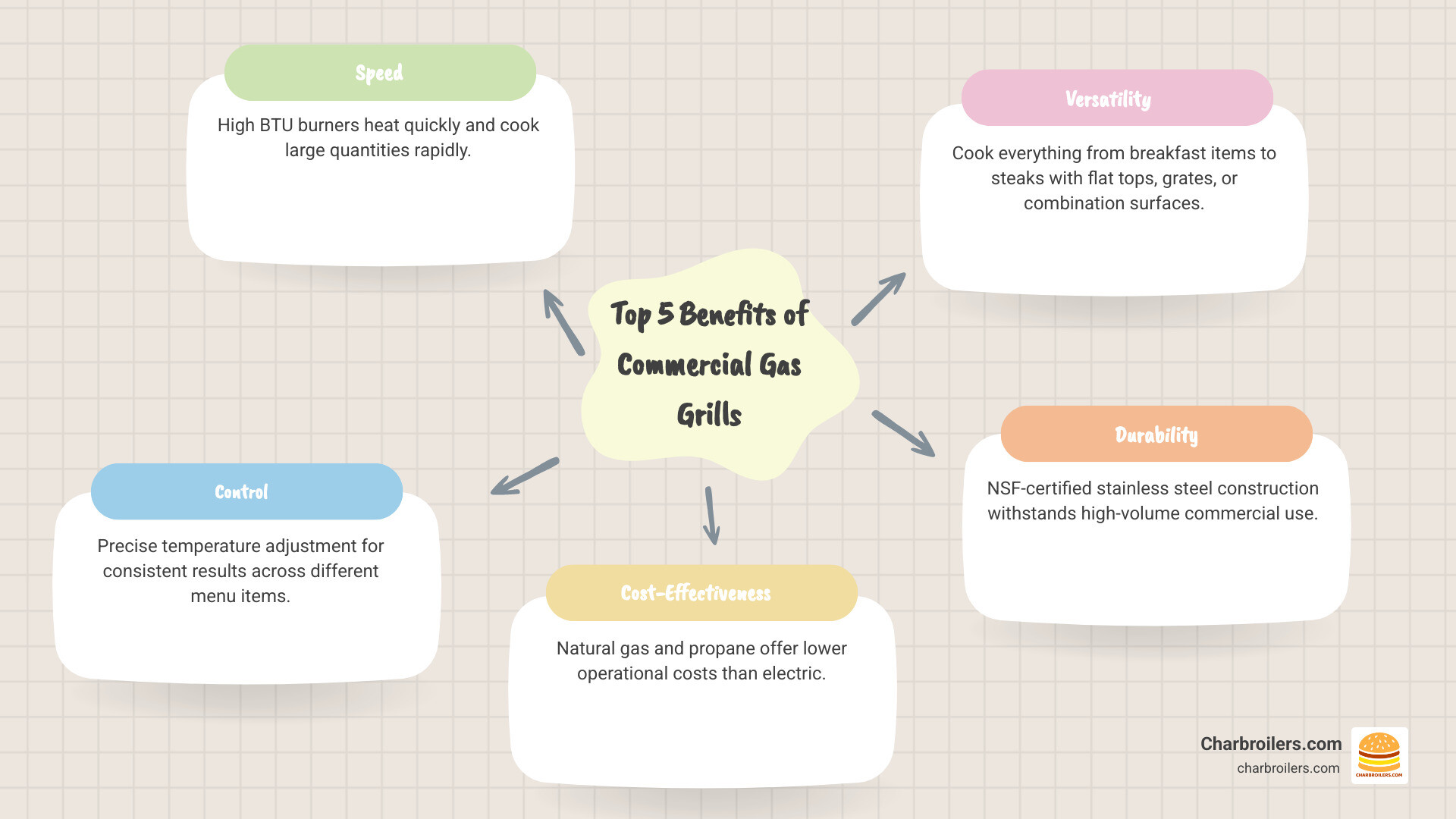
What makes commercial gas grills essential for restaurants:
- High BTU output (typically exceeding 30,000 BTU) for rapid, consistent cooking
- Precise temperature control for perfect results on everything from burgers to delicate fish
- Cost-effective operation with natural gas or propane fuel options
- Versatile cooking surfaces including flat tops, grated charbroilers, and combination units
- Durable construction featuring NSF-listed stainless steel surfaces built for high-volume use
Commercial grills and griddles are the workhorses of busy restaurant kitchens, cafeterias, and ghost kitchens. They provide even heat distribution, excellent searing capabilities, and easy cleanup—letting your kitchen staff focus on creating great food instead of fighting with equipment.
I'm Sean Kearney, founder of Charbroilers.com and The Restaurant Warehouse, with over a decade of experience helping restaurants find the right commercial gas grill for restaurant operations at fair prices. Before starting my business, I worked at Amazon.com and played linebacker for the University of Washington Huskies—experiences that taught me the value of teamwork and helping others succeed.
Learn more about commercial gas grill for restaurant:
- commercial kitchen equipment grill
- commercial indoor electric grill
- used commercial flat top grill for sale
Why Gas Grills are a Restaurant Kitchen's Workhorse
In the world of commercial kitchens, efficiency and food quality are paramount. A commercial gas grill for restaurant use isn't just a piece of equipment; it's a strategic investment that significantly impacts your operational flow and the culinary experience you offer. These grills are designed to meet the rigorous demands of high-volume cooking, delivering consistent results that keep customers coming back for more.
Our experience shows that gas grills truly shine in their ability to provide consistent heat and precise temperature control. This means your chefs can cook with confidence, knowing that each burger, steak, or vegetable will be cooked to perfection. The rapid heating capabilities of gas grills reduce wait times during peak hours, allowing your kitchen to handle a rush with ease. Beyond speed, gas grills offer the distinct advantage of producing authentic char marks and that beloved smoky flavor that's hard to achieve with other cooking methods. It's this combination of practical benefits and flavor improvement that makes the commercial gas grill for restaurant operations an indispensable tool.
For more insights into maximizing your grill's potential, explore how you can fire up your profits with these commercial propane grills.
How a Gas Grill Improves Efficiency and Quality
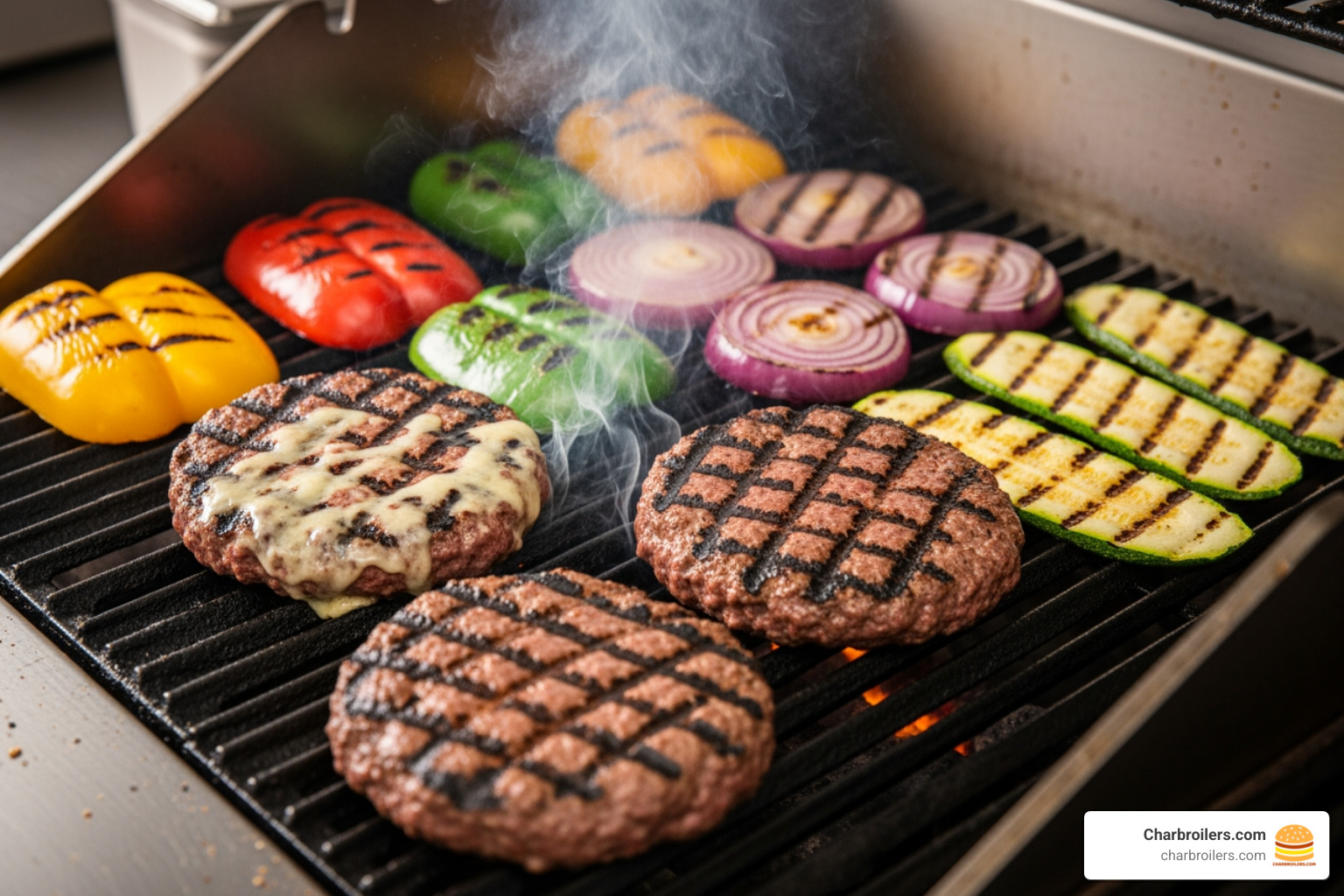
The secret weapon of a commercial gas grill for restaurant kitchens lies in its impressive BTU (British Thermal Unit) output. These heavy-duty appliances boast high BTU ratings, often exceeding 30,000, which translates to quick preheating and rapid temperature recovery. Imagine the hustle of a busy dinner service: a high-BTU gas grill can quickly sear multiple proteins, locking in juices and flavors, without losing significant heat between batches. This consistent performance during peak hours is crucial for maintaining food quality and speeding up service.
By allowing chefs to precisely control cooking temperatures, a gas grill ensures that every dish, from delicate fish to thick-cut steaks, is cooked exactly as intended. This precision improves the overall quality and consistency of your menu items, elevating the dining experience for your patrons. Investing in quality grills means improving your kitchen’s productivity, enhancing food flavor and texture, and delivering the quick, consistent service your customers expect. We believe that a well-chosen commercial gas grill for restaurant use can significantly improve kitchen efficiency and food quality, directly contributing to your establishment's success.
To understand how gas and electric models compare in powering your kitchen, check out commercial grills power up your kitchen with top gas electric models.
Gas vs. Other Cooking Methods: Charcoal and Electric
When it comes to commercial cooking, gas grills aren't the only players on the field. Charcoal and electric grills each have their own unique characteristics. However, for many busy restaurants, gas often emerges as the preferred choice due to its balance of convenience, control, and efficiency. Let's break down the differences:
| Feature | Gas Grills | Charcoal Grills | Electric Grills |
|---|---|---|---|
| Heat Control | Excellent, precise temperature adjustment | Good, but slower to adjust | Good, consistent heat |
| Startup Time | Very fast, instant heat | Slow, requires time to ignite and heat coals | Fast, but often less intense heat |
| Flavor Profile | Clean, direct heat, authentic char marks | Distinct smoky, char-grilled flavor | Clean, no added flavor, can be less intense |
| Cleanup | Relatively easy, grease trays | More involved, ash disposal, grate cleaning | Easiest, often non-stick surfaces |
| Operational Cost | Moderate, especially with natural gas | Can be higher due to charcoal cost and labor | Moderate to high, depending on electricity rates |
| Versatility | High, ideal for various menu items | High, but requires more skill for consistency | Moderate, good for specific items |
| Maintenance | Regular cleaning, burner checks | Frequent grate cleaning, ash removal | Simple, surface cleaning |
| Ventilation | Essential for commercial kitchens | Crucial due to smoke and fumes | Required, but less intense than gas/charcoal |
Gas grills offer the convenience of instant heat and precise control, allowing chefs to quickly adapt to different cooking needs. While charcoal grills deliver an undeniable smoky flavor, they require more time to start, are messier to clean, and demand more attention to maintain consistent heat. This can be a challenge in a high-volume kitchen. For tips on managing charcoal, see how to keep a charcoal grill hot.
Electric grills, on the other hand, are typically the easiest to clean and offer very consistent heat. However, they often lack the high heat output or the ability to produce the distinctive char and sear marks that gas grills effortlessly achieve. They also don't impart any unique flavor profile. For certain applications, an electric commercial grill can be a great choice, but for the diverse, high-performance demands of most restaurants, a commercial gas grill for restaurant operations often provides the best all-around solution.
Types and Configurations of Commercial Gas Grills
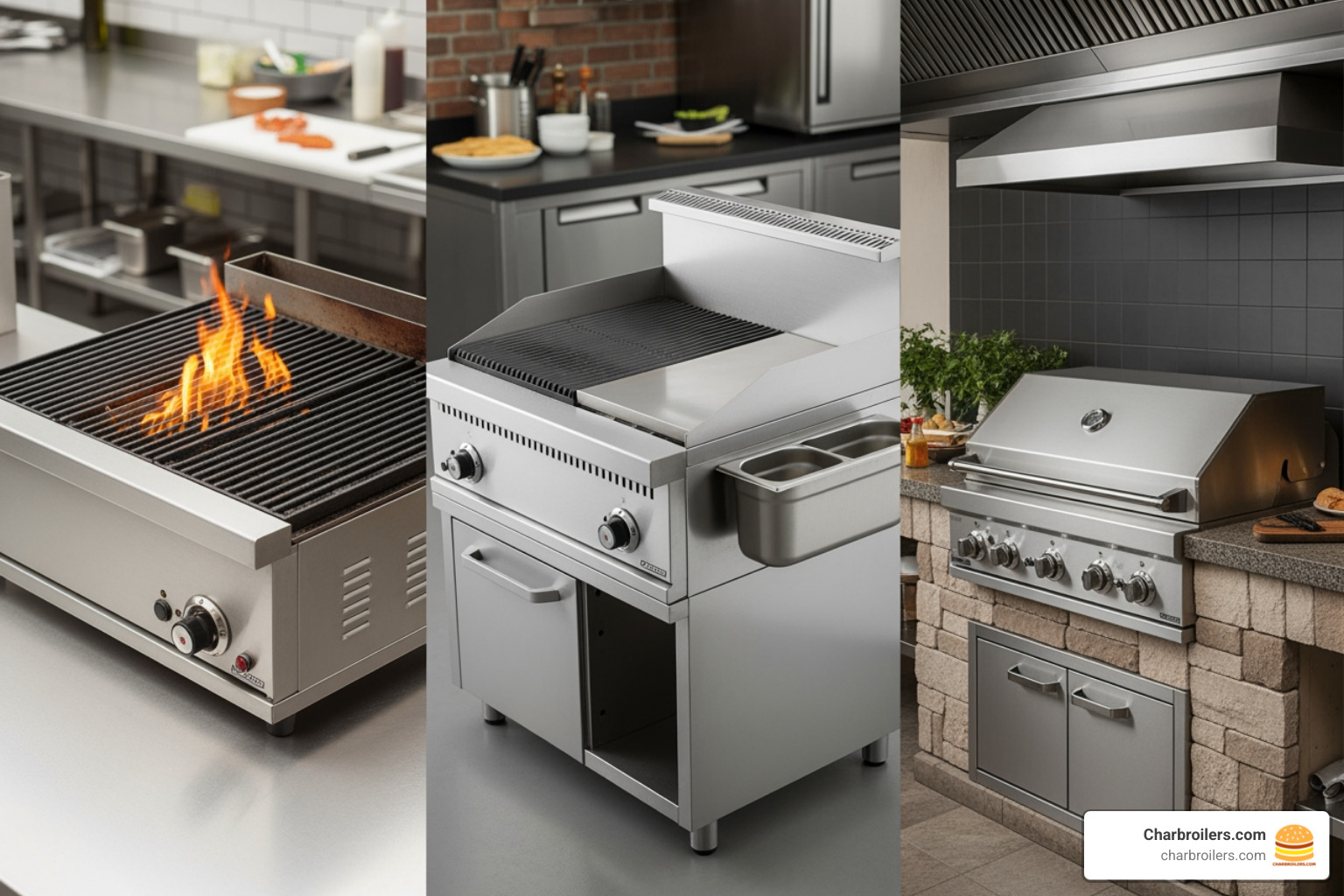
When we talk about a commercial gas grill for restaurant use, we're not just referring to one standard appliance. The world of commercial grills is incredibly diverse, offering a range of formats and cooking surfaces custom to specific kitchen layouts, menu styles, and operational needs. Understanding these variations is key to selecting the perfect grill that will truly improve your kitchen's capabilities. Each type brings its own set of advantages, allowing us to customize cooking stations to perfectly fit our culinary vision.
A comprehensive look at these versatile tools can be found in our guide, fire up your menu a comprehensive look at commercial grills.
Grill Formats: Countertop, Freestanding, and Built-In
The physical format of your commercial gas grill for restaurant needs will largely depend on your kitchen's available space, workflow, and whether you plan to cook indoors or out.
- Countertop Models: These are excellent for kitchens with limited floor space or for adding specialized grilling capacity without a major overhaul. They sit directly on an existing counter, making them flexible additions. Our guide to countertop champions the ultimate commercial gas grill roundup provides a deeper dive into these space-saving powerhouses.
- Freestanding Units: Designed for high-volume kitchens, freestanding grills are robust floor units that often include storage cabinets or refrigerated bases underneath. They are workhorses, built to handle continuous use and heavy loads.
- Built-in Grills: For restaurants with outdoor dining areas, patios, or poolside service, built-in gas grills seamlessly integrate into outdoor kitchen designs. These units are specifically engineered to withstand outdoor elements like rain and UV rays, often constructed from durable stainless steel. They allow us to expand our menu offerings and create engaging outdoor cooking experiences.
- Portable Grills: Essential for catering events, food trucks, and temporary setups, portable gas grills offer mobility and flexibility. These models often feature folding leg carts for easy transport and setup, allowing us to bring the flame-broiled flavor directly to our customers. For those on the go, food truck cooking equipment is an important consideration.
Cooking Surfaces: Flat Tops, Grates, and Hybrids
The type of cooking surface on your commercial gas grill for restaurant operations dictates what you can prepare and the culinary results you'll achieve.
- Flat Top Griddles: These smooth, even surfaces are incredibly versatile. They're perfect for breakfast items like pancakes, eggs, and bacon, as well as searing burgers, sautéing vegetables, or even preparing stir-fries. Flat tops provide consistent, direct heat across the entire surface, ensuring even cooking. For outdoor flat tops, check out grill like a pro with these commercial outdoor flat tops.
- Grated Charbroilers: When we envision a classic grilled item, we often think of the distinctive char marks and smoky flavor imparted by a grated charbroiler. These grills feature grates (often made of cast iron or stainless steel) that allow direct flame contact with the food, ideal for steaks, burgers, chicken, and seafood. The heat source can vary, including radiant, lava rock, or infrared elements. Radiant charbroilers use metal baffles to distribute heat, while lava rock models use ceramic briquettes for even heat and flavor. Infrared cooking offers intense, focused heat for rapid searing. Learn more about gas grill char broil options.
- Hybrid or Combination Units: Some innovative commercial gas grill for restaurant models combine both a flat top griddle and a grated charbroiler section, offering maximum versatility in a single footprint. This allows us to prepare a wider range of menu items simultaneously, optimizing kitchen space and efficiency.
Beyond these main types, specialty grills like Panini presses (with their characteristic grooved plates) and Teppanyaki griddles (large, flat surfaces for theatrical cooking) also fall under the commercial gas grill umbrella, catering to specific culinary niches.
Key Features to Consider When Buying a Commercial Gas Grill for Restaurant
Choosing the right commercial gas grill for restaurant use is a critical decision that impacts everything from your menu offerings to your kitchen's efficiency. It's not just about finding a grill; it's about finding the right grill that aligns with your specific needs. Our aim is to help you make an informed choice that will serve your business well for years to come.
To ensure you're making the best investment, we've put together a guide to help you grill your way to profit choosing the best commercial gas char grill. You can also explore a wide range of options on our Commercial Griddles & Grills | Charbroilers.com page.
Choosing the right commercial gas grill for restaurant success
When we're evaluating a commercial gas grill for restaurant applications, several key features demand our attention:
- BTU Output: As we've discussed, BTU (British Thermal Unit) is a measure of heating power. For commercial use, we're looking for high BTU outputs, often exceeding 30,000 per burner or per foot of cooking surface. This ensures rapid heating, quick temperature recovery, and the ability to cook large quantities of food efficiently. Higher BTU is especially important for searing and high-volume operations.
-
Cooking Surface Material: The material of your cooking surface affects heat distribution, durability, and cleaning.
- Cast Iron: Excellent for heat retention and provides superb searing capabilities, creating those coveted char marks. It requires proper seasoning and maintenance to prevent rust.
- Stainless Steel: Durable, easy to clean, and resistant to corrosion. Often used for grates and can be found in various grades, with higher grades offering better performance and longevity.
- Chrome-plated: A popular option for griddles, offering easy release and cleaning.
- Plate Thickness (for griddles): Thicker plates (e.g., 1" vs. 5/8") retain heat better and are less prone to warping, providing more consistent cooking across the surface, especially for high-volume tasks.
- Size and Cooking Area: Measure your available kitchen space carefully. Commercial grills come in various widths (e.g., 24", 36", 48", 60", 72"). Consider the volume of food you need to prepare simultaneously and the typical size of your menu items. A larger cooking area means more capacity, but also requires more space and potentially higher BTU output.
- Number of Burners & Zoned Cooking: More burners generally mean more precise heat control. Many commercial gas grills feature independent burners, allowing for "zoned cooking." This means we can set different temperature zones across the grill surface—for example, a high-heat zone for searing, a medium-heat zone for cooking through, and a low-heat zone for holding or delicate items. This versatility is invaluable in a busy kitchen.
-
Thermostatic vs. Manual Controls:
- Manual Controls: Offer direct control over gas flow to each burner, providing a wide range of temperatures but requiring more chef intuition to maintain specific heat levels.
- Thermostatic Controls: Found on many griddles, these allow you to set a precise temperature (e.g., 350°F), and the grill will automatically adjust the flame to maintain that temperature. This is excellent for consistency, especially for items like pancakes or eggs.
- Grease Management Systems: A good grease tray and chute system is essential for hygiene and safety. Look for removable, easy-to-clean grease trays that effectively channel away excess fat, reducing flare-ups and simplifying daily cleanup.
For a broader look at essential kitchen tools, explore our commercial kitchen equipment guide.
Powering your commercial gas grill for restaurant use: Natural Gas vs. Propane
The choice of fuel source for your commercial gas grill for restaurant is a fundamental decision with long-term implications for cost, convenience, and kitchen layout. We primarily deal with two options: natural gas (NG) and liquid propane (LP).
-
Natural Gas (NG):
- Cost-Effective: Often the most economical choice over time, especially in areas with established natural gas infrastructure. Natural gas is generally cheaper per BTU than propane.
- Continuous Supply: If your building has a natural gas line, you have a virtually endless supply, eliminating the need for tank refills or monitoring levels. This is a huge advantage for high-volume restaurants.
- Installation: Requires a natural gas line connection, which can be a significant upfront cost if not already present. However, many commercial establishments in Seattle, WA are already equipped with natural gas lines, making these grills convenient to integrate.
- Temperature: Natural gas can reach high temperatures, providing powerful and consistent heat for grilling.
-
Propane (LP):
- Portability: The main advantage of propane is its portability. It's stored in tanks, making it ideal for food trucks, outdoor catering, or restaurants without natural gas hookups.
- Higher Energy Content: Propane has a slightly higher energy density than natural gas, meaning a given volume of propane produces more heat.
- Tank Management: Requires regular monitoring and refilling of tanks, which can be an operational consideration. We need to ensure we have a reliable supplier and a system for swapping out empty tanks. If you're wondering how to check if propane tank is empty, we have resources to help.
- Installation: Simpler installation for standalone units, as it only requires connecting to a propane tank.
Conversion Kits: Many commercial gas grill for restaurant models are designed to be field-convertible between natural gas and liquid propane. This flexibility is a valuable feature, allowing us to adapt the grill to different locations or future changes in our operations. Always ensure any conversion is done by a qualified professional to maintain safety and warranty.
The decision between natural gas and propane boils down to your specific operational needs, existing infrastructure, and long-term cost considerations. Our guide on natural gas vs propane offers a more detailed comparison.
Maintenance, Safety, and Cost of Commercial Grills
Investing in a commercial gas grill for restaurant operations is a significant decision. To truly maximize that investment, we must consider not only the initial purchase but also the ongoing aspects of maintenance, safety, and understanding the true cost. Proper care ensures longevity and optimal performance, while adherence to safety standards protects our staff and customers. These considerations are fundamental to running a successful and compliant commercial kitchen.
For a broader perspective on maintaining all your vital kitchen tools, refer to our guide on commercial kitchen appliances.
Essential Maintenance for Longevity
A well-maintained commercial gas grill for restaurant use is a happy grill, and a happy grill translates to consistent, high-quality food and fewer breakdowns. Regular maintenance is crucial for ensuring longevity and optimal performance.
- Daily Cleaning: At the end of each service, the cooking surface (grates or flat top) should be thoroughly cleaned to remove food particles and grease. For charbroilers, this might involve scraping grates and emptying grease trays. For griddles, scraping and wiping down the surface is key. This daily routine prevents buildup that can affect cooking performance and flavor. See our tips on how to clean gas grill grates.
- Deep Cleaning Schedule: Beyond daily tasks, a weekly or bi-weekly deep clean is necessary. This includes cleaning under the grates, around burners, and thoroughly scrubbing all stainless steel surfaces.
- Seasoning Grates/Griddles: Cast iron grates and many griddle surfaces benefit from regular seasoning. This creates a non-stick layer and protects against rust.
- Checking Gas Lines: Periodically inspect gas lines for any signs of wear, leaks, or obstructions. This is a critical safety check.
- Burner Maintenance: Ensure burners are free from debris and food particles. Clogged burner ports can lead to uneven heating and reduced efficiency.
- Grease Trap Cleaning: Regularly empty and clean the grease trap or collection system. This prevents overflows, reduces fire hazards, and maintains hygiene.
Adhering to a strict gas grill maintenance schedule will not only extend the life of your equipment but also contribute to a safer, more efficient kitchen environment.
Safety Certifications and Kitchen Regulations
Safety is non-negotiable in any commercial kitchen, and a commercial gas grill for restaurant operations is no exception. We must ensure our equipment meets specific certifications and adheres to local regulations.
- NSF Certification: Look for the NSF (National Sanitation Foundation) certification. NSF-listed equipment meets strict public health and safety standards, particularly concerning material safety, design, and construction for easy cleaning. This certification is a strong indicator of a grill's quality and suitability for commercial food service.
- ANSI Standards: The American National Standards Institute (ANSI) develops standards for a wide range of products, including commercial cooking equipment. Compliance with relevant ANSI standards ensures the grill has been tested for performance and safety.
- Local Health Codes: Always be aware of and comply with local health codes in Seattle, WA. These codes dictate requirements for equipment installation, ventilation, and maintenance.
- Proper Ventilation: Gas grills produce heat, smoke, and exhaust fumes. Adequate commercial kitchen ventilation requirements are crucial to remove these byproducts, maintain air quality, and ensure a comfortable working environment. This typically involves a commercial kitchen hood system. Learn more about commercial kitchen ventilation requirements.
- Commercial Kitchen Fire Suppression Systems: Given the open flame and high heat associated with gas grills, a robust commercial kitchen fire suppression systems is a mandatory safety feature in all commercial kitchens.
Ensuring your commercial gas grill for restaurant operations is certified and installed according to regulations protects your business, your employees, and your customers.
Understanding Price Ranges and Cost Factors
The cost of a commercial gas grill for restaurant use can vary significantly, ranging from a few hundred dollars for compact countertop models to several thousand for large, heavy-duty freestanding or built-in units. Understanding the factors that influence these prices helps us make a smart investment.
- Entry-Level Models: Often smaller countertop units, these might start around $500 - $1,500. They are suitable for lower-volume operations or as supplementary grilling stations.
- Mid-Range Units: Most restaurants will find their ideal grill in this category, ranging from $1,500 to $4,000. These include larger countertop charbroilers or griddles and smaller freestanding units. For example, a professional gas grill might be around $1,800, while a stainless steel version could be $3,150.
- Heavy-Duty and Specialty Units: Large freestanding grills, combination units, built-in outdoor grills, or those with advanced features (like infrared burners or integrated refrigerated bases) can cost anywhere from $4,000 to $10,000 or more. A 72-inch professional gas grill, for instance, could be $2,400, with a stainless steel model reaching $3,800.
Price Influencers:
- Size and BTU Rating: Larger grills with higher BTU outputs will naturally cost more due to increased material and engineering.
- Brand and Manufacturer: Established brands with a reputation for quality and durability often command higher prices, but they also typically offer better warranties and support.
- Material and Construction: NSF-listed stainless steel construction is standard for commercial equipment, but variations in steel gauge and overall build quality affect cost. Thicker griddle plates or specialized grates also add to the price.
- Features: Additional features like thermostatic controls, zoned cooking, integrated storage or refrigeration, specialized heat sources (e.g., infrared), or field convertibility between NG/LP will increase the price.
- Installation Requirements: Don't forget to factor in installation costs, especially if new gas lines or ventilation systems are required.
- New vs. Used: Buying used commercial grills smart buys for your restaurant kitchen can offer significant savings, but careful inspection and understanding the equipment's history are crucial.
By carefully evaluating these factors against your budget and operational needs, we can identify a commercial gas grill for restaurant use that offers the best value and performance for your business.
Conclusion: Selecting the Perfect Grill for Your Culinary Vision
Choosing the right commercial gas grill for restaurant operations is a foundational decision that impacts everything from kitchen efficiency and food quality to customer satisfaction and profitability. We've explored the myriad benefits of these workhorse appliances, from their high BTU output and precise temperature control to their versatility across different cooking surfaces and formats. Gas grills stand out as a superior choice for most commercial settings, offering a compelling balance of speed, flavor, and operational cost-effectiveness compared to charcoal or electric alternatives.
The perfect grill for your establishment will depend on your unique culinary vision and operational demands. Whether you need the space-saving convenience of a countertop model, the high-volume capacity of a freestanding unit, or the outdoor appeal of a built-in grill, there's a commercial gas grill for restaurant use designed to meet your needs. Pay close attention to key features like BTU output, cooking surface material, size, and control types, and always prioritize safety certifications and proper maintenance.
At Charbroilers.com, we understand the intricacies of commercial kitchen equipment and are dedicated to helping you find the ideal tools to fire up your menu and improve your profits. We believe that with the right commercial gas grill, you can consistently deliver delicious, flame-broiled flavors that keep your customers coming back for more.
Ready to take your grilling to the next level? Explore our comprehensive guide to commercial charbroilers for your restaurant and find the perfect addition to your kitchen.