
Grill Like a Pro with These Commercial Outdoor Flat Tops
Why Commercial Outdoor Flat Top Grills Are Essential for Modern Foodservice
Why Your Outdoor Kitchen Needs a Flat Top Grill
Picture this: you're cooking breakfast for a busy morning rush, and you need to prepare eggs, bacon, pancakes, and hash browns all at once. With a commercial outdoor flat top grill, this becomes effortless thanks to its most valuable feature - even heat distribution across the entire cooking surface.
Unlike traditional grills that create frustrating hot spots and cooler areas, flat tops maintain consistent temperatures that open up the secret to professional cooking: the Maillard reaction. This chemical process is what creates that gorgeous golden-brown crust on your proteins that makes customers' mouths water.
That superior crust isn't just for show - it's what separates amateur cooking from restaurant-quality results. See the perfect crust you can achieve when you master flat top cooking techniques. The controlled heat environment lets you achieve that beautiful searing while maintaining precise temperature control throughout the entire cooking process.
Here's something that'll make your kitchen staff smile: no more flare-ups. Traditional grills can create unpredictable flame bursts that char food unevenly and create stressful cooking conditions. Flat tops provide a stable, predictable cooking environment that's perfect for cooking delicate items like fish fillets, eggs, and vegetables that need gentle, consistent heat.
The real game-changer is how a single commercial outdoor flat top grill can handle your entire menu throughout the day. Start your morning with pancakes, eggs, and bacon sizzling away. Transition seamlessly to lunch service with burgers and grilled sandwiches. Then finish strong with dinner preparations including steaks, seafood, and stir-fry dishes.
Some creative operators even use their flat tops to create a hibachi-style experience, cooking directly in front of customers for that entertaining dinner theater atmosphere. It's amazing how versatile these units can be when you think outside the box.
Restaurant operators consistently tell us that flat tops have dramatically expanded their menu options. The large, smooth cooking surface lets you use multiple cooking techniques simultaneously - you can sear proteins on high heat while keeping buns perfectly warm on a cooler section of the griddle. It's like having multiple cooking stations in one efficient unit.
Key Features to Look For in a Commercial Outdoor Flat Top Grill
Shopping for a commercial outdoor flat top grill can feel overwhelming with so many options available. But focusing on a few key features will help you find the perfect unit for your operation.
Material construction makes or breaks your investment. The best units feature 304 stainless steel with a #4 finish that stands up to outdoor weather and heavy use. Some operators prefer cast iron griddles for their superior heat retention, though they need more care to prevent rust. Either way, you want quality materials that will last through thousands of cooking cycles.
Griddle plate thickness directly affects how your food cooks. Heavy-duty 12-gauge steel plates distribute heat more evenly than thinner options. When a quality plate weighs 14 pounds or more, you know it's built to maintain steady temperatures even when you're cooking at full capacity.
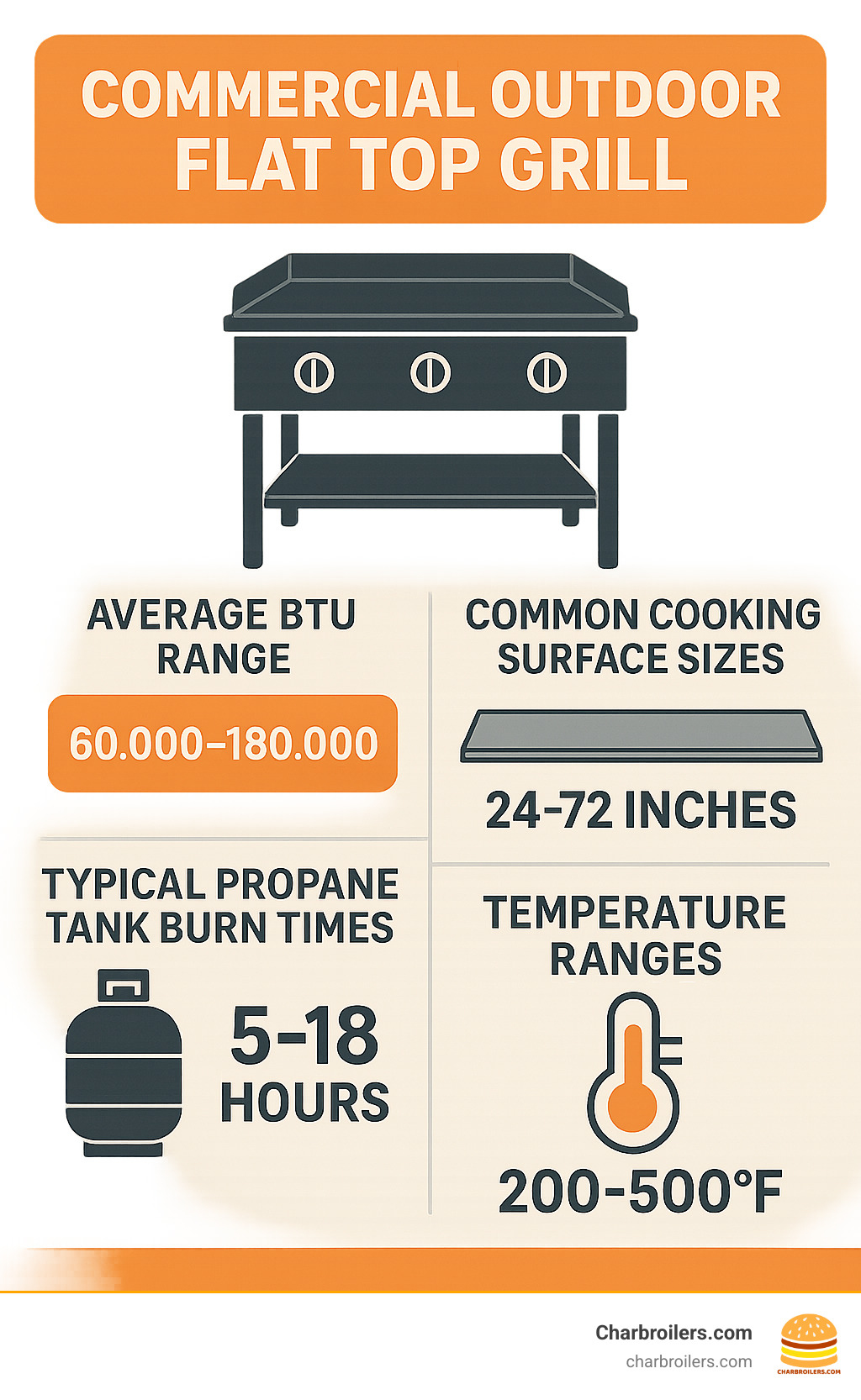
Size and capacity should match your actual needs, not your wishful thinking. Small units at 24-36 inches work great for focused menus or smaller operations. Medium griddles spanning 48-60 inches handle most restaurant needs with their 4-6 burner configuration. Large units at 72+ inches are powerhouses designed for high-volume operations, catering companies, and food festivals.
BTU output determines how quickly your griddle heats up and recovers when you add cold food. Individual burners typically range from 12,000 to 30,000 BTUs, with total outputs reaching 180,000 BTUs for commercial units. Higher BTU ratings mean faster service and better temperature control during busy periods.
Grease management systems keep your operation clean and safe. Quality units feature built-in grease troughs positioned at the front, just like restaurant kitchen designs. Some models include removable grease drawers that make cleanup much easier at the end of a long day.
Portability features can transform how you use your griddle. Heavy-duty casters and steering wheels let you move equipment for cleaning, reconfigure your kitchen layout, or take your griddle to off-site events. This flexibility often pays for itself in increased revenue opportunities.
Fuel Type Considerations
| Feature | Propane (LP) | Natural Gas |
|---|---|---|
| Portability | Highly portable with tank | Requires gas line connection |
| Installation | Minimal setup required | Professional installation needed |
| Fuel Cost | Higher per BTU | Lower operating costs |
| BTU Consistency | Consistent output | Steady, regulated supply |
| Outdoor Use | Ideal for mobile operations | Best for permanent installations |
Propane systems offer maximum flexibility for outdoor cooking. A 30-pound tank provides 5-9 hours of operation, while 40-pound tanks last 7-12 hours. For all-day events, 100-pound tanks can run 12-18 hours depending on how hard you're working the griddle.
Natural gas connections cost less to operate but require permanent installation with proper gas line routing. This works best for built-in outdoor kitchens where you won't need to move the unit around.
Understanding Griddle Controls
Control systems can make the difference between consistent results and frustrated cooks. Manual controls offer basic on/off functionality with simple flame adjustment. They work fine if you have experienced operators who understand heat management.
Thermostatic controls automatically maintain set temperatures regardless of food load. These systems help ensure consistent cooking results whether your most experienced cook or newest team member is running the griddle.
Snap-action controls provide reliable ignition and precise flame adjustment, while solid-state systems offer the most advanced temperature control with digital displays and programmable settings.
Creating heat zones across your cooking surface lets you prepare different menu items simultaneously. You can maintain high-heat areas for searing steaks while keeping lower-temperature zones for warming buns or melting cheese. This precise temperature management capability is what separates professional griddles from backyard models.
Top Styles of Outdoor Griddles for Your Foodservice Business
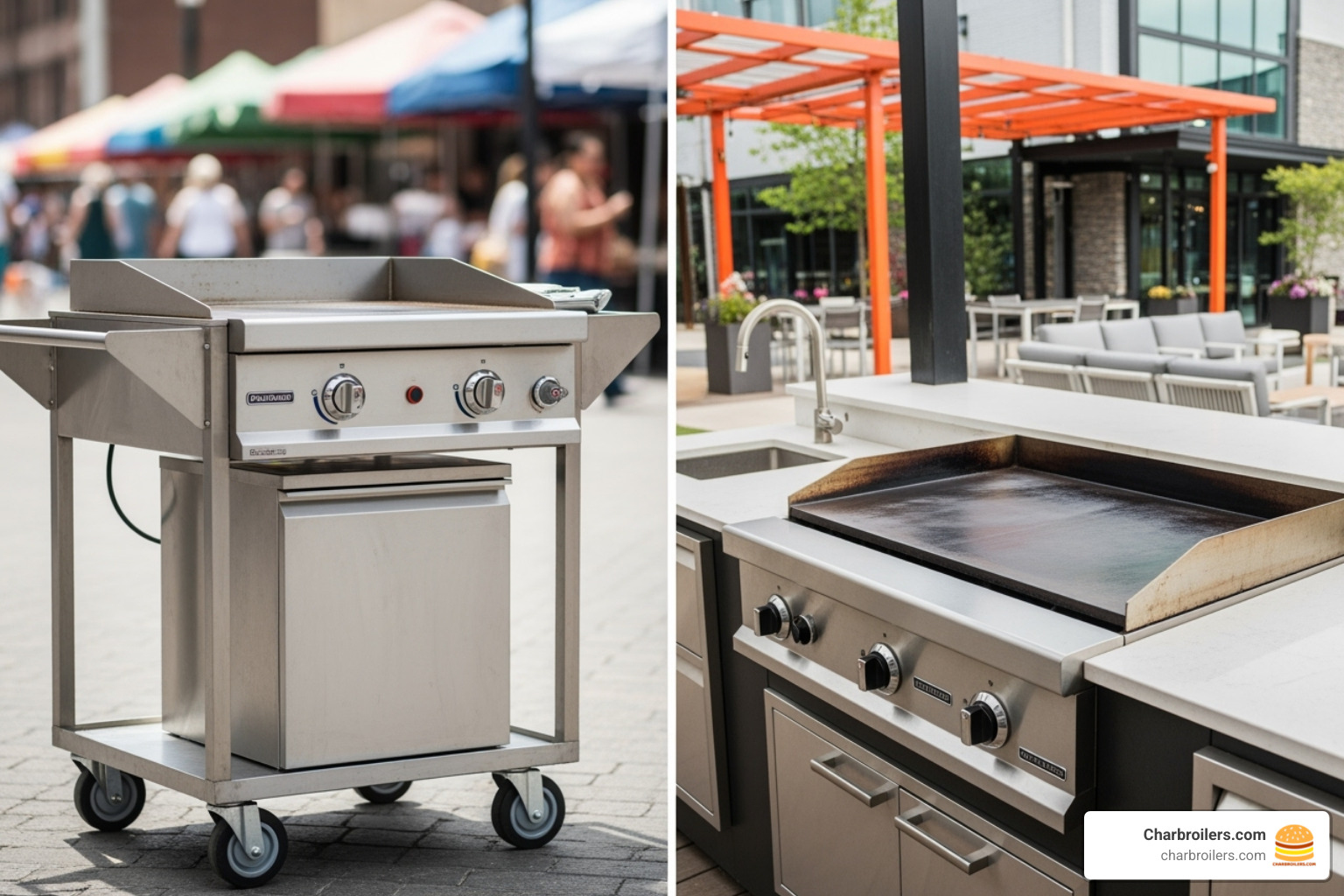
Finding the perfect commercial outdoor flat top grill comes down to understanding your space and how you'll actually use it. Over the years, I've helped operators choose between three main configurations, and each one shines in different situations.
The key is honestly assessing your kitchen space and matching it to your operational needs. Are you catering events every weekend? A mobile unit might be your best friend. Building a permanent outdoor kitchen? Built-in models create that professional look customers love. Working with limited space? Countertop options can transform what you thought was impossible.
The Freestanding Commercial Outdoor Flat Top Grill
The mobile cart design is like having a complete cooking station on wheels. These units come with everything you need - integrated storage shelves for your tools, propane tank storage tucked safely underneath, and enough prep space to handle serious cooking sessions.
What makes these units special is their portability for events and catering. One of our customers recently told me: "I used this last weekend to do an off-site catering for a wedding. From 160 pieces of Salmon, 160 pieces of marinated chicken, to my asparagus & German sausages, this flat top handled every bit of it, with perfect sears."
The side shelves and storage space aren't just convenient - they're essential for smooth operation. Quality units feature stainless steel shelving that matches the griddle construction, giving you durability that lasts. Some models even have fold-down shelves, perfect when you need to squeeze the unit into tighter storage spaces.
This all-in-one cooking station approach eliminates the headache of coordinating separate prep tables and tool storage. If you're working with limited outdoor space or need to move equipment regularly, these mobile units solve multiple problems at once.
The Built-In Commercial Outdoor Flat Top Grill
Built-in models create that seamless outdoor kitchen integration that makes your setup look like it belongs in a high-end restaurant. The sleek design flows naturally with your other equipment, but this beauty comes with some planning requirements.
Permanent installation means you're committed to the location, but it also means you can typically accommodate larger cooking surfaces. Without worrying about mobility, you can focus purely on cooking capacity and performance.
Ventilation planning becomes crucial with built-in installations. You need proper clearance from combustible materials and adequate airflow to prevent gas buildup. Many installations require professional consultation to meet local building codes - it's not just about safety, it's about doing things right the first time.
The custom kitchen aesthetic allows your griddle to complement your existing outdoor setup perfectly. That flush-mounted appearance creates clean sight lines and professional presentation, especially important when customers can see your cooking area.
Countertop and Drop-In Models
Sometimes the best solution is the simplest one. Countertop models work on any stable, heat-resistant surface, giving you flexibility without permanent modifications to your existing setup.
Drop-in models mount flush with existing countertops, providing that clean, integrated look similar to built-in units but with much easier installation. These units feature heating elements in the center with cooler outer edges - perfect for food warming and staging.
The space-saving design shines when you're working with existing outdoor kitchen infrastructure. You can add flat top cooking capability without major renovations, which proves particularly valuable when converting a charbroiler station or adding cooking capacity to limited outdoor spaces.
Placing on existing surfaces or drop-in flush mounting both work well for operations that need to maximize every square inch. If space is your biggest constraint, these models can transform what you thought was impossible into a reality.
Essential Maintenance, Safety, and Operation Tips
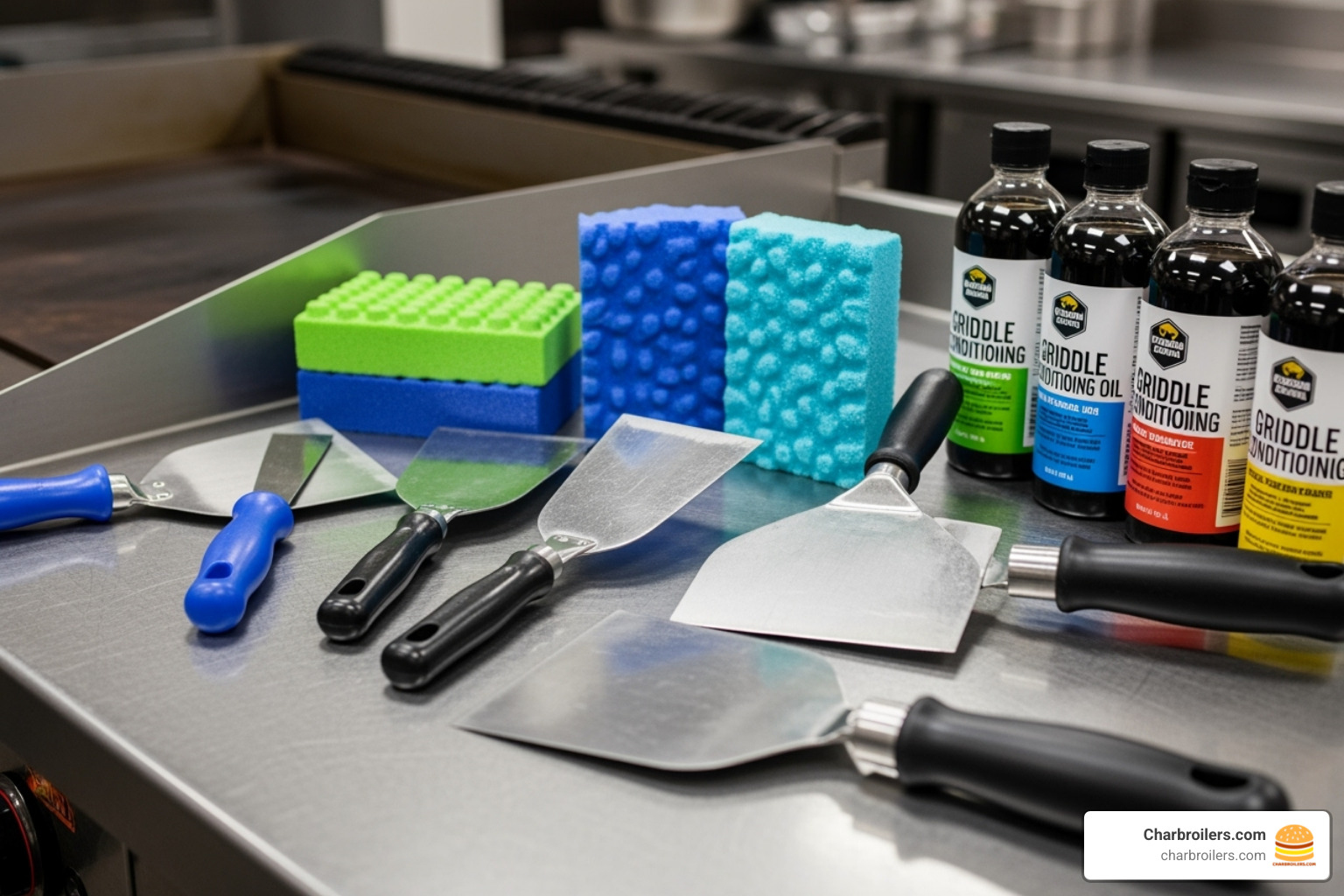
Taking care of your commercial outdoor flat top grill doesn't have to be complicated, but doing it right makes all the difference in performance and longevity. Think of proper maintenance as an investment that pays dividends in consistent cooking results and equipment reliability.
Seasoning your griddle creates that coveted non-stick surface that gets better with age. Start by giving your new griddle a thorough cleaning to remove any manufacturing residue. Apply a thin layer of high-heat cooking oil across the entire surface—don't overdo it, as too much oil can create sticky spots.
Heat the griddle to medium temperature and watch as the oil begins to polymerize, creating a protective coating that bonds with the metal. This process should be repeated several times before your first cooking session. The surface will gradually develop a dark, smooth patina that's the hallmark of a well-seasoned griddle.
Daily cleaning is surprisingly straightforward when you develop the right routine. While the griddle is still warm (not hot), use a food-safe scraper to remove food debris and excess grease. This warm temperature makes cleaning easier since grease hasn't solidified yet. Never use paint scrapers or non-food-grade tools that could introduce contaminants to your cooking surface.
Quality griddle scrapers are specifically designed for this purpose and won't damage your carefully maintained seasoning. Follow up with a cleaning brick to smooth out any rough spots, then apply a light coat of oil to prevent rust and maintain the seasoning layer.
Deep cleaning becomes necessary when grease buildup affects cooking performance or when you notice uneven heating. Allow the griddle to cool completely, then use a commercial degreaser designed for food-service equipment. After thorough cleaning, you'll need to re-season the surface following the same process used for new equipment.
Safety protocols around your commercial outdoor flat top grill focus on three main areas: gas connections, proper ventilation, and hot surface management. Regular inspection of gas lines and connections prevents dangerous leaks—look for loose fittings, damaged hoses, or the smell of gas around connections.
Ventilation requirements vary depending on your installation type. Outdoor units generally operate safely in open air, but built-in installations may require additional planning to prevent gas accumulation in enclosed spaces. Always maintain proper clearance from combustible materials as specified in your equipment manual.
For operators in California, California Proposition 65 Warning Information provides important safety guidelines regarding potential chemical exposure from cooking equipment. It's worth reviewing these guidelines regardless of your location for best practices.
Essential accessories can significantly improve both safety and performance. Wind guards protect flame stability during breezy conditions—something every outdoor operator encounters. Griddle covers protect your equipment from weather when not in use, extending equipment life and reducing cleaning time.
Quality covers use commercial-grade vinyl designed for outdoor exposure and UV resistance. Don't skimp on cover quality—a good cover pays for itself by protecting your investment from the elements.
Frequently Asked Questions about Commercial Outdoor Grills
How do I properly season a new commercial griddle?
Getting your new commercial outdoor flat top grill properly seasoned is like breaking in a good pair of work boots - it takes a little patience, but the results are worth it.
Start by giving the griddle a thorough cleaning with warm, soapy water. You'll want to remove all the manufacturing oils and any residue from shipping. Rinse everything off completely and dry the surface until it's spotless.
Next comes the fun part - applying your first coat of oil. Flaxseed, canola, or vegetable oil all work beautifully for this process. Spread a thin layer across the entire cooking surface - think "light coating," not "swimming in oil."
Heat your griddle to a medium temperature, around 300-350°F. You'll watch the oil start to smoke and change color as it bonds with the metal. This polymerization process typically takes about 15-20 minutes, and you'll notice the surface developing that characteristic darker appearance.
Let the griddle cool down completely, then repeat this process 2-3 times for the best results. Each layer builds on the previous one, creating that smooth, non-stick surface that makes flat top cooking so enjoyable.
Re-seasoning becomes necessary when your griddle starts losing its non-stick properties or shows any signs of rust. The good news? Light seasoning after each use helps maintain that protective coating and actually improves cooking performance over time.
Can I use a commercial outdoor flat top grill for different types of food simultaneously?
This is where commercial outdoor flat top grills really shine! The ability to cook completely different foods at the same time is one of their greatest advantages - and yes, you can absolutely do this without everything tasting like everything else.
The secret lies in creating different heat zones across your cooking surface. You can have steaks searing on high heat while eggs cook gently on a medium zone, and buns stay warm on a low-heat area. It's like having multiple cooking stations all in one place.
Individual burner controls make this possible. Set some burners to high for that perfect sear, others to medium for regular cooking, and keep some on low for warming and holding finished items. The large cooking surface gives you plenty of room to work with different techniques simultaneously.
Preventing flavor transfer is easier than you might think. Use separate areas of the griddle for different proteins, keep your spatula clean between handling different ingredients, and take advantage of the smooth surface to create natural barriers between cooking zones.
One of our customers loves how she can prepare her entire breakfast menu at once: "Hash browns crisping on one side, eggs cooking to order in the middle, and bacon staying warm on the other end. It's like having three different cooking stations but with just one piece of equipment."
What are the ventilation requirements for an outdoor griddle?
The beauty of outdoor cooking is that Mother Nature provides most of your ventilation for you. Commercial outdoor flat top grills generally operate safely in open-air environments without needing additional ventilation systems.
Natural airflow prevents gas buildup and provides all the combustion air your griddle needs to operate properly. It's one of the reasons why outdoor cooking feels so much more relaxed than being stuck in a hot indoor kitchen.
Clearance requirements are still important, though. Most manufacturers recommend keeping 24-36 inches of space from combustible materials on all sides. This includes overhead clearance from awnings, umbrellas, or any structures that might trap heat or gases.
Built-in island installations might need some extra planning, especially if your griddle sits under partial enclosures or in areas where natural airflow is limited. When in doubt, it's worth getting professional consultation to make sure everything meets safety standards.
Local code compliance varies depending on where you're located. Some areas require permits for outdoor cooking equipment, while others have specific rules about gas line routing and safety shutoffs. A quick check with your local authorities before installation can save you headaches down the road.
The bottom line? Outdoor griddles are designed to work safely in open air, but a little planning goes a long way toward keeping everything running smoothly and safely.
Conclusion
A commercial outdoor flat top grill represents one of the most versatile and profitable investments for modern foodservice operations. The combination of even heat distribution, high-volume capacity, and menu flexibility makes these units essential for restaurants, catering companies, and food-service businesses looking to expand their outdoor cooking capabilities.
The versatility extends from breakfast service through dinner preparation, allowing operators to maximize equipment utilization throughout operating hours. Whether you're searing steaks for dinner service or preparing pancakes for weekend brunch, a quality flat top delivers consistent results that keep customers coming back.
Durability considerations make these units particularly valuable for outdoor operations. Quality construction from materials like 304 stainless steel ensures years of reliable service, even in challenging weather conditions. The investment pays dividends through reduced maintenance costs and consistent cooking performance.
Profitability improves through increased menu options, faster cooking times, and reduced labor requirements. The ability to cook multiple items simultaneously increases kitchen efficiency while the easy-cleaning flat surface reduces maintenance time compared to traditional grill grates.
Choosing the right model depends on your specific operational needs, available space, and growth plans. Whether you select a mobile cart for maximum flexibility, a built-in unit for permanent installation, or a countertop model for space efficiency, the key is matching the equipment to your operational requirements.
At Charbroilers.com, our expertise in commercial kitchen equipment helps operators make informed decisions about their outdoor cooking investments. We understand the unique challenges of outdoor foodservice and can guide you toward the commercial outdoor flat top grill that best serves your business goals.
Ready to expand your outdoor cooking capabilities? Explore our complete guide to commercial charbroilers to perfect your entire grill line and find how the right equipment combination can transform your outdoor kitchen operations.
Commercial outdoor flat top grill word roundup: