
Fire Up Your Menu: A Comprehensive Look at Commercial Grills
Why Commercial Kitchen Equipment Grills Are Essential for Restaurant Success
Commercial kitchen equipment grill options have exploded in variety and sophistication, with the global commercial kitchen equipment market valued at $30.5 billion in 2022 and projected to reach $47.8 billion by 2030. Whether you're running a busy steakhouse, cozy diner, or fast-casual café, choosing the right grill can make or break your kitchen's efficiency and food quality.
Quick Answer: Commercial Kitchen Equipment Grill Types
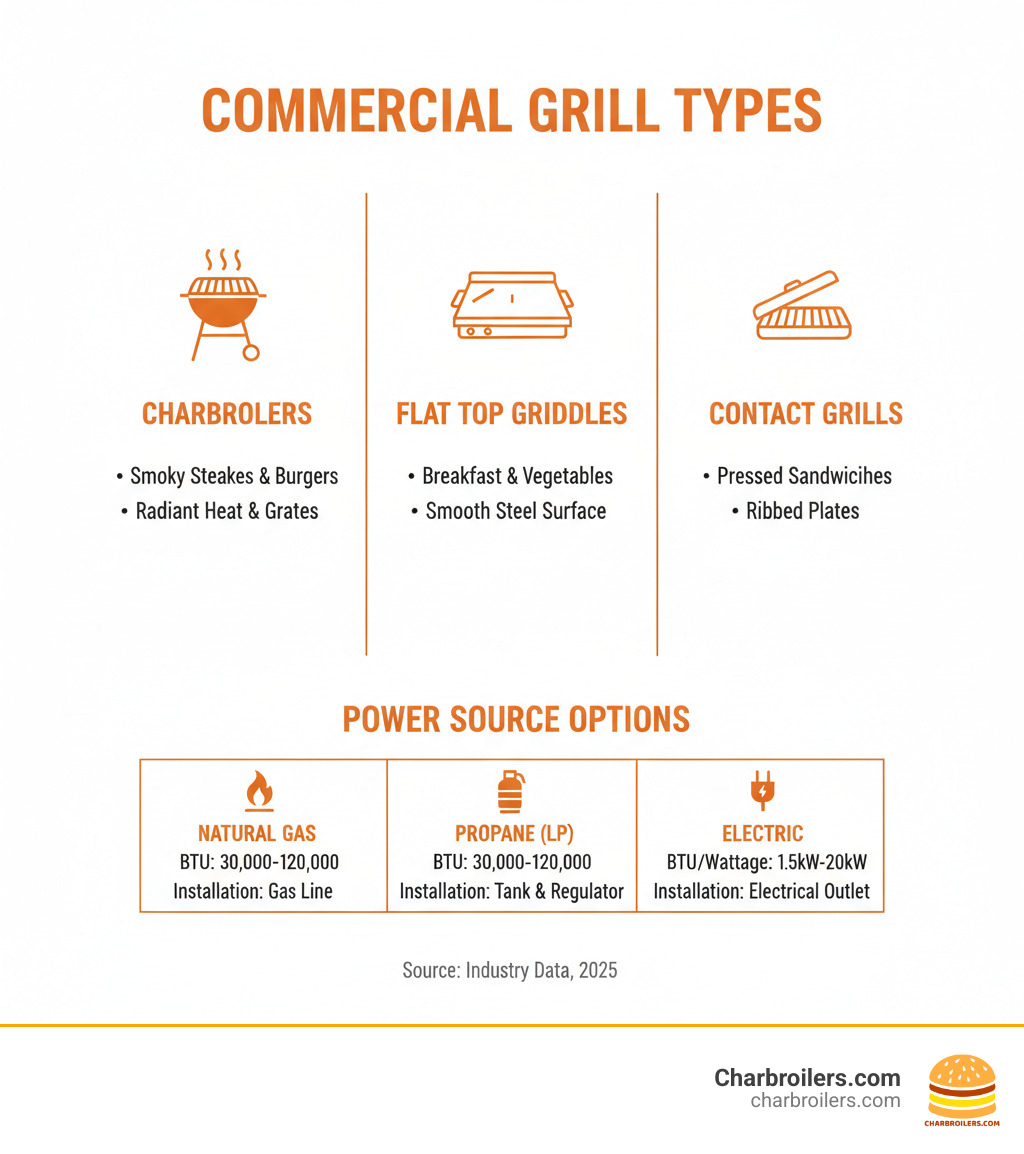
- Charbroilers - Create smoky flavor with radiant heat and distinctive sear marks
- Griddles (Flat Top Grills) - Provide even heat distribution for versatile cooking
- Panini/Contact Grills - Press and grill sandwiches with ribbed plates
- Power Sources - Natural gas, propane (LP), or electric options
- Key Features - BTU output, plate thickness, manual or thermostatic controls
The right commercial grill does more than just cook food - it becomes the heartbeat of your kitchen operation. From the perfect sear marks on a ribeye to the evenly cooked pancakes on a Sunday morning, your grill choice directly impacts food quality, kitchen workflow, and ultimately your bottom line.
As Sean Kearney from Charbroilers.com, I've spent over a decade helping restaurant owners steer the commercial kitchen equipment grill marketplace after founding The Restaurant Warehouse following my time at Amazon.com. My experience has taught me that the right grill investment can transform both your menu capabilities and operational efficiency.
Similar topics to commercial kitchen equipment grill:
- commercial gas stove 48 inch
- commercial oven with griddle
- how to clean a commercial stainless steel griddle
Decoding the World of Commercial Grills: Types and Applications
Walking into any successful restaurant kitchen, you'll likely hear the symphony of sizzling, grilling, and flipping that makes mouths water. But here's the thing – not all that delicious sound comes from the same type of grill! The world of commercial kitchen equipment grill options is wonderfully diverse, with each type bringing its own personality to your menu.
Think of it this way: choosing a grill is like picking the right tool for an artist. A charbroiler is your bold paintbrush for dramatic smoky flavors, while a griddle is your versatile palette knife that can handle just about anything you throw at it.
Charbroilers: The King of Smoky Flavor
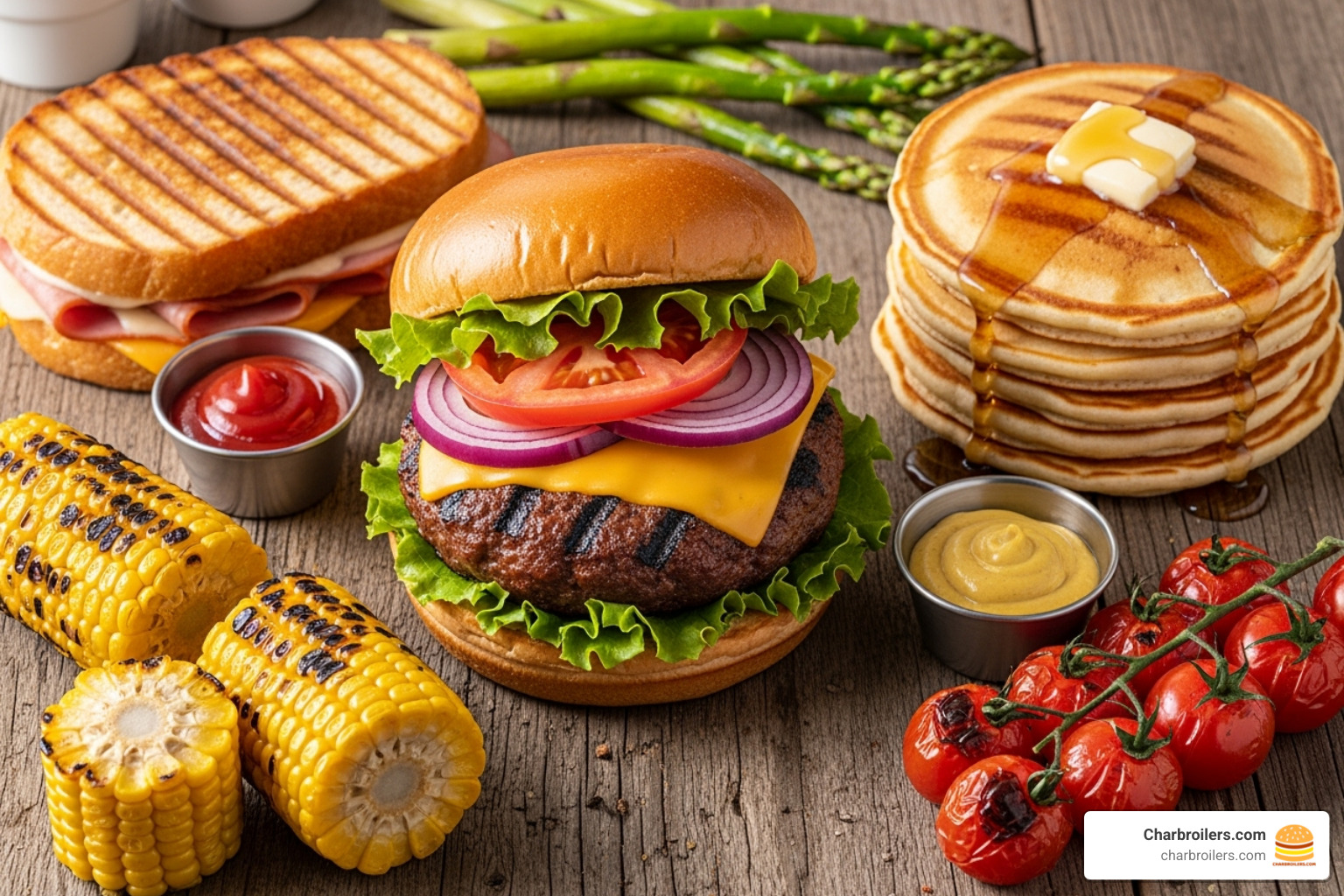
When customers see those perfect sear marks on their steak and smell that irresistible smoky aroma, they're experiencing the magic of a charbroiler. This commercial kitchen equipment grill is the showstopper of any steakhouse or burger joint, cooking food directly over intense heat that can reach up to 700°F.
The secret sauce? It's all about the radiant heat system. Most modern charbroilers use metal radiants that sit above gas burners, absorbing heat and then radiating it evenly upward to your cooking grates. This gives you consistent results without the fuss of traditional lava rock systems, though some chefs still swear by lava rock for that extra smoky punch.
Infrared charbroilers take things up another notch, delivering intense, focused heat that can sear a steak in seconds. They're the sports cars of the grill world – fast, efficient, and impressive to watch in action.
Your grates matter too. Cast iron grates give you the best heat retention and those Instagram-worthy grill marks, while stainless steel options are easier to clean and maintain. It's like choosing between a classic cast iron skillet and a modern non-stick pan – both have their place.
Want to dive deeper into the smoky world of charbroilers? Check out our guides on Gas Grill Char Broil and Fire Up Flavor with the Best Charbroiler Grills of the Year.
Griddles (Flat Top Grills): The Versatile Workhorse
If charbroilers are the dramatic stars, then griddles are the reliable best friends of the kitchen world. These flat top grills might not give you those flashy grill marks, but they'll handle just about everything else with style.
Picture this: it's Sunday morning rush, and you need to cook pancakes, scrambled eggs, hash browns, and bacon all at once. A griddle's smooth, even heat distribution makes this juggling act look effortless. The thick steel plate (usually around half an inch thick) holds heat like a dream and spreads it evenly across the entire surface.
But griddles aren't just for breakfast foods. They're masters at searing vegetables without losing them through grates, perfect for teppanyaki style cooking where the show is part of the meal, and brilliant for items that need gentle, consistent heat.
The beauty of a griddle lies in its flexibility. You can create different temperature zones across the same surface, cooking delicate fish on one side while getting a perfect crust on a burger patty on the other.
For the full scoop on these versatile workhorses, explore our resources like The Ultimate Commercial Flat Top Grill Roundup: Sizzle Up Your Menu and 48-Inch Commercial Flat Top Grill Guide: Cooking Up Success.
Specialty Grills for Unique Menus
Sometimes your menu calls for something a little different, and that's where specialty grills shine. These are the specialized tools that can set your restaurant apart from the crowd.
Panini presses and contact grills are the sandwich specialists of the grill family. With their hinged design and ribbed plates, they press down on food from both sides, creating those distinctive grooved surfaces that make paninis and grilled sandwiches so appealing. They're speed demons too – cooking from both sides cuts your cook time in half.
Clam shell grills work on the same principle but are built for higher volume. Whether you're cranking out burgers during lunch rush or need perfectly cooked chicken breasts for dinner service, these grills deliver consistent results fast.
The magic happens when the top and bottom heating elements work together, sealing in juices while creating attractive grill marks on both surfaces. It's like having a professional press that happens to cook your food to perfection.

These specialty options let you expand your menu in exciting ways. A perfectly pressed panini with those signature grill marks can become your café's signature item, while quesadillas get that perfect crispy exterior that keeps customers coming back for more.
Choosing Your Perfect Commercial Kitchen Equipment Grill
Finding the right commercial kitchen equipment grill feels a lot like dating - you need something that matches your style, fits your space, and won't break your heart (or budget) down the road. The difference is, this relationship could last 15-20 years and help you serve thousands of happy customers! Our Countertop Champions: The Ultimate Commercial Gas Grill Roundup is a great place to start exploring your options.
The key is understanding that every kitchen has unique needs. A busy steakhouse requires different equipment than a cozy breakfast café. Your commercial kitchen equipment grill should improve your menu, not limit it.
Power Source: The Gas vs. Electric Showdown
Here's where things get interesting - and where many restaurant owners get stuck. Should you go with natural gas, propane, or electric? Each option has its own personality, and choosing the wrong one can mean higher operating costs or cooking limitations.
Natural gas is like that reliable friend who's always there when you need them. If your building already has a gas line, this is usually your most economical choice. You'll get instant heat control and excellent heat recovery - crucial when you're slammed during dinner rush. The downside? If you don't have a gas line, installation can be expensive.
Propane gives you freedom. It's perfect for food trucks, outdoor catering, or any situation where you need portability. You get the same instant heat and precise control as natural gas, but you'll need to manage tank refills and storage. Our Commercial Griddle Propane Picks That Sizzle can help you explore these mobile-friendly options.
Electric grills are the plug-and-play option. No gas lines, no tanks - just consistent, even heat. They're often required in venues with strict ventilation rules. The trade-off? They can be slower to recover heat during busy periods, and your electricity bill might give you sticker shock.
For a detailed comparison of gas versus electric options, check out 36" Commercial Griddles: Gas vs. Electric and Top Picks.
| Feature | Natural Gas | Liquid Propane (LP) | Electric |
|---|---|---|---|
| Operating Cost | Generally lowest (if line exists) | Moderate (tank refills) | Varies by electricity rates, can be higher |
| Installation | Requires gas line connection | Tank connection, highly portable | Plug-and-play (with correct voltage) |
| Heat Control | Instant, precise | Instant, precise | Very even, good with thermostatic controls |
| Heat Recovery | Excellent | Excellent | Good, but can be slower than gas |
| Efficiency | High BTU output, rapid cooking | High BTU output, rapid cooking | High demand for energy-efficient models |
| Ventilation | Requires robust ventilation system | Requires robust ventilation system | May require less intense ventilation (check local codes) |
Size, Material, and Controls for Your Commercial Kitchen Equipment Grill
Once you've sorted out your power source, it's time for the fun stuff - choosing the features that will make your kitchen hum with efficiency.
Size matters more than you might think. A compact 24-inch countertop model works beautifully for smaller operations or as backup equipment. But if you're feeding hundreds of people daily, you'll want to look at 48-inch or larger freestanding units. Always measure your space twice and order once - trust me on this one!
Material choice determines how your grill performs and how long it lasts. Stainless steel construction gives you durability and easy cleaning. For cooking surfaces, cast iron is the gold standard - it holds heat beautifully and creates those perfect sear marks customers love. The catch? Cast iron needs regular seasoning to prevent rust. Our guide on How to Season Cast Iron Grates walks you through this essential maintenance step.
Plate thickness is where griddles really shine. Thicker plates (around 1-inch or 20mm) retain heat better and recover faster when you drop cold food on them. This means consistent cooking even during your busiest rushes.
The control system can make or break your cooking experience. Manual controls give experienced chefs direct flame control - perfect for charbroilers where you want different heat zones. Thermostatic controls are like having a sous chef watching the temperature for you. Set it to 350°F, and it stays there. For insights into different control options, The Ultimate Atosa Griddle Guide: Manual, Thermostatic, and Beyond covers everything you need to know.
Matching the Grill to Your Cuisine
Your menu should drive your commercial kitchen equipment grill choice, not the other way around. Think about what you're cooking most often and what equipment will help you do it better.
Steakhouses need serious firepower. You'll want a heavy-duty charbroiler with high BTU output (80,000 to 120,000 BTUs or more) and robust cast-iron grates. Your customers expect that perfect char and smoky flavor on their premium cuts.
Diners and breakfast spots thrive on versatility. A large, thick-plate griddle handles eggs, pancakes, bacon, and hash browns all at once. Add a smaller charbroiler for burgers and you've covered most of your menu.
Cafés and delis often center around sandwiches and light fare. A quality panini press or contact grill becomes your workhorse, while a small griddle handles breakfast items and seared vegetables.
The key is thinking about your peak hours and cooking volume. Can you handle your Friday night rush with your current setup? Will your new commercial kitchen equipment grill expand your menu possibilities or just replace what you're already doing?
Maximizing Your Investment: Profitability and Maintenance
Investing in a commercial kitchen equipment grill is more than just buying equipment—it's making a strategic decision that can transform your restaurant's operations and profitability. Think of it as adding a reliable team member who works tirelessly to help you serve better food faster. For financing options that help manage cash flow while you're building your kitchen arsenal, resources like Learn More Best options for Major Equipment and Supplies.Learn More can be incredibly helpful.
How a Commercial Kitchen Equipment Grill Boosts Efficiency and Profit
The right commercial kitchen equipment grill doesn't just cook food—it becomes the engine that drives your kitchen's efficiency and your restaurant's success. I've seen countless restaurant owners amazed by how much their operations improved after upgrading to the right grill.
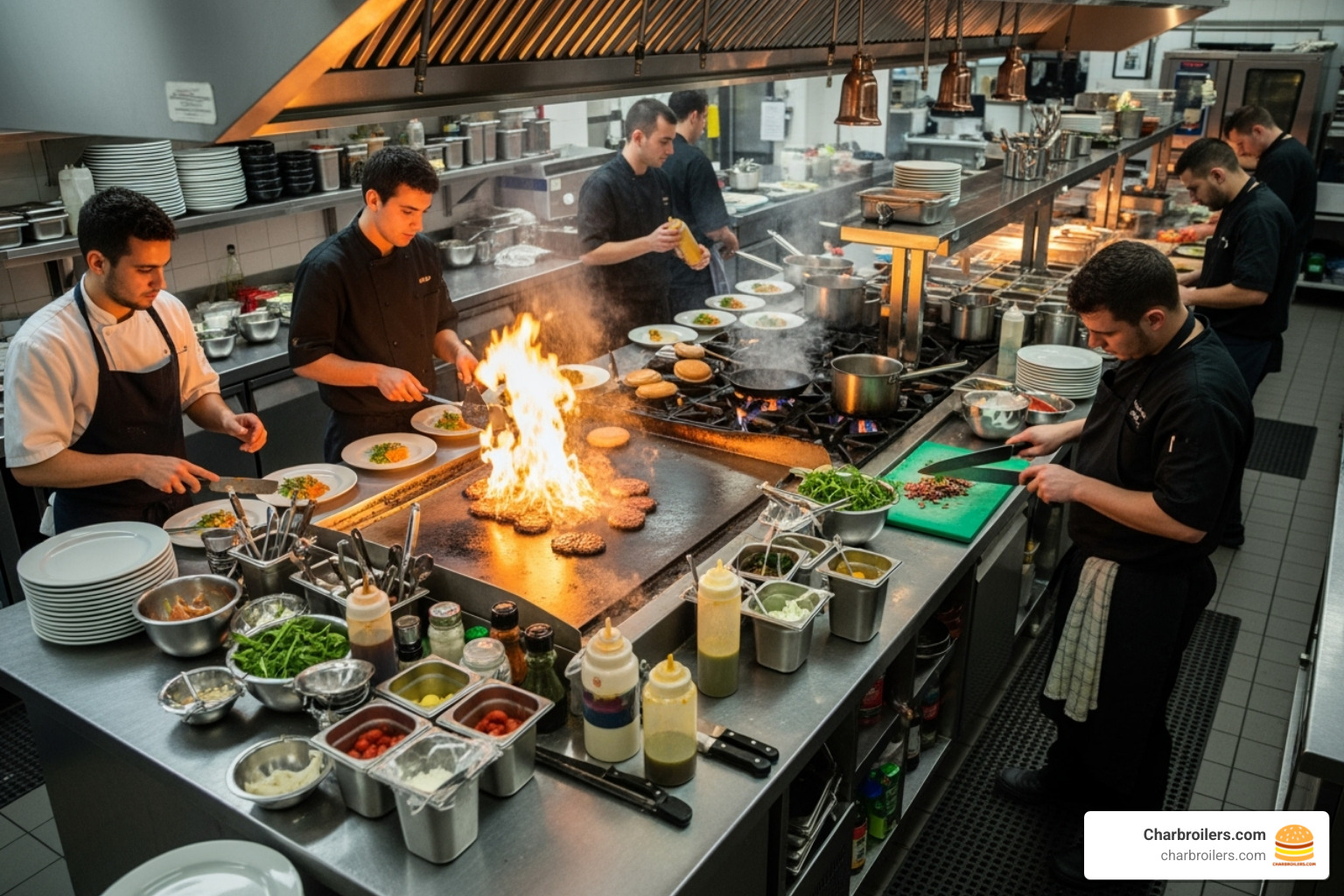
Kitchen workflow gets a major boost when you have equipment that works with your team, not against them. Picture this: your chef seamlessly moves from searing a perfect ribeye on the charbroiler to flipping pancakes on the griddle, all within arm's reach. No more running across the kitchen or waiting for equipment to heat up.
Reduced cook times mean everything in a busy kitchen. High-performance grills with excellent heat recovery don't just cook faster—they maintain their temperature even when you're slammed with orders. This translates directly into serving more customers during peak hours, which means more revenue per shift.
Menu expansion becomes possible when you have versatile equipment. A quality griddle opens doors to breakfast platters, grilled sandwiches, and even stir-fry dishes. A charbroiler lets you offer premium steaks and gourmet burgers that command higher prices. More menu options mean attracting different customer segments and increasing your average ticket size.
Consistent results are what separate good restaurants from great ones. Precise temperature controls, especially on thermostatic griddles, ensure every dish meets your standards. When customers know they'll get the same perfect meal every time, they become loyal customers who bring friends.
Food quality and customer satisfaction go hand in hand with the right equipment. That perfect sear, the smoky char, or the evenly cooked omelet isn't just about technique—it's about having equipment that performs consistently. Happy customers leave positive reviews, recommend you to others, and keep coming back.
The profitability impact is where all these benefits converge. Faster service means higher table turnover. Expanded menus attract more customers. Consistent quality builds reputation. Lower food waste from precise cooking improves margins. Your commercial kitchen equipment grill becomes an active contributor to your bottom line, not just a kitchen tool.
Essential Maintenance and Cleaning Best Practices
Your commercial kitchen equipment grill is only as good as the care you give it. Proper maintenance isn't just about following health codes—it's about protecting your investment and ensuring peak performance for years to come. Trust me, a little daily attention saves you from expensive repairs down the road.
Daily cleaning should become as routine as opening your doors. For griddles, scrape off food residue with a griddle scraper while the surface is still warm. Pour a small amount of water onto the surface (if your manufacturer recommends it) to loosen stubborn bits, then scrub with a griddle brick or pad. Finish by wiping clean and applying a thin layer of cooking oil to protect and season the surface. Our comprehensive guide, The Ultimate Guide to Cleaning a Commercial Stainless Steel Griddle, walks you through every step.
For charbroilers, use a wire brush to clean grates after each use, especially while they're still warm. Remove the grates and clear any debris from underneath, including radiants or lava rocks. Don't forget to empty and clean the grease tray regularly—this prevents dangerous flare-ups and keeps your kitchen sanitary. Cast iron grates need special attention, which you'll find detailed in How to Clean Cast Iron Grill.
Deep cleaning on a weekly or monthly schedule keeps your equipment running like new. Remove griddle plates when possible and thoroughly clean all components, including sides and backsplashes. For charbroilers, take out all grates, radiants, or lava rocks and clean the entire interior, including burners and firebox. Replace worn lava rocks or damaged radiants promptly.
Seasoning cast iron is an art that pays dividends. After cleaning, apply a thin, even layer of high-smoke-point oil like flaxseed or grapeseed oil, then heat until it smokes. Let it cool and repeat several times to build that perfect non-stick surface. Learn the complete process in How to Season Cast Iron Grates.
Removing rust doesn't have to be a nightmare if you catch it early. Our guide on How to Remove Rust from Grill shows you exactly how to restore your equipment to like-new condition.
Safety checks should be part of your routine. Check gas lines for leaks using soapy water, inspect electrical cords for fraying, and ensure your ventilation system is working properly. A well-maintained grill is a safe grill that extends equipment life and keeps your team protected.
By following these practices, your commercial kitchen equipment grill will deliver consistent performance, maintain food quality, and provide the longevity that makes your investment worthwhile. Every minute spent on proper maintenance saves hours of downtime and keeps your kitchen running smoothly.
Frequently Asked Questions about Commercial Grills
Choosing the right commercial kitchen equipment grill for your restaurant can feel overwhelming, especially with so many options and technical specifications to consider. Over the years, I've fielded countless questions from restaurant owners trying to make the best decision for their kitchens. Here are the most common questions that come up, along with straightforward answers to help guide your choice.
What's the difference between a charbroiler and a griddle?
Think of this as the difference between outdoor grilling and cooking on your stovetop - both are fantastic, but they create completely different culinary experiences.
A charbroiler cooks your food on raised grates, allowing the heat source (gas flames or electric elements) to directly contact the food through the grates. This setup lets fat and juices drip away from the food, creating those signature grill marks and that beloved smoky flavor we associate with barbecue. The direct heat and flame contact give steaks their perfect sear, burgers their char, and vegetables those beautiful caramelized edges.
A griddle, on the other hand, features a completely flat cooking surface that heats evenly across the entire plate. Food cooks through direct contact with this heated surface, and all those flavorful juices stay right where they belong - with your food. This makes griddles absolutely perfect for breakfast items like pancakes and eggs, delicate fish that might fall through grill grates, and anything that benefits from even, consistent heat distribution.
The choice really comes down to what flavors and textures you want to achieve. Charbroilers excel at smoky flavors and distinctive grill marks, while griddles shine with even searing and versatile cooking capabilities.
How many BTUs does my commercial grill need?
BTU stands for British Thermal Unit, which is simply a way to measure how much heat your gas-powered grill can produce. Think of it like horsepower for your car - more BTUs generally mean more cooking power, but the right amount depends on how you'll use it.
For standard-duty operations like smaller cafes or restaurants where grilling is occasional, BTU ranges from 40,000 to 60,000 typically provide plenty of power. These work great when you're grilling burgers for lunch rushes or preparing smaller quantities of grilled items.
Medium-duty grills with 60,000 to 80,000 BTUs step up the game for busier kitchens. If your grill runs consistently during peak hours or you're cooking larger quantities, this range offers the heat recovery you need to maintain consistent temperatures even when cold food hits the grates.
Heavy-duty operations - think busy steakhouses, high-volume diners, or anywhere the grill never stops - need 80,000 BTUs or higher. Some commercial units push well over 120,000 BTUs, delivering the intense heat required for continuous, high-volume cooking without temperature drops.
The key is matching your BTU output to your actual cooking volume and menu requirements. A grill that's underpowered for your needs will struggle during busy periods, while one that's overpowered wastes energy and money.
Is a gas or electric grill better for my restaurant?
This question doesn't have a one-size-fits-all answer because both gas and electric commercial kitchen equipment grill options have their strengths. The best choice depends on your specific kitchen setup, menu needs, and operational preferences.
Gas grills - whether natural gas or propane - offer instant heat control and excellent responsiveness. Turn the knob, and you immediately get more or less heat. This makes them favorites among experienced chefs who want precise, immediate control over their cooking temperatures. Gas also typically provides superior heat recovery, meaning when you place cold food on the grill, it bounces back to cooking temperature quickly. If you already have natural gas lines, operating costs are usually lower, while propane offers excellent portability for food trucks or outdoor events.
Electric grills bring their own advantages, particularly incredibly even heat distribution and easier installation - often just requiring the right electrical outlet. They're becoming increasingly sophisticated, with precise thermostatic controls that maintain exact temperatures automatically. Electric grills also produce less ambient heat in your kitchen, which can reduce cooling costs and make for a more comfortable working environment.
The trade-offs come down to gas offering raw power and immediate responsiveness versus electric providing precision and convenience. Consider your kitchen's existing infrastructure, your menu's demands, local utility costs, and your staff's preferences. Modern electric grills have closed much of the performance gap, making either choice viable for most operations.
Conclusion
Choosing the right commercial kitchen equipment grill might feel overwhelming at first, but think of it as selecting the perfect partner for your culinary journey. Throughout this guide, we've walked together through the sizzling world of commercial grills, from the smoky charbroiler that creates those Instagram-worthy sear marks to the versatile griddle that can handle everything from pancakes to perfectly pressed paninis.
The beauty lies in understanding that each grill type serves a unique purpose in your kitchen symphony. Whether you're running a busy steakhouse that demands high-BTU charbroilers or a cozy café where a specialty panini press becomes your signature equipment, the right choice transforms your kitchen from good to exceptional.
Your commercial kitchen equipment grill investment goes far beyond the initial purchase price. We've explored how the right grill becomes a profit-generating powerhouse, improving your kitchen workflow, expanding your menu possibilities, and most importantly, creating those consistent, delicious results that keep customers coming back for more.
The technical details matter too - from choosing between gas versus electric power sources to understanding why plate thickness makes a difference in your griddle's performance. But don't let the specifications intimidate you. Every BTU rating, every control type, and every material choice ultimately serves one goal: helping you create amazing food efficiently and profitably.
Proper maintenance isn't just about keeping your equipment clean (though that's crucial). It's about protecting your investment and ensuring that perfect sear or evenly cooked breakfast keeps happening day after day, year after year. A well-maintained grill is a reliable partner that won't let you down during the dinner rush.
At Charbroilers.com, we've spent years helping restaurant owners like you steer these decisions. Our experience has taught us that there's no one-size-fits-all solution, but there is always a perfect match for your specific needs, space, and culinary vision.
Ready to take the next step? Explore our comprehensive guide to commercial charbroilers for your restaurant and find how the right grill can transform your kitchen operations. Let's turn up the heat and get your kitchen sizzling!