

Grill Your Way to Profit: Choosing the Best Commercial Gas Char Grill
Why Commercial Gas Char Grills Are Essential for Restaurant Success
Gas char grills are a cornerstone of profitable commercial kitchens, delivering the signature seared flavors that define great restaurant cooking. These workhorses combine the convenience of gas with the ability to create coveted char marks and smoky tastes.
For commercial use, look for grills with 30,000-40,000+ BTUs, cast iron or stainless steel grates, and independent burner controls. Sizing ranges from 18-24" countertop models to 36-60" freestanding units, making them ideal for steakhouses, burger joints, and cafes.
The right gas char grill transforms kitchen operations. Unlike charcoal, gas models heat up in minutes, ensuring faster ticket times during peak hours. They also offer precise temperature control, allowing chefs to create different heat zones for searing steaks and gently cooking chicken simultaneously. This consistency is key to driving profits.
I'm Sean Kearney from Charbroilers.com. With over a decade of experience, I've seen how the right gas char grills can lift food quality and boost bottom-line results for hundreds of restaurants.
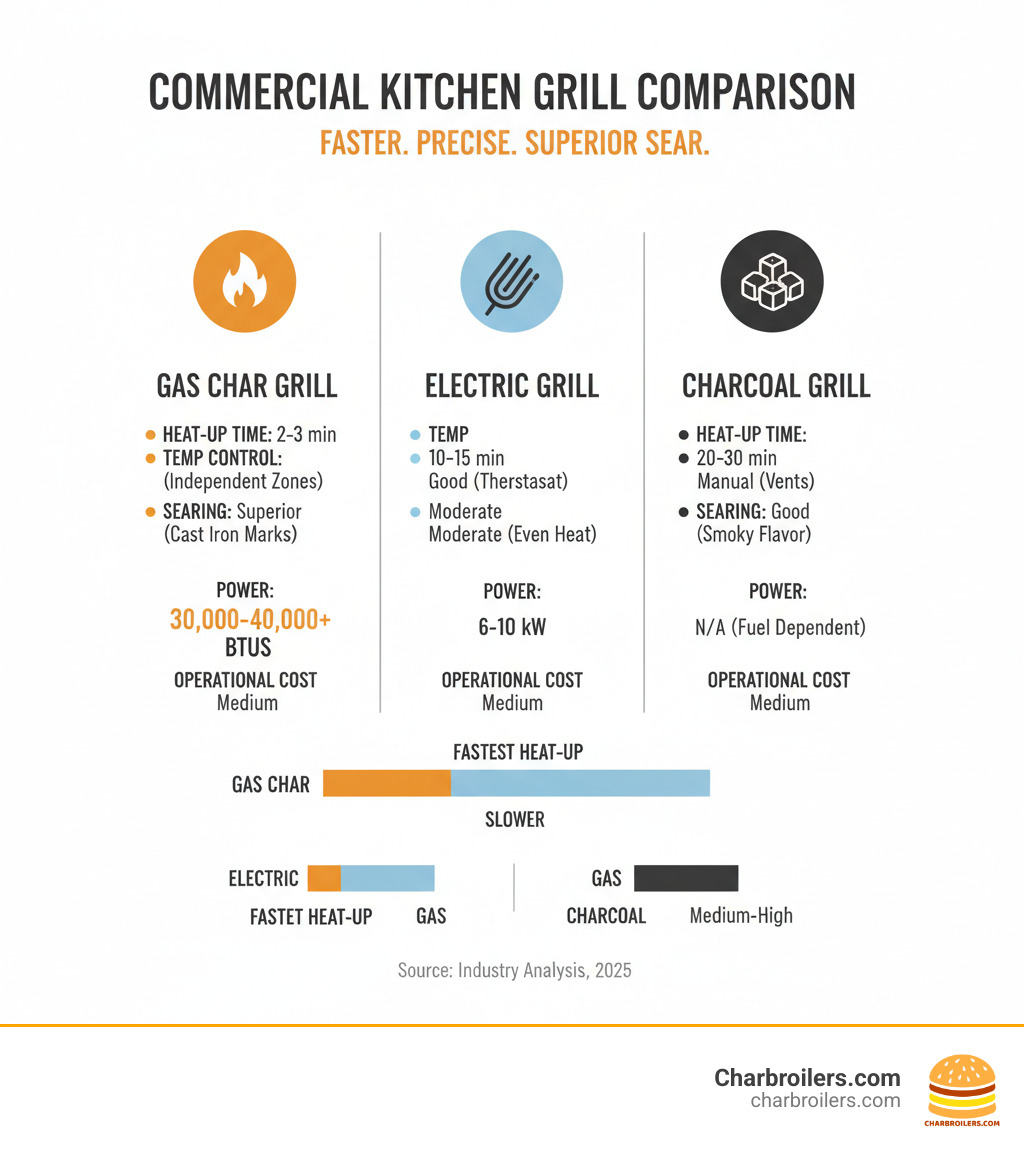
Simple guide to gas char grills terms:
Understanding the Core Components of Commercial Gas Char Grills
Commercial gas char grills are precision-engineered workhorses. Every component, from the burners to the body, is designed for performance, durability, and efficiency to handle a busy service.
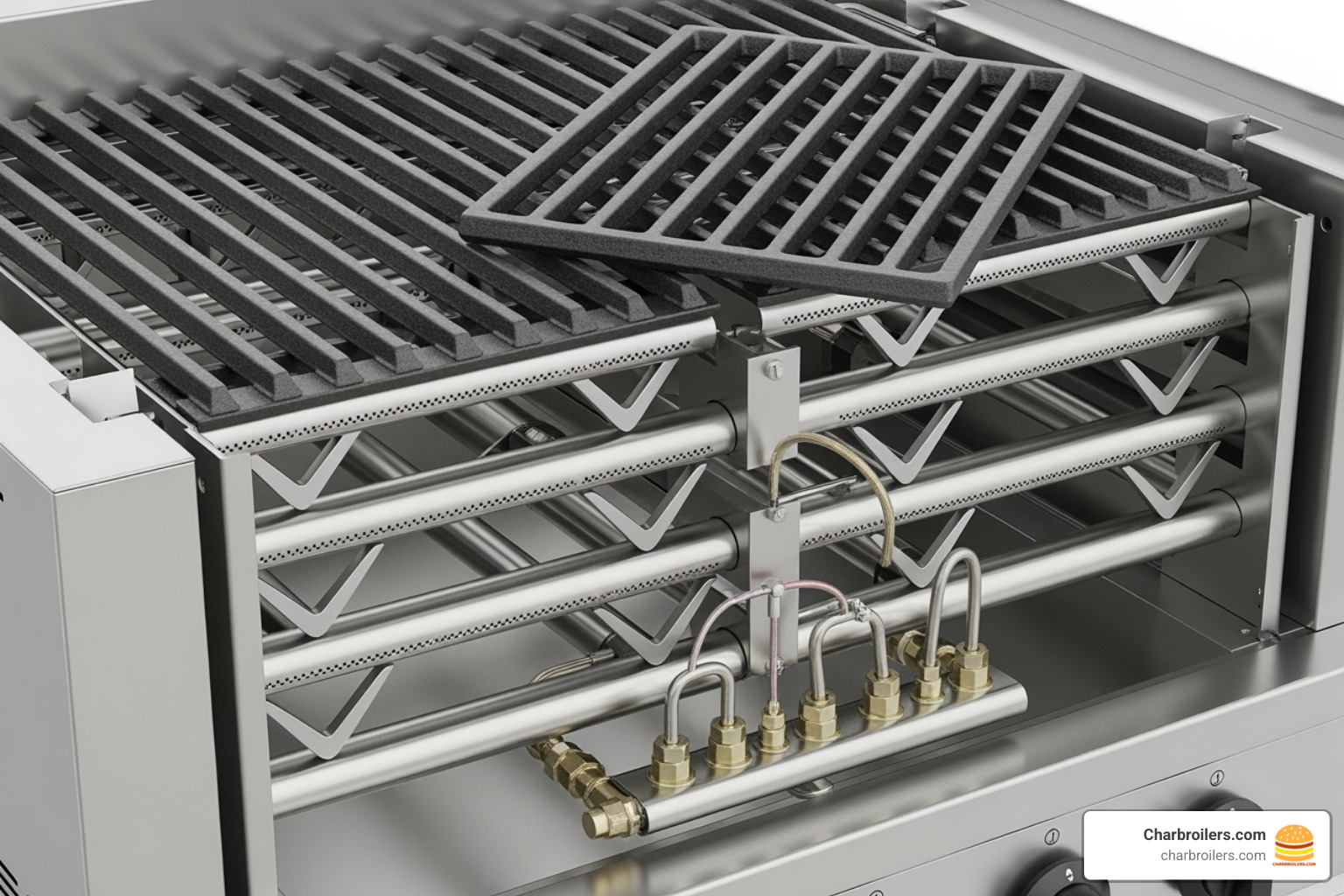
The quality of these parts determines the grill's heat distribution and longevity. For a detailed breakdown, see our guide on The Right Parts for the Perfect Char Commercial Charbroiler Components.
Burner Power and Control (BTUs)
BTU output measures a grill's heating power, with commercial gas char grills typically offering 30,000 to 40,000+ BTUs per burner. However, power is useless without control. Independent controls are essential, allowing chefs to create multiple heat zones on a single grill surface. This means you can sear a steak at high heat on one side while gently cooking fish on the other.
Quality stainless steel burners provide the even heating necessary for consistent results, eliminating hot spots. This precision temperature control is key to building a reputation for perfectly cooked food. For a quick refresher on the unit itself, see British thermal unit.
Grate Material and Design
The grates directly impact your food's final quality.
- Cast iron grates excel at heat retention and creating superior sear marks. They require regular seasoning to prevent rust, a process detailed in our guide on How to Season Cast Iron Grates.
- Stainless steel grates are extremely durable, easy to clean, and offer excellent rust resistance, making them ideal for high-volume kitchens.
The right choice depends on balancing searing capability with maintenance requirements.
Construction and Durability
Commercial kitchen equipment must be built to last. A stainless steel body is standard for gas char grills, as it resists grease, heat, and corrosion while being easy to clean. Welded construction is superior to bolted frames, ensuring stability and longevity under heavy use.
Investing in commercial-grade materials means your grill will be a reliable asset, not a repair liability. Learn more about the engineering behind these tools in our article, What is a Charbroiler Anyway.
Gas vs. Other Fuels: A Commercial Kitchen Comparison
The fuel source for your char grill affects daily operations, costs, and flavor. The choice between gas, charcoal, and electric shapes your kitchen's workflow and the final product.
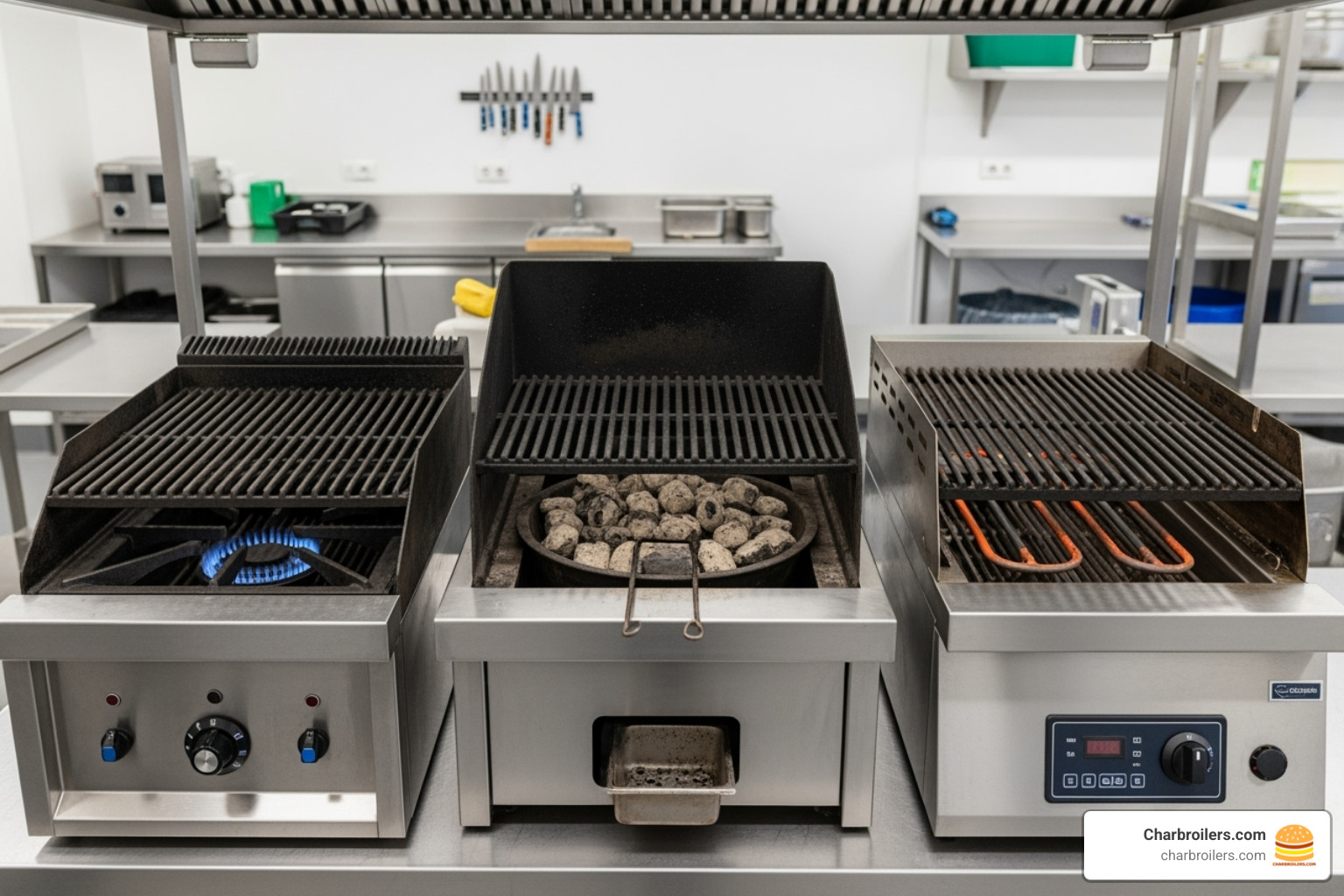
If you choose gas, it's also important to understand the differences between Natural Gas vs Propane, as each has unique installation and cost considerations.
The Case for Gas
Most commercial kitchens prefer gas char grills for their blend of performance and convenience.
- Speed: Gas grills reach full heat in minutes, not the 20-30 minutes required for charcoal. This rapid quick startup is crucial for reducing ticket times during peak hours.
- Control: Consistent temperature is simple to achieve with knob controls. Independent burners allow for multiple heat zones, enabling versatile cooking on one surface.
- Convenience: Gas offers on-demand heat without the prep or extensive cleanup of charcoal. This makes them ideal for high-volume cooking with less cleanup.
Charcoal and Electric Alternatives
While gas is the standard, other fuels have niche applications.
- Charcoal provides a superior smoky flavor but is labor-intensive and often subject to strict indoor use restrictions and ventilation codes. It is best suited for specific menu items rather than all-day use.
- Electric grills are a clean, safe option where gas is unavailable or ventilation is limited. However, they often lack the high searing temperatures and authentic char-grilled flavor of gas or charcoal.
Commercial Grill Fuel Comparison
| Feature | Gas Char Grills | Charcoal Grills | Electric Grills |
|---|---|---|---|
| Heat-up Time | Fast (minutes) | Slow (20-30 minutes) | Moderate (5-10 minutes) |
| Temp Control | Excellent (precise, independent zones) | Moderate (requires skill, less precise) | Good (digital controls) |
| Flavor | Excellent (seared, char flavor, can add wood chips) | Superior (deep smoky, traditional char) | Good (clean, no char flavor unless added) |
| Operating Cost | Moderate (depends on gas prices, efficient) | Moderate (depends on charcoal cost, less efficient) | Moderate to High (depends on electricity rates) |
| Maintenance | Moderate (grease management, grate cleaning) | High (ash removal, extensive cleaning) | Low (easy to wipe down, minimal residue) |
| Best Use Case | High-volume, versatile menus, consistent charring | Niche menus, specific smoky flavor, lower volume | Indoor, low-volume, minimal ventilation, specific uses |
Key Features That Boost Performance and Versatility
Modern gas char grills offer advanced features that maximize kitchen output and menu diversity. These innovations turn basic grilling into precision cooking. For a comprehensive look, see our Countertop Champions The Ultimate Commercial Gas Grill Roundup.
Specialized Burners and Sear Stations
Specialized burners are engineered for specific tasks to deliver restaurant-quality results.
- Infrared burners provide intense, radiant heat for high-heat searing, creating a perfect crust on steaks while keeping the interior juicy.
- Dedicated sear stations are specialized zones that reach scorching temperatures quickly. Advanced systems are designed to deliver juicier results and reduce flare-ups, ensuring consistent, controlled charring.
These burners help create flavor-packed food and expand menu possibilities.
Choosing the Right Size and Configuration for Gas Char Grills
Sizing your gas char grill correctly is about matching the equipment to your kitchen's workflow and demand.
- Cooking area should align with your peak menu volume. A busy steakhouse needs a larger surface (e.g., 36-60 inches) than a small cafe.
- Footprint is also key. Countertop models (18-24 inches) are excellent for adding grilling capacity in a small kitchen layout, while freestanding units are built for high-volume operations.
A properly sized grill prevents bottlenecks and optimizes your cooking line.
Smart Technology and Add-Ons
Add-ons and smart technology expand a grill's utility beyond basic functions.
- Side burners provide extra space for preparing sauces or side dishes.
- Griddle tops offer incredible versatility, allowing you to grill on one side and cook pancakes or onions on the other. This is ideal for maximizing small spaces and diverse menus. Learn more in our Commercial Gas Griddle guide.
- Smart controls offer precise temperature monitoring, reducing guesswork.
- Rotisserie kits enable you to cook whole chickens and roasts, changing your grill into a multi-functional station.
Top Commercial Gas Char Grill Models for Your Business
Choosing the right commercial gas char grill is an investment in your kitchen's efficiency and profitability. Whether you run a high-volume steakhouse or a compact food truck, there is a model designed for your specific operational needs.
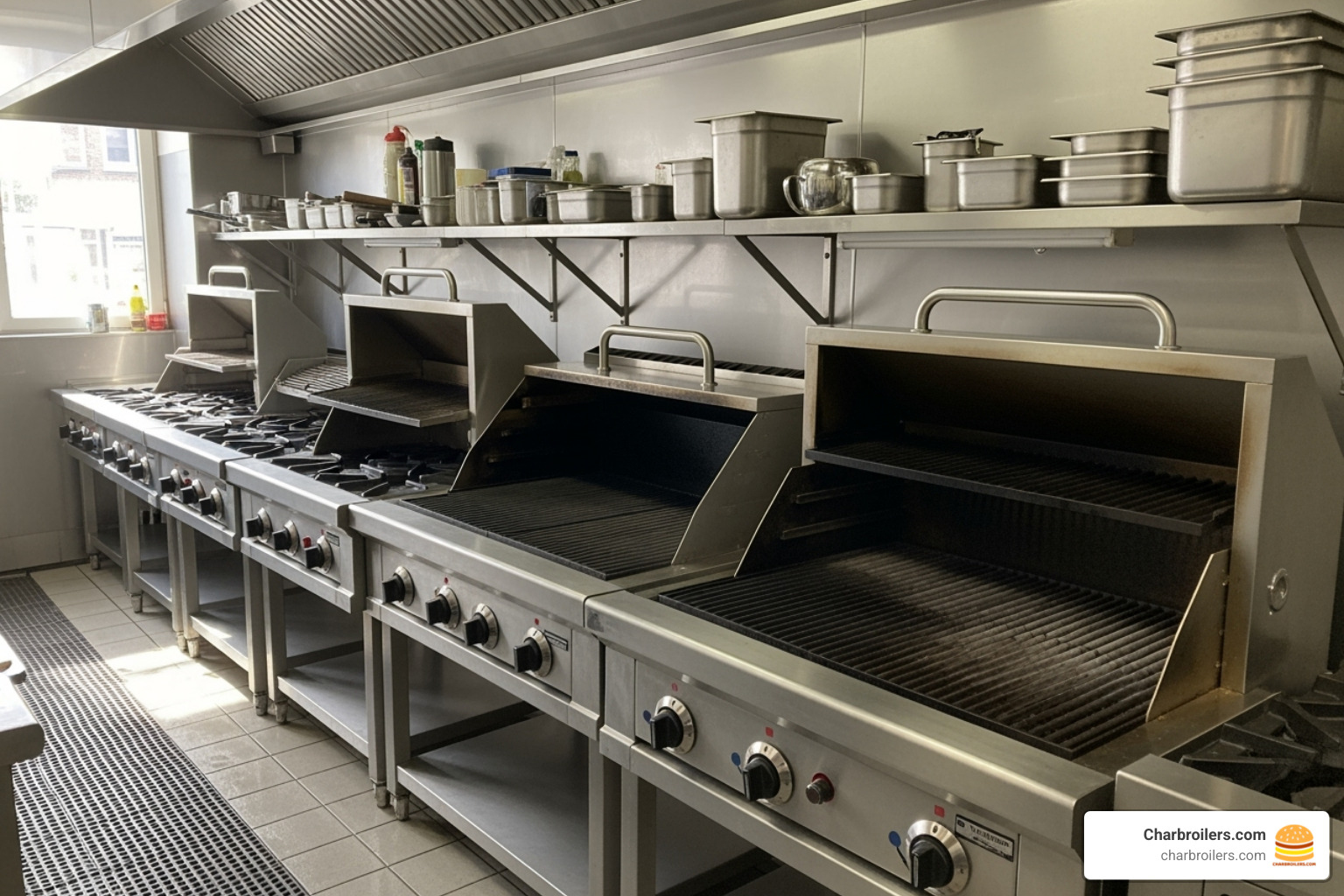
The High-Volume Workhorse
Ideal for steakhouses and busy restaurants, these heavy-duty units are built for continuous use.
- Features: A large cooking surface (36-60 inches), multiple burners with independent controls, and high BTU output (30,000+ per burner).
- Benefits: These grills handle a full dinner rush, maintain consistent heat for perfect searing, and recover temperature quickly. Robust stainless steel construction and efficient grease management ensure longevity and safety.
The Compact Countertop Powerhouse
Perfect for cafes, food trucks, and smaller kitchens where space is a premium.
- Features: A space-saving design (18-24 inches), powerful high-BTU burners, and commercial-grade durability.
- Benefits: These units deliver powerful performance and quick heat-up in a small footprint. They offer an efficient way to add char-grilled items to your menu without a major kitchen overhaul.
The Versatile Combo Grill
For maximum flexibility, combo units combine a gas char grill with a flat-top griddle surface.
- Features: Dual-functionality cooking surfaces in a single footprint.
- Benefits: This design provides incredible menu flexibility, allowing you to handle breakfast, lunch, and dinner from one station. It's an ideal solution for maximizing small spaces and improving kitchen workflow. Explore more options in our guide on Commercial Grills Power Up Your Kitchen with Top Gas Electric Models.
Maintenance, Safety, and Long-Term Value
Proper care for your gas char grill is essential for consistent performance, longevity, and a positive return on investment. A small amount of daily effort prevents costly repairs and downtime.
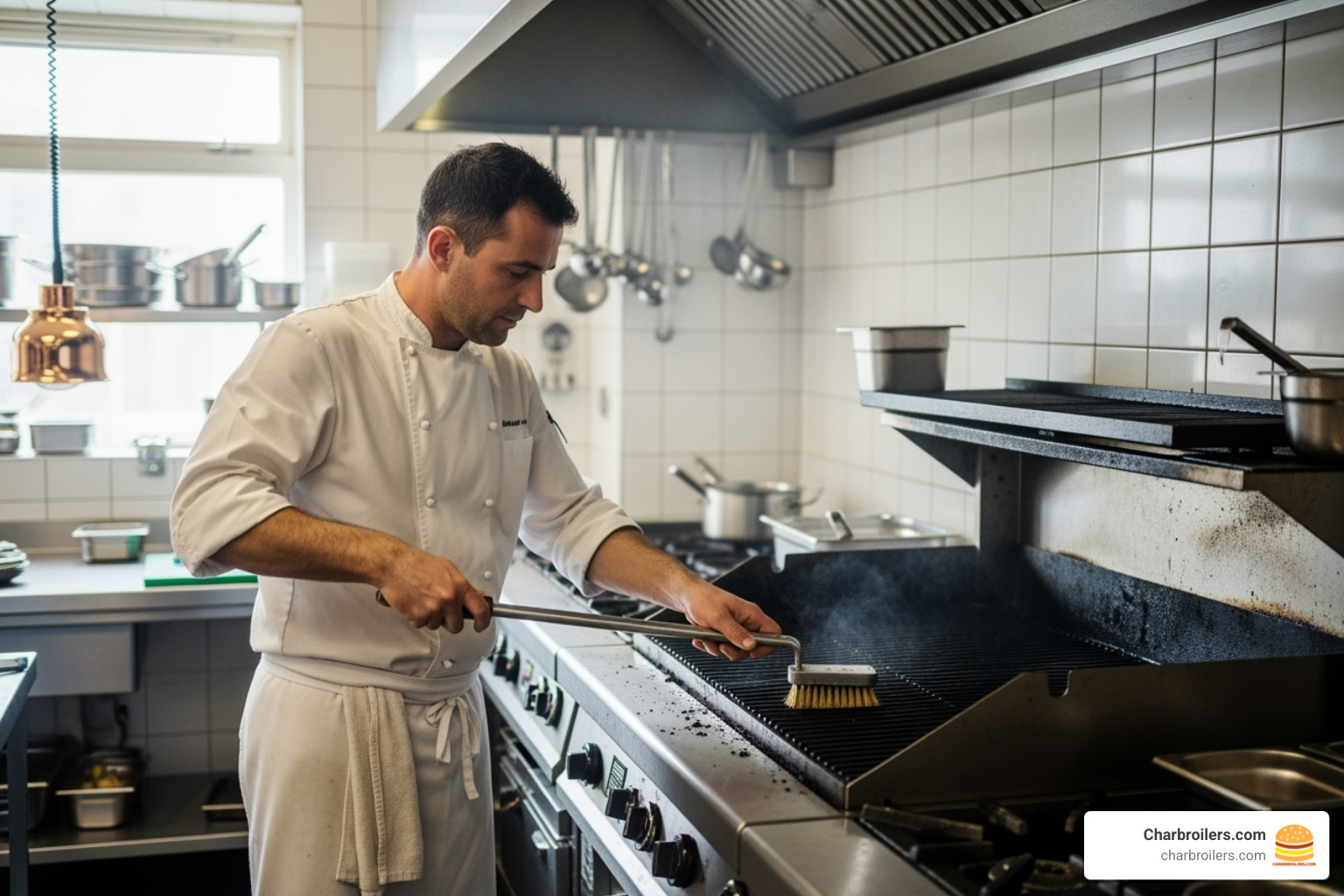
Well-maintained grills cook better, last longer, and operate more safely. Poor maintenance leads to uneven cooking, fire hazards, and equipment failure.
Essential Maintenance for Your Gas Char Grills
A consistent maintenance routine is key.
- Daily Cleaning: After each service, scrape and clean the grates to remove food residue, which can cause hot spots and harbor bacteria. Crucially, empty and clean all drip trays and grease channels to prevent fire hazards.
- Weekly Deep Cleaning: Remove and wash the grates, clean the burner covers, and check burner ports for clogs. For detailed instructions, follow our guide on How to Clean Your Grill.
- Preventing Rust: Cast iron grates require regular seasoning (a light coating of oil) to prevent rust and maintain their non-stick properties.
Safety and Ventilation Requirements
Gas char grills produce intense heat and smoke, making safety measures non-negotiable.
- Ventilation: A commercial-grade exhaust hood is required to remove heat, smoke, and grease-laden vapors, ensuring a safe working environment.
- Fire Safety: A fire suppression system must be installed above all commercial cooking equipment.
- Installation: Always use certified professionals for proper installation to comply with local fire and building codes.
- Training: Ensure all staff are trained on safe operation, including lighting, temperature management, and emergency shut-off procedures. For more on safety, see our guide Getting Fired Up About Commercial Charbroilers.
Understanding Warranties
Warranty coverage protects your investment. Pay attention to the duration for different components:
- Burner Warranties: Typically 1-10 years. A longer warranty (5+ years) often indicates superior quality.
- Firebox Coverage: Usually 2-10 years, reflecting the unit's structural durability.
- Parts Warranties: Often 1 year for items like igniters and valves.
Look for suppliers like Charbroilers.com that offer long-term support and replacement parts beyond the warranty period.
Frequently Asked Questions about Commercial Gas Grills
Here are answers to the most common questions restaurant owners ask when choosing a commercial gas char grill.
What are the most important features to look for in a commercial gas char grill?
Focus on features that directly impact performance, durability, and ease of use.
- Independent Burner Controls: Essential for creating multiple heat zones for cooking different foods simultaneously.
- Grate Material: Choose between cast iron for superior heat retention and searing, or stainless steel for durability and easy cleaning.
- Stainless Steel Construction: Ensures the grill can withstand the demands of a commercial kitchen, resisting heat, grease, and corrosion.
- BTU Output: Look for 30,000+ BTUs per burner, but prioritize even heat distribution over raw numbers.
- Grease Management: An efficient system with removable drip trays is crucial for safety and cleanup.
- Sizing: Select a size that matches your menu volume and kitchen layout.
How many BTUs do I need for a commercial charbroiler?
While 30,000 to 40,000+ BTUs per burner is a good benchmark for commercial gas char grills, heat flux and even heat distribution are more important than the raw BTU number. A well-designed burner spreads heat uniformly, eliminating hot and cold spots and ensuring consistent cooking results. Focus on the quality of the burner design, not just the highest BTU rating. Your BTU needs should also be matched to your menu; searing thick steaks requires more sustained heat than grilling delicate vegetables.
How do I prevent flare-ups on a gas char grill?
Flare-ups are caused by grease igniting on hot surfaces. Preventing them is key to quality cooking.
- Grease Management: Regularly clean grease trays and channels to prevent overflow.
- Burner Protection: Heat tents or "flavorizer bars" vaporize drippings into smoke, preventing them from hitting the open flame.
- Food Prep: Trim excess fat from meats before grilling.
- Temperature Control: Use cooler zones on your grill to move food away from a flare-up if one occurs.
- Regular Cleaning: Scrape grates after each use and preheat the grill properly to burn off any residue.
Conclusion
Choosing the right commercial gas char grill is a critical decision that impacts your restaurant's efficiency, flavor profile, and profitability. As we've covered, the key advantages of gas are speed, precise temperature control, and operational convenience.
From high-volume workhorses to compact countertop units and versatile combo grills, there is a model designed for every kitchen's needs. Prioritize features like independent burner controls, durable stainless steel construction, and effective grease management. Proper maintenance, as detailed in our How to Clean Your Grill guide, is essential for safety and longevity.
A quality gas char grill delivers the consistent, perfectly seared results that customers remember. By investing in the right equipment for your menu and volume, you are investing in your restaurant's success.
Ready to find the perfect grill for your business? Explore our Ultimate Guide to Commercial Charbroilers for Your Restaurant for more expert insights.