

Commercial Charbroilers: Which Grill Will Sizzle for Your Business?
Why a Commercial Charbroiler Grill is Essential for Your Kitchen
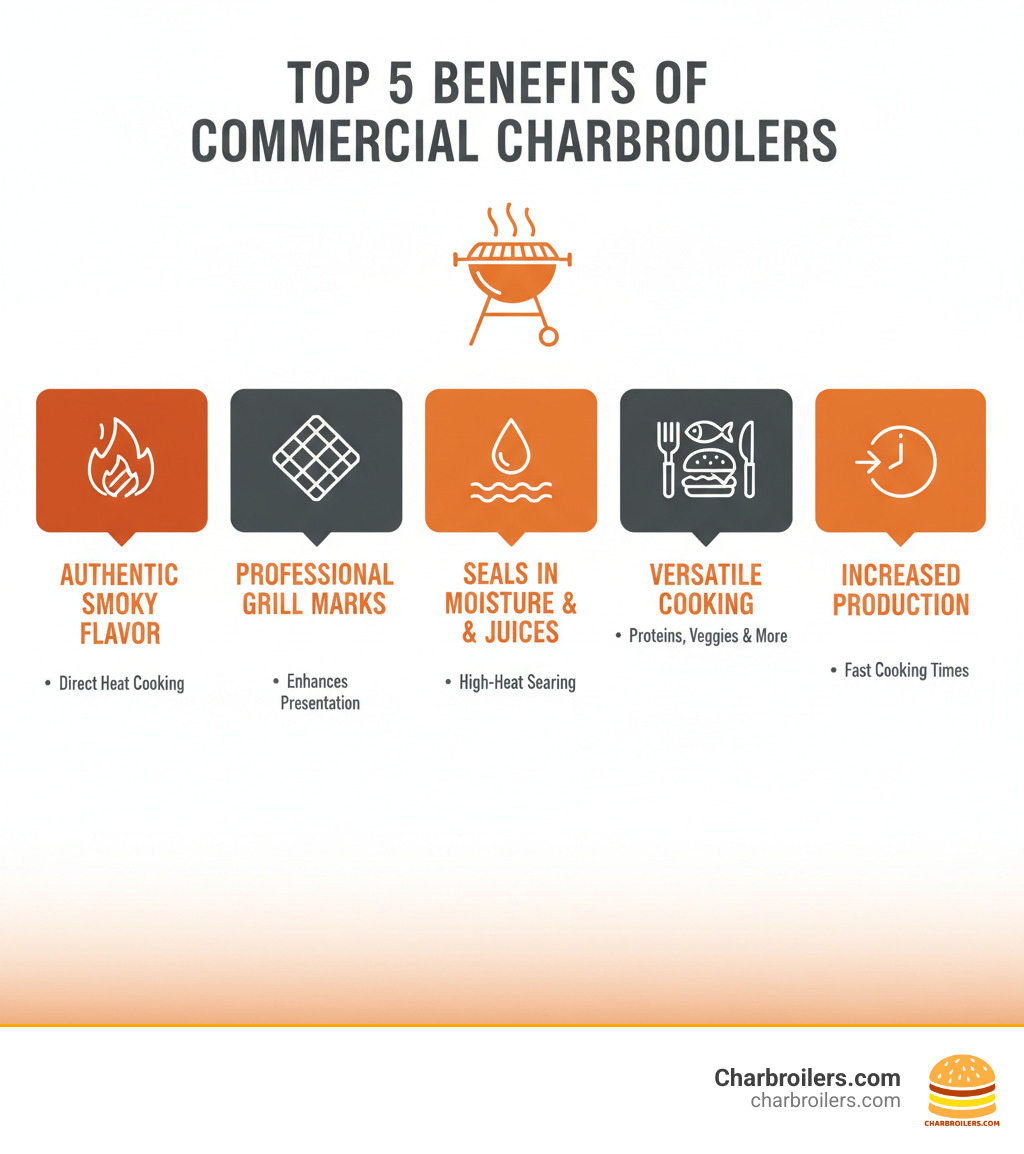
A commercial charbroiler grill is a professional cooking appliance that uses grates positioned over a direct heat source to cook food quickly while creating distinctive char marks and smoky flavor. Here's what makes them essential:
Key Benefits:
- Signature flavor: Creates authentic smoky, char-grilled taste customers crave
- Visual appeal: Produces enticing diamond grill marks on steaks, burgers, chicken, and vegetables
- Moisture retention: High heat sears food quickly, locking in juices for tender results
- Kitchen versatility: Handles breakfast, lunch, and dinner items from proteins to sandwiches
- Speed: Cooks food faster than conventional methods for high-volume service
Best For Cooking:
- Steaks and burgers
- Chicken breasts and thighs
- Fish fillets and seafood
- Vegetables and sandwiches
You're facing a tough decision. Your menu demands that perfect char-grilled flavor, but your kitchen space is tight, your budget is tighter, and you need equipment that won't quit during dinner rush. Commercial charbroilers deliver the smoky taste and professional grill marks that lift your dishes from ordinary to memorable—but only if you choose the right one.
The wrong charbroiler means wasted space, higher gas bills, inconsistent cooking, and frustrated staff struggling with cleanup. The right one becomes your kitchen workhorse, cranking out perfectly seared proteins meal after meal while fitting your space and budget constraints.
I'm Sean Kearney, founder of Charbroilers.com with over a decade helping restaurants find the perfect commercial charbroiler grill for their operations. Whether you're running a food truck or a high-volume steakhouse, I'll walk you through exactly what you need to know to make the smart choice.
Essential commercial charbroiler grill terms:
Decoding the Types: Finding the Right Charbroiler Model
Here's the truth: not every commercial charbroiler grill fits every kitchen. The countertop model that's perfect for your food truck would be laughably small in a busy steakhouse. The floor model that dominates a high-volume restaurant would never squeeze into a ghost kitchen.
Your space, menu, and cooking volume determine which charbroiler becomes your kitchen's MVP. Understanding the different configurations and heat sources isn't just technical knowledge—it's the foundation for making a smart investment that serves you for years.
If you're just getting started with charbroilers, our guide What the Heck is a Charbroiler Anyway? breaks down the basics. For a broader perspective on your grilling options, check out Commercial Grills: Power Up Your Kitchen with Top Gas & Electric Models.
Countertop, Floor, and Modular Models
The physical design of your charbroiler determines how it fits into your kitchen—and whether it actually works for your operation.
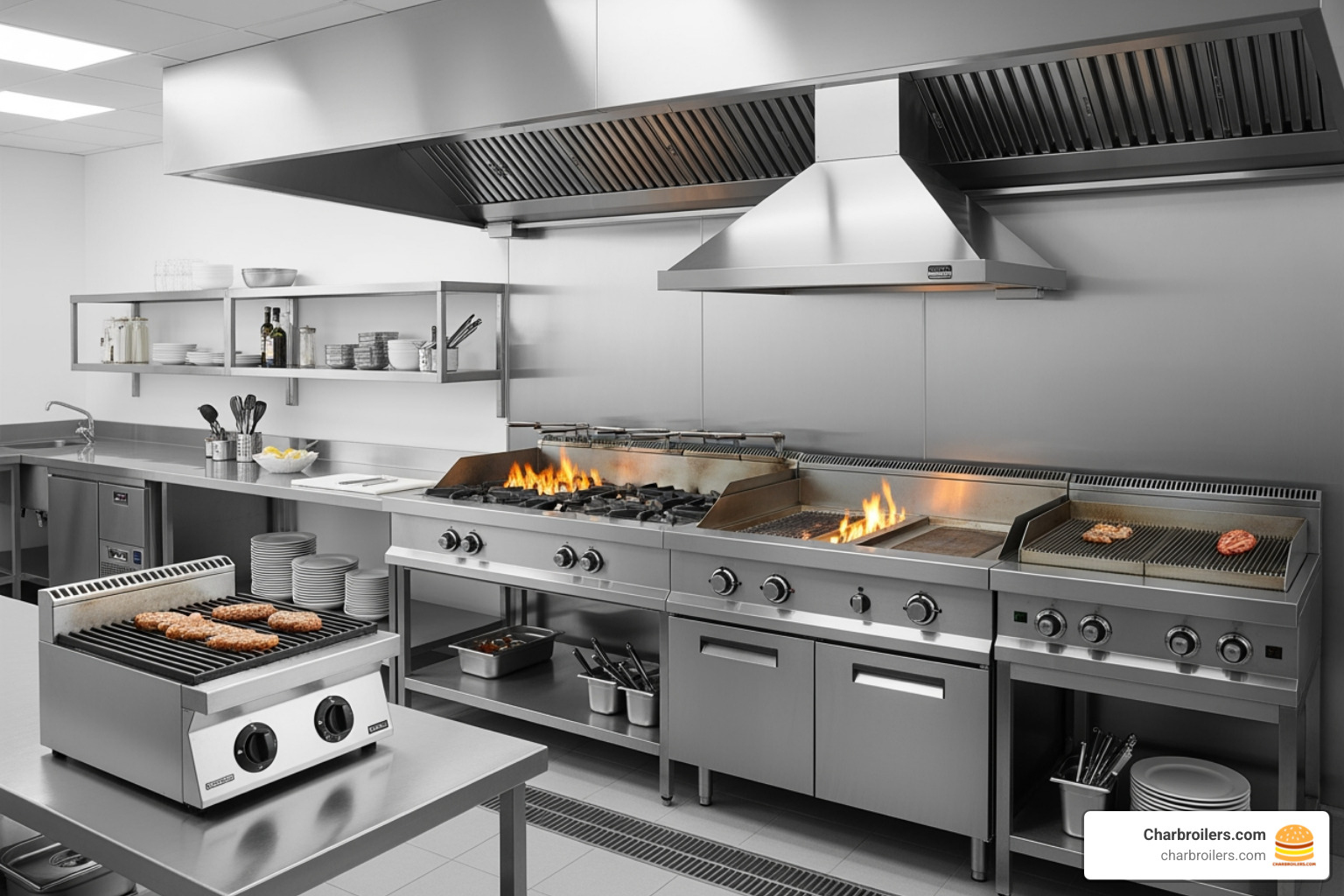
Countertop charbroilers are the space-saving heroes of tight kitchens. These compact powerhouses sit directly on your existing countertops or equipment stands, delivering serious grilling capability without claiming valuable floor space. They're ideal for food trucks, ghost kitchens, and smaller restaurant setups where every square foot counts. Don't let their size fool you—many pack up to 25,000 BTU per hour, giving you the heat needed for perfect sears on steaks, burgers, and vegetables. Their stainless steel construction means they're built to last despite their smaller footprint. Want to explore a popular compact option? See our guide Small Grill, Big Thrill: Meet the Atosa 24 Charbroiler.
Floor model charbroilers are what you reach for when volume is your game. These heavy-duty units are built for steakhouses, large diners, and any operation where the grill never stops during service. Their larger cooking surface handles peak hours without breaking a sweat. Many come with cabinet bases underneath, giving you convenient storage for tools, pans, or even integrated refrigeration. The extra footprint isn't wasted—it's invested in capacity.
Modular charbroilers offer the ultimate in kitchen customization. These units install directly into your countertops, creating a seamless, built-in look that maximizes workspace efficiency. They deliver the same powerful performance as freestanding models but integrate smoothly into custom kitchen designs. Whether you're planning a new layout or renovating an existing space, modular units give you flexibility without sacrificing capability. For a complete overview of sizing options across all configurations, check out From Compact to King-Sized: A Roundup of 12, 24, and 36-Inch Commercial Charbroilers.
Heat Source Showdown: Gas, Electric, Radiant, Lava Rock & Infrared
The heat source is where the magic happens—or doesn't. This choice affects everything from flavor to fuel costs to how consistently your food cooks.
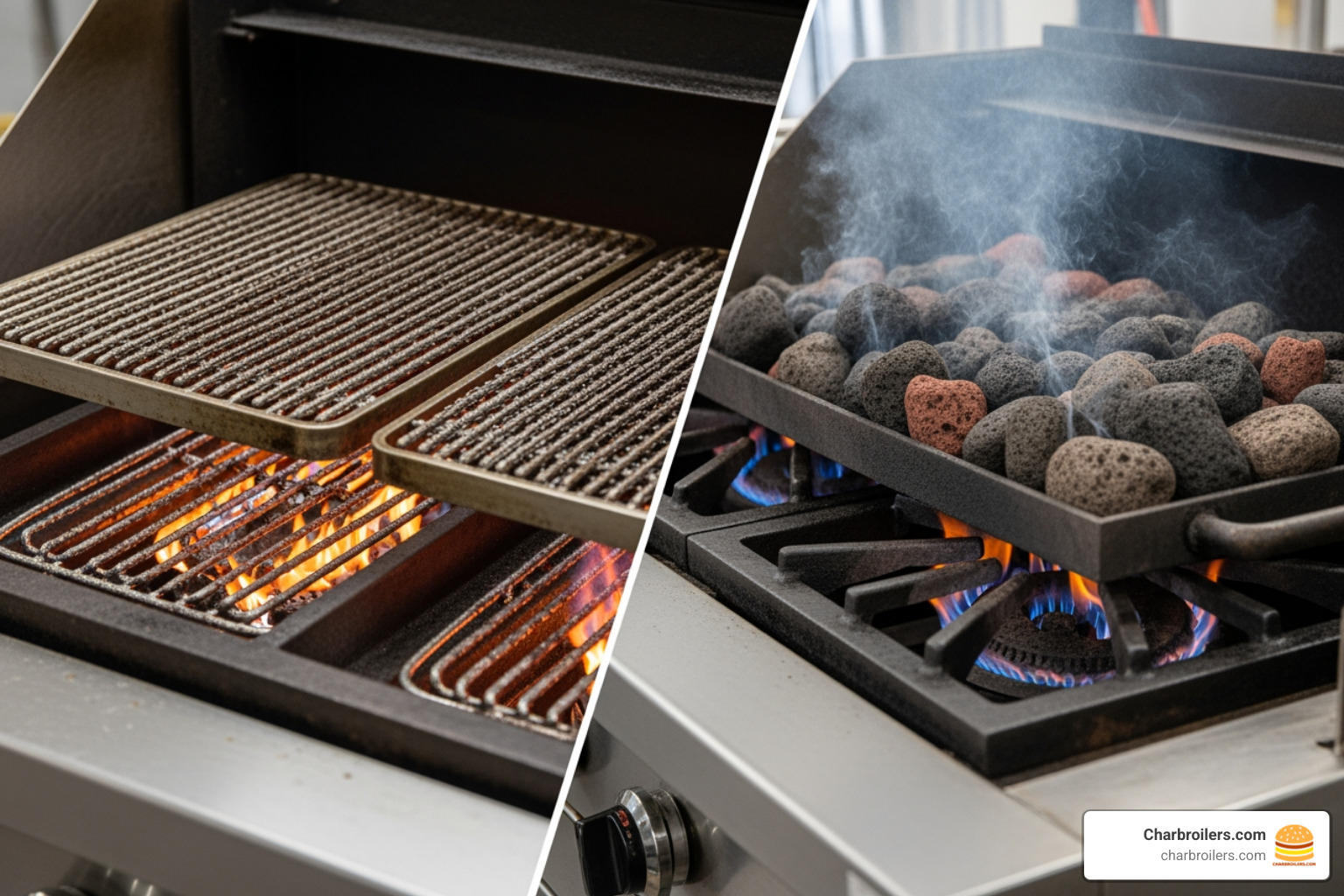
Gas charbroilers dominate commercial kitchens for good reason. Running on natural gas or liquid propane, they heat up quickly and give you precise temperature control when you need it. That intense, direct heat creates the perfect sear that keeps customers coming back. They're the workhorses most professional kitchens count on. Learn more in our guide to Gas Grill Char Broil.
Electric charbroilers solve the problem when gas lines aren't available or practical. They heat up a bit slower than gas models, but they deliver consistent, even heat distribution across the cooking surface. The flameless design often makes cleanup easier, and some kitchens simply prefer the control electric units provide. Explore your options in Electric Charbroiler Commercial.
Radiant charbroilers use angled metal plates positioned directly above the burners. When meat drippings hit these blazing-hot radiants, they vaporize instantly, creating that signature smoky flavor you're after. The angled design channels grease away from the flame, which means fewer flare-ups and simpler cleanup at the end of service.
Lava rock charbroilers bring outdoor grilling flavor indoors. Volcanic rocks sit above the burners, absorbing heat and radiating it evenly to your cooking surface. When food drippings hit those hot rocks, they create flavorful smoke that infuses directly into your food. The porous rocks also collect drippings, helping manage grease. For a detailed comparison, see Lava Rock vs. Ceramic Briquettes.
Ceramic briquette charbroilers work similarly to lava rock but with some key advantages. The ceramic briquettes absorb and distribute heat more evenly, eliminating cold spots across your cooking surface. They're less prone to flare-ups than lava rocks and typically easier to clean and maintain. Some high-end models use dense, durable high-temperature ceramic in a "heat-sink" style firebox that never needs replacing—a smart long-term investment.
Infrared charbroilers represent the cutting edge of grilling technology. These units use specialized burners that emit intense infrared heat, cooking food faster while using less gas. The incredibly high, even heat creates superior searing and locks in juices. Advanced infrared technology delivers increased production capacity, letting you serve more customers without adding equipment or space.
The Ultimate Buyer's Guide to the Perfect Commercial Charbroiler Grill
You're ready to invest in a commercial charbroiler grill, but choosing the right one feels overwhelming. Between size options, power ratings, and wildly different price tags, how do you know which features actually matter for your kitchen?
The truth is, there's no universal "best" charbroiler—only the best one for your specific situation. A food truck in Denver has completely different needs than a steakhouse in Miami. Your restaurant concept, anticipated cooking volume, and budget constraints should drive every decision. For a deeper dive into matching charbroilers to your operation, check out Charbroil Champions: Finding the Best Commercial Charbroiler.
Let's break down the key purchasing features so you can make a confident decision.
Size, Power, and Price
These three factors form the foundation of your charbroiler decision. Get any one wrong, and you'll either waste money or struggle through service.
Size and width must fit your actual kitchen footprint—measure twice, order once. Commercial models range from compact 12-inch units perfect for food trucks to expansive 72-inch or even 84-inch beasts designed for high-volume steakhouses. A 24-inch countertop model might be your sweet spot if you're running a small bistro, while a 48-inch unit could handle the demands of a busy diner. Think about your busiest service periods and how much cooking surface you'll need when tickets are flying. Need guidance on sizing? Our guide From Compact to King-Sized: A Roundup of 12, 24, and 36-Inch Commercial Charbroilers walks through the options.
BTU output measures the heating power of gas charbroilers—think of it as the engine horsepower for your grill. Higher BTU generally means faster heat-up times and more intense searing capabilities. Commercial charbroilers can range from 40,000 BTU for smaller units to over 260,000 BTU for the largest, heaviest-duty models. Matching BTU output to your cooking volume prevents energy waste and ensures you can actually keep up during dinner rush. Look for individual burner controls too—they let you create different temperature zones across the cooking surface, which is invaluable when you're juggling steaks at different doneness levels.
Price range varies dramatically based on size, brand, BTU output, construction materials, and special features. Entry-level countertop models might start around $400-$800, while large, heavy-duty floor models with advanced technologies can easily exceed $5,000, with some premium units going beyond $12,000. For example, a 15-inch gas radiant broiler might run around $425, while a 48-inch countertop radiant charbroiler could top $8,000. Yes, it's an investment—but a well-chosen charbroiler pays dividends in customer satisfaction and kitchen efficiency. Learn more about maximizing your investment in Heat Up Your Business with These Commercial Charbroilers. And if budget is tight, explore options in Small Grill, Big Thrill: Meet the Atosa 24 Charbroiler.
Grates and Construction: The Anatomy of a Durable Commercial Charbroiler Grill
The materials and build quality of your commercial charbroiler grill determine whether it becomes your kitchen workhorse or a maintenance headache. This is where you separate equipment that lasts years from stuff that fails after months of heavy use.
Grate material matters because it's literally where your food makes contact with heat. Cast iron grates are known for exceptional heat retention and durability—they hold temperature beautifully and create those picture-perfect char marks customers love. The trade-off? They require regular seasoning and cleaning to prevent rust. If you go this route, you'll want to read Heavy Metal Heroes: Choosing Your Commercial Cast Iron Griddle and How to Clean Cast Iron Grill to keep them in top shape.
Stainless steel grates offer superior corrosion resistance and easier cleaning—just scrub and go. While they don't retain heat quite as well as cast iron, their durability and low maintenance make them attractive for busy kitchens where quick turnaround matters. Chrome-plated grates split the difference with a smooth, easy-to-clean surface and good corrosion resistance, often found in models where presentation and quick cleanup are priorities.
Grate style adds another dimension to consider. Some charbroilers feature fixed grates, while others offer adjustable grates that can be tilted or raised and lowered. Adjustable grates give you more control over cooking temperatures and help manage those inevitable flare-ups when fat drips onto the heat source.
Construction material for the body of your charbroiler should be heavy-duty—look for stainless steel exterior panels that offer durability and easy cleaning. Insulated double walls improve heat retention and energy efficiency, which translates to lower gas bills and a cooler kitchen environment. Features like heat deflector panels and splash guards might seem minor, but they make a real difference for safety and keeping your kitchen cleaner. A model like the 48 in. Commercial Countertop Radiant Char broiler in Stainless Steel showcases how quality materials contribute to long-term performance.
| Feature | Cast Iron Grates | Stainless Steel Grates |
|---|---|---|
| Durability | Very high, heavy-duty | High, excellent corrosion resistance |
| Heat Retention | Excellent, provides consistent heat and searing | Good, but generally less than cast iron |
| Maintenance | Requires seasoning, prone to rust if not cared for | Easier to clean, less prone to rust |
| Cost | Often a standard or mid-range option | Can be more expensive than cast iron |
Mastering Your Charbroiler: Operation, Cleaning, and Maintenance
Your commercial charbroiler grill is only as good as how well you use and care for it. Think of it this way: you wouldn't buy a sports car and never change the oil, right? The same principle applies here. Proper operation, cleaning, and maintenance directly impact your food quality, how long your equipment lasts, and whether your kitchen stays safe during the dinner rush.
I've seen too many kitchens struggle with charbroilers that could have lasted another decade if they'd just followed basic maintenance routines. On the flip side, I've watched chefs turn out consistently perfect steaks night after night because they understood their equipment inside and out. Let's make sure you're in that second category. For detailed cooking guidance, check out From Raw to Radiant: A Guide to Cooking on Your Commercial Charbroiler. And remember, proper care is your best defense against dangerous situations—learn more about How to Prevent Grease Fires.
Sizzling with Success: Cooking Techniques for Your Commercial Charbroiler Grill
The real magic of a commercial charbroiler grill happens when you understand how to harness its intense heat. That signature smoky flavor and those beautiful diamond char marks don't just happen by accident—they're the result of proper technique.
Preheat thoroughly before you start cooking. This isn't optional. Your grates need to be screaming hot to create an immediate sear when food hits the surface. That instant contact is what locks in juices and creates those gorgeous grill marks your customers expect. When drippings hit the hot radiants or lava rocks below, they vaporize instantly, creating that authentic smoky aroma that makes mouths water from across the dining room.
Flare-ups are part of grilling, but they shouldn't take over your cooking surface. A little flame adds character and flavor, but excessive flare-ups will char your food black and ruin an otherwise perfect steak. If you're using a radiant charbroiler, you're already ahead of the game—the angled radiants channel grease away from the flames. With lava rock models, trimming excess fat from your proteins and keeping the rocks reasonably clean makes a huge difference. When flames do get enthusiastic, having adjustable grates lets you quickly move food to a cooler zone until things calm down.
Temperature management separates the pros from the amateurs. Most commercial charbroilers come with independent burner controls for a reason—they let you create hot zones and cool zones across your cooking surface. This means you can sear a steak at high heat on one side while finishing chicken breasts more gently on the other. Master these temperature zones and you'll nail everything from How to Grill Perfect Steaks to hitting the right Burger Cooking Temp every single time. Even techniques like How to Grill Chicken on Charcoal Grill translate beautifully to your commercial unit when you understand heat control.
Keeping it Clean: Essential Maintenance and Repair
Here's the truth nobody likes to hear: cleaning your charbroiler isn't glamorous, but it's absolutely critical. I'm not just talking about food safety or making your health inspector happy (though both matter). Regular cleaning and maintenance directly affect how well your equipment performs and how long it lasts. Neglect it, and you're throwing money away.
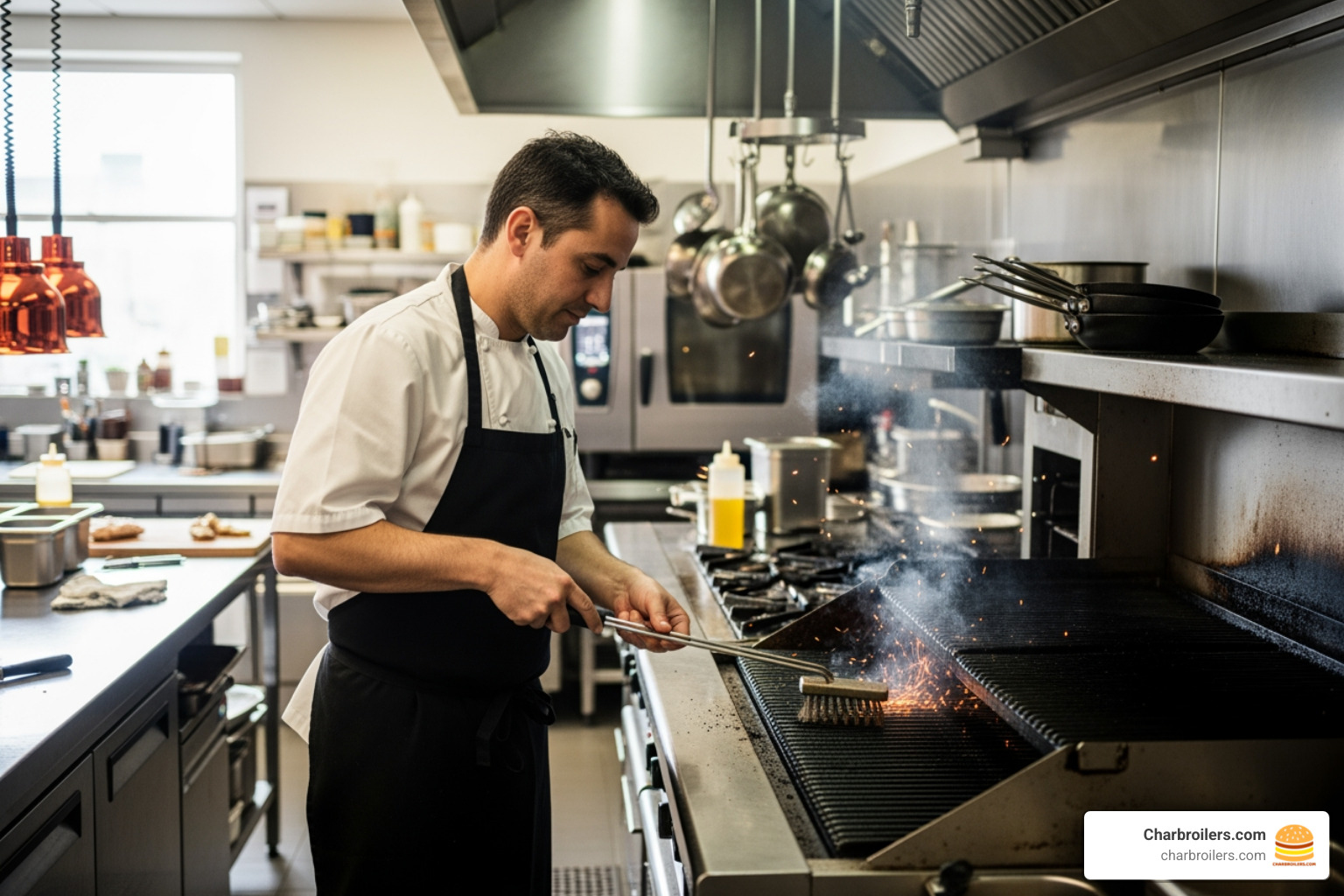
Daily cleaning isn't negotiable. After every shift, scrape down those grates while they're still warm. Food residue comes off much easier when it hasn't had time to cement itself onto the metal. Most commercial charbroilers feature removable grates and drip trays specifically to make this task manageable—take advantage of that design. Pull out the drip tray and empty it. Grease buildup isn't just gross; it's a fire hazard waiting for the wrong moment.
If you're working with cast iron grates, give them a good scraping and then a light coating of oil. This simple seasoning step maintains that naturally non-stick surface and keeps rust at bay. For detailed instructions, our guide on How to Clean Cast Iron Grill walks you through the process, and How to Season Cast Iron Grates covers the seasoning technique that keeps them in top shape.
Deep cleaning needs to happen regularly, even when you don't feel like it. Weekly or bi-weekly (depending on your volume), break down the removable components and give everything a thorough degreasing. For lava rock or ceramic briquette models, inspect those heat diffusers. Over time, they accumulate grease and debris that affects heat distribution. Sometimes they just need cleaning; sometimes they need replacing. Either way, staying on top of this prevents bigger problems down the road.
When rust appears on cast iron, act fast. A little surface rust isn't the end of the world—scrub it off with a stiff brush, then re-season the grates. But if you ignore it, minor rust becomes major rust, and suddenly you're shopping for replacement grates instead of just doing five minutes of maintenance.
Pay attention to warning signs before they become expensive repairs. Uneven heating, burners that won't ignite properly, or strange sounds all signal that something needs attention. Routine inspections catch these issues early when they're cheap and easy to fix. For comprehensive troubleshooting advice, Don't Get Burned: Expert Tips for Commercial Charbroiler Repair covers the most common problems and solutions.
Taking care of your commercial charbroiler grill isn't complicated, but it does require consistency. Treat it right, and it'll serve you reliably through thousands of steaks, burgers, and chicken breasts. Neglect it, and you'll be shopping for a replacement years earlier than necessary. Your choice.
Frequently Asked Questions about Commercial Charbroilers
Let me answer the questions I hear most often from restaurant owners trying to make smart equipment decisions.
What's the difference between a charbroiler and a griddle?
Think of it this way: charbroilers and griddles are like two completely different tools in your kitchen arsenal, each with its own superpower.
A commercial charbroiler grill uses open grates positioned over direct heat—whether that's gas flames, radiant heat, or lava rocks. This setup is specifically designed for grilling and searing, creating those beautiful char marks and smoky flavors that make steaks, burgers, and chicken breasts irresistible. The open grates allow fat to drip away and create flavorful smoke when it hits the heat source below.
A griddle, on the other hand, features a solid, flat cooking surface—no grates, no flames underneath. This flat-top design is perfect for foods that need full surface contact, like pancakes, eggs, bacon, hash browns, or even smash burgers. The solid surface gives you precise temperature control without any flare-ups, and nothing falls through the cracks (literally).
The simple rule: If you want grill marks and smoky flavor, choose a charbroiler. If you need a flat surface for delicate items or breakfast foods, go with a griddle. Many busy kitchens use both. For a deeper dive into griddles, check out The Hot Plate Handbook: Mastering Commercial Griddles and Flat Top Grills.
How much do commercial charbroilers typically cost?
Here's the honest answer: it depends on what you need, but I can give you realistic price ranges.
Entry-level countertop models start around $400-$800, which is perfect if you're running a food truck, ghost kitchen, or small café with limited grilling needs. These compact units still deliver serious heat and professional results—they're just smaller.
Mid-range models typically run $1,500-$3,000 and offer more cooking surface, higher BTU output, and better construction. These work well for casual dining restaurants and busy lunch spots.
Large, heavy-duty floor models with advanced features can easily cost over $5,000, with some premium units reaching $10,000-$12,000 or more. These powerhouses are built for high-volume steakhouses and restaurants where the grill runs all day, every day.
What influences the price? Several factors drive the cost up: physical size and cooking surface area, total BTU output, brand reputation, construction materials (especially stainless steel quality), heat source type (infrared tends to cost more), special features like adjustable grates or individual burner controls, and whether it includes a cabinet base or refrigerated storage.
If you're budget-conscious, consider exploring quality used equipment. You can often find well-maintained charbroilers at significant savings—just make sure to inspect them thoroughly. Learn more in our guide: Used Commercial Grills: Smart Buys for Your Restaurant Kitchen.
What kind of ventilation is required for a commercial charbroiler?
Let me be blunt: you absolutely need proper ventilation for a commercial charbroiler grill, and it's not optional.
Commercial charbroilers produce intense heat, smoke, and grease-laden vapors during cooking. Without adequate ventilation, you're creating a fire hazard, violating health codes, and making your kitchen unbearably hot and smoky for your staff. Nobody wants to work in those conditions, and inspectors definitely won't let you operate that way.
What you need: Almost every commercial kitchen using a charbroiler requires a Type 1 commercial kitchen hood system with a fire suppression system. This specialized hood captures smoke, grease particles, and heat, then exhausts them safely outside. Type 1 hoods are specifically designed for grease-producing appliances like charbroilers, fryers, and ranges.
The ventilation system must meet local fire codes and health department regulations, which often follow standards set by the National Fire Protection Association (NFPA). In Seattle, WA, and most other jurisdictions, these requirements are strictly enforced. Your hood system needs to be sized appropriately for your charbroiler's BTU output and properly installed by licensed professionals.
Don't cut corners here. Proper ventilation protects your staff, your customers, your building, and your business license. It's a significant upfront investment, but it's absolutely necessary for legal operation. For detailed guidance on what your kitchen needs, read our comprehensive article: Commercial Kitchen Ventilation Requirements.
Conclusion: Fire Up Your Menu with the Right Charbroiler
You've made it through the heat, and now you understand what separates a smart charbroiler investment from an expensive mistake. A commercial charbroiler grill isn't just another piece of equipment—it's the difference between ordinary grilled food and the kind of smoky, perfectly seared dishes that turn first-time diners into regulars.
We've walked through the signature benefits that make charbroilers essential: that unmistakable smoky flavor, those professional grill marks, the moisture-locking sear, and the kitchen versatility to handle everything from breakfast to late-night service. You now know the distinctions between countertop models perfect for tight spaces, floor models built for high-volume operations, and modular units that integrate seamlessly into custom kitchens.
The heat source showdown revealed how gas, electric, radiant, lava rock, ceramic briquette, and infrared technologies each bring unique advantages to your cooking line. You've learned what to prioritize when purchasing: matching the size and BTU output to your actual cooking volume, understanding how grate materials like cast iron versus stainless steel affect performance and maintenance, and recognizing that durable construction pays dividends through years of service.
Most importantly, you've finded that the right charbroiler for your restaurant is the one that fits your specific needs—your space constraints, your menu concept, your cooking volume, and your budget. Whether you're running a food truck in Seattle or managing a busy steakhouse, there's a charbroiler designed to improve your menu and streamline your operations.
At Charbroilers.com, we've spent over a decade helping restaurant owners steer these decisions. Our wide selection of charbroilers means you're not settling for whatever happens to be in stock—you're choosing equipment that truly matches your operation. And with flexible financing options, you can get the charbroiler you need without straining your capital.
Ready to transform your menu with perfectly grilled proteins and vegetables? Explore our complete guide to commercial charbroilers for your restaurant and find how the right commercial charbroiler grill can become your kitchen's most valuable player.