
Ice, Ice, Baby: Where to Buy Your Next Restaurant Ice Machine
Why Your Restaurant Needs a Reliable Ice Supply
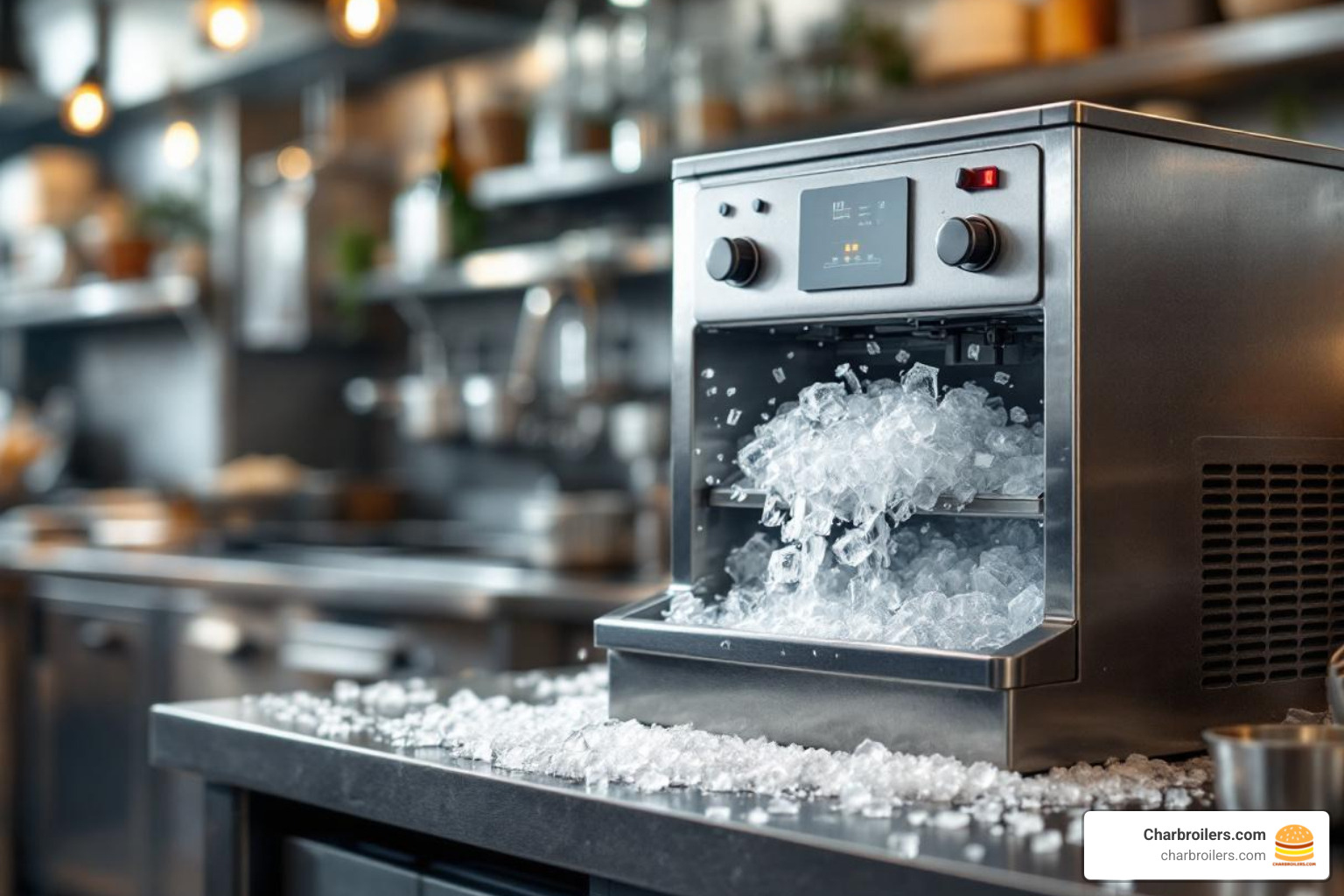
A restaurant supply ice maker is essential equipment for any foodservice operation—from bars crafting cocktails to cafes serving iced coffee to kitchens needing ice for food prep. Whether you need 68 pounds per day for a small café or over 900 pounds for a busy restaurant, choosing the right commercial ice maker impacts your drink quality, customer satisfaction, and bottom line.
Quick Answer: Where to Buy a Restaurant Supply Ice Maker
- Online Restaurant Supply Stores: Shop from home with detailed specs and pricing
- Local Equipment Dealers: Get hands-on service and installation support
- Manufacturer Direct: Buy from brands like Hoshizaki, Ice-O-Matic, True, and EFI
- Price Range: $1,800-$4,400 CAD for undercounter units (60-280 lbs/day); $4,700-$17,000+ CAD for modular and dispenser units (300-1,000+ lbs/day)
The quality of your ice matters more than you think. Full-size cubes melt slowly in premium spirits, while half-size cubes cool soft drinks quickly. Nugget ice has become a customer favorite in sodas and smoothies, and flake ice keeps your seafood displays fresh. If you want a neutral overview of how commercial ice machines work and common ice types, you can also review this general guide to icemakers alongside our recommendations.
But before you buy, you need to understand production capacity, condenser types, and whether an undercounter or modular unit fits your space. You'll also want to know about antimicrobial protection features like PURE ICE®, energy efficiency ratings, and warranty terms that can extend up to 7 years on key components when you enroll in filter programs.
I'm Sean Kearney, founder of Charbroilers.com, and I've spent over a decade helping restaurants find the right equipment at fair prices. Through my work sourcing restaurant supply ice makers and other commercial kitchen equipment, I've learned that the right ice machine choice comes down to matching your daily volume needs with your budget and space constraints.
Terms related to restaurant supply ice maker:
A Guide to Commercial Ice Maker Types
Choosing the right restaurant supply ice maker starts with understanding the different types available. Each offers unique advantages depending on your restaurant's specific needs, available space, and ice demand. Let's break them down.
Undercounter Ice Makers These compact units are self-contained, meaning the ice maker and storage bin are combined into one convenient machine. They're designed to fit neatly under a standard counter, making them perfect for smaller operations where space is at a premium. Think busy bars, cozy cafes, or limited-service restaurants in Seattle, WA.
Undercounter models are typically more affordable and easier to install than their larger counterparts. Their production capacities usually range from about 60 to 280 pounds of ice per day. For example, you can find models like the EFI 68 Lb Undercounter Cube Ice Machine IM-68, producing 68 lbs/day, or the EFI 280 Lb Undercounter Cube Ice Machine IM-280, offering 280 lbs/day. These are excellent choices if you're looking for a small commercial ice machine that doesn't compromise on quality.
Modular Ice Makers When your ice demand goes beyond what an undercounter unit can handle, it's time to consider a modular ice maker. These machines are ice-making "heads" that sit atop a separate ice storage bin. This modular design allows for much higher production volumes, often ranging from 300 to over 1,000 pounds of ice per day.
Modular units are the workhorses of high-volume restaurants, hotels, and large catering operations. They offer flexibility because you can pair an ice maker head with a bin size that perfectly matches your storage needs. If you're planning for significant ice production, check out our insights on commercial ice makers for modular setups. For instance, Ice-O-Matic's Elevation Series™ Modular Cube Ice Makers can produce substantial amounts: the CIM0836HR can yield approximately 906 lb/24 hours, and the CIM1136FW can go up to 968 lb/24 hours at optimal conditions.
Ice and Water Dispensers For self-service applications, especially in hotels, offices, or quick-service restaurants, ice and water dispensers are incredibly convenient. These units combine an ice maker, storage, and a dispensing mechanism, often with a water spigot, allowing customers to easily grab ice and water. They are designed for user-friendliness and hygiene. If you’re looking to improve customer convenience, explore options to find your perfect water and ice dispenser. While some models, like the Hoshizaki® 257# Cubelet Ice Machine and Water Dispenser, can have a higher upfront cost (around CA$17,053.20 as an example), the self-service efficiency can be a significant benefit.
Full-Size vs. Half-Size Cubes
The type of ice cube your restaurant supply ice maker produces can significantly impact your beverage program and even your kitchen operations. It’s not just about keeping things cold; it’s about presentation and functionality.
Full-size cubes, often measuring around 7/8" x 7/8" x 7/8", are dense and melt slowly. This makes them ideal for spirits, cocktails, and other premium beverages where dilution needs to be minimal. Imagine a perfectly crafted Old Fashioned with a single, crystal-clear, slow-melting cube – that's the full-size cube's domain. Our guide on choosing the right large cube ice machine for premium drinks digs deeper into this.
Half-size cubes, typically 3/8" x 7/8" x 7/8", are smaller and more numerous per pound. They are excellent for fast cooling, making them a popular choice for soft drinks, sodas, blended beverages, and general-purpose use. They fill glasses more completely, giving the appearance of a generous serving. The Ice-O-Matic CIM0836HR and True® Modular 30" 630# Half-Size Cube Air-Cooled Ice Maker are examples of machines that produce half-size cubes, showing their prevalence in commercial settings.
Nugget, Flake, and Specialty Ice
Beyond the standard cubes, there's a whole world of ice shapes designed for specific applications.
Nugget ice, often called "chewable ice" or "pellet ice," is soft, porous, and highly sought after. It's fantastic for fountain drinks, smoothies, and mixed beverages because it blends easily and absorbs flavors well. You'll often find it in healthcare facilities, fast-food restaurants, and convenience stores. If your customers love to chew their ice, a nugget ice machine is a must-have. Dive into everything about commercial nugget ice machines for more details.
Flake ice is soft, moldable, and maintains a very low temperature. Its unique texture makes it perfect for displaying fresh seafood, produce, and deli items, as it cradles delicate products without bruising them. It's also used in bakeries for dough mixing and in healthcare for therapeutic applications.
Gourmet ice or specialty shapes like spheres, crescents, or top hats are less common but offer an liftd touch for high-end bars and restaurants aiming for a unique presentation. These machines often produce ultra-clear, slow-melting ice that can truly make a drink stand out.
How to Choose the Right Restaurant Supply Ice Maker
Selecting the perfect restaurant supply ice maker requires careful consideration of several critical factors. It's like finding the right chef's knife – it needs to fit your hand (and your kitchen) perfectly.
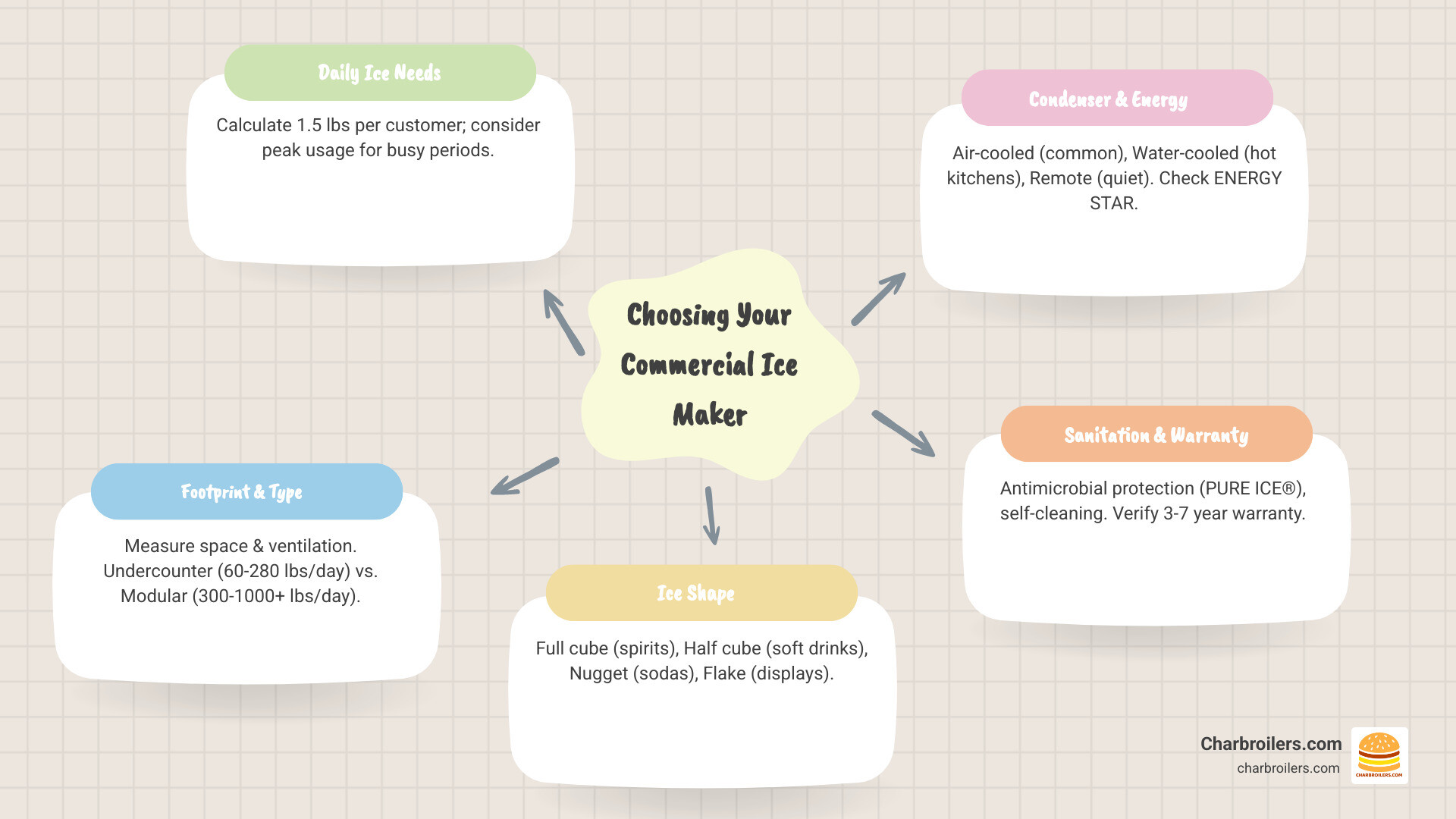
Production Capacity This is arguably the most important factor. You need to know how much ice your restaurant consumes daily. A common rule of thumb is to estimate 1.5 pounds of ice per customer, but this can vary wildly based on your menu. Do you serve a lot of iced tea, cocktails, or blended drinks? Do you have a salad bar or display case that uses ice?
When calculating, always factor in peak usage periods and a buffer. Running out of ice during a busy dinner rush is a surefire way to frustrate staff and customers. For instance, a small Seattle cafe might be fine with an EFI 68 Lb Undercounter Cube Ice Machine, while a busy restaurant might need a modular unit like the Ice-O-Matic CIM0530HW, which produces approximately 586 lb/24 hours. Always aim for a machine that can comfortably exceed your daily needs by about 20-30% to account for unexpected demand or machine downtime.
Size and Footprint Before you even start browsing models, measure your available space. This is especially crucial for undercounter units, where every inch matters. Remember to account for proper ventilation, as most ice makers (especially air-cooled models) require clearance around them to operate efficiently. An air-cooled unit needs space for air intake and exhaust, often from the front, top, or sides. Poor ventilation can lead to reduced ice production and increased energy consumption.
Consider where the machine will be located in your Seattle, WA kitchen. Is it near a drain? Is there easy access to a water line? These practical considerations are just as important as the machine's specifications. For a comprehensive comparison, check out The Ultimate Guide to Comparing Commercial Ice Makers.
Condenser Types Explained: Air, Water, or Remote?
The condenser is the part of your restaurant supply ice maker that expels heat generated during the ice-making process. The type of condenser you choose significantly impacts installation, performance, and operational costs.
Air-cooled condensers are the most common and generally the most affordable option. They work by using fans to blow air over a coil, dissipating heat. The upside? No extra water usage for cooling. The downside? They require good air circulation and can add heat to your kitchen environment, which can be an issue in already hot spaces. If your kitchen in Seattle, WA is well-ventilated and not prone to extreme heat, an air-cooled model is often a great choice.
Water-cooled condensers use a continuous flow of water to cool the refrigerant. They are highly efficient in hot kitchens or areas with poor air circulation because they don't rely on ambient air. This also means they operate more quietly. However, the trade-off is higher water utility costs and the need for a dedicated water line and drain for the condenser. In areas with high water costs or restrictions, this might be a prohibitive factor.
Remote condensers offer the quietest operation, making them ideal for front-of-house areas or dining rooms where noise is a concern. With a remote system, the noisy and heat-generating condenser unit is installed outdoors or in a separate mechanical room, away from the ice maker head. While this provides excellent noise and heat control, the installation is more complex and typically more expensive due to the need for refrigerant lines running between the ice maker and the remote condenser.
Understanding these options is key to a deep dive into commercial ice production methods and making the best choice for your specific restaurant setup.
Key Features, Technology, and Maintenance
A modern restaurant supply ice maker is more than just a glorified freezer. Today's machines come packed with features designed to improve hygiene, efficiency, and longevity.
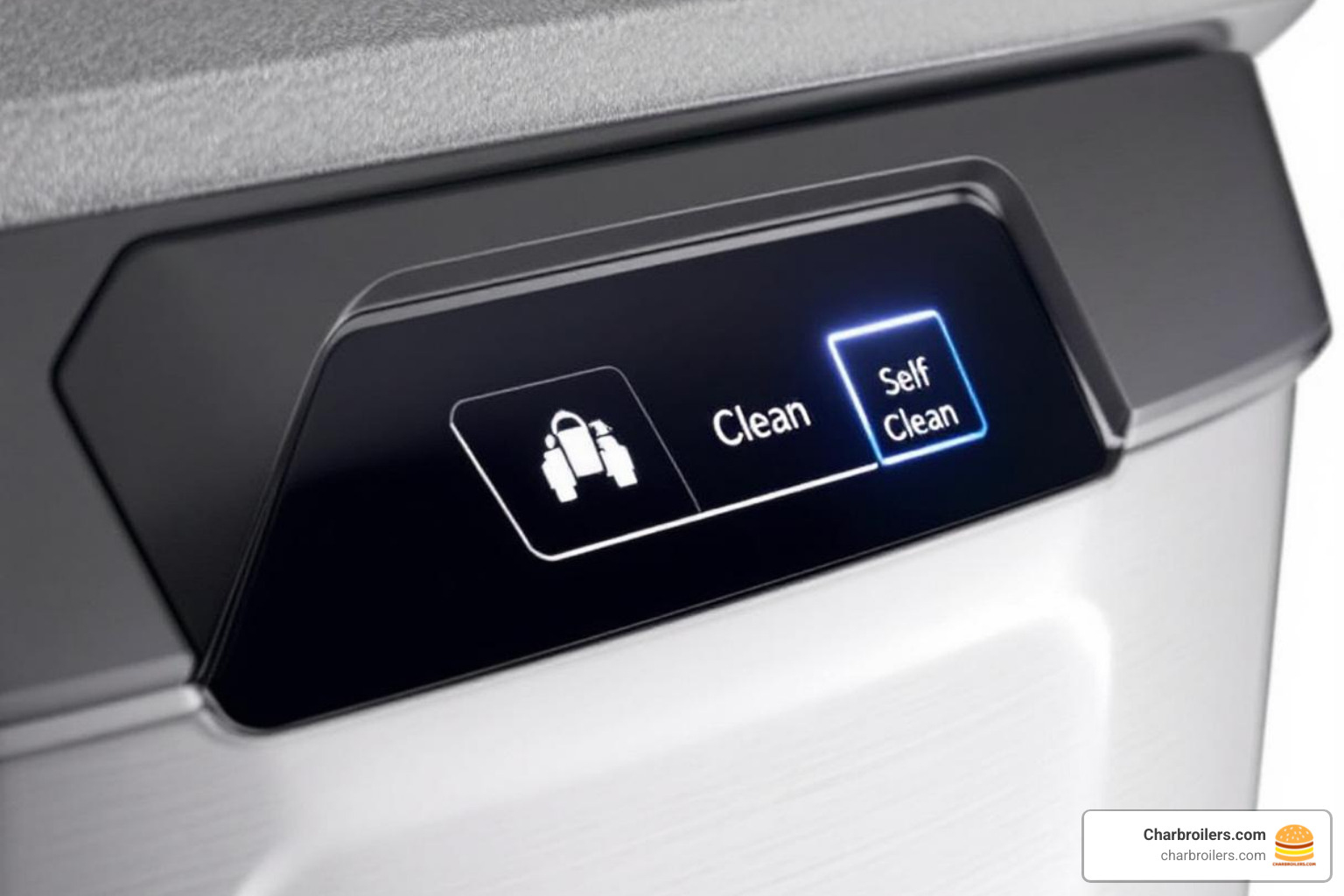
Sanitation Features In any foodservice operation, hygiene is paramount. Look for ice makers with advanced sanitation features to ensure your ice is clean and safe. Many leading brands, like Ice-O-Matic, incorporate PURE ICE® built-in antimicrobial protection, which inhibits bacterial growth. This technology helps keep the ice-making components cleaner for longer.
Other valuable features include:
- Self-cleaning cycles: Automated cleaning programs that reduce manual labor.
- One-touch sanitize/descaling controls: Simplifies the routine maintenance process, making it easy for staff to keep the machine in top condition. The Ice-O-Matic CIM0836HR, CIM1136FW, CIM0330FA, CIM0530HW, and CIM0436HW models all boast these convenient features.
- Dishwasher-safe food zone components: Removable parts that can be easily cleaned in a commercial dishwasher, further simplifying hygiene.
These features not only ensure food safety but also contribute to the longevity and efficiency of your machine. You can find more details on these advanced sanitation features on manufacturer websites.
Energy Efficiency Operating a commercial kitchen comes with significant utility costs. An energy-efficient restaurant supply ice maker can lead to substantial savings over its lifespan. Look for models with an ENERGY STAR® certification. While not all commercial ice makers qualify (some water-cooled units, for example, might not), many air-cooled and undercounter models do.
Energy-efficient ice makers often feature better insulation, optimized refrigeration systems, and smart controls that can reduce energy consumption without sacrificing ice production.
Warranty and Service A commercial ice maker is a significant investment, so understanding the warranty and available service is crucial. Most manufacturers offer a standard warranty, typically 3 years on parts and labor for the ice maker itself. However, many extend this coverage for key components like the evaporator and compressor.
For example, Ice-O-Matic offers 5 years parts on the evaporator and compressor, and an impressive 7 years parts and labor on the evaporator when you enroll in their filter program. This highlights the importance of using recommended water filters, which protect your machine from mineral buildup and ensure optimal performance. In Seattle, WA, having access to reliable service technicians is also vital for quick repairs and maintenance. Our guide on top commercial clear ice cube makers often discusses these warranty considerations.
The Bottom Line: Pricing and Where to Shop
When it comes to purchasing a restaurant supply ice maker, understanding the price points and where to buy is essential for your budget and operational needs. We've compiled a quick comparison to help you visualize the choices.
| Ice Maker Type | Capacity Range (lbs/24 hours) | Price Range (CAD) | Best Use Case |
|---|---|---|---|
| Undercounter | 60-280 | $1,800 - $4,400 | Small cafes, bars, back-up ice |
| Modular | 300-1000+ | $4,700 - $7,700+ | High-volume restaurants, hotels, large-scale operations |
| Dispenser | 200-500+ | $17,000+ | Self-service, healthcare, offices |
For a more detailed breakdown of costs, refer to your essential ingredient: a cube ice machine price guide.
Understanding the price of a restaurant supply ice maker
The price of a restaurant supply ice maker can vary significantly based on its type, production capacity, features, and brand. The Canadian Dollar (CAD) pricing provided in our research offers a good benchmark for the investment levels you can expect, though local pricing in Seattle, WA will be in USD and may vary based on exchange rates, shipping, and local dealer markups.
Undercounter price range: Expect to pay anywhere from approximately $1,800 to $4,400 CAD for undercounter models. This range covers units producing from 68 lbs (like the EFI 68 Lb Undercounter Cube Ice Machine IM-68 at $1850.00 CAD) up to 280 lbs (e.g., the EFI 280 Lb Undercounter Cube Ice Machine IM-280 at $4350.00 CAD). Smaller units like the Simag 62-lbs Undercounter Ice Machine are around CA$2,334.00, while the Ice-O-Matic Gourmet Cube 63# Undercounter Ice Maker is CA$3,159.65.
Modular price range: For modular ice maker heads and separate bins, prices typically start higher, ranging from $4,700 to $7,700+ CAD. For example, an EFI Cube Ice Machine with Bin 350LBS, IM-350 is priced at $4750.00 CAD, while True® Modular units like the 30" 630# Half-Size Cube Air-Cooled Ice Maker can reach CA$7,651.56. High-capacity models with advanced features will naturally be at the higher end.
Specialty dispenser prices: Units that combine ice making with dispensing, especially those with high capacity or specific ice types (like cubelet), can be a substantial investment. The Hoshizaki® 257# Cubelet Ice Machine and Water Dispenser, for instance, is priced at CA$17,053.20. These are often chosen for specific front-of-house or high-traffic self-service needs.
These prices are for the ice maker head and sometimes include a basic bin. Additional costs might include water filtration systems, installation, and ongoing maintenance supplies.
Where can you buy a restaurant supply ice maker?
Finding the right vendor for your restaurant supply ice maker is almost as important as choosing the machine itself. You have several avenues to explore, each with its own benefits:
- Online restaurant supply stores: Many reputable online retailers offer a vast selection of commercial ice makers from various brands. These platforms provide detailed specifications, customer reviews, and competitive pricing. They're great for comparison shopping and often have financing options.
- Local equipment dealers: For businesses in Seattle, WA, local restaurant supply stores offer the advantage of hands-on service. You can see models in person, get personalized advice, and benefit from local installation and maintenance support. This is crucial for troubleshooting and ensuring your warranty remains valid. You might also find specialized dealers who focus specifically on ice machine sales and service in the wider Seattle area.
- Manufacturer direct: You can also explore options directly from leading manufacturers like Hoshizaki America or Ice-O-Matic. While you typically purchase through their authorized dealer networks, their websites provide extensive product information, specifications, and often a "dealer locator" tool to find a local vendor in Seattle, WA.
When purchasing, always verify the service availability in your area. A great price means little if you can't get prompt service when your machine needs attention. We always recommend checking out where to find commercial ice makers in your area to ensure you have local support.
Considering Alternatives to Buying
Sometimes, outright purchasing a restaurant supply ice maker isn't the best initial move. For new businesses in Seattle, WA, or those with fluctuating ice demands, alternatives can offer flexibility and reduced upfront costs.
Leasing and renting options are increasingly popular. With a lease, you typically pay a monthly fee for a set period, after which you might have the option to buy the machine. Renting offers even greater flexibility, often on a month-to-month basis.
The benefits of leasing or renting include:
- Lower upfront costs: Frees up capital for other essential restaurant investments.
- Maintenance often included: Many rental or lease agreements include routine maintenance and repairs, saving you from unexpected service bills.
- Flexibility: Allows you to test different capacities or types of ice makers before committing to a purchase, or easily upgrade as your business grows.
If you're exploring these flexible options, our guide on renting commercial ice machines made easy and breezy can provide valuable insights. It’s an ideal solution for businesses that want to manage cash flow effectively or are still establishing their long-term ice needs.
Conclusion: Making the Coolest Choice for Your Business
Choosing the right restaurant supply ice maker is a critical decision that impacts everything from beverage quality to operational efficiency and customer satisfaction. We've covered a lot of ground, from understanding different ice types and capacities to navigating condenser options, key features, and pricing.
To make the coolest choice for your business in Seattle, WA, remember to:
- Assess your needs: Accurately calculate your daily and peak ice consumption.
- Choose the right type: Decide between undercounter, modular, or dispenser models based on space and volume.
- Prioritize sanitation and efficiency: Look for antimicrobial protection, easy cleaning features, and ENERGY STAR® certification.
- Set a realistic budget: Factor in not just the purchase price but also installation, ongoing utility costs, and maintenance.
- Consider warranty and service: Ensure you have reliable local support and understand warranty terms, especially those linked to filter programs.
A reliable ice machine is more than just a convenience; it's a foundational piece of equipment for any successful foodservice operation. Just like a perfectly seared steak needs the right charbroiler, a refreshing drink needs consistent, high-quality ice.
Here at Charbroilers.com, we understand the importance of efficient and reliable kitchen equipment. Now that your beverage program is chilled to perfection, ensure your cooking line can handle the heat. Explore our complete guide to commercial charbroilers for your restaurant.