
Find Your Perfect Water and Ice Dispenser
Why Every Kitchen Needs Reliable Water and Ice Access
A water and ice dispenser is a convenient appliance that provides chilled or hot water and fresh ice on demand.
Quick Guide to Water and Ice Dispensers:
- Countertop Models - Compact units ideal for small spaces, producing 20-50 lbs of ice daily
- Freestanding Units - Larger capacity dispensers for high-volume needs, up to 1,000+ lbs/day
- Bottleless Systems - Connect directly to water lines, eliminating bottle replacements
- Combination Features - Hot water (≥194°F), cold water (≤46.4°F), and ice production in one machine
- Average Capacity - Most home/office models produce 22-48 lbs of ice per 24 hours
The global water dispenser market is projected to reach $5.7 billion by 2030, reflecting a growing demand. For a busy restaurant or office, the right dispenser eliminates heavy bottle lifting, reduces plastic waste by up to 5,000 bottles per year, and ensures constant access to fresh water and ice.
Modern dispensers offer features like self-cleaning functions, child safety locks, and advanced filtration to remove contaminants like lead and microplastics. They deliver consistent results, from bullet-shaped ice cubes ready in 6-13 minutes to popular nugget ice, meeting needs for beverage service, food prep, and general hydration.
I'm Sean Kearney from Charbroilers.com, and with over a decade of experience helping restaurants find the right equipment, I've seen how the right water and ice dispenser streamlines operations and improves service quality. This guide will cover the types, features, and how to choose the perfect model for your needs.
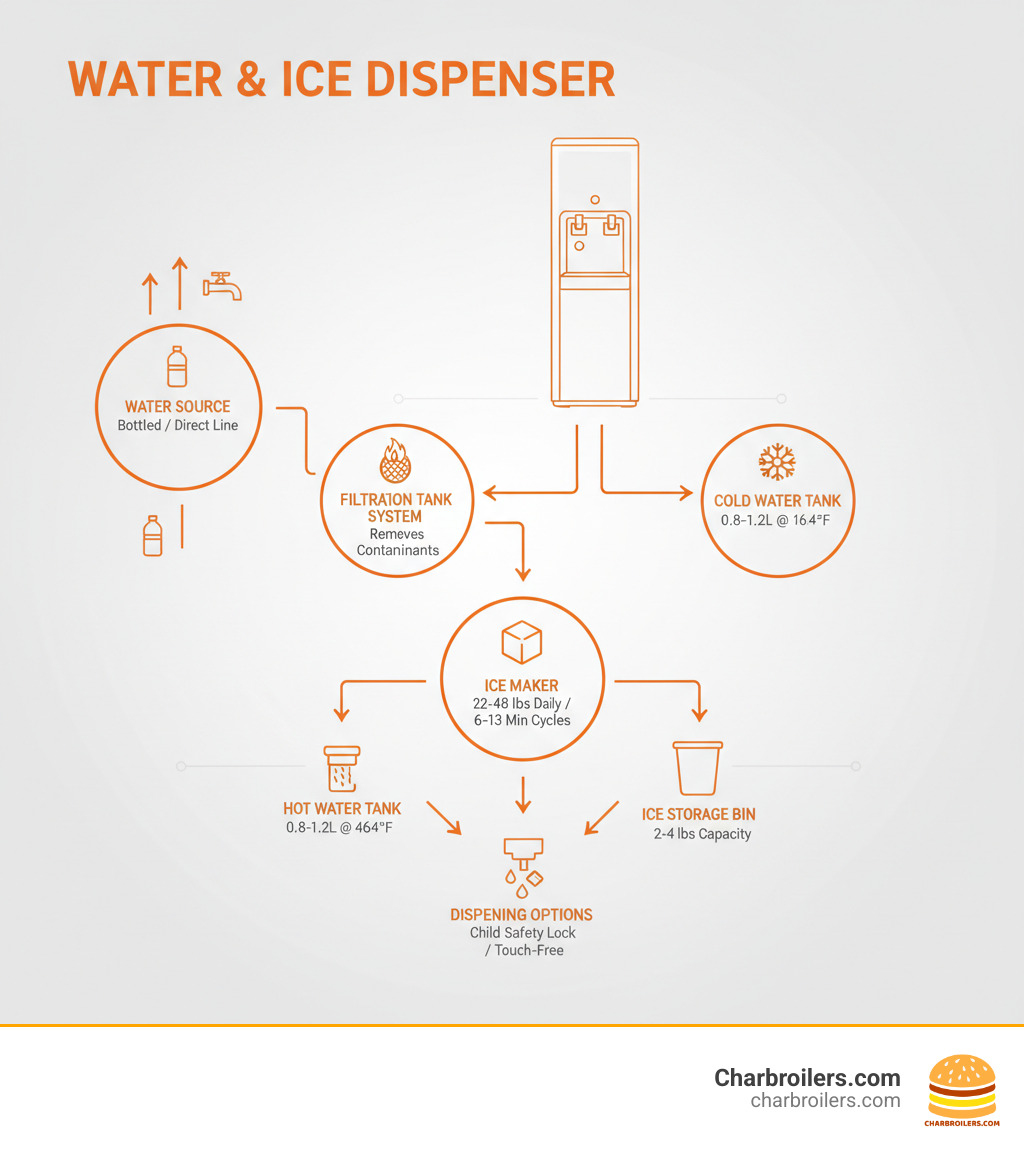
Quick water and ice dispenser terms:
Types of Water and Ice Dispensers
Choosing the right water and ice dispenser starts with understanding the available types. Let's walk through the main options to find your perfect match.
Countertop models are compact units that sit on your counter, ideal for smaller kitchens or offices. Many can produce up to 40 lbs of ice daily, with fast cycles of 6-13 minutes. They often combine hot water, cold water, and ice production in one package, offering convenient hydration without using floor space.
Freestanding units are larger, floor-standing appliances similar to traditional water coolers but with built-in ice makers. Designed for spaces with more room, like large offices or commercial kitchens, they offer significantly higher water and ice capacities for serving crowds.
Both countertop and freestanding dispensers come in bottom-loading and top-loading configurations. Top-loading models require lifting heavy 3 or 5-gallon water bottles onto the unit. Bottom-loading dispensers are more ergonomic, allowing you to slide the bottle into a cabinet at the base.
Bottleless (Point-of-Use) dispensers connect directly to your water line for an endless supply of filtered water. This eliminates the need to order, store, or replace bottles, providing continuous hydration. Many businesses are switching to this convenient option.
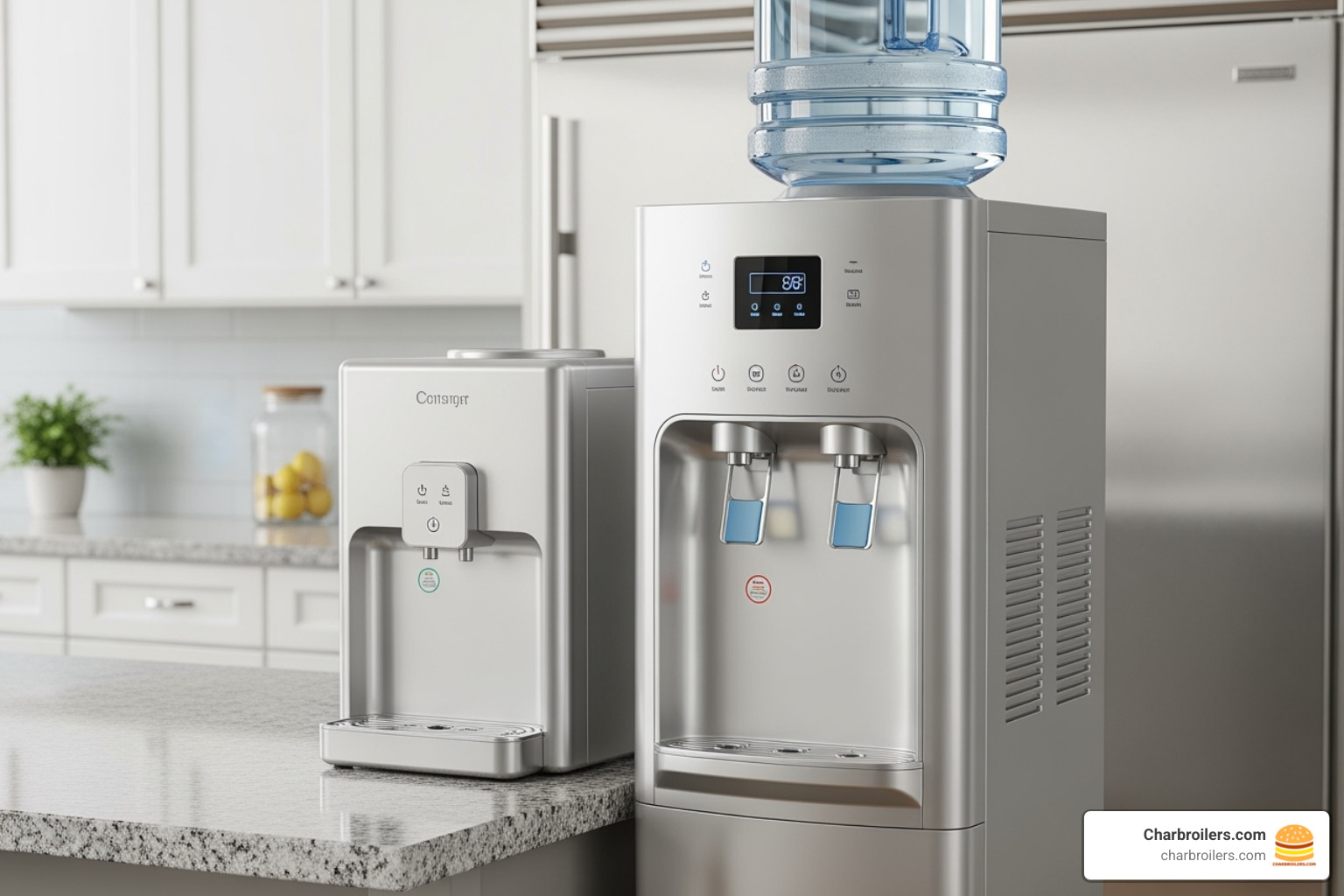
Comparing Bottled vs. Bottleless Systems
When choosing, you'll face the debate of bottled vs. bottleless systems. Both have their place, but the trend is moving toward bottleless.
Bottled coolers are portable and require no plumbing, making them great for temporary setups or locations where a water line isn't practical. The downsides include managing delivery schedules, storing bulky bottles, and the physical effort of replacement.
Bottleless coolers tap into your water line for an unlimited supply, eliminating logistical headaches. A typical office can eliminate up to 5,000 plastic bottles annually, which is both cost-effective and environmentally friendly. Advanced multi-stage filters in bottleless systems remove contaminants like lead, PFAS, and microplastics, providing cleaner, safer water. Over time, the cost savings from no recurring bottle purchases are significant.
Understanding Dispenser Configurations
Beyond the main types, consider what features matter for your daily use.
Combination units deliver hot water (around 194°F), cold water (typically 46.4°F), and fresh ice from one machine. They are popular in offices for consolidating appliances and decluttering breakrooms.
Water-only dispensers focus on delivering hot and cold filtered water without an ice maker. They are simpler, often more affordable, and sufficient if you only need water for hydration and hot beverages.
Ice-only dispensers are dedicated to ice production and storage. While not technically a water and ice dispenser, they are often paired with separate water dispensing points in commercial kitchens for maximum flexibility.
Touch-free dispensing is an increasingly important hygienic feature that reduces germ spread, which employees and customers appreciate.
Finally, child safety locks on hot water functions are essential for preventing accidental burns, providing peace of mind in homes or family-friendly businesses.
Key Features to Consider When Choosing Your Dispenser
Picking the right water and ice dispenser requires matching the tool to the job. Focusing on a few key features will save you headaches later.
Ice production capacity is measured in pounds per day (lbs/day). A small office or home may only need a unit producing 20-50 lbs/day. A busy restaurant, however, will need a commercial-grade unit producing 50 to over 1,000 pounds daily to avoid shortages during peak hours.
Don't overlook ice storage bin size. If the bin is too small, you'll run out of ice during peak times. A restaurant needs enough storage to handle busy periods without waiting for a new batch.
Water tank capacity is crucial for serving multiple hot or cold drinks in succession. Hot water tanks typically hold 0.8L to 1.2L, while cold water tanks range from 1.2L to 2.5L. This determines how much water is instantly available before the unit must reheat or cool more.
The filtration system is the heart of the dispenser. A quality filter improves taste, protects your health, and extends the life of the equipment.
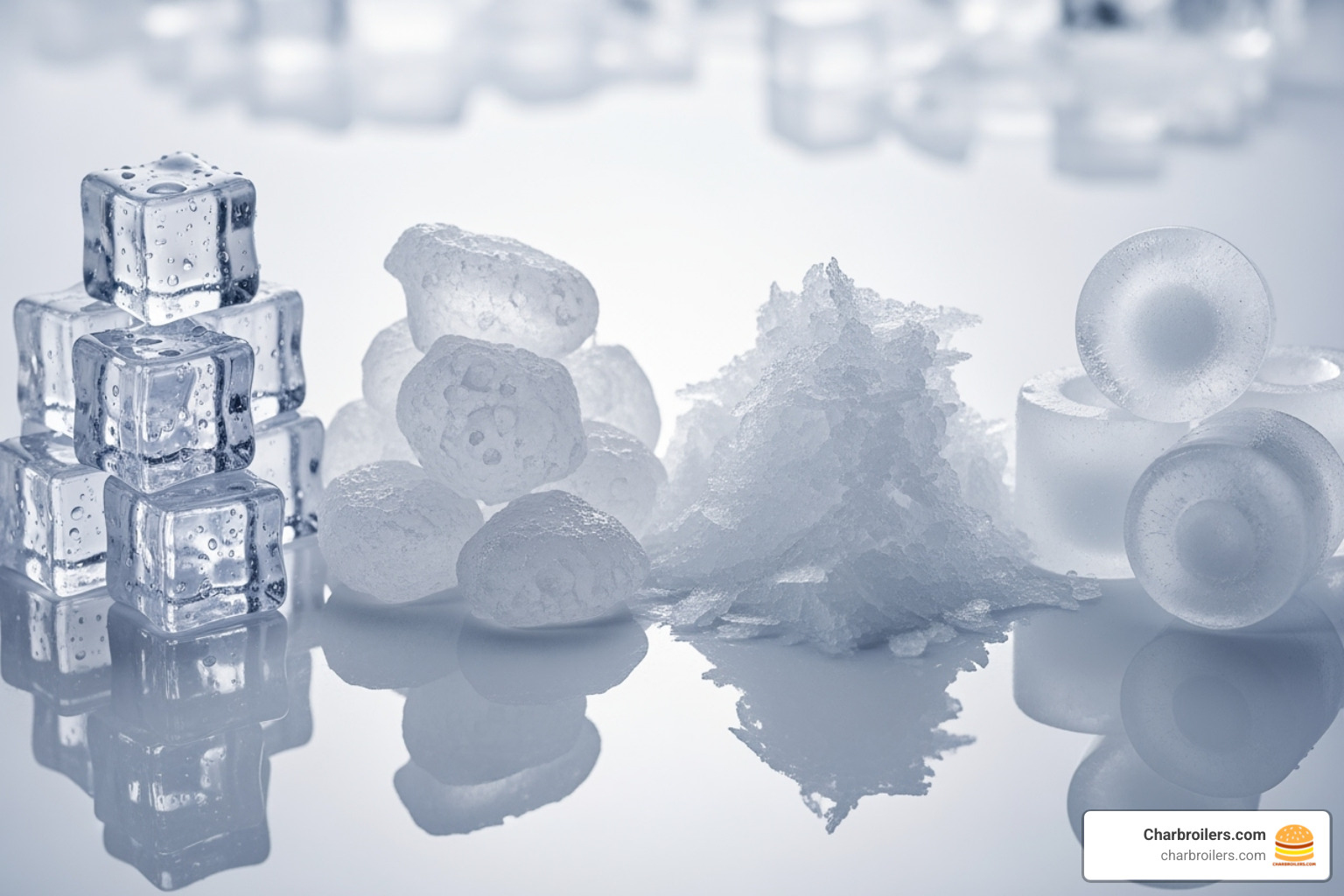
A Guide to Ice Types from a Water and Ice Dispenser
The type of ice your water and ice dispenser produces can significantly impact the customer experience.
Cube ice consists of hard, clear cubes that melt slowly, making them ideal for cocktails and soft drinks where dilution is a concern. It's the professional choice for beverage service.
Nugget ice—also called chewable or Sonic ice—has a loyal following. This soft, porous ice is a favorite in healthcare and fast-food because it's easy to chew and absorbs drink flavors. Its popularity is so great that some customers choose restaurants based on its availability.
Flake ice is a specialist type used for food displays like seafood counters and salad bars. It molds easily around products to keep them cool and is also used in medical facilities for cold therapy.
Bullet ice is common in home and small office ice makers. These hollow, cylindrical pieces are produced quickly and are versatile for everyday drinks, melting at a moderate rate.
When choosing, consider who will use the ice and for what purpose. For general beverage service, bullet or cube ice is suitable. For a premium chewable experience, a nugget ice dispenser is necessary.
Evaluating Filtration and Energy Efficiency
Filtration systems and energy efficiency are two features that save money and improve water quality.
Multi-stage filtration systems are standard in quality dispensers. Carbon filters improve taste and odor by tackling chlorine, while reverse osmosis removes dissolved solids, heavy metals, and other contaminants for exceptionally pure water. These systems remove harmful substances like lead, PFAS, and microplastics, protecting the health of everyone who uses the dispenser.
As a practical tip, plan to replace filters every 6-12 months. If installing a plumbed-in unit, a universal icemaker hose can simplify the connection.
Energy efficiency offers real savings on utility bills. Look for ENERGY STAR certification, as these models can be up to 50% more efficient than standard ones. An efficient model may cost more upfront but provides significant long-term savings and reduces your carbon footprint.
Finding the Right Water and Ice Dispenser for Your Needs
Choosing the perfect water and ice dispenser means matching the machine to your situation. A home kitchen's needs differ greatly from a restaurant's, and understanding this is key to a good investment.
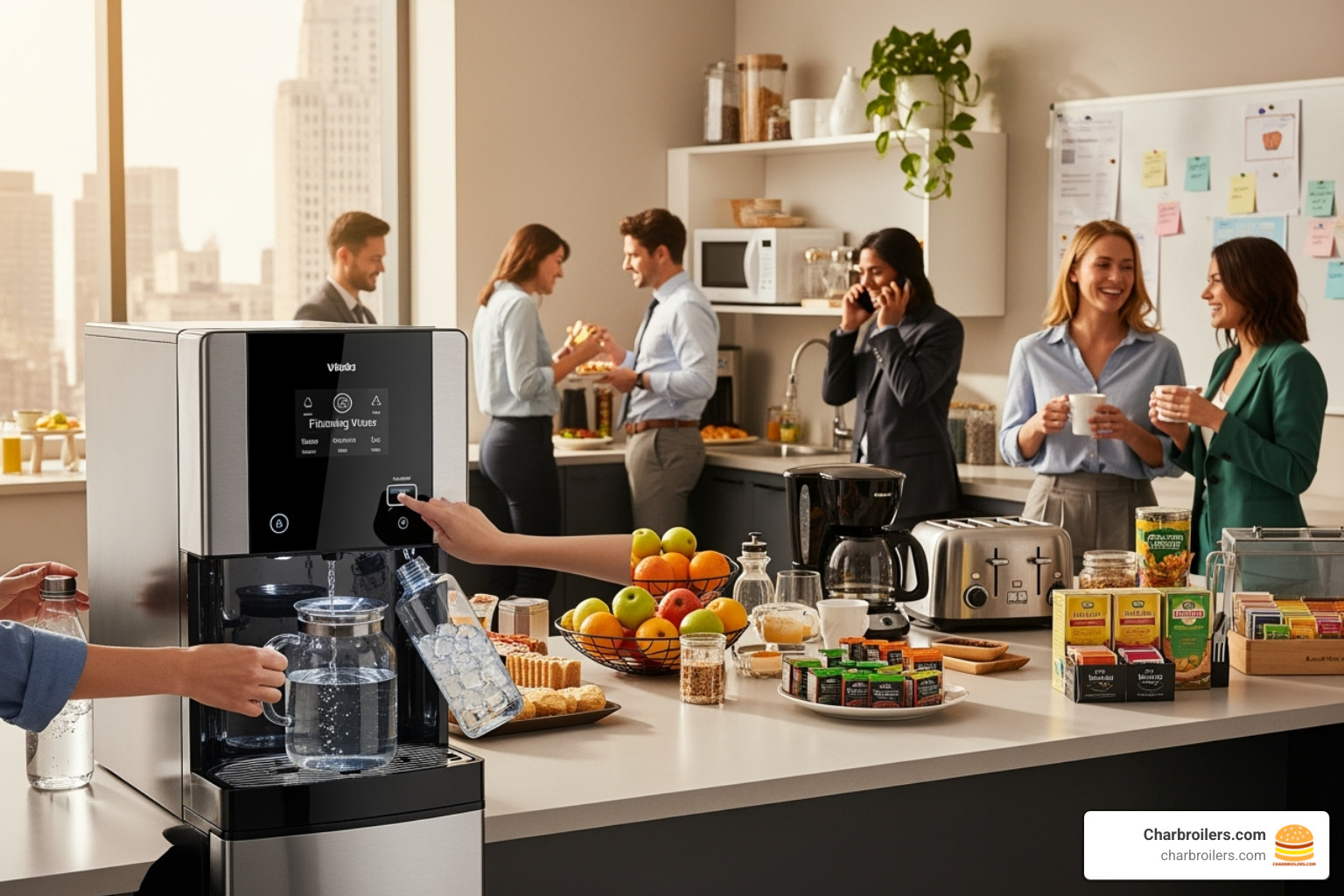
For Home and Small Office Use
For a home or small office, a compact design is a priority. Look for countertop models or slim freestanding units that fit comfortably in your space. A machine producing 20-50 lbs of ice daily is usually sufficient, with many home models offering capacities of 22-48 lbs per 24 hours. These units can produce 9-12 bullet-shaped ice cubes every 6-13 minutes.
Noise level is an important consideration in quieter environments. Look for units operating at ≤48dB, which is comparable to light rainfall. Aesthetics and ease of use—like intuitive controls and removable drip trays—are also key.
A self-cleaning function is a valuable feature that simplifies maintenance. Many models offer this convenience, providing hot, cold, and room temperature water alongside a 22 lbs/24h ice making capacity. Bottom-loading designs are another great convenience, eliminating the need to lift heavy water bottles.
For those who prefer a bottleless setup, point-of-use water coolers offer features like 4-stage filtration and 3-temperature settings. They connect to your water line for unlimited filtered water and ice, eliminating bottle management. Also, don't overlook child safety locks on hot water dispensers (which can reach 194°F) if children are present.
For Commercial and Restaurant Use
At Charbroilers.com, we know that in commercial settings, a water and ice dispenser is a critical piece of equipment for smooth operations.
High-capacity units are non-negotiable, with machines producing 50 to over 1,000 pounds of ice daily. A busy restaurant can use hundreds of pounds during a single dinner service. The growing ice dispenser market, projected to reach $1.9 billion by 2030, shows how essential these machines are.
Durability is paramount for equipment running 12-16 hours a day. Look for NSF certification, which ensures the product meets strict public health standards—a must for any food service business.
Most commercial operations choose freestanding models with direct plumbing. A point-of-use system ensures a constant supply of water and ice, eliminating the hassle of managing bottles during peak service.
Different commercial settings have unique needs: hospitals require hygienic, touch-free dispensing; hotels need reliable amenities for guests; and restaurants need specific ice types and quick staff access. Commercial models offer a variety of storage capacities (from 196 lbs to 500+ lbs) to match usage patterns.
Maintenance contracts are a worthwhile investment in commercial settings. Professional installation and regular servicing prevent expensive problems and downtime. The right water and ice dispenser also boosts workplace productivity. Easy access to water and ice keeps staff hydrated, which is crucial for safety and performance in hot kitchens.
Reliability is a necessity for restaurants. Customers expect iced drinks, recipes require ice, and staff need drinking water. A commercial-grade water and ice dispenser matching your volume and operational needs is a smart investment in your business.
Installation and Maintenance Essentials
Proper installation and regular maintenance are key to enjoying your new water and ice dispenser for years to come. Just like any kitchen appliance, it requires care to perform its best.
Choosing the right location is the first step. Ensure there's enough space for ventilation, and place it on a stable, level surface away from heat sources to save energy. For bottleless systems, the location must be near a water line.
For the power supply, ensure a matching dedicated outlet is nearby. For bottleless models, the water line connection involves tapping into a cold water supply. While this is more technical, professional installation is often quick and minimally disruptive.
Once installed, a consistent cleaning schedule is essential for hygiene and performance. Regularly wipe the exterior, clean the drip tray, and sanitize water reservoirs and nozzles. Even with a self-cleaning feature, some manual cleaning of external parts is necessary.
Filter replacement is the most important maintenance task. To ensure the removal of contaminants like lead and microplastics, change filters every 6-12 months as recommended by the manufacturer. Fresh filters ensure great-tasting water and protect the machine's internal components.
Descaling is necessary, especially in areas with hard water, to prevent mineral buildup that reduces efficiency. Follow the manufacturer's instructions to run a descaling solution, like white vinegar, through the system every few months.
For commercial settings, professional servicing is highly recommended. Service packages often include maintenance, filter replacements, and repairs, preventing costly downtime and providing peace of mind. A maintenance contract ensures experts are keeping your equipment in peak condition.
At Charbroilers.com, we know that reliable equipment is crucial. Proper care for your water and ice dispenser ensures it will last, providing clean water and fresh ice without becoming a headache. Taking these essentials seriously means one less thing to worry about in your operation.
Conclusion
This guide has covered the essentials for finding the perfect water and ice dispenser for your needs. Let's recap the key points.
The right water and ice dispenser creates a more efficient, healthy, and sustainable environment in any setting. From compact countertop models to high-capacity commercial units producing over 1,000 pounds of ice daily, there is a dispenser for every situation.
Key decisions include choosing between bottled or bottleless systems. Bottled offers portability, while bottleless provides long-term savings, reduced waste, and a continuous supply. You also need to consider ice types, from slow-melting cube ice to popular chewable nugget ice, as it impacts beverage service.
For home and small office use, prioritize convenience features like self-cleaning functions, child safety locks, and quiet, compact designs. For commercial use, durability and high capacity are non-negotiable. Look for NSF certification, direct water connections, and maintenance support to handle high-volume service.
Don't overlook advanced filtration systems for clean, safe, great-tasting water and ice. An ENERGY STAR certified model will also save on utility bills and reduce your environmental footprint.
The projected growth of the water dispenser market to $5.7 billion by 2030 proves that businesses and homeowners recognize the value of reliable hydration.
At Charbroilers.com, we understand that every piece of equipment plays a role in your success. The right water and ice dispenser keeps your team hydrated, your customers happy, and your operations running smoothly. When weighing your options, balance the features you need with your budget and consider the long-term benefits of reduced waste and lower operating costs.
Ready to explore more ways to optimize your commercial kitchen? Explore our guides to commercial kitchen equipment and find how the right tools can transform your food service operation.