

Elevate Your Drinks: Top Commercial Clear Ice Cube Makers Reviewed
Why Clear Ice Lifts Every Beverage You Serve
A commercial clear ice cube maker produces crystal-clear, slow-melting ice that improves drink presentation and minimizes dilution. Here's what sets these machines apart:
Top Features to Look For:
- Production capacity: 300-1800+ lbs per 24 hours depending on volume needs
- Ice clarity: Directional freezing technology removes air bubbles and impurities
- Cooling type: Air-cooled (easier install) or water-cooled (higher efficiency)
- Price range: $3,500-$10,000+ for commercial-grade units
- Certifications: NSF, UL, CE for safety and sanitation standards
Best For: Bars, restaurants, hotels, and catering operations where drink quality and presentation matter.
If you've ever noticed how premium cocktail bars serve drinks with perfectly transparent ice cubes while regular ice looks cloudy and white, you're seeing the difference clear ice makes. That cloudiness? It's trapped air and impurities that make ice melt faster and dilute drinks. Clear ice isn't just prettier—it's denser, melts slower, and keeps beverages tasting the way they should.
The technology behind clear ice production has come a long way. Modern commercial machines use directional freezing to push impurities out while building ice layer by layer. Some units produce cubes, others make spheres or diamonds, and high-volume models can create massive blocks for carving. The right machine depends on your volume, space, and budget.
I'm Sean Kearney from Charbroilers.com, and over my decade-plus in restaurant equipment, I've helped countless operators select the right commercial clear ice cube maker for their needs. Whether you're upgrading a hotel bar or launching a craft cocktail program, choosing the right ice equipment is as important as any other kitchen investment.
Handy commercial clear ice cube maker terms:
The Crystal Clear Advantage: Why Your Business Needs Premium Ice
In the food service world, details matter. A commercial clear ice cube maker is a strategic move that transforms your beverage program and shapes customer perception. But what makes clear ice worth the investment compared to regular cloudy ice?

The Triple Advantage: Slow Melting, Pure Flavor, and Premium Looks
The primary benefit is a slower melting rate. Regular ice is cloudy because of trapped air and impurities, which cause it to melt quickly and dilute drinks. A perfectly crafted cocktail can become a watery disappointment in minutes. Clear ice, being denser and purer, melts significantly slower, preserving the integrity of the beverage from the first sip to the last.
This purity also ensures neutral flavor. Cloudy ice can absorb odors and tastes from the water supply or freezer, interfering with the carefully balanced flavors of a premium spirit or cocktail. Clear ice is odorless and tasteless, letting the drink's ingredients shine.
Finally, the aesthetics of clear ice signal quality and lift the perceived value of a drink. A crystal-clear cube or sphere in a glass is a visual statement of attention to detail, changing an ordinary beverage into a luxury experience that customers notice and appreciate.
Ideal Applications for Clear Ice
A commercial clear ice cube maker is a valuable asset in any establishment where beverage quality is a priority.
- Bars and Lounges: Essential for craft cocktail programs where flavor preservation and presentation are paramount.
- Restaurants: Improves everything from cocktails to iced tea, preventing dilution throughout a meal.
- Hotels: Signals a commitment to quality in lobby bars, room service, and banquet halls.
- Catering Operations: Adds sophistication to beverage stations at events and keeps drinks fresh for longer.
- Cafés: Differentiates iced coffees and cold brews by keeping them bold and undiluted.
Investing in a commercial clear ice machine is an investment in your brand's reputation for quality.
Want to explore more options for keeping your business properly equipped? Check out our guide on the best commercial ice making equipment to keep your business cool.
Understanding the Technology Behind Flawless Ice
Have you ever wondered why the ice in your favorite cocktail bar looks like glass, while the ice from your freezer at home resembles a frozen cloud? The difference isn't magic—it's science. And for businesses serious about their beverage programs, understanding how a commercial clear ice cube maker creates that pristine ice is worth knowing.
Directional Freezing: The Art of Purity
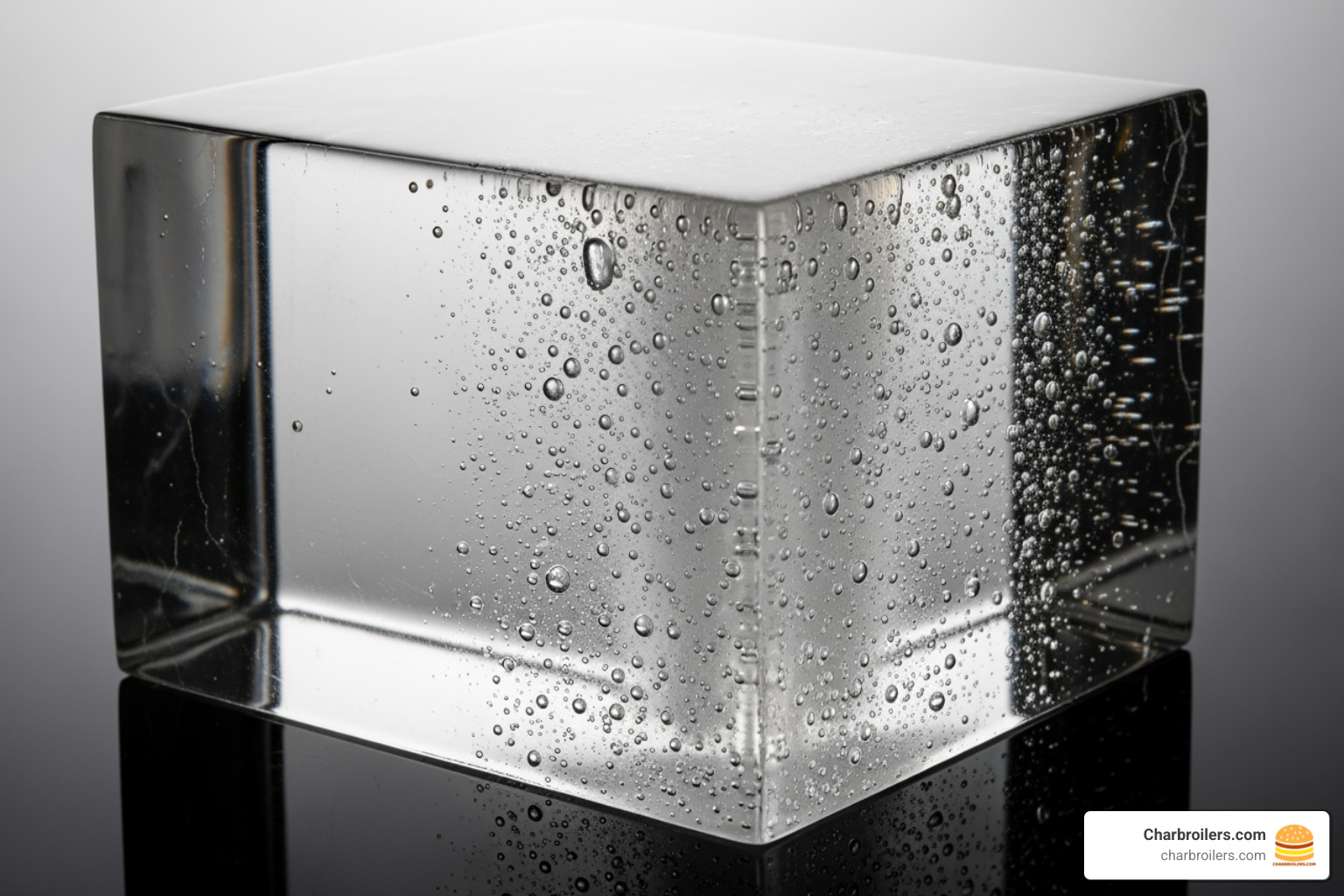
The secret behind crystal-clear ice is called directional freezing, and it's actually inspired by nature. Think about how a lake freezes in winter—from the top down, pushing impurities deeper as the ice forms. Commercial clear ice makers take this natural process and perfect it with precision engineering.
Here's what happens inside these machines. The commercial clear ice cube maker circulates water continuously over a chilled plate or mold. This constant movement is crucial—it keeps air bubbles from sticking to the forming ice and prevents impurities from getting trapped where they don't belong.
As the water circulates, freezing happens layer by layer rather than all at once. Each thin layer of ice pushes dissolved minerals, gases, and other impurities away from the freezing front. It's like slowly building a transparent wall, brick by crystal-clear brick.
The magic really happens in what the machine does with those impurities and trapped air. As the ice builds up, everything unwanted gets concentrated in the remaining unfrozen water. In a well-designed clear ice system, this waste water—now loaded with all the minerals and dissolved solids—gets drained away before it can freeze. What's left behind is pure, dense ice that's 100% transparent, without air bubbles or impurity pollution.
This controlled process creates ice that's fundamentally different from what standard ice makers produce. Regular commercial ice machines freeze water quickly from all directions at once, which traps everything inside—air, minerals, and other dissolved solids. That's what creates the cloudy, white appearance we're all familiar with. It's not dirty ice, it's just ice that formed too fast to push the impurities out.
Ice Shape Versatility
One of the most exciting aspects of modern clear ice technology is the variety of shapes you can create. A commercial clear ice cube maker isn't limited to boring old cubes anymore. Depending on the model you choose, you can produce an impressive range of premium ice forms.
Cubes remain the classic choice—they're versatile and familiar, but now with perfect clarity. Spheres have become incredibly popular in upscale bars because they melt slowly and look absolutely stunning in a rocks glass. Diamonds offer a unique geometric shape that adds sophistication to signature cocktails. And Collins spears—those long, slender ice blocks—fit perfectly in highball glasses and melt beautifully over time.
The best part? You don't need to carve or cut anything. Modern machines produce these shapes ready to serve, no ice pick required. This versatility lets you customize your presentation for different drinks and occasions, giving your beverage program a signature look that customers will remember.
Understanding how directional freezing works and what shapes are possible helps you appreciate the engineering behind that perfect ice cube. It's not just frozen water—it's precision manufacturing that happens to look beautiful in a glass. For more insights into how commercial ice production works, check out our guide on commercial ice production methods.
Choosing the Right Commercial Clear Ice Cube Maker for Your Needs
Picking the perfect commercial clear ice cube maker is a bit like choosing the right charbroilerit all comes down to understanding your operation's unique needs. You wouldn't put a massive 60-inch charbroiler in a food truck, right? Same logic applies here. Let's walk through how to find a machine that'll serve your business beautifully for years to come.
Buying Considerations: Matching Machine to Business Volume
Before you fall in love with a gleaming stainless steel ice maker, take a step back and do some honest math. How much ice does your operation actually need? Calculate your average daily consumption, then factor in your busiest daysFriday night rush, Sunday brunch, wedding season. Running out of ice during peak hours is a nightmare you don't want to experience twice.
The key is finding that sweet spot where you're producing enough ice to handle demand without paying for capacity you'll never use. For a thorough breakdown of how different models stack up, our ultimate guide to comparing commercial ice makers walks you through the decision-making process.
Types of Commercial Clear Ice Makers
Just as we offer different equipment for different kitchen setups, commercial clear ice cube makers come in several configurations. Each has its own strengths depending on your space, volume, and workflow.
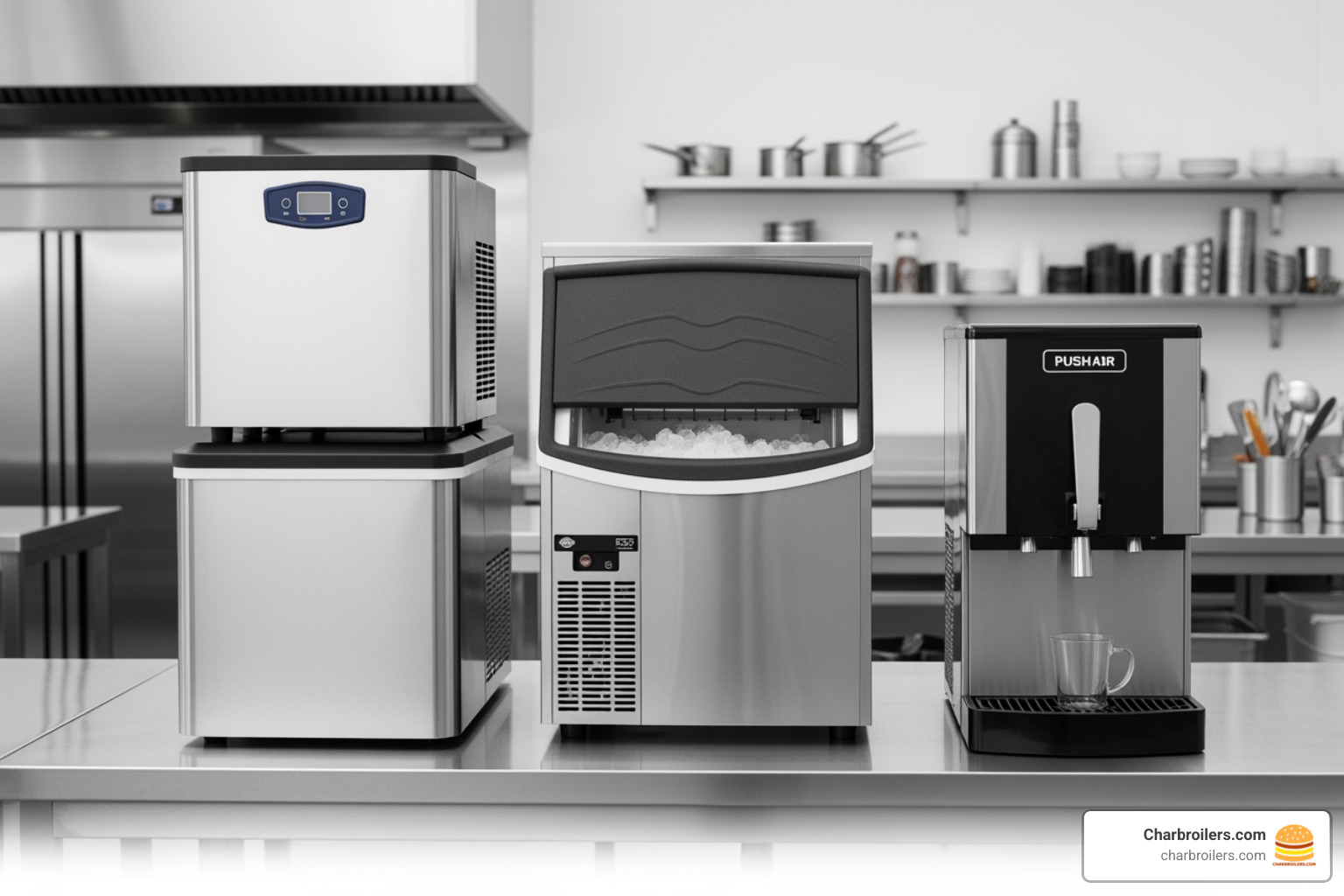
Undercounter models are the all-in-one solutionthey're self-contained units that make ice and store it in the same compact footprint. They're perfect for bars that need clear ice right at the service station or smaller restaurants where space is precious. You won't break production records with these, but for steady, accessible ice throughout service, they're hard to beat.
Modular ice machine heads are where things get serious. These are production powerhouses that sit on top of separate storage bins. The beauty here is flexibilityyou can pair a high-output ice maker with whatever size bin matches your needs. They're designed for restaurants, hotels, and bars that go through large volumes of ice daily. If you're exploring modular options, check out our guide on commercial ice makers for modular setups.
Large block ice makers occupy a specialized niche. These are industrial-scale machines that produce massive blocks for ice carving, specialized cocktail programs, or retail operations. Unless you're running a high-volume craft cocktail bar or need blocks for special events, you probably won't need this level of production.
Key Features to Evaluate in a Commercial Clear Ice Cube Maker
When you're ready to pull the trigger, here's what deserves your attention.
Production capacity is listed in pounds per 24 hours. You'll find everything from compact units producing around 300 pounds daily to heavy-duty models cranking out over 1,800 pounds every 24 hours. Match this to your peak demand, not your average dayyou need headroom for the busy times.
Cooling systems come in two flavors. Air-cooled machines use ambient air to cool their condenser. They're cost-friendly, use less energy, and are easier to install. The trade-off? They work best in clean, temperature-controlled environments with good airflow.
Water-cooled systems use water for cooling, which means they perform consistently even in hot or poorly ventilated spaces. They're typically more energy-efficient in terms of electricity, though they do consume watersomething to factor into your utility costs. Some advanced systems even feature water-circulating technology to reduce water consumption while maintaining performance.
Energy efficiency matters more than you might think. Over a machine's lifetime, electricity costs can dwarf the initial purchase price. Look for units designed for low noise and power consumption. When possible, choose ENERGY STAR certified commercial ice machines to cut energy and water use without sacrificing performance.
Certifications aren't just alphabet soupthey're your assurance that a machine meets rigorous standards. NSF certification means it meets public health standards. UL certification confirms electrical safety. CE marking indicates compliance with health, safety, and environmental protection standards. Look for models that carry these certifications for peace of mind.
Price range varies considerably. Smaller self-contained units start around $3,500, while high-capacity modular systems can easily exceed $10,000. Specialized units that create unique shapes like spheres or diamonds without carving can also be found in this range.
This is an investment in your brand's reputation for quality. When customers notice that crystal-clear sphere in their Old Fashioned, they're seeing your commitment to excellence. For a deeper dive into what you can expect to spend, take a look at our cube ice machine price guide.
Installation and Maintenance: Protecting Your Investment
You've made a smart investment in a commercial clear ice cube maker. Now comes the crucial part: getting it installed correctly and keeping it running smoothly. Proper installation and regular maintenance ensure your machine delivers consistent, crystal-clear ice, prevents unexpected breakdowns, and guarantees every cube meets the highest safety standards.
Installation Requirements for a Commercial Clear Ice Cube Maker
Installing a commercial clear ice cube maker is a job for professionals, as these machines have specific requirements.
You'll need a dedicated potable water line for ice production and, for water-cooled models, a second line for cooling. Proper drainage is also essential to carry away purged water, requiring a nearby floor drain or approved connection to prevent health hazards and water damage.
The electrical requirements are significant. These machines often need a dedicated circuit with the correct voltage and amperage. Always check the manufacturer's specifications and have a licensed electrician handle the wiring.
Finally, ensure adequate ventilation clearance, especially for air-cooled models that need space for airflow to prevent overheating. Some modular units offer flexible exhaust options for easier placement. Given these complexities, professional installation is essential to prevent future problems and keep your warranty intact.
The Importance of Water Quality and Maintenance
The water going into your commercial clear ice cube maker is as important as the machine itself. A water filtration system is a necessity, not a luxury. It removes minerals and sediments that cause cloudy ice and harmful scale buildup. Scale clogs water lines, reduces efficiency, drives up energy costs, and leads to expensive breakdowns.
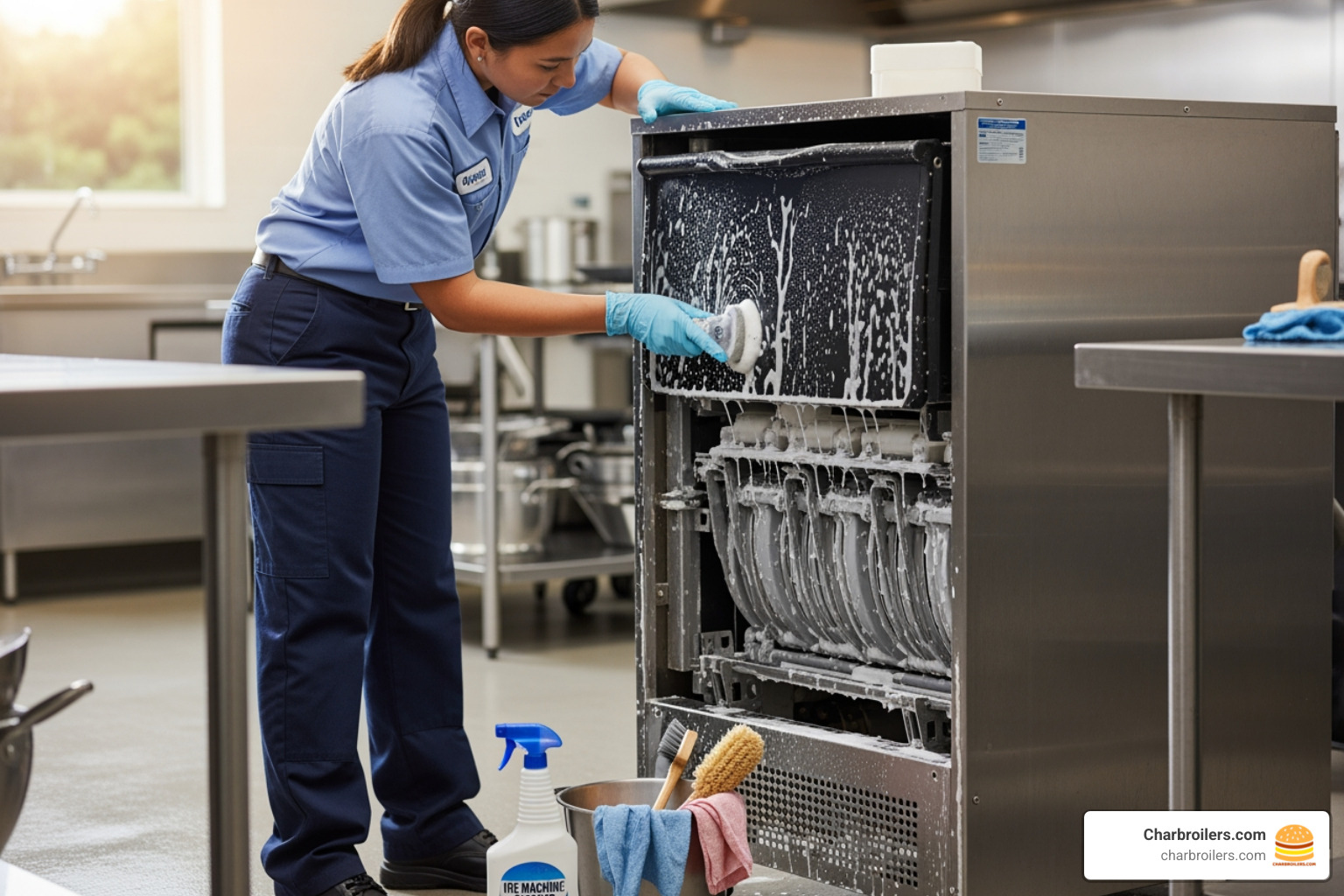
Regular descaling and sanitizing are crucial to prevent scale buildup and kill bacteria. Many modern machines simplify this with features like automatic cleaning cycles, one-touch controls, and dishwasher-safe components. However, these automated features complement, not replace, a manual cleaning schedule. Always follow your manufacturer's guidelines. Some machines even have built-in antimicrobial protection to help keep ice clean between manual cleanings.
Even with diligent daily care, professional servicing should be part of your maintenance plan. Schedule regular check-ups with a qualified technician who can perform deeper cleaning, inspect components, and spot potential issues. To find a technician, consult your machine's documentation or contact an authorized service provider for your brand. The FDA's Food Code also provides guidelines on ice machine maintenance and sanitation standards that many health departments follow.
The bottom line? Taking care of your commercial clear ice cube maker ensures it operates at peak performance, consistently delivering the premium ice your customers expect.
Frequently Asked Questions about Commercial Clear Ice Makers
We get a lot of questions about these fantastic machines, so let's tackle some of the most common ones to help you make an informed decision.
How is a commercial clear ice maker different from a residential one?
The differences are significant. A commercial clear ice cube maker is built for the rigors of a business, while residential units are for home convenience.
- Production Volume: Commercial machines produce hundreds or even thousands of pounds of ice daily, while residential models produce a very small fraction of that.
- Durability: Commercial units feature heavy-duty construction, often with stainless steel bodies, to withstand continuous use in demanding environments.
- Duty Cycle: Commercial machines are designed for a continuous duty cycle to keep up with high-volume demand, whereas residential units operate intermittently.
- Installation: Commercial models have complex installation requirements (dedicated water, drainage, electrical) that necessitate professional setup. Residential units are generally simpler to install.
For those curious about bringing commercial-grade ice to their home, we have a guide on top commercial ice makers for home use: a buyer's guide to residential chill.
How much ice do I need for my business?
Calculating your ice needs is crucial. Here's a general guideline:
- Restaurants: 1.5 to 2 pounds of ice per customer.
- Bars: 3 to 5 pounds of ice per customer, especially for cocktails.
- Hotels: 5 pounds per room, plus extra for on-site dining and bars.
- Cafés: 1 to 2 pounds per customer for iced beverages.
Always plan for peak usage. Your machine needs to handle your busiest days, not just your average ones. It's better to slightly overestimate your needs than to run out during a rush. A medium-sized restaurant might need a machine producing around 600 lbs per 24 hours, while a large hotel could require a unit producing over 1,800 lbs.
Are water-cooled or air-cooled ice machines better?
The "better" choice depends entirely on your specific circumstances, as both have distinct advantages.
Air-cooled machines are generally less expensive to buy and install. They use less water and are easier to maintain. However, they release hot air, which can heat up your kitchen, and they are less efficient in hot environments (above 80°F). They also require significant ventilation clearance.
Water-cooled machines offer more consistent production, even in hot kitchens, because their performance isn't affected by ambient air temperature. They are also quieter and don't add heat to the room. The downsides are a more complex and expensive installation, and significant water consumption for the cooling process, which increases utility costs.
For a business in a moderate climate with good ventilation, an air-cooled unit might be the most cost-effective choice. For a high-volume operation in a hot or cramped kitchen, a water-cooled unit may offer more reliable performance. It's a balance between initial investment, ongoing utility costs, and your specific environment.
Conclusion
If you've made it this far, you already know that great beverages start with great ice. Investing in a commercial clear ice cube maker isn't just about adding another appliance to your kitchen—it's about showing your customers you care about every detail of their experience. From the first visual impression of crystal-clear ice to the last sip that tastes exactly as intended, this equipment delivers on quality in ways your guests will notice and appreciate.
We've walked through the real advantages together: ice that melts slower and keeps drinks from getting watered down, pure flavor without any off-tastes or odors, and that unmistakable premium look that tells customers they're somewhere special. The directional freezing technology behind these machines might sound technical, but what matters is the result—consistently beautiful, slow-melting ice that lifts every beverage you serve.
Choosing the right machine comes down to understanding your business. Whether you need a space-saving undercounter unit for your craft cocktail bar or a high-capacity modular system for your busy hotel, there's a commercial clear ice cube maker that fits. We've covered the key decision points: matching production capacity to your actual needs, weighing the pros and cons of air-cooled versus water-cooled systems, and ensuring your machine carries the proper NSF, UL, and CE certifications. And let's not forget that proper installation and regular maintenance—paired with good water filtration—are what keep your investment performing beautifully for years to come.
At the end of the day, a commercial clear ice cube maker does more than just make ice. It helps set your establishment apart in a competitive market. It shows attention to detail. It improves your bottom line by reducing waste and increasing perceived value. Most importantly, it makes your customers happy—and that's what keeps them coming back.
Now that your beverage program is perfected with crystal-clear ice, it's time to make sure your kitchen is just as impressive. Explore our guide to commercial charbroilers for your restaurant and let's keep building the food service operation of your dreams, one quality piece of equipment at a time.