
Beyond the Cube: A Buyer's Guide to Commercial Bar Ice Makers
Why Commercial Bar Ice Machines Are Essential to Your Bar's Success
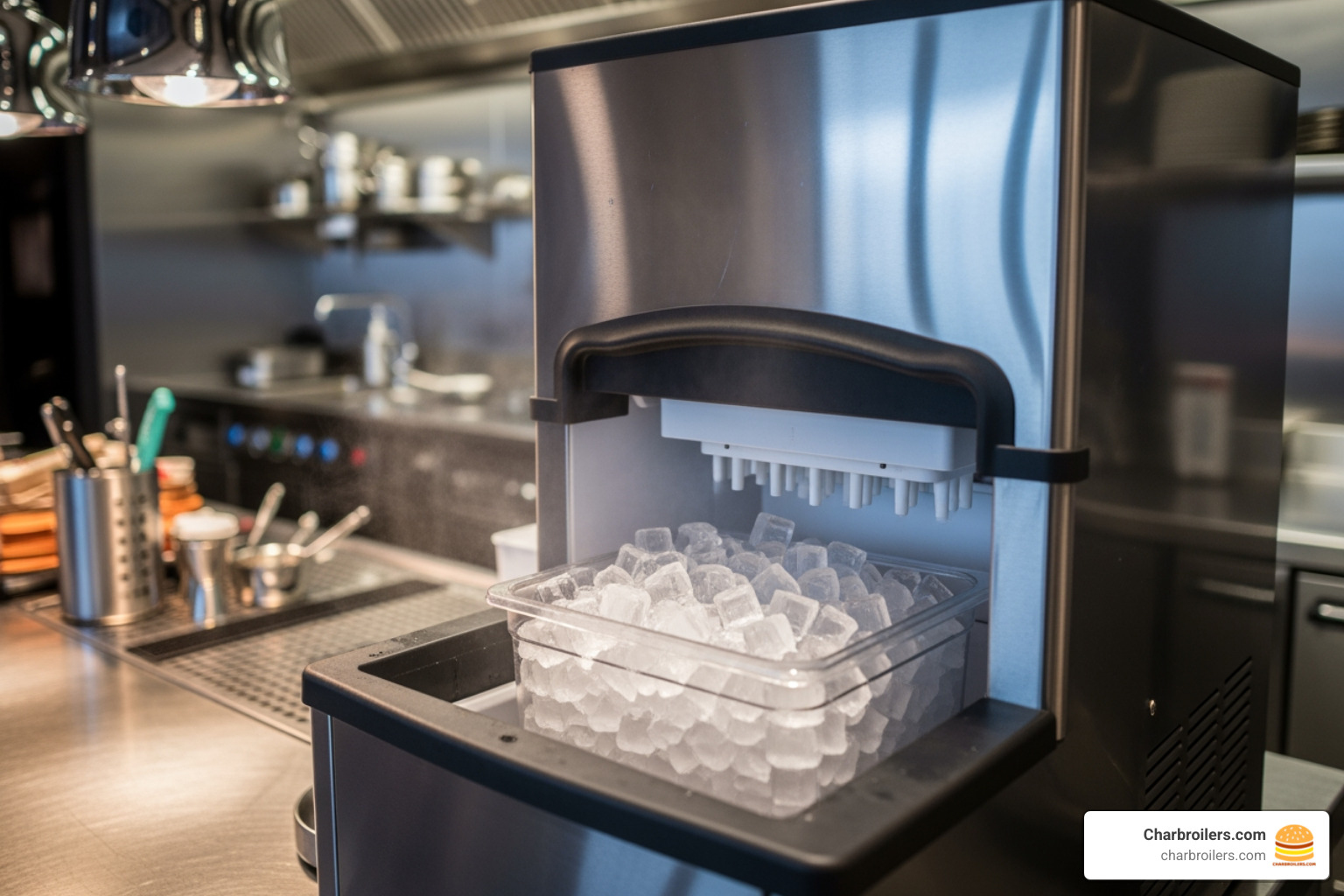
A commercial bar ice machine is critical equipment for any bar, restaurant, or hospitality venue serving cold beverages. The right machine ensures you never run out of ice during peak hours, maintains drink quality, and keeps customers satisfied.
Quick Guide to Choosing a Commercial Bar Ice Machine:
- Determine your ice type - Cube ice for cocktails, nugget ice for soft drinks, gourmet ice for premium spirits
- Calculate daily production needs - Estimate 1.5 lbs of ice per customer during peak hours
- Choose your machine type - Undercounter (compact, low-volume), modular (high-volume, customizable), or countertop (self-serve nugget ice)
- Select condenser type - Air-cooled (lower upfront cost, easier installation) or water-cooled (efficient in hot kitchens, higher water costs)
- Consider key features - Antimicrobial protection, one-touch cleaning, dishwasher-safe components, energy efficiency
- Plan for maintenance - Regular cleaning, descaling, and filter replacement extend machine life
The ice you serve affects everything from drink temperature and dilution rate to visual presentation and customer perception. A well-chosen commercial bar ice machine becomes a workhorse that quietly supports your operation, while a poor choice leads to frustrated staff, disappointed customers, and lost revenue during your busiest shifts.
As Sean Kearney from Charbroilers.com, I've spent over a decade helping bars and restaurants find the right commercial bar ice machine for their specific needs, from compact undercounter units to high-capacity modular systems. This guide breaks down everything you need to know to make a smart buying decision that fits your space, budget, and service volume.
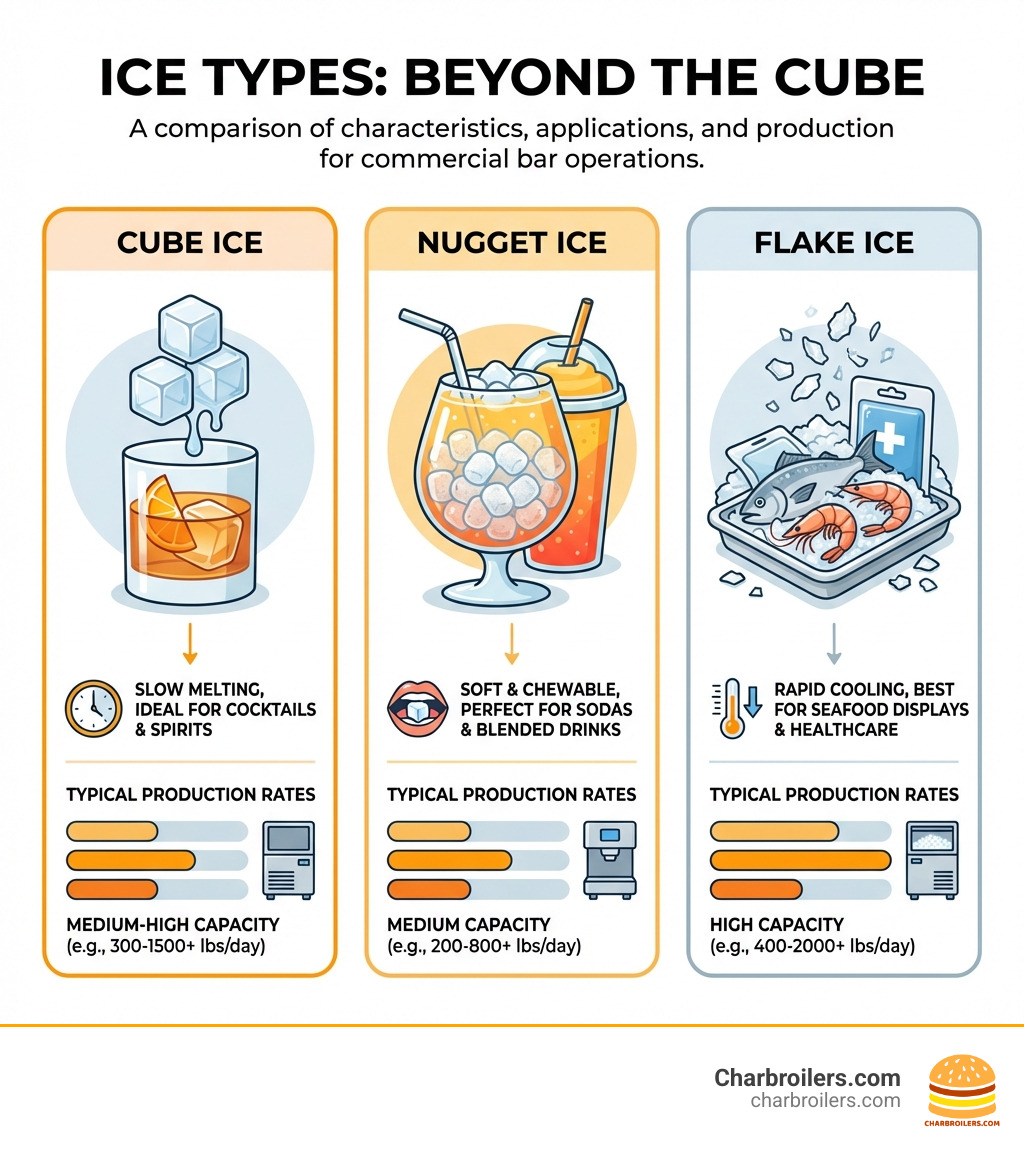
Commercial bar ice machine terms to know:
Decoding the Machine: Types of Bar Ice Makers
Choosing the right type of commercial bar ice machine is the first step in ensuring your establishment runs smoothly. These machines come in various configurations, each designed to meet specific needs regarding space, production volume, and convenience. From compact units tucked under the counter to robust systems built for high-volume operations, understanding these differences is key.
Undercounter Ice Machines
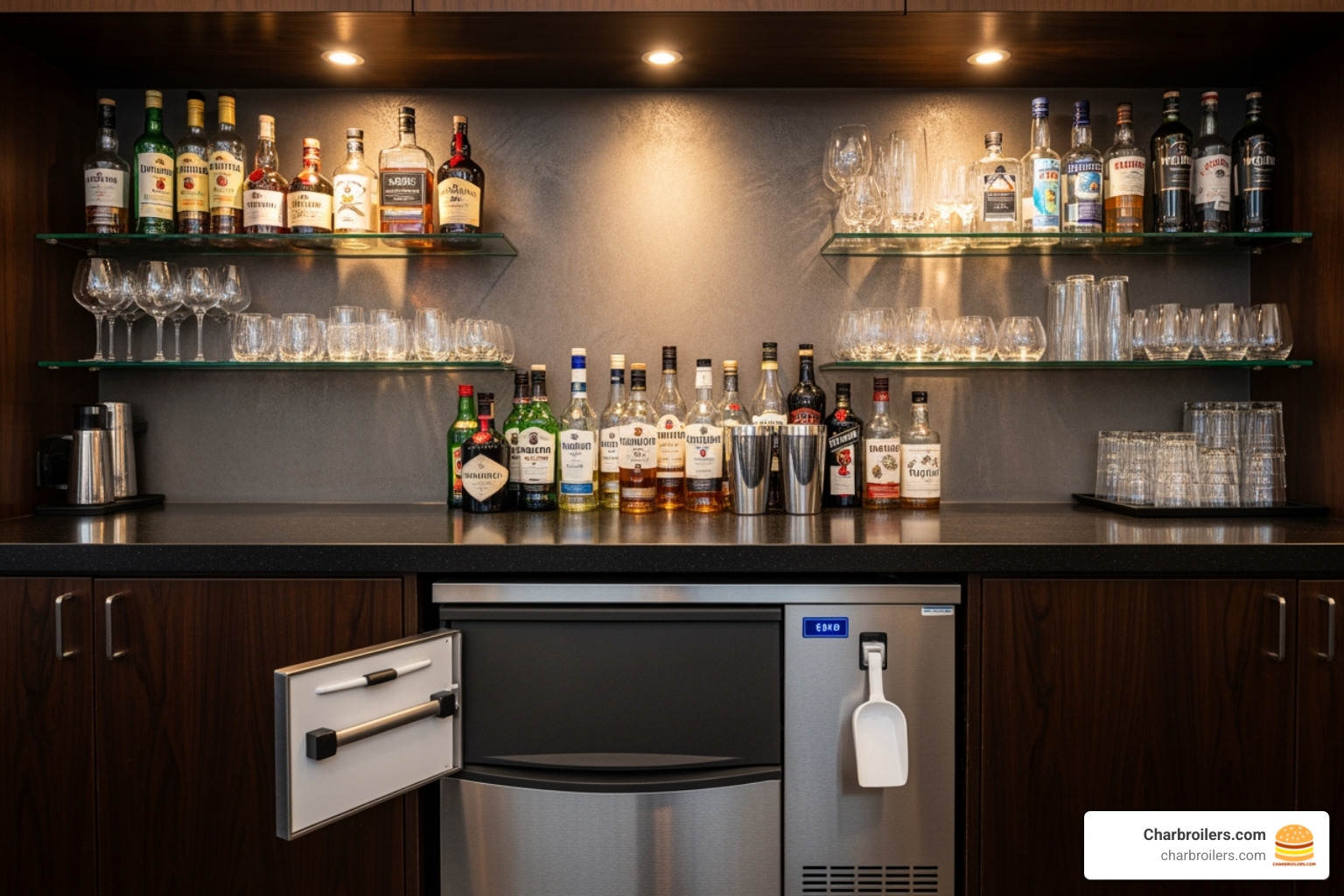
Undercounter commercial ice machines are the unsung heroes of many bars. Their compact design makes them ideal for small-volume ice production and perfect for fitting beneath counters or in areas where floor space or height restrictions prohibit larger equipment. These all-in-one units typically include both the ice maker and a storage bin, making them a self-contained solution. They are particularly well-suited for bar stations where bartenders need immediate access to ice without having to travel far. If you're running a smaller bar or need supplemental ice at specific stations, an undercounter unit might be your best bet. We offer a range of options for businesses looking for compact yet powerful solutions. For more on smaller units, check out our guide: Don't sweat the small stuff: Top small commercial ice machines for your business.
Modular Ice Machines
For bars with higher ice demands or specific spatial requirements, modular ice machines offer ultimate flexibility. These commercial ice machines allow you to build your own custom unit by selecting the ice-making head and the storage bin separately. This modularity means you can pair a high-production head with a bin size that perfectly matches your daily needs, or even stack multiple heads on a single bin for immense capacity. This setup is fantastic for customizable setups, allowing us to tailor the system to your bar's unique layout and volume. This design also makes maintenance and upgrades simpler since components can be swapped out individually. Consider these for high-volume needs where flexibility is paramount. Learn more about customizing your setup: Cool choices for commercial ice maker and bin setups and ensure you have the right storage with Don't get left in the cold: Your guide to buying the best commercial ice storage bin.
Countertop Ice & Water Dispensers
While less common for primary bar ice production, countertop ice machines, particularly those that dispense nugget ice and water, can be valuable additions to certain bar areas or breakrooms. These machines are ideal for self-service applications, allowing customers or staff to easily get chewable nugget ice and water. Nugget ice, often described as "the people's ice," is a consumer favorite for its soft, chewable texture, making it perfect for fountain drinks, smoothies, and general beverages. While you might not be making craft cocktails with this, it's a great option for supporting other areas of your business. For more on dispensing solutions, see our guide: Dispense the truth about commercial ice dispensers.
The Perfect Chill: Matching Ice Type to Your Menu
The type of ice you serve is not just an afterthought; it's a crucial ingredient that impacts drink quality, presentation, and even customer satisfaction. Different ice types interact with beverages in unique ways, affecting dilution, temperature, and visual appeal. Choosing the right ice for your bar's menu can lift your offerings from good to exceptional.
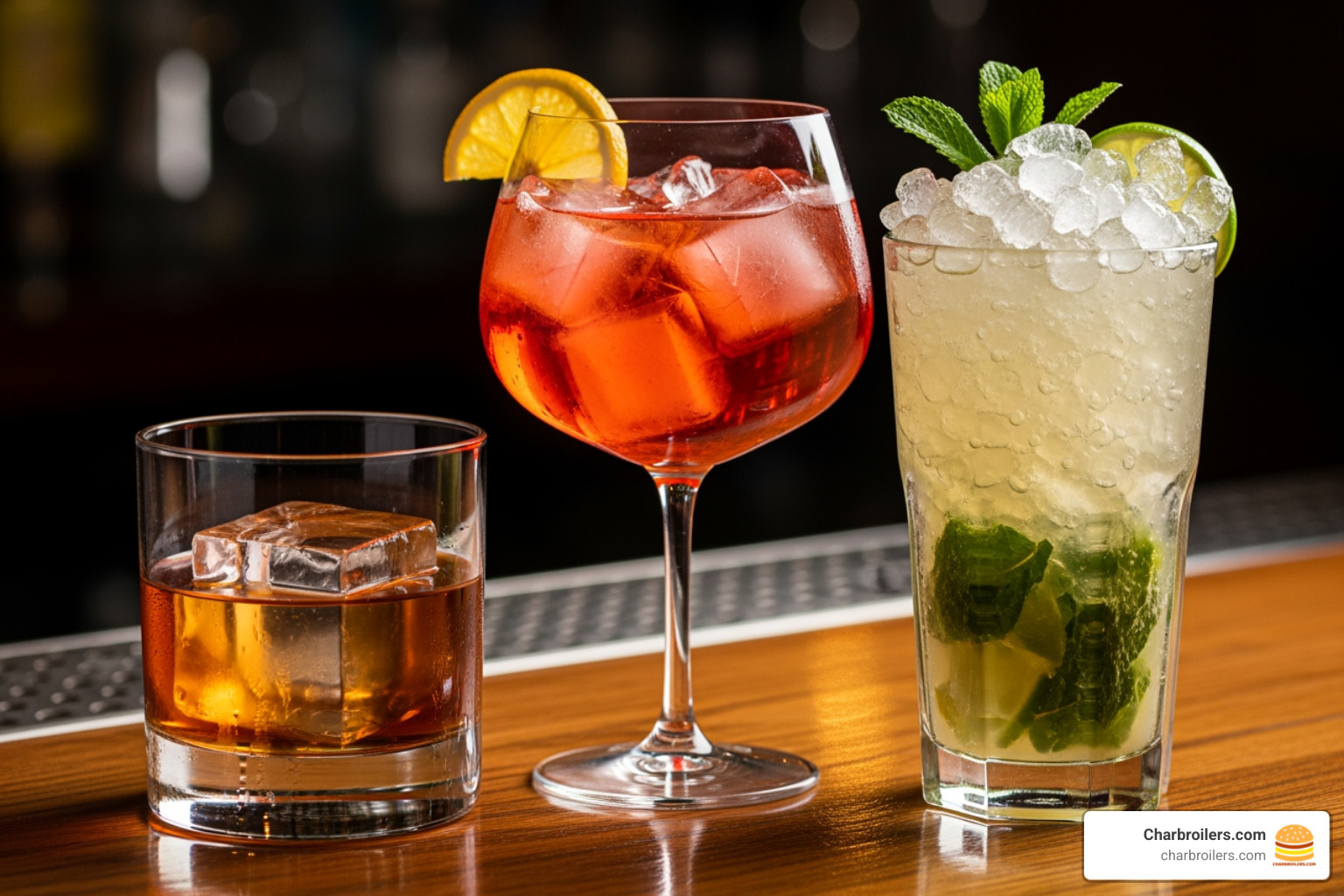
Cube Ice (Full & Half)
Cube ice is the classic choice for most bar applications, and for good reason. It’s dense, melts slowly, and provides excellent chilling power without over-diluting drinks. This makes it perfect for high-end cocktails and spirits, where maintaining the drink's integrity is paramount.
- Full Cubes: These large, solid cubes melt very slowly, making them ideal for premium spirits served neat or on the rocks, and for craft cocktails where minimal dilution is desired. Their substantial size also adds a sophisticated aesthetic to drinks. If you're aiming for that "big chill" effect, full cubes are the way to go. We have a guide specifically for this: The big chill: How to choose the right large cube ice machine for premium drinks. For truly clear and impressive ice, explore Elevate your drinks: Top commercial clear ice cube makers reviewed.
- Half Cubes: Smaller and more versatile than full cubes, half cubes are an excellent general-purpose ice for a wide range of beverages, from sodas and iced teas to mixed drinks. They still offer good chilling and reasonable melt rates but pack more tightly into a glass, offering better displacement and a satisfying "clink."
Nugget Ice (Pearl or Chewable Ice)
Nugget ice, also known as Pearl Ice or chewable ice, has gained immense popularity for its soft, chewable texture and rapid cooling capabilities. This ice type is formed from compressed flakes, creating small, irregular pieces that are easy to chew and absorb drink flavors.
Nugget ice is fantastic for:
- Blended drinks and smoothies: Its soft texture blends easily, creating smooth, consistent beverages.
- Sodas and fountain drinks: It quickly chills drinks and is a favorite among customers who enjoy chewing their ice.
- Healthcare facilities: Its chewable nature makes it safer and more palatable for patients.
If your bar serves a lot of blended concoctions or has a busy soda fountain, a commercial bar ice machine producing nugget ice is a smart investment. Dive deeper into this popular ice type: Chew on this: Everything about commercial nugget ice machines.
Specialty and Gourmet Ice
Beyond the standard cubes and nuggets, some bars, especially those focusing on high-end mixology, opt for specialty or gourmet ice. This can include clear, slow-melting spheres, large format cubes, or unique shapes designed to make a statement. These types of ice are about enhancing the presentation and experience of premium spirits and cocktails.
Our UCG series machines, for instance, are perfect for mixologists looking to lift cocktails and everyday drinks to a whole new level. Gourmet ice ensures minimal dilution and maximum visual impact, making each drink a work of art. For those looking to really impress, exploring options for specialty ice can set your bar apart. Find more about premium options: Top premium commercial ice makers to keep your cool factor high.
Key Factors for Choosing Your Commercial Bar Ice Machine
Selecting the right commercial bar ice machine involves more than just picking an ice type. We need to consider practical factors like production capacity, cooling methods, size, and efficiency to ensure the machine seamlessly integrates into your operation and meets your specific demands.
Calculating Capacity for Your Commercial Bar Ice Machine
One of the most critical decisions is determining the correct ice production capacity. Running out of ice during a busy shift is a bartender's nightmare! Ice machine capacity is typically measured in pounds per 24 hours. To estimate your needs, consider:
- Peak demand: How much ice do you use on your busiest day? A general rule of thumb for bars is to estimate 1.5 to 3 pounds of ice per customer.
- Storage capacity: The ice machine's storage bin capacity also matters. You need enough storage to handle peak demand, even if the machine isn't constantly producing.
- Ambient and water temperatures: Ice production rates are affected by ambient air temperature and incoming water temperature. Machines produce less ice in warmer environments (e.g., 90°F ambient/70°F water) compared to cooler conditions (e.g., 70°F ambient/50°F water). Always check a machine's specifications at both ranges.
For example, a machine rated at approximately 968 lbs/24 hours at 70°F/50°F will produce less—around 896 lbs/24 hours—at 90°F/70°F. If your bar in Seattle, WA, has a hot kitchen or limited ventilation, this temperature impact is crucial. We offer a range of high-capacity models suitable for demanding environments.
Condenser Types: Air-Cooled vs. Water-Cooled
The condenser is the component that removes heat from the refrigeration system. Commercial ice machines primarily use two types of condensers: air-cooled and water-cooled. Each has distinct advantages and disadvantages for a bar setting.
| Feature | Air-Cooled Condenser | Water-Cooled Condenser |
|---|---|---|
| Initial Cost | Generally lower | Generally higher |
| Water Usage | Minimal (only for ice production) | High (for cooling the condenser and ice production) |
| Energy Use | Can be higher, especially in warm environments | Generally lower, more consistent efficiency |
| Heat & Noise | Discharges heat and noise into the surrounding air | Discharges heat into water, quieter operation |
| Installation | Easier, requires good ventilation | More complex, requires dedicated water lines and drains |
| Ideal Environment | Well-ventilated areas, cooler climates | Hot kitchens, tight spaces, areas with poor ventilation |
Air-Cooled Condensers: These are the most common and often the easiest to install. They pull in ambient air to cool the refrigerant, then expel warm air. This means they require adequate clearance around the machine for airflow (typically 6-12 inches) and can add heat and noise to your bar or kitchen. In a busy, warm bar in Seattle, an air-cooled unit might work harder and be less efficient. However, they conserve water, which can be a significant operating cost saving. You can browse our various air-cooled models to find the right fit for your space.
Water-Cooled Condensers: These condensers use a continuous flow of water to cool the refrigerant, then drain the warmed water away. They are more efficient in hot environments or confined spaces where airflow is restricted, as they don't discharge heat into the room. This can lead to lower energy consumption and quieter operation. The trade-off is higher water usage and potentially higher installation costs due to the need for dedicated water lines and drainage. In areas with high water costs or strict water usage regulations, this might be a concern. However, for a bar with a consistently warm environment, the efficiency gains can be substantial. Explore our selection of water-cooled models to see if one is right for your bar.
Essential Features and Certifications
Beyond the basics, several features can significantly impact the usability, longevity, and hygiene of your commercial bar ice machine:
- Energy Efficiency: While not all commercial ice machines carry an Energy Star rating (some models like those producing 316 lb/24 hours or 600 lb/24 hours may not), looking for energy-efficient models can reduce operating costs over time. This is especially important for equipment that runs 24/7.
- Ease of Cleaning: Ice machines can be breeding grounds for mold and mildew if not cleaned regularly. Look for features like one-touch sanitize/descaling controls and dishwasher-safe food zone components, which simplify maintenance and ensure hygienic ice production. Some systems even include built-in antimicrobial protection, like PURE ICE® to inhibit bacterial growth.
- Durability: A commercial bar ice machine is a significant investment. Look for robust construction and reliable brands that are known for their longevity in demanding commercial environments.
- NSF Certification: This certification from NSF International ensures that the equipment meets strict public health standards for design, materials, and construction. Always look for NSF-certified machines to guarantee safety and compliance.
For a deeper dive into what makes a commercial ice machine reliable, refer to Stay cool under pressure: Commercial ice makers machines reviewed.
Installation, Maintenance, and Long-Term Value
Purchasing a commercial bar ice machine is just the beginning. To ensure optimal performance, longevity, and a solid return on your investment, you need to consider installation requirements, ongoing maintenance, and the specifics of warranties. Understanding these factors upfront can save you headaches and unexpected costs down the line.
Maintenance Needs of a Commercial Bar Ice Machine
Regular maintenance is paramount for any commercial kitchen equipment, and ice machines are no exception. Neglecting maintenance can lead to breakdowns, reduced ice quality, and costly repairs.
- Regular Cleaning: Ice machines need to be cleaned and sanitized regularly to prevent the buildup of mold, slime, and mineral deposits. Features like one-touch sanitize/descaling controls and dishwasher-safe food zone components make this process much easier. Some machines even boast PURE ICE® built-in antimicrobial protection to help keep things clean between deep cleans.
- Descaling: Mineral deposits from water can accumulate on internal components, reducing efficiency and ice quality. Descaling removes these deposits.
- Water Filter Replacement: A good water filtration system is essential for producing clear, clean-tasting ice and protecting your machine from mineral buildup. Filters need to be replaced periodically according to the manufacturer's recommendations. Many manufacturers offer extended warranty programs if you use their recommended filters.
- Professional Servicing: Beyond daily and weekly cleaning, professional servicing (typically annually or semi-annually) can catch potential issues before they become major problems, ensuring your machine runs efficiently for years.
By adhering to a consistent maintenance schedule, you can ensure your commercial bar ice machine operates at its peak, producing high-quality ice day in and day out. To find a machine that matches your operational and maintenance needs, explore our curated selection of commercial ice machines.
Optimizing Production and Storage
Even with the perfect machine, how you manage your ice can make a big difference, especially during peak hours.
- Meeting Peak Demand: If you operate a high-volume bar, ensure your total ice production capacity significantly exceeds your average daily needs. This buffer is crucial for those unexpected rushes or events.
- Proper Bin Sizing: Your ice storage bin should be large enough to hold a full 24 hours of ice production, ideally with some extra capacity. Modular systems allow you to pair ice makers with appropriately sized bins. Some bins feature sliding ice gates to reduce spillage and improve safety during ice removal.
- Ice Scooping Best Practices: Always use a dedicated, sanitized ice scoop. Never use glassware to scoop ice, as this can chip the glass and contaminate your ice supply with glass shards.
- Staggering Production Cycles: If you have multiple ice machines, staggering their production cycles can help maintain a consistent supply and reduce strain on your electrical system.
To ensure you're always prepared, consider connecting with local experts in Seattle, WA, who can help you assess your needs and optimize your setup. You can find local service and sales options through us.
Understanding Price and Warranty
The cost of a commercial bar ice machine isn't just the sticker price; it includes installation, operating costs, and potential repairs.
- Initial Cost: Prices for commercial bar ice machines can vary widely, from a few thousand dollars for smaller undercounter units to upwards of $10,000 for high-capacity modular systems. Factors like production capacity, ice type, condenser type, and brand influence the cost. For an overview of pricing, check out Your essential ingredient: A cube ice machine price guide.
- Operating Costs: This includes electricity, water usage (especially for water-cooled models), and the cost of water filters. These ongoing expenses should be factored into your budget.
- Warranty Coverage: Warranties typically cover parts and labor for a certain period (e.g., 3 years parts & labor for the ice maker, 5 years parts for the evaporator & compressor). Some manufacturers offer extended warranties on key components, like a 7-year parts & labor warranty for the evaporator, often contingent on enrolling in a filter program and using their recommended water filters. Always read the warranty terms carefully to understand what's covered and what might void it. This can be a significant factor in the long-term value of your investment.
- Financing Options: We understand that purchasing commercial equipment is a big decision. We offer financing options custom for food service operations to help you acquire the equipment you need without a massive upfront capital outlay. Alternatively, some businesses explore renting options. For more on that, see Renting commercial ice machines made easy and breezy.
Conclusion
Choosing the right commercial bar ice machine is a strategic decision that impacts your bar's efficiency, drink quality, and bottom line. By carefully considering the different types of machines, the ideal ice for your menu, critical factors like capacity and condenser type, and long-term maintenance and warranty, you can make an informed choice that will serve your business well for years to come.
From the slow-melting elegance of full cubes in a craft cocktail to the chewable comfort of nugget ice in a soda, the ice you serve is an essential ingredient that improves the customer experience. Don't underestimate its power! We at Charbroilers.com are here to help you steer these choices and find the perfect commercial bar ice machine for your establishment in Seattle, WA.
Ready to equip your bar with the best? Explore our complete guide to commercial kitchen equipment to build the perfect restaurant.