

Dispense the Truth About Commercial Ice Dispensers
Why Every High-Volume Kitchen Needs the Right Ice Solution
A commercial ice dispenser is more than just a convenience—it's a critical piece of equipment that directly impacts your operation's efficiency, hygiene standards, and customer satisfaction. These machines deliver ice quickly and cleanly with the push of a button or wave of a hand, eliminating the need for scoops, open bins, and the contamination risks that come with them. Whether you're running a busy restaurant, managing a hotel, or operating a healthcare facility, the right dispenser ensures cold drinks stay cold, food displays stay fresh, and your team stays focused on service instead of ice management.
Key Features of Commercial Ice Dispensers:
- Touchless or lever-operated dispensing to reduce contamination
- Production capacities ranging from 80 lbs to over 650 lbs per day
- Ice types including cube, nugget, and flake for different applications
- Built-in filtration systems for cleaner, better-tasting ice
- Countertop, freestanding, and hotel-style configurations to fit any space
Main Benefits:
- Improved hygiene through reduced hand contact
- Consistent ice availability during peak service hours
- Labor savings by eliminating bagging and scooping tasks
- Cost savings over purchasing bagged ice long-term
The commercial ice dispenser has become essential in , high-volume foodservice environments where speed and sanitation cannot be compromised. Ice dispensers streamline operations, maintain hygiene standards, and ensure continuous ice production—whether you're serving hundreds of cocktails on a Saturday night or keeping patient hydration stations stocked around the clock.
I'm Sean Kearney, founder of Charbroilers.com, and with over a decade of experience helping restaurants and foodservice operations find the right equipment, I've seen how the right commercial ice dispenser can transform daily operations and protect your bottom line. This guide will walk you through everything you need to know—from choosing the right type and capacity to understanding installation requirements and maintenance schedules—so you can make a confident, informed decision for your business.
Understanding the Types and the Ice They Make
Choosing a commercial ice dispenser is like picking the right tool for the job. Matching the dispenser to your operation prevents daily headaches and ensures smooth service.
First, consider the unit's footprint and where it will fit in your space.
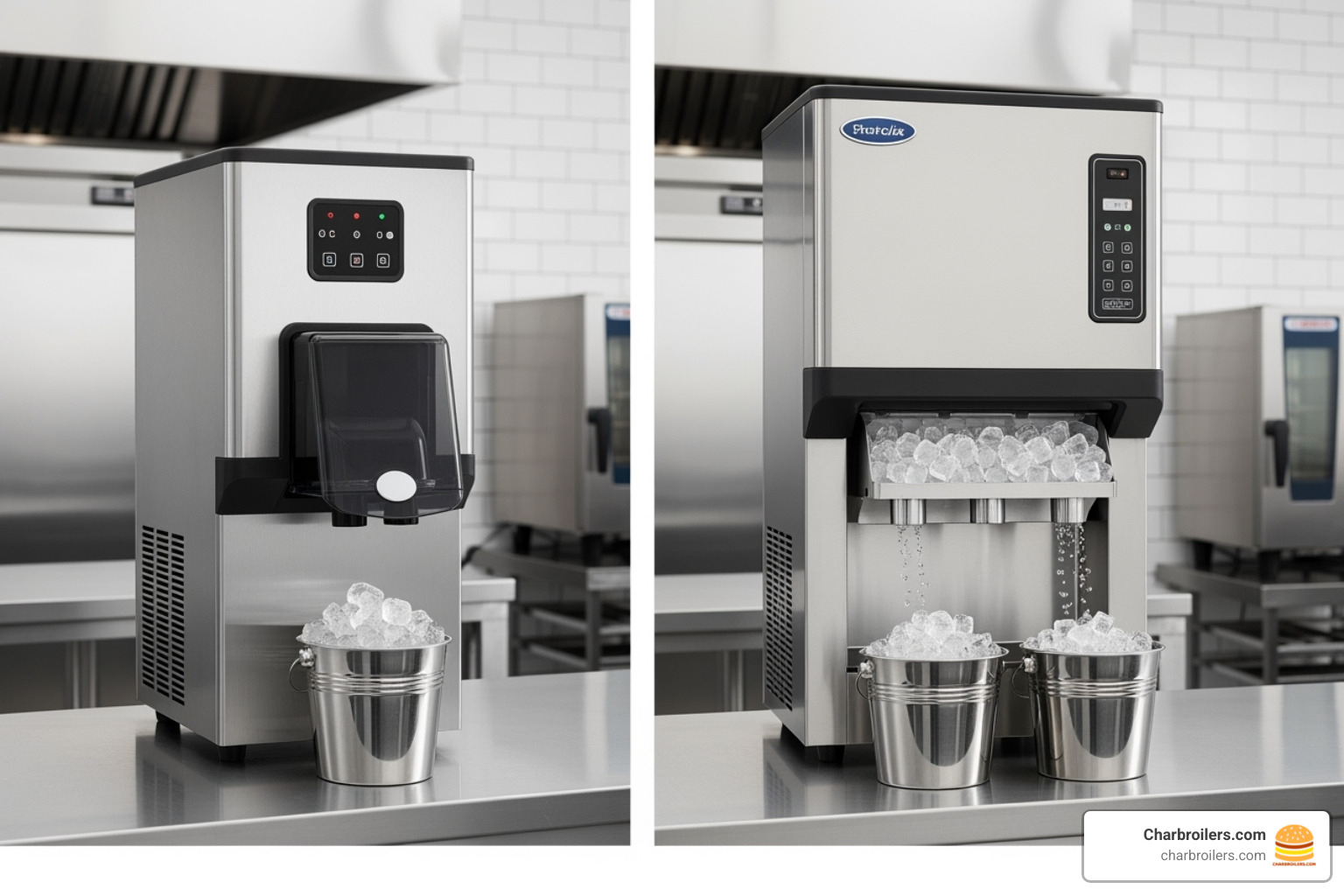
Freestanding units are the workhorses for high-volume operations, producing 400 to 650 pounds of ice or more per day. Ideal for busy restaurants, large cafeterias, or industrial kitchens, these durable floor models are built for continuous use.
Countertop models are compact units perfect for smaller spaces like office breakrooms, convenience stores, or concession stands. They offer self-serve convenience where floor space is limited.
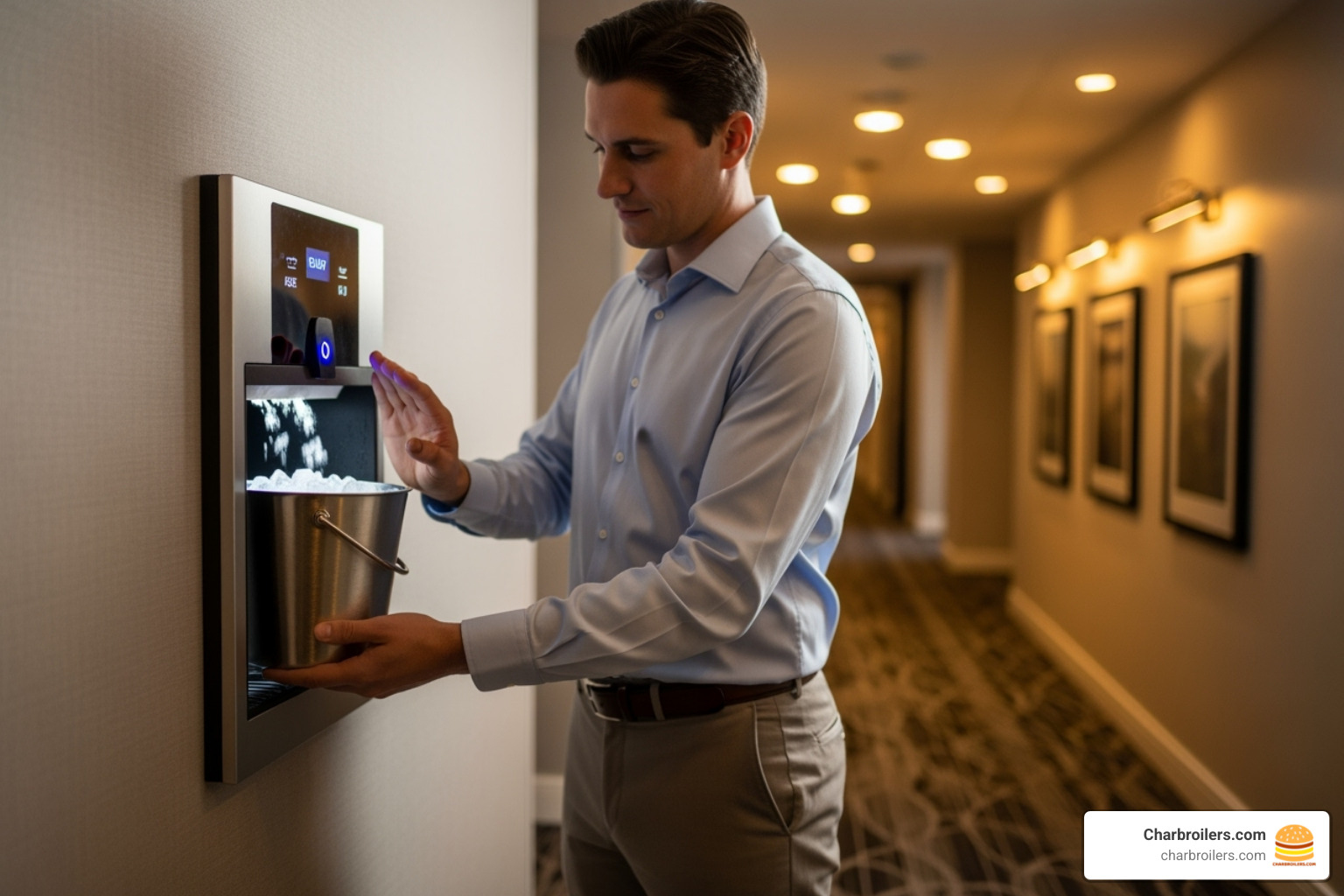
Hotel dispensers are purpose-built for guest use. Found in hotel hallways, they allow guests to fill ice buckets themselves. Many feature touchless dispensing for improved hygiene, prioritizing ease of use and cleanliness for guests.
Combination ice and water units dispense both filtered water and ice from a single machine. They are ideal for offices and healthcare facilities, reducing plastic waste from bottled water and providing a convenient, all-in-one hydration station.
The Shape of Cold: Cube, Nugget, and Flake Ice
The shape of the ice matters more than you might think. The type of ice your commercial ice dispenser produces should match its intended application.
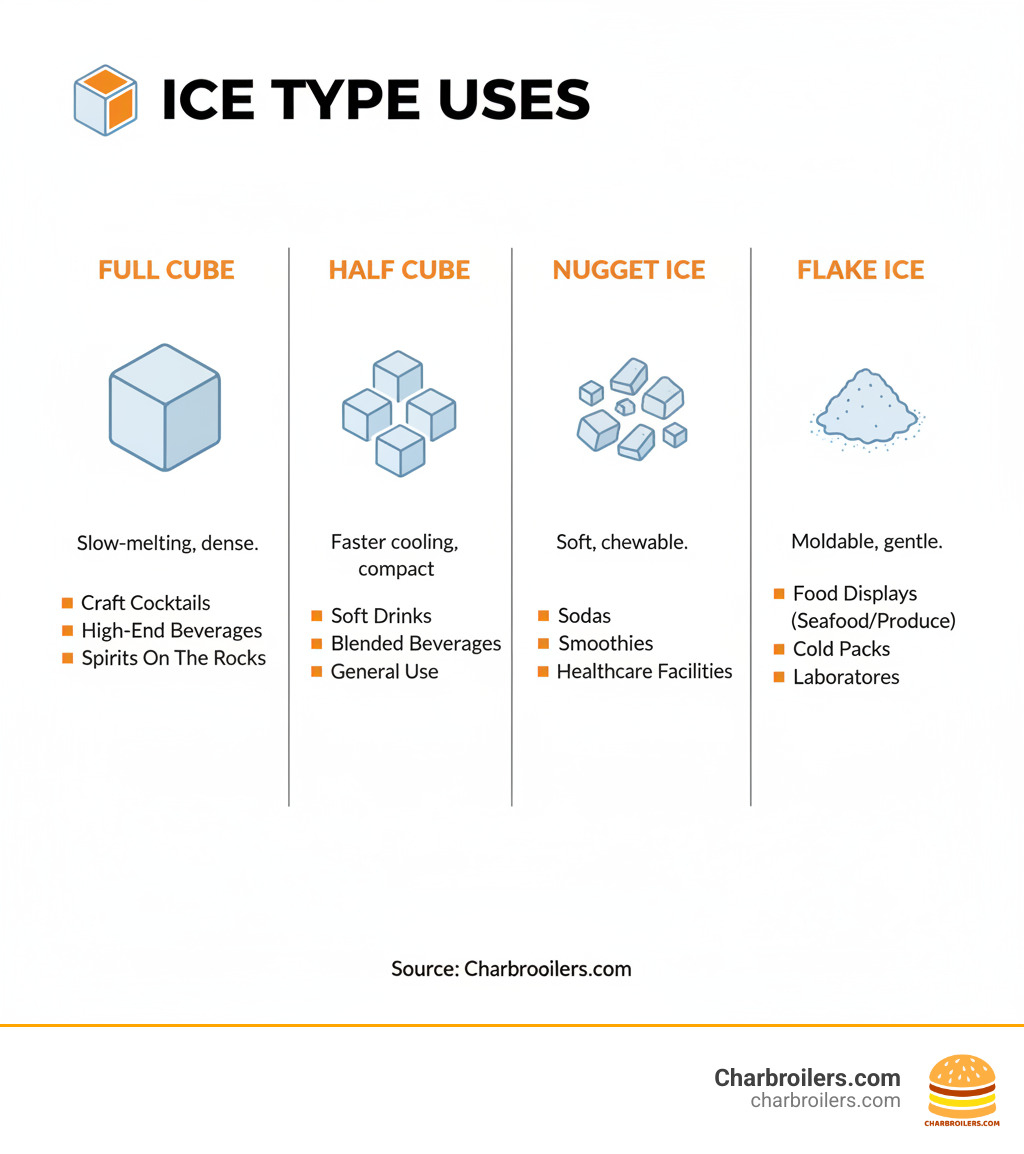
Full cube ice is a classic for a reason. These dense, slow-melting cubes are perfect for cocktails and premium beverages, as they chill drinks without diluting them quickly. They are the top choice for bars and upscale restaurants.
Half cube ice offers faster cooling and better glass coverage, making it ideal for soft drinks, blended beverages, and general restaurant use. It's a versatile choice for most applications.
Nugget ice—sometimes called "chewblet" ice—is soft, chewable, and absorbs drink flavors well, making it a customer favorite. It's perfect for sodas, smoothies, and blended drinks. Healthcare facilities also prefer nugget ice because it's easy for patients to chew, aiding hydration. To learn more, check out our guide on commercial crushed ice makers.
Finally, flake ice is soft and moldable, conforming to any shape. This makes it perfect for seafood displays, produce preservation, and food presentation, as it chills products evenly without causing damage. Some models produce a harder "superflake" ice ideal for rapid cooling. Medical facilities also use flake ice for therapeutic packs and lab work.
Understanding these differences helps you choose a commercial ice dispenser that fits your operation. Whether you're serving cocktails, displaying seafood, or caring for patients, there's an ice type and dispenser designed for your needs.
Key Features and Benefits of a Commercial Ice Dispenser
Investing in a commercial ice dispenser is about more than just ice on demand; it's about improving how your business runs. Built for the pace of busy kitchens and healthcare facilities, these machines streamline operations, improve the customer experience, and pay for themselves through efficiency and cost savings. To optimize your ice production strategy, see our guide on beyond the chill: unveiling the best commercial ice makers for peak performance.
Choosing the Right Commercial Ice Dispenser for Your Needs
Finding the right commercial ice dispenser means matching its capabilities to your needs. Start with production capacity, measured in pounds per day. Some units can produce over 600 lbs daily, while heavy-duty models can exceed 1,500 lbs—enough for the busiest establishments.
Next, consider storage bin capacity, which is how much ice is ready to serve. Capacities can range from around 120 lbs to over 600 lbs. Ensure your storage can handle peak service hours to avoid running out of ice during a rush.
The dispensing mechanism is key for hygiene. While lever and push-button systems exist, touchless or sensor-activated dispensing is the game-changer. By waving a hand or using a foot pedal, users get ice without touching the machine, dramatically cutting contamination risk.
Don't overlook unit dimensions and footprint. Measure your space carefully. Compact countertop units can fit in spaces just over 16 inches wide, while larger freestanding models need more room. Always account for clearance for ventilation and maintenance.
Energy efficiency matters. Look for models with an ENERGY STAR rating—they use less electricity and water, which translates to lower utility bills.
Pay attention to water filtration systems. Advanced dispensers integrate filtration like carbon filters, reverse osmosis, or UV sanitization. These systems remove impurities, improve taste, and protect the machine from scale buildup, resulting in better ice and fewer service calls.
To estimate your specific needs and explore various models, we recommend utilizing an Ice Machine Selector Tool that helps match your operation to the right equipment.
The Business Advantages: Hygiene, Efficiency, and Savings
A quality commercial ice dispenser offers many advantages. Improved sanitation is paramount. Touchless dispensing eliminates the need for scoops and reduces cross-contamination. Advanced technologies like UV-based sanitization and antimicrobial surfaces take hygiene even further by actively fighting bacteria.
Consistent ice availability transforms service during rush periods. A reliable dispenser keeps ice flowing, so your staff can focus on serving guests instead of scrambling for ice.
The labor savings add up quickly. Staff simply dispense what they need and move on, freeing them up for more important, revenue-generating tasks.
Lower utility costs are a tangible benefit. Modern commercial ice dispensers, especially ENERGY STAR rated models, use significantly less electricity and water, saving you money every month.
There's also an environmental benefit. Point-of-use, bottleless systems reduce plastic waste by eliminating the need for bottled water and bagged ice. This cuts costs and supports sustainability efforts.
If upfront costs feel daunting, solutions like renting commercial ice machines made easy and breezy can make these essential machines accessible without the large capital outlay. Whether you buy or rent, the benefits of a quality commercial ice dispenser make it one of the smartest investments for your operation.
Who Needs an Ice Dispenser? Applications and Food Safety
A commercial ice dispenser is a quiet workhorse in many busy establishments. It's essential not just for convenience, but for meeting critical food safety and hygiene standards. Since ice is a food product, choosing the right dispenser is vital for public health. For a broader look at how ice machines serve different businesses, see our guide on ice machines that mean business: hotels, offices, and beyond.
Top Industries and Use Cases
The versatility of a commercial ice dispenser allows it to adapt to the unique needs of different environments.
Hotels and motels were early adopters for good reason. A hallway ice dispenser is a meaningful amenity for guests. Many units are designed for this self-service role, with touchless options offering guests greater confidence in hygiene.
Foodservice operations like restaurants, cafes, and bars are demanding users. From the bar to the kitchen line to self-serve beverage stations, ice is constantly needed. A reliable dispenser prevents service slowdowns caused by ice shortages.
In healthcare facilities, hygiene is life-saving. Patients need exceptionally clean ice, and many prefer soft, chewable nugget ice, which is gentler after medical procedures. Here, touchless dispensing is critical to minimize contamination.
Corporate offices and breakrooms have acceptd these machines as a workplace perk that reduces the cost and environmental impact of bottled water.
You'll also find commercial ice dispensers in convenience stores for fountain drinks and in educational institutions like school cafeterias where hundreds of students need access daily.
How Dispensers Lift Food Safety and Hygiene
This is where commercial ice dispensers truly shine: improving hygiene over traditional methods.
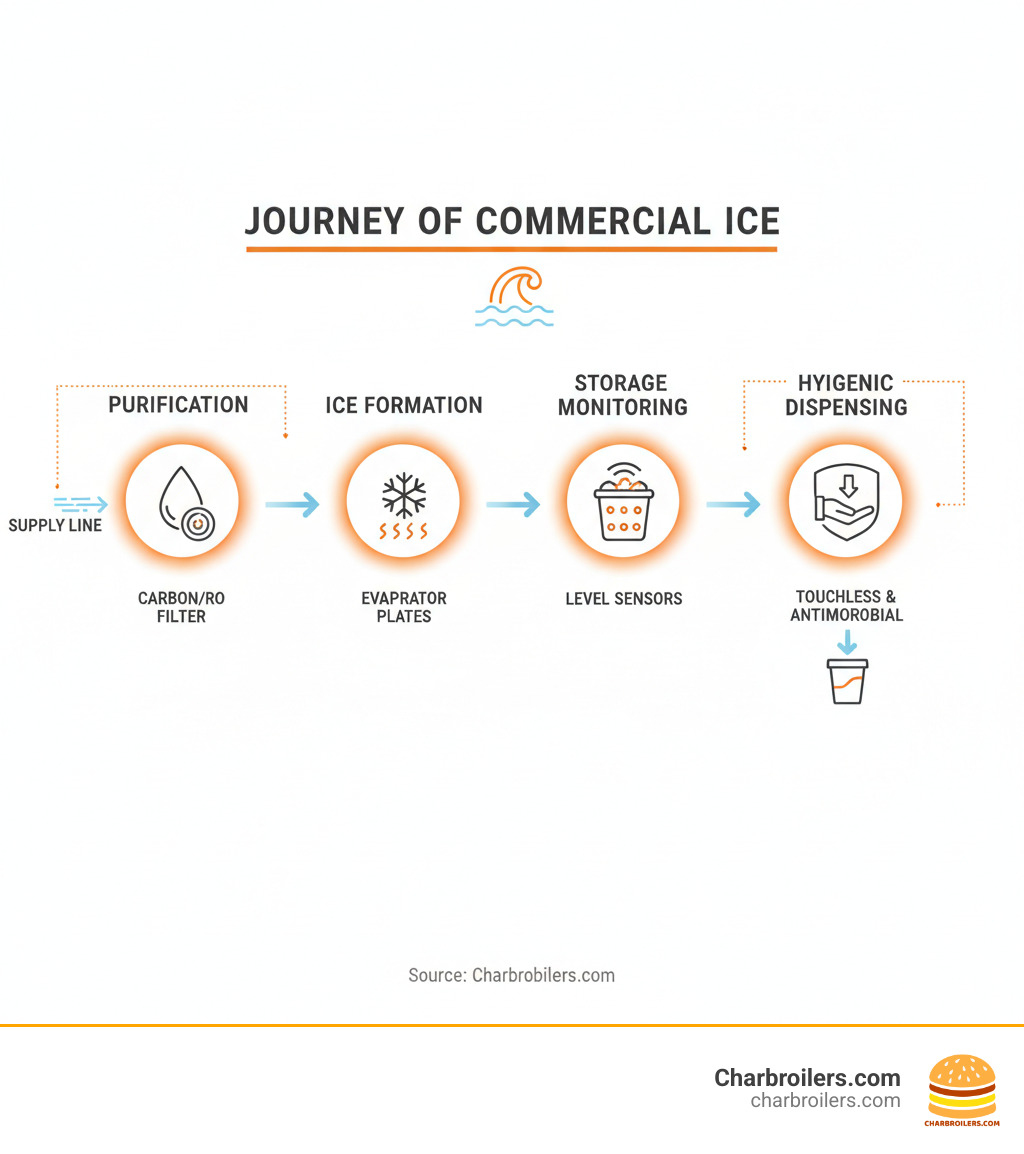
The most significant advancement is touchless dispensing technology. Getting ice with a wave of the hand or a foot pedal eliminates the hand-to-ice contamination pathway, a common source of foodborne illness.
Modern dispensers often incorporate antimicrobial surfaces. This technology actively inhibits bacterial growth on key components, providing a passive defense system that works 24/7 to keep surfaces safer.
Commercial ice dispensers eliminate open ice bins and scoops entirely. The ice remains protected in a sealed environment from production to dispensing, preventing contamination from airborne particles or dirty hands.
The self-contained nature of these systems means the entire process—water filtration, freezing, and storage—happens in a controlled environment.
Many advanced dispensers purify water before making ice. Carbon filtration improves taste, while reverse osmosis removes more impurities. Some units even use UV sanitization systems to destroy bacteria and viruses inside the machine, resulting in genuinely clean ice.
These features help businesses comply with health codes and regulations, protecting customers and your reputation.
Installation and Upkeep: A Guide to Longevity
Proper installation and maintenance protect your investment in a commercial ice dispenser. A well-maintained machine lasts longer, produces cleaner ice, runs more efficiently, and saves you money. For more insights, check out our guide on cool choices for commercial ice maker and bin setups.
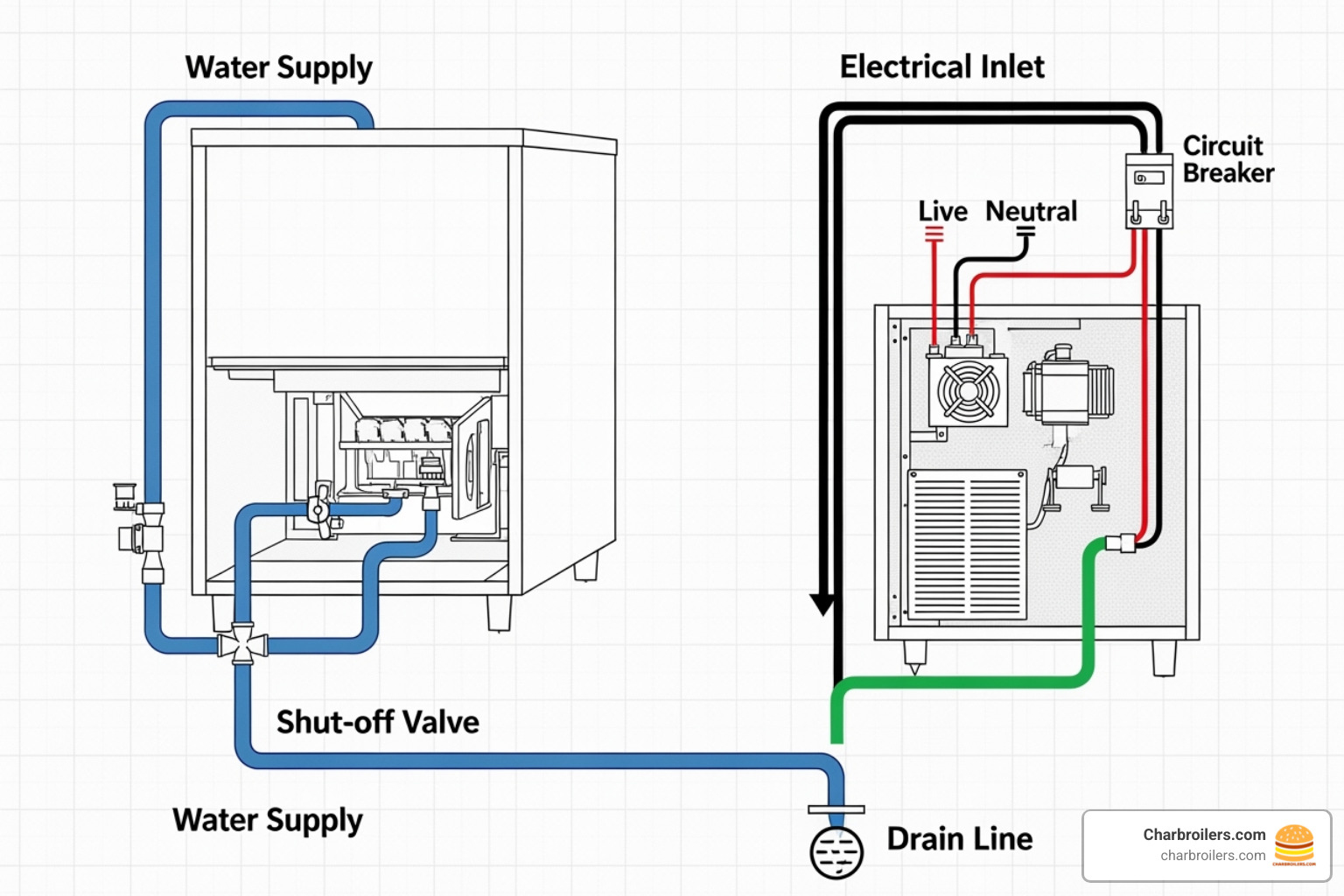
Installation and Plumbing Checklist
Getting the installation right from the start prevents future headaches.
Space and clearance are critical. Your dispenser needs adequate airflow to prevent overheating and run efficiently. Always check the manufacturer's specifications for minimum clearance, which can be 12 inches or more.
Electrical requirements are a serious safety concern. Most commercial ice dispensers draw significant power and require one or more dedicated circuits. Using the wrong setup is a safety hazard and could void your warranty.
Water supply lines connect the dispenser to your building's potable water. You'll need to ensure the water pressure is within the manufacturer's specified range (e.g., 40-80 PSI) for the machine to perform optimally. Plan for any integrated filtration systems as well.
Drainage for meltwater is essential. Some units use gravity-fed drainage, which requires the drain to be lower than the machine. Others may need a drain pump to move water to a distant or higher drain.
We always recommend professional installation. The complex electrical and plumbing requirements are best handled by a qualified technician to ensure code compliance, optimal performance, and warranty validity.
Maintenance Best Practices for Your Commercial Ice Dispenser
Regular maintenance is key to a long service life. Most tasks are straightforward and can become part of a routine.
Daily attention includes wiping down the exterior and dispensing area to prevent buildup.
Weekly sanitizing of the ice storage bin is crucial. Use a food-grade sanitizer as recommended by the manufacturer to prevent bacterial growth and protect your customers.
Monthly filter cleaning improves performance. Clean the condenser air filter monthly to maintain efficiency. A clogged filter forces the machine to work harder, increasing energy use and wear.
Filter replacement is typically required every six months, but follow your manufacturer's guidelines. Water filters are key to ice quality and machine performance. Some service packages include filter changes, taking the guesswork out of scheduling.
Descaling and sanitizing are deep cleaning procedures that remove mineral buildup and bacteria from the internal system. This is vital for efficiency and ice quality. Some modern machines feature a "One-Touch Cleaning" cycle to simplify the process. Always use manufacturer-approved cleaning solutions to avoid damage.
Professional servicing should happen at least once or twice a year. A technician can perform deep cleaning, inspect components, and catch small issues before they become costly repairs.
Condenser coil maintenance is also important. Keep coils clean and free of debris to prevent the machine from overworking and driving up energy costs.
For detailed technical specifications and maintenance guides, manufacturers often provide E-Document Catalogs online.
Frequently Asked Questions about Commercial Ice Dispensers
We know that investing in a commercial ice dispenser is a big decision, and you probably have questions. Here are the answers to the ones that come up most often:
What is the typical lifespan of a commercial ice dispenser?
With proper care, a quality commercial ice dispenser can last 10 to 15 years, offering a solid return on investment. However, this lifespan depends on factors you control. Poor water quality, infrequent cleaning, and skipping professional servicing will shorten the machine's life. Following the manufacturer's service guidelines is the best way to maximize its lifespan and protect your investment.
Do commercial ice dispensers use a lot of electricity and water?
Yes, commercial ice dispensers consume electricity and water, but modern units are designed for efficiency. For electricity, look for ENERGY STAR-rated models, which use significantly less power. Consumption varies, but an efficient model might use around 5 kWh per 100 lbs of ice. For water consumption, high-quality machines optimize usage, with some using around 16 gallons of water per 100 lbs of ice. Choosing a machine sized correctly for your needs is key to efficiency.
How much do commercial ice dispensers cost?
Prices for commercial ice dispensers vary widely, from around $2,000 for small countertop units to over $10,000 for high-capacity models. The cost is influenced by production and storage capacity, the type of ice it produces (specialty ice like nugget or flake can be pricier), and brand reputation. Advanced features like touchless dispensing, UV sanitization, and antimicrobial surfaces also add to the cost, as does the unit's configuration—freestanding models are typically more expensive than countertop versions. The wide price range reflects the diversity of options available.
The best approach is to determine your ice needs, then match features to your budget. For more detailed pricing insights specifically on cube ice machines, check out our cube ice machine price guide. And remember, if upfront costs are a concern, financing and rental options can make these essential machines more accessible to your operation.
Conclusion: Make the Cool Choice for Your Business
In the world of foodservice, every piece of equipment plays a vital role in your success. A commercial ice dispenser is far more than a simple appliance; it's a strategic investment that underpins the efficiency, hygiene, and overall experience you offer your customers. We've seen how these machines provide unparalleled convenience, ensure consistent ice availability, and contribute significantly to food safety standards through features like touchless dispensing and advanced filtration.
By choosing the right type of dispenser, matching its capacity and ice type to your specific needs, and committing to proper installation and maintenance, you're not just buying a machine—you're securing a reliable, hygienic, and cost-effective solution for years to come. This empowers your business to serve customers safely and effectively, ensuring every cold drink is perfectly chilled and every food display is impeccably fresh.
At Charbroilers.com, we understand the demands of your kitchen. While we specialize in high-quality charbroilers, deep fryers, and griddles, we also recognize the interconnectedness of all commercial kitchen equipment. Making informed decisions about every aspect of your operation, including your ice supply, is crucial for success.
Ready to optimize other areas of your kitchen? Explore our complete guide to commercial charbroilers for your restaurant and find how Charbroilers.com can help you build a more efficient and profitable foodservice business.