

Secondhand Chill: Your Guide to Used Commercial Refrigeration
Why a Used Commercial Refrigerator Makes Business Sense
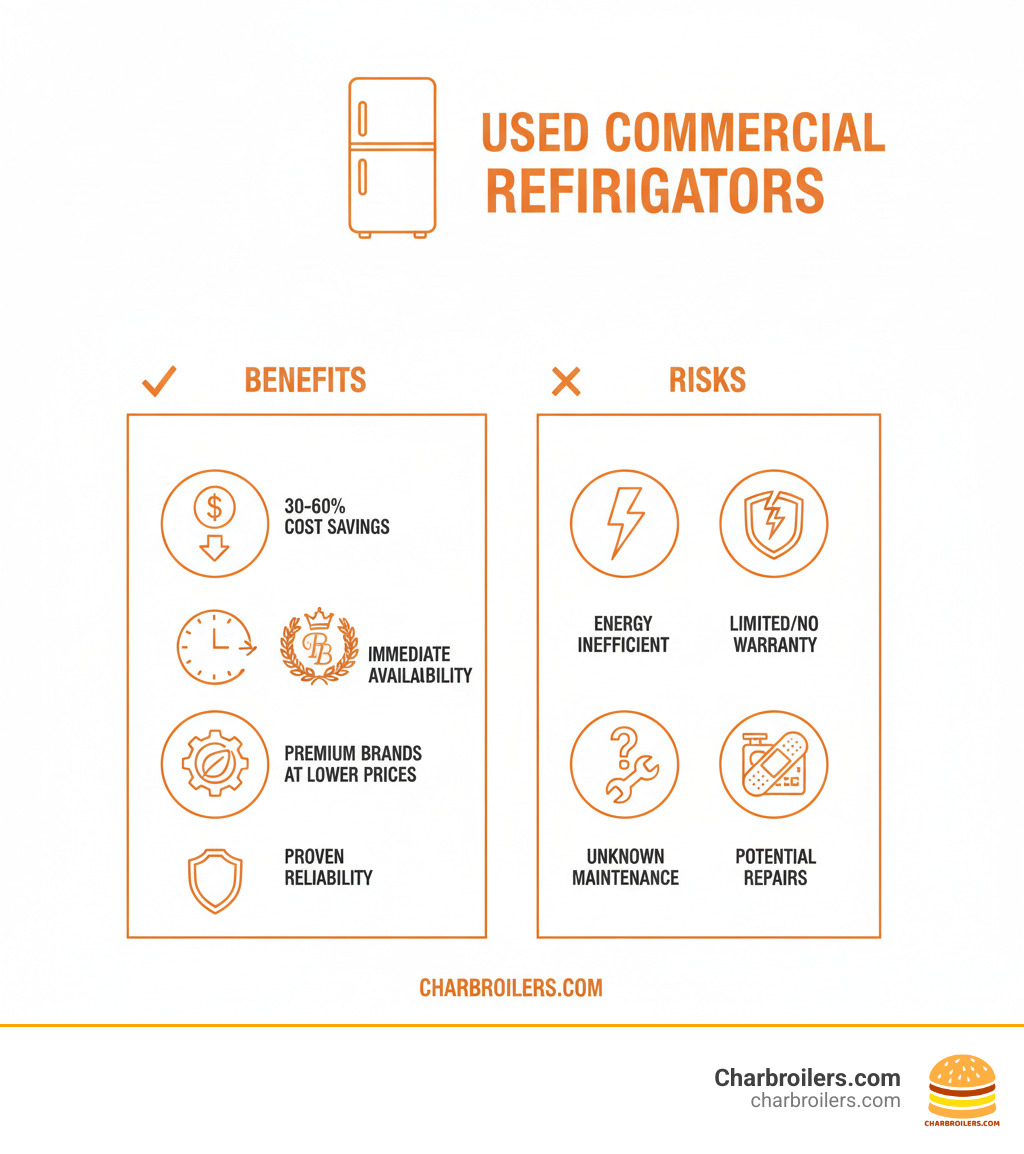
A used commercial refrigerator can save your business 30-60% compared to buying new, making it a smart choice for startups and established restaurants. But not all used equipment is a good deal. Older models can be energy hogs, and a private sale often means no warranty.
This guide will help you find a reliable used unit that keeps ingredients fresh and costs down. With over a decade of experience in the restaurant equipment industry, I'll show you what to look for—and what to avoid.
Quick Look: Buying a Used Commercial Refrigerator
- Cost Savings: Pay $800-$2,500 for a used reach-in vs. $3,000-$6,000 new.
- Where to Buy: Restaurant equipment dealers, online marketplaces, and auctions.
- What to Check: Door seals, compressor, temperature accuracy, and overall condition.
- Top Brands: True, Turbo Air, Hoshizaki, and Traulsen offer proven reliability.
- Lifespan: Expect 5-10+ additional years with proper care.
- Warranty: Prioritize refurbished units with dealer warranties over "as-is" sales.
Used commercial refrigerator terminology:
The Cool-Headed Calculation: Weighing the Pros and Cons
Buying a used commercial refrigerator starts with the numbers. You can save 30% to 60% off the retail price, freeing up thousands of dollars for other business needs. Quality brands like True, Turbo Air, and Hoshizaki are built to last, so a well-maintained used unit often has years of life left.
However, smart buying means understanding both the benefits and the risks. You need to ensure you're getting a reliable workhorse, not someone else's problem.
| Feature | New Commercial Refrigerator | Used Commercial Refrigerator |
|---|---|---|
| Typical Cost | $3,000 - $10,000+ | $800 - $4,500 (30-60% savings) |
| Lifespan | 10-20 years | 5-10+ additional years (with proper maintenance) |
| Energy Use | Generally higher efficiency, many are ENERGY STAR certified | Varies; older models may be less efficient |
| Warranty | Full manufacturer warranty (1-5 years) | Limited dealer warranty (refurbished) or "as-is" (private sale) |
| Availability | May have lead times | Immediate, subject to inventory |
| Condition | Pristine | Varies from "like new" to "well-used" |
The Upside: Major Benefits of Buying Used
The significant cost reduction is the main draw. This leads to a faster ROI and frees up cash flow. It also gives you access to higher-end brands like Traulsen that might be unaffordable new. Buying used also has a reduced environmental footprint by keeping functional equipment out of landfills. Plus, used units are typically available immediately, which is crucial if you need a quick replacement. Our Detailed Guide to Comparing Commercial Refrigerators can help you weigh your options.
The Downside: Potential Risks of a Used Commercial Refrigerator
Be aware of the potential pitfalls. An older unit might use significantly more electricity than modern ENERGY STAR certified models, eating into your initial savings via higher utility bills. Another major risk is the lack of warranty. Private sales are almost always "as-is," meaning you're responsible for any breakdowns. A major repair, like a new compressor, can cost $800-$1,500, turning your bargain into a burden.
Finally, the unit's unknown history is a gamble. Was it well-maintained or neglected? This is why a thorough inspection is non-negotiable. If you're unsure what to check, our The Ultimate Checklist for Commercial Refrigerator Repair Services can guide you. The key is to do your homework to ensure the savings are real and the risks are managed.
A Tour of Secondhand Coolers: Types on the Market
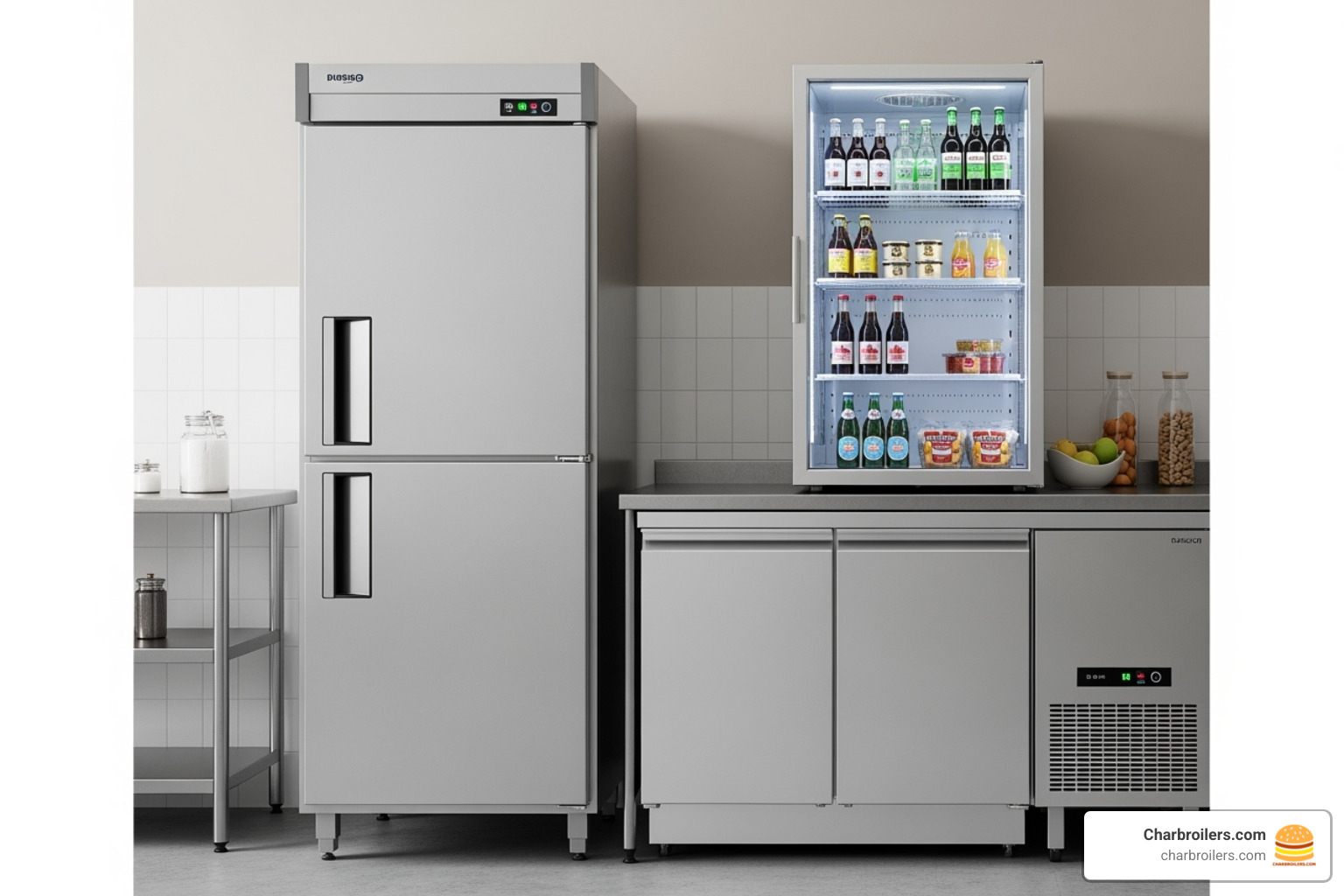
The market for used commercial refrigerators is diverse, offering units for every type of food service operation at a fraction of their original cost. From storage workhorses to customer-facing display cases, you can find a quality used unit that fits your specific needs and budget. For an overview of how different types work, see our guide on Commercial Refrigeration Equipment Explained: No Sweat.
For the Back of House: Storage & Prep
These are the workhorses that keep your kitchen running.
- Reach-in Refrigerators & Freezers: The backbone of kitchen storage, available in one to three-door models. Brands like True and Hoshizaki are common and reliable.
- Walk-in Coolers & Freezers: Essential for high-volume operations, offering massive bulk storage. Used modular units can be a great value. Learn more in our Essential Guide to Restaurant Walk-In Fridges.
- Undercounter & Chef Bases: These units fit under counters or cooking equipment, keeping ingredients at arm's reach to maximize efficiency.
- Pizza Prep Tables: A must for pizzerias and sandwich shops, combining refrigerated ingredient pans, a workspace, and storage.
- Pass-thru Refrigerators: With doors on both sides, they streamline workflow between prep and service lines.
- Deep Freezers: For long-term storage of frozen goods. Find out more about Used Commercial Deep Freezers for Sale.
For the Front of House: Display & Access
These units both cool and merchandise your products.
- Glass Door Merchandisers: Perfect for showcasing drinks, desserts, and grab-and-go items in cafes and stores.
- Open-air Coolers: Allow customers to easily grab items like sandwiches and drinks, ideal for high-traffic areas.
- Bar Coolers: Low-profile units that fit under the bar to keep beverages chilled and accessible.
- Countertop Display Units: Small refrigerators that highlight specific products like cakes or specialty drinks at the point of sale. For more on smaller units, see our article on Compact Cooling Champions: Commercial Mini Fridges.
The Smart Buyer's Checklist: How to Inspect a Used Unit
Buying a used commercial refrigerator requires a thorough inspection to separate a great deal from a future headache. You don't need to be a technician to spot most red flags. This checklist will guide you through what to look for.
Before you inspect, consider these factors:
- Brand Reputation: Stick to known brands like True, Hoshizaki, and Traulsen. Parts and service are easier to find.
- Size and Capacity: Measure your space, including doorways and hallways, before you shop. Ensure the unit fits your kitchen and your storage needs.
- Age and Model Number: Find the data plate to identify the unit's age. Newer models are often more energy-efficient.
- NSF Certification: Look for the NSF logo to ensure the unit meets health department standards. Learn more in our guide to NSF ANSI Standard 7 for Refrigerators and Freezers.
On-Site Inspection Checklist
Take your time with this process. A reputable seller will understand.
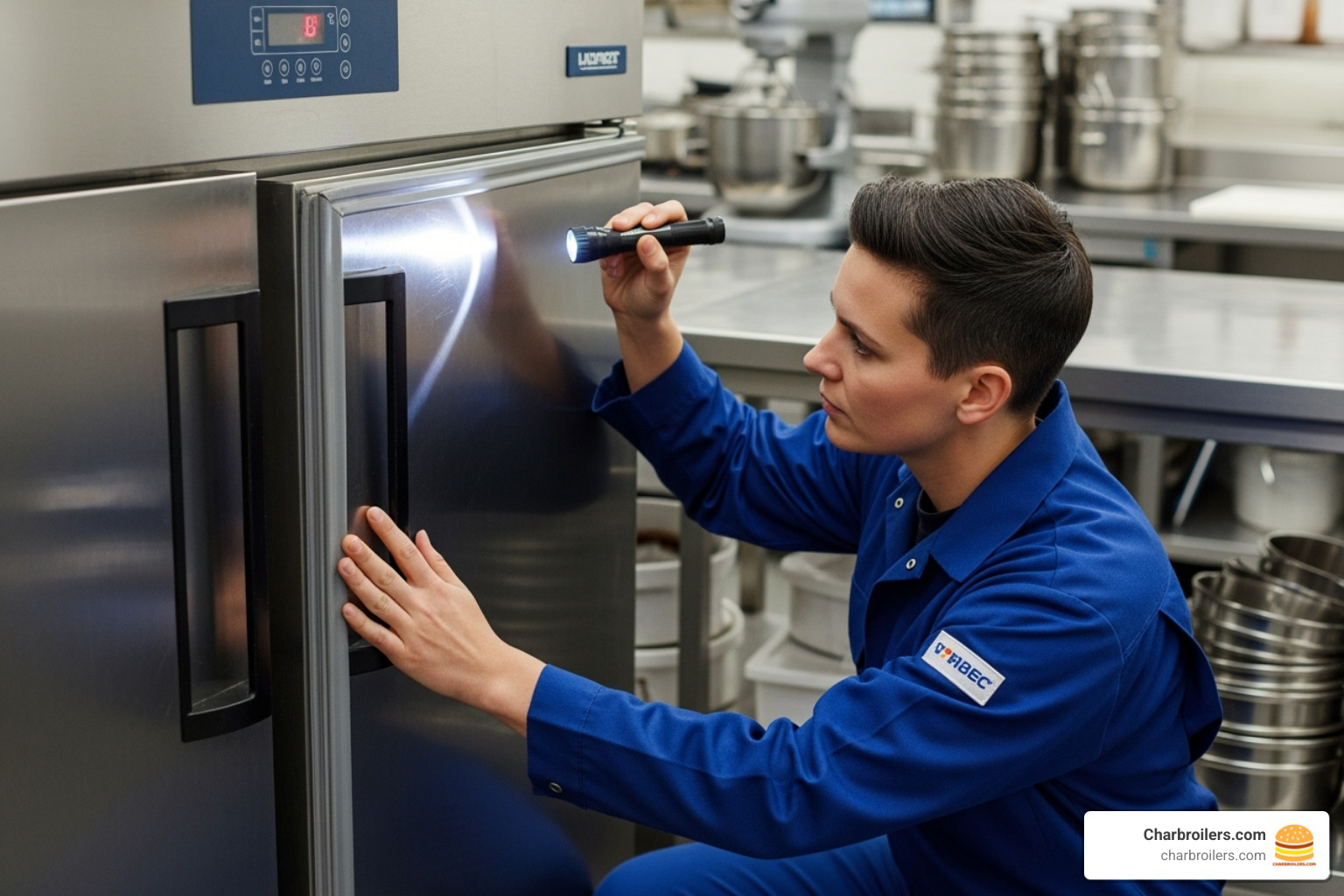
- Examine Gaskets and Seals: The rubber seals around the door should be soft, pliable, and free of cracks or tears. A poor seal wastes energy and strains the compressor. Close the door and feel for any escaping cold air.
- Listen to the Compressor: Ask for the unit to be plugged in. The compressor should run with a steady, low hum. Loud rattling, grinding, or banging is a major red flag. Be wary if the seller says it "just needs Freon," as this often indicates a leak.
- Verify Temperature Accuracy: Place your own thermometer inside. A refrigerator should hold between 34-40°F, and a freezer at or below 0°F. Let it run for at least 30 minutes. If it struggles to reach temperature or cycles too frequently, the system has issues.
- Inspect Condenser Coils: Look at the coils (usually at the bottom or back). They should be clean and free of thick dust. Dirty coils indicate poor maintenance and cause the unit to work harder.
- Check for Rust and Damage: Minor scratches are normal, but significant dents or deep rust, especially at the base or around hinges, can signal structural problems. Walk away from heavy corrosion.
- Test Lights and Features: Open the door to check interior lights. Ensure any digital displays or special functions are working correctly. Factor any non-working features into your offer.
Where to Find Your Next Used Commercial Refrigerator
Knowing where to find a quality used commercial refrigerator is key to getting a good deal. While prices vary, expect to pay between $800 to $4,500 for most standard units, a significant saving over new equipment. The source you choose will determine the selection, price, and level of protection you receive.
Reputable Online & Local Sources
- Specialized Restaurant Equipment Dealers: This is your best bet. These businesses inspect, clean, and often refurbish units before selling them. They understand commercial needs and usually offer a limited warranty.
- Online Marketplaces: Sites like eBay offer a vast selection, while Facebook Marketplace and Craigslist are great for finding local deals. Buying local allows you to inspect the unit in person and avoid shipping costs.
- Restaurant Auctions: You can find incredible bargains at auctions for closing or renovating restaurants. However, sales are almost always "as-is," so inspect the equipment beforehand if possible.
- Local Searches: Searching for a used commercial refrigerator near me can uncover hidden gems from local sellers. For help finding local experts, see our guide on Commercial Refrigeration Near Me.
Warranties and Guarantees: Refurbished vs. "As-Is"
Understanding the difference between refurbished and "as-is" is crucial.
A refurbished unit from a dealer has been professionally inspected, repaired, and cleaned. This process adds value and reliability. Most importantly, these units often come with a limited warranty (typically 30-90 days), which protects you from immediate failures.
An "as-is" sale, common with private sellers and auctions, means you buy the unit in its current condition with no guarantees. The price may be lower, but you assume all the risk. A single major repair could wipe out your initial savings.
Always ask questions about the unit's history, any past repairs, and the specifics of the refurbishment process. A reputable seller will provide clear answers. For most buyers, the peace of mind and protection that come with a refurbished unit from a trusted dealer are well worth it.
Keeping Your Cool: Maintenance for Longevity
Once you've purchased a quality used commercial refrigerator, proactive maintenance is key to its longevity. Regular care prevents breakdowns, protects your food inventory, and keeps energy bills low. Most tasks are simple and can be done by your staff.
Essential Maintenance Tips
These simple steps will extend the life of your unit:
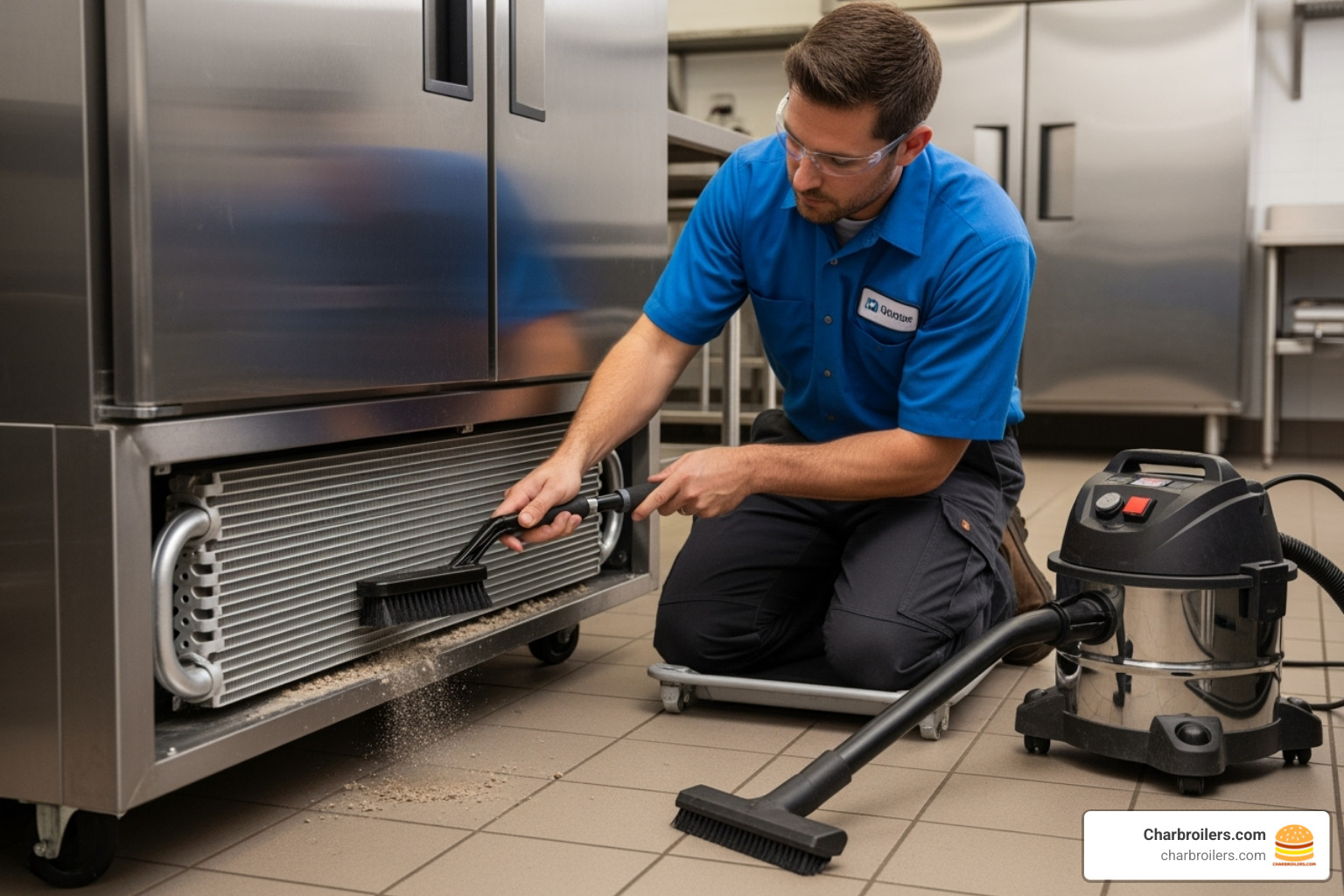
- Clean Condenser Coils Monthly: Dust and grease buildup on the coils (at the back or bottom) forces the compressor to work harder. Use a brush and vacuum to keep them clean for better efficiency and a longer lifespan.
- Check Door Gaskets Weekly: Wipe down door seals with warm, soapy water to keep them flexible. A tight seal is crucial for holding in cold air. Replace gaskets that are cracked or torn.
- Monitor Temperature Daily: Use an external thermometer to ensure your refrigerator stays between 34-40°F and your freezer at or below 0°F. Catching temperature fluctuations early prevents food spoilage.
- Ensure Proper Airflow: Leave several inches of clearance around the unit. Good ventilation prevents the compressor from overheating.
- Schedule Professional Servicing Annually: A technician can check refrigerant levels, inspect electrical parts, and spot potential issues you might miss. This is a smart investment, especially for a used unit. For troubleshooting tips, see our article on Fixing Common Issues with Commercial Freezers.
Frequently Asked Questions about Used Commercial Refrigerators
Here are answers to some common questions about buying a used commercial refrigerator.
What is a good price for a used commercial refrigerator?
Prices depend on the unit's type, brand, age, and condition, but you should expect to save 30% to 70% off the retail price of a new model. For example, a single-door reach-in that costs $3,500+ new might be found for $800 to $2,000 used. Always compare the used price to the new price to confirm you're getting a good value.
How long does a used commercial refrigerator last?
A well-made commercial unit from a top brand has a total lifespan of 10-20 years. If you buy a five-year-old unit and maintain it properly, you can reasonably expect another 5 to 10+ years of reliable service. Longevity depends heavily on past and future maintenance, which is why your inspection and ongoing care are so important.
Is it better to buy a refurbished or just a used refrigerator?
For most buyers, refurbished is the smarter, safer choice. A refurbished unit from a reputable dealer has been professionally inspected, cleaned, and repaired. Crucially, it often comes with a limited warranty (e.g., 30-90 days), giving you a safety net against immediate problems. An "as-is" unit from a private seller or auction is cheaper but carries all the risk; one major repair could eliminate your savings. The peace of mind and quality assurance of a refurbished used commercial refrigerator are typically worth the slightly higher cost.
Conclusion
A used commercial refrigerator is a strategic move that can save your business thousands, but it requires an informed approach. It's not about cutting corners; it's about balancing cost with quality.
The key to a successful purchase is a thorough inspection. Pay close attention to the door seals, listen to the compressor, verify the temperature, and check for rust or damage. Once you've bought a unit, consistent maintenance—like cleaning coils, checking gaskets, and monitoring temperatures—is non-negotiable. These simple steps will ensure your investment provides reliable service for years to come.
A quality used unit from a brand like True or Hoshizaki can easily last another 5-10 years with proper care, offering a fantastic return on investment.
As you outfit your kitchen, cooking equipment is just as vital. Charbroilers.com offers a wide selection of essential commercial kitchen appliances to complete your setup. For help choosing the right cooking equipment, see our Guide to Commercial Charbroilers for Your Restaurant.
Here's to making smart investments and building a successful kitchen.