

Compact Cooling Champions – Commercial Mini Fridges Worth Your Investment
Why Commercial Mini Fridges Are Essential for Modern Food Service
A commercial mini fridge is a compact refrigeration unit designed for business use, featuring heavy-duty construction, NSF certification, and precise temperature control between 32°F–50°F. These space-saving units are perfect for hotels, cafes, bars, and restaurants needing reliable cooling in tight spaces.
Key Commercial Mini Fridge Types:
- Undercounter refrigerators - Built-in units that fit beneath counters
- Glass door merchandisers - Display coolers for beverages and grab-and-go items
- Back bar coolers - Horizontal units designed for bar service
- Countertop display units - Compact coolers for point-of-sale areas
Essential Features to Look For:
- NSF-7 certification for commercial food safety
- Temperature range of 32°F–50°F for optimal food storage
- Heavy-duty compressor for constant use
- Adjustable shelving and reversible doors
- Digital temperature controls with precise monitoring
The research shows that proper ventilation is critical—these units need several inches of clearance on all sides to prevent overheating and maintain efficiency. Energy Star certified models can reduce operating costs by at least 15% compared to standard units.
I'm Sean Kearney from Charbroilers.com. With over a decade of experience in the restaurant equipment industry, I've seen how a certified commercial mini fridge boosts efficiency. Investing in quality commercial units pays off through durability and consistent performance.
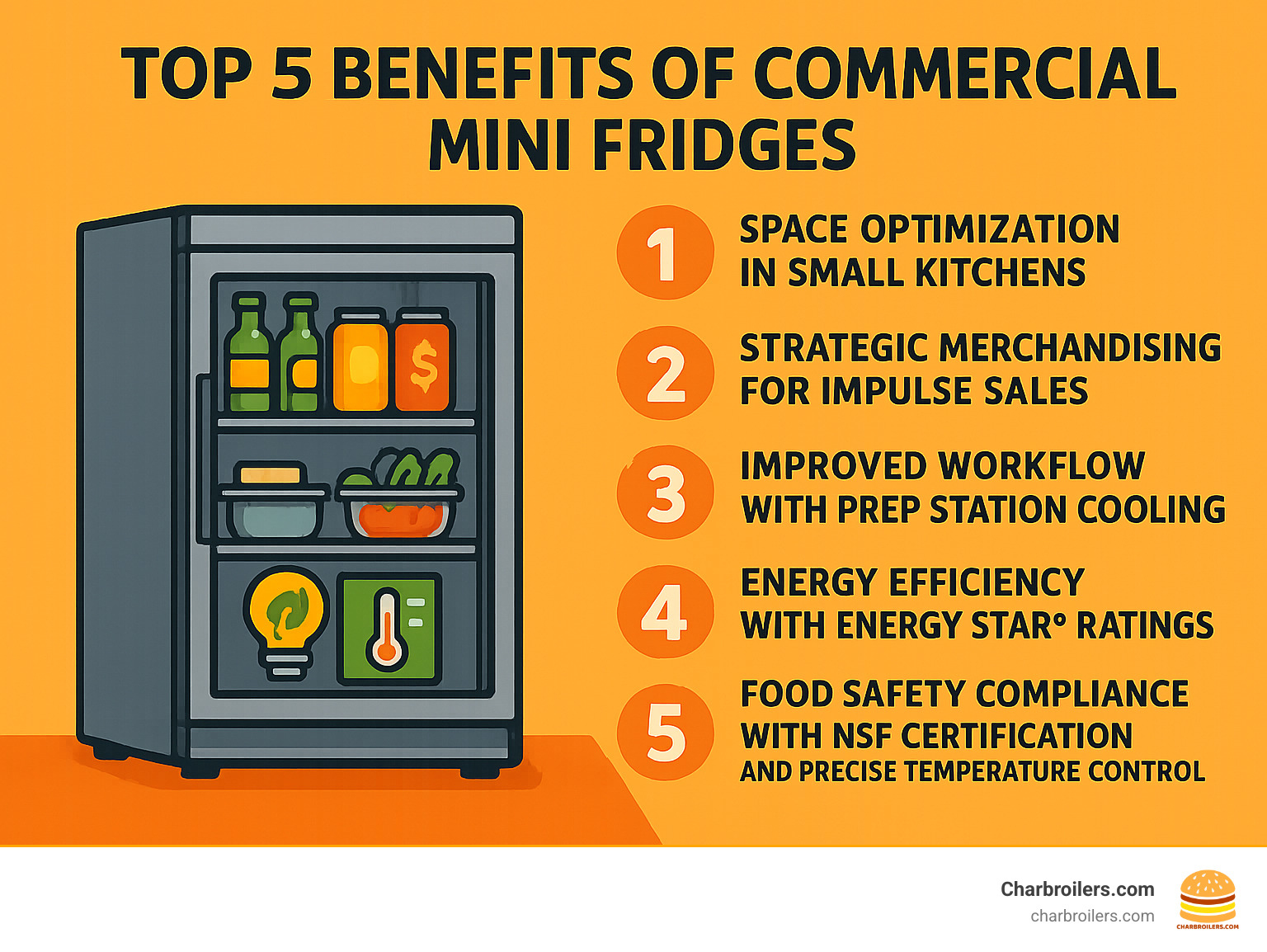
Key commercial mini fridge vocabulary:
Why Your Business Needs a Compact Cooler: Top Applications & Advantages
Every food service business faces the challenge of maximizing efficiency while minimizing space. A commercial mini fridge is a secret weapon in this regard—a purpose-built workhorse designed for demanding commercial environments.
In a busy kitchen, every second counts. A bartender grabbing a beer from an undercounter unit saves time. A hotel guest finding chilled snacks in their room earns revenue. A café customer seeing grab-and-go sandwiches in a countertop cooler leads to an impulse sale.
Hotel rooms benefit enormously from these compact units, providing guests with convenient snacks and an additional revenue stream for you. Office break rooms become more functional, allowing employees to easily access lunches and drinks.
Cafes and bars see significant operational improvements. From storing milk for lattes to keeping garnishes fresh at prep stations, these units integrate seamlessly into your workflow. Our Charbroilers.com Back Bar Cooler Buying Guide dives deeper into how these specialized units can transform your bar service.
For catering events, portable units solve safe food storage challenges, while point-of-sale merchandising turns checkout areas into profit centers.
These units optimize workflow and maximize small spaces by fitting into tight corners, under counters, and on tabletops—turning unused areas into functional storage that keeps essential items within arm's reach.
Boost Sales with Strategic Placement
Imagine a customer waiting to pay, and right beside the register is a gleaming commercial mini fridge filled with ice-cold drinks. That's not just storage—that's smart merchandising.
Glass-door display coolers act as silent salespeople, showcasing beverages and grab-and-go items in high-traffic areas. The visual appeal of neatly arranged products creates an irresistible invitation for impulse buys, boosting your bottom line while offering customers convenience.
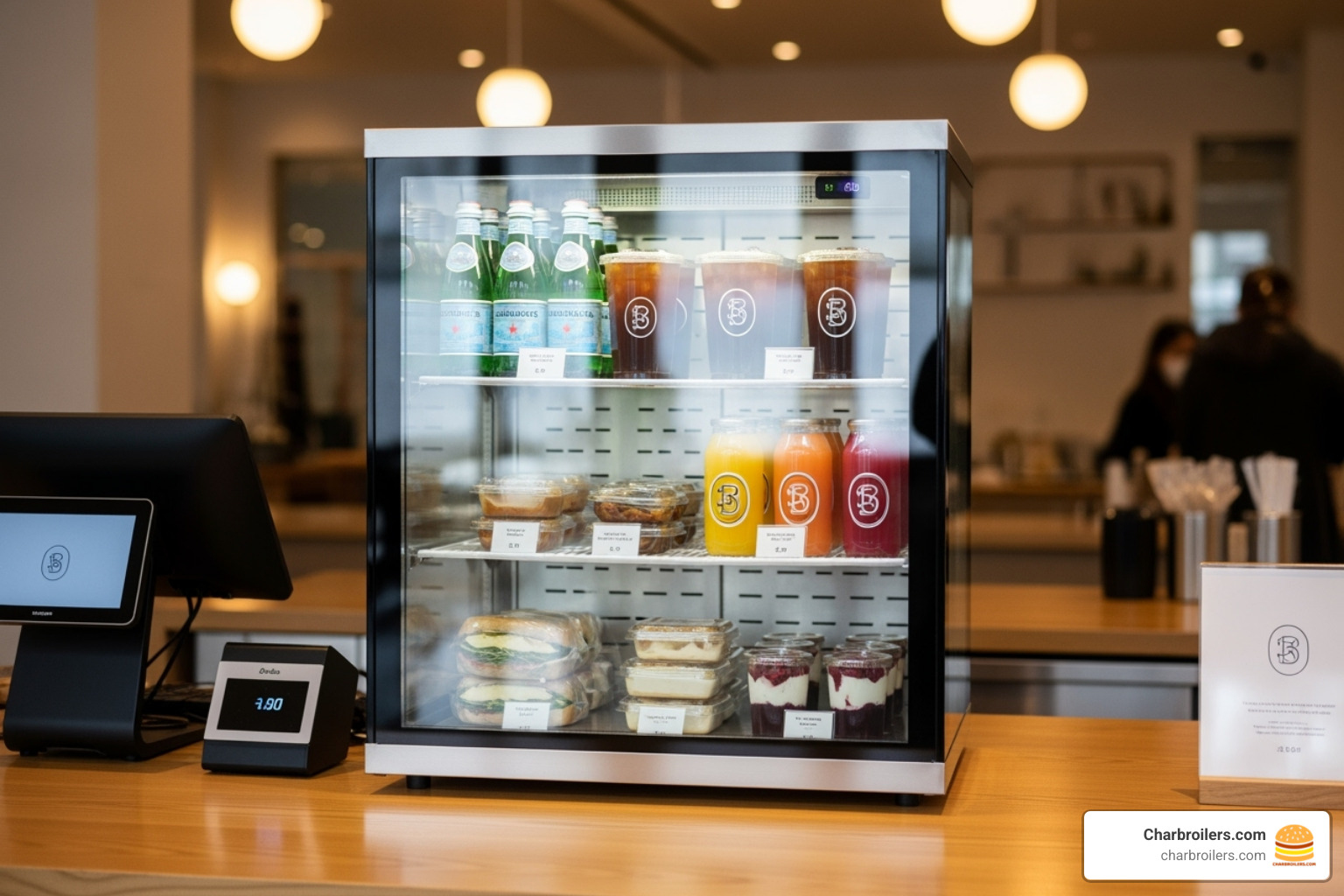
Smart beverage display placement near checkout or waiting zones captures customers when they're most likely to make spontaneous purchases.
Streamline Your Kitchen & Bar Operations
In busy kitchens and bars, efficiency is essential. A strategically placed commercial mini fridge transforms prep stations into smooth-running command centers.
Undercounter storage keeps ingredients like chopped vegetables, sauces, and garnishes exactly where staff needs them, eliminating wasted steps. Bar service becomes lightning-fast when bartenders can access chilled mixers and garnishes without leaving their station. This reduced staff movement means faster service and fewer mistakes, while quick access to ingredients during rush periods prevents kitchen chaos.
If you're looking to maximize every inch of space, our Charbroilers.com Guide to Under Cabinet Freezers offers similar space-saving solutions for frozen storage needs.
Decoding the Specs: Choosing the Right Commercial Mini Fridge
Choosing a commercial mini fridge means understanding key specs to ensure you get a unit that lasts. The main difference from a residential model is durability and heavy-duty construction. Commercial units are built for hundreds of daily openings with robust compressors, reinforced hinges, and stainless steel exteriors. Temperature consistency is also critical. Commercial models use powerful cooling systems to maintain precise temperatures despite frequent use, protecting your inventory and ensuring food safety compliance.
To help you steer the options, here's how different commercial mini fridge types stack up:
| Commercial Mini Fridge Type | Capacity Range (Approx. Cu. Ft.) | Ideal Use Case | Key Certifications Often Found |
|---|---|---|---|
| Undercounter Refrigerator | 2.5 - 6.0 | Kitchen prep, bar service, small cafes | NSF, UL |
| Countertop Display Cooler | 1.0 - 3.5 | Impulse buys, grab-and-go, small retail | NSF, UL |
| Glass Door Merchandiser | 2.0 - 10.0 | Beverage display, product merchandising | NSF, UL, Energy Star |
| Solid Door Worktop Unit | 3.0 - 8.0 | Kitchen prep, ingredient storage | NSF, UL |
| Back Bar Cooler | 3.0 - 15.0 (multiple sections) | Bar beverage storage, bottle/can organization | NSF, UL |
For a deeper dive into commercial refrigeration options, check out our Charbroilers.com Guide To Comparing Commercial Refrigerators for comprehensive comparisons.
Key Features of a Commercial Mini Fridge
When investing in a commercial mini fridge, certain features are critical for daily operations.
Capacity is measured in cubic feet, typically ranging from 1 to 15 cu. ft. for mini units. A small cafe might need a 3.2 cu. ft. unit, while a busy bar may require 6 cu. ft. or more.
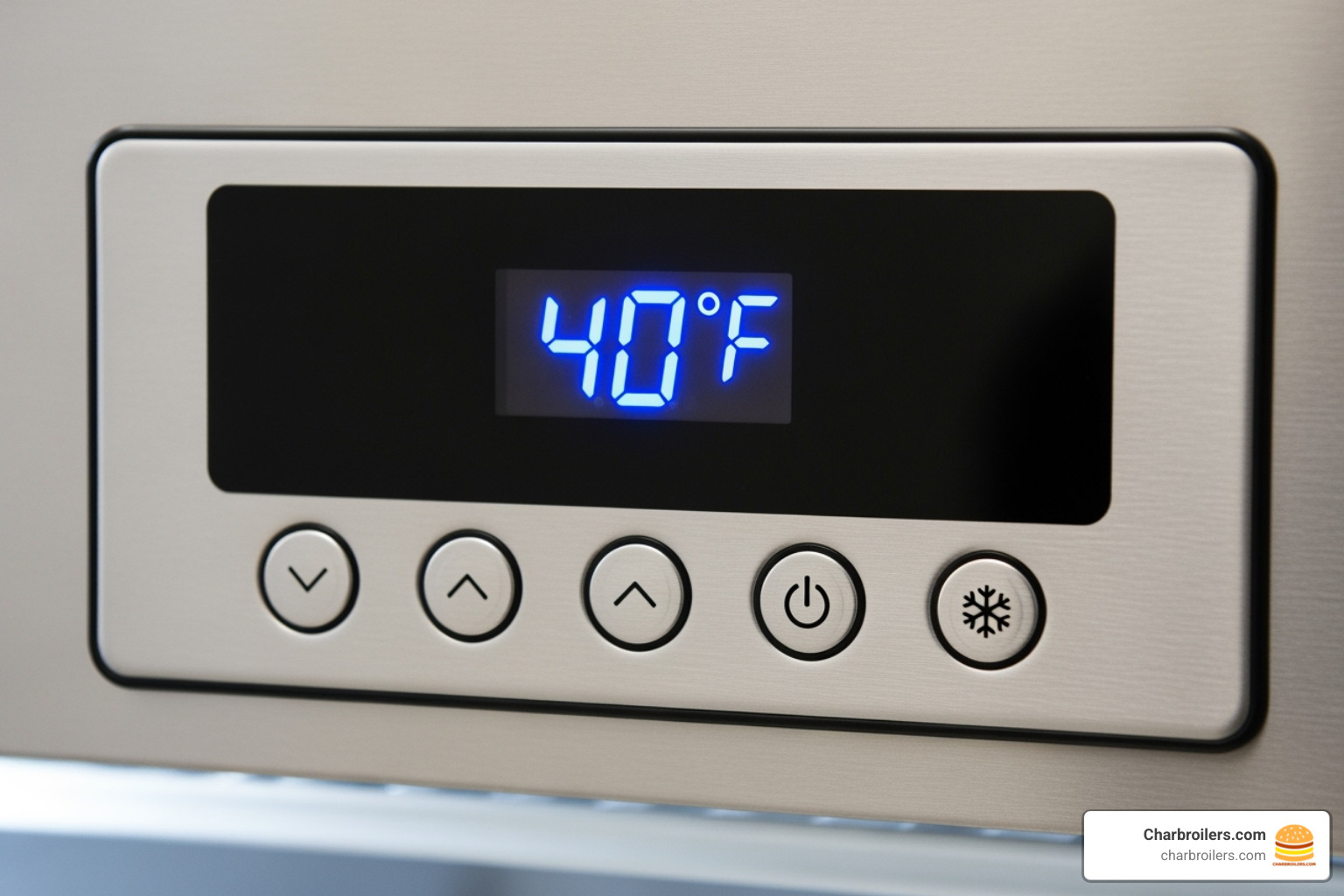
The temperature range of 32°F to 50°F is standard, but for food safety, keep perishables between 32°F and 40°F to stay out of the bacterial danger zone. Commercial units excel at maintaining this consistency.
Adjustable shelves are a lifesaver for storing items of various sizes, and most units have removable shelves for easy cleaning and reconfiguration.
Door locks are essential for units in public areas or hotel rooms to secure your inventory.
Reversible doors offer flexibility in tight spaces, allowing you to change the door swing to match your workflow.
A digital thermostat provides precise temperature control and readouts, taking the guesswork out of maintaining safe temperatures.
NSF Certification is non-negotiable for food service, as it ensures the unit meets strict public health and safety standards. Many health departments require it.
UL Certification covers electrical safety standards, ensuring the unit won't pose fire or shock hazards.
Types of Commercial Mini Fridge Units
Choosing the right style of commercial mini fridge can dramatically improve your operations.
Undercounter refrigerators are space-saving champions, sliding under counters to keep prep ingredients within arm's reach.
Countertop display coolers turn storage into sales. These compact, glass-doored units sit on your counter to showcase beverages or grab-and-go items.
Glass door merchandisers are for higher-volume operations, perfect for convenience stores or cafeterias where customers can easily see and access products.
Solid door worktop units are multitaskers, providing refrigerated storage below and a durable work surface on top.
Back bar coolers are designed for bar operations. They are typically shallow and wide, making bottles and cans easily accessible during busy service.
For more insights into commercial refrigeration equipment, our Charbroilers.com Commercial Refrigeration Equipment Guide provides detailed explanations of the entire category.
Installation, Efficiency, and Safety: A Buyer's Checklist
Getting your commercial mini fridge up and running properly isn't just about plugging it in and walking away. The way you install and position your unit makes all the difference between smooth operation and costly headaches down the road.
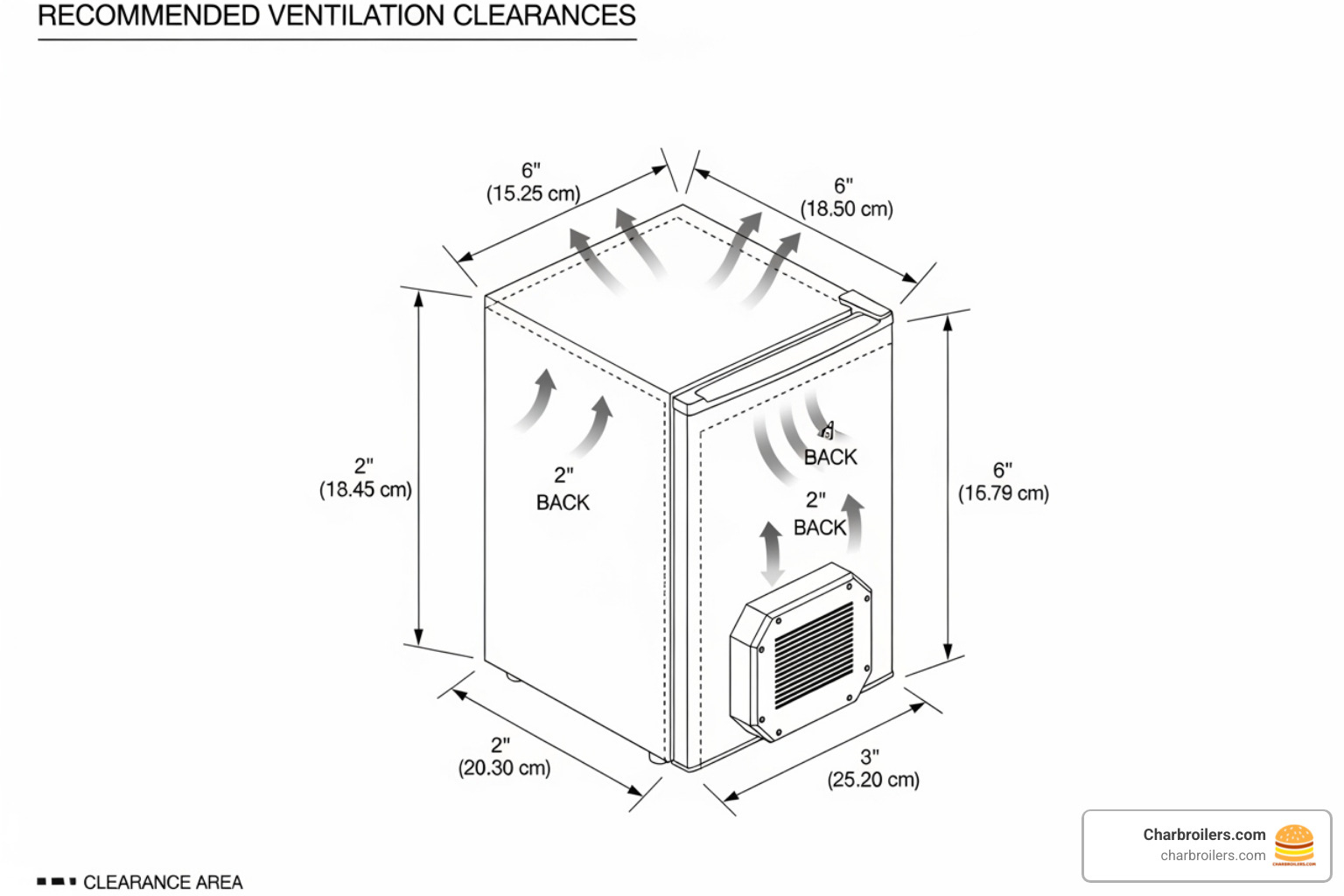
Think of your refrigerator like a hardworking athlete - it needs room to breathe and the right conditions to perform at its best. When a commercial mini fridge works to keep things cold, it generates heat that needs somewhere to go. If that heat gets trapped, your unit will struggle like a runner in a heavy coat.
Proper ventilation is absolutely critical for any refrigeration unit. Your manufacturer's manual will specify exactly how much clearance you need - typically several inches on the top, back, and sides. Some built-in models have front-venting systems designed for tighter spaces, but even these need adequate airflow to function efficiently.
Electrical safety should never be an afterthought. Always use a dedicated, properly grounded outlet for your unit. Extension cords might seem convenient, but they're a fire hazard waiting to happen. Make it a habit to check your power cord regularly for any signs of wear, fraying, or damage.
Noise levels might not seem like a big deal until you have a humming refrigerator disrupting your customers' conversations or your staff's break time. Most modern units operate between 35 and 46 decibels - about as quiet as a library. If noise matters in your space, check the decibel rating before you buy.
Energy Efficiency and Certifications
Your commercial mini fridge will be running 24/7, so energy efficiency isn't just good for the planet - it's good for your wallet. The difference between an efficient unit and an energy hog can add up to hundreds of dollars per year in electricity costs.
ENERGY STAR certification is your best friend here. These units use at least 15% less energy than standard models, which translates directly into reduced utility bills. Over the lifespan of your refrigerator, those savings really add up.
Many newer units also use eco-friendly refrigerants that have less environmental impact. This helps you meet sustainability goals while potentially giving you a positive talking point with environmentally conscious customers. It's a win-win that supports your long-term savings strategy.
Critical Safety and Placement Warnings
Some placement mistakes can turn your reliable commercial mini fridge into an expensive problem. Avoiding uncontrolled temperature environments like garages, outdoor areas, or unheated storage rooms is crucial. These extreme conditions force your unit to work overtime, leading to premature wear and potentially voiding your warranty.
Always place your unit on stable, level surfaces. A wobbly refrigerator doesn't just make annoying noises - it can affect door sealing and compressor efficiency. Take a moment to check that everything sits level and secure.
Keep an eye on your cord condition as part of regular maintenance. A damaged cord isn't just an efficiency issue - it's a serious electrical hazard that could put your business at risk.
Overheating prevention comes back to that ventilation we talked about earlier. If your unit feels excessively hot or struggles to maintain temperature, check the clearance around it immediately. While the sealed refrigeration system itself won't catch fire, electrical issues from damaged components absolutely can.
Some products may carry warnings under California's Proposition 65, indicating the presence of certain chemicals. You can find more information about these warnings at the California Proposition 65 Warning Information website to stay informed about any potential concerns.
Maximizing Your Investment: Cost, Warranty, and Maintenance
When running a food service business, every dollar counts. Choosing a commercial mini fridge isn't just about finding the cheapest option—it's about making a smart investment that pays off over time.
A residential mini-fridge might be cheaper upfront, but it isn't built for commercial demands. It will struggle with constant door openings and temperature fluctuations, leading to repairs, replacements, and lost inventory. A commercial mini fridge, however, is engineered to be a reliable workhorse with heavy-duty components that ensure consistent performance and a longer lifespan.
Commercial warranties are another key difference. Unlike residential warranties that often exclude business use, commercial warranties are designed for your reality, with many units offering robust coverage like 24-month parts and labor. Always read the fine print to understand what's covered and what might void your warranty.
We understand that outfitting your kitchen is a significant investment. That's why at Charbroilers.com, we offer financing options designed for food service operations, allowing you to get the equipment you need without draining your cash flow. For a complete selection, explore our Charbroilers.com Commercial Refrigerators For Sale.
Essential Maintenance for Longevity
Proper maintenance is about protecting your investment and preventing expensive breakdowns. The most critical task is regularly cleaning condenser coils. These coils, usually on the back or bottom, dissipate heat. When clogged with dust and grease, your commercial mini fridge works overtime, increasing energy bills and wearing out the compressor. A simple cleaning every 1-3 months can save you hundreds.
Check your door seals too. Damaged gaskets let cold air escape, forcing your unit to run constantly. Test them by closing the door on a piece of paper; if it slides out easily, it's time for a replacement.
If your unit requires manual defrosting, don't put it off, as ice buildup reduces efficiency. Most modern commercial units are all-refrigerator models, which eliminates this concern.
Interior cleaning is about food safety. Use food-safe cleaners, and for any "new plastic" smell, an open box of baking soda works wonders.
Finally, temperature monitoring is crucial. Use a separate thermometer to verify your unit maintains the food-safe range of 32°F to 39.2°F. Consistent temperature issues signal the need for professional attention.
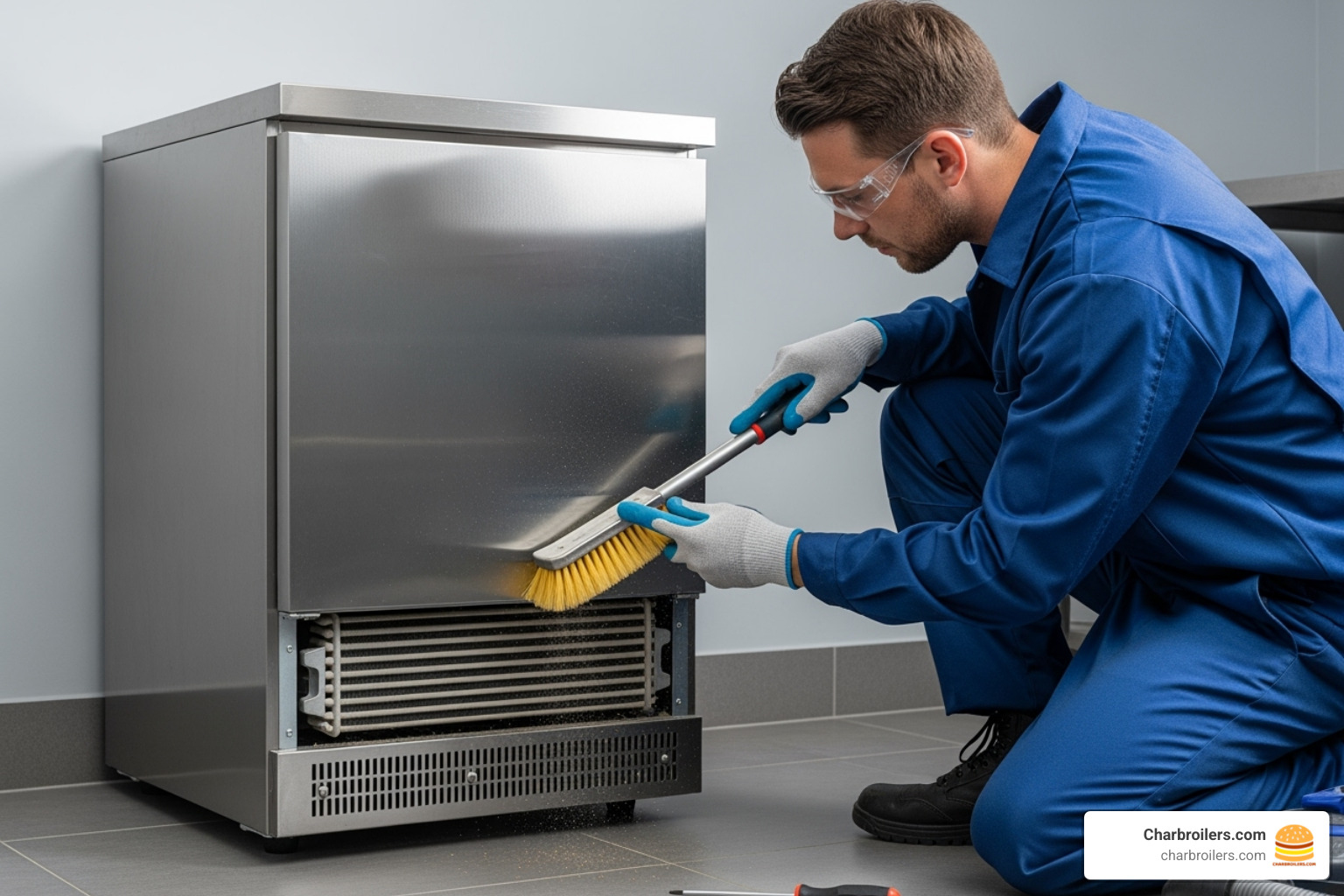
Think of maintenance as insurance for your commercial mini fridge. A few minutes of care each month can extend its life, keep energy costs down, and ensure your products stay safe and fresh.
Frequently Asked Questions about Commercial Mini Fridges
After helping thousands of restaurant owners, I've heard just about every question imaginable. Here are the most common ones, with the straight answers you need.
Can a commercial mini fridge be enclosed in a cabinet?
Yes, but with a major caveat: your commercial mini fridge needs room to breathe. The unit works by pushing heat out through its condenser coils. If that heat gets trapped in a closed cabinet, the fridge will work overtime, leading to higher electricity bills and a shorter lifespan.
The cabinet needs proper openings—typically at the back and bottom—to let air flow freely. Every manufacturer specifies clearance requirements in their manual; following them is critical for performance.
Here's a pro tip: if you try to open your fridge door right after closing it and it feels "stuck," that's a good sign of a tight seal, which makes proper ventilation even more important.
What is the ideal temperature for a commercial mini fridge?
For food safety, keep your commercial mini fridge between 32°F and 40°F (0°C to 4°C). This sweet spot keeps perishables out of the "danger zone" (40°F to 140°F), where bacteria multiply rapidly. While some units operate up to 50°F, stick to the colder end of the spectrum for most foods and beverages to protect your customers and your reputation.
If you notice items freezing, your temperature might be set too low, or products may be touching the back wall or air vents. A small adjustment usually fixes this.
How is a commercial mini fridge different from a residential one?
This is a critical distinction that can save you from a costly mistake. A commercial mini fridge is built for an entirely different world than a residential one.
- Construction and Durability: Commercial units have heavy-duty compressors, reinforced shelving, and stainless steel construction to handle hundreds of daily openings.
- Performance: They feature more powerful compressors that recover temperature quickly after the door is opened, which is essential during busy service.
- Certifications: Most commercial units have NSF-7 certification for public health and safety and UL certification for electrical safety. You won't find these on residential models.
- Warranty: Commercial warranties cover business use, whereas using a residential unit in a commercial setting will likely void its warranty.
- Temperature Control: Commercial units offer precise digital controls, which are essential for food safety compliance.
The bottom line is that a commercial mini fridge is an investment in reliability, compliance, and long-term efficiency.
Conclusion
Choosing the right commercial mini fridge isn't just about buying another piece of equipment—it's about making a smart investment that can transform how your business operates. Whether you're running a busy cafe, managing a hotel, or operating a busy bar, these compact cooling champions offer the perfect blend of space efficiency and commercial-grade performance.
Throughout this guide, we've explored how commercial mini fridge units can boost your sales through strategic placement, streamline your kitchen operations with better workflow, and provide the durability your business demands. The key is focusing on what really matters: commercial-grade durability that can handle constant use, proper certification like NSF-7 for food safety compliance, and energy efficiency that keeps your operating costs in check.
These aren't just smaller versions of home refrigerators. They're purpose-built workhorses designed for your unique challenges. From the precise temperature control that keeps your ingredients fresh to the heavy-duty compressors that recover quickly after busy rushes, every feature serves a purpose in your operation.
The investment pays off in multiple ways. You'll see improved operations through better organization and workflow. Your customers will appreciate the convenience and selection, leading to improved customer satisfaction. And with strategic placement for impulse buys and grab-and-go items, you can genuinely boost your bottom line.
Don't forget the importance of proper installation with adequate ventilation, regular maintenance like cleaning those condenser coils, and choosing units with solid commercial warranties. These simple steps protect your investment and ensure years of reliable service.
For a wide selection of commercial kitchen equipment and flexible financing options to get you started, explore the resources at Charbroilers.com. We understand the challenges of running a food service business, and we're here to help you find solutions that work within your budget and space constraints.
Find the Perfect Cooling Solution for Your Business
Just like selecting the perfect charbroiler for your restaurant's specific cooking needs, finding the right commercial mini fridge is about understanding your unique requirements and matching them with the right equipment. At Charbroilers.com, we believe in providing not just products, but complete solutions.
Our expert advice helps you steer the options, from undercounter units for tight kitchen spaces to glass-door merchandisers that drive impulse sales. With our financing options specifically designed for food service operations, you don't have to compromise on quality due to budget constraints.
Whether you're just starting out or expanding your current operation, we're here to help you build a kitchen that works as hard as you do. Check out our Guide to Commercial Charbroilers for Your Restaurant to see how we approach helping businesses find the right commercial kitchen equipment for their needs.