

Chill Out, Outside: Finding the Perfect Outdoor Ice Machine
Why Your Business Needs an Outdoor Ice Machine
Outdoor commercial ice machine for sale options range from compact modular ice makers to large-capacity ice and water vending machines that can store 6,500+ lbs of ice and serve thousands of customers daily. Here's what you need to know:
Quick Buyer's Guide:
- Modular Ice Makers: 316-561 lbs/24 hours production, require separate storage bins
- Ice Vending Machines: 500-6,500 lbs storage capacity, built-in payment systems
- Ice Merchandisers: Store 30-390 bagged ice units (7-20 lb bags)
- Key Features: All-steel construction, weatherproof paint, dual exhaust systems
- Price Factors: Production capacity, storage size, vending features, climate adaptability
If you're running a busy restaurant, hotel, convenience store, or outdoor venue, ice isn't just nice to have—it's essential. But indoor ice machines come with limitations: they take up valuable kitchen space, require constant staff monitoring, and can't serve customers 24/7. An outdoor commercial ice machine for sale solves these problems by producing or storing ice outside your main facility, freeing up space while providing round-the-clock availability.
The benefits go beyond convenience. Outdoor ice machines can actually increase your revenue. One ice vending machine generated over $4,000 in a single weekend, according to industry data. These machines eliminate restocking labor, reduce theft, and can boost profit per bag by over 250% compared to traditional ice delivery. For hotels, they transform ice machines from cost centers into cash flow generators. For retail locations, they improve customer experience while maximizing profit margins.
Weather resistance is built into these units. Features like all-steel construction with water-tight seams, increased insulation (2.5" in walls, 3" in floors), and two-part all-weather paint provide superior protection against humidity, corrosion, and temperature extremes. Whether you're in the desert heat or Canadian winters, modern outdoor ice machines maintain optimal temperatures of 16°F to 24°F.
I'm Sean Kearney from Charbroilers.com, and with over a decade in the restaurant equipment industry, I've helped countless businesses find the right outdoor commercial ice machine for sale that fits their budget and operational needs. My goal is to simplify your search by breaking down what really matters when investing in outdoor ice equipment.
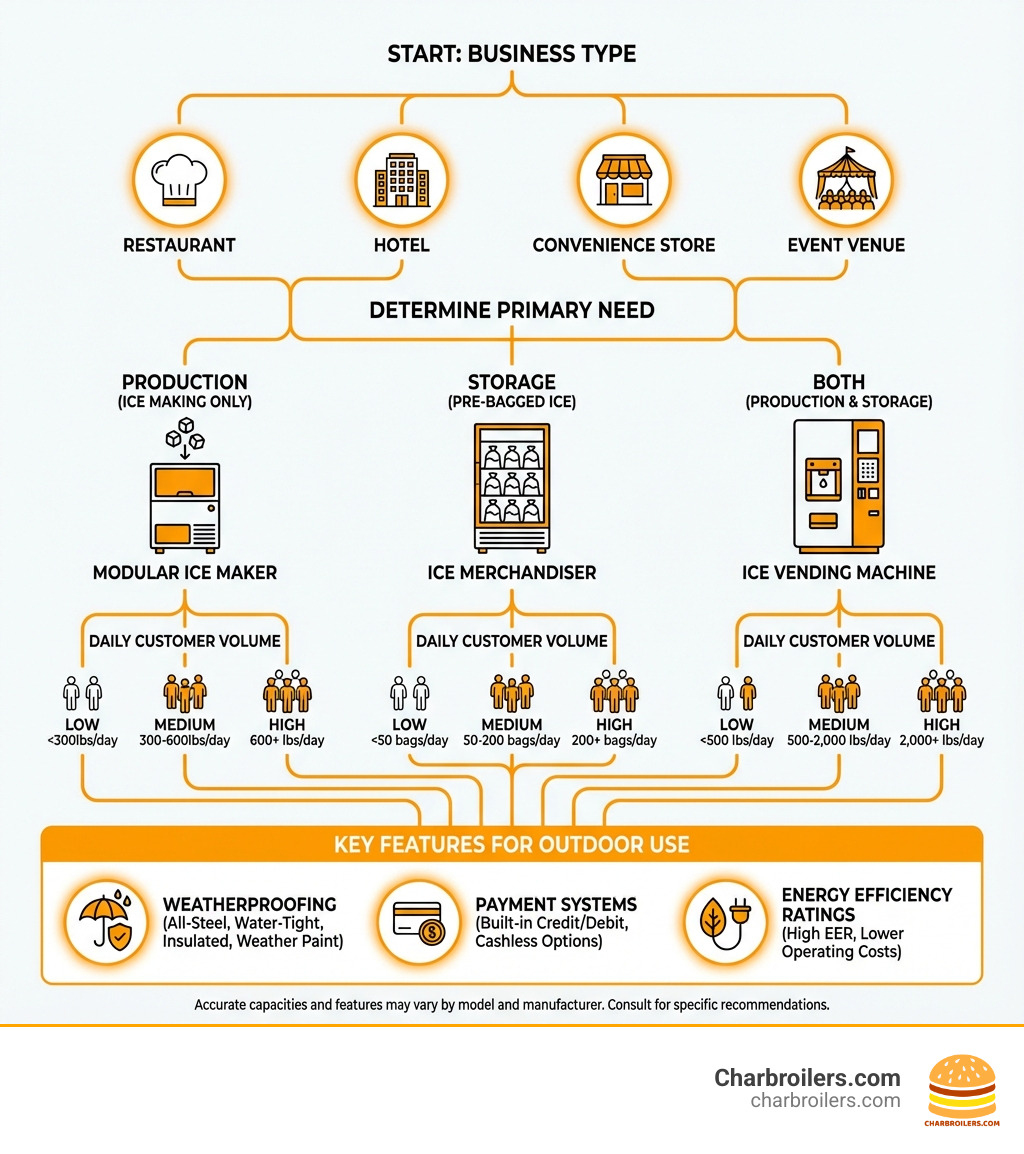
Outdoor commercial ice machine for sale terms to know:
Key Factors When Shopping for an Outdoor Commercial Ice Machine for Sale
Investing in an outdoor commercial ice machine is a significant decision for any business. Unlike indoor models, these machines face the elements, which means they need to be built differently and chosen with specific considerations in mind. For us, the primary goal is finding a unit that can consistently deliver quality ice, regardless of what Mother Nature throws its way.
When we evaluate an outdoor commercial ice machine for sale, we look beyond just the price tag. We consider its climate suitability, ensuring it can withstand the varying temperatures and humidity of our region, Seattle, WA. Durability is paramount; these aren't delicate appliances. They need robust construction to handle continuous operation in an exposed environment. This includes features like all-steel construction with precision machine-formed, water-tight lock-form seams, which create a stronger and more resilient merchandiser. The exterior finish is equally important, often featuring a two-part primer/top coat all-weather paint. This specialized paint provides superior resistance to humidity, corrosion, and other harsh weather conditions, protecting the unit's integrity and appearance over time.
For a deeper dive into commercial ice machines generally, including key features and comparisons, check out The Ultimate Guide to Comparing Commercial Ice Makers.
Sizing Up Your Needs: Production Capacity and Storage
One of the most critical decisions is determining the right production capacity and storage size for your specific needs. It's like Goldilocks and the three bears: you don't want too little ice, or too much.
Production Capacity Calculation: Ice machine production is typically measured in pounds per 24 hours. What's often overlooked is how much this capacity can fluctuate based on ambient air temperature and incoming water temperature. For example, an Elevation Series™ Modular Cube Ice Maker might produce approximately 316 lbs/24 hours at 70°F air/50°F water, but only 274 lbs/24 hours at 90°F air/70°F water. This difference is significant, especially in outdoor settings where temperatures can soar during summer. We always advise our clients to consider their peak demand and the hottest expected outdoor temperatures to avoid running out of ice when it's needed most. Some advanced ice vending machines, like the Kooler Ice IM2500 Series II, are even designed to allow for additional ice makers to be added as production needs increase, offering future-proofing for growing businesses.
Storage Bin Size: Once produced, the ice needs a place to stay frozen and accessible. Storage bin capacity is measured in pounds, or for merchandisers, in the number of bagged ice units it can hold. For instance, a Leer Model 30 merchandiser can store 80 7 lb. bags or 30 20 lb. bags, while a larger Model 155 can hold up to 390 7 lb. bags or 150 20 lb. bags. For ice vending machines, storage can be even more substantial, with models like the Ice House storing up to 6,500 lbs of ice, and even smaller units like the Kooler Ice IM500 boasting the largest bin in its class at 500 lbs. Matching your storage to your production and sales volume is key to efficiency and customer satisfaction.
To learn more about selecting the right storage for your ice machine, read our guide: Don't Get Left in the Cold: Your Guide to Buying the Best Commercial Ice Storage Bin.
Climate and Energy Efficiency Considerations
Operating an ice machine outdoors, especially in varying climates, introduces unique energy efficiency challenges.
Air-cooled vs. Water-cooled Units: Most outdoor commercial ice machines are air-cooled due to their self-contained nature, but it's important to understand the implications. Air-cooled units dissipate heat into the surrounding air, making them less efficient in very hot climates. Water-cooled units, which use water to cool the condenser, are generally more efficient in hotter environments but require a continuous water supply and drainage, which might be impractical for some outdoor setups. The Ice-O-Matic Elevation Series™ offers both types, with air-cooled models producing up to 561 lb/24 hours and water-cooled models around 316 lb/24 hours under similar conditions. Proper ventilation is crucial for air-cooled outdoor units to prevent overheating and maintain efficiency.
High R-value Insulation: To combat external temperatures and maintain consistent internal temperatures (typically 16°F – 24°F), outdoor units feature significantly increased insulation. Leer's merchandisers, for example, boast 2.5 inches of insulation in the ceiling and walls, and 3 inches in the floor. This high R-value insulation is vital for reducing heat infiltration and ensuring the ice stays frozen, which directly impacts energy consumption.
R290 Refrigerant: The industry is moving towards more environmentally friendly refrigerants. Leer Inc., for instance, is fully transitioning to R290 refrigerant. R290 (propane) is a natural refrigerant with a very low Global Warming Potential (GWP) and excellent thermodynamic properties, making it an energy-efficient choice. When considering an outdoor commercial ice machine for sale, looking for models that use R290 or other low-GWP refrigerants can offer long-term environmental and operational benefits.
Energy Star Certification: While not all commercial ice machines achieve Energy Star certification, it's a designation worth looking for. An Energy Star certified unit indicates it meets strict energy efficiency guidelines set by the EPA. Even if a specific outdoor model isn't certified, understanding its energy consumption in different ambient conditions is crucial for managing operational costs.
For more on compliance and standards for refrigeration equipment, see our guide: Cool Compliance: Your Guide to NSF/ANSI Standard 7 for Refrigerators and Freezers.
Types of Outdoor Ice Machines and How They Differ
When we talk about an outdoor commercial ice machine for sale, we're often referring to a few distinct categories, each designed for different operational needs and business models.
Modular Ice Makers: These are typically the ice-making head units that produce ice but require a separate storage bin. Models like the Ice-O-Matic Elevation Series™ modular cube ice makers are designed for high production (e.g., 561 lb/24 hours) and offer flexibility, allowing you to pair them with an appropriately sized ice bin. While the ice maker head itself might be rated for outdoor use (with proper enclosure), the bin also needs to be outdoor-rated and insulated to maintain ice quality.
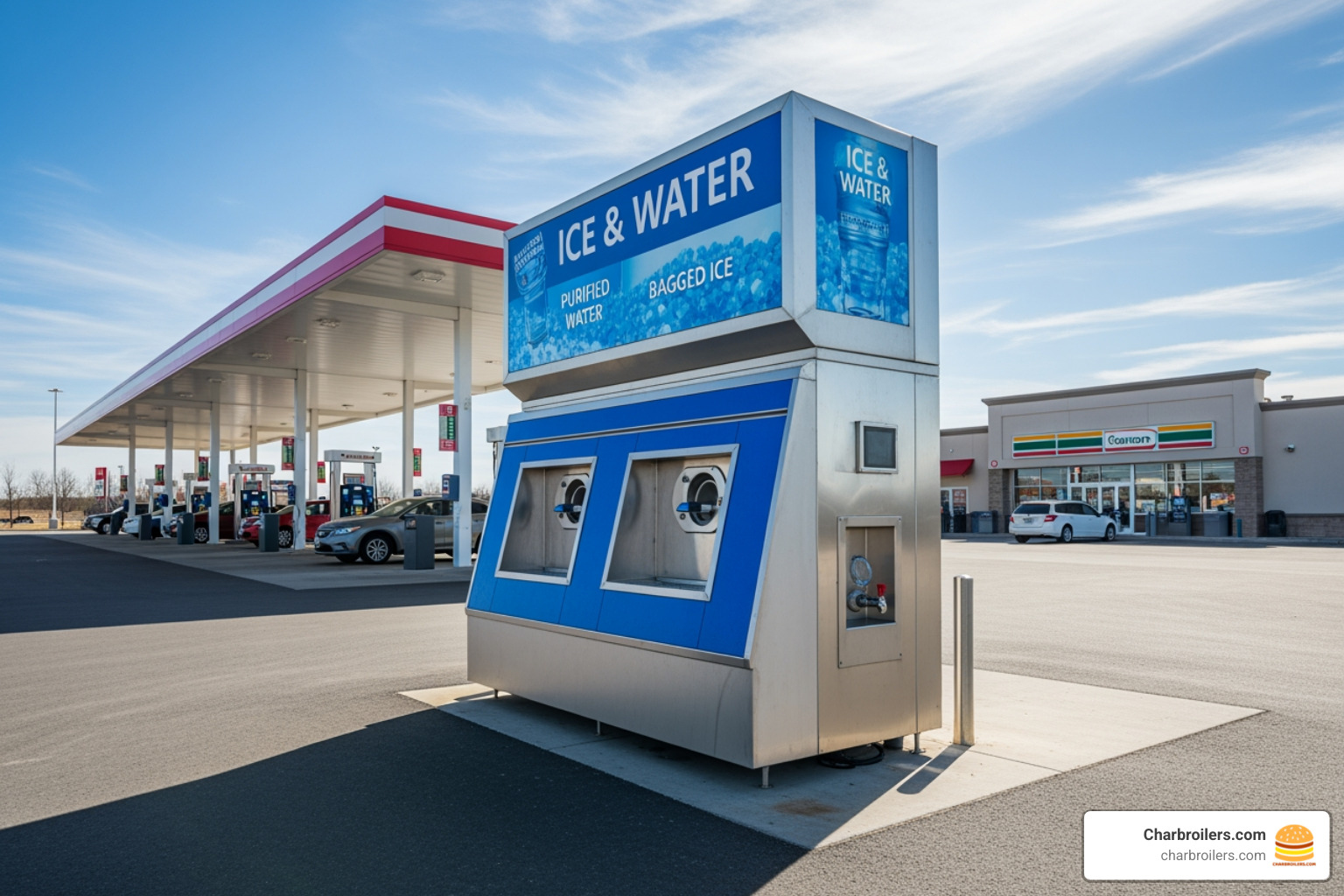
Ice and Water Vending Machines: These are self-contained units that produce, store, bag (or dispense loose), and vend both ice and water directly to customers. They are essentially a business in a box. Companies like Kooler Ice and Ice House America specialize in these. Models range from the compact IM500 (with a 500lb bin) to the massive Ice House, which can store 6,500 lbs of ice. The HYDRATION PRO is an industrial-sized ice and water dispenser. These machines connect directly to your water and electrical lines, producing an unlimited supply on demand. They are designed for 24/7 self-service, eliminating the need for staff.
Packaged Ice Vending Machines: Some units, like the ICE EXPRESS, are designed specifically to vend pre-bagged ice. While they don't produce ice on-site, they are built to withstand outdoor conditions and offer a convenient self-service option for customers. These are often robust enough for outdoor summer use.
For a deeper dive into how ice is produced in commercial settings, check out Chill Out: A Deep Dive into Commercial Ice Production Methods.
Outdoor vs. Indoor Models: More Than Just a Weatherproof Shell
The distinction between an outdoor and indoor ice machine goes far beyond a simple weatherproof coating. Outdoor models are engineered from the ground up to face environmental challenges.
Durability Differences: Outdoor machines are constructed with heavy-duty materials designed to resist impact, corrosion, and wear from exposure. Leer's outdoor ice merchandisers, for example, feature all-steel construction with no fasteners, welding, or adhesives. Instead, they use precision machine-formed, offset seams that create water-tight lock-form seams, making the unit stronger and more durable. Indoor units typically don't require this level of external ruggedness.
Water-tight Seams: This is a critical feature for outdoor units. Precision-formed, water-tight seams prevent rain, snow, and humidity from penetrating the unit, protecting internal components and insulation from damage and ensuring consistent performance.
Improved Insulation: As mentioned earlier, outdoor units boast significantly thicker and higher R-value insulation (e.g., 2.5-3 inches thick) to maintain optimal internal temperatures despite fluctuating external conditions. This is essential for energy efficiency and preventing ice melt.
Refrigeration System Protection: Outdoor units often incorporate features to protect their vital refrigeration components. Compressor covers provide airflow while shielding the compressor from direct exposure to rain, dust, and debris. Components like door gaskets are made from durable materials like Santoprene® to withstand harsh outdoor climates.
Maintenance Variations: While internal maintenance (cleaning, sanitizing) is similar, outdoor units may require more frequent exterior cleaning to remove dirt, pollen, and environmental buildup. Their robust design, however, often simplifies internal servicing. Kooler Ice machines, for instance, feature a "plug and play" mechanical system for simple service and maintenance, and Leer's Automatic Defrost units have a drop-down evaporator for easier servicing.
For more insights into commercial ice makers, including their performance and reviews, read Stay Cool Under Pressure: Commercial Ice Makers Machines Reviewed.
What to Look for in an outdoor commercial ice machine for sale: Vending Features
For businesses considering an ice vending machine, the integrated vending features are a game-changer. These features transform a simple ice machine into a revenue-generating, self-service business.
Payment Systems: Modern outdoor ice vending machines offer a variety of payment options to maximize convenience for customers. This typically includes:
- Cash and Coin: Still essential for many customers.
- Credit/Debit Card Readers: A must-have for impulse buys and higher-value purchases.
- Mobile Pay: Compatibility with popular mobile payment apps offers ultimate convenience.
- Tokens and Coupons: Useful for promotions or specific business models.
Offering multiple payment options ensures you capture every potential sale.
Remote Management Systems: This is where the "smart" comes into smart vending. Systems like Ice House America's SmartIce™ Remote Management System allow you to monitor and manage your machine from anywhere.
- Inventory Monitoring: Keep track of ice levels in real-time, so you know when production needs to catch up or if there's a potential issue.
- Sales Tracking: Gain insights into sales volume, peak hours, and revenue generation. This data is invaluable for optimizing pricing, stock levels, and even identifying the best locations for additional machines.
- Troubleshooting and Alerts: Receive notifications for operational issues, allowing for proactive maintenance and minimal downtime.
These features contribute to the "passive income" potential of ice vending machines, making them an attractive business opportunity.
For more on commercial dispensers, check out Dispense the Truth About Commercial Ice Dispensers.
The Investment: Cost, Maintenance, and Long-Term Value
When we consider an outdoor commercial ice machine for sale, we're not just looking at an expense; we're looking at a long-term investment. Understanding the initial cost, ongoing maintenance, and available support is crucial for calculating the true return on investment.
Understanding the Price Tag
The cost of an outdoor commercial ice machine for sale can vary widely, influenced by several key factors:
- Production Capacity: Machines that produce hundreds or even thousands of pounds of ice daily will naturally command a higher price than smaller units.
- Storage Size: Larger integrated storage bins or merchandisers add to the cost, especially those with advanced insulation and robust construction.
- Vending Features: Machines with sophisticated payment systems, remote management capabilities, and advanced filtration will be more expensive than basic ice makers.
- Brand and Quality: Reputable manufacturers known for durability and reliability often have higher price points, but this typically translates to a longer lifespan and fewer issues.
- Type of Machine: A modular ice maker head will be less expensive than a full-fledged ice and water vending kiosk, which is essentially a complete business unit.
For example, a basic modular ice maker might be in one price range, while a highly productive, fully automated ice and water vending machine with a 6,500 lb storage capacity will be a significantly larger investment, but with proportionally higher revenue potential. You can see an example of detailed product specifications for a modular ice maker here: See an example of product specifications.
For businesses looking to manage upfront costs, exploring options for Renting Commercial Ice Machines Made Easy and Breezy can be a viable alternative to outright purchase.
Maintenance Tips for your outdoor commercial ice machine for sale
Regular maintenance is the secret sauce to ensuring your outdoor ice machine operates efficiently, produces clean ice, and enjoys a long lifespan. Neglecting maintenance can lead to costly repairs and even health hazards.
- Regular Cleaning Schedule: Outdoor units can accumulate dirt, dust, and environmental debris on their exterior. A routine exterior wipe-down is a good start. Internally, ice makers need consistent cleaning and sanitizing. Many modern Ice-O-Matic units feature "one-touch sanitize/descaling controls" and "dishwasher-safe food zone components," making this process much simpler.
- Descaling: Mineral buildup from water can impair an ice machine's performance. Descaling should be done regularly, following manufacturer guidelines, to remove these deposits.
- Filter Replacement: Water filters are crucial for producing clean, clear ice and protecting the machine's internal components from mineral buildup. Manufacturers often recommend specific filters (e.g., IOMQ for Ice-O-Matic models), and some even offer extended warranty coverage for the evaporator if you participate in their filter program.
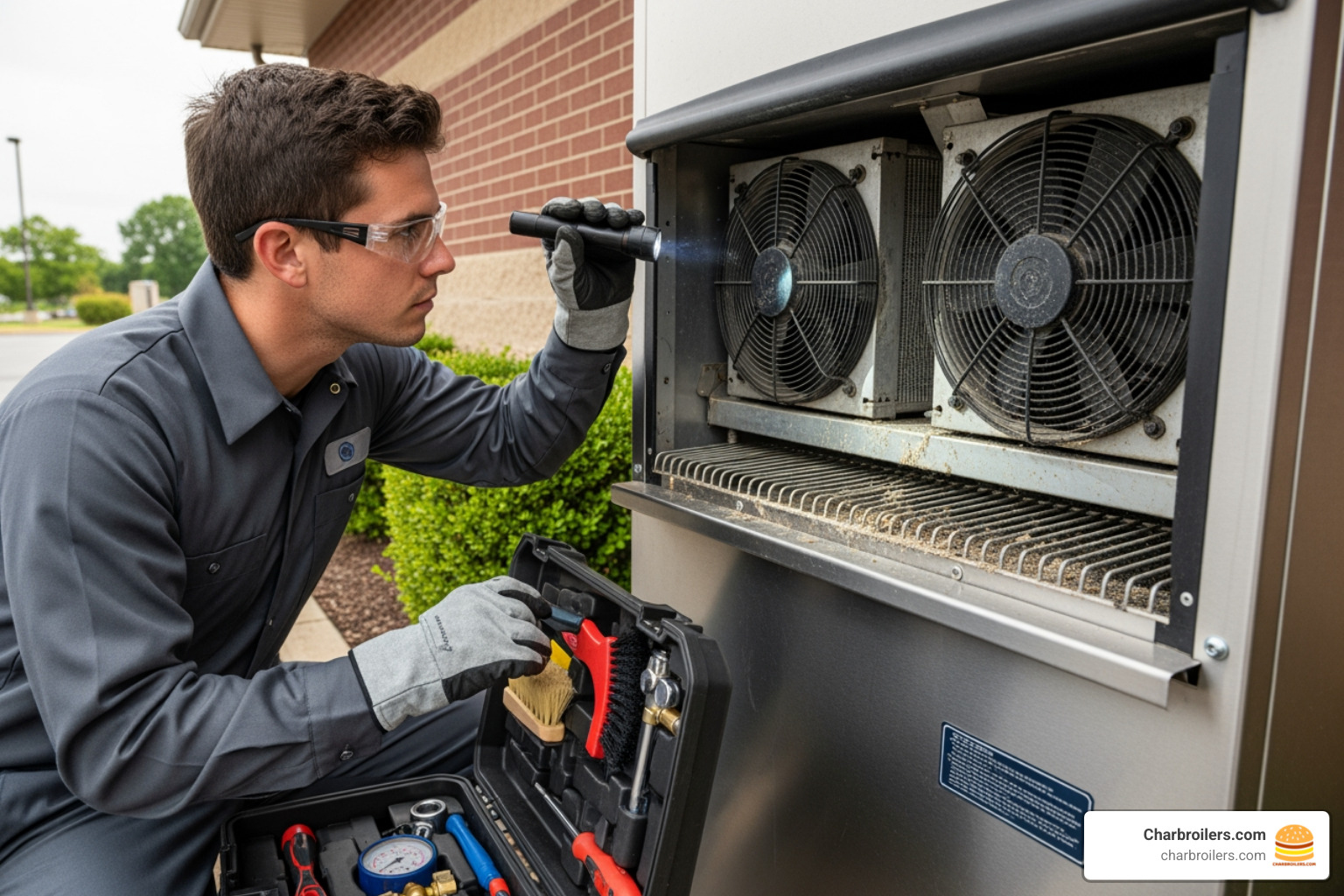
- Condenser Coil Cleaning: For air-cooled outdoor units, the condenser coils can get dirty quickly from airborne particles. Clean coils are essential for efficient heat exchange. Regularly brush or vacuum the coils to ensure proper airflow and prevent the compressor from overworking.
- Defrost Systems: Outdoor merchandisers often come with either "Automatic Defrost Units" or "Cold Wall Manual Defrost Units" (Leer offers both). Understanding your unit's defrost method and performing manual defrosts if necessary is important to prevent frost buildup.
- Professional Servicing: While routine cleaning can be done by staff, we recommend professional servicing at least once or twice a year. Technicians can perform deeper diagnostics, check refrigerant levels, inspect electrical components, and ensure everything is running optimally. The "plug and play" mechanical systems found in some machines are designed to simplify professional service.
For more comprehensive advice on maintaining your ice-making equipment, refer to Ice Ice Baby: Best Commercial Ice Making Equipment to Keep Your Business Cool.
Warranty and Manufacturer Support
A solid warranty and reliable manufacturer support are non-negotiable for any significant equipment purchase, especially for an outdoor commercial ice machine for sale. These machines work hard, and knowing you're covered provides invaluable peace of mind.
- Standard Warranty Periods: Most manufacturers offer a standard warranty. For example, Ice-O-Matic typically provides a 3-year parts & labor warranty for the ice maker itself. Key components like the evaporator and compressor often come with a longer 5-year parts warranty.
- Extended Warranties and Filter Programs: Many manufacturers incentivize proper maintenance by offering extended warranties. Ice-O-Matic, for instance, extends the evaporator warranty to 7 years parts & labor when you enroll in their filter program and use recommended filters. This highlights the importance of using the right water filtration.
- Access to Service Technicians: Knowing that you have access to qualified service technicians is crucial. Manufacturers usually provide online locators or contact information to help you find certified professionals in your area. For instance, Ice-O-Matic provides ways to Find service technicians directly through their website. When purchasing an outdoor unit, verify that local technicians are experienced with outdoor-rated equipment.
Frequently Asked Questions about Outdoor Ice Machines
We often get asked similar questions by business owners considering an outdoor ice machine. Let's tackle some of the most common ones.
How much ice will I need for my business?
Determining your ice needs is crucial to avoid running out during peak times or over-investing in excess capacity. Here are factors we consider:
- Business Type: A hotel needs ice for guest rooms, bars, and potentially kitchens. A convenience store sells bagged ice. A restaurant uses ice for drinks and food presentation. An event venue has high, concentrated demand.
- Peak Hours and Days: How much ice do you go through during your busiest periods? Plan for this.
- Seasonal Demand: Summer months will drastically increase ice consumption compared to winter.
- Usage: Are you primarily selling bagged ice, or is it for beverages, food service, or cooling?
-
Rule of Thumb Calculations:
- Restaurants: Typically 1.5-3 lbs of ice per customer.
- Bars: 3-5 lbs of ice per customer.
- Hotels: 5 lbs per room.
- Convenience Stores: Depends heavily on location and traffic, but aim for sufficient storage to meet daily peak demands.
It's always better to slightly overestimate than to run out of ice and disappoint customers.
Can any commercial ice machine be used outdoors?
Absolutely not! This is a common misconception that can lead to significant equipment damage and safety hazards. Standard indoor commercial ice machines are not built to withstand the elements. An outdoor commercial ice machine is specifically designed and rated for outdoor use.
Key differences include:
- Specific Outdoor Ratings: Look for UL Outdoor listings or similar certifications indicating the machine is safe and suitable for exterior placement.
- Weatherproofing Features: This includes the all-steel construction, two-part all-weather paint, and water-tight seams we discussed earlier.
- Ventilation Requirements: Outdoor units, especially air-cooled ones, need adequate space for airflow to dissipate heat effectively. Placing an indoor unit outside without proper protection will lead to overheating, premature component failure, and voided warranties.
What is the difference between an ice merchandiser and an ice machine?
These terms are often used interchangeably, but they refer to distinct pieces of equipment:
- Ice Machine (or Ice Maker): This is the unit that produces the ice. It takes water, freezes it, and harvests the ice into a storage bin. Examples include modular ice makers like the Ice-O-Matic Elevation Series™.
- Ice Merchandiser: This is essentially a commercial freezer designed specifically for storing and displaying pre-bagged ice for sale. It keeps already-produced ice frozen. Leer's outdoor models, for instance, are ice merchandisers, designed to hold varying quantities of 7 lb or 20 lb bags.
- Ice Vending Machine: This type of machine combines both functions. It typically has an integrated ice maker, a storage bin, and a dispensing mechanism (often including a bagging system) along with payment processing, allowing it to produce, store, and sell ice on demand.
Understanding these differences helps us select the right equipment for your specific operational needs, whether you need to make ice, store ice, or do both.
Conclusion: Make the Coolest Investment for Your Business
Choosing the right outdoor commercial ice machine for sale is a strategic decision that can significantly impact your business's efficiency, customer satisfaction, and bottom line. We've explored the myriad benefits, from saving valuable indoor space and providing 24/7 ice availability to boosting revenue and improving the customer experience.
The key to a successful investment lies in carefully considering factors such as production capacity, storage size, and the specific climate challenges of your location in Seattle, WA. Opting for units with robust, all-steel construction, superior insulation, and corrosion-resistant finishes is paramount for durability. Additionally, understanding the nuances of energy efficiency, modern refrigerants like R290, and advanced vending features like remote management systems will ensure your machine is not just a purchase, but a smart, long-term asset.
The right outdoor commercial ice machine for sale is more than just a piece of equipment; it's a reliable, revenue-generating partner that works tirelessly, day and night, to keep your business cool and your customers happy. At Charbroilers.com, we understand the importance of this investment. We offer a wide selection of commercial kitchen equipment and provide financing options custom for food service operations, making it easier for you to acquire the perfect outdoor ice solution for your needs.
Ready to make the coolest investment for your business? Explore our complete guide to commercial equipment for your restaurant and let us help you find the ideal outdoor ice machine to keep your operations running smoothly, no matter the weather.