

Beyond the Shine: Why Stainless Steel Matters (or Doesn't) for Your Commercial Freezer
Why Commercial Freezer Materials Matter More Than You Think
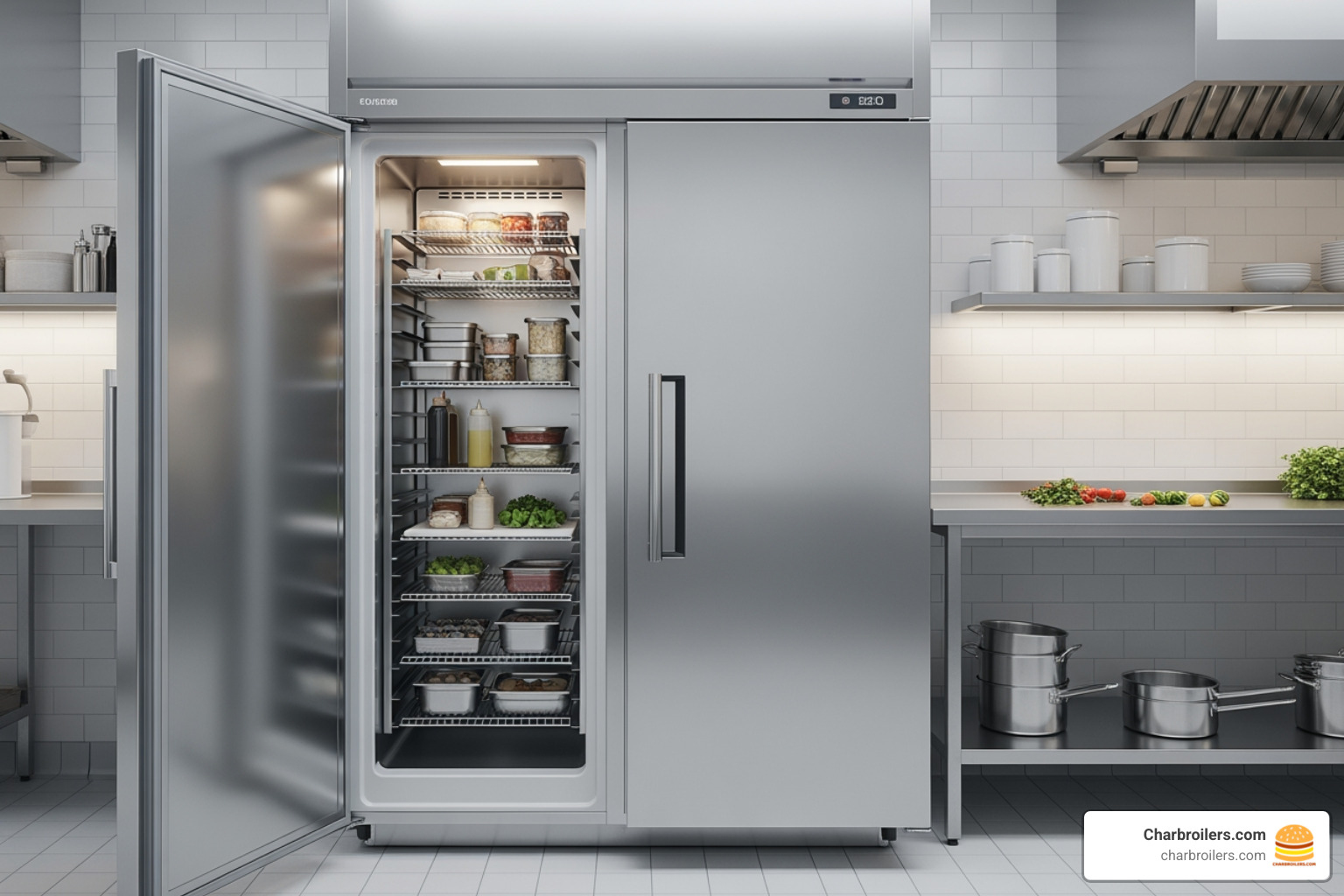
Do commercial freezers need to be stainless steel? The short answer is: not always, but the interior almost certainly does. To meet health codes, the inside of a commercial freezer must be stainless steel or a similar corrosion-resistant material. The exterior, shelving, and other components offer more flexibility, with aluminum or coated steel being viable options depending on your needs and budget.
Quick Material Requirements:
- Interior surfaces: Stainless steel is the industry standard for food safety and durability.
- Exterior surfaces: Aluminum or coated steel are acceptable alternatives.
- Shelving: Stainless steel or epoxy-coated wire both work well.
- Regulatory requirement: Materials must be "smooth, easily cleanable, and corrosion-resistant" per NSF/ANSI 7 standards.
- Bottom line: The interior is critical for compliance; exterior choices depend on your budget and placement.
The gleaming stainless steel in professional kitchens isn't just for looks. It resists corrosion, cleans easily, and withstands daily abuse. However, it costs more than alternatives like painted steel or aluminum. So, where is it essential, and where can you save money without compromising safety or lifespan?
Understanding these trade-offs helps you invest where it matters most—like a durable, easy-to-clean stainless steel interior—and economize on components like the exterior, where other materials may suffice.
I'm Sean Kearney from Charbroilers.com. With over a decade in the restaurant equipment industry, I've helped countless operators determine their material needs. This guide will break down which components require stainless steel and where you have flexibility, helping you choose wisely for your kitchen and budget.
Do commercial freezers need to be stainless steel terms simplified:
- nsf ansi standard 7 commercial refrigerators and freezers
- commercial refrigerators and freezers
- commercial deep freezer
The Best Advantages of Stainless Steel in Commercial Freezers
Stainless steel is the gold standard for commercial freezers for reasons that go far beyond aesthetics. It delivers critical benefits for any busy kitchen.
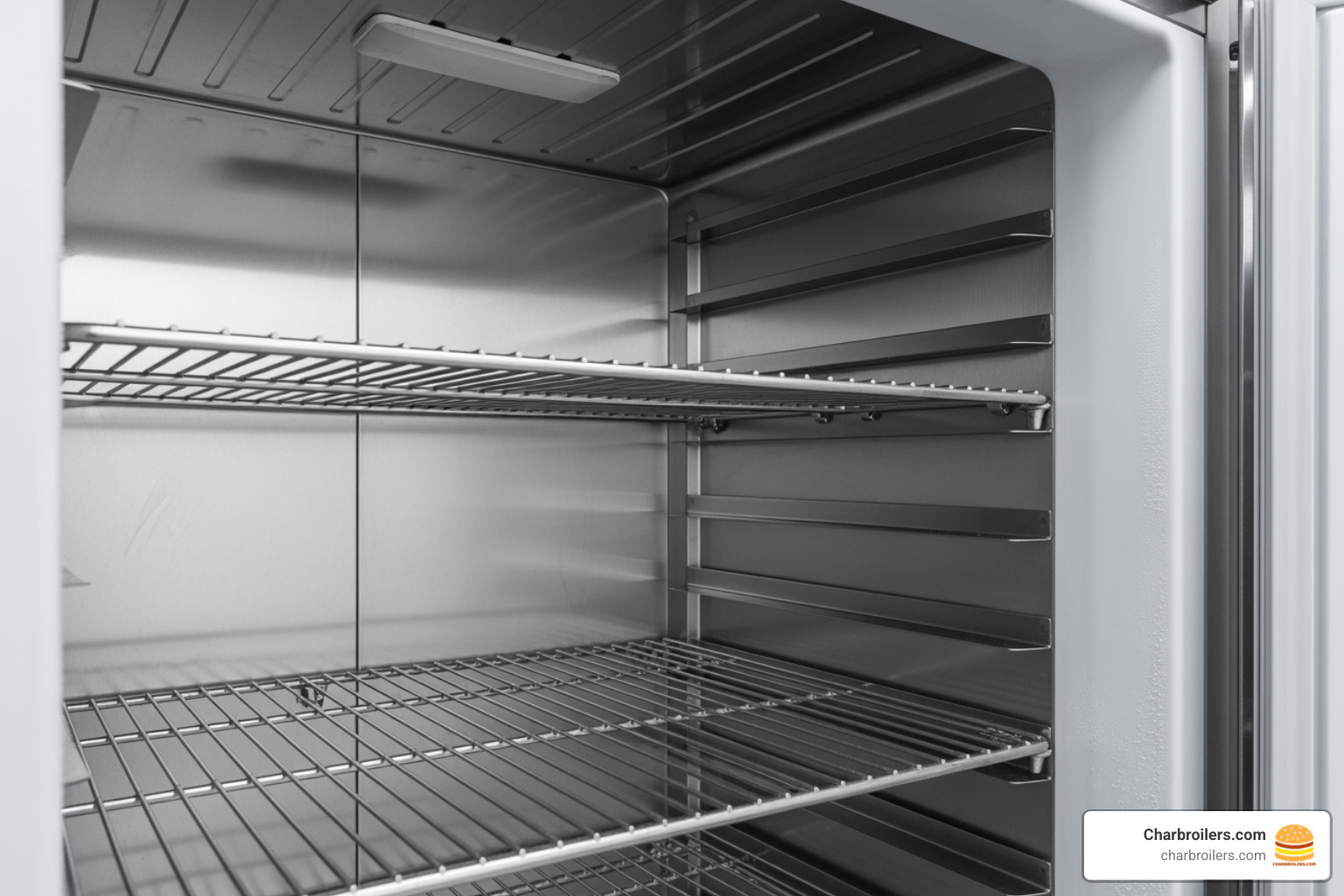
Durability and Corrosion Resistance In a busy kitchen, equipment must be tough. Stainless steel withstands the daily barrage of bumps from carts and heavy use. Crucially, it resists corrosion from condensation—a constant in freezers due to the temperature difference between the cold interior and the warm kitchen. While other materials rust, stainless steel maintains its integrity and appearance for years.
Hygiene and Food Safety This is where stainless steel truly excels. Its non-porous surface has no tiny openings for food particles and bacteria to hide, making it incredibly easy to clean and sanitize. This is non-negotiable for passing health inspections and ensuring customer safety. The smooth surface prevents bacterial growth and is essential when storing raw proteins, acidic sauces, or salty foods that can corrode lesser materials. For more tips, see our food safety guidelines for restaurants.
Built for the Kitchen Environment Commercial kitchens require equipment that can handle abuse. Stainless steel offers impressive resistance to dents and scratches, which could otherwise create havens for bacteria on other materials. It also withstands the harsh cleaning chemicals required to meet health codes, unlike materials that might discolor or degrade. This durability leads to exceptional longevity, making a stainless steel freezer a wise long-term investment. While the upfront cost is higher, its extended lifespan often results in a lower total cost of ownership. Our commercial kitchen equipment checklist can help you plan your investments.
Finally, the professional look of stainless steel communicates a commitment to quality and cleanliness. It also contributes to temperature consistency, as the material doesn't transfer heat easily, helping your unit run more efficiently.
Are There Rules? NSF Standards and Material Requirements
When asking do commercial freezers need to be stainless steel, the answer often lies in health and safety regulations. The key standard is NSF/ANSI 7, which governs commercial refrigerators and freezers and is the benchmark used by health inspectors.
This standard requires that materials in food storage areas be "smooth, easily cleanable, and corrosion-resistant." These three traits are the hallmark of stainless steel. The standard also distinguishes between the food zone (surfaces in direct contact with unpackaged food) and the splash zone (surfaces prone to splashes but not direct food contact). The food zone has the strictest requirements, demanding non-toxic materials.
Stainless steel is the default choice for compliance because it effortlessly meets all NSF/ANSI 7 criteria. A stainless steel interior signals to inspectors that you prioritize food safety. For a full breakdown, see our guide to NSF/ANSI 7 standards.
Understanding Stainless Steel Grades
Not all stainless steel is the same, which explains price variations among units.
304-Grade Stainless Steel: This is the industry workhorse. Containing chromium and nickel, it offers exceptional corrosion resistance against acids, salts, and chlorides common in kitchens. It's ideal for interiors, especially if you store marinated meats or acidic sauces.
430-Grade Stainless Steel: A more budget-friendly option, this grade contains chromium but no nickel. It's still corrosion-resistant and easy to clean but is less robust than 304-grade. It performs well on exteriors or in dry environments but may show rust in coastal areas or with acidic food storage.
The cost difference between grades can be significant. Manufacturers often use 304-grade for interiors and 430-grade for exteriors to balance cost and performance. Understanding this helps you evaluate the value of a freezer.
So, Do Commercial Freezers Need to Be Stainless Steel? A Component-by-Component Breakdown
The answer to "do commercial freezers need to be stainless steel" isn't a simple yes or no—it depends on which part of the freezer you're talking about. Some components demand stainless steel, while others allow for flexibility, letting you balance budget with performance.
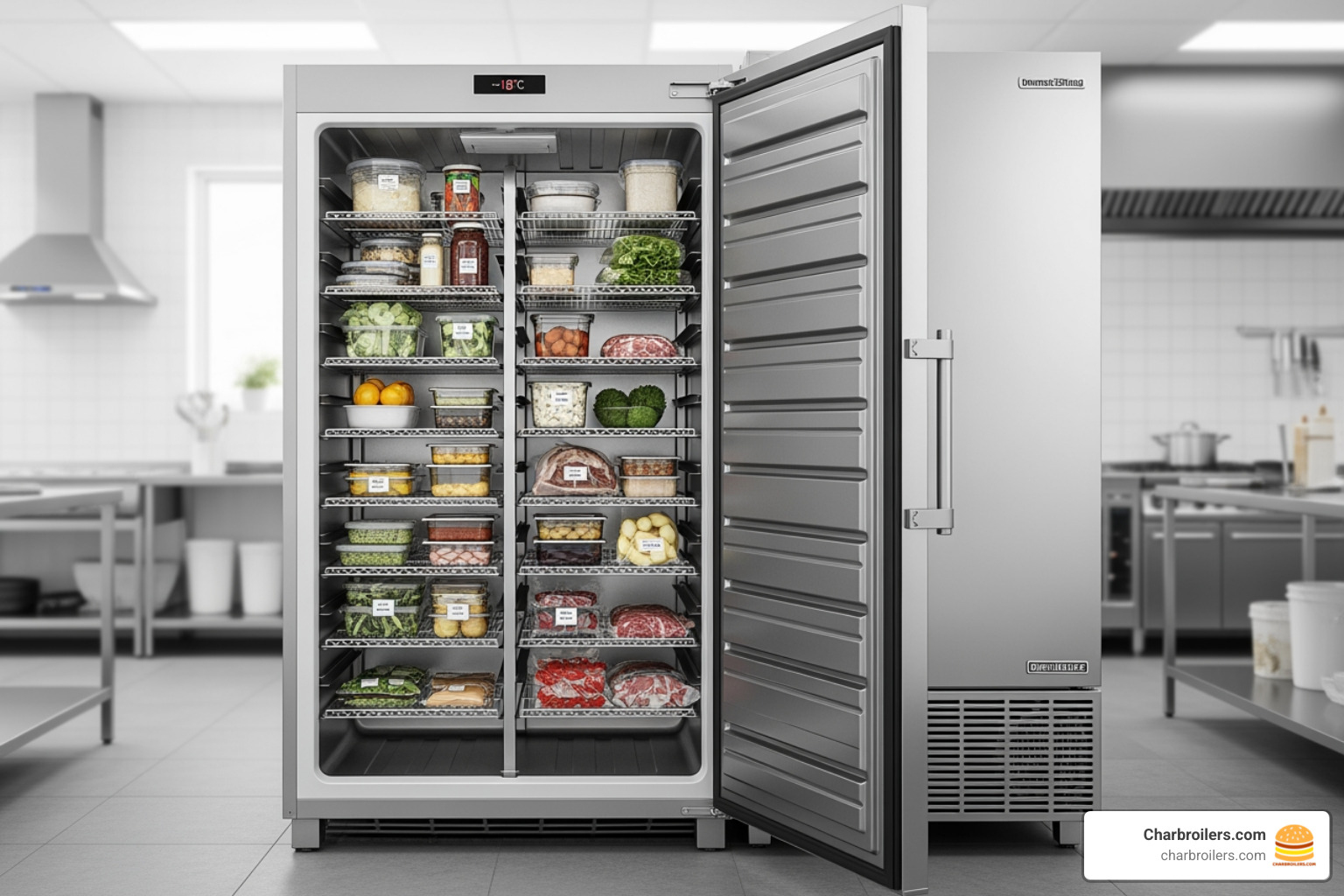
Let's break down each component to see where you need to invest in stainless steel and where you can find savings.
The Freezer Interior: The Non-Negotiable Zone
The freezer interior is where stainless steel (or an equivalent food-safe material) is essential for passing health inspections. This area is critical because it's where your food is stored, often in direct contact with surfaces. Stainless steel's non-porous surface prevents the absorption of liquids and odors and leaves no crevices for bacteria to hide, ensuring it can be thoroughly sanitized. This prevents contamination and protects both your customers and your reputation. The interior also needs durability against frozen goods—heavy, sharp-edged boxes and pans that can chip or crack lesser materials. Stainless steel withstands this abuse, maintaining a smooth, sanitary surface for years. Explore options in our guide to stainless steel commercial chest freezers.
The Freezer Exterior: Function Meets Form
The exterior of your freezer offers more flexibility and opportunities to save money. The choice often depends on placement and traffic.
- Aluminum exteriors are a common mid-range option. They are lighter and less expensive than stainless steel while still offering good corrosion resistance.
- Painted or coated steel exteriors are the most economical choice. While modern coatings are durable, they can chip or scratch, exposing the underlying steel to rust if not maintained.
The key factor is front-of-house vs. back-of-house placement. A visible stainless steel exterior conveys professionalism and cleanliness to customers. For a freezer in a back prep area, an aluminum or coated steel exterior is a perfectly functional, cost-effective choice. For more on freezer types, see our article on commercial upright freezers.
Shelving and Racks: Supporting Your Inventory
Freezer shelving must support heavy loads in a cold, humid environment while being easy to clean.
- Stainless steel shelving is the premium choice for its strength, corrosion resistance, and ease of cleaning. It's ideal for storing very heavy items.
- Coated wire shelving (typically epoxy-coated) is a popular and affordable alternative. It's lightweight, resists rust, and its open design promotes better air circulation, which can improve temperature consistency.
When choosing, prioritize load-bearing capacity to prevent sagging. Also, ensure the shelving is easy to clean, as spills and ice buildup are inevitable. Both stainless steel and quality coated wire will prevent rust from condensation, a critical feature in any freezer.
Weighing the Alternatives and the Costs
When asking "do commercial freezers need to be stainless steel?" you're ultimately asking about value. While stainless steel has a higher upfront price, its durability and superior hygiene often make it the more economical choice when considering the total cost of ownership.
A cheaper painted steel exterior might save money initially, but a chip can lead to rust, requiring repairs and looking unprofessional. In contrast, a stainless steel unit maintains its performance and appearance for years with minimal maintenance. The lower repair and replacement frequency of stainless steel is a significant factor in its long-term value. Aluminum offers a solid middle ground with good corrosion resistance at a moderate price.
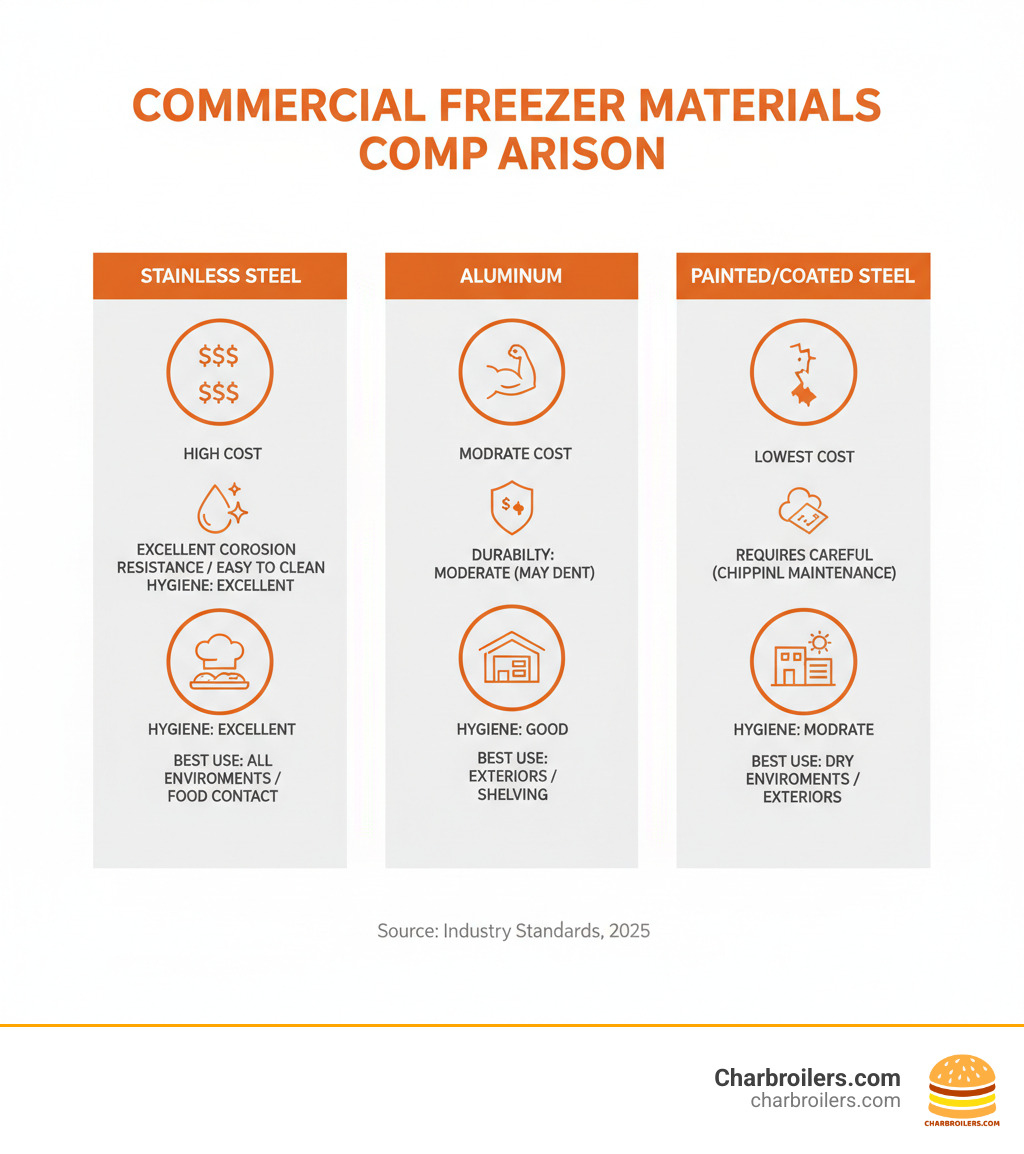
Here's how the materials compare:
| Feature | Stainless Steel | Aluminum | Painted/Coated Steel |
|---|---|---|---|
| Cost | High | Moderate | Lowest |
| Durability | Excellent (resists dents, scratches, corrosion) | Good (lightweight, good corrosion resistance) | Fair (prone to chipping, scratching) |
| Hygiene | Excellent (non-porous, easy to sanitize) | Good (non-porous, easy to clean) | Moderate (coating can harbor bacteria if chipped) |
| Maintenance | Low (easy to clean, resists stains) | Low (easy to clean, resists corrosion) | Moderate (requires careful cleaning, touch-ups) |
Energy efficiency is another consideration. While tied more to insulation and overall construction, the reflective surface of stainless steel can help repel ambient heat. Look for Energy Star certified models to lower utility bills, and check for utility rebates before purchasing.
When is an Alternative Material a Smart Choice?
Stainless steel isn't always necessary for every component. An alternative is a smart choice in these situations:
- Budget Constraints: An aluminum or coated steel exterior on a back-of-house freezer saves money for other critical equipment.
- Low-Humidity Environments: In dry areas with minimal corrosive elements, aluminum performs well without the premium cost.
- Back-of-House Storage: When aesthetics aren't a priority, you have more flexibility with exterior materials.
- Less Frequent Use: For long-term storage units with less daily wear and tear, a less expensive exterior is often sufficient.
Exploring options like used commercial deep freezers for sale smart buys for smart businesses can also help you acquire quality equipment on a budget.
Frequently Asked Questions about Commercial Freezer Materials
How does the type of food I store affect the material I need?
The food you store significantly impacts your material choice. Acidic foods (citrus, tomatoes, marinades) and salty products (cured meats, brines) accelerate corrosion. For these items, a 304-grade stainless steel interior is essential to prevent degradation and food contamination. High-moisture items also increase corrosion potential, making resistant materials a wise choice. Furthermore, if you store unpackaged goods that directly touch interior surfaces (the "food zone"), NSF standards require a non-toxic, smooth, and corrosion-resistant material like stainless steel.
Are glass door freezers made of stainless steel?
Yes, many commercial glass door freezers use stainless steel, particularly for the frame construction and interior materials. A stainless steel frame provides a professional look for display purposes and offers durability against constant use. The interior is almost always stainless steel to meet the same hygiene and food safety standards as solid-door units. This combination provides excellent product visibility while ensuring robust, sanitary construction. Our commercial glass door fridge roundup showcases some great options.
Do walk-in freezers follow the same material rules?
Yes, walk-in freezers adhere to the same core NSF principle of using "smooth, easily cleanable, and corrosion-resistant" materials, especially in food contact zones.
- Panel Construction: Walk-ins use modular panels with various interior finish options. While coated steel or aluminum are sometimes used, stainless steel is often chosen for walls in high-traffic or food-contact areas for its superior durability and hygiene.
- Floor Materials: Floors in walk-ins must withstand heavy foot traffic and rolling carts. You'll typically find heavy-duty stainless steel or other non-slip, food-grade flooring designed for durability for high volume.
- Shelving: Shelving follows the same logic as reach-ins, with stainless steel or heavy-duty coated wire being the standard choices for their load capacity and corrosion resistance.
For more on these units, see our essential guide to restaurant walk in fridges.
Conclusion: Making the Smartest Material Choice for Your Business
So, do commercial freezers need to be stainless steel? The answer is strategic: yes, where it matters most.
The interior of your commercial freezer is the non-negotiable zone. This is where food safety, durability, and compliance with NSF/ANSI 7 standards converge. A stainless steel interior prevents contamination and withstands daily wear, making it a critical investment for any food service operation.
For exteriors and shelving, you have more flexibility. Aluminum exteriors and coated wire shelves are excellent, budget-friendly alternatives for back-of-house units or less intensive use. The key is to match the material to the application.
Stainless steel is a long-term investment in reliability. The higher upfront cost is often offset by lower maintenance, fewer repairs, and a longer lifespan. You're not just buying a freezer; you're buying peace of mind and years of dependable service.
At Charbroilers.com, we help you build a kitchen that works. Whether you need a charbroiler, a deep fryer, or the perfect commercial freezer, we're here to guide you. Our financing solutions make it easier to invest in the quality equipment your business deserves. For a complete overview of your options, read our essential commercial refrigeration buying guide.
Choose your freezer's materials wisely, and it will be a cornerstone of your kitchen's safety and efficiency for years to come.