

Chill Out: Finding the Perfect Freezer for Your Restaurant
Why Your Restaurant Kitchen Needs the Right Commercial Freezer
Finding the right freezer for restaurant kitchen operations is crucial for food safety, cost control, and efficiency. Here are your main commercial freezer options:
Types of Commercial Freezers:
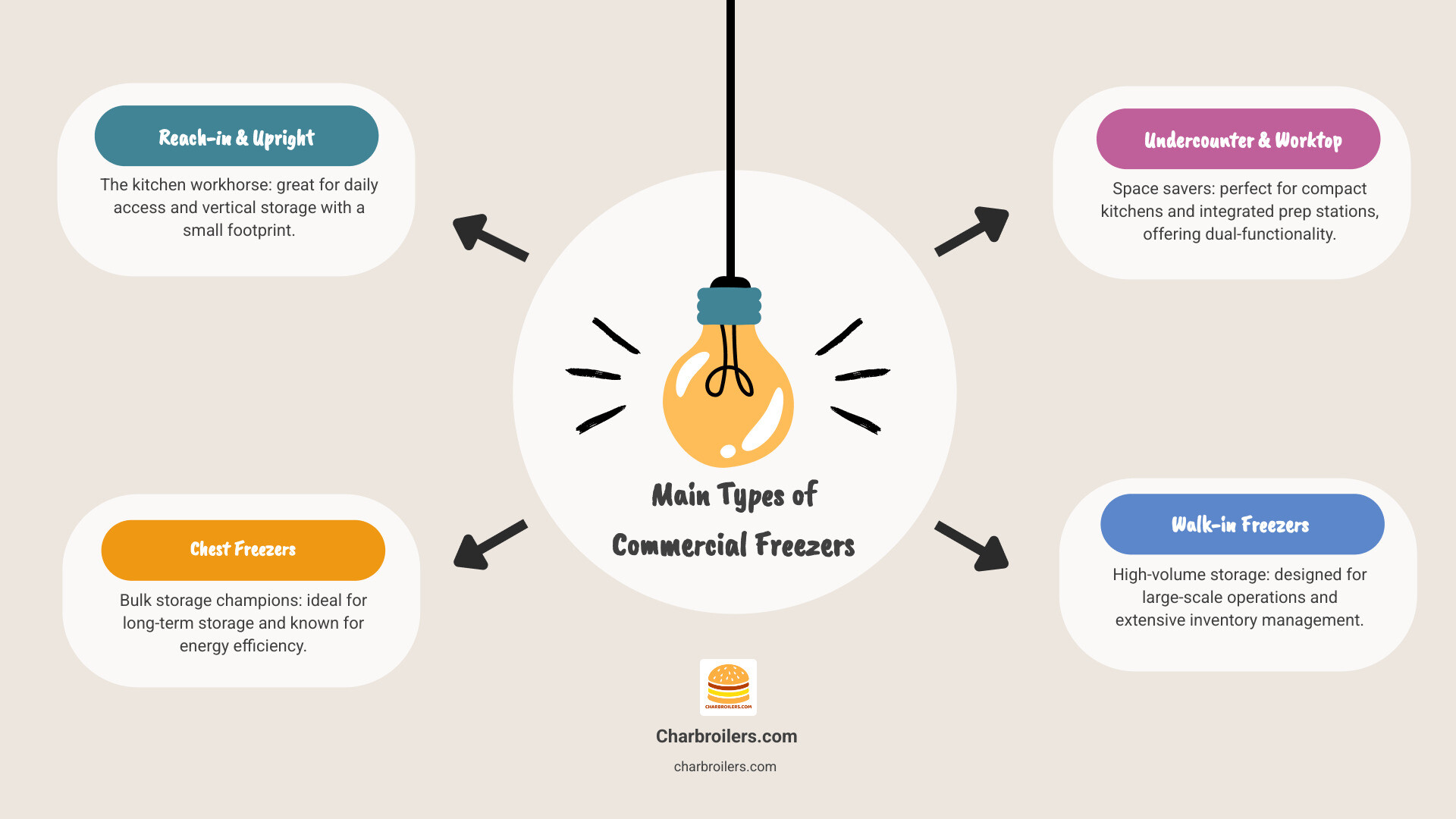
- Reach-in/Upright Freezers - Daily access; small footprints
- Chest Freezers - Bulk storage; energy efficient
- Undercounter Freezers - Tight spaces; prep stations
- Walk-in Freezers - High-volume storage
- Blast Chillers - Rapid cooling for food safety compliance
Key Considerations:
- Temperature control - Must maintain 0 F (-18 C) consistently
- Energy efficiency - Look for ENERGY STAR ratings
- Door type - Solid doors save energy, glass doors aid merchandising
- Size requirements - Match cubic feet to your storage needs
Commercial freezers safeguard quality and compliance. Poor temperature control leads to spoilage and risk. From bulk ingredients to pre-prepped items, the right unit keeps service smooth and protects margins.
Todays units add helpful features like automatic defrost, LED lighting, and precise controls. Match your freezer to workflow, space, and storage volume for best results.
I'm Sean Kearney from Charbroilers.com. With over a decade in the restaurant equipment industry, Ive helped operators pair the right cold storage with their kitchens to boost efficiency and cut waste.
Basic freezer for restaurant kitchen vocab:
- blast freezer commercial
- double door commercial freezer
- nsf ansi standard 7 commercial refrigerators and freezers
Decoding the Deep Freeze: Types of Commercial Freezers
Choosing the right freezer for restaurant kitchen operations doesnt have to be overwhelming. Each type has a specialty. Lets explore to find your ideal fit.
Reach-In & Upright Freezers: The Kitchen Workhorse
During service, reach-ins excel at fast access with vertical storage that saves floor space. Adjustable shelves let you tailor interiors to pans, boxes, and cases. The upright design keeps items visible and organized, reducing search time and door-open minutes.
For comprehensive insights into these essential units, check out our Guide to Commercial Upright Frost Free Freezers and Everything You Need to Know About Commercial Freezers.
Chest Freezers: For Bulk Storage Champions
Buying in bulk? Chest freezers deliver long-term, energy-efficient storage. Because cold air sinks, opening the lid releases less cold than a door swing, helping temperature stability and utility costs. They shine for large cuts, cases, or seasonal stock.
Some models include glass tops for light display needs while preserving product integrity.
Dive deeper into chest freezer options with our guides: The Ultimate Guide to Commercial Cool Chest Freezers and Top 7 Cu. Ft. Commercial Chest Freezer Picks.
Undercounter & Worktop Freezers: The Space Savers
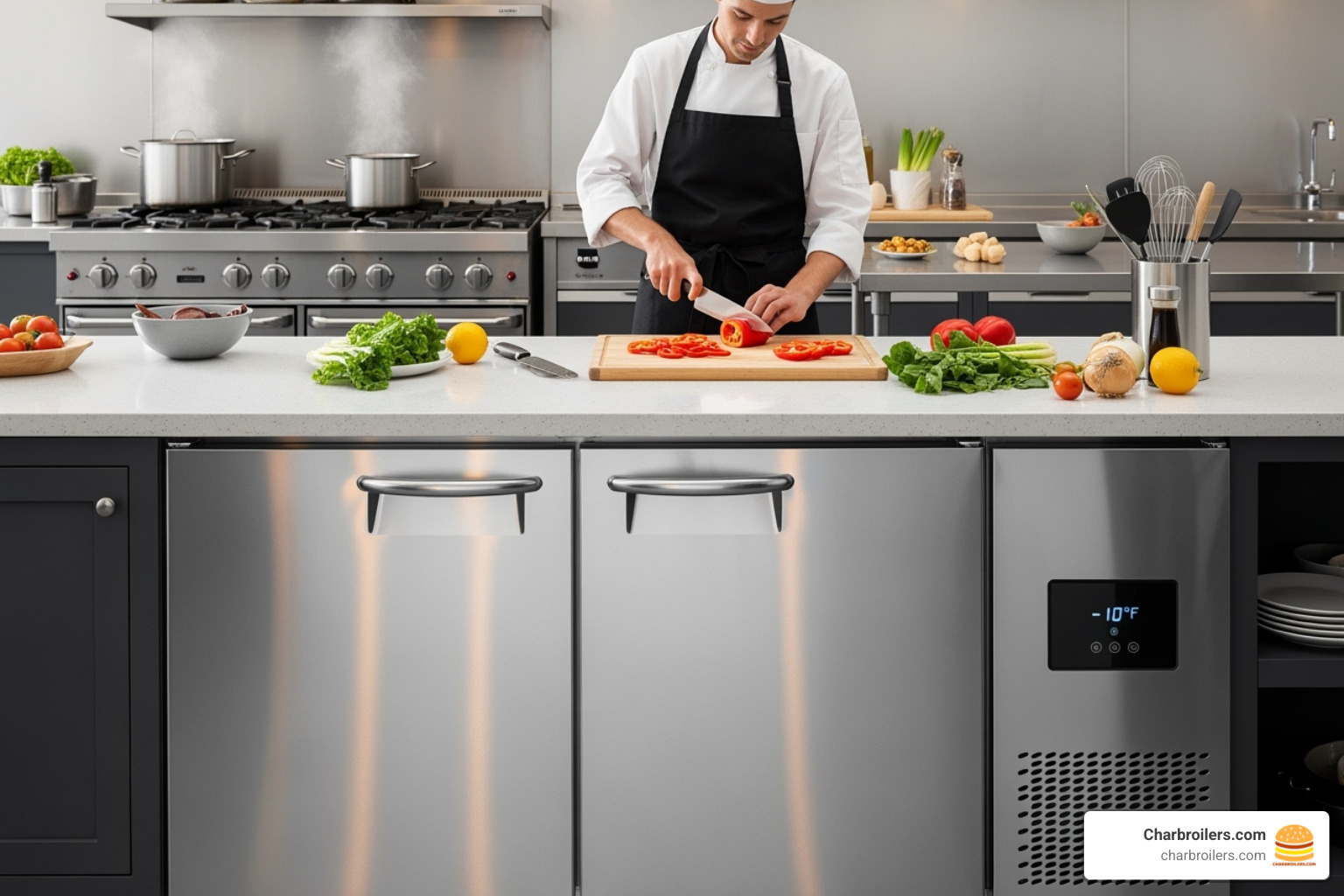
In compact kitchens, undercounter and worktop units keep frozen items within arms reach at the line. Worktops add usable prep surface above the freezer, effectively doubling up on function in the same footprint. Small countertop models (4 6 cu. ft.) are handy in cafes and QSR stations.
Learn more about maximizing small spaces with our articles: Best Under Cabinet Freezers for Small Kitchens and Top Small Commercial Freezers to Keep Your Products Fresh.
Specialized Units: Walk-Ins, Blast Chillers & Display Freezers
Walk-in freezers handle high-volume storage and simplify inventory in commissaries and larger operations. Blast chillers rapidly cool food through the danger zone to support HACCP and quality. Display freezers combine merchandising with proper holding temps for desserts and retail items.
For more detailed information on these specialized units, explore our Essential Guide to Restaurant Walk-In Fridges and Top Commercial Blast Chillers for Every Business.
Key Factors for Choosing the Right Freezer for a Restaurant Kitchen
Finding the perfect freezer for restaurant kitchen operations goes beyond chest vs. upright. The details determine workflow, energy spend, and compliance.
Choosing the right size freezer for your restaurant kitchen
Sizing is part math, part layout. Start with weekly frozen usage and multiply by 1.5 for bulk buys and seasonality. Balance capacity with footprint so doors and traffic lanes stay clear. Plan door swing to avoid bottlenecks and safety risks, and consider left/right-hinge options. If growth is likely, sizing up now is often cheaper than replacing later. To help visualize how different freezer sizes might fit your space, you can view a sample room diagram that shows typical kitchen layouts.
Energy Efficiency and Maintenance Features
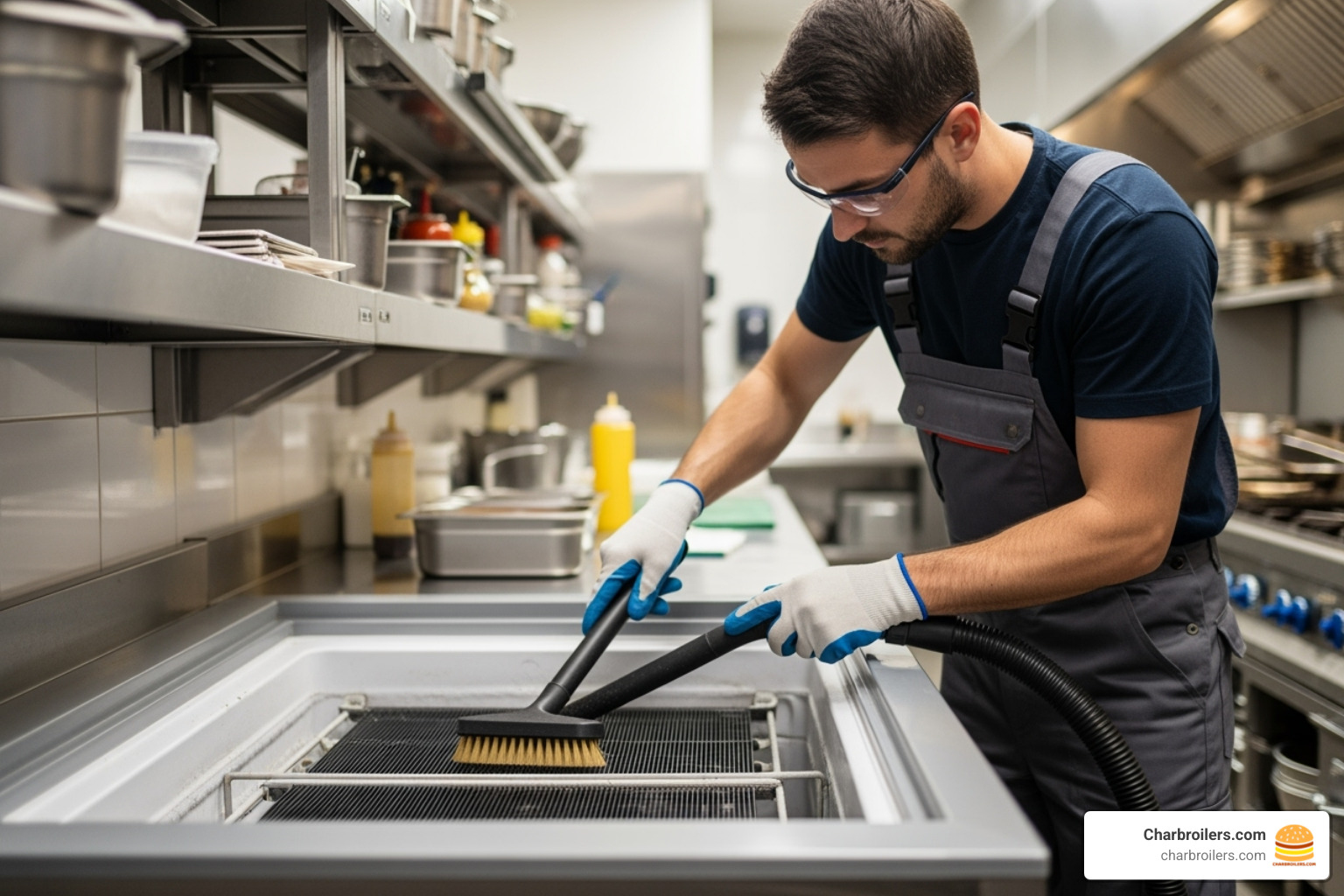
Look for ENERGY STAR models, LED lighting, self-closing doors, and automatic defrost. Strong insulation reduces compressor cycling and extends lifespan. Match condenser location (front- or rear-breathing) to your ventilation and cleaning access.
Clean condenser coils every 3 6 months (more often in greasy or dusty kitchens) to keep energy use and repair risk down. For detailed maintenance guidance, check out our article on Fixing Common Issues with Imperial Frost Free Commercial Freezers.
Solid Door vs. Glass Door: A Clear Choice?
Solid doors maximize insulation and durability, making them the back-of-house default. Glass doors improve visibility and merchandising, but typically use more energy. Stainless steel door models pair performance with easy sanitation and are favored by inspectors. For broader door considerations, our Commercial 2-Door Cooler Buying Guide offers relevant comparisons.
Ensuring Compliance and Safety
Prioritize NSF/ANSI Standard 7 certification to meet health codes and ensure consistent sub-zero holding during frequent openings. Commercial units are engineered for temperature stability and cleanability that residential models cant match. For a comprehensive understanding, see our Guide to NSF/ANSI Standard 7 for Refrigerators and Freezers.
Budgeting for Your Freezer: Purchase & Financing Options
Let's talk money – because even the perfect freezer for restaurant kitchen needs to make sense for your budget. Understanding your investment options, from upfront costs to creative financing solutions, helps you make a smart choice that won't freeze your cash flow.
New vs. Used: Weighing the Pros and Cons
Here's the age-old restaurant equipment question: should you buy new or go with a used unit? Both paths have their merits, and the right choice depends on your specific situation.
New commercial freezers give you that fresh-out-of-the-box confidence. You get the latest technology, including improved energy efficiency that can save you money monthly. The full manufacturer warranty means you're covered if anything goes wrong, and you can expect a longer lifespan from your investment. The downside? That higher initial cost can be tough on startup budgets or businesses watching every penny.
Used commercial freezers are budget-friendly heroes. You can access top-quality brands at significantly lower prices, stretching your equipment dollars further. Many used units from reputable suppliers are thoroughly cleaned, tested, and serviced – they're practically "like new" at a fraction of the cost. However, you'll typically get a shorter warranty period (often 90 days), and older models might not have the latest energy-saving features.
The sweet spot? Reliability matters more than age. A well-maintained three-year-old freezer from a trusted brand often beats a brand-new unit from an unknown manufacturer.
Flexible Financing: The Rent-Try-Buy Advantage
Cash flow is the lifeblood of any restaurant, and dropping several thousand dollars on a freezer can hurt. That's where flexible financing options become your best friend.
Rent-Try-Buy programs are particularly smart for restaurant owners. Instead of a massive upfront expense, you make manageable weekly payments that don't shock your cash flow. But here's the clever part – you're actually testing the equipment while you use it.
What if your business grows faster than expected and you need a larger unit? What if your menu changes and you need different storage solutions? Traditional purchases lock you in, but Rent-Try-Buy gives you flexibility to adapt. Plus, a significant portion of your rental payments (often 60%) can go toward the purchase price if you decide to buy.
From a tax perspective, rental payments are typically 100% deductible, which can provide additional financial benefits. Most programs offer 12-month agreements with options to upgrade or return equipment as your needs change.
Learn more about our financing options to see how we can help make your equipment investment work for your budget.
Typical Price Ranges for a freezer for restaurant kitchen
Knowing what to expect price-wise helps you budget realistically. Here's what different freezer for restaurant kitchen options typically cost:
| Freezer Type | New Price Range (Approx.) | Used Price Range (Approx.) |
|---|---|---|
| Undercounter | $1,000 - $3,000 | $500 - $1,500 |
| Reach-In (1-3 Door) | $1,500 - $5,000 | $700 - $2,500 |
| Chest Freezers | $500 - $2,000 | $200 - $1,000 |
| Walk-In Freezer Room | $8,000 - $20,000+ | $4,000 - $10,000+ |
| Blast Chillers | $3,000 - $15,000+ | $1,500 - $7,000 |
These are general ranges – actual prices vary based on brand, features, and current market conditions.
The cheapest option isn't always the best value. Factor in energy efficiency, reliability, and warranty coverage when comparing prices. A slightly more expensive unit that saves you $50 monthly on electricity pays for itself over time.
Understanding Warranty and Support
A commercial freezer is a long-term relationship, not a one-night stand. Understanding what happens after you buy is crucial for protecting your investment.
Parts and labor warranties are your safety net. Most new units come with 1-3 year coverage, protecting you from unexpected repair costs due to manufacturing defects. Even our used equipment typically includes a 90-day parts-and-labor warranty for peace of mind.
Service network availability can make or break your experience. When your freezer breaks down during the dinner rush, you need fast help. A manufacturer with a wide service network means quicker response times and less downtime. Nobody wants to explain to customers why the ice cream is melted.
Quality customer support makes everything easier. This includes accessible help lines, online resources, and clear communication when you have questions. We believe in comprehensive support – check out our Help & Support page to see how we take care of our customers.
The bottom line? Don't just buy a freezer – invest in a complete solution that includes reliable support when you need it most.
Frequently Asked Questions about Commercial Freezers
Shopping for a freezer for restaurant kitchen use brings up plenty of questions. After helping hundreds of restaurant owners over the years, I've noticed the same concerns come up time and again. Let me share the answers to the most common questions that might be keeping you up at night.
What is the ideal temperature for a commercial freezer?
Your commercial freezer should maintain a steady 0°F (-18°C) or colder to keep food safe and preserve quality. This isn't just a suggestion—it's the temperature that effectively stops bacterial growth in its tracks while maintaining the nutritional value, texture, and flavor your customers expect.
Think of this sub-zero temperature as your food safety insurance policy. Any warmer, and you're risking spoilage, freezer burn, and potentially dangerous bacterial growth. Specialized blast chillers can drop even lower to rapidly freeze items, but for everyday storage, that magic 0°F mark is your target.
Here's the key: consistency matters more than you might think. Temperature fluctuations are the enemy of food quality preservation. Always use a reliable thermometer to monitor internal temperatures, and don't rely solely on the unit's built-in display.
How often should I clean my commercial freezer's coils?
Cleaning your condenser coils is one of those maintenance tasks that pays for itself. Every 3 to 6 months is the sweet spot for most kitchens, though you might need to clean them more frequently if your kitchen gets particularly dusty or greasy.
Here's why this matters for your bottom line: dirty coils force your compressor to work overtime, driving up energy costs and shortening your freezer's lifespan. It's like asking someone to run a marathon while breathing through a straw—they'll eventually collapse from the effort.
The good news? This simple task can save you significant money on utility bills and prevent those heart-stopping repair calls. Follow your manufacturer's specific cleaning instructions, and if you're in a particularly challenging environment, don't hesitate to clean more frequently. Your energy bill will thank you.
Can I use a residential freezer in my restaurant kitchen?
I get this question a lot, especially from new restaurant owners trying to save money. The short answer is absolutely not—and here's why it's actually a costly mistake in disguise.
Residential freezers simply aren't built for commercial use. They lack the durability needed for continuous operation in a demanding kitchen environment. While a home freezer might open a few times a day, your restaurant freezer could see dozens of openings during a busy dinner rush.
The cooling power difference is significant too. Commercial units have robust compressors and refrigeration systems designed to maintain consistent temperatures despite frequent door openings and the high ambient temperatures found in busy kitchens. A residential unit will struggle and likely fail under these conditions.
NSF certification is another deal-breaker. Commercial freezers carry this certification, proving they meet public health and safety standards for materials, design, and performance in food service settings. Health inspectors will flag residential units as non-compliant, potentially leading to fines or even temporary shutdowns.
Finally, using residential equipment in a commercial setting will void the warranty, leaving you completely unprotected. It's a false economy that ends up costing far more than investing in the right freezer for restaurant kitchen operations from the start.
The Final Chill: Making Your Perfect Choice
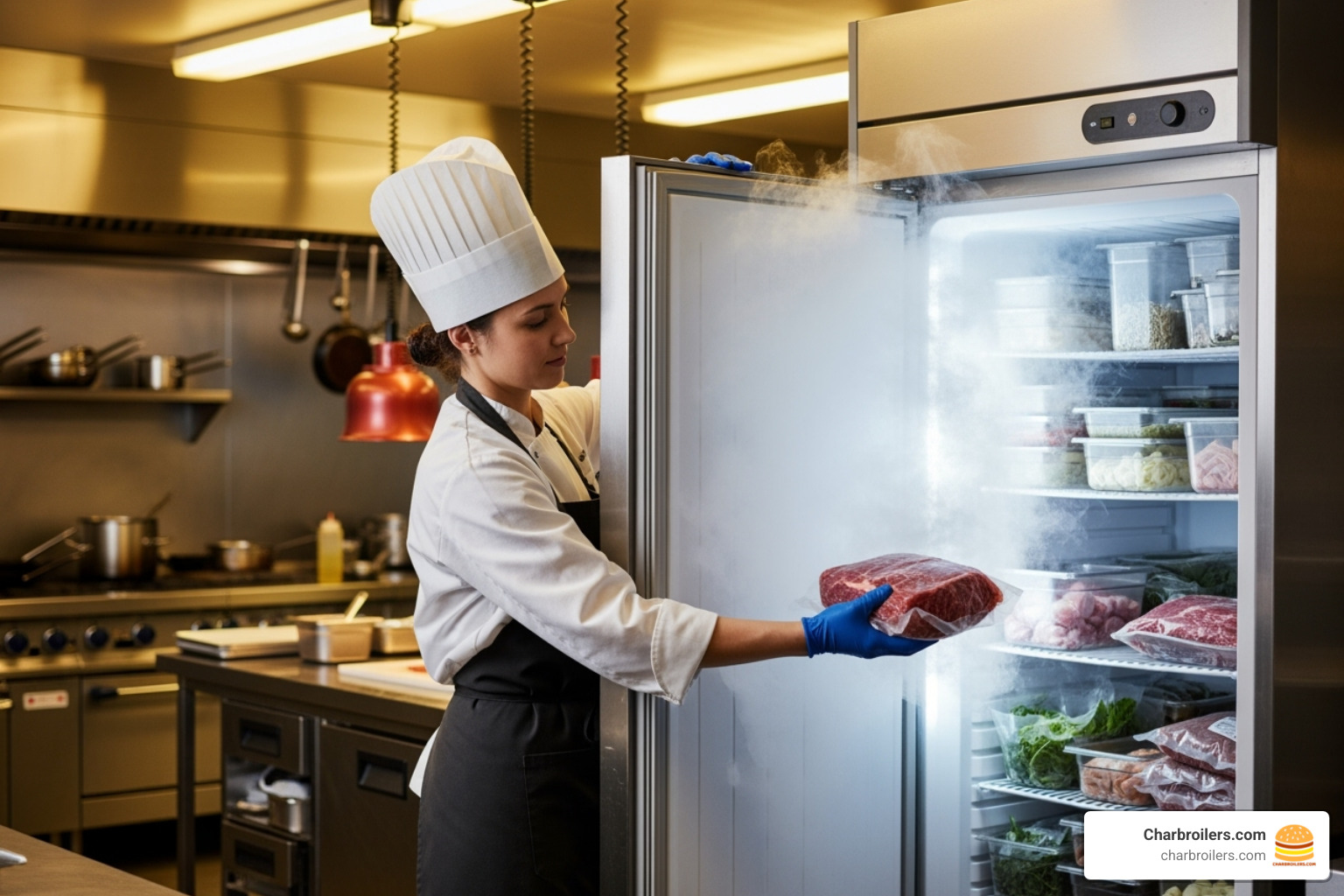
Finding the perfect freezer for restaurant kitchen operations doesn't have to feel overwhelming. Think of it as investing in the heartbeat of your food storage system—a decision that touches every dish you serve and every dollar you save.
The happy chef in the image above knows what it feels like to work with the right equipment. When you open your freezer door and everything is exactly where it should be, at the perfect temperature, ready to transform into your next masterpiece—that's when you know you made the smart choice.
Understanding your specific needs is where it all starts. Whether you're running a cozy bistro that needs a compact undercounter unit or managing a high-volume restaurant that requires a walk-in freezer room, matching your equipment to your actual workflow makes all the difference. Don't get swayed by the biggest or flashiest option if a simple chest freezer will do the job better.
Energy efficiency and compliance aren't just buzzwords—they're your ticket to lower utility bills and peaceful nights knowing you're meeting food safety standards. That ENERGY STAR rating and NSF certification might seem like small details, but they're the foundation of a smart investment that pays dividends month after month.
The financial side deserves just as much attention as the technical specs. Whether you choose new equipment with full warranties or explore quality used options, consider how financing programs can help preserve your cash flow. Sometimes the best choice isn't the cheapest upfront cost, but the one that fits your budget while delivering reliable performance.
At Charbroilers.com, we've seen how the right commercial freezer transforms kitchen operations. We're not just selling equipment—we're helping you build a foundation for success. From compact space-savers to industrial-strength storage solutions, we understand that every restaurant has unique needs.
Your kitchen efficiency, food safety standards, and bottom line all depend on making this choice thoughtfully. Take the time to consider your space, your volume, and your growth plans. The perfect freezer for restaurant kitchen operations is out there, and we're here to help you find it.
For everything else you need to know about keeping your kitchen cool and efficient, dive into our comprehensive guide: Commercial Refrigeration Equipment Explained: No Sweat. Because when it comes to commercial kitchen equipment, we've got you covered.