

Double the Doors, Double the Chill: Everything You Need to Know About Commercial Freezers
Why Double Door Commercial Freezers Are Essential for Your Restaurant
A double door commercial freezer is a crucial investment for any restaurant kitchen. These upright, reach-in units provide the large-capacity frozen storage and organization busy kitchens demand, all while maintaining food-safe temperatures to keep your business compliant.
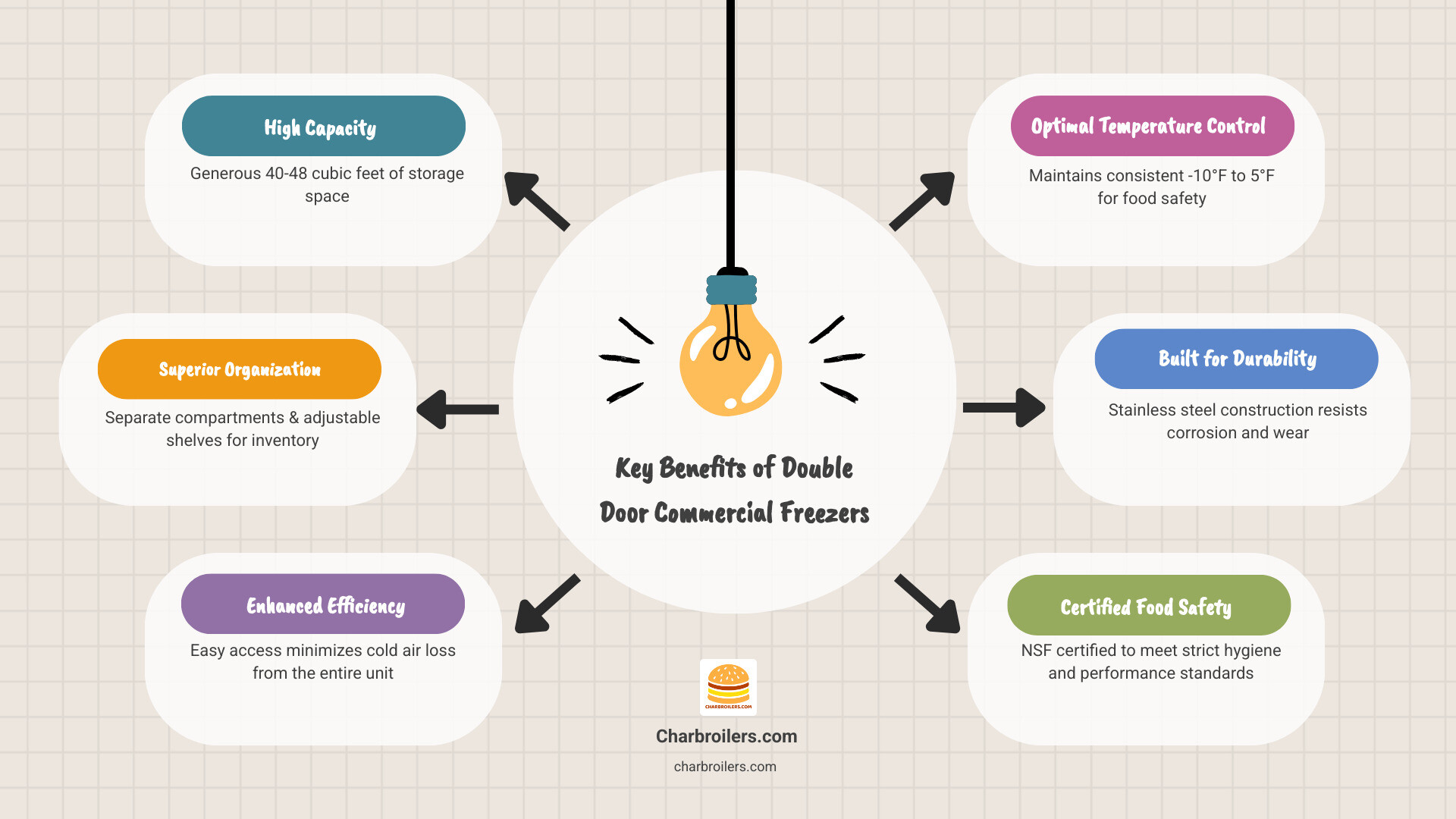
Key benefits of double door commercial freezers:
- Capacity: 40-48 cubic feet of storage space
- Organization: Separate compartments for different food types
- Efficiency: Easy access without losing cold air from the entire unit
- Temperature Range: Maintains -10°F to 5°F for optimal food safety
- Durability: Stainless steel construction resists corrosion and bacteria
Unlike chest freezers that require digging through layers of frozen items, double door reach-in models let you organize inventory at eye level. This design saves time during busy service and reduces energy costs by minimizing cold air loss.
Food safety is paramount. These freezers maintain consistent temperatures between -8°F to 0°F, ensuring ingredients stay fresh and safe. The dual-door design also allows you to dedicate sections to different food types, like keeping raw proteins separate from prepared items.
I'm Sean Kearney from Charbroilers.com. With over a decade in the restaurant equipment industry, I've helped countless owners choose the right double door commercial freezer. My experience has given me deep insight into what makes these units essential for efficient kitchen operations.
Double door commercial freezer terms to learn:
Essential Features of a Double Door Commercial Freezer
When shopping for a double door commercial freezer, the features inside the unit will make or break your daily kitchen operations. The right features can turn a good freezer into a game-changer for your business.

Digital temperature controllers are your first line of defense against spoilage. They provide precise temperature readings at a glance, and advanced systems can even self-diagnose issues before they become costly disasters.
Self-closing doors are a must-have. If a door is left ajar during a dinner rush, you could lose hundreds of dollars in inventory. These smart hinges automatically swing the door shut but are designed to stay open past 90 degrees for easy loading.
Interior LED lighting illuminates every corner without generating heat, making it easy to find items quickly. Plus, they are energy-efficient and long-lasting.
Adjustable shelves, typically epoxy-coated to resist rust, allow you to customize the interior space to maximize every cubic foot of storage.
Door locks provide essential security for your valuable inventory, especially in kitchens with multiple staff members.
For a comprehensive comparison of these features, check out our Detailed Guide to Comparing Commercial Refrigerators.
Understanding Key Specifications
The technical specs tell the real story of a freezer's capabilities.
- Capacity: Most double door units offer 40-48 cubic feet of storage. Consider not just your current needs, but your future growth.
- Dimensions: Measure your floor space, doorways, and ceiling height. Many units are over 80 inches tall, and you must account for ventilation clearance on all sides.
- Temperature Range: Quality freezers maintain temperatures between -10°F to 5°F, which is crucial for food quality and meeting health codes.
- Electrical Requirements: Most units need a dedicated 115V, 15-amp circuit. Confirm your kitchen's electrical system can handle the load before you buy.
Our guide on restaurant-ready commercial refrigerators covers these specifications in more detail.
Why Stainless Steel Construction Matters
Stainless steel isn't just for looks; it's about performance. It offers best durability for tough kitchen environments and resists corrosion from moisture and cleaning chemicals. Its non-porous surface is hygienic, as it doesn't harbor bacteria or absorb odors, making it easy to clean. This saves time and helps you maintain the sanitary conditions health inspectors demand. Finally, the professional appearance of stainless steel conveys cleanliness and quality.
Compressor and Defrost Systems: The Technical Core
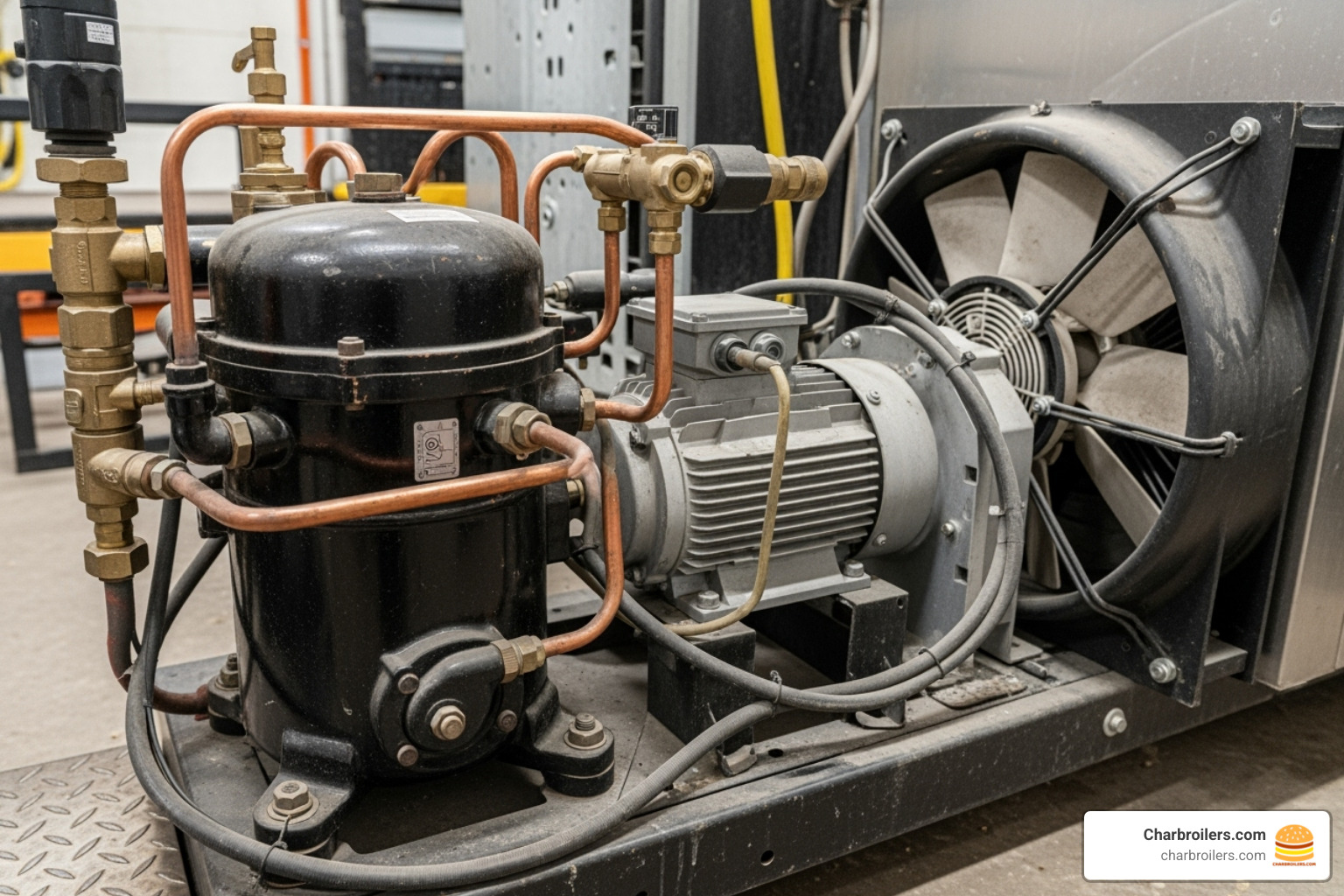
Think of your double door commercial freezer like a car—what's under the hood truly matters. The compressor and defrost system are the engine of your freezer, directly impacting your energy bills, maintenance costs, and reliability.
| Feature / Compressor Type | Top-Mount Compressor | Bottom-Mount Compressor |
|---|---|---|
| Placement | Located on top of the unit | Located at the bottom of the unit |
| Environmental Suitability | Ideal for dusty or spill-prone environments (e.g., bakeries) as it draws cleaner air from above. | Draws air from near the floor, which can be dustier. |
| Heat Dissipation | Can contribute to warmer ambient temperatures above the unit. | Dissipates heat closer to the floor. |
| Ergonomics & Capacity | Can slightly reduce usable interior height. | Raises the bottom shelf, making it easier to load heavy items without bending. |
| Maintenance Access | Generally easier to access for cleaning as coils are at eye level. | Often slides out for easier maintenance, but can be challenging if unit is against a wall. |
| Efficiency | Draws cooler air from above, potentially leading to slightly better efficiency. | Operates in warmer air near the floor, potentially requiring more effort to cool. |
For a comprehensive breakdown, check out our guide: Commercial Refrigeration Equipment Explained: No Sweat.
Top-Mount vs. Bottom-Mount Compressors
The compressor's location affects ergonomics, maintenance, and performance.
Top-mount compressors are great for dusty kitchens, like bakeries, as they pull in cleaner air from above. However, they can add to the unit's height, and cleaning the coils requires a step ladder.
Bottom-mount compressors are a popular choice in modern double door commercial freezer units. Many feature slide-out assemblies that simplify maintenance. The real win is the raised bottom shelf, which saves your staff's backs when loading heavy cases. While they draw warmer air from the floor, modern designs handle this efficiently.
Decoding Defrost Types
Ice buildup is the enemy of every freezer. Here’s how different systems handle it.
- Manual defrost is simple and energy-efficient but highly inconvenient. It requires you to turn off the unit and empty it to let the ice melt—a major disruption in a busy restaurant.
- Automatic or cycle defrost is a good middle ground. The system periodically pauses to let frost melt and drain away. The temperature fluctuation is too brief to affect your food.
- Frost-free systems are the standard in many commercial units. A heating element and fan prevent any ice from forming. While they use slightly more energy, the convenience and consistent performance are usually worth it. The labor savings and prevention of food loss often offset any extra energy cost.
Efficiency, Safety, and Environmental Impact
Choosing the right double door commercial freezer involves protecting your bottom line and the planet while meeting the highest safety standards.
The Rise of R-290 Refrigerant
A quiet revolution is happening inside your freezer. R-290 refrigerant (propane) is replacing older, environmentally harmful refrigerants. Learn more: R-290 (propane) as a refrigerant.
- Eco-Friendly: With a Global Warming Potential (GWP) of just 3 and zero Ozone Depletion Potential (ODP), R-290 is a sustainable choice. Many forward-thinking manufacturers are making the switch.
- Energy Efficiency: This refrigerant can deliver up to 25% better energy efficiency, translating directly to lower monthly utility bills.
- Safety: Commercial systems use tiny, sealed amounts of R-290 with robust, factory-sealed safety features. These units undergo rigorous testing to meet strict safety standards.
Essential Certifications for Your Double Door Commercial Freezer
Certifications are your guarantee that the equipment is safe, legal, and efficient.
- NSF Certification: This is non-negotiable for food safety. The NSF/ANSI Standard 7 ensures that all materials are safe for food contact and the unit can be properly cleaned to prevent bacterial growth.
- ETL Certification: This mark from Intertek confirms the freezer has been tested for electrical safety, protecting your kitchen from hazards.
- Energy Star Certification: This government-backed program identifies equipment that meets strict EPA energy efficiency guidelines, helping you save on operating costs. See: ENERGY STAR: Commercial Refrigerators and Freezers.
These certifications work together to protect your business, customers, and budget. For a deeper dive into NSF standards, check out our guide: Cool Compliance: Your Guide to NSF/ANSI Standard 7 for Refrigerators and Freezers.
Making the Purchase: Cost, Warranty, and Maintenance
Buying a double door commercial freezer is a major decision. Let's walk through the financial considerations, protection plans, and care requirements to protect your investment.
New vs. Certified Used: A Cost-Benefit Analysis
Should you buy new or certified used? The right choice depends on your budget and needs.
New freezers offer peace of mind with a full manufacturer warranty and the latest technology. A high-end model might run over $8,000, while a standard new unit can be found for under $5,000. The upfront investment is higher, but you get maximum reliability.
Certified used freezers can offer incredible value, with prices often falling between $2,500 and $3,000. These units are typically refurbished, cleaned, and tested. The trade-offs include shorter warranties and potential cosmetic wear. Older units may also use less eco-friendly refrigerants. If your budget is tight, certified used is a strong option.
Understanding Warranty and Financing
Understanding your protection and payment options is crucial for smart business planning.
Warranty coverage on a new unit typically includes 2-3 years for parts and labor, with a 5-year warranty on the compressor. Always read the fine print to understand what's covered and who handles service calls.
Leasing options are a game-changer for cash flow. Instead of a large upfront payment, you might lease a new freezer starting at around $190 per month, preserving capital for other business needs.
Equipment financing through loans is another solid option. At Charbroilers.com, we help you find the best financing solution for your situation, whether you're a startup or an established operation looking to upgrade.
Installation and Long-Term Maintenance
Proper installation and maintenance will ensure your freezer serves you faithfully for years.
- Placement: Give your freezer room to breathe. Allow several inches of clearance on all sides for air circulation. Keep it away from heat sources like ovens or grills.
- Electrical: Most commercial freezers need a dedicated circuit. Have a qualified electrician verify your setup to prevent power issues that could damage the unit.
- Regular Cleaning: Daily, wipe down the magnetic door gaskets to ensure a proper seal. Every 3-6 months, clean the condenser coils with a brush and vacuum to maintain efficiency.
- Professional Servicing: An annual check-up by a qualified technician can catch small problems before they become expensive disasters. This is especially important for used equipment.
Frequently Asked Questions about Double Door Commercial Freezers
After helping hundreds of restaurant owners, I've noticed the same questions come up again and again about double door commercial freezers. Here are the answers that matter most.
What is the ideal temperature range for a commercial freezer?
Your double door commercial freezer should maintain temperatures between -10°F and 0°F (-23°C and -18°C). This range is critical for food safety, preventing bacterial growth while preserving texture and flavor.
Consistency is key. A freezer that fluctuates wildly will damage food quality and waste energy. Look for units with digital controllers that maintain a steady temperature within this safe zone.
How much clearance does a commercial freezer need for ventilation?
This is a critical detail. Your freezer needs at least 3 to 6 inches of clearance on the sides and back. Cramming a freezer into a tight space forces the compressor to work overtime, leading to higher energy bills and premature equipment failure.
Without proper airflow, the condenser coils cannot dissipate heat effectively. Always check your specific model's manual for exact requirements, as that extra space will pay for itself in lower repair costs.
How often should I clean the condenser coils?
Plan on cleaning the condenser coils every 3 to 6 months. However, in a particularly greasy kitchen with charbroilers or deep fryers, you may need to do this monthly.
Dirty coils are the silent killer of commercial freezers, forcing the system to work harder and driving up energy costs. This simple preventive maintenance task is easy to perform with a brush and vacuum. For bottom-mount units, the compressor assembly often slides out for easier access.
Conclusion
Investing in a double door commercial freezer is a significant step for your kitchen. You are now equipped with the knowledge to choose a unit that will serve your business for years to come.
From essential features like digital controls and self-closing doors to the technical details of compressors and defrost systems, you can now confidently select a freezer that matches your operational needs. We've covered why stainless steel construction is vital for durability and hygiene, and how modern R-290 refrigerant and key certifications like NSF and Energy Star protect both your investment and the environment.
Whether you opt for a new unit with a full warranty or a budget-friendly certified used model, proper installation and regular maintenance are key to longevity. Cleaning condenser coils and door gaskets will ensure your freezer runs efficiently, saving you money in the long run.
Your perfect double door commercial freezer is out there—one that fits your space, capacity, and budget. At Charbroilers.com, we use our industry expertise to help you steer these choices and find the right equipment for your unique kitchen.
Ready to explore more? Check out our Twice as Nice: Commercial 2-Door Cooler Buying Guide for additional insights.