
Secondhand Chill: Your Guide to Pre-Owned Restaurant Ice Makers
Why Buying a Restaurant Ice Maker Used Makes Smart Business Sense
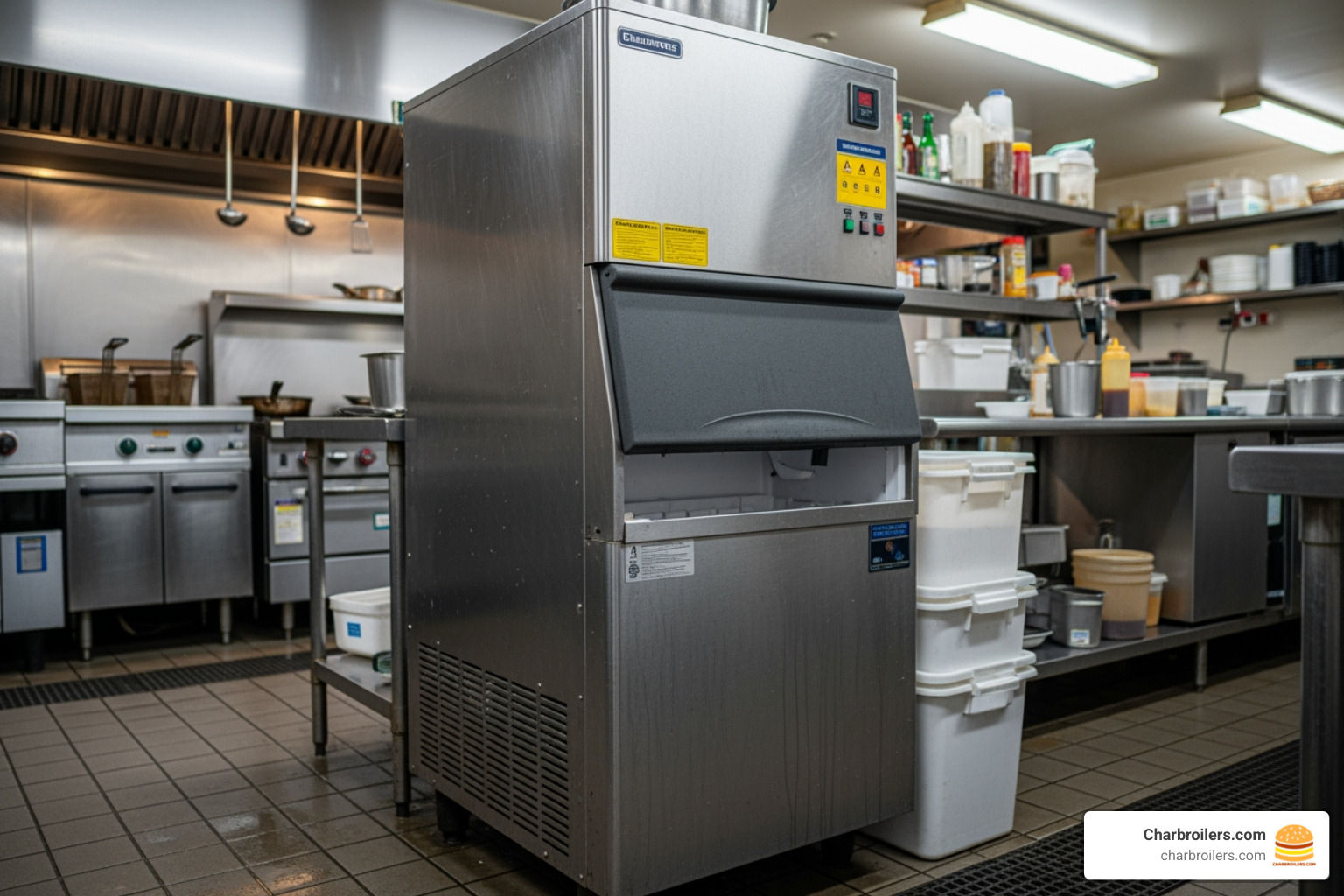
Restaurant ice maker used units offer a practical solution for budget-conscious operators who need reliable ice production without the hefty price tag of new equipment. Here's what you need to know when evaluating pre-owned machines:
Key Considerations When Buying Used:
- Cost Savings: Save 40-70% compared to new units
- Brand Reputation: Stick with proven brands like Manitowoc, Hoshizaki, Scotsman, and Ice-O-Matic
- Production Capacity: Match your volume needs (measured in lbs/24h)
- Condition: Look for refurbished units with warranties when possible
- Inspection: Check for rust, scale buildup, mold, and damaged components
- Parts Availability: Verify replacement parts are readily available for the model
- Maintenance History: Request service records from the seller
Nothing is more frustrating for staff and profits than a broken ice machine on a busy day. The good news? A well-chosen used ice maker can deliver years of reliable service at a fraction of the cost of buying new. The bad news? Without proper evaluation, you might end up with a money pit that breaks down repeatedly.
The research shows that refurbished ice machines offer better value than strictly "as-is" used units because they've been sanitized, serviced, and often come with a warranty. This mitigates the biggest risk of buying used equipment: unexpected repairs and downtime.
I'm Sean Kearney from Charbroilers.com, and over the past decade working with restaurant ice maker used equipment, I've helped countless restaurant owners steer the pre-owned market to find reliable machines at fair prices. My goal is to help you avoid costly mistakes while securing the ice production capacity your operation needs.
Quick look at restaurant ice maker used:
The Big Chill: Weighing the Pros and Cons of Used Ice Machines
Buying a pre-owned commercial ice machine can feel like a gamble, but with the right approach, a restaurant ice maker used can be a smart financial decision. A broken unit impacts profits and customer satisfaction, but new isn't always the best option.
Refurbished ice machines offer significant cost savings over new units, making them attractive for businesses on a budget. They are typically sanitized, serviced, and include a warranty, mitigating the risks of buying "as-is." Understanding the difference between "used" and "refurbished" is key to avoiding future problems. For more on rental and purchase options, see our guide on renting commercial ice machines made easy and breezy.
The Benefits of Buying Used
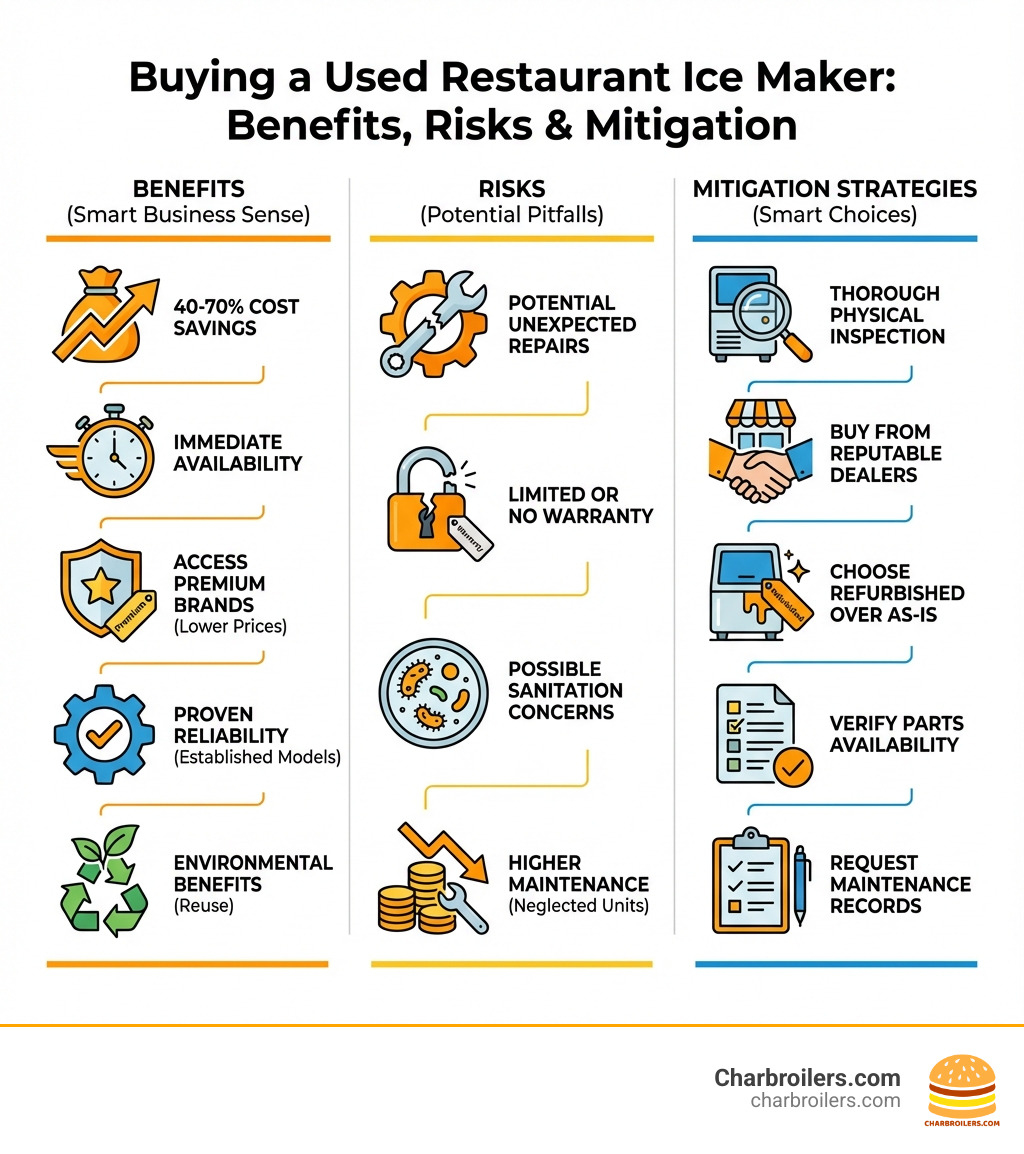
When we talk about the advantages of a restaurant ice maker used, the most obvious and compelling one is cost savings. Our research indicates that refurbished ice machines can offer a significant reduction in price, often ranging from 40-70% less than a brand-new model. This can free up capital for other essential restaurant needs.
Beyond the immediate financial relief, buying used offers several other compelling benefits:
- Immediate Availability: Used machines are often available for immediate pickup, avoiding the manufacturing and shipping lead times of new equipment.
- Access to Higher-End Models: Your budget may allow for a used, higher-capacity, or more feature-rich model from a top brand instead of a new entry-level unit.
- Proven Workhorses: A used unit from a reputable brand that has performed reliably for years is a testament to its durability.
- Environmental Benefits: Reusing equipment extends its lifecycle and reduces waste, contributing to sustainability.
Potential Risks and How to Mitigate Them
While the allure of savings is strong, we must also acknowledge the potential drawbacks of purchasing a restaurant ice maker used. These risks, however, are largely manageable with proper due diligence.
-
Unexpected Repairs: "As-is" units may have hidden issues leading to costly repairs.
- Mitigation: Opt for refurbished units from reputable dealers that have been serviced and tested. A thorough inspection is essential for "as-is" purchases.
-
No or Limited Warranty: Most used machines lack a manufacturer's warranty, leaving you financially exposed.
- Mitigation: Seek dealers who offer a warranty on refurbished units (e.g., 90 days for parts and labor). Some may offer extended warranty options.
-
Sanitation Concerns: A used machine can harbor bacteria or mold if not properly cleaned.
- Mitigation: Confirm the unit has been professionally cleaned and sanitized. If not, factor in the cost and effort of doing it yourself.
-
Higher Maintenance Costs: A neglected machine may require more frequent and expensive maintenance.
- Mitigation: Request maintenance records. A well-maintained unit is a safer bet. Look for signs of regular service during your inspection.
The key to navigating these risks is to be an informed buyer. Don't let the excitement of a bargain overshadow the need for a careful evaluation.
Decoding the Specs: What to Look for in a Used Ice Maker
Choosing the right restaurant ice maker used isn't just about price; it's about matching the machine's capabilities to your restaurant's needs. Precision is key.
Key Factors for a Restaurant Ice Maker Used
When evaluating a used ice machine, we focus on several critical factors:
- Brand Reputation: Stick with industry leaders like Manitowoc, Hoshizaki, Scotsman, and Ice-O-Matic. They are known for durability, reliability, and parts availability, making them easier to repair.
- Production Capacity (lbs/24h): Determine your daily ice needs by considering peak hours, drink sales, and salad bars. Capacities range from 80 lbs/day for undercounter units to over 600 lbs/day for modular machines. It's wise to slightly overestimate your needs.
- Storage Bin Size: The bin's capacity should complement the machine's production rate. A 500 lbs/day machine with a 200 lb bin will require frequent emptying. For more, see our guide to cool choices for commercial ice maker and bin setups.
- Unit Age vs. Lifespan: A commercial ice machine lasts 7-10 years, sometimes longer if well-maintained. A used unit's age impacts its remaining useful life, so weigh the lower cost of an older machine against its expected longevity.
Choosing Your Ice: Cube, Nugget, or Flake?
The type of ice you need is dictated by your menu and customer preferences. The used market offers a wide variety.
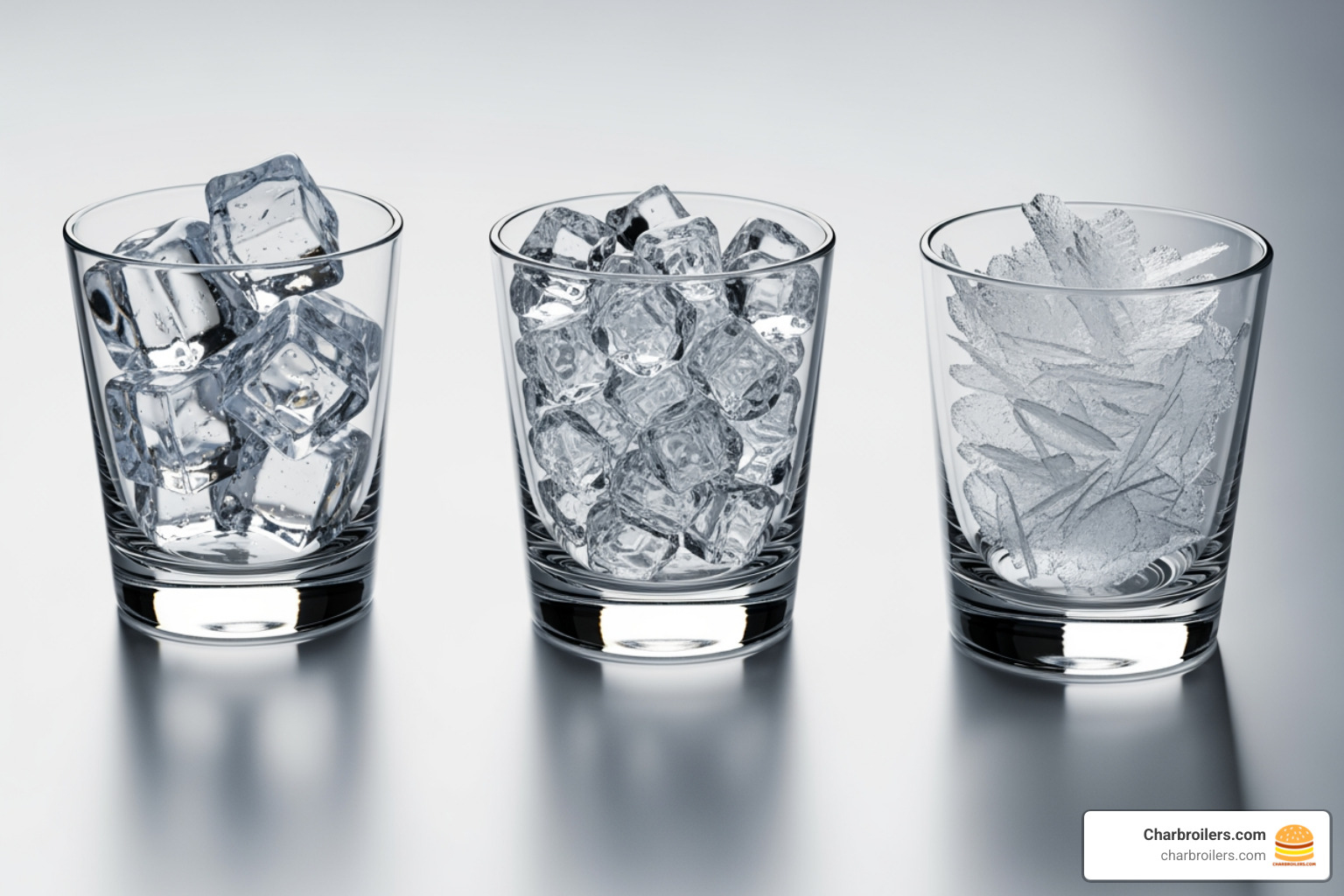
- Full Cube Ice: Large, solid cubes that melt slowly, ideal for high-end cocktails and general use where dilution is a concern. For more, see our guide on the big chill: How to choose the right large cube ice machine for premium drinks.
- Half Cube Ice: Smaller and more versatile, perfect for sodas, mixed drinks, and bagged ice. They cool drinks quickly and fit most glasses.
- Nugget Ice: Soft, chewable ice ("sonic ice") popular for soft drinks and blended beverages. It absorbs flavors well and is gentle on teeth.
- Flake Ice: Soft, malleable ice best for food displays like seafood or salad bars, as it packs easily without bruising items. Learn more in our article on commercial crushed ice maker.
Understanding your specific needs will help you filter through the available restaurant ice maker used units to find one that produces the perfect ice for your operation.
Air-Cooled vs. Water-Cooled: What's the Difference?
The cooling method of an ice machine significantly impacts its installation, utility costs, and performance.
- Air-Cooled Ice Machines: The most common type, these use ambient air to cool the condenser. They are easier and cheaper to install but require good ventilation. They can be less efficient in hot kitchens and will release heat into the room.
- Water-Cooled Ice Machines: These use a continuous water flow for cooling, making them more efficient in hot or poorly ventilated areas without adding ambient heat. However, they have higher water consumption and require more complex plumbing.
Here’s a quick comparison:
| Feature | Air-Cooled Ice Machines | Water-Cooled Ice Machines |
|---|---|---|
| Initial Cost | Generally lower | Generally higher (due to plumbing) |
| Water Usage | Uses less water (only for ice production) | Uses significantly more water (for ice + cooling) |
| Energy Usage | Can be less efficient in hot environments | More energy-efficient, especially in hot environments |
| Heat Output | Releases heat into the surrounding area | Releases less heat into the surrounding area |
| Ideal Env. | Well-ventilated areas, cooler kitchens | Hot kitchens, tight spaces, poor airflow |
| Installation | Simpler, requires space for airflow | More complex, requires dedicated water lines for cooling |
| Maintenance | Requires regular cleaning of air filters | Requires descaling of water lines |
For a deeper understanding of how these systems work, you can explore our guide on chill out: a deep dive into commercial ice production methods. When buying a restaurant ice maker used, consider your kitchen's layout, ambient temperature, and utility costs to determine which cooling method is best for you.
The Smart Buyer's Checklist for a Restaurant Ice Maker Used
Once you've narrowed your options, it's time for a detailed inspection. Asking the right questions and carefully checking the machine can save you from costly problems later.
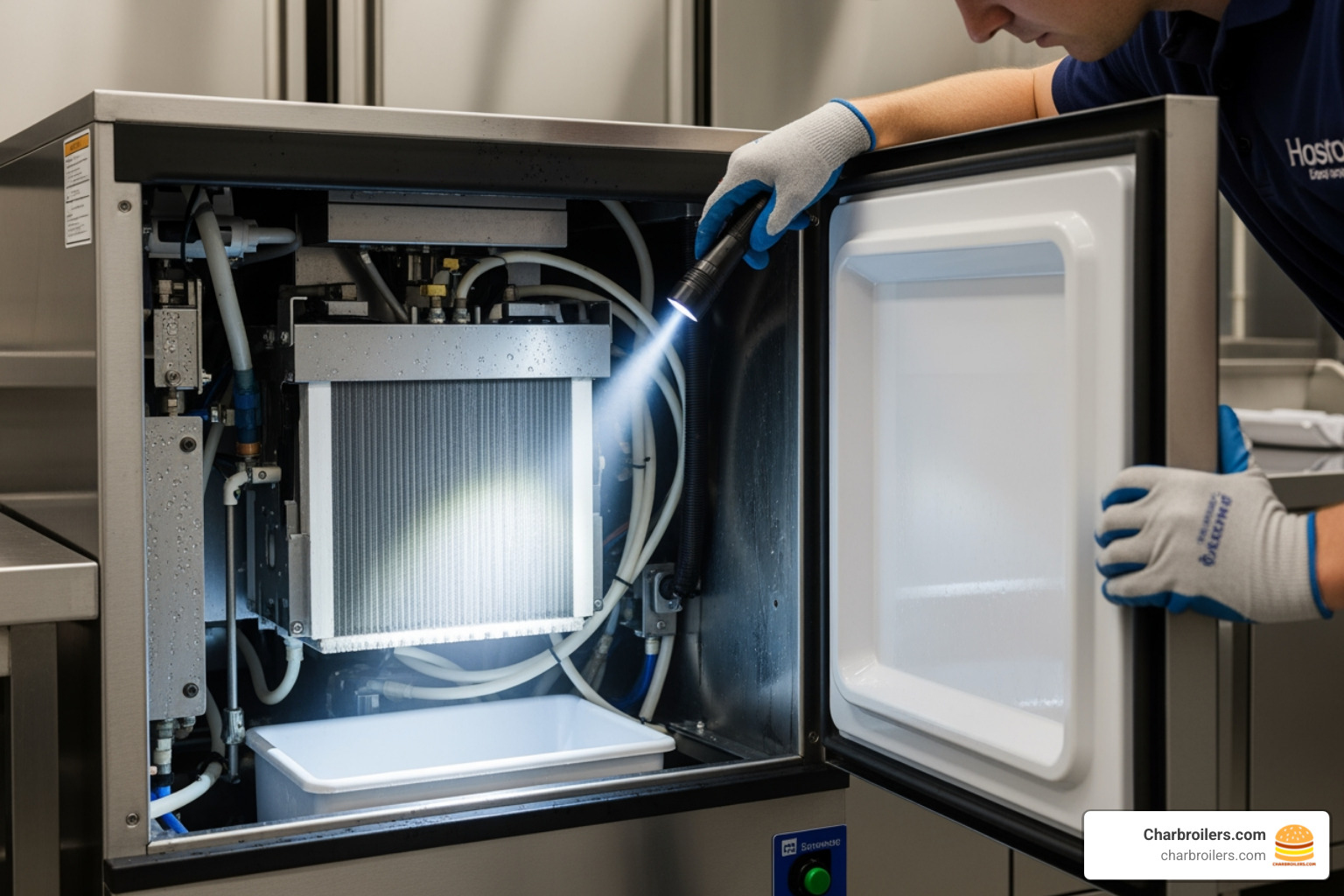
How to Inspect a Used Ice Machine
Our best advice for buying any restaurant ice maker used is to inspect it as if your business depends on it – because it does! Here’s a checklist of what to look for:
- Exterior Condition: Check for major dents, deep scratches, or rust. Minor cosmetic issues are acceptable, but structural damage can signal rough handling.
-
Internal Cleanliness: Inspect the interior for:
- Scale Buildup: White, flaky deposits on evaporator plates or water lines suggest hard water and neglect, which can impede ice production.
- Mold or Slime: Pink or black discoloration is a major health hazard and a sign of poor cleaning.
- Damaged Components: Look for cracks, breaks, or corrosion on the water curtain, sensors, and tubing.
- Evaporator Plate: The plate should be smooth and free of deep scratches or pitting. Damaged plating can cause poor ice production.
- Condenser Fins (Air-Cooled): For air-cooled units, fins should be clean and free of heavy dust or grease. Blocked fins reduce efficiency and can cause overheating.
- Listen to it Run: If possible, have the seller power it on. Listen for unusual grinding, buzzing, or rattling noises.
- Check for Leaks: Inspect the base and connections for any signs of water leaks.
Signs of a Well-Maintained Unit:
- Clean interior, minimal to no scale or mold.
- Intact components, no visible cracks or breaks.
- Clean air filters (for air-cooled models).
- Smooth operation when powered on.
- Documentation of maintenance.
Signs of Neglect:
- Heavy scale, mold, or mildew.
- Rusting components.
- Damaged or missing parts.
- Excessive noise during operation.
- Foul odors.
Essential Questions to Ask the Seller
Don't be shy! The more information you gather, the better your decision will be. When you find a restaurant ice maker used that catches your eye, be ready with these questions:
- "What is the machine's previous usage history?": Was it in a high-volume bar, a small cafe, or a hotel? This can give you an idea of the wear and tear.
- "Why are you selling it?": A common reason is upgrading to a larger unit, which is often a good sign. If the reason is "it stopped working," proceed with extreme caution or pass altogether.
- "Do you have maintenance records?": This is gold! Records show if the machine was regularly serviced, cleaned, and if any major repairs were done.
- "How old is the unit?": Knowing the age helps you estimate its remaining lifespan.
- "Have there been any recent repairs, and if so, what were they?": This helps identify recurring issues or recently fixed problems.
- "Is the availability of replacement parts good for this model?": For older models, parts can become scarce. Check with a local parts supplier for common components like water pumps, control boards, and sensors.
- "What type of ice does it produce?": Confirm this verbally, even if you think you know.
- "Is it air-cooled or water-cooled?": Crucial for installation planning.
- "What is the electrical requirement (voltage, amperage)?": Ensure it matches your building's capacity.
For a broader perspective on comparing different models, our guide the ultimate guide to comparing commercial ice makers can be a valuable resource.
Maintenance Needs for a Restaurant Ice Maker Used
All commercial ice machines require regular maintenance, and a restaurant ice maker used is no exception. Neglecting maintenance can lead to breakdowns and poor ice quality.
- Typical Maintenance Schedule: Plan for professional cleaning and sanitizing every 6-12 months. This includes descaling to remove mineral buildup and sanitizing the water system.
- Cleaning and Sanitizing: Regularly clean the exterior and bin. Use nickel-safe ice machine cleaner and sanitizer for internal components as per the manufacturer's instructions to prevent mold and bacteria.
- Water Filter Replacement: Use a water filter and replace it every 3-6 months to protect the machine and improve ice quality.
- Professional Servicing: Schedule professional service at least annually. A technician can inspect components, check refrigerant levels, and catch potential issues early, which is vital for a used unit.
For more details on keeping your ice machine in top shape, check out stay cool under pressure: commercial ice makers & machines reviewed. A little maintenance goes a long way in extending the life of your investment.
Where to Find Your Perfect Pre-Owned Ice Machine
Finding the right restaurant ice maker used requires knowing where to look. From online marketplaces to local dealers, each source has pros and cons. As we are based in Seattle, WA, we'll highlight local resources alongside broader online options. For more local guidance, see our guide to discover commercial ice makers in your area.
Online Marketplaces and Local Listings
Online platforms offer a vast selection, but they also require a keen eye and careful verification.
-
Online Marketplaces (e.g., eBay): Websites like eBay offer a wide variety of new and used commercial ice machines from top brands like Manitowoc, Hoshizaki, Scotsman, and Ice-O-Matic.
- Pros: Huge selection and competitive pricing. Some sellers offer refurbished units with limited warranties.
- Cons: Physical inspection is often impossible, shipping can be expensive, and returns may be difficult. Always check seller ratings.
-
Local Classifieds: For our Seattle customers, local platforms are excellent for finding used equipment directly from other businesses. You can find "for sale by owner" listings for a "commercial ice maker" or "ice machine" on sites like Seattle's Craigslist.
- Pros: Opportunity for physical inspection, no shipping costs, and direct negotiation.
- Cons: Limited selection, "as-is" sales are common (no warranty), and you must be vigilant about scams.
When browsing online, pay close attention to the description, photos, and seller reviews. Always try to arrange a physical inspection if geographically possible. You can explore available commercial ice machines on Charbroilers.com as well, which may include new and pre-owned options: Commercial Ice Machines for sale - Charbroilers.com.
Restaurant Equipment Dealers and Refurbishers
This option often provides a safer, albeit sometimes slightly more expensive, route to acquiring a restaurant ice maker used.
-
Benefits of Dealer Purchase: Reputable restaurant equipment dealers often have a dedicated section for used or refurbished equipment.
- Certified Used Units: These machines have been inspected, repaired, cleaned, and tested by technicians.
- Included Warranties: A key advantage is the warranty (often 30-90 days), which reduces your risk.
- Service and Support: Dealers can provide installation, maintenance, and replacement parts for peace of mind.
- Expert Advice: Sales teams can help you choose the right machine for your needs.
For those in the Seattle area, seeking out local restaurant equipment suppliers who specialize in used or refurbished items is a smart move. While we at Charbroilers.com focus on our core product lines, we understand the value of quality used equipment and sometimes feature pre-owned items. Keep an eye on our offerings for Pre-owned and refurbished ice machines from Charbroilers.com.
Frequently Asked Questions about Used Ice Makers
We hear a lot of questions from restaurant owners considering a restaurant ice maker used. Here are some of the most common ones we address:
What is the typical lifespan of a commercial ice machine?
A well-maintained commercial ice machine lasts 7-10 years, with top-tier brands like Manitowoc or Hoshizaki often lasting 12-15 years. A used unit's age and condition directly impact its remaining lifespan. A 5-7 year old machine with good maintenance records can be a great value, while a neglected 9-year-old unit may be near the end of its life. Always factor age into your assessment.
How much can I save by buying a used restaurant ice maker?
Savings on a restaurant ice maker used can be substantial, typically 40-70% compared to new. A new $5,000 machine might be found used for $1,500-$3,000. The final cost depends on age, brand, condition ("as-is" vs. "refurbished"), and the seller. Refurbished units cost slightly more but offer better value with servicing and a warranty.
Are replacement parts hard to find for older models?
The availability of replacement parts for a restaurant ice maker used depends on the brand. For reputable brands like Manitowoc, Hoshizaki, Scotsman, and Ice-O-Matic, replacement parts are generally available for many years, even for discontinued models. For less common brands or very old units, parts can be scarce. Before buying an older model, check the availability of common parts like water pumps, control boards, and sensors. A quick call to a parts supplier or an online search can confirm this. A machine with no available parts is a risky purchase.
Conclusion
Navigating the market for a restaurant ice maker used can seem daunting, but with the right knowledge and a methodical approach, it's a smart investment that can significantly benefit your restaurant's bottom line. We've explored the compelling benefits, such as substantial cost savings and access to higher-end models, while also highlighting the potential risks and, more importantly, how to mitigate them through careful inspection and choosing reputable sources.
The key lies in due diligence: thoroughly inspecting the machine, asking the right questions about its history and maintenance, and understanding the nuances of ice types and cooling systems. Whether you opt for a bargain from a local listing or a certified refurbished unit from a dealer, your goal is a reliable machine that keeps your drinks cold and your customers happy without breaking the bank.
At Charbroilers.com, we understand the critical role every piece of equipment plays in your kitchen. While we specialize in high-performance cooking equipment, we're always here to support your broader commercial kitchen needs with insights and resources. By making informed decisions about your ice machine, you're not just saving money; you're investing in the smooth operation and success of your restaurant.
For more comprehensive guides on equipping your kitchen, explore our resources, including Your comprehensive guide to commercial charbroilers for your restaurant. We're here to help you make cool, calculated choices for your business!