

Pre-Owned Perfection: Unlocking Value in Used Commercial Fridges
Why Smart Restaurant Owners Choose Pre-Owned Refrigeration
A used commercial fridge can save your business thousands while delivering reliable performance. To find the right one, you need to know what to evaluate.
Key Evaluation Criteria:
- Compressor condition - Listen for unusual noises or vibrations.
- Temperature consistency - Test for proper cooling (33-40°F).
- Door seals and gaskets - Check for cracks, tears, or air leaks.
- Interior condition - Look for rust, cracks, or damaged shelving.
- Age and brand - Verify the model number and research its lifespan.
- Warranty coverage - Confirm what protection comes with the purchase.
Restaurant owners must stretch tight budgets. With new commercial refrigerators costing $3,000 to $12,000+, buying used can cut costs by 50-75% without sacrificing performance. Many refurbished units come with 90-day warranties and can be delivered faster than new equipment. Choosing pre-owned also keeps functional appliances out of landfills, making it an environmentally responsible choice.
Used doesn't mean unreliable. A pre-owned commercial fridge is a smart investment when you know what to inspect. You get access to premium brands like True, Turbo Air, and Traulsen at a fraction of the cost.
I'm Sean Kearney, founder of Charbroilers.com. With over a decade in the restaurant equipment industry, I've seen businesses thrive by strategically purchasing used commercial fridges. Let me show you how to buy used refrigeration with confidence.
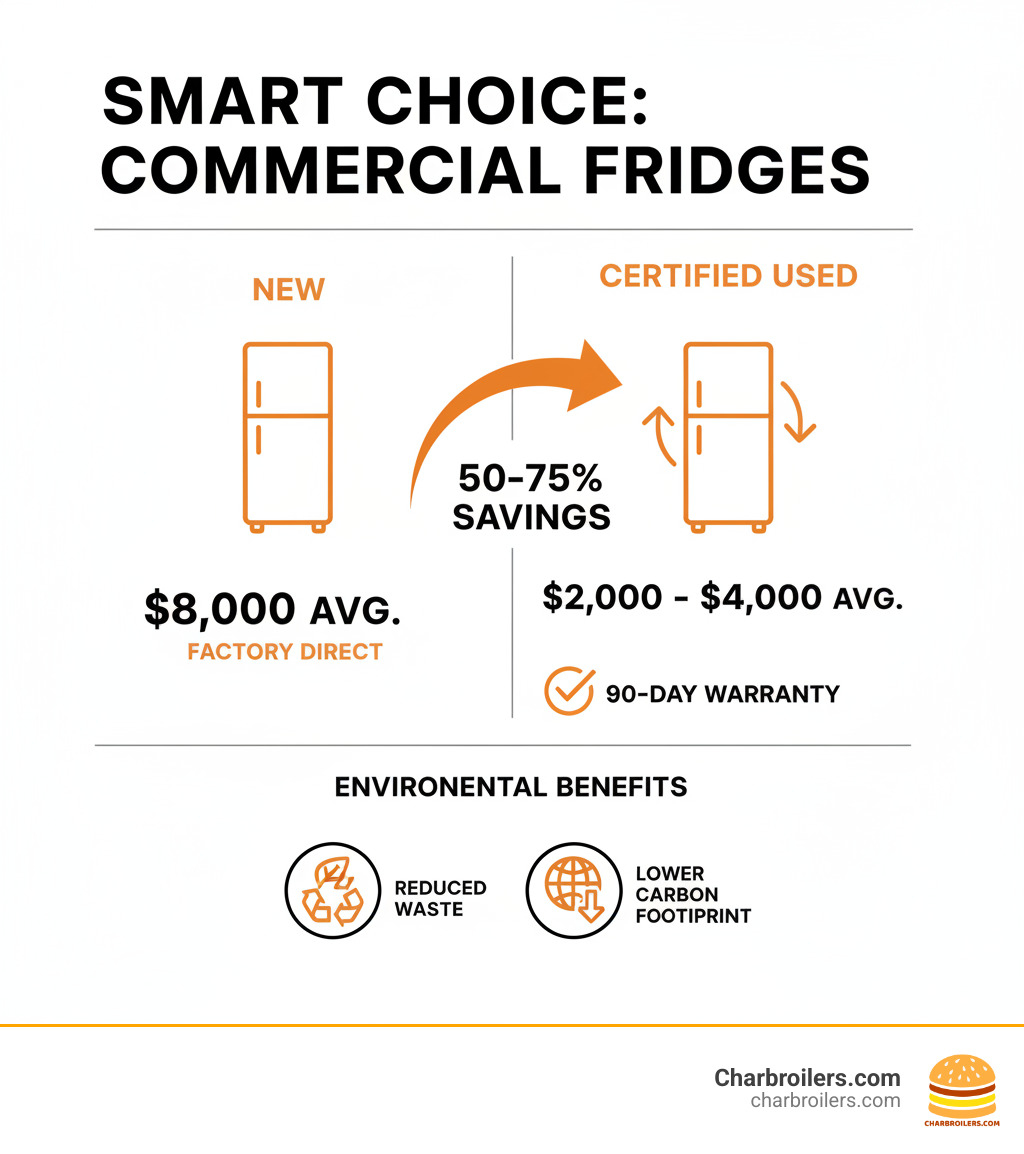
Used commercial fridge terminology:
The Chilling Truth: Why a Used Commercial Fridge is a Smart Investment
Buying a used commercial fridge is a strategic move that improves your bottom line. The most obvious benefit is significant cost savings. A new commercial refrigerator can cost $5,000 to $12,000, but a quality used unit is often 50% to 75% off that price. That's thousands you can redirect toward staff, menu development, or other equipment.
Buying used also gives you access to premium brands like True, Turbo Air, and Traulsen that might otherwise be out of budget. These workhorses are built to last, meaning you get professional-grade reliability for a faster return on investment. Furthermore, purchasing used equipment is an environmentally friendly choice. Giving a fridge a second life keeps it out of a landfill and reduces the resources needed to manufacture new units.
Of course, buying used has potential risks, such as a shorter lifespan, limited warranty, hidden defects, or higher energy use. However, these risks are manageable with a thorough inspection and smart purchasing strategy.
Potential Risks and How to Mitigate Them
Let's cover what can go wrong and how to prevent it.
A shorter lifespan is a common concern. A used fridge has already been in service, but age isn't the only factor. A well-maintained 6-year-old premium brand can outlast a poorly-maintained 3-year-old budget model. Ask about the unit's age, service history, and previous use.
Lack of warranty is another worry. Private sellers often sell "as-is," meaning any problems are yours to fix. Reputable dealers, however, frequently offer "certified used" equipment with a 90-day warranty on parts and labor, providing a valuable safety net.
Hidden defects can turn a great deal into a mistake. A compressor might sound fine but be near failure. Never buy a used commercial fridge sight unseen. Test it for at least an hour, check the temperature, and listen for odd sounds. For peace of mind, hire a refrigeration technician for a professional inspection. Our guide on The Ultimate Checklist for Commercial Refrigerator Repair Services details what pros look for.
Finally, consider higher energy consumption. An older model might cost more in monthly electricity than a newer, energy-efficient unit, eating into your initial savings. Research the model's energy efficiency to make a financially sound long-term decision.
Understanding Warranties and Financing
Warranties vary by seller. Certified dealers often provide a 90-day parts-and-labor warranty, covering major components. In contrast, a private sale is typically "as-is," leaving you responsible for all repairs. Always read the fine print to understand what's covered.
Regarding payment, some dealers offer flexible payment options or financing programs to help you manage cash flow. This can be a lifesaver, but be sure to understand the interest rates and terms to ensure the overall cost remains a good value.
For a deeper dive into total ownership costs, see our guide: The Price of Cool: A Guide to Commercial Refrigerator Costs.
Your Pre-Purchase Inspection Checklist: What to Look For
You've found what looks like the perfect used commercial fridge at a price that makes your accountant smile. Before you hand over any money, though, you need to become a detective. A thorough inspection isn't just recommended—it's essential. This is where you separate the reliable workhorses from the expensive mistakes.
Think of this inspection as your insurance policy. A unit might look pristine on the outside but harbor problems that'll cost you thousands down the road. The good news? Most issues reveal themselves if you know where to look. Let's walk through exactly what you need to check to ensure you're getting a quality unit with plenty of life left in it.
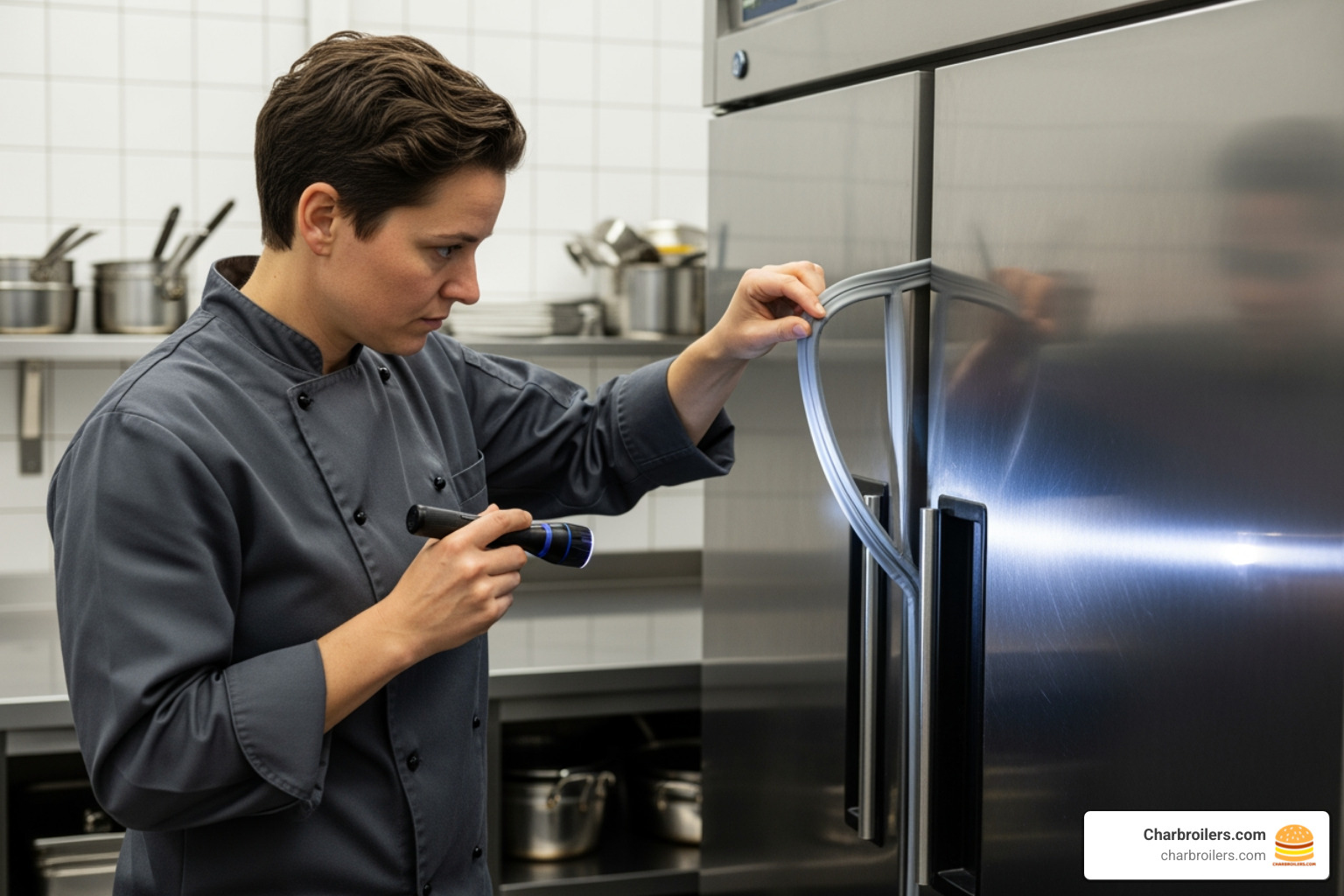
Here's what to check:
- Gaskets and Seals: These rubber strips are critical for efficiency. Feel for cracks, tears, or hardness. A simple test: if a dollar bill closed in the door pulls out easily, the seal is bad. Poor seals lead to higher energy bills.
- Door Hinges: Doors should swing smoothly and close firmly. Worn hinges prevent a proper seal and can be costly to replace.
- Interior Condition: Look for deep rust or corrosion, especially on the floor of the unit, as this suggests neglect. Ensure all shelves are present and sturdy.
- Compressor and Condenser: The compressor is the heart of the unit. Plug it in and listen. A healthy compressor has a steady hum, while grinding or banging are red flags. Check the condenser coils (usually at the bottom or back). If they are caked in dust, it indicates poor maintenance, which shortens the compressor's life.
- Temperature Consistency: After the unit has run for at least 30 minutes, use a thermometer to check the temperature. A refrigerator should hold steady between 33-40°F. If it struggles to reach or maintain this range, walk away.
- Electrical Wiring: Check the power cord for fraying or damage. Any burnt smells or loose connections are serious safety hazards.
- Data Plate: Find the manufacturer's data plate (usually inside the door frame) and note the model and serial numbers. This allows you to research the unit's age and specifications.
For more on spotting problems, our guide on Freeze Check: Out These Commercial Refrigerators and Freezers Before You Buy can help.
Choosing the Right Size and Type for Your Needs
A great deal isn't a bargain if the fridge doesn't fit your kitchen or your needs.
First, measure your space, accounting for door swing and necessary ventilation clearance around the unit. Cramming a fridge into a tight space causes overheating and premature failure.
Next, consider your required storage capacity. Overfilling a fridge hurts airflow and efficiency, while a unit that's too large wastes energy and space.
Finally, choose the right type for your operation. Common types include:
- Reach-in refrigerators: The workhorses for general storage in most kitchens.
- Undercounter units: Fit under prep stations to save floor space.
- Display cases: Glass-door units for showcasing grab-and-go items.
- Prep tables: Combine refrigerated storage with a workspace, essential for sandwich or salad stations.
Your menu and workflow should guide your decision. To learn more about different types, see our guide: Commercial Refrigeration Equipment Explained: No Sweat.
Where to Find the Best Deals on a Used Commercial Fridge
You've done your homework on what to inspect, and you know what type of used commercial fridge fits your operation. Now comes the exciting part: the hunt for the perfect unit at the right price. Think of it as a treasure hunt, but instead of gold doubloons, you're after reliable refrigeration that doesn't drain your bank account.
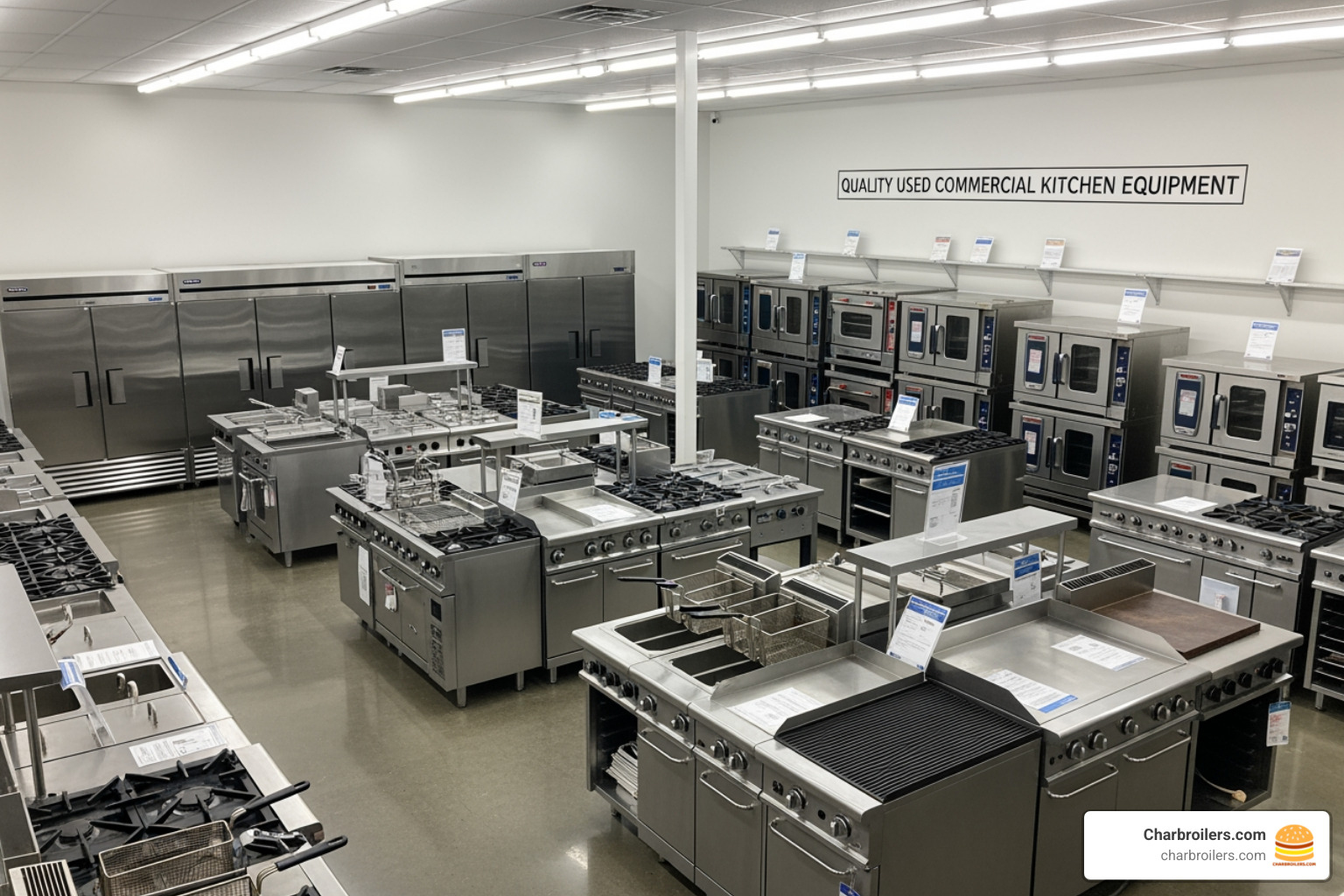
There are several places to find great deals, each with its own advantages.
Reputable Dealers and Marketplaces
Certified refurbished dealers are often your safest bet. They inspect, repair, and resell equipment, often including a 90-day parts-and-labor warranty. This protection provides peace of mind that you're covered if something goes wrong early on.
Local restaurant equipment suppliers are another solid option. Many have a used equipment section, allowing you to inspect units in person and speak with knowledgeable staff. Checking with local suppliers can uncover hidden gems in your area.
Online marketplaces like Facebook Marketplace and Craigslist cast a wider net. You can often find local restaurant owners selling equipment directly, which means no shipping costs and the ability to inspect before buying. However, this requires more vigilance.
What should you expect to pay? Prices vary by size, age, brand, and condition. A small undercounter unit might cost $300-$1,000, while a large two-door reach-in could be $1,500-$5,000. Compared to new prices, the savings are substantial.
When dealing with private sellers, ask detailed questions about the unit's age, history, and reason for selling. Arrange to see the equipment running and consider bringing a technician for an inspection on high-value items. Never send payment before seeing the unit in person.
Reliable Brands to Look For
Brand reputation matters when buying used. Some manufacturers are known for equipment that can take a beating and keep on cooling.
- True refrigerators are known for reliability and robust construction, often lasting 15-20 years with proper care.
- Turbo Air offers a great balance of performance and affordability.
- Traulsen is a premium brand with heavy-duty construction, commanding higher used prices but delivering superior performance.
- Atosa provides quality construction at competitive prices.
- Beverage-Air, Randell, and Delfield are other respected brands with solid reputations for durability.
Why does brand matter? Established manufacturers have extensive parts networks, making repairs easier and faster. Choosing a trusted brand dramatically increases your odds of getting a unit that will serve you well for years. For more help comparing brands, see The Ultimate Guide to Comparing Commercial Refrigerators.
Keeping Your Cool: Maintenance for Your Secondhand Fridge
Congratulations! You've found a fantastic used commercial fridge and it's now humming away in your Seattle kitchen. But the journey doesn't end there. To ensure your pre-owned investment continues to deliver reliable performance for years to come, proper maintenance is absolutely critical. A little consistent care goes a long way.
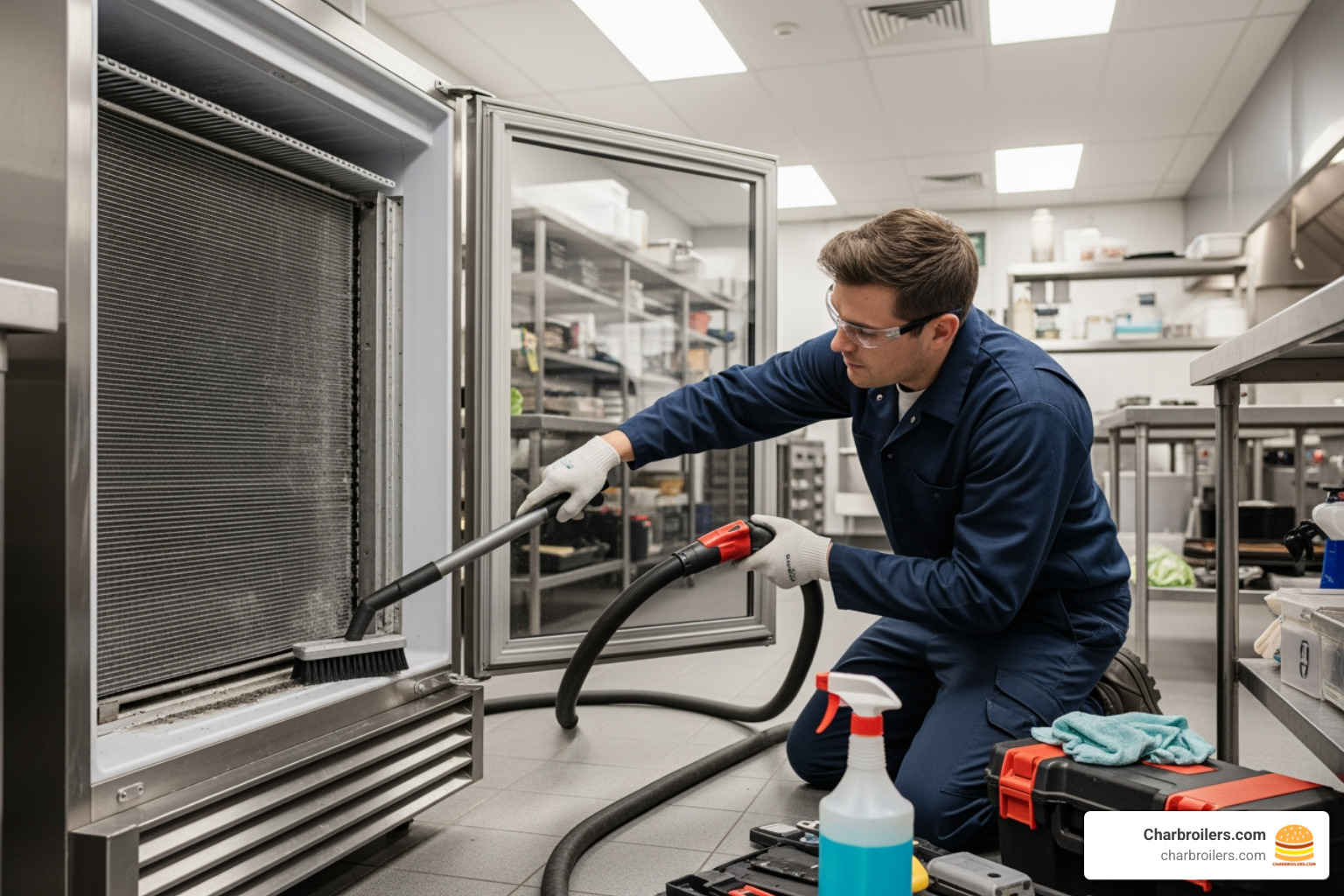
Essential Maintenance for a Used Commercial Fridge
- Clean Condenser Coils Monthly: This is the most important task. Clogged coils force the compressor to work harder, increasing energy bills and risking failure. Use a stiff brush and a shop vacuum to clean them.
- Check and Clean Door Gaskets Weekly: Gaskets prevent warm air from entering. Clean them with warm, soapy water to remove debris. Check for cracks or tears and replace damaged gaskets promptly—it's an inexpensive fix that saves energy.
- Monitor Temperature Daily: Don't just rely on the external display. Place an independent thermometer inside and check it daily. Refrigerators should hold at 33-40°F, and freezers at 0°F or below.
- Maintain a Cleaning Schedule: Wipe down all interior and exterior surfaces regularly to ensure food safety and proper function.
- Ensure Proper Ventilation: Your fridge needs breathing room to dissipate heat. Make sure there is adequate clearance around the unit, especially near the condenser.
While you can handle most maintenance, schedule professional servicing at least once a year. A technician can check refrigerant levels, calibrate thermostats, and spot potential problems before they become emergencies. For help finding local professionals, see our guide: Commercial Refrigeration Near Me: Your Guide to Local Cooling Experts.
Frequently Asked Questions about Used Commercial Refrigerators
Here are straightforward answers to common questions about buying a used commercial fridge.
What's the main difference between a commercial and a residential fridge?
A commercial fridge is a heavy-duty workhorse, while a residential one is built for light use. Commercial units have powerful compressors to handle constant door openings in hot kitchens and recover temperature quickly. Most importantly, they are NSF certified for food safety, with easy-to-clean surfaces and precise temperature control. A residential fridge would fail quickly in a commercial setting and violate health codes. For more on this, see The Homeowner's Guide to Commercial-Grade Refrigeration.
How much can I realistically save by buying used?
You can typically save 50% to 75% off the new retail price. A premium reach-in that costs $8,000 new might be found for $2,000-$4,000 used. Savings depend on the unit's condition, brand, and age. Even after factoring in a professional inspection, the savings are substantial, freeing up capital for other parts of your business. Learn more in our guide: Used Commercial Fridge & Freezers: What You Need to Know Before You Buy.
Can I use a regular fridge in a commercial kitchen?
Absolutely not. It's a critical food safety and compliance issue. Residential refrigerators simply cannot maintain the consistent temperatures required by health codes, especially in a busy kitchen. A health inspector will immediately flag a residential unit, leading to fines or even a shutdown. They also lack the durability for commercial use and will fail quickly, costing you more in spoiled food and repairs than you'd ever save. Always use NSF-certified commercial equipment. Our guide on Cool Compliance: Your Guide to NSF/ANSI Standard 7 for Refrigerators and Freezers explains the standards.
Conclusion
You've just walked through everything you need to know to make buying a used commercial fridge a smart, confident decision for your Seattle restaurant or food service business. It's not about settling for second best—it's about being strategic with your capital while still getting equipment that performs like a champion.
The key is knowing what to look for. Check those gaskets and seals carefully. Listen to the compressor's hum. Test the temperature consistency. Research the model number and verify the unit's age. Buy from reputable dealers when possible—those 90-day warranties can be lifesavers. And once you've brought your used commercial fridge home, treat it right with regular coil cleaning, gasket checks, and annual professional servicing.
This isn't just about saving money upfront. It's about maximizing your entire budget so you can invest in other areas of your business—better ingredients, skilled staff, marketing that brings customers through your doors. Every dollar you save on equipment is a dollar you can put toward making your restaurant the best it can be.
At Charbroilers.com, we understand the challenges restaurant owners face every single day. While we specialize in new equipment and financing options for charbroilers, fryers, and griddles, we also believe in empowering you with knowledge about all aspects of commercial kitchen equipment. Whether you're buying new or used, the goal is the same: equipping your kitchen for long-term success.
Ready to explore more ways to set up your commercial kitchen for success? Explore our complete guide to commercial kitchen equipment and find how the right equipment choices—new or used—can transform your operation.