
Freeze! Check Out These Commercial Refrigerators and Freezers Before You Buy
The Unsung Hero of Your Foodservice Business
Commercial refrigerators and freezers are the unsung heroes of any food service business. They are specialized, heavy-duty cooling systems. Unlike home units, they're built for constant use and large capacities. They keep your ingredients safe and fresh.
Here's why they are essential for your business:
- Food Safety: They maintain precise temperatures to stop food from spoiling. This is key for health regulations.
- Preservation: Your ingredients stay fresh longer. This cuts down on waste and saves you money.
- Efficiency: These units handle high volumes and constant opening and closing. They are designed for busy kitchens.
- Compliance: Using them helps you meet strict food safety rules. This protects your business and your customers.
I'm Sean Kearney from Charbroilers.com. With over a decade in the restaurant equipment industry, I've helped countless businesses find the right commercial refrigerators and freezers and other essential equipment.
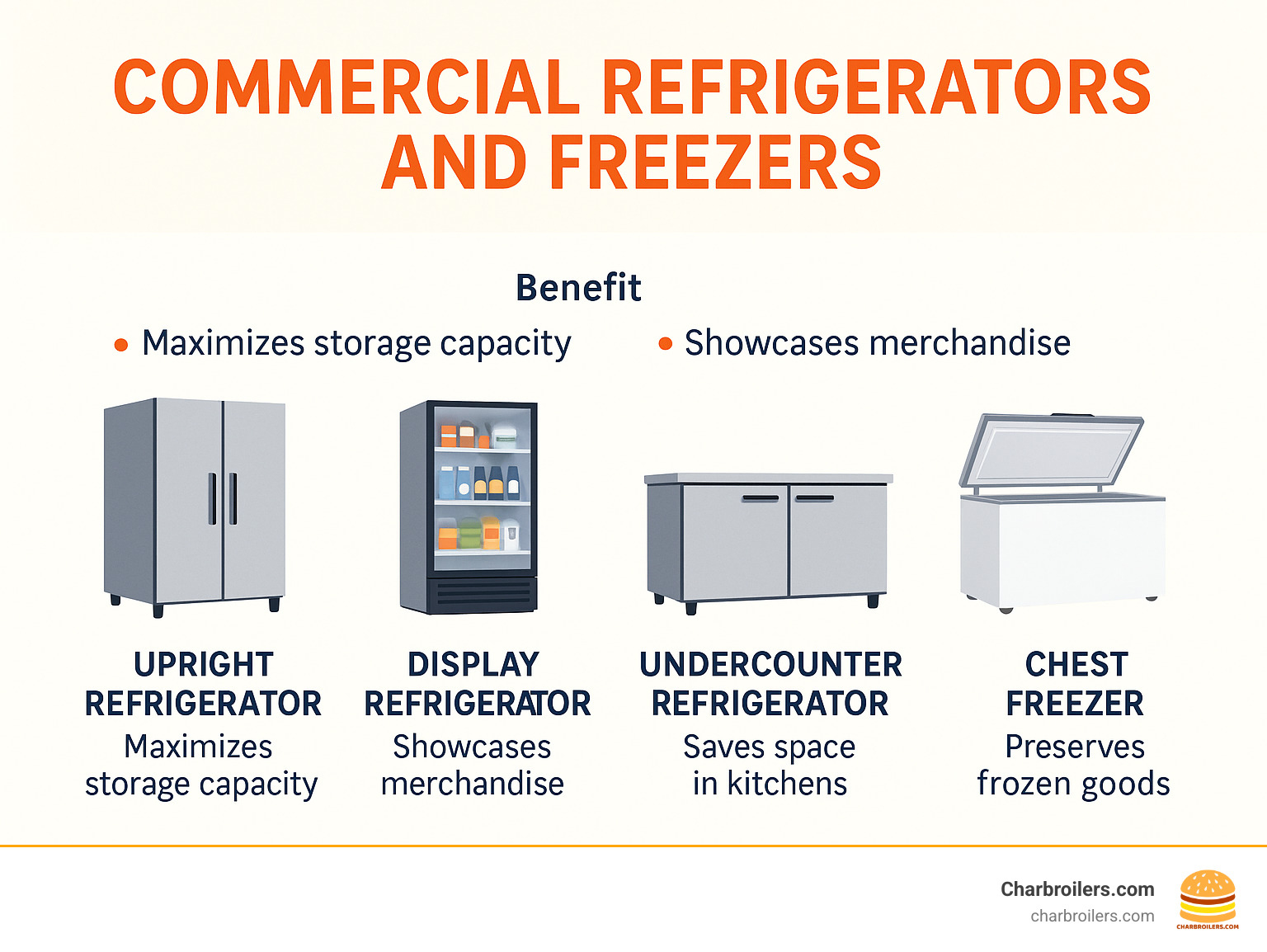
Quick look at commercial refrigerators and freezers:
Decoding the Chill: A Guide to Commercial Refrigeration Types
Choosing the right commercial refrigerator or freezer means finding a unit that fits your space, handles the workload, and keeps ingredients in prime condition. With a wide variety available for every type of foodservice business, let's explore the most common types.
Reach-In & Pass-Through Units
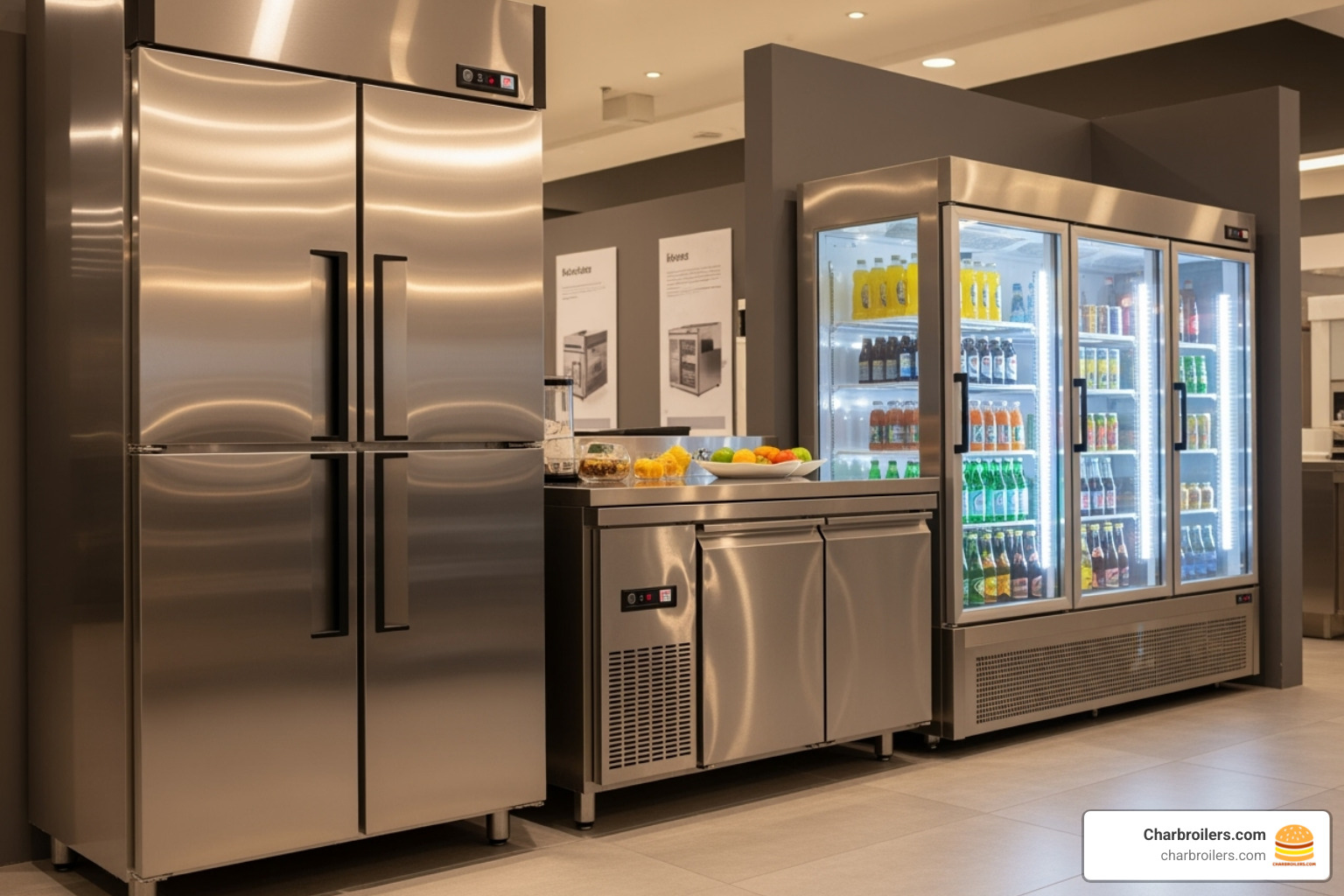
Reach-in commercial refrigerators and freezers are the workhorses of daily operations, providing quick access to ingredients. These vertical, stainless steel units come in various door options and capacities, from a compact 8.39 cu. ft. to a massive 71 cu. ft., suiting any size operation.
Many units offer 1, 2, 3, 4, or even 6 half doors, which are fantastic for minimizing temperature fluctuations. Pass-through units take this a step further, allowing ingredients to be loaded from one side of the kitchen and retrieved from another, streamlining workflow. They're essential for hotels, restaurants, and schools.
Keep Your Cool With These Restaurant Ready Commercial Refrigerators
Walk-In Coolers & Freezers
For serious bulk storage, walk-in coolers and freezers are the solution. These large, insulated rooms maximize the shelf life of perishable items and can be custom-sized to your needs, allowing you to store entire pallets of ingredients.
While new walk-ins offer bespoke solutions, used options can be cost-effective. Used walk-in coolers can maintain a temperature range of +35° to +45° Fahrenheit (+1.67° to +7.22° Celsius). For more extreme needs, heavy-duty reefer containers can offer a dual-temperature range from -30° to +86° Fahrenheit (-34.4° to +30° Celsius), built for heavy traffic. These are vital for any business dealing with large volumes, from supermarkets to catering operations.
Keeping It Cool Your Essential Guide To Restaurant Walk In Fridges
Undercounter & Worktop Refrigerators
When space is at a premium, undercounter and worktop commercial refrigerators and freezers shine. These compact units fit neatly under counters, providing refrigerated storage right where it's needed. They are ideal space-saving solutions for small prep areas, bars, or self-service stations.
Worktop models combine refrigerated storage with a durable work surface, making them ideal for sandwich or pizza prep lines. Many come with drawer configurations for organized storage. For small kitchens, cafes, or bars, these units are invaluable for storing small food items, ingredients, and beverages within arm's reach.

Space Savers Best Under Cabinet Freezers For Small Kitchens
Display & Merchandising Units
Display and merchandising commercial refrigerators and freezers are customer-facing units designed to showcase products and encourage impulse buys. Examples include glass-door beverage coolers, bakery cases, and deli displays.
They come in various styles, including vertical merchandisers, open-front grab-and-go units, and serve-over counters. While glass doors offer excellent visibility, solid doors provide more insulation. However, for businesses like bakeries, cafes, and grocery stores, the ability to display items like cold drinks, baked goods, or pre-made salads is crucial for driving sales.
Cooler Than Cool The Ultimate Back Bar Cooler Buying Guide
Key Features to Consider When Buying Commercial Refrigerators and Freezers
Choosing the right commercial refrigerator or freezer goes beyond type. Key features like compressor location, door style, and construction materials impact workflow, energy use, and durability. Let's explore the crucial details that make a difference.
Compressor Location: Top vs. Bottom Mount
The location of your unit's compressor might seem like a minor detail, but it can significantly impact efficiency and maintenance.
If your kitchen or bakery has flour, dust, or other airborne debris, a top-mounted compressor is ideal. It’s positioned away from the floor, making it less likely to clog with dust. This results in more consistent performance and less frequent cleaning.
On the other hand, bottom-mounted compressors are generally more energy-efficient. They draw in cooler air from the floor, which means less work for the compressor. Plus, they’re often more ergonomic for maintenance since the components are at an accessible height. These are often preferred for general foodservice environments where dust isn't a major concern.
Door Styles and Materials
The doors on your commercial refrigerator or freezer are a key player in energy efficiency and workflow.
For maximum energy savings, solid doors are the champions. They keep the cold locked in tight, making them ideal for back-of-house storage where visibility isn't a priority. Many solid door models come in durable, easy-to-clean stainless steel.
If you want to showcase your offerings, glass doors are the way to go. Perfect for display units, they let customers see inside without opening the door, which helps prevent cold air from escaping. While solid doors offer superior insulation, modern glass doors with features like low-emissivity glass can be up to 33% more efficient than older triple-pane glass.
Look for self-closing doors to prevent energy waste. Some reach-in models feature half doors, further reducing cold air loss. Don't forget gasket quality. A tight, well-maintained door gasket is crucial to prevent cold air leaks, higher energy bills, and ice buildup. Regularly checking and cleaning gaskets is a small task with a big payoff.
Temperature Control and Defrost Systems
Precise temperature control is non-negotiable for food safety. You'll want a commercial refrigerator or freezer equipped with digital thermostats. These give you accurate temperature adjustments and consistent readings, ensuring your ingredients are always stored within safe ranges – typically 35-40°F for refrigeration and 0°F or below for freezing.
Another must-have feature is an automatic defrost cycle. A proper defrost system prevents ice from accumulating on evaporator coils, keeping your unit running efficiently and maintaining consistent cooling. Some advanced units even boast self-cleaning condensers, which actively prevent dust buildup – a common culprit behind major equipment issues. These smart features mean less manual work and a longer, more efficient life for your equipment.
The Green Chill: Energy Efficiency and Sustainability
With commercial refrigerators and freezers, energy efficiency and sustainability are smart business practices that pay off. Since refrigeration equipment runs constantly and can account for 40% to 50% of an electricity bill, choosing an efficient model offers a fantastic opportunity to trim costs.
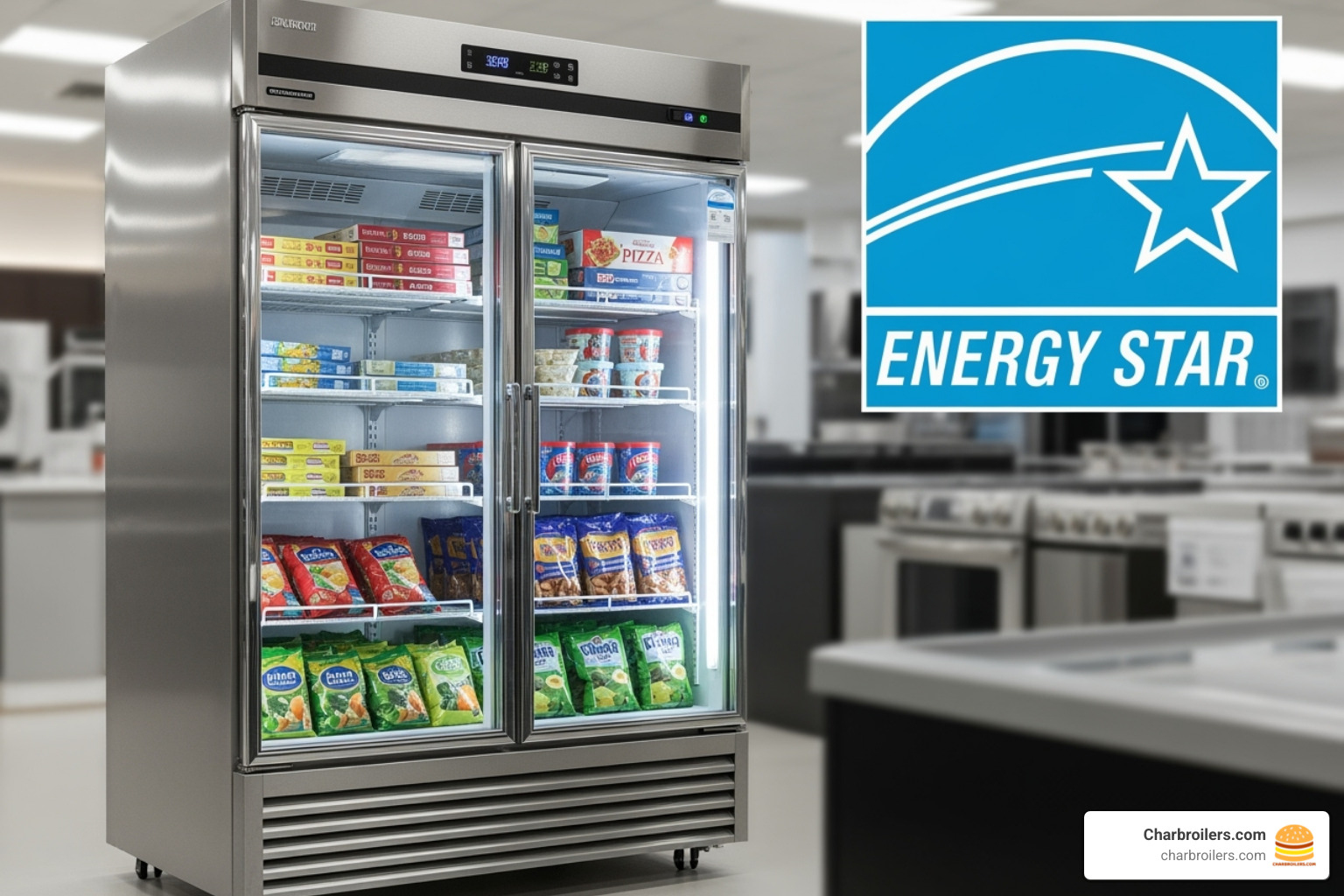
Understanding ENERGY STAR for commercial refrigerators and freezers
To find an energy-saving unit, look for the ENERGY STAR certification. This label indicates that a product meets strict energy performance standards set by the U.S. Environmental Protection Agency. Choosing an ENERGY STAR certified commercial refrigerator or freezer means investing in equipment designed to cut utility costs and reduce maintenance without sacrificing performance.
An ENERGY STAR qualified commercial refrigerator can save you $300 or more over its lifetime. Top-performing models could save you $480 or more. Plus, many utility companies offer rebates or incentives for purchasing ENERGY STAR equipment, making the initial investment more appealing.
Choosing ENERGY STAR units is also a win for the environment, especially models using refrigerants with a lower Global Warming Potential (GWP). Unlike older HFCs, newer refrigerants like R-600a, R-290, R-450A, R-513A, and R-744 (CO2) are much kinder to the planet if released. This choice helps reduce your carbon footprint while keeping your food perfectly chilled.
Ready to explore your options? You can easily Find certified models with the ENERGY STAR Product Finder.
Eco-Friendly Features That Save Money
Beyond the ENERGY STAR label, specific design features contribute to energy savings, helping your commercial refrigerators and freezers work smarter, not harder.
For display units, Low-Emissivity Glass is a game-changer. This specialized glass can be up to 33% more efficient than traditional triple-pane glass. LED Lighting brilliantly illuminates your products and lasts three times longer than fluorescent lamps, meaning fewer replacements and less energy use.
Inside the unit, High-Efficiency Compressors maintain perfect temperatures using significantly less energy. Advanced Insulation materials and clever designs minimize heat transfer, so your cooling system doesn't have to work overtime.
Finally, don't overlook Smart Controls. Features like precise digital temperature controls and 'connected' products allow you to fine-tune energy usage, sometimes even monitoring units remotely. These eco-friendly features put money back in your pocket and showcase your commitment to sustainability.
Want to dive deeper into what makes a unit truly efficient? You can Learn about ENERGY STAR Key Product Criteria.
Making the Right Investment: Maintenance, Repair, and Longevity
Investing in commercial refrigerators and freezers is a long-term commitment. The total cost of ownership—including energy use, maintenance, and potential repairs—is more important than the initial price. Planning for these factors upfront saves money and prevents future issues.
New vs. Used Equipment
One of the first big decisions is between new and used equipment.
New equipment offers the latest technology, top-notch energy efficiency, and a full warranty for peace of mind.
On the other hand, used equipment can be a budget-friendly solution, especially for new businesses. A used walk-in cooler, for example, can be very cost-effective. With used units, it's important to inspect them thoroughly, understand their history, and be aware of limited or non-existent warranties. Whether new or used, consider the unit's expected lifespan and the manufacturer's reputation. Spending more upfront on a quality unit can save on future repair costs and provide longer service.
Essential Maintenance for Your Commercial Refrigerators and Freezers
Even the best commercial refrigerators and freezers need regular maintenance to run smoothly and prevent costly breakdowns. A little preventative care now can save you trouble and expense later.
One of the most critical tasks is cleaning condenser coils. They collect dust and grease, forcing your unit to work harder, use more energy, and risk a breakdown. We recommend cleaning coils every three months, or more often in dusty environments like bakeries.
Don't forget to check your door gaskets regularly. If they're torn or worn out, warm air can sneak in, making the unit work harder and leading to ice buildup. Clean them frequently and replace them when they no longer form a tight seal. Also, clear your drain lines to prevent water leaks or ice formation. Keep an eye on your unit's defrost cycles to ensure they’re working correctly. Finally, always ensure adequate airflow around your unit to help it dissipate heat efficiently.
Regular maintenance extends the life of your equipment, helps maintain optimal temperatures for food safety, and keeps energy bills in check.
Fixing Common Issues With Imperial Frost Free Commercial Freezers
Features That Simplify Repair
When repairs are needed, certain features can save you time and money.
Modular refrigeration systems allow key parts to be removed and fixed without moving the entire unit. Manufacturers like HABCO, with their innovative Cassette(R) system, design units this way for less disruption and faster, cheaper repairs. Technicians can swap components easily, sometimes without special tools.
Self-cleaning condensers are another great feature, significantly reducing how often you need to manually clean the coils and preventing common issues. Units designed with easy-to-access components make a technician's job quicker, reducing your labor costs. Many modern commercial refrigerators and freezers also come with digital diagnostics, which display error codes to help quickly pinpoint the cause of a problem.
These features show a manufacturer's commitment to making your life easier long after the initial purchase.
Frequently Asked Questions about Commercial Refrigeration
Here are answers to the most common questions business owners have about commercial refrigerators and freezers.
What temperature should my commercial refrigerator and freezer be?
Setting the right temperature is crucial for food safety and health code compliance.
Your commercial refrigerator should stay between 35°F and 40°F (2°C to 4°C). This range slows bacterial growth without freezing fresh ingredients.
Commercial freezers need to maintain 0°F or below (-18°C or colder). At this temperature, harmful bacteria can't multiply, keeping frozen goods safe indefinitely.
Pro tip: Don't rely solely on the built-in display. Check temperatures daily with a separate, calibrated thermometer to prevent food spoilage and health code violations. A backup thermometer is cheap insurance.
How often should I clean the condenser coils?
This maintenance task is critical to your equipment's lifespan. Clean condenser coils every 3 months, minimum. This simple task can prevent many service calls.
Your environment matters. A bakery with flour dust or a high-volume kitchen with grease may require monthly cleaning. Pizzerias and busy restaurants often fall into this category.
Dusty coils force your compressor to work overtime, leading to higher energy bills, reduced efficiency, and eventual compressor failure. Replacing a compressor is far more expensive than routine cleaning.
Can I use an extension cord with my commercial freezer?
Absolutely not.
Commercial refrigerators and freezers draw significant power, and extension cords are not built to handle this continuous load safely. Using one creates a serious fire hazard.
Furthermore, using an extension cord voids your warranty immediately. Manufacturers are clear about this risk. If your unit fails while using an extension cord, you will have to pay for the repairs or replacement yourself.
Extension cords also cause voltage drops, meaning your unit doesn't get the power it needs. This strains the compressor, shortening its life and causing expensive damage.
If an outlet isn't close enough, have a qualified electrician install a dedicated one. The upfront cost is minimal compared to replacing damaged equipment or dealing with a fire. Protect your investment with a proper electrical connection.
Conclusion: Find the Perfect Chill for Your Business
Commercial refrigerators and freezers are more than just cold boxes; they are the unsung heroes of your foodservice business. Choosing the right one is a strategic move for your success.
They are vital for food safety, kitchen efficiency, and your bottom line. From reach-ins and walk-ins to undercounter and display units, each type has a specific role. Picking the right fit for your needs is key.
Important features like compressor location, door type, and precise temperature controls impact daily workflow, energy bills, and maintenance. These details add up to a unit that works perfectly for you.
Prioritizing energy efficiency is a smart move. An ENERGY STAR label means you're getting a unit designed to save on utility bills, and you might even get rebates. It’s a win for your wallet and the planet, especially with eco-friendly refrigerants.
View your commercial refrigerators and freezers as a long-term investment. Regular maintenance, like cleaning condenser coils and checking door gaskets, prevents major issues and extends the equipment's life. When repairs are needed, units with easy-to-access parts save time and money.
Here at Charbroilers.com, we understand what it takes to run a busy kitchen. While we love our charbroilers, deep fryers, and griddles, we're also passionate about helping you equip your entire kitchen. We're here to help you find the perfect commercial refrigerators and freezers that fit your needs and budget. We also offer financing options designed for foodservice businesses, because getting the right equipment shouldn't be a barrier to your dreams.
Ready to dive deeper and compare your options? Check out our detailed guide: Get a Detailed Guide To Comparing Commercial Refrigerators