

Used Commercial Fridge Freezers: What You Need to Know Before You Buy
Why Buying a Used Commercial Fridge Freezer Makes Smart Business Sense
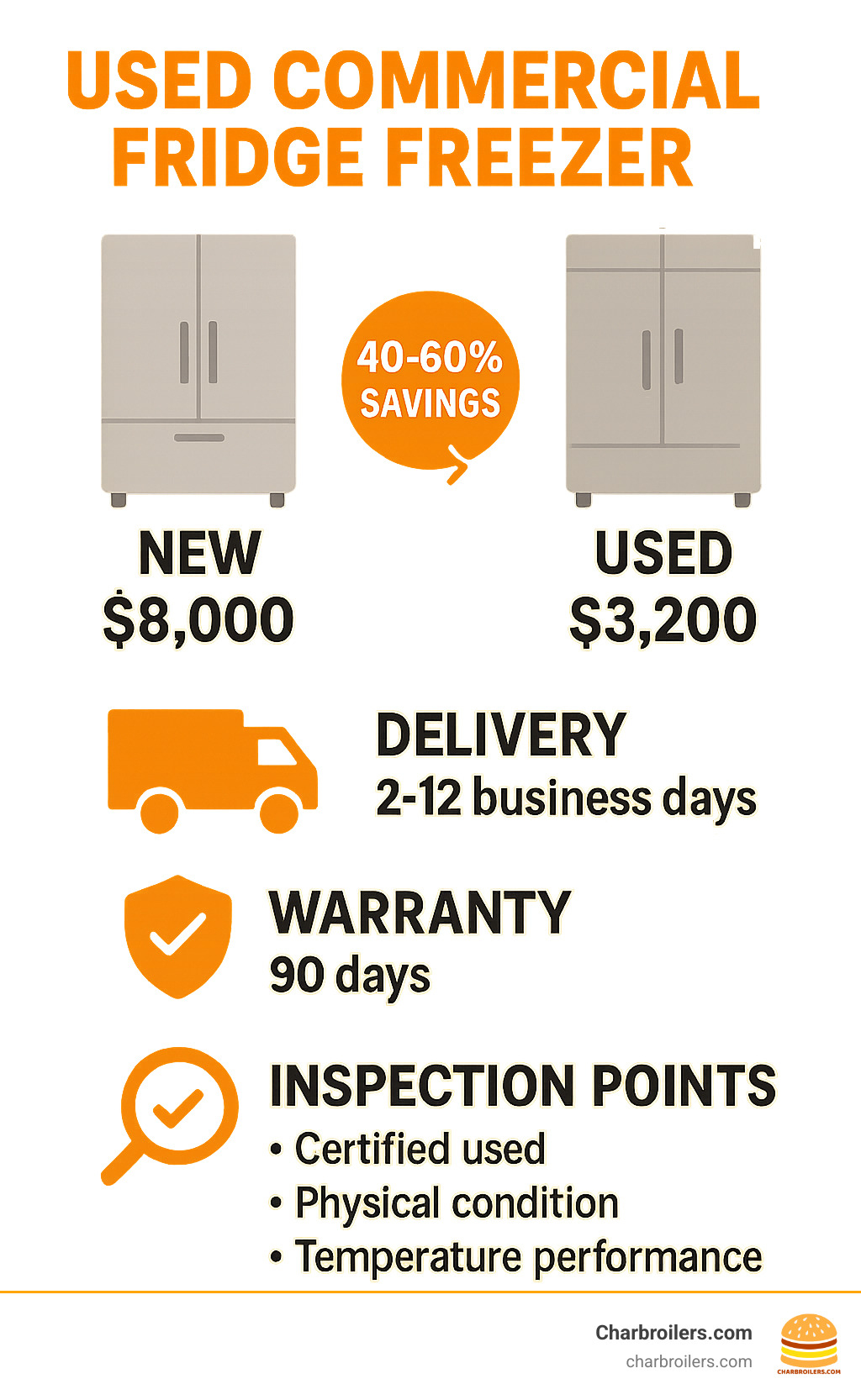
A used commercial fridge freezer can save your restaurant thousands of dollars while delivering the same reliable performance as new equipment. Here's what you need to know:
Key Benefits:
- Cost savings: Up to 50% less than new equipment
- Quick delivery: Available within 2-12 business days
- Premium brands: Access to leading manufacturers at discounted prices
- Warranty protection: 90-day parts-and-labor coverage on certified used units
What to Look For:
- Certified used equipment (cleaned, tested, and serviced)
- Physical condition (door seals, compressor, interior cleanliness)
- Temperature performance (should reach proper cooling temperatures)
- Service history and age of the unit
The restaurant equipment industry has seen a surge in quality used equipment availability. As one dealer notes, their "used restaurant equipment has been stripped, cleaned, tested, and serviced; it's the next best thing to new." This means you can get commercial-grade refrigeration without the hefty price tag of buying new.
Smart buying starts with understanding your options. You'll find everything from reach-in coolers to walk-in freezers, with popular brands like True, Delfield, and Beverage Air readily available in the used market. The key is knowing how to inspect the equipment and where to buy from reputable sellers.
I'm Sean Kearney from Charbroilers.com, and I've spent over a decade helping restaurants find the right equipment at fair prices, including guiding countless business owners through their used commercial fridge freezer purchases. My experience in the restaurant equipment industry has shown me that buying used can be one of the smartest investments a restaurant owner makes - when done right.
Used commercial fridge freezer terms explained:
- nsf ansi standard 7 commercial refrigerators and freezers
- commercial upright frost free freezer
- small commercial freezer
The Financial Advantage: Key Benefits and Potential Risks
When setting up a commercial kitchen, equipment costs can quickly pile up. A used commercial fridge freezer can be a smart business decision, helping you optimize your startup capital or expansion funds.
The Benefits of Buying Used
Significantly lower prices are the main draw. You can save up to 50% compared to new equipment, meaning a premium True or Delfield used commercial fridge freezer might be available for half the original price.
This budget maximization frees up funds for other needs, like an extra prep table or higher-quality ingredients. It's a financial head start in a tight-margin industry.
Buying used often provides access to leading brands that might otherwise be out of reach. Established restaurants regularly upgrade equipment, making their well-maintained units available.
Quick availability and faster delivery can be a lifesaver. While new equipment can take weeks to arrive, used units are often delivered within 2-12 business days, preventing costly downtime.
Choosing used equipment is also an environmentally friendly choice. You give perfectly good equipment a second life, reducing manufacturing demand and waste.
For a deeper dive into how all your refrigeration fits together in your kitchen setup, our guide on Commercial Refrigeration Equipment Explained: No Sweat breaks it down beautifully.
Potential Drawbacks and How to Avoid Them
Buying used isn't without risks, but most are avoidable with the right approach.
No warranty protection is a major concern with private sellers. If the unit fails, you're on your own. Reputable dealers solve this by offering 90-day parts-and-labor warranties on certified used equipment.
Unknown history can be daunting. Was the unit maintained properly? This uncertainty is reduced when buying from established dealers who source equipment from trusted businesses.
Higher energy consumption is worth considering with older units. An energy-hungry freezer can increase electric bills. It's smart to ask about energy efficiency and look for ENERGY STAR certified products when possible.
Cosmetic damage is common with used equipment. A few dents and scratches are normal and usually don't affect performance, especially for back-of-house units.
Your best mitigation strategies are simple: choose units checked by certified technicians and stick with reputable sellers. Always ask for service history records, as a well-maintained older unit can outperform a neglected newer one.
The bottom line is that buying used can be one of the smartest financial moves you makewhen you do it right.
Your 7-Point Inspection Checklist for a Used Commercial Fridge Freezer
Once you've found a promising used commercial fridge freezer, it's time for a thorough inspection to reveal its true condition.
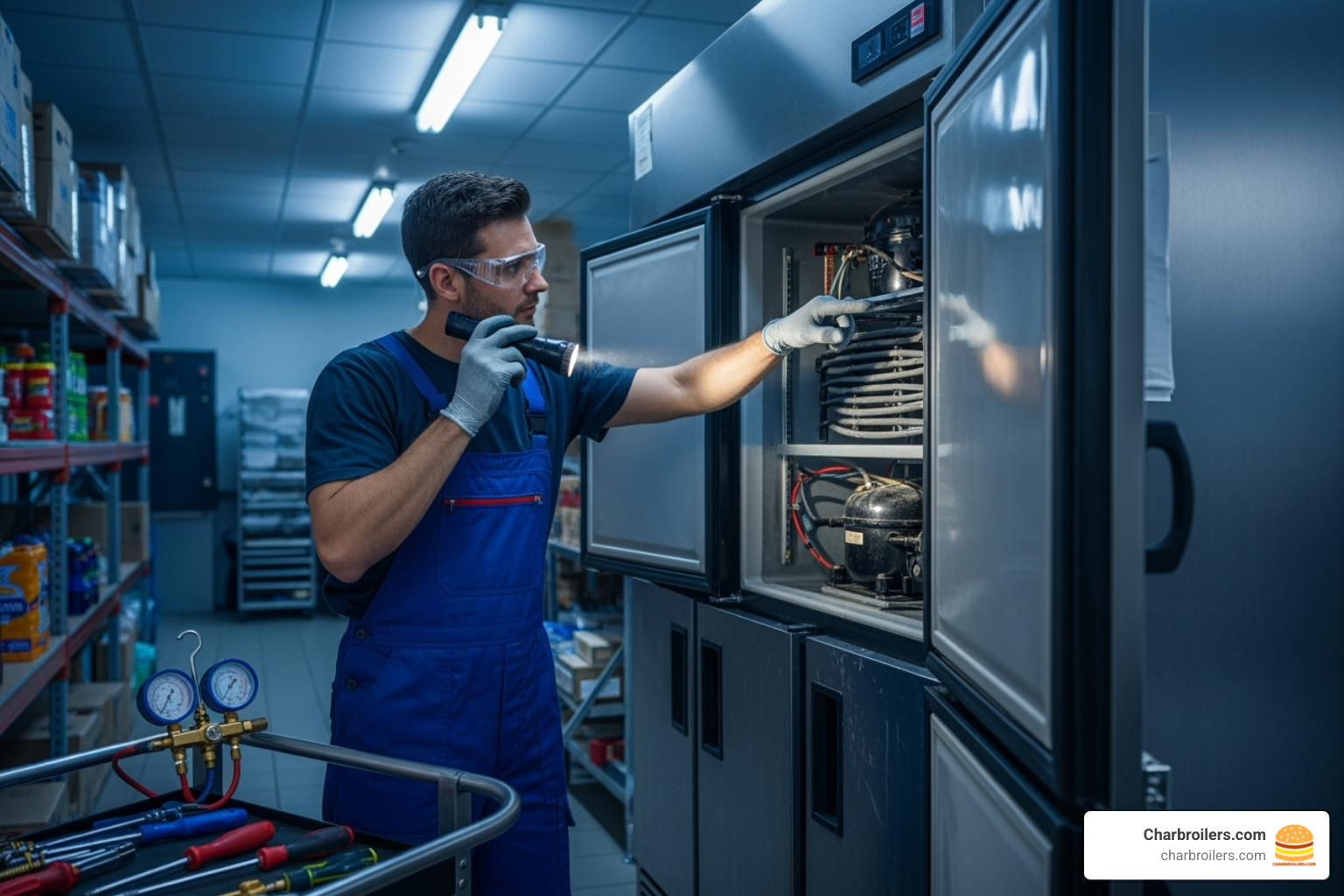
Before you begin, gather your essential inspection tools: a flashlight, a reliable thermometer, and a small mirror for hard-to-see spots.
1. Assess the Physical Condition
- Dents and Scratches: Assess if dents and scratches are merely cosmetic or indicate structural damage. Minor dings are usually fine, but large gashes near the compressor housing are a red flag.
- Door Seals and Gaskets: These are critical for energy efficiency. Check for cracks, tears, or hardening. A weak seal lets cold air escape, forcing the unit to work harder. Use the paper test: if a piece of paper closed in the door pulls out easily, the seal is weak.
- Hinge Integrity: Open and close the doors. They should swing smoothly and self-close properly. Wobbly or stiff hinges can indicate heavy use and lead to poor seals.
- Interior Cleanliness: A unit that has been "pressure washed inside and out" is a good sign. Look for mold, mildew, or odors, which can indicate poor maintenance.
- Adjustable Shelves: Ensure all shelves are present, sturdy, and easy to adjust. Missing shelves limit storage and can be a hassle to replace.
- Rust or Corrosion: Inspect the interior and exterior, especially around the base and back. Rust indicates moisture exposure and can compromise structural integrity and hygiene.
2. Verify Technical Specifications
- Dimensions: Precisely measure the unit's exterior (width, depth, height). Compare these to your available space, including doorframes and hallways for delivery.
- Capacity (Cu. Ft.): Confirm the interior capacity is adequate for your storage needs.
- Voltage and Amperage: Verify the unit's electrical requirements (e.g., 115V, 208-230V) are compatible with your kitchen's outlets to avoid overloading circuits.
- Refrigerant Type: Knowing the refrigerant type (e.g., R134a, R290) is helpful. Some older refrigerants are being phased out, which could impact future repair costs.
- NSF Certification: Look for an NSF sticker, which indicates the unit meets public health and safety standards required by many health departments. For more on this, consult our guide on Cool Compliance: Your Guide to NSF/ANSI Standard 7 for Refrigerators and Freezers.
3. Test the Compressor and Cooling System
The cooling system is the heart of the unit. A fridge that doesn't cool is just an expensive cabinet.
- Listen to the Compressor: When running, the compressor should hum steadily, not make loud grinding or clanking noises.
- Check for Excessive Noise or Vibration: Loud noises or excessive vibration could indicate a failing compressor, loose parts, or fan motor issues.
- Temperature Test: Place a thermometer inside and let it run for a few hours. A refrigerator should hold 35-40°F (1.7-4.4°C). A freezer should reach 0°F (-18°C) or lower.
- Cooling Time: Note how long the unit takes to reach its target temperature. An excessively long time may indicate an inefficient compressor or a refrigerant leak.
- Defrost Cycle Functionality: For frost-free units, ensure the defrost cycle works correctly to prevent ice buildup. If you have issues, our article on Fixing Common Issues with Imperial Frost Free Commercial Freezers may help.
4. Check the Unit's Age and History
A unit's past can help predict its future performance.
- Serial Number Lookup: Use the serial number to look up the unit's age with the manufacturer for an accurate estimate.
- Previous Owner Information: Reputable dealers often source "ex-rental equipment that has been sourced from businesses we know and trust." Knowing its previous environment (e.g., high-volume restaurant vs. low-use kitchen) provides clues about wear and tear.
- Service Records: Always ask for service records. A documented maintenance history is a safer bet than an unknown past.
- Signs of Heavy Use: Visual cues like worn door handles or heavily scratched interiors suggest a lot of action. This isn't a deal-breaker but warrants more questions.
Common Types, Brands, and Expected Performance
The used commercial fridge freezer market offers a wide variety, but knowing what you're looking at is key. Understanding the available equipment helps you make the smartest choice for your needs.
Buying used lets you afford the ideal refrigeration for your workflow, rather than settling for what a new-equipment budget allows. For a comprehensive comparison, our Detailed Guide to Comparing Commercial Refrigerators breaks down everything you need to know.
Popular Types of Used Commercial Refrigeration
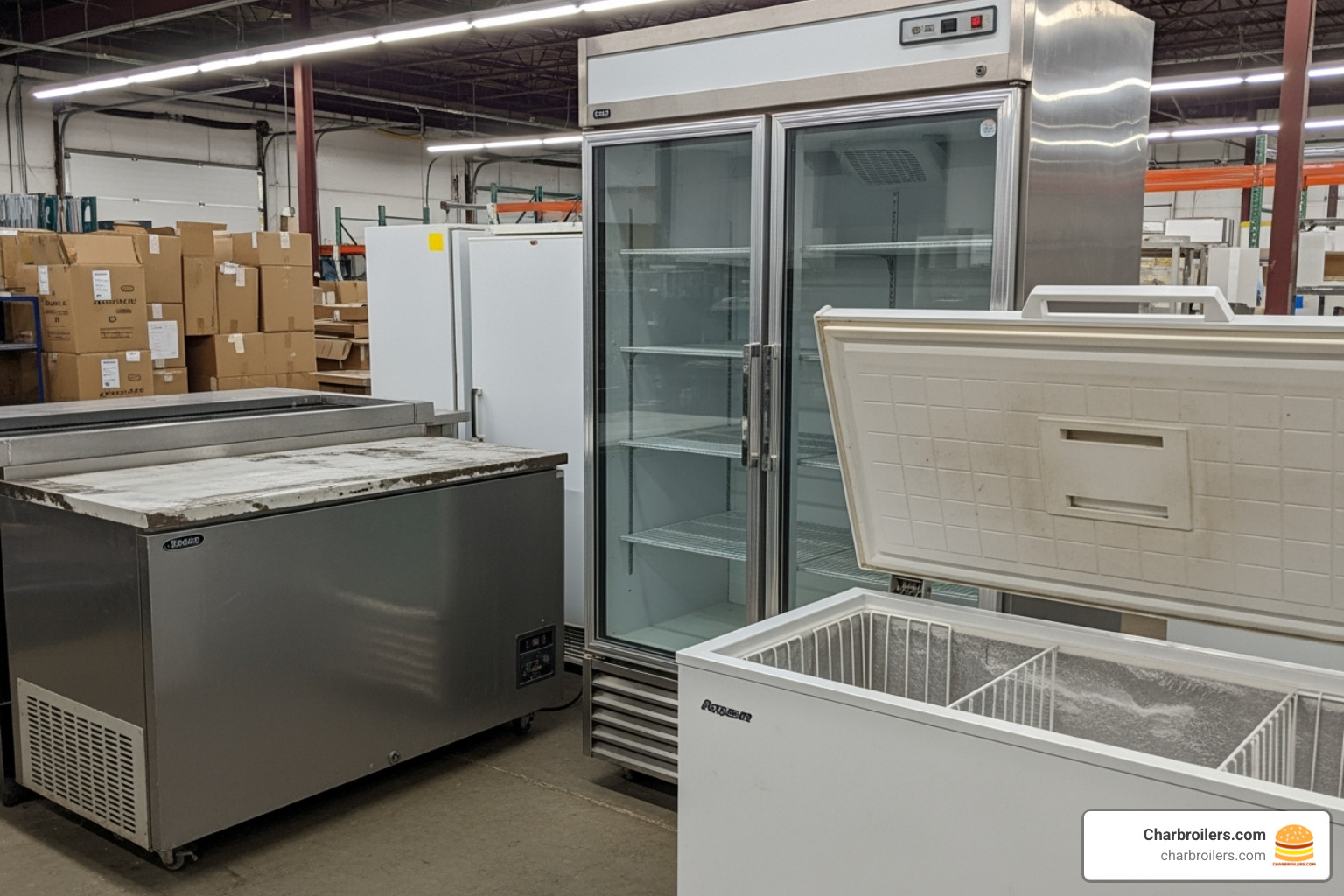
Here are the most common types you'll find in the used market:
Reach-in refrigerators and freezers are kitchen workhorses. These tall, cabinet-style units offer commercial-grade performance and come in single, double, or triple-door configurations with solid or glass doors. Our Twice As Nice: Commercial 2-Door Cooler Buying Guide dives deep into these models.
Walk-in coolers and freezers are heavy-duty solutions for high-volume operations. These room-sized units offer maximum storage capacity, and the used market often has excellent panels and refrigeration systems. Learn more in Keeping It Cool: Your Essential Guide to Restaurant Walk-In Fridges.
Chest freezers offer simple, reliable bulk storage. These top-loading units are energy-efficient and maintain consistent temperatures. For sizing guidance, see The Ultimate Guide to Commercial Cool Chest Freezers: 3, 5, 4, and 7 Cu. Ft. Models.
Undercounter units solve space challenges by fitting neatly beneath countertops. They are perfect for prep stations, bars, or smaller kitchens. Find options in Space Savers: Best Under Cabinet Freezers for Small Kitchens.
Prep tables combine a refrigerated base with a stainless steel workspace, often with cutouts for food pans. They are ideal for sandwich, pizza, or salad stations.
Display merchandisers use glass doors and interior lighting to showcase products like beverages, desserts, and grab-and-go items to customers.
In the used market, you'll find trusted brands like True, Delfield, Hussmann, Beverage Air, Habco, Omcan, and Kelvinator, all known for reliable performance.
What is the typical lifespan of a used commercial fridge freezer?
A key question is: How long will this used commercial fridge freezer last?
Longevity depends on several factors. Original build quality is foundational, as premium brands are engineered for longer commercial use. Maintenance history is equally crucial; a regularly serviced unit will significantly outlast a neglected one. Other factors include usage intensity and environmental conditions like a hot kitchen, which forces the compressor to work harder.
For certified used equipment, refurbishment quality gives the unit a second lease on life. Units that are "stripped, cleaned, tested, and serviced" can perform like new for years.
Brand-new commercial refrigeration typically lasts 10 to 15 years with good maintenance. For a quality used commercial fridge freezer, especially a certified unit, you can realistically expect another 5 to 10 years of dependable performance.
Well-refurbished used units should perform as "the next best thing to new." However, even well-maintained units eventually show age through increased noise, longer cooling cycles, or temperature fluctuations. These signs suggest you should start planning for a future replacement. The key is to buy smart from the start by choosing quality brands and reputable sellers.
Decoding the Deal: Warranty, Buying Options, and Where to Look
Once you've decided on a used commercial fridge freezer, it's time to find the right deal with solid protection. Understanding the different categories, warranties, and sellers can save you money and headaches.
Understanding 'Certified Used' vs. 'Scratch-and-Dent'
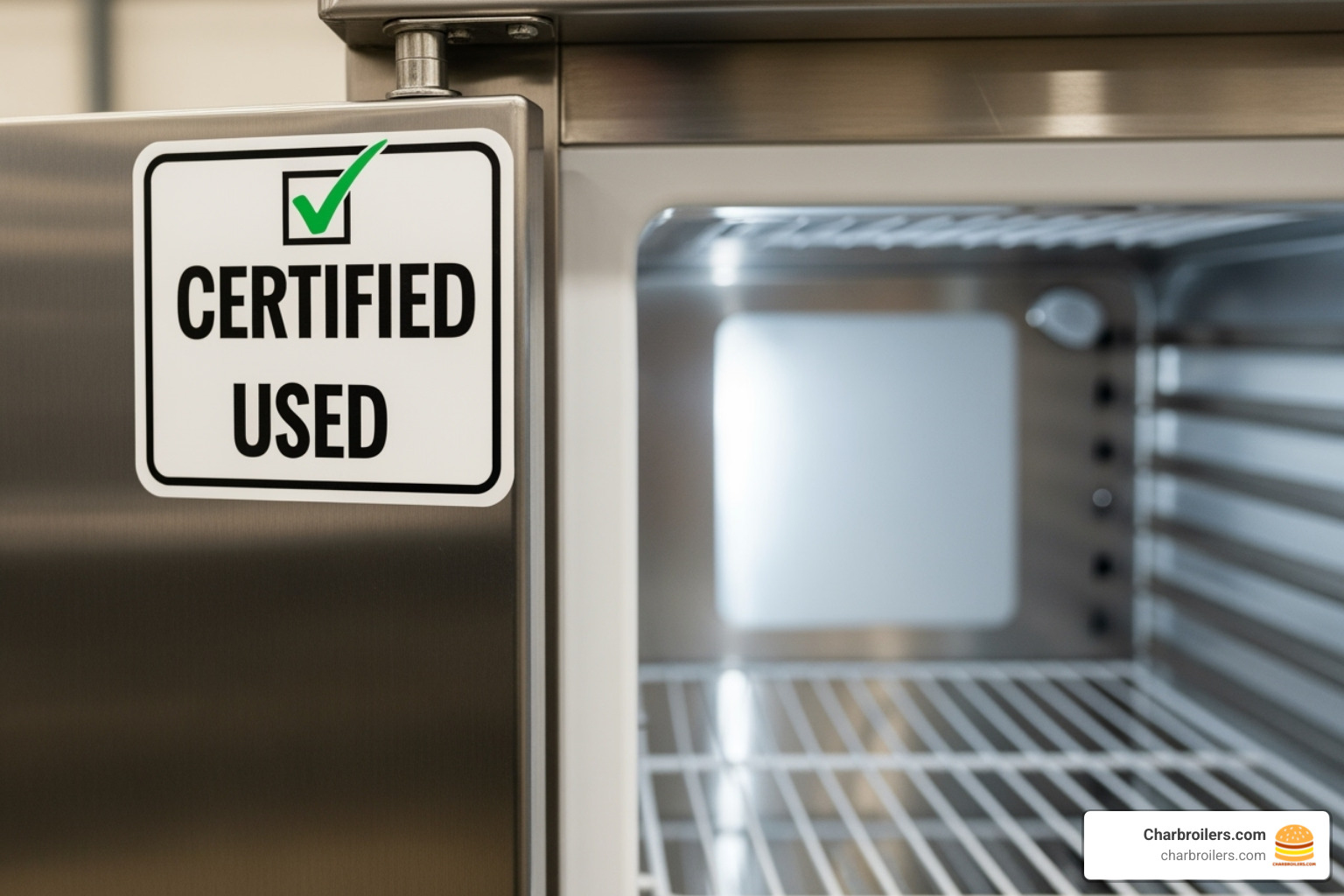
Not all used units are equal. Certified Used is the premium option, consisting mostly of ex-rental equipment that has been sourced from businesses we know and trust. These units have been stripped, cleaned, tested, and serviced by qualified technicians, bringing them back to near-new operational standards. You get reliable performance without the new equipment price tag.
Scratch-and-Dent units are typically new or lightly used pieces with cosmetic damage, like dings from shipping or use as a floor model. While this unit does have some dents and scratches, its functional integrity is intact. These offer incredible value for back-of-house operations where aesthetics aren't a priority.
Warranty and Service Support for a used commercial fridge freezer
The warranty can make or break your used equipment experience. For extra peace of mind, our second-hand restaurant equipment comes with a 90-day parts-and-labour warranty. This is real protection for your investment, covering you if something goes wrong in the first three months.
This warranty coverage bridges the gap between used and new equipment, offering immediate protection against unforeseen issues.
Beyond the warranty, look for sellers who offer ongoing service support options. Many dealers work with engineering partners for servicing and maintenance, giving you access to qualified technicians for the long term.
Spare parts availability is also important. Reputable dealers often stock common parts or can source them quickly. You can even buy used refrigerated spare parts to keep maintenance costs down.
Where to Find Reliable Sellers and Financing
Finding the right seller is as important as finding the right unit.
Restaurant equipment dealers are your best bet for certified used equipment. They have the expertise to properly refurbish units and the reputation to stand behind their work.
Online marketplaces and classifieds can offer great deals but require more caution. You'll likely be buying "as-is" with limited protection, so a thorough in-person inspection is crucial.
Consider the Rent-Try-Buy model. This approach lets you test equipment before purchasing through a flexible 12-month rental agreement. You make weekly payments, and if you buy, 60% of net rental payments go toward the purchase price. This is ideal if your business needs might change. Plus, rental payments are 100% tax deductible.
Many dealers also offer other financing options to help manage cash flow, so you don't have to drain your working capital.
| Purchase Type | Price Range | Warranty | Condition | Best For |
|---|---|---|---|---|
| Certified Used | 40-60% of new | 90-day parts & labor | Professionally refurbished | Businesses wanting reliability with savings |
| Scratch-and-Dent | 50-70% of new | Varies by seller | Cosmetic damage only | Back-of-house operations, budget-conscious buyers |
| Private Sale | 30-50% of new | None | As-is condition | Experienced buyers comfortable with risk |
Conclusion
Choosing a used commercial fridge freezer is a smart business decision that helps you manage your kitchen budget. You can access premium brands at up to 50% off retail while getting reliable, professional-grade equipment.
Success lies in doing your homework. With our 7-point inspection checklist, you can confidently assess everything from door seals and compressor performance to service history. Cosmetic scratches don't affect functionality, but a failing compressor will.
Due diligence pays dividends. Understanding the difference between Certified Used and Scratch-and-Dent options, combined with a 90-day parts-and-labor warranty from a reputable dealer, gives you protection and peace of mind.
Flexible financing, like the Rent-Try-Buy model, makes the decision even smarter by preserving cash flow.
Long-term value comes from choosing wisely. A well-maintained used commercial fridge freezer from a trusted brand can serve your kitchen reliably for 5-10 years or more. This means consistent performance and proper food storage temperatures.
At Charbroilers.com, we've seen many restaurant owners make this smart choice. The savings on refrigeration can be invested in other essential equipment, like a commercial charbroiler or griddle, to build a complete kitchen within your budget.
Ready to explore your options? Check out our comprehensive guide: Keep Your Cool With These Commercial Refrigerators For Sale.