

Ice Cream Display Freezers: Choosing the Perfect Model for Your Business
Why the Right Ice Cream Display Freezer Makes or Breaks Your Dessert Sales
An ice cream display freezer is a commercial unit designed to store frozen desserts at optimal serving temperatures while showcasing them to customers. Choosing the right one is crucial for sales and service efficiency.
Quick Selection Guide:
- Dipping Cabinets - Best for parlors serving hand-scooped ice cream.
- Glass Top Chest Freezers - Ideal for self-service of pre-packaged novelties.
- Upright Display Freezers - Perfect for retail with limited floor space.
Key Buying Factors:
- Type - Match the freezer to your service style (scooping vs. grab-and-go).
- Size - Base capacity on flavor count and sales volume.
- Temperature - Look for a range of -26°C to -13°C (-14.8°F to 8.6°F).
- Certifications - Ensure NSF or ETL approval for food safety.
- Features - Consider LED lighting, sliding glass doors, and locking casters.
A standard freezer keeps ice cream rock-hard, making it impossible to scoop. A commercial ice cream display freezer maintains a temperature that keeps desserts firm for quality but soft enough for immediate serving. This ensures faster service and happier customers.
These units also drive impulse sales. When customers see colorful gelato or their favorite ice cream bars in a well-lit freezer, they are more likely to buy. For ice cream parlors, cafes, and convenience stores, presentation directly impacts profit.
The challenge is finding a unit that fits your space, budget, and business model. Each configuration serves different needs, and choosing the wrong one leads to wasted money and frustrated staff.
As Sean Kearney from Charbroilers.com, with over a decade in restaurant equipment, I've guided many businesses to their ideal ice cream display freezer. This guide covers everything you need to know to make the right choice.
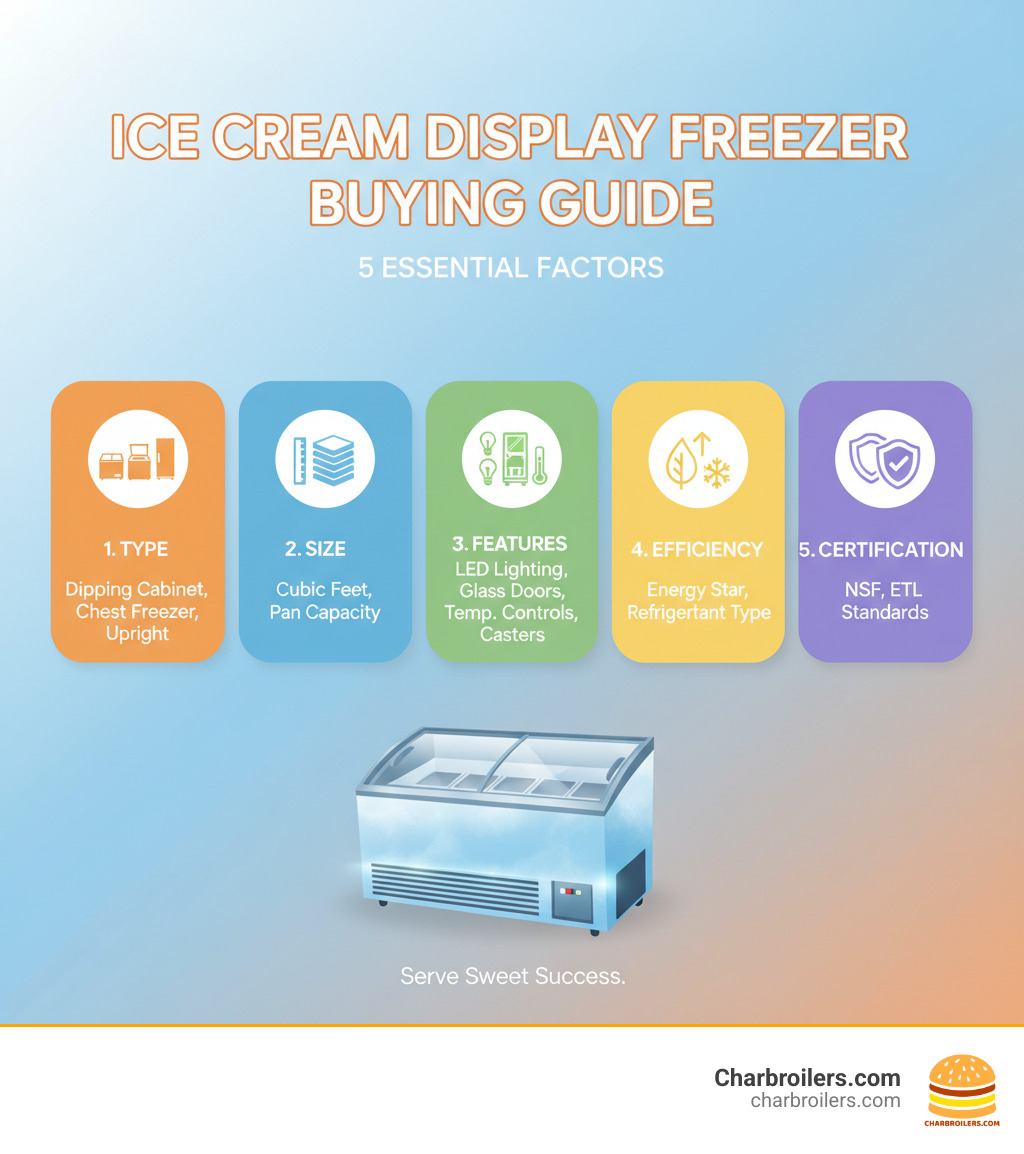
Ice cream display freezer terms at a glance:
Types of Commercial Ice Cream Display Freezers
Your choice of freezer style shapes how your business runs. The right ice cream display freezer streamlines service, while the wrong one creates bottlenecks. Consider how customers interact with your product: Are they watching you scoop, grabbing a pre-packaged treat, or browsing through glass doors?
Each freezer type excels in specific situations. A dipping cabinet is perfect for a parlor but wrong for a convenience store. A chest freezer works for self-service but causes issues in a full-service restaurant. Getting this right saves money, space, and headaches. For a broader look at display refrigeration, see our commercial glass door fridge roundup.
Dipping Cabinets & Gelato Cases
Walk into any ice cream parlor and you'll see a dipping cabinet. These units are built for hand-scooping, keeping desserts at a temperature that's firm enough to hold shape but soft enough to scoop easily.
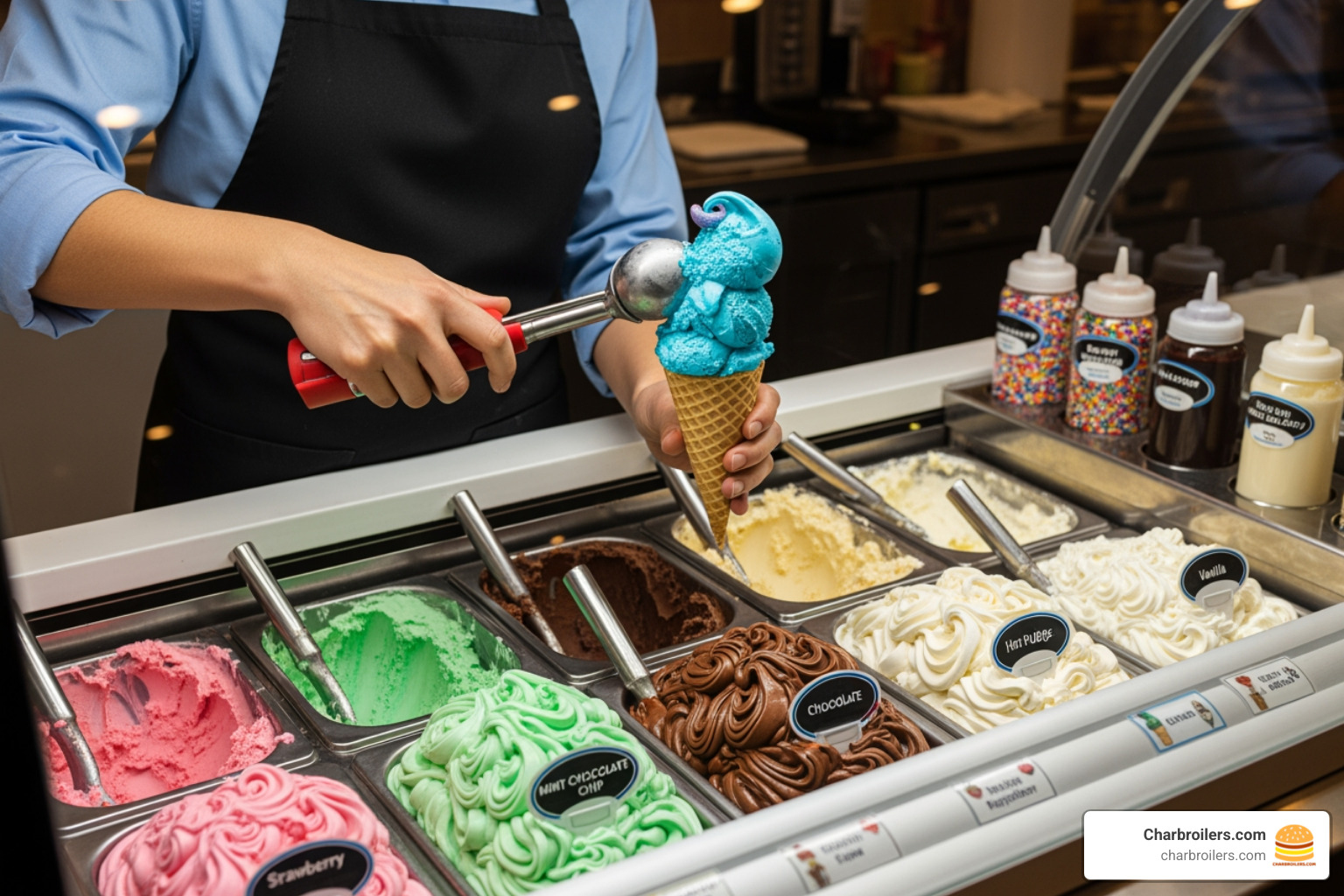
Pan capacity dictates how many flavors you can offer. Small units may hold four 3-gallon tubs, great for a cafe, while large cabinets can hold twelve or more for established shops. Sneeze guards are essential for food safety, providing a transparent barrier. Both curved glass, which is visually inviting, and flat glass, which offers an unobstructed view, effectively showcase your products.
Many dipping cabinets include back-of-house storage underneath the display. This hidden compartment keeps backup tubs nearby, preventing trips to a walk-in freezer during a rush. These cabinets are ideal for any setting where staff serve customers directly, such as parlors, restaurants, and concession stands. For more on creating eye-catching service areas, our guide on display counter fridges has similar tips.
Glass Top Chest Freezers
The glass top chest freezer is the workhorse of self-service. Found in convenience stores and grocery aisles, these horizontal units let customers slide open the glass doors and grab what they want. They are simple, efficient, and perfect for pre-packaged items.
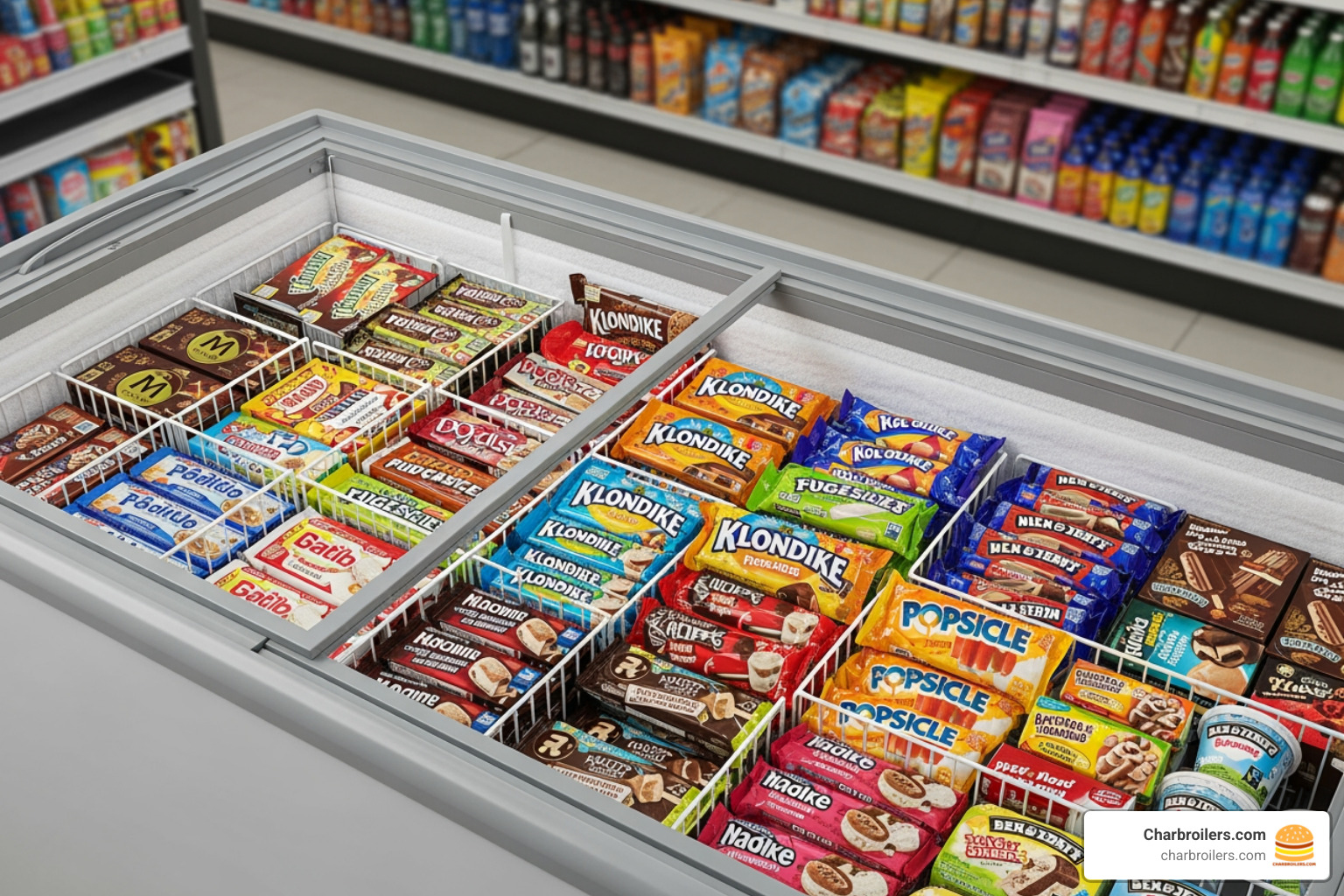
The sliding glass doors allow easy access from either side. Many models include locking mechanisms to secure inventory overnight. Locking casters offer flexibility, allowing you to move the unit for cleaning or rearranging your store layout.
Inside, wire baskets keep products organized. A compact 5.4 cu. ft. model might have two baskets, while larger 16.3 cu. ft. models can have five, providing ample room for dozens of different products. These freezers excel in high-traffic areas where customers want to browse and grab items quickly. For more on chest freezer options, see our roundup of stainless steel commercial chest freezers.
Upright Display Freezers
When floor space is tight but your product selection is large, upright display freezers are the solution. These vertical glass door merchandisers offer impressive capacity in a slim footprint, displaying products at eye level.
The vertical design is their key advantage. They build upward, often reaching six feet tall while taking up less than three feet of floor space, making them ideal for narrow aisles or small shops.
Adjustable shelving lets you configure the interior for different products, from pint containers to novelty bars. The large glass doors and internal LED lighting provide an unobstructed, well-lit view of everything inside.
These freezers are perfect for packaged goods in retail environments. The combination of space efficiency and merchandising power makes them popular in convenience stores, cafes, and restaurants with limited floor space. To learn more about vertical freezers, our guide on commercial upright freezers digs deeper.
Must-Have Features and Specifications
When investing in a commercial ice cream display freezer, the right features can transform your operation. They make service smoother, products more appealing, and your staff's work easier. The details matter. For a comprehensive comparison, our detailed guide to comparing commercial refrigerators offers valuable context.
Key Features for Your Ice Cream Display Freezer
Think of these features as upgrades that make the entire experience better for you and your customers.
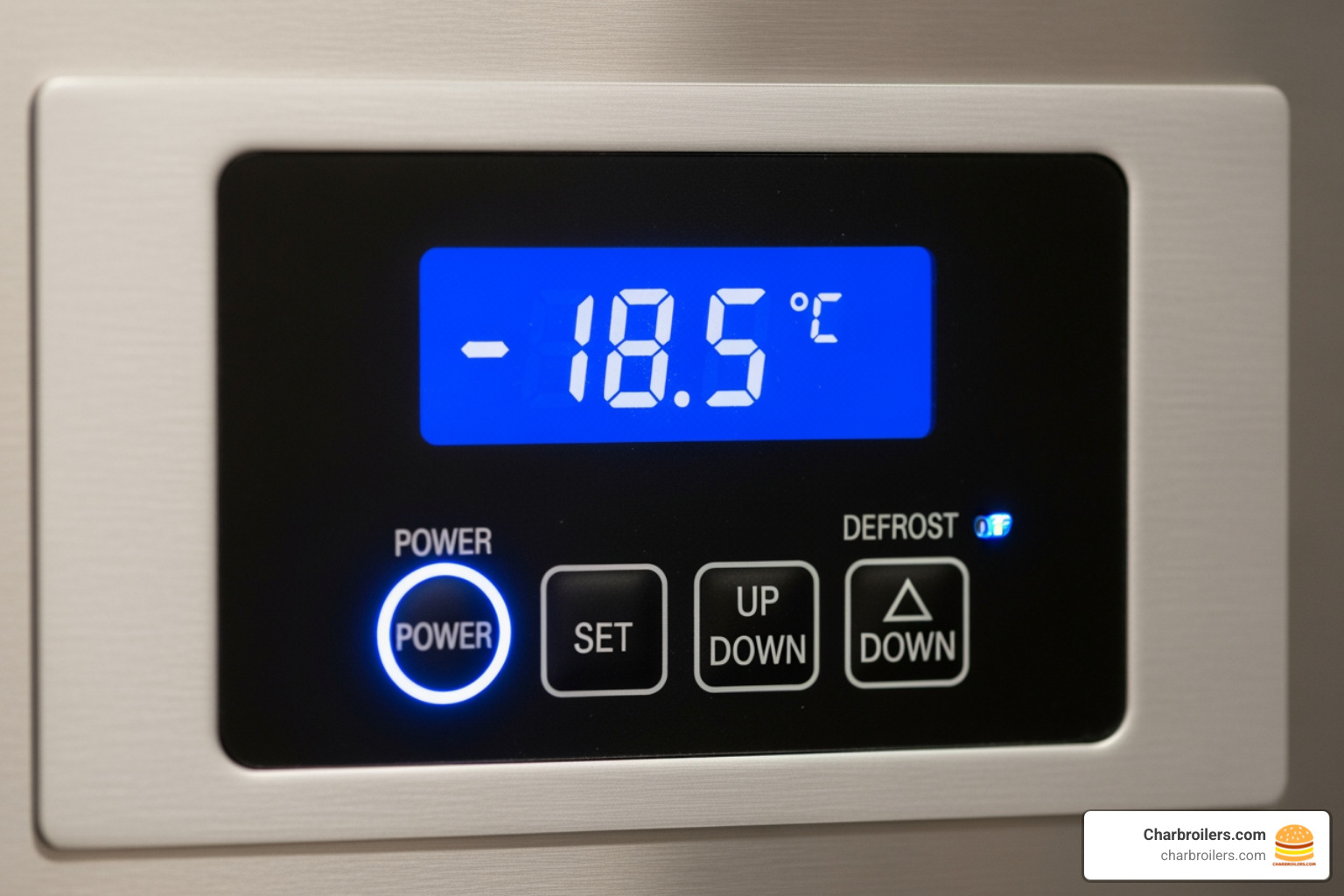
Temperature range and control is the top priority. Your freezer must maintain -26°C to -13°C (-14.8°F to 8.6°F). This range keeps ice cream firm but scoopable. Precise thermostats also improve energy efficiency.
LED lighting acts as a silent salesperson, making colorful ice cream look irresistible and triggering impulse buys. Modern units use energy-efficient LED strips to showcase products.
The defrost type affects your workload. Manual defrost units require you to periodically shut them down to melt ice, but they often maintain steadier temperatures. Automatic frost-free systems save labor but can cause minor temperature fluctuations.
Locking doors provide security for your inventory, which is crucial in self-service settings or after hours.
Mobility casters are essential for cleaning and rearranging. Locking casters let you roll the unit easily and then secure it firmly in place.
Sizing and Capacity
Getting the size right is critical. Too small, and you're constantly restocking. Too large, and you're wasting energy and space.
Start by counting the number of flavors you'll offer. A small café might only need four pans, while a dedicated parlor may need twelve or more. Also, consider your sales volume. A four-pan freezer can serve about 100 guests, which is fine for a restaurant, but a high-traffic shop needs a much larger capacity.
Storage space is measured in cubic feet (cu. ft.) and pan capacity. Units range from compact 5.4 cu. ft. models to large 20 cu. ft. units. Consider both display and backup storage. Some dipping cabinets have lower compartments for extra pans.
Don't forget the footprint. Measure your floor space, but also account for clearance for doors, staff movement, and proper ventilation around the unit.
For smaller operations, exploring small commercial freezers can reveal space-efficient options.
Certifications and Energy Efficiency
Certifications protect you from failing health inspections and high utility bills. NSF certification, from an organization like NSF International, verifies that the unit meets public health standards for materials and cleanability. ETL certification confirms it meets North American electrical safety standards. Always choose units with NSF or ETL certification to meet health department requirements. Our guide on NSF/ANSI Standard 7 for refrigerators and freezers explains these standards thoroughly.
Energy efficiency directly impacts your operating costs. Look for units with modern refrigerants like R290 and quality insulation. Features like multi-stage temperature adjustment and robust construction also contribute to efficiency. An energy-efficient model may cost more upfront but will save you money on utility bills over its lifespan.
Maintenance, Troubleshooting, and Longevity
Your ice cream display freezer is a serious investment. Proper maintenance protects it, ensures food safety, maximizes its lifespan, and helps you avoid expensive emergency repairs. The good news is that most maintenance is straightforward. For broader repair insights, our ultimate checklist for commercial refrigerator repair services is a useful resource.
Maintaining Your Ice Cream Display Freezer
Regular cleaning and checks keep your equipment running efficiently and your products safe.
- Daily: Wipe down all glass and exterior surfaces. Check and log the internal temperature. Ensure doors close properly and seals are intact.
- Weekly: Clean door gaskets with warm, soapy water to prevent energy loss and frost buildup. Clear debris from the condenser coil and vents to ensure good airflow. Rotate ice cream tubs to ensure even temperature distribution and prevent ice crystals.
- Monthly: For manual defrost units, perform a full defrost. Turn off the unit, remove products, and let the ice melt naturally—never use sharp objects to chip it away. Clean the interior thoroughly before restarting. Clean the condenser coil with a brush or vacuum to remove dust and lint. Inspect electrical cords and casters.
Common Issues and Troubleshooting
Even well-maintained equipment can have issues. Knowing what to look for can help you decide between a quick fix and a professional call.
- Temperature fluctuations: Check thermostat settings, ensure you haven't blocked airflow by overloading, and inspect door seals and condenser coils. If the problem persists, it could be a refrigerant leak or faulty compressor.
- Excessive frost buildup: This often points to a faulty door gasket or too-frequent door openings. In frost-free units, it could be a malfunctioning defrost heater.
- Compressor problems: If the unit isn't cooling but the compressor runs constantly, it may be low on refrigerant. If it won't run at all, check the power supply. Unusual noises often signal mechanical problems.
- Water leakage: A clogged drain line is a common cause, especially after defrosting. It could also be a damaged drain pan or condensation from a faulty seal.
- Faulty lighting: Check the power connection to the light strip. It may be a simple bulb or wiring issue.
When to call a professional: If you suspect a refrigerant leak, compressor failure, or significant electrical problem, call a technician. Attempting complex repairs can be dangerous and may void your warranty. Our article on fixing common issues with Imperial frost-free commercial freezers offers more detailed troubleshooting scenarios.
Frequently Asked Questions about Ice Cream Display Freezers
We've helped business owners select the perfect ice cream display freezer for years and often hear the same questions. Here are answers to the most common concerns.
What are the benefits of a commercial ice cream freezer vs. a standard freezer?
Using a standard home freezer for a commercial ice cream business is inefficient. Commercial units are superior for several reasons:
- Temperature Consistency: A commercial freezer maintains the ideal range of -26°C to -13°C (-14.8°F to 8.6°F), keeping ice cream scoopable, not rock-solid like in a colder home freezer.
- Design for Scooping: Dipping cabinets are built for service, with insulated lids and organized layouts that allow quick access to flavors without warming the entire unit.
- Durability: Commercial units are built with heavy-duty materials like coated cold-rolled steel to withstand constant use, unlike home freezers which can fail quickly under commercial demands.
- Display: Features like LED lighting and tempered glass doors turn your inventory into an attractive display that drives impulse sales.
- Food Safety: Commercial units have NSF or ETL certifications, ensuring they meet public health codes, which standard freezers lack. Our guide on NSF/ANSI Standard 7 explains this in more detail.
What is the ideal temperature for an ice cream display freezer?
The ideal temperature range is -26°C to -13°C (-14.8°F to 8.6°F). This range is crucial for balancing two factors:
- Scoopability and Preservation: It keeps ice cream firm enough to prevent melting but soft enough for smooth scooping.
- Preventing Ice Crystals: Stable temperatures within this range prevent the formation of unpleasant ice crystals, preserving the creamy texture customers expect.
This optimal temperature ensures the best texture, flavor, and customer experience. Quality commercial units offer precise temperature controls to find the perfect setting for your products.
What are the typical price ranges for these freezers?
The cost of a commercial ice cream display freezer varies significantly by type, size, and features. For more context, see our guide to commercial refrigerator costs.
- Entry-Level ($800 - $1,500): This range includes small glass top chest freezers and compact countertop units (around 5.7 cu. ft.). They are suitable for small cafes or food trucks.
- Mid-Range ($1,500 - $3,000): This includes standard dipping cabinets and larger chest freezers (around 13 cu. ft.), holding four to eight pans. These are a good fit for most established businesses.
- High-End ($3,000+): Premium dipping cabinets and gelato cases can exceed $6,000. These units offer large capacities (20+ cu. ft.), advanced features, and premium designs for high-volume parlors.
Price is driven by size, brand reputation, features (digital controls, defrost systems), and certifications. Remember to consider the total cost of ownership, as an energy-efficient model can save you money on operating costs over time.
Conclusion
We've covered why a proper ice cream display freezer is essential, explored the different types, and detailed the features, sizing, and maintenance that lead to success.
Choosing the right freezer is about more than just keeping things cold. It's about creating an appealing display that drives sales, streamlining service for your staff, and protecting your investment with a reliable, efficient unit. It's about building a business that thrives.
Whether you need a dipping cabinet for an ice cream parlor, a chest freezer for a convenience store, or an upright merchandiser for a café, the perfect configuration is out there. The right equipment will pay for itself through happier customers, faster service, and lower energy bills.
At Charbroilers.com, we've spent over a decade helping businesses find equipment that works as hard as they do. We're here to help you steer the options and find the freezer that fits your needs, budget, and vision.
Ready to take the next step? Our commercial refrigeration essential buying guide offers more insights to help you make the perfect choice. Your ideal ice cream display freezer is out there, and we're here to help you find it.