
How Often Should You Clean a Commercial Griddle? The Definitive Guide
Why a Consistent Griddle Cleaning Schedule is Critical for Your Kitchen
How often should you clean a commercial griddle? The answer depends on your usage level, but here's the quick breakdown:
Daily Cleaning:
- During shifts: Scrape debris between orders to prevent buildup
- End of each shift: Clean the cooking surface thoroughly and wipe down backsplash, side splashes, and front
- Grease traps: Empty and clean daily to prevent fire hazards
Weekly Cleaning:
- Deep clean: Perform a comprehensive cleaning of the entire unit, including underneath, sides, and all surfaces
- Check gas lines (if applicable) and lubricate moving parts
Monthly Maintenance:
- Inspect and clean burners and heating elements
- Calibrate temperature controls for accuracy
- Check electrical components for wear or damage
Professional Servicing:
- Twice yearly (or at least annually) for thorough inspection and repairs
Your griddle is the workhorse of your kitchen—flipping pancakes at breakfast, searing burgers at lunch, and crisping everything in between. But without regular cleaning, that workhorse becomes a liability. Grease buildup doesn't just affect food quality and safety; it reduces heat transfer efficiency, causes flavor contamination, and can even lead to dangerous fires or costly equipment failure.
I'm Sean Kearney from Charbroilers.com, and with over a decade in the restaurant equipment industry, I've seen how often should you clean a commercial griddle directly impacts both food quality and equipment longevity. Understanding the right cleaning frequency for your specific operation isn't just about maintenance—it's about protecting your investment and your customers.
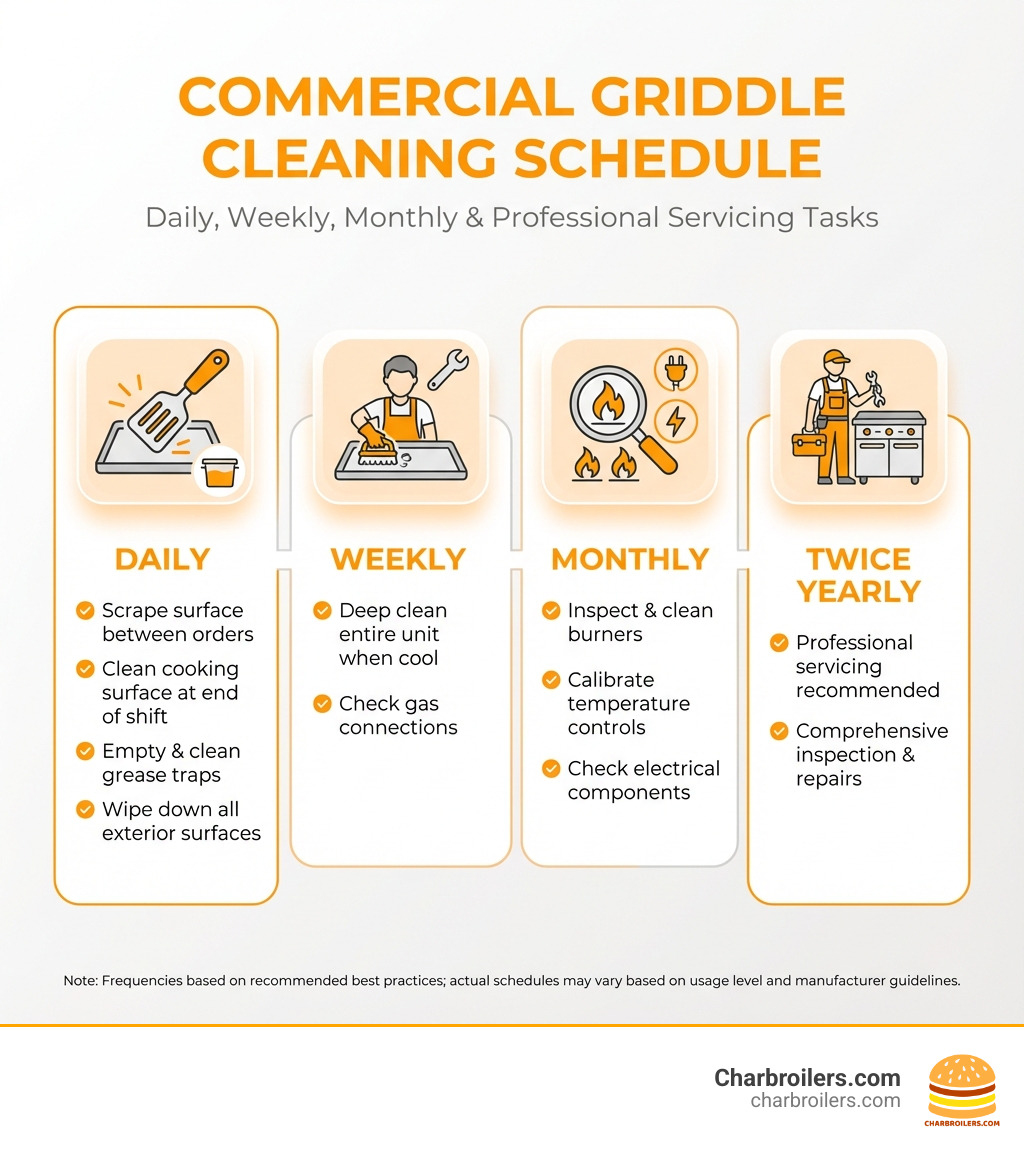
Quick look at how often should you clean a commercial griddle:
The Daily Griddle Cleaning Routine: Non-Negotiable Tasks
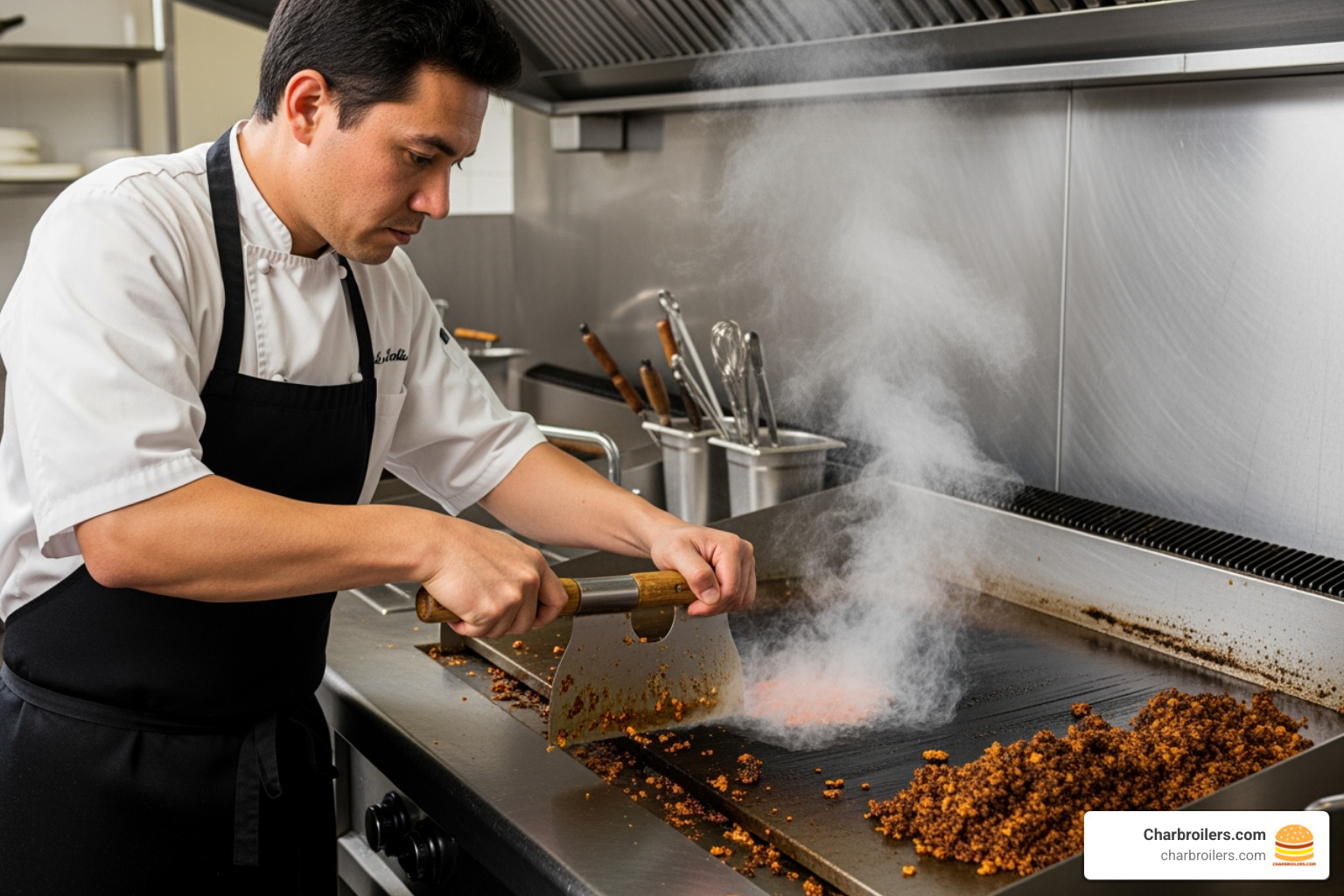
When it comes to commercial griddles, daily cleaning isn't just a recommendation—it's absolutely essential. Think of your griddle as the canvas for your culinary masterpieces; you wouldn't paint on a dirty canvas, would you? This routine ensures food safety, prevents unwanted flavor transfer, and keeps your griddle operating at peak efficiency. It's the first answer to the question, "how often should you clean a commercial griddle?"
Light Cleaning During and After Every Shift
The work of keeping your griddle pristine starts even while you're cooking. Light cleaning during and after every shift is crucial to prevent the accumulation of food debris, grease, and carbon buildup. This continuous effort makes the end-of-day deep clean significantly easier and faster.
During service, make it a habit to scrape the griddle surface continuously between uses. This means after every batch of pancakes, after every round of eggs, and certainly after every burger. This immediate scraping removes juices, fats, and food particles before they have a chance to harden and carbonize, which can lead to sticking and uneven cooking. If you don't, you might find that your dinnertime beef takes on the flavor of brunchtime chicken, and nobody wants that surprise!
At the end of each shift, beyond the cooking surface, we advise you to wipe down the front, backsplash, and the inside and outside side splashes. This daily wipe-down prevents grease from accumulating in hard-to-reach areas and minimizes the time required for weekly deep cleaning. By maintaining a "clean slate" throughout the day, you ensure consistent heat transfer and a sanitary cooking environment. For more tips on keeping your griddle sparkling, check out our guide on Griddle Glory: Simple Steps to a Spotless Surface.
How Often Should You Clean a Commercial Griddle's Grease Trap?
The grease trap, or collection tray, is the unsung hero of your griddle's cleanliness, collecting all the fats, oils, and grease (FOG) scraped from the cooking surface. But like any hero, it needs regular attention. How often should you clean a commercial griddle's grease trap? Daily, without fail.
Grease traps should be emptied and cleaned daily to prevent overflow and, more importantly, to mitigate fire hazards. An overflowing grease trap is not only unsanitary but can also spill onto floors, creating slip hazards, or worse, drip onto electrical or gas components, posing a serious fire risk.
Emptying the grease drawer whenever necessary, and ideally at the end of every day, ensures proper disposal of waste and keeps your kitchen safe and compliant with health regulations. Remove the tray, dispose of the contents safely, and then wash it thoroughly with warm water and degreasing soap, just like any other dish. This simple daily task is a critical component of overall kitchen hygiene and fire prevention. Learn more about managing FOG in your kitchen with our insights on Kitchen Grease Trap.
Weekly and Monthly Deep Cleaning: Beyond the Surface
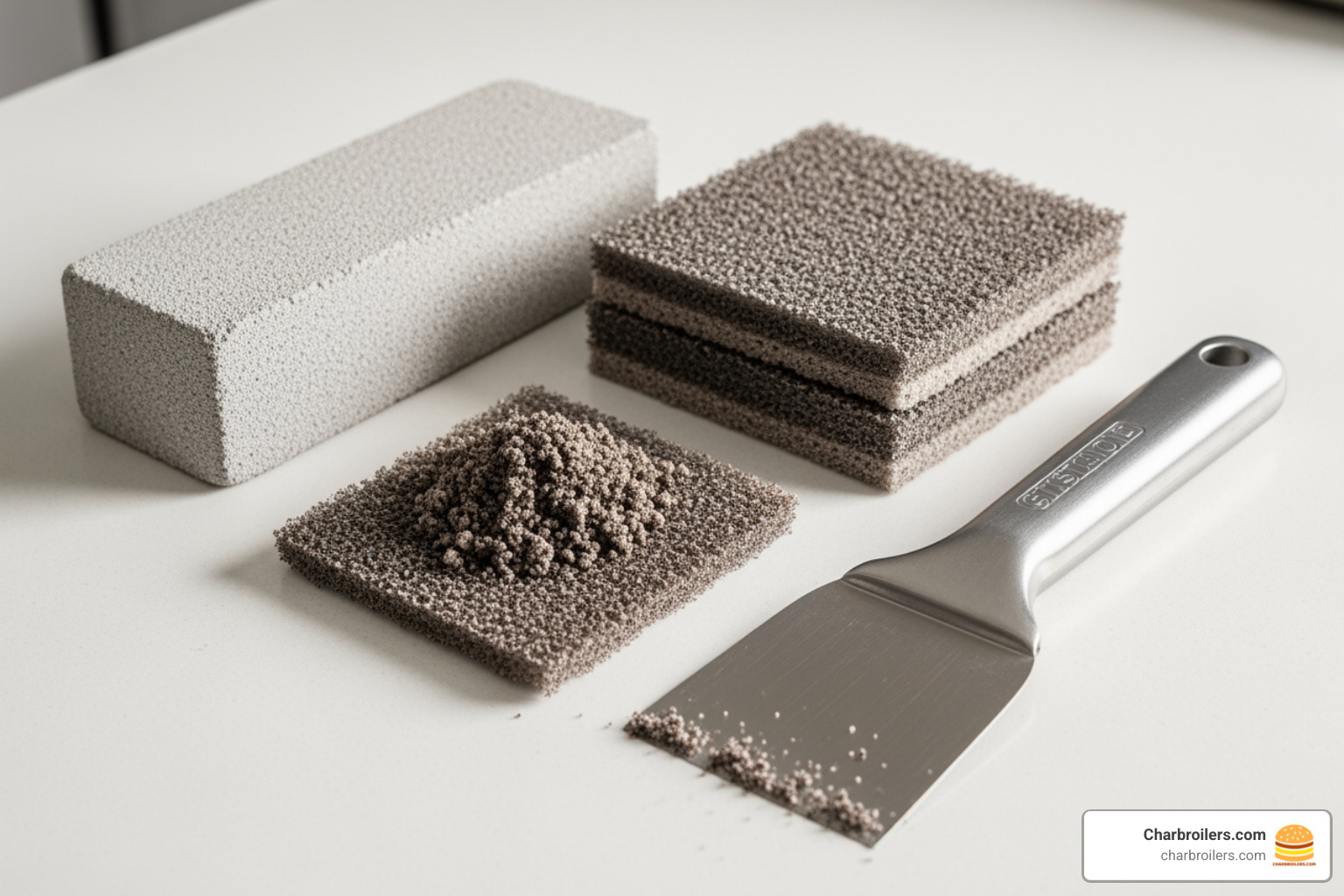
While daily cleaning keeps your griddle looking good and performing well, there are certain tasks that require a more comprehensive approach. This is where weekly and monthly deep cleaning comes into play, tackling stubborn grease, carbon buildup, and ensuring every nook and cranny of your griddle is pristine. It's the next layer in understanding how often should you clean a commercial griddle for optimal performance and longevity.
Your Weekly Deep Clean Checklist
Once a week, it's time for a thorough deep clean of your commercial griddle. This isn't just about the cooking surface; it involves a comprehensive cleaning of the entire unit, including underneath, sides, and backsplashes. This process is vital for removing any accumulated residue that daily cleaning might miss and for preventing it from becoming a baked-on, carbonized nightmare.
Here’s our recommended weekly deep clean checklist:
- Cooling the Griddle Safely: Always begin your thorough cleaning session with a griddle that is warm to the touch, but never hot. This is a critical safety step and also prevents damage to your equipment. Never use ice or ice water to cool down your griddle faster, as the rapid temperature change can cause thermal shock, leading to warping or stress cracks in the griddle surface. Use room temperature water for any necessary cooling or rinsing.
- Disconnecting Power: Before you start any deep cleaning, always disconnect the appliance from its power source (unplug it for electric griddles or turn off the gas supply for gas griddles). Safety first!
- Remove Removable Parts: Take off any removable components like drip trays, splash guards, or grates. These should be soaked in hot, soapy water while you clean the main unit.
- Initial Scraping: Scrape off any significant food residue and carbon buildup from the cooking surface using a griddle scraper.
- Applying Degreaser: For stubborn grease and carbon, apply a commercial-grade griddle cleaning solution or degreaser. Follow the manufacturer's directions carefully. Some solutions are heat-activated and applied to a warm surface, while others work best on a cool griddle.
- Scrubbing Surfaces: Use a grill brick or heavy-duty scouring pad to scrub the griddle surface thoroughly. Work in small, concentric circles or in the direction of the grain for steel griddles. Don't forget to scrub the sides, front, and any other external surfaces of the griddle unit.
- Rinsing Thoroughly: Rinse the griddle surface and all cleaned parts thoroughly with water to remove all cleaning chemical residue. Use a clean, damp cloth or a squeegee to ensure all residue is flushed into the grease trough.
- Drying and Reassembly: Wipe everything dry and allow all components to air dry completely before reassembling.
This weekly deep clean tackles stubborn buildup and extends the life of your equipment. For detailed instructions on cleaning specific materials, our Ultimate Guide to Cleaning a Commercial Stainless Steel Griddle offers even more insights.
Monthly Maintenance: Burners, Controls, and Inspections
Beyond the weekly deep clean, a monthly routine focuses on the inner workings and calibration of your griddle. This helps maintain consistent performance and catches potential issues before they become major problems.
- Inspecting and Cleaning Burners (Gas Griddles): For gas griddles, monthly inspection and cleaning of burners are essential. Remove the burners, clean ports and grates with a wire brush, and check for any damage or obstructions. Clogged burners or gas lines can lead to uneven flame or heat output, affecting cooking quality.
- Calibrating Temperature Controls: Over time, temperature controls can become inaccurate. Monthly calibration ensures that your griddle is heating to the correct temperature, preventing uneven cooking and wasted energy. Refer to your griddle's operations manual for specific calibration instructions.
- Checking Electrical Components (Electric Griddles): For electric griddles, inspect electrical components for any signs of wear, fraying, or damage. Faulty electrical components can pose safety risks and lead to inconsistent heating.
- Visual Inspections: Take a moment to visually inspect the entire unit for any stress cracks, loose connections, or unusual wear and tear. Early detection can prevent more costly repairs down the line.
These monthly tasks are proactive steps that contribute significantly to the longevity and efficiency of your commercial griddle.
How Often Should You Clean a Commercial Griddle Based on Key Factors?
The general guidelines for how often should you clean a commercial griddle are a great starting point, but the specific needs of your kitchen might require adjustments. Factors such as the griddle's surface type, the volume of use, and the kinds of food you cook all play a significant role in determining your ideal cleaning frequency and methods.
| Factor | Steel Griddle ](https://charbroilers.com/blogs/chabroilers/top-professional-griddles-a-buyers-guide-to-commercial-excellence)
Adjusting Frequency for Griddle Surface Type
Not all griddles are created equal, and neither are their cleaning needs. The material of your griddle's cooking surface significantly influences the tools and methods you should use, and sometimes, even the frequency.
- Steel Griddles: These are the most common and robust, favored in busy kitchens due to their economy and durability. For steel griddles, you can typically use more aggressive cleaning tools like griddle bricks and specialized scrapers. After cooling to 300°F-350°F, apply room temperature water, scrape debris, and for tough grime, use a griddle brick. Seasoning with oil after cleaning is crucial to prevent rust and maintain a non-stick surface.
- Chrome Griddles: Chrome plates are known for their aesthetic appeal, making them popular in open kitchens. They also emit less heat into the kitchen, which is a bonus for comfort. However, chrome surfaces are more delicate than steel and require a gentler touch. Avoid abrasive cleaners and tools. After cooling to 300°F-350°F, use a special razor scraper for debris, then apply room temperature water and scrub with a Palmetto brush. Finish with a non-abrasive, food-safe polish and wipe with a clean, damp cloth to ensure all polish is removed, followed by a light coat of oil.
- Composite Griddles: These high-tech griddles offer faster recovery times and higher heat transfer rates, leading to energy savings and improved cooking uniformity. Cleaning a composite griddle also requires care. After cooling to 300°F-350°F, scrape debris with a standard griddle scraper. Mix room temperature water with a mild detergent and coat the surface, then scrub with a non-abrasive scrubby pad. Flush with room temperature water and squeegee clean.
Understanding these material-specific nuances is key to effective cleaning and extending the life of your griddle. For those with Heavy Metal Heroes: Choosing Your Commercial Cast Iron Griddle, the seasoning process becomes even more vital.
How Usage Volume Impacts Your Cleaning Schedule
The sheer volume of food you cook and the type of menu items you offer are huge factors in determining how often should you clean a commercial griddle. A griddle in a busy diner serving breakfast, lunch, and dinner will naturally require more frequent attention than one in a low-volume establishment.
- High-Volume Kitchens: If your griddle sees heavy daily use—think constant breakfast rushes with pancakes and eggs, followed by a steady stream of burgers and grilled sandwiches for lunch and dinner—we strongly advise cleaning it daily, and even more frequently with heavy use. This prevents flavor transfer (no one wants a burger that tastes like last night's bacon!), maintains cooking efficiency, and avoids unsightly burnt-oil-flake contamination. Light cleaning and scraping should be continuous during service.
- Greasy Foods and Sugary Sauces: Menu items that are high in fat (like bacon, burgers, and fried eggs) or contain sugary sauces will leave more residue and carbonize faster. If these are staples on your menu, you'll need to increase your scraping and light cleaning frequency throughout the day. Improper cleaning between different food types can even pose serious health risks for individuals with food allergies, making diligent cleaning even more critical.
The goal is to ensure that your griddle is always ready for its next culinary task, regardless of how busy you are.
Seasoning and Professional Servicing Schedule
Beyond the routine scrubbing and scraping, there are two crucial aspects of griddle maintenance that ensure long-term care and extend the life of your equipment: proper seasoning and timely professional servicing. These preventive maintenance steps are vital for keeping your griddle in top shape. For more general insights into equipment longevity, check out our guide on Gas Grill Maintenance.
How Often Should You Season a Commercial Griddle After Cleaning?
Seasoning your griddle is like putting a protective, non-stick shield on its surface. It's a simple yet powerful step that prevents rust and creates a naturally non-stick cooking area. So, how often should you clean a commercial griddle and then season it?
- After Every Deep Clean: We recommend seasoning your griddle after every thorough deep clean, typically once a week or whenever the surface has been stripped down. After cleaning, apply a thin, even layer of cooking oil or shortening to the griddle surface. Then, heat the griddle to a low temperature (around 300°F-350°F) for about an hour. Let it cool, and then wipe off any excess oil. This process creates a polymerized layer that protects the metal.
- Signs Re-Seasoning is Needed: You'll know it's time to re-season if food starts sticking to the surface more than usual, or if you notice any signs of rust forming. A well-seasoned griddle should have a smooth, dark, non-stick finish. Think of it as a constant battle against rust and sticking—one you can win with regular seasoning! For those with cast iron, our guide on How to Season Cast Iron Grates offers relevant tips.
When to Call for Professional Servicing
While your team can handle daily, weekly, and monthly maintenance, some issues require the expertise of qualified technicians. Knowing how often should you clean a commercial griddle and when to call in the pros is key to preventing major breakdowns and ensuring safety.
We recommend scheduling professional servicing at least twice a year, or at least annually, for a thorough inspection and any necessary repairs. This proactive approach helps identify potential issues before they escalate.
Here are some signs that it's time to call a professional:
- Persistent Performance Issues: If you notice uneven heating, fluctuating temperatures, or unreliable ignition (for gas griddles) despite your regular cleaning efforts.
- Unusual Noises or Smells: Any strange sounds, persistent gas odors, or burning smells are red flags that require immediate attention.
- Visible Signs of Damage: Rust, corrosion, stress cracks, or physical damage that goes beyond surface-level wear and tear.
- Decreased Efficiency: If your griddle is taking longer to heat up or isn't maintaining temperature as effectively as it used to, it might be a sign of internal issues.
- Safety Concerns: This is paramount. If you suspect gas leaks (use a soapy water solution around connections—bubbles indicate a leak!), electrical malfunctions, or if the griddle is overheating, immediately shut off the appliance, evacuate the area, and contact a qualified technician. Do not attempt to fix these issues yourself.
Professional technicians can perform complex diagnostics, clean internal components you can't reach, and ensure all safety mechanisms are functioning correctly.
The Consequences of Neglecting Your Griddle
While we've focused on how often should you clean a commercial griddle, it's equally important to understand the dire consequences of not cleaning it frequently enough. Neglecting this vital piece of equipment can lead to a cascade of problems, impacting everything from food quality and safety to operational costs and even fire hazards.
- Food Safety Risks and Cross-Contamination: The most critical consequence. Accumulated food debris, grease, and carbon can harbor bacteria, leading to food contamination. If you cook different types of food on an unclean surface, you risk cross-contamination, which can be particularly dangerous for customers with food allergies. No chef wants to compromise their customers' health or face health code violations.
- Inconsistent Cooking and Inefficient Heat Transfer: A thick layer of carbonized grease acts as an insulator, preventing heat from transferring evenly across the griddle surface. This leads to hot and cold spots, resulting in inconsistently cooked food—some parts burnt, others undercooked. Not only does this affect taste and presentation, but undercooked food can also pose health risks.
- Unwanted Flavor Transfer: Imagine a batch of delicate crepes tasting faintly of yesterday's garlic burger. That's the reality of a dirty griddle. The accumulated residues pass unwanted flavors between dishes, ruining the culinary experience and potentially disappointing your customers.
- Fire Hazards: Grease buildup is a significant fire risk in any commercial kitchen. If grease overflows from the trap or accumulates heavily on and around heating elements, it can easily ignite, leading to dangerous and costly grease fires. Learn more about prevention with our guide on How to Prevent Grease Fires.
- Costly Repairs and Reduced Equipment Lifespan: A neglected griddle is a griddle destined for an early grave. Hardened grease and carbon can damage heating elements, warp surfaces due to uneven heating, and even infiltrate internal components. Stress cracks caused by thermal shock (from improper cleaning with ice, for example) can expand, allowing grease to drip into inner workings, leading to expensive repairs or even requiring premature replacement of the entire unit. Regular maintenance is an investment that saves you money in the long run.
A dirty griddle isn't just unsightly; it's a liability that threatens your reputation, your customers' health, and your bottom line.
Frequently Asked Questions about Commercial Griddle Cleaning
We know that getting your griddle cleaning routine just right can bring up a few questions. Here are some of the most common ones we encounter:
What are the signs a commercial griddle needs a deep clean?
Beyond your scheduled weekly deep clean, your griddle will send you clear signals when it needs extra attention. Look out for:
- Flaking Carbon: If you see black, carbonized flakes breaking off and getting into your food, it's a huge indicator of heavy buildup.
- Food Sticking: Despite proper seasoning, if food consistently sticks to the surface, the non-stick layer might be compromised by underlying grime.
- Uneven Browning: As discussed, accumulated grease creates hot and cold spots, leading to inconsistent cooking and browning.
- Excessive Smoke: While some smoke is normal, excessive smoke during operation, particularly if it's acrid or darker than usual, can indicate heavy grease buildup burning off.
- Unpleasant Odors: Persistent foul smells emanating from the griddle even after light cleaning suggest deeply embedded grease and food residues.
If you notice any of these signs, it's time to roll up your sleeves for a thorough deep clean!
Can I use ice to cool down my griddle for faster cleaning?
Absolutely not! This is a common misconception and a surefire way to damage your expensive equipment. Using ice or ice water to rapidly cool down a hot griddle causes what's known as "thermal shock." The sudden, drastic temperature change can lead to:
- Warping: The metal surface can buckle or deform, creating uneven cooking areas.
- Cracking: Stress cracks can form, compromising the integrity of the griddle plate and potentially allowing grease to seep into internal components.
- Safety Concerns: A warped or cracked griddle can become a safety hazard.
Always allow your griddle to cool naturally to a warm-to-the-touch temperature before deep cleaning, or use room temperature water if you need to facilitate cleaning on a still-warm surface. Patience here will save you costly repairs.
Does the type of food I cook affect cleaning frequency?
Yes, absolutely! The types of food you prepare significantly impact the rate of grease and carbon buildup, and thus, how often should you clean a commercial griddle.
- High-Fat Foods: Items like bacon, burgers, sausages, and fried eggs release a lot of fat and oil. This grease can quickly carbonize and stick to the griddle surface, requiring more frequent scraping and cleaning during and after shifts.
- Sugary Sauces and Marinades: Foods cooked with sugary glazes or marinades (think BBQ ribs or teriyaki chicken) can leave behind sticky, burnt-on residues that are particularly tough to clean. These will necessitate more immediate attention to prevent hardening.
- Delicate or Flavor-Sensitive Items: If you cook items like pancakes, delicate fish, or vegetables after high-flavor, high-fat meats, you'll need to clean more thoroughly between batches to prevent unwanted flavor transfer and ensure consistent taste.
In general, the greasier or stickier your menu items, the more vigilant you need to be with your daily and in-shift cleaning routines.
Conclusion
Mastering how often should you clean a commercial griddle is more than just a chore; it's a fundamental aspect of running a successful and safe commercial kitchen. From the continuous scraping and wiping during service to the crucial daily emptying of grease traps, and the comprehensive weekly deep cleans, each step plays a vital role. Monthly inspections of burners and controls ensure optimal performance, while regular professional servicing safeguards your investment for the long haul.
A clean griddle isn't just about aesthetics; it's about delivering consistent food quality, upholding the highest standards of food safety, and maximizing the longevity and efficiency of your equipment. Neglect, on the other hand, can lead to unsanitary conditions, compromised flavors, dangerous fire hazards, and expensive repairs.
At Charbroilers.com, we understand the demands of a busy kitchen. That's why we emphasize the importance of proper maintenance for all our commercial kitchen equipment. By adhering to a diligent cleaning schedule, you're not just cleaning a griddle—you're nurturing a key asset that contributes directly to your restaurant's success. Explore our range of high-quality equipment and find out how we can support your kitchen's needs with our Guide to Commercial Charbroilers for Your Restaurant and other essential cooking solutions.