
Fan-tastic Cooking: Understanding Your Commercial Convection Oven
More Than Just Hot Air
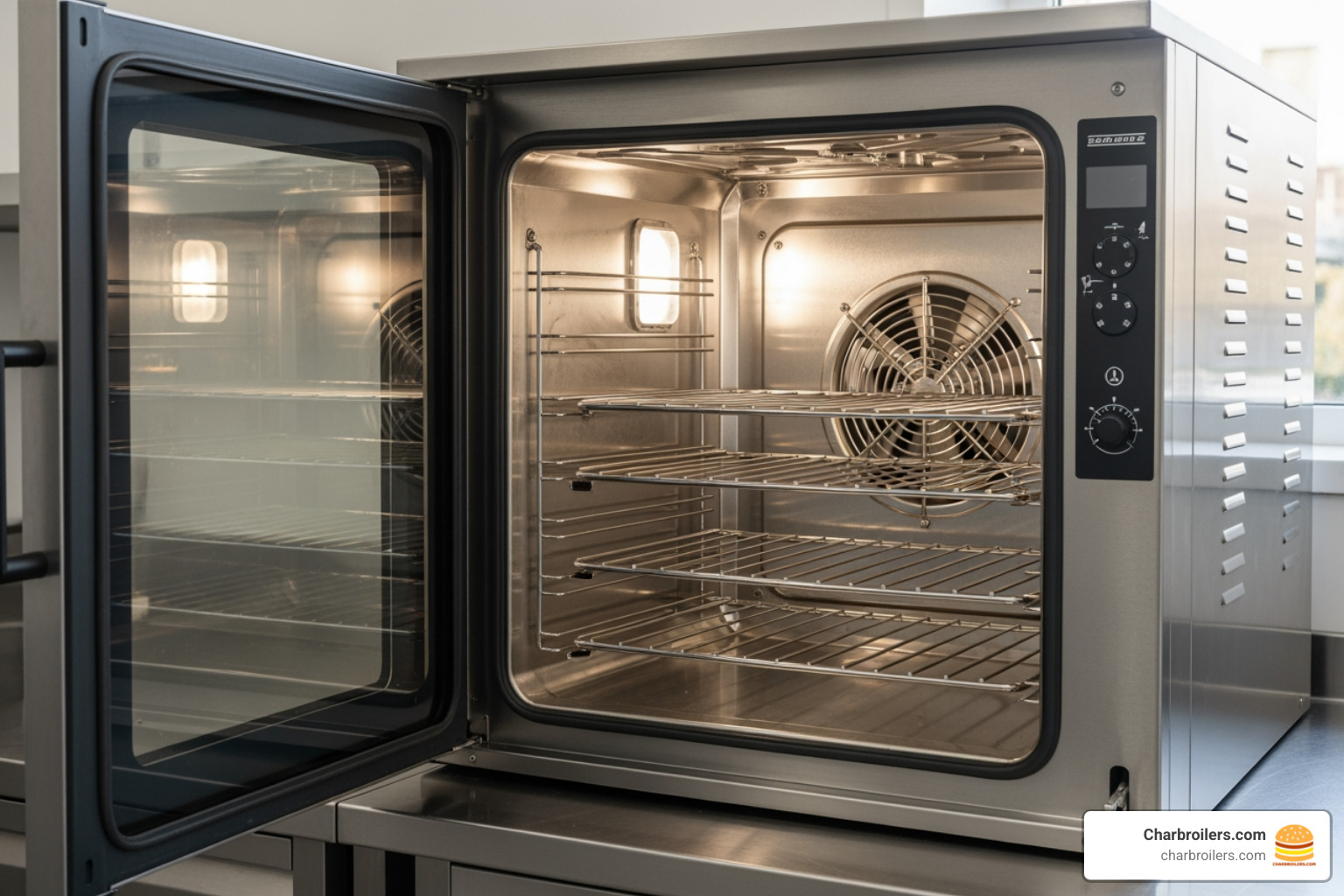
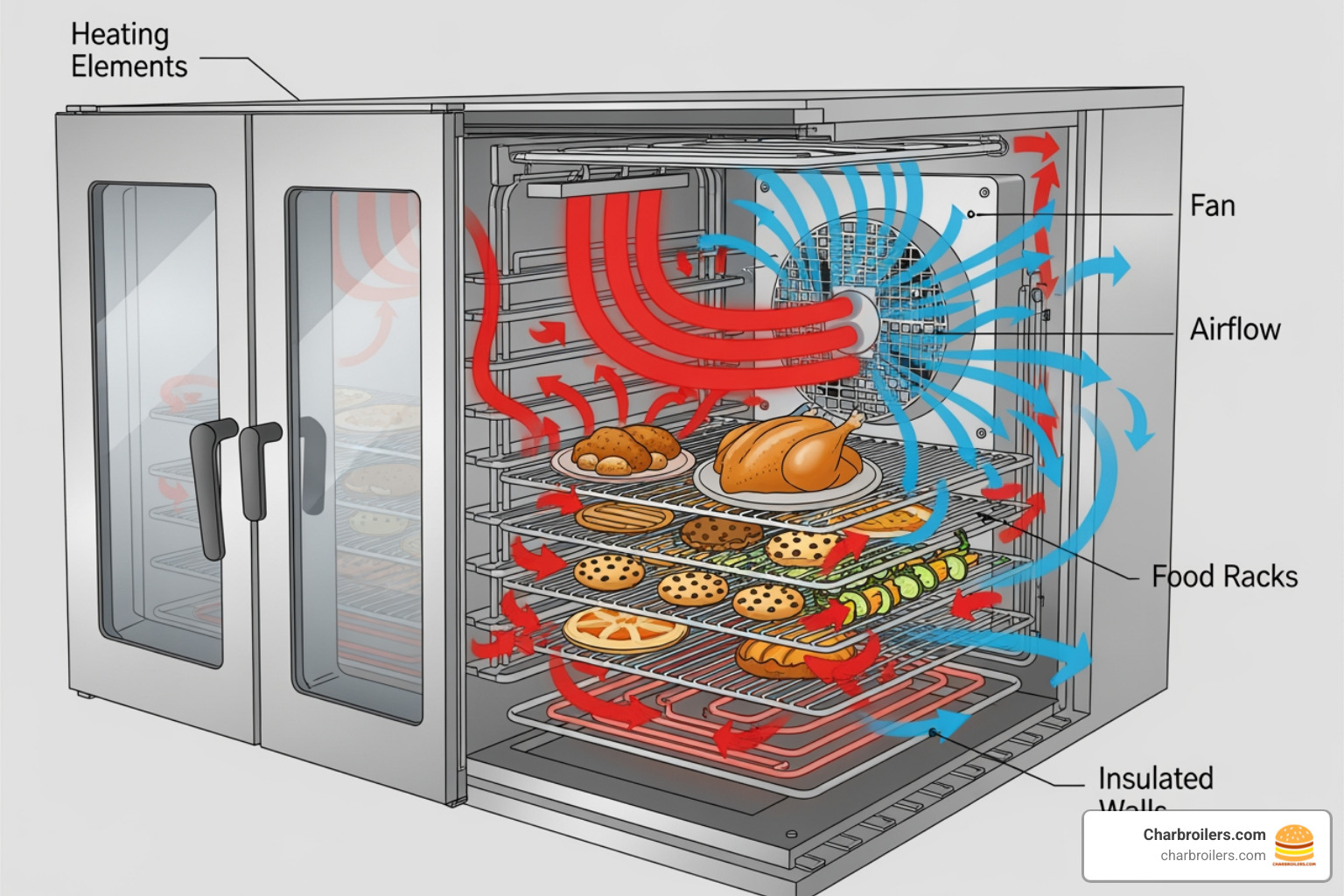
How do commercial convection ovens work? Commercial convection ovens use powerful fans to circulate hot air continuously throughout the oven cavity, creating uniform heat that cooks food faster and more evenly than traditional ovens. Here's the basic operation:
- Heating elements warm the air inside the oven cavity
- Fans actively blow this hot air around the food from all sides
- Exhaust systems remove moisture and maintain consistent temperature
- Even heat distribution eliminates hot spots and cold zones
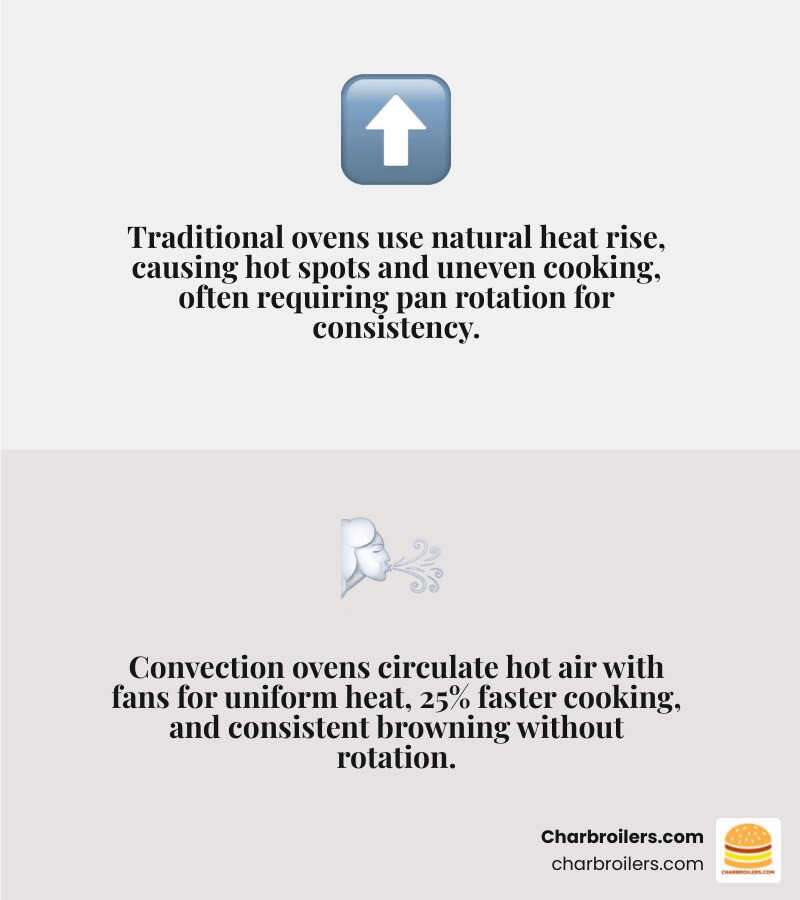
This forced air circulation is the key difference. In a traditional oven, heat rises naturally, creating hot spots on top racks and cooler zones below. You've probably rotated sheet pans mid-bake to compensate. Convection ovens eliminate this problem entirely by keeping air moving constantly.
The result? Food cooks up to 25% faster at temperatures that are 25 degrees lower than conventional ovens. The circulating air also strips away the thin layer of cooler air that naturally forms around food (sometimes called a "halo"), which speeds up cooking and creates better browning and crisping.
For busy commercial kitchens where speed, consistency, and quality matter, this technology is a game-changer. No more rotating pans, no more unevenly cooked batches, and significantly lower energy costs.
I'm Sean Kearney from Charbroilers.com, and over the past decade in the restaurant equipment industry, I've helped countless restaurant owners understand how commercial convection ovens work and select the right models for their specific needs. Whether you're running a high-volume bakery or a compact food truck, understanding convection technology helps you make smarter equipment investments.
How do commercial convection ovens work terms to learn:
- commercial convection ovens
- do commercial convection ovens need venting
- convection oven cleaning tips
The Science of Speed: How Do Commercial Convection Ovens Work?
At its heart, cooking is all about transferring heat. In the culinary world, we primarily rely on three methods: conduction, radiation, and convection. While traditional ovens use all three, commercial convection ovens lift the game by supercharging the convection process.
- Conduction is direct heat transfer, like when a pan heats food or a baking sheet conducts heat to the bottom of a cookie.
- Radiation is heat transfer through electromagnetic waves, like the glow from a broiler or the heat radiating from the oven walls.
- Convection is heat transfer through the movement of a fluid (in this case, air). In a conventional oven, this happens naturally as hot air rises. But in a convection oven, a fan actively forces this air movement, creating what we call forced convection.
This active circulation ensures that heat isn't just rising; it's swirling around every inch of your food. This dynamic process makes convection the predominant heat transfer mechanism in these ovens. The result is a dry heat environment that cooks food up to 25% faster and often allows us to set temperatures 25 degrees lower than we would in a traditional oven. It’s like giving your food a hot air hug from all directions!
The Core Mechanics: How a Commercial Convection Oven Works
So, you're probably wondering, "what's under the hood?" The magic of how commercial convection ovens work lies in their expertly engineered fan and exhaust systems. These aren't just simple fans; they're the conductors of an intricate heat symphony designed for culinary perfection.
Each convection oven is engineered with multiple zones, each often equipped with its own burner or heating element and a fan. Once the air is heated by these elements, the fan kicks into action, blowing this hot air through ducts and circulating it evenly throughout the oven cavity. This constant movement is key for several reasons:
- Eliminating the "Halo" of Cold Air: Food naturally creates a thin boundary layer of cooler air around itself. In a conventional oven, this layer acts as an insulator, slowing down cooking. The powerful airflow in a convection oven constantly strips this "halo" away, allowing heat to penetrate the food more efficiently and speeding up the cooking process.
- Consistent Temperature: By continuously circulating heated air, the fan ensures a uniformly even temperature across the entire oven cavity. This means no more hot spots or cold zones, so every item, whether it's on the top rack or the bottom, cooks at the same rate. This consistency is a huge time-saver in a busy commercial kitchen, as it eliminates the need to turn pans or swap rack positions mid-bake.
- Moisture Removal: The constant airflow also helps to evaporate moisture from the surface of the food. This isn't just about drying; it's about achieving that desirable crispiness and promoting the Maillard reaction, which is responsible for the rich, browned crusts on roasted meats and baked goods. This effective moisture removal also contributes to less food shrinkage, yielding larger quantities per batch.
Direct-Fired vs. Indirect-Fired Systems
When we dive deeper into how commercial convection ovens work, especially those powered by gas, we encounter a distinction between direct-fired and indirect-fired systems. Understanding this difference can help you choose the right oven for your specific menu items.
- Direct-Fired Ovens: In these ovens, the burner is typically located directly below the cooking cavity. The burner's gas mixes with recirculated air, and the combustion products are blown directly onto the food. This method delivers very intense, high-temperature heat. Direct-fired ovens are excellent for high-temperature baking tasks like pizzas, flatbreads, biscuits, and crackers, where you want rapid cooking and a crispy finish. The direct interaction with the heat source means quick recovery times and powerful performance.
- Indirect-Fired Ovens: Here, a heat exchanger separates the combustion products from the air circulating in the baking chamber. The burner heats a coil or chamber, and then the fan blows air over this heated surface before it enters the cooking cavity. This means the burner's flame doesn't directly touch the air or the food. While they might have a slightly slower startup, indirect-fired ovens provide a more consistent and gentle heat. Many bakeries prefer them for delicate items like cakes, pastries, pies, and cupcakes, as they offer a greater margin for error and ensure more even baking without the risk of scorching from direct flame exposure. They are also fantastic for roasting and preparing casseroles.
For a deeper dive into the specifics of gas-powered units, check out our guide on More info about gas convection ovens.
A Spectrum of Heat: Types of Commercial Convection Ovens
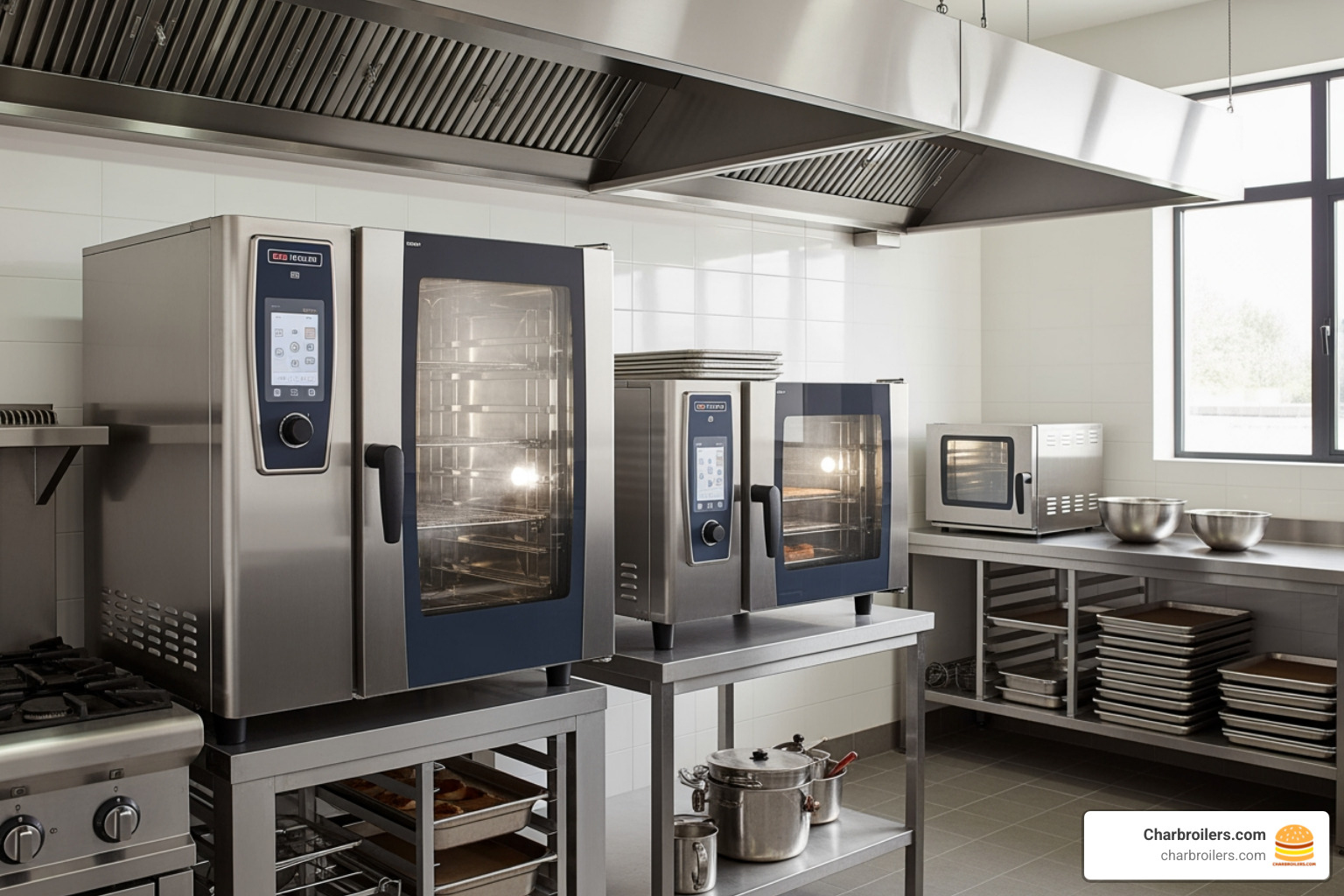
Just like there's a chef for every dish, there's a commercial convection oven for every kitchen setup and cooking need. Understanding the different types available is crucial for making an informed decision for your operation. Our comprehensive guide on The Ultimate Guide to Comparing Commercial Convection Ovens can help you steer the options.
Traditional vs. True (European) Convection
When discussing how commercial convection ovens work, it's important to differentiate between two primary convection technologies:
| Feature | Traditional (American) Convection Oven | True (European) Convection Oven |
|---|---|---|
| Heating Elements | Two (top and bottom) | Three (top, bottom, and a third element around the fan) |
| Air Circulation | Fan circulates air from existing elements | Fan circulates air heated by its own element |
| Efficiency | Good, faster than conventional | Better, with more stable and consistent temperature distribution |
| Heat-Up Time | Standard for convection | Faster heat-up and quicker recovery times |
- Traditional (American) Convection Ovens: These ovens take a standard radiant oven and add a fan, typically mounted in the back, to circulate the hot air generated by the top and bottom heating elements. This significantly improves heat distribution compared to a conventional oven.
- True (European) Convection Ovens: These models go a step further. They include a third heating element positioned directly behind or around the fan. This dedicated heating element pre-heats the air before the fan blows it into the oven cavity. This results in even more stable and consistent temperatures, faster heat-up times, and quicker recovery, leading to superior cooking efficiency.
Common Commercial Models and Their Uses
Beyond the internal mechanics, commercial convection ovens come in various configurations designed for specific applications:
- Countertop Ovens: These compact units are perfect for smaller operations like cafes, food trucks, or as a secondary oven in a busy kitchen. They offer the benefits of convection in a smaller footprint, handling half-size or quarter-size sheet pans. Learn more about Unleash Culinary Power: Top Commercial Countertop Convection Ovens.
- Floor Models: These are the full-sized, free-standing workhorses of large commercial kitchens and bakeries. They can be single-deck or Commercial Double Stack Ovens, designed to handle multiple full-size sheet pans simultaneously, providing high volume output.
- Combi Ovens: A true marvel of modern kitchen technology, combi ovens combine the power of a convection oven with a convection steamer. This allows for dry heat cooking, full steam cooking, or a precise combination of both. They offer incredible versatility for baking, roasting, steaming, stewing, and even rethermalizing, all while being up to 30% more energy-efficient than traditional ovens.
- Impinger Ovens: Often seen in pizza establishments, impinger ovens are a specialized type of convection cooking. They use high-velocity, forced hot air that blasts through small jets directly onto the food, rapidly cooking items like pizzas, sandwiches, and nachos up to four times faster than a traditional deck oven.
- Convection Microwave Ovens: For speed and versatility, some microwave ovens now integrate a convection feature. These units use both microwaves for rapid heating and forced hot air for browning and crisping, making them excellent "speed ovens" for quick-serve environments or reheating with a quality finish.
The Convection Advantage: Key Benefits for Your Kitchen
Understanding how commercial convection ovens work is one thing; appreciating the tangible benefits they bring to your commercial kitchen is another. These ovens aren't just a fancy upgrade; they're a strategic investment that pays dividends in efficiency, quality, and consistency.
Here's why commercial convection ovens are a preferred choice for various culinary applications:
- Faster Cooking: As we've mentioned, food cooks up to 25% faster. This means quicker table turns, reduced waiting times, and increased output during peak hours.
- Consistent Results: The uniform heat distribution eliminates hot and cold spots. There's no need to rotate pans or swap rack positions, ensuring every item comes out perfectly cooked and uniformly browned.
- Better Yield: Faster cooking times and uniform heat distribution lead to less food shrinkage. This means more product per batch, which directly impacts your bottom line.
- Even Browning: The circulating dry heat creates superior and more even browning and a perfect crusty texture on baked goods and roasted items.
- Energy Efficiency: Because they cook faster and often at lower temperatures, convection ovens can be more energy-efficient than traditional ovens, leading to significant utility bill savings over time.
- Versatility: From roasting succulent meats and vegetables to baking delicate pastries, crisping up casseroles, and even rethermalizing pre-cooked food, a convection oven handles a wide array of culinary tasks with ease.
Maximizing Efficiency and Output
In a commercial setting, every minute and every penny counts. Convection ovens are designed to help you maximize both.
By cooking 25% faster than traditional ovens, you can significantly increase your kitchen's throughput. Imagine the difference this makes for a busy bakery churning out dozens of cookies or a restaurant roasting multiple chickens during the dinner rush.
Beyond speed, the energy savings are substantial. Because these ovens operate at lower temperatures and for shorter durations, they consume less power or gas. This translates directly to lower utility bills. For example, an electric convection oven with ENERGY STAR certification could save about $70 per year and approximately $670 over its lifespan compared to standard models. If you're using a gas convection oven, an ENERGY STAR certified model could result in roughly $1400 in utility bill savings over its lifespan! These savings are not just theoretical; they are real-world financial benefits that directly impact your operational costs.
Furthermore, the uniform heat distribution means you don't waste time rotating pans. This frees up your staff to focus on other tasks, further boosting efficiency. We've seen kitchens easily cook multiple dishes simultaneously, confident that everything will be done evenly and on time.
From Purchase to Plate: A Practical Guide
Choosing the right commercial convection oven involves more than just understanding how commercial convection ovens work. It's about matching the oven's capabilities to your kitchen's specific demands. When you're ready to Upgrade Your Kitchen: Finding the Best Commercial Convection Oven, consider these key factors:
-
Size and Capacity:
- Full-size ovens typically hold five or more standard 18" x 26" sheet pans.
- Half-size ovens accommodate one or more half-sized 18" x 13" sheet pans, perfect for smaller batches.
- Quarter-size ovens are even more compact, ideal for very small operations or specialized tasks.
- Single-deck vs. Double-deck refers to the number of cooking compartments. Double-deck models are excellent for high-volume needs.
- Standard depth vs. Deep (bakery) depth: Deep depth ovens have an interior cavity that's usually 4 inches deeper, allowing pans to be loaded front-to-back or left-to-right for increased airflow around the product.
-
Fuel Type (Electric vs. Gas):
- Electric convection ovens are straightforward to install and offer precise temperature control.
- Natural gas convection ovens are often efficient and cost-effective if you have a gas supply available in Seattle. They typically heat up quickly.
- LPG (Liquid Propane Gas) is an effective alternative to natural gas, especially in areas where natural gas isn't readily available, though it can be more expensive.
-
Controls (Manual vs. Digital):
- Manual controls are simple, durable, and generally less expensive.
- Digital controls offer greater precision, programmable settings, and advanced features like auto adjustments, cook-and-hold functions, or even steam injection for artisan breads.
- Safety Features: Look for essential features like overheating safety cut-offs, anti-slip feet, cool-touch door handles, heat-resistant exteriors, and certifications (UL, NSF, ETL) to ensure compliance and safe operation.
- Materials and Construction: Commercial ovens are built to last, typically from stainless steel. Ovens featuring welded metal panels are often superior to bolted versions in terms of durability and ease of cleaning. Tempered glass doors are common, allowing you to monitor cooking progress without opening the door.
Beyond the Basics: How do commercial convection ovens handle different foods?
The versatility of convection ovens is truly remarkable, but understanding the nuances of how they interact with different foods is key to open uping their full potential. This often comes down to one critical factor: fan speed.
While some commercial convection ovens might have fixed-speed fans, many modern units offer variable fan speeds—high, low, intermittent, or even reversing airflow—to suit various cooking needs.
- High Fan Speed: This is ideal for dense foods like roasted meats, root vegetables, or casseroles. The powerful airflow ensures even cooking and promotes rapid browning and crisping.
- Low Fan Speed or Intermittent Fan: For delicate items, a high-speed fan can be too aggressive. Fast air currents can distort the shape of soft doughs, batters, or sponge cakes, and cause rapid surface drying that prevents proper expansion. For items like flan, muffins, or soufflés, a low fan speed or an intermittent setting is crucial to prevent them from drying out or becoming misshapen. Some foods, like certain cheesecakes, might even benefit from no fan at all, as they require more moisture in the air. As our friends at MSU Extension highlight, cakes and roasts do well in a convection oven because they don't require moisture in the air like baking breads or certain cheesecakes.
Finding the right balance is an art, but with practice, you'll master it. For more tips on optimizing fan usage, check out Blowing Hot Air: How to Properly Use Commercial Fan-Forced Ovens.
Ideal Applications for Convection Ovens:
- Roasting: Meats (chicken, beef, pork), vegetables (potatoes, carrots, broccoli) achieve beautiful caramelization and even cooking.
- Baking Pastries: Cookies, pies, tarts, and certain breads benefit from the even heat for consistent browning and crisp crusts.
- Casseroles: Cook through evenly without burnt edges or undercooked centers.
- Rethermalizing: Quickly and efficiently reheat pre-cooked meals.
Maintenance and Cleaning for Longevity
To ensure your commercial convection oven continues to perform at its peak, understanding how commercial convection ovens work also means knowing how to care for them. Regular maintenance and cleaning are non-negotiable for extending the lifespan of your investment and maintaining food safety standards. The average service life of a convection oven is typically 6 to 10 years, and proper care can help you reach the higher end of that range.
Here’s a quick guide to keeping your oven sparkling and efficient:
-
Daily Cleaning:
- Interiors: Once cooled, wipe down the interior with a commercial-grade oven cleaner. For enamel interiors, use enamel-safe cleaners to prevent peeling.
- Exteriors: Clean stainless steel exteriors with commercial-grade stainless steel cleaners. Avoid abrasive pads like steel wool, which can scratch the surface and lead to pitting or rust.
- Glass Doors: Clean glass doors daily with a glass cleaner or soap and water to prevent grease from baking on and becoming a permanent fixture.
- Cooling Fans: Ensure cooling fans and air intake areas are clear of debris and grease. A buildup can hinder performance and even lead to breakdowns.
- Deep Cleaning: Follow your oven's handbook for specific deep cleaning protocols. This might involve more intensive cleaning cycles or specialized products.
- Checking the Fan: Periodically inspect the convection fan for any food debris or grease buildup. If you notice unusual noises or inconsistent cooking, it could be a sign that the fan needs attention. Any cooking materials (like foil) that might have been sucked into the fan should be carefully removed.
- Professional Servicing: While daily cleaning is vital, don't shy away from professional servicing. If your oven is between 6-10 years old and repair costs are starting to mount, it might be more economical to consider a replacement. Regular checks by a certified technician can prevent minor issues from becoming major headaches.
For more detailed cleaning tips and tricks, be sure to read our article on Baked-On Mess? Convection Oven Cleaning Hacks to the Rescue!.
Conclusion: Using the Power of Convection
We've peeled back the layers to reveal exactly how commercial convection ovens work, from the fundamental science of heat transfer to the intricate mechanics of fan and exhaust systems. We've explored the different types, their unique applications, and the incredible benefits they bring to your kitchen—speed, consistency, efficiency, and superior food quality.
Commercial convection ovens are more than just cooking appliances; they are a cornerstone of modern commercial kitchen appliances, empowering chefs to produce exceptional results with greater ease and profitability. By understanding these powerful machines, you can make smarter equipment choices, optimize your cooking processes, and ultimately lift your culinary creations.
At Charbroilers.com, we're committed to equipping your restaurant with the best tools to succeed. Whether you're roasting, baking, or rethermalizing, a high-quality commercial convection oven is an invaluable asset.
Ready to improve your kitchen's capabilities? Explore our complete guide to commercial kitchen equipment to find the perfect fit for your restaurant.