
Upgrade Your Kitchen: Finding the Best Commercial Convection Oven
Why Every Commercial Kitchen Needs a Convection Oven
A commercial convection oven uses powerful fans to circulate hot air throughout the cooking chamber, delivering faster cooking times and more consistent results than traditional static ovens. If you're looking to purchase a commercial oven, here's what you need to know:
Key Benefits of Commercial Convection Ovens:
- 25% faster cooking compared to conventional ovens
- Even heat distribution eliminates hot and cold spots
- Reduced moisture prevents flavor transfer between different foods
- Versatile cooking for baking, roasting, and reheating
- Available in multiple configurations: countertop, freestanding, single-deck, and double-deck models
- Power options: electric, natural gas, or liquid propane
Whether you're running a busy restaurant, bakery, or cafe, a commercial convection oven can transform your kitchen's efficiency. These workhorses handle everything from perfectly roasted chickens to golden-brown pastries, all while reducing cooking time and energy costs.
The circulating air technology prevents hot spots and ensures uniform browning on every tray. This means you can load multiple sheet pans and get consistent results across all levels—a game-changer for high-volume operations.
As Sean Kearney, founder of Charbroilers.com with over a decade of experience in restaurant equipment, I've helped countless kitchens find the right commercial convection oven to match their needs and budget. My goal is to cut through the confusion and help you make a smart investment that will serve your kitchen for years to come.
Commercial conventional oven helpful reading:
The Convection Advantage: Faster, Crispier, and More Consistent Cooking
Upgrading a commercial kitchen often involves a commercial convection oven, a fundamental shift in cooking that delivers superior results to traditional static ovens. While a static oven relies on radiant heat, a convection oven uses fans to circulate hot air. This simple mechanism dramatically improves kitchen output and dish quality.
A compelling advantage is speed. Commercial convection ovens can cook about 25% faster than static ovens. Faster cooking times mean higher throughput, allowing you to serve more customers and turn tables quicker, which is essential for any busy establishment.
Beyond speed, the circulating hot air ensures even cooking and browning. The fan system eliminates hot and cold spots, so every part of the food receives consistent heat. This is crucial for delicate baked goods and achieving a golden-brown crust on roasted items. The fan and exhaust system also reduce moisture, creating a dry environment perfect for crispy textures on roasted vegetables or chicken. This dry air also prevents flavor transfer, so you can bake different items simultaneously without cross-contamination.
What Foods Cook Best in a Convection Oven?
Thanks to their unique cooking mechanism, commercial convection ovens excel with a wide variety of foods. Their ability to deliver even heat and reduce moisture makes them incredibly versatile.
Here are some types of food that truly shine in a convection oven:
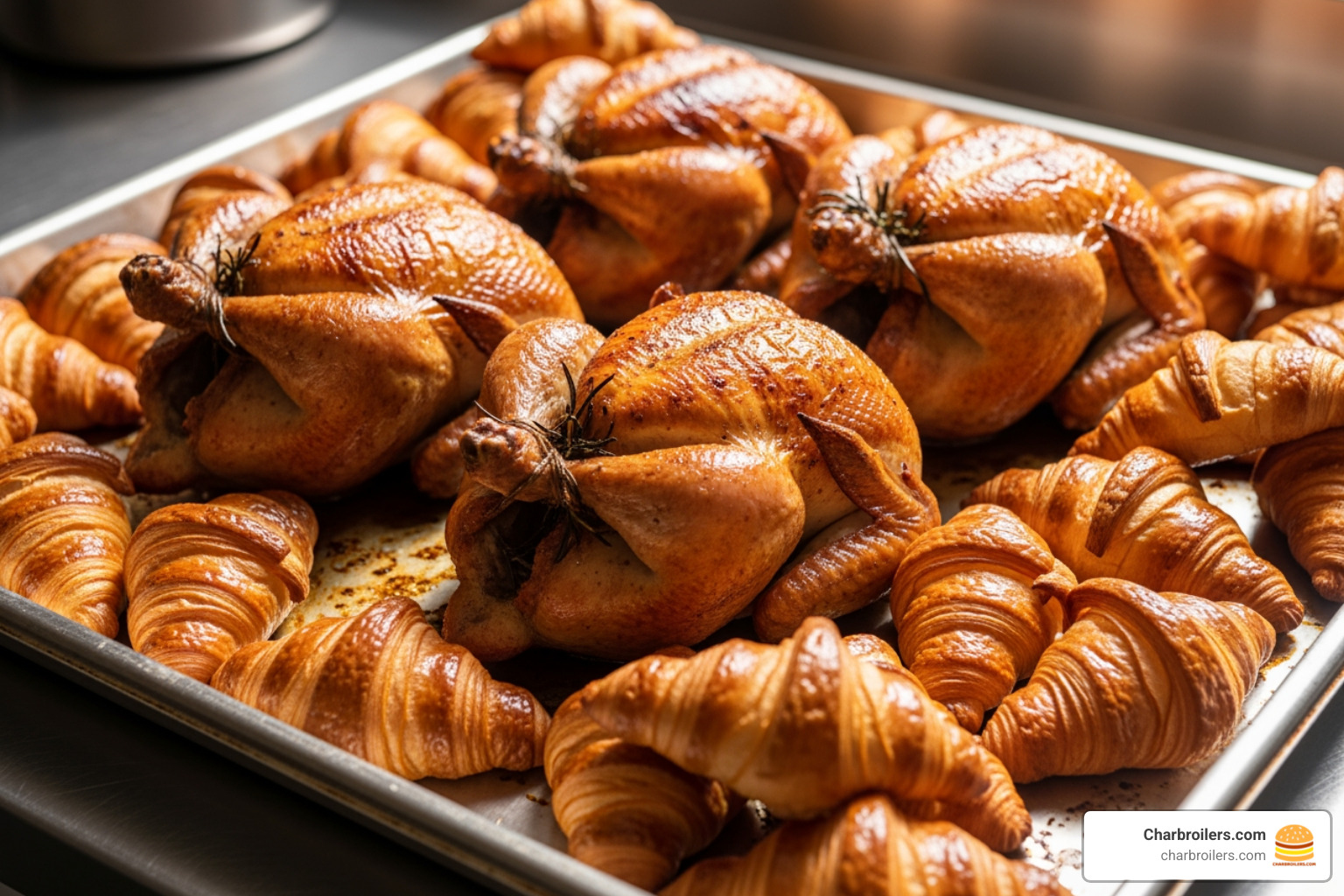
- Roasted Meats and Poultry: Whether you're roasting a whole chicken, a succulent prime rib, or delicate fish fillets, the circulating hot air ensures a beautifully browned exterior and a juicy, evenly cooked interior. The faster cooking time also helps to retain moisture.
- Sheet Pan Dinners: For efficiency and consistent results, sheet pan meals featuring proteins and vegetables cook wonderfully in a convection oven, achieving perfect tenderness and caramelization across the entire pan.
- Cookies and Cakes: Bakers adore convection ovens for their ability to bake multiple trays of cookies or cakes evenly, with uniform rising and consistent browning. This is a game-changer for bakeries producing high volumes of baked goods daily.
- Breads: From artisan loaves to everyday rolls, the dry heat and even circulation contribute to a crisp crust and a well-developed internal structure.
- Dehydrated Foods: While not their primary function, the constant airflow and lower temperatures make convection ovens surprisingly effective for gently dehydrating fruits, vegetables, or jerky.
Convection vs. Conventional: What's the Difference?
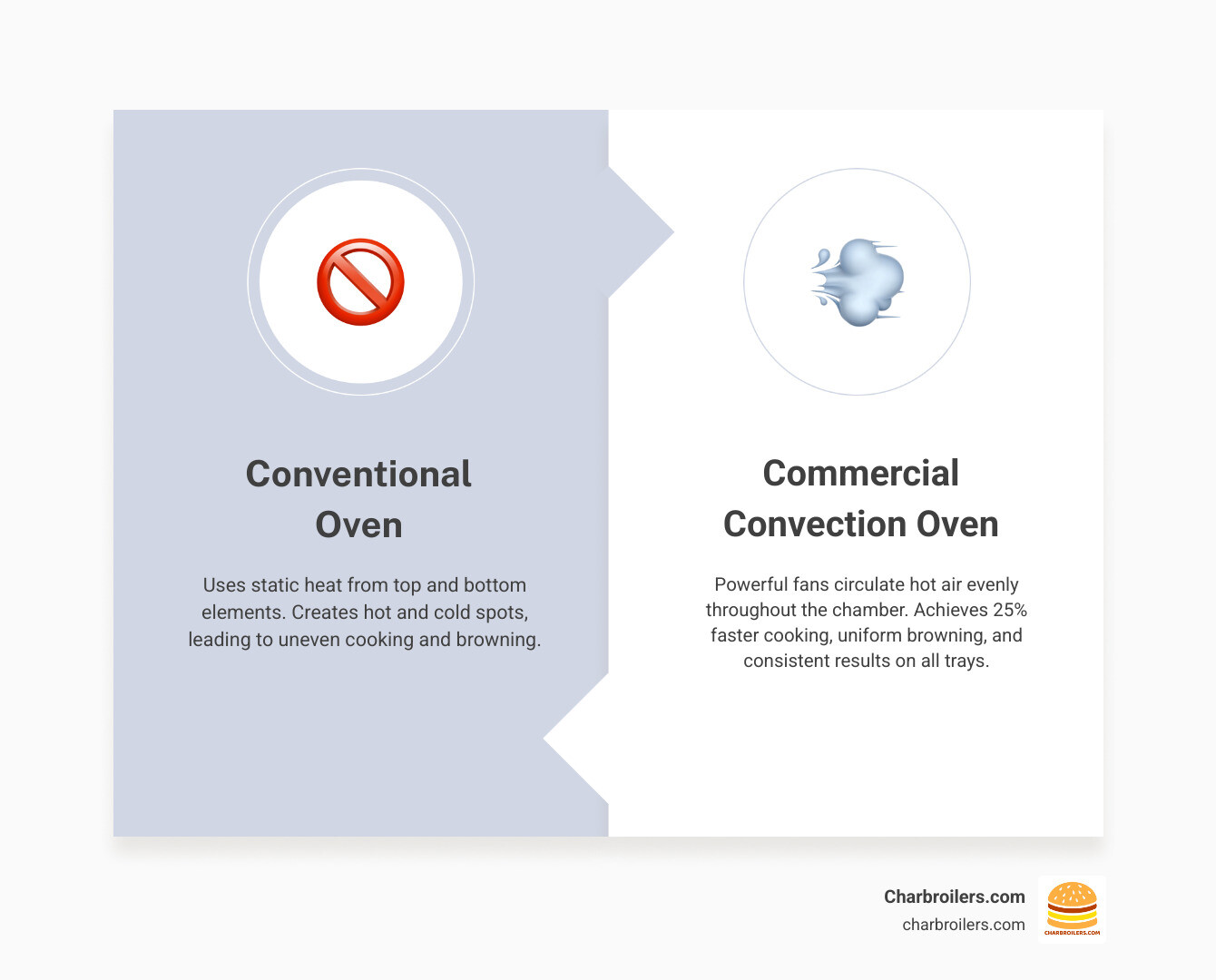
While the terms are sometimes confused, the difference between a conventional and convection oven is profound in a commercial kitchen. A traditional or "static" commercial conventional oven uses radiant heat from top and bottom elements. This method relies on natural air circulation, which often leads to hot and cold spots and requires pan rotation for even results.
A commercial convection oven, on the other hand, adds a fan (or multiple fans) to actively circulate hot air. This forced air circulation is the key differentiator.
Here’s a breakdown of the core differences:
- Static Heat vs. Circulated Air: Conventional ovens use static, radiant heat. Convection ovens use dynamic, circulated hot air.
- Eliminating Hot Spots: The fan in a convection oven ensures the temperature is uniform throughout the entire cavity, virtually eliminating hot spots and cold spots. This means every cookie on a sheet pan, no matter its position, cooks at the same rate.
- Cooking Speed: Convection ovens cook about 25% faster because the circulating hot air accelerates the cooking process.
- Browning Capabilities: The consistent airflow and reduced moisture in a convection oven lead to superior browning and crisping. For baked goods, this means a better crust; for roasted items, a more appealing exterior.
- Energy Usage: This efficiency means it cooks faster and at a lower temperature, which can lead to energy savings compared to a conventional oven.
A commercial convection oven is a more efficient, consistent, and versatile workhorse for any modern commercial kitchen.
A Buyer's Guide: How to Choose the Right Commercial Convection Oven
Choosing the right commercial convection oven is a key investment. It's about finding a reliable, efficient model that fits your kitchen's specific operational needs.
When making your selection, we recommend considering several critical factors:
- Kitchen Space: How much footprint can you realistically dedicate to your oven? Will it be a compact countertop unit or a towering double-deck model?
- Production Volume: Are you baking a few dozen cookies a day or hundreds of sheet pans during a busy shift? Your volume dictates capacity.
- Menu Type: Do you specialize in delicate pastries, high-volume roasting, or a diverse menu requiring varied cooking methods?
- Budget Considerations: Commercial ovens are a significant investment. Balance initial cost with long-term operational efficiency and durability.
Let's explore the specifics to help you make an informed decision.
Freestanding vs. Countertop Models
The first decision many kitchens face is whether to opt for a freestanding or countertop commercial convection oven. Each has its place and purpose:
- Freestanding Ovens: These are the heavy-duty workhorses of high-volume kitchens. They typically accommodate full-size sheet pans (18"x26") and are ideal for restaurants, bakeries, and large-scale catering operations. Many freestanding models offer the option of stacking two units to create double-deck options, effectively doubling your cooking capacity within the same footprint. This is a popular choice for busy establishments that need maximum output.
- Countertop Ovens: If space is at a premium or your cooking needs are supplemental, a countertop commercial convection oven is a fantastic solution. These smaller units are perfect for coffee shops, quick-service restaurants, or as an auxiliary oven in a larger kitchen. They often use half-size sheet pans (13"x18") or smaller. While they don't offer the same capacity as freestanding models, they provide the benefits of convection cooking in a compact form factor. For example, a 100-liter countertop convection oven is a great option for light- to medium-duty use, suitable for cafes or quick-service restaurants.
Powering Your Oven: Electric, Gas, and Propane
The power source for your commercial convection oven is a fundamental choice that impacts installation, operating costs, and even performance. The three main options are electric, natural gas, and propane.
| Feature | Electric Convection Oven | Gas Convection Oven | Propane Convection Oven |
|---|---|---|---|
| Cost | Lower upfront cost; electricity costs vary by region. | Lower operating costs where natural gas is available. | Higher fuel costs than natural gas; requires tank refilling. |
| Installation | Requires appropriate voltage (e.g., 208V, 240V) and phase (1 or 3 phase) wiring. | Requires a natural gas line connection. | Requires a propane tank connection. Ideal for mobile kitchens or areas without natural gas. |
| Performance | Precise temperature control, consistent heat. | Often preferred for quick heat-up and recovery times. | Similar performance to natural gas but with propane fuel. |
| Maintenance | Generally simpler, fewer moving parts related to fuel. | Requires gas line checks and proper ventilation. | Requires propane tank and line maintenance. |
| BTU/kW Ratings | Measured in kW (e.g., 10-12 kW for full-size). | Measured in BTU (e.g., 50,000 to 120,000 BTU/hr). | Measured in BTU (similar to natural gas). |
| Ventilation | Still requires proper ventilation (grease-rated hood if cooking grease-laden foods). | Requires robust ventilation due to combustion byproducts and grease-laden vapors. | Requires robust ventilation due to combustion byproducts and grease-laden vapors. |
When choosing, consider your existing utility infrastructure. If you have a natural gas line, a gas oven might be more economical to operate. If not, electric models offer flexibility, provided your electrical system can handle the voltage and phase requirements (e.g., 208V, 240V, or 480V, 1-phase or 3-phase). Some electric models offer flexibility, with options for 1 or 3 phase power and various voltages.
Key Features for Your Commercial Convection Oven
Beyond the power source, a range of features can significantly impact the usability and efficiency of your commercial convection oven.
-
Oven Size:
- Full-size: These are the standard for high-volume operations, accommodating 18"x26" sheet pans.
- Half-size: More compact, typically using 13"x18" sheet pans, ideal for smaller kitchens or supplementary cooking.
- Quarter-size: Even smaller, often countertop models, for very low-volume or specialized tasks.
-
Interior Depth:
- Standard Depth: Most common, suitable for general baking and roasting.
- Deep/Bakery Depth: Offers extra interior space for better airflow or specialized bakery trays, ideal for high-volume bakeries.
-
Number of Decks:
- Single Deck: A standalone unit, perfect for medium-volume operations or when space is limited.
- Double Deck (Stacked): Consists of two ovens stacked one on top of the other, effectively doubling capacity without increasing footprint. This configuration is a popular choice for high-volume kitchens, allowing for simultaneous cooking of different items or larger batches.
-
Control Types:
- Manual Controls: Simple, intuitive dial controls for temperature and timer. Easy to use and reliable, often found on entry-level or standard-duty models.
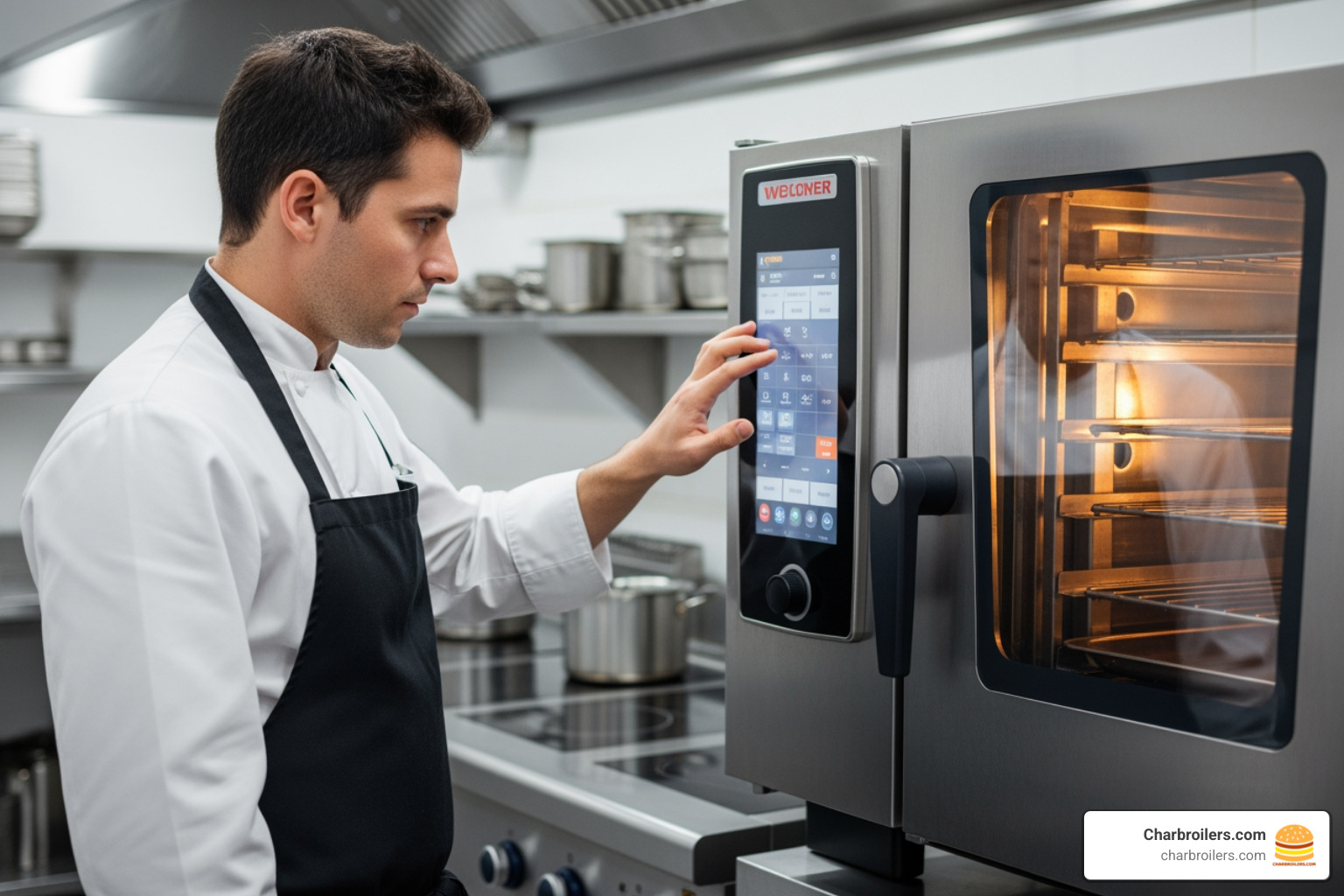
- Digital Controls: Offer more precise temperature settings, programmable cooking cycles, and often include features like multiple fan speeds, memory settings for recipes, and integrated timers.
- Programmable Controls: Found on advanced models, these allow you to store specific cooking programs. This ensures consistency across batches and is useful for complex recipes or kitchens with staff of varying skill levels.
Considering these features carefully will ensure you select a commercial convection oven that truly meets your kitchen's demands.
Advanced Technologies in a Commercial Convection Oven
The world of commercial convection ovens isn't static; it's constantly evolving with innovative technologies designed to push performance, efficiency, and consistency to new heights. While all convection ovens circulate air, premium models incorporate advanced features that can significantly improve cooking results and provide long-term value for your investment.
Leading manufacturers are integrating sophisticated systems that optimize every aspect of the cooking process. We're seeing features like gentle bake modes for delicate items and dishwasher-safe removable doors for easier cleaning. These high-performance features aren't just bells and whistles; they contribute to better food quality, reduced labor, and increased kitchen efficiency.
Fan and Airflow Systems
The heart of any commercial convection oven is its fan system, and advanced models take this to another level. It's not just about moving air; it's about moving it precisely and uniformly.
- Reversing Fans: Many high-end commercial convection ovens feature reversing fans. This technology ensures that the fan periodically reverses its direction, guaranteeing uniform results on all trays. This means no more rotating pans halfway through cooking – the oven handles it all, distributing air and heat perfectly evenly.
- Advanced Airflow Technology: Modern systems are designed to ensure the perfect distribution of air and heat inside the baking chamber. Some are known for gentle air circulation and even heat distribution, ensuring that delicate items are cooked thoroughly without being dried out or over-browned on one side. This level of control is crucial for consistent baking and roasting across multiple racks.
Humidity and Moisture Control
While convection ovens inherently create a drier cooking environment, advanced models offer sophisticated humidity and moisture control features that open up new culinary possibilities.
- Moisture Evacuation Systems: Advanced systems actively expel humid air from the cooking chamber. This is particularly beneficial for baked goods, as it favors the correct formation of the internal structure of items and helps achieve crisper textures. Imagine perfectly flaky croissants or crunchy bread crusts, batch after batch.
- Steam Injection Capabilities: Some advanced commercial convection ovens feature steam injection. This allows chefs to introduce controlled bursts of moisture into the oven. This is invaluable for baking artisan breads (creating a beautiful crust), roasting meats (keeping them juicy), or even rethermalizing dishes without drying them out. It's about having precise control over the cooking environment to achieve optimal texture and flavor.
These advanced technologies demonstrate how a commercial convection oven can go beyond basic cooking, offering unparalleled control and consistency for demanding commercial kitchens.
Installation, Ventilation, and Energy Efficiency
Acquiring a new commercial convection oven is an exciting step, but the journey doesn't end with the purchase. Proper installation, adequate ventilation, and a focus on energy efficiency are crucial for safe operation, optimal performance, and long-term cost savings. We always emphasize that professional installation is key to ensuring your oven meets all local fire and safety codes.
Ventilation and Exhaust System Requirements
Any commercial cooking equipment, especially a commercial convection oven, will generate heat, steam, and potentially grease-laden vapors. Proper ventilation is a legal and safety requirement.
- Exhaust Hoods: All commercial cooking equipment that produces smoke, grease, or steam must be installed under a commercial exhaust hood. This hood captures and filters these vapors, preventing fire hazards and improving the work environment.
- Grease-Laden Vapors: Convection ovens, particularly when roasting meats or baking items with high fat content, will produce grease-laden vapors. Your ventilation system must be capable of handling this. Local codes will dictate the specific requirements for your exhaust system, including ductwork, fans, and fire suppression.
- Local Codes and Air Intakes: It's imperative that installation adheres strictly to national and local codes (e.g., NFPA96 in the USA). This often includes maintaining adequate clearance from walls and other heat-producing equipment (e.g., 2" from the rear, 6" from the sides as per some user manuals) and ensuring the room has proper air intakes to compensate for the air being exhausted. Without sufficient makeup air, your ventilation system won't operate effectively. Always consult with a licensed installer to ensure compliance.
Maximizing Efficiency with ENERGY STAR
Energy efficiency is good for your bottom line and the environment. Choosing an ENERGY STAR certified commercial convection oven is a smart business decision.
- Reduced Operating Costs: ENERGY STAR certified commercial ovens are designed to use less energy than conventional models. This translates directly into lower utility bills. Over the lifespan of an oven, these savings can be substantial. For example, some certified electric ovens show convection mode cooking energy efficiency as high as 80%, with low idle energy rates.
- Environmental Impact: By consuming less energy, these ovens help reduce your carbon footprint, aligning with growing environmental consciousness among consumers and businesses.
- Rebates and Incentives: Many utility companies and local governments offer rebates or incentives for businesses that invest in ENERGY STAR certified equipment. It's worth researching available rebates for commercial kitchen equipment. Always check the ENERGY STAR Product Finder for eligible models and available rebates.
- Idle Energy Rates: When comparing ovens, pay attention to the "idle energy rate" – this tells you how much energy the oven consumes when it's on but not actively cooking. Lower idle rates mean more savings during off-peak hours or between batches. The ENERGY STAR database provides detailed metrics for both cooking energy efficiency and idle energy rates for certified commercial ovens.
Investing in an ENERGY STAR certified commercial convection oven is a win-win: you save money, reduce your environmental impact, and often benefit from superior performance and build quality.
Frequently Asked Questions about Commercial Convection Ovens
We get a lot of questions about commercial convection ovens, and we're always happy to help explain these powerful kitchen tools. Here are some of the most common queries we encounter:
How do you clean a commercial convection oven?
Keeping your commercial convection oven clean is vital for hygiene, optimal performance, and extending its lifespan. We recommend a multi-step approach:
- Daily Cleaning Procedures: After each use, once the oven has cooled, wipe down the interior with a soft cloth and warm, soapy water. Brush out any crumbs or loose food debris. For stainless steel surfaces, use a cleaner specifically designed for stainless steel.
- Deep Cleaning: At least once a month, perform a more thorough deep clean. This involves applying a commercial oven cleaner to the interior, allowing it to penetrate and loosen caked-on grease, and then scrubbing with a non-abrasive sponge or cloth.
- Removable Parts: Many modern ovens feature removable racks, and some advanced models even have dishwasher-safe removable doors. Remove these parts and soak them in soapy water, then scrub and rinse thoroughly.
- Avoid Harsh Chemicals: Do not use abrasive powder detergents, corrosive substances, or steel wool, as these can damage the oven's surfaces. Also, avoid spraying directly with a water jet, especially near electrical components.
- Rust Prevention: Avoid contact with iron objects to prevent rust stains on stainless steel. If rust stains appear, use approved cleaning agents.
- Professional Maintenance: We strongly advise having your oven checked at least once a year by an authorized technician. For detailed instructions, always consult your oven's user manual.
Can I use regular recipes in a convection oven?
Yes, but you will need to make adjustments. Because commercial convection ovens cook faster, you'll need to modify traditional recipes.
- Adjusting Cooking Time: As a rule of thumb, reduce the cooking time by about 25%. For example, a 60-minute recipe may only need 45 minutes, so start checking for doneness early.
- Reducing Temperature: You may also need to lower the temperature by about 25°F (around 15°C). For example, if a recipe calls for 350°F, try 325°F in your convection oven.
- Monitoring Food Closely: Especially when you're first getting used to your commercial convection oven, it's crucial to monitor your food closely. Use a thermometer for meats and visually check baked goods for doneness. You'll quickly get a feel for how your specific oven performs.
What is the difference between a convection oven and a combi oven?
While both are advanced cooking appliances, a commercial convection oven and a combi oven serve different primary functions:
- Convection Oven: As we've discussed, a convection oven uses circulating dry heat to cook food. It's excellent for baking, roasting, and achieving crispy textures. It's essentially a very efficient dry-heat oven.
-
Combi Oven: A combi oven (short for combination oven) is a versatile powerhouse that combines three cooking modes in one unit:
- Convection Function: It can operate as a standard convection oven, using dry heat and circulating air.
- Steam Function: It can inject steam into the cooking chamber, allowing for steaming, poaching, or blanching. This is perfect for delicate items, vegetables, or maintaining moisture.
- Combination Cooking: This is where the combi oven truly shines. It can use a combination of convection and steam simultaneously, allowing precise control over humidity. This is ideal for achieving juicy roasts with a browned exterior, baking breads with a perfect crust and moist interior, or rethermalizing food without drying it out.
In short, a commercial convection oven excels at dry-heat cooking (roasting, baking), while a combi oven adds steam and combination cooking modes for ultimate versatility. Combi ovens are more expensive, but their flexibility can be invaluable for diverse menus.
Find the Perfect Oven for Your Professional Kitchen
Investing in a commercial convection oven is one of the smartest decisions you can make to lift your kitchen's efficiency and the quality of your food. From the incredible speed and consistent results to the potential energy savings and advanced features, the benefits are clear. We've explored everything from different power sources and sizes to cutting-edge technologies like reversing fans and humidity control, all with an eye toward helping businesses in Seattle, WA make the best choice.
Remember to consider your kitchen's unique needs: your available space, the volume of food you produce, and the specific items on your menu. Whether you opt for a compact countertop model for supplemental baking or a robust double-deck freestanding unit to handle high-volume roasting, matching the features to your needs is paramount. Don't forget the importance of proper installation, ventilation, and leveraging ENERGY STAR certification for long-term value.
At Charbroilers.com, we understand the demands of the restaurant industry. We're here to help you steer the options and find the perfect commercial convection oven that will serve as a reliable workhorse in your kitchen for years to come.
Ready to explore more essential kitchen equipment? Check out our comprehensive Guide to Commercial Charbroilers for Your Restaurant to complete your setup!