
Unlocking Efficiency The Power of Gas Convection Ovens
Why Gas Convection Ovens Are Essential for Commercial Kitchens
A gas convection oven is a commercial cooking appliance that uses a gas burner and a fan to circulate hot air, resulting in faster, more even cooking than traditional gas ovens.
Key characteristics of gas convection ovens:
- Heat Source: Natural gas or propane burner (typically 30,000-60,000+ BTU)
- Convection System: Fan circulates heated air for uniform temperature
- Cooking Speed: 25-30% faster than standard ovens
- Installation: Requires gas line connection and proper ventilation
- Price Range: $3,000 to $20,000+ depending on size and features
- Common Uses: Multi-rack baking, roasting large cuts, high-volume production
For busy commercial kitchens facing limited space and tight budgets, a gas convection oven is a game-changer. It cooks faster, uses space efficiently with multi-rack capability, and delivers consistent results during peak service.
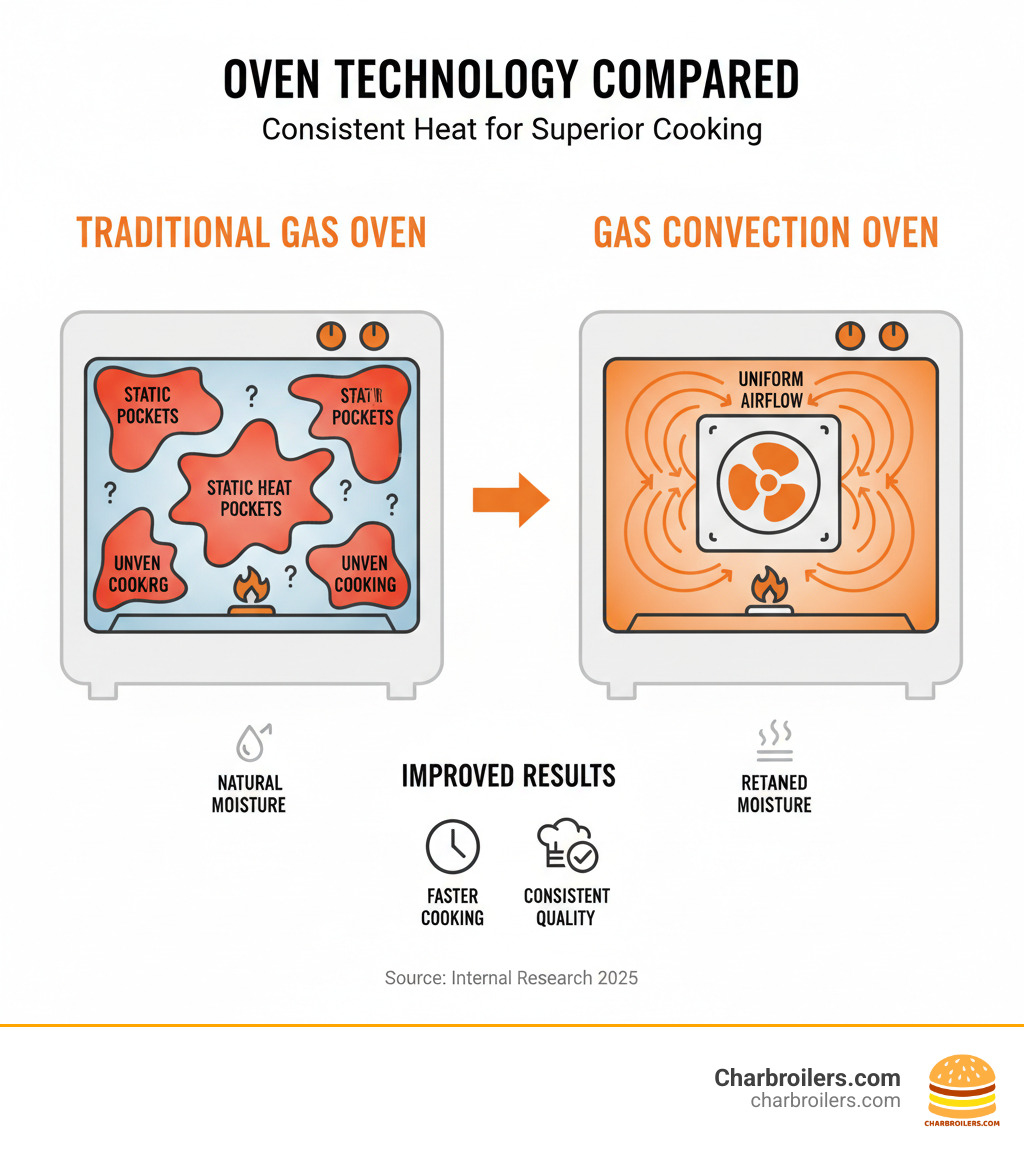
The technology is simple but effective: gas burners provide a "strong lively heat" with natural moisture, while the convection fan eliminates hot spots for edge-to-edge consistency. This allows you to roast multiple items on different racks simultaneously without rotating trays. While basic convection adds a fan to standard gas heat, True European Convection systems include an extra heating element around the fan for even better performance.
The benefits go beyond speed. Gas convection ovens retain moisture better than electric models, leading to juicier roasts. They also prevent flavor transfer between different dishes, a major advantage for kitchens with diverse menus.
I'm Sean Kearney, founder of Charbroilers.com. With a decade in the restaurant equipment industry, I've helped hundreds of operators select the right gas convection oven. My goal is to help you understand your investment and find the best fit for your needs.
Easy gas convection oven word list:
- how does a commercial convection oven work
- do commercial convection ovens need venting
- commercial convection ovens
The Mechanics of Convection: How Heat is Mastered
A gas convection oven masters heat by actively circulating it. Unlike traditional ovens where heat rises naturally, these machines use a powerful fan to push hot air throughout the entire cooking chamber.
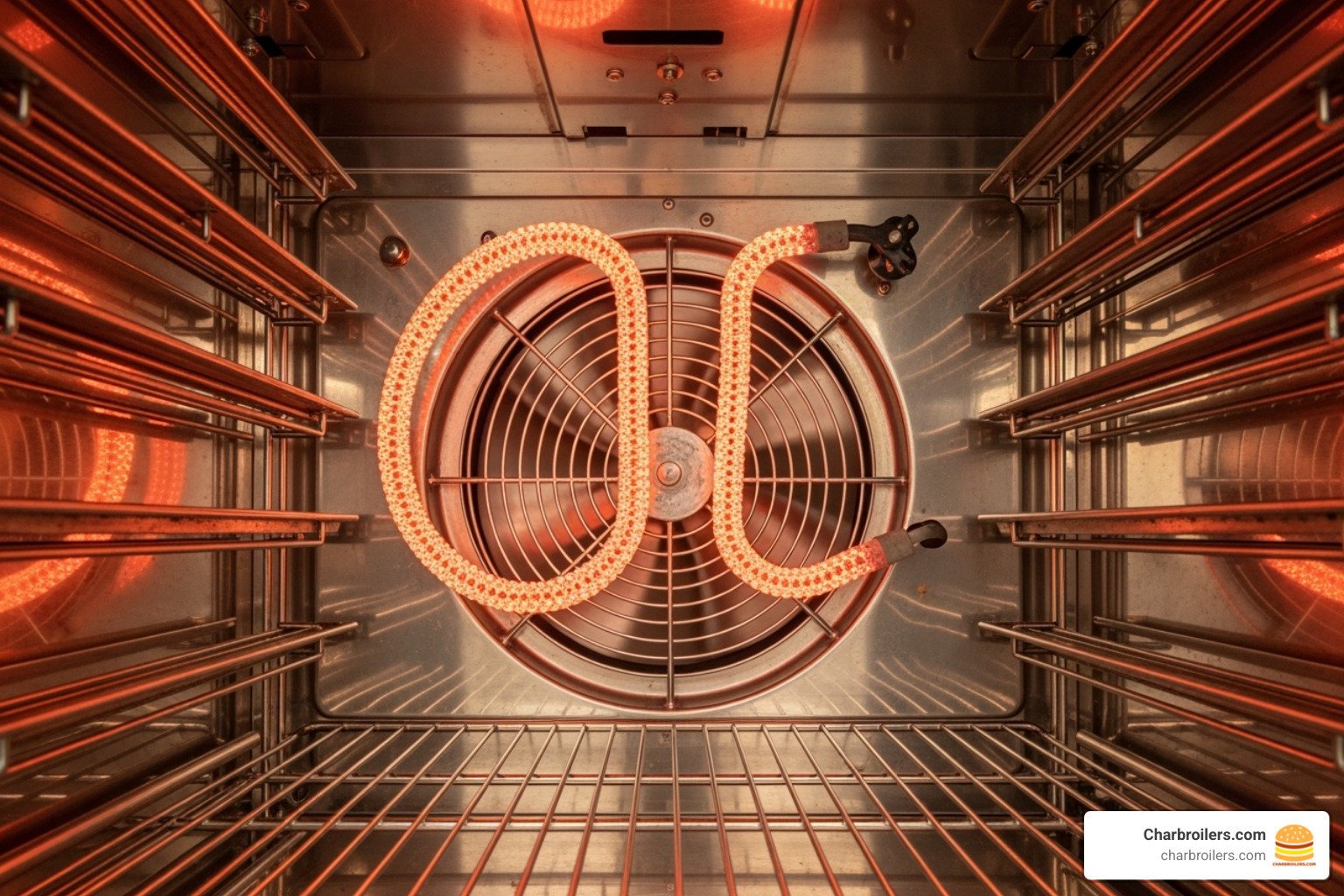
The process is straightforward: a gas burner heats the air, and a fan at the back circulates it. This constant movement eliminates hot and cold spots, ensuring the temperature is consistent from top to bottom. The result? No more rotating pans.
This moving air also speeds up cooking by transferring heat more efficiently. It helps evaporate moisture from food surfaces, creating superior browning and crisping on everything from roasted vegetables to dinner rolls. For a deeper dive, see our guide on how commercial convection ovens operate.
Understanding Different Convection Systems
Not all convection systems are the same. Understanding the differences helps you choose the right oven.
- Fan-assisted convection is the basic setup, adding a fan to a standard gas oven to move heated air. It's effective and common.
- True convection (or European convection) adds a dedicated heating element around the fan. This heats the air before it enters the oven cavity, providing exceptionally consistent temperatures, which is ideal for multi-rack baking.
- Advanced air systems are the top tier, featuring reversing fans that change direction or variable speed fans for precise airflow control. These systems deliver unparalleled uniformity, ensuring everything on multiple racks cooks to the same golden color.
For more on how these systems perform, check out our article on convection cooking systems.
The Role of Gas Heat
Gas provides a "lively heat" with natural moisture, an advantage over electric heat. This moist heat is crucial for roasting, keeping meats like prime rib juicy while the convection fan crisps the exterior.
For baking bread and pizza, the moisture from gas combustion improves crust development. Gas heat is also highly responsive to temperature changes, offering precise control. While electric ovens provide stable, dry heat, the unique characteristics of gas heat—moisture, responsiveness, and power—create a preferred cooking environment for many chefs, especially for roasting and baking. The impact on roasting and baking is clear: foods brown evenly, retain more juices, and develop better flavor.
Key Benefits of a Commercial Gas Convection Oven
A gas convection oven is an investment that transforms your kitchen's efficiency and food quality. The benefits impact everything from service speed to your bottom line.
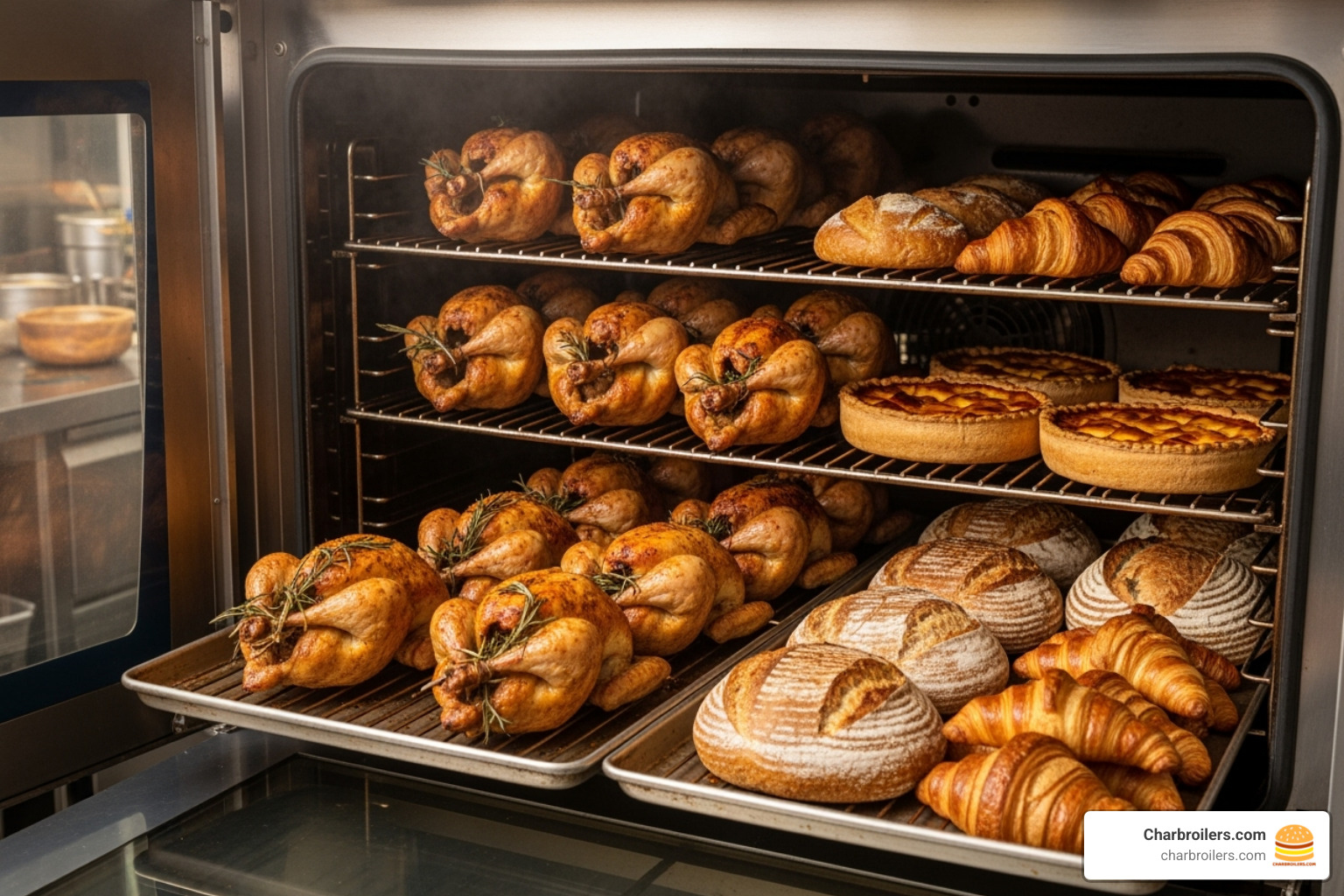
In a commercial kitchen, speed is crucial. A gas convection oven cooks 25-30% faster than traditional ovens, a significant advantage during a dinner rush. The circulating hot air also delivers superior browning and crisping, creating the golden color and texture customers love. This consistency across multiple racks means increased kitchen output without sacrificing quality. You can confidently load several racks knowing everything will cook evenly. See which models excel in our Top Industrial Convection Ovens Reviewed.
Energy Efficiency and Cost Savings
A gas convection oven pays for itself through lower operating costs. Faster cooking and reduced preheat times mean less gas consumption. You can also cook at temperatures 25°F lower than conventional recipes require. With powerful outputs of 30,000 to 60,000+ BTU, these ovens heat quickly and recover fast, leading to potential energy savings of up to 40% compared to older models. Over time, these savings significantly impact your utility bills.
Improved Food Quality
Your reputation depends on food quality. A gas convection oven delivers consistency. The moisture retention from gas heat keeps roasts juicy and baked goods tender. Another key benefit is no flavor transfer between dishes; the circulating air prevents aromas from mixing, so you can bake salmon and apple pie simultaneously. Most importantly, you get consistent results every time. Even heat distribution ensures recipes are reliable, helping your staff deliver the same great experience to customers with every visit.
Find out how the right oven can lift your menu in Convection Perfection: Top Ovens for Your Commercial Kitchen.
Buyer's Guide: Selecting the Right Gas Convection Oven
Choosing the right gas convection oven means investing in your kitchen's productivity. Focus on your specific needs, from volume to menu type, to make the best choice.
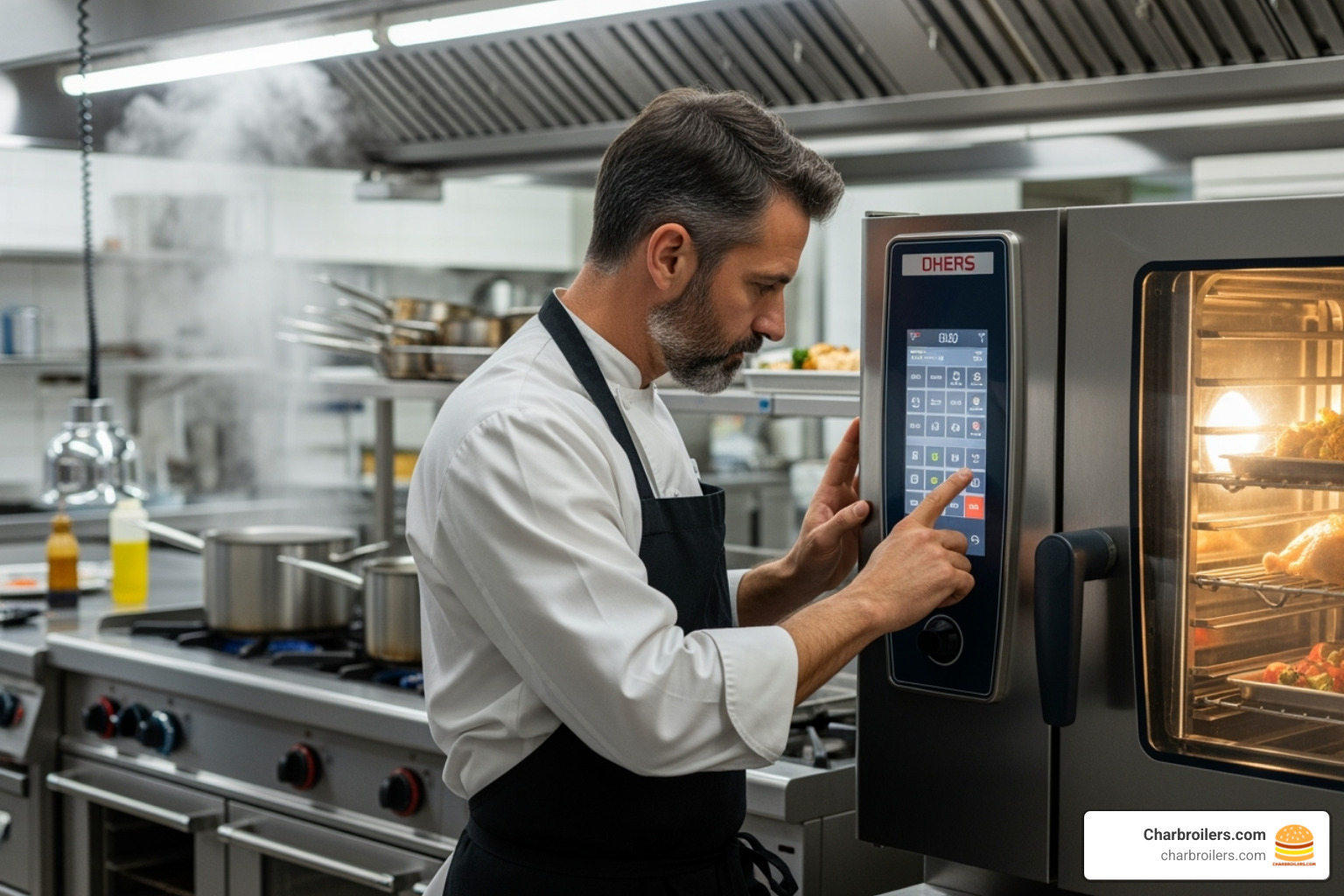
Before comparing models, read The Ultimate Guide to Comparing Commercial Convection Ovens for a solid foundation.
Essential Features and Specifications
- Oven Capacity: Full-size ovens fit standard 18"x26" sheet pans, while half-size models are better for smaller spaces. Double-deck units maximize output without using more floor space.
- BTU Rating: Higher BTUs (33,000 to 60,000+) mean faster preheating and recovery. High-volume kitchens should prioritize a higher BTU rating.
- Construction: Look for durable stainless steel with continuous welds to withstand heavy use and simplify cleaning.
- Door Type: Glass doors allow you to monitor food without heat loss, while solid doors offer slightly better heat retention and durability.
- Controls: Manual knobs are simple and durable. Digital controls offer precision and programmable cycles to standardize recipes.
- Fuel Compatibility: Most ovens use natural gas, but many can be converted to propane (LP). Verify this before purchase.
- Certifications: Ensure the oven has UL, CUL, NSF, or CSA certifications to meet safety and sanitation standards.
- Price Range: Prices range from $3,500 for smaller units to over $20,000 for premium or combi models. Financing can make high-end equipment more accessible.
Advanced Cooking Functions
Modern ovens offer features that expand your menu. Air Fry mode uses high-speed convection for crispy results with minimal oil. Steam cooking capabilities (in combi ovens) provide humidity control for delicate items and perfect bread crusts. Other features like dehydrator functions and smart features with Wi-Fi for remote monitoring add versatility. Explore how these integrate into cooking systems in our guide on Commercial Gas Ranges with Convection Ovens.
Cleaning and Maintenance Features
Easy-to-clean ovens are essential in a busy kitchen.
- Self-cleaning modes use high heat to incinerate residue, saving labor.
- Steam clean functions use water and moderate heat to loosen grime.
- Removable racks and doors make deep cleaning much easier.
- Fingerprint-resistant finishes help maintain a professional appearance.
For detailed cleaning tips, see our Convection Oven Cleaning Hacks.
Gas vs. Electric: Which Convection Oven is for You?
The choice between a gas and electric convection oven depends on your kitchen's infrastructure, cooking style, and budget. Both are excellent options, but they have key differences.
A gas convection oven provides a "lively heat" with natural moisture, ideal for juicy roasts and artisan breads. It heats up quickly but cools down more slowly. An electric oven produces a drier, more stable heat with precise temperature control, which is great for crisping and delicate baking.
| Attribute | Gas Convection Oven | Electric Convection Oven |
|---|---|---|
| Heat Source | Natural gas or propane burner | Electric heating elements (coils, radiant) |
| Temperature Response | Quick to heat up, slower to cool down | Precise temperature control, quicker cool-down |
| Moisture Level | Produces moister heat, ideal for roasting/bread | Produces drier heat, excellent for crisping/baking |
| Installation | Requires gas line connection (professional install) | Requires dedicated electrical circuit (professional install) |
| Operating Cost | Generally lower (gas often cheaper than electricity) | Can be higher (electricity costs vary by region) |
| Upfront Cost | Comparable or slightly higher | Comparable or slightly lower |
Installation for both types requires a professional. Gas ovens need a gas line, while electric ovens need a dedicated high-amperage circuit.
The operating cost typically favors gas, as natural gas is often cheaper than electricity, leading to long-term savings. The upfront cost is usually comparable for both types.
Both gas and electric models use convection fans to circulate air, eliminate hot spots, and speed up cooking. The choice comes down to preference. If you have gas lines and prioritize moist heat, a gas convection oven is a great fit. If you need precise temperature control and have the electrical setup, an electric model may be better.
For more on electric options, see our guide to the Best Commercial Electric Ranges with Convection Ovens.
Installation and Upkeep for Peak Performance
Proper installation and maintenance are key to ensuring your gas convection oven performs safely and efficiently for years.
Installation is not a DIY project. A certified technician must handle the gas line connection to ensure correct pressure, fuel type (natural gas or propane), and leak-free safety. This is essential for meeting local building codes. Equally important is ventilation. A commercial exhaust hood system, sized to handle your oven's BTU output, is required to remove heat, steam, and fumes safely. For detailed guidance, review our resource on Venting and Hood Requirements.
Routine upkeep is your best insurance policy. Daily cleaning of interior and exterior surfaces prevents grease buildup. Use self-clean or steam-clean functions for deeper cleaning, but always remove racks and heavy soil first. Periodically check the convection fan for unusual noises and inspect door seals for damage, as a bad seal wastes energy.
Finally, schedule professional servicing at least once a year. A technician can check gas connections, burner efficiency, and temperature accuracy, catching small issues before they become major problems. Consistent care will reward you with reliable performance and efficiency.
Frequently Asked Questions about Gas Convection Ovens
Do I need to adjust my recipes for a gas convection oven?
Yes. A gas convection oven cooks faster and more efficiently due to its fan. To prevent over-browning, make these two adjustments:
- Reduce the temperature by 25°F from what the recipe calls for (e.g., set it to 350°F instead of 375°F).
- Check for doneness 25-30% sooner than the recipe suggests. An hour-long recipe might be done in 45 minutes.
Also, be mindful that dark pans absorb more heat and may require further adjustments. For more tips, see our Convection Perfection guide.
What is the difference between a standard gas oven and a gas convection oven?
The main difference is the fan. A standard gas oven relies on natural heat rising from a bottom burner, which creates hot and cold spots. A gas convection oven adds a powerful fan that circulates hot air, eliminating those spots. This results in cooking that is 25-30% faster and much more even, especially across multiple racks.
Can you use a gas convection oven without the fan?
Yes. Most gas convection ovens have a standard "bake" mode that turns the fan off, allowing the oven to function like a traditional gas oven. This is ideal for delicate items like soufflés, custards, or certain quick breads that can be disturbed by the moving air. This versatility allows you to choose the best cooking method for any dish.
Conclusion
A gas convection oven is a transformative tool for any commercial kitchen. By circulating hot, moist air, it eliminates hot spots, cooks 25-30% faster, and delivers consistent, high-quality results. The benefits are clear: superior browning, juicier roasts, and significant energy savings. From basic models to advanced units with air fry modes, these ovens are designed for efficiency and performance.
At Charbroilers.com, we know that the right equipment is a strategic investment in your success. A gas convection oven empowers your team to work smarter, serve more customers, and maintain the quality that builds your reputation. It's an appliance that works as hard as you do.
When you're ready to find the perfect equipment for your restaurant, from convection ovens to specialty charbroilers, we're here to help. Explore our comprehensive guide to commercial charbroilers and let us help you build the successful kitchen you envision.