

Top Commercial Ice Makers for Home Use: A Buyer's Guide to Residential Chill
Why Commercial Ice Makers Are Perfect for High-Volume Home Entertaining
A commercial ice maker for home use offers the ultimate solution for homeowners who need reliable, high-capacity ice production. Here's what you need to know:
Key Benefits:
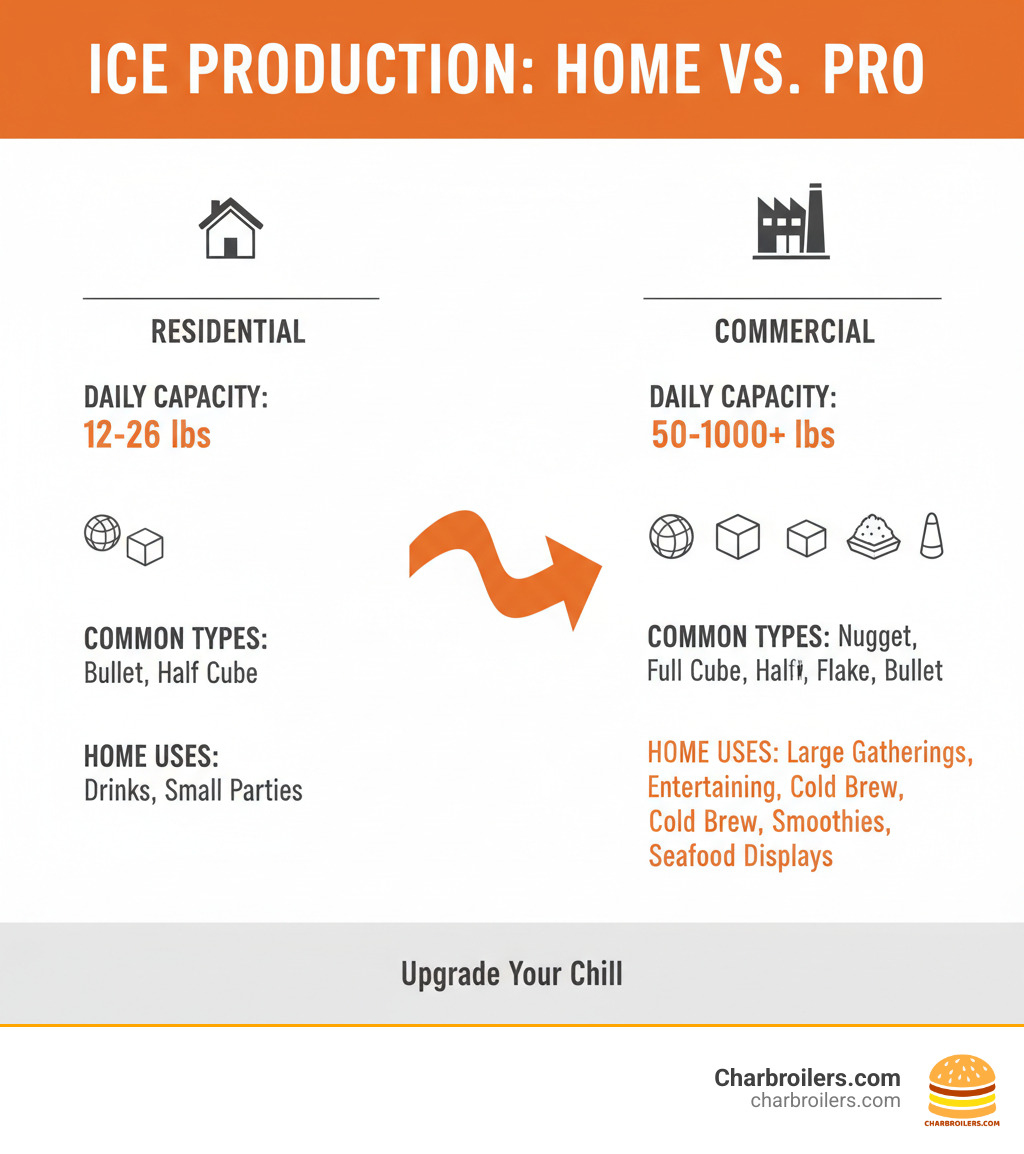
- Production capacity: 50-1000+ pounds of ice per day vs. 12-26 pounds from residential units
- Ice variety: Full cubes, nugget, flake, crescent, and bullet ice types
- Durability: Built for continuous operation with stainless steel construction
- Speed: Consistent ice production without waiting periods
Main considerations:
- Higher upfront costs ($500-$5000+ vs. $150-$500 for residential)
- Installation requirements (water line, drain, electrical)
- Increased energy consumption and maintenance needs
- Noise levels vary by model type
Whether you're running a busy kitchen, hosting frequent gatherings, or simply need a never-ending supply of restaurant-quality ice, commercial units deliver the performance that residential models can't match.
I'm Sean Kearney from Charbroilers.com, and with over a decade in the restaurant equipment industry, I've helped countless clients choose the right commercial ice maker for home and commercial applications. My experience at Amazon.com and founding The Restaurant Warehouse has given me deep insights into what makes these machines work reliably in demanding environments.
Commercial ice maker for home helpful reading:
- Ice Ice Baby: Best Commercial Ice Making Equipment to Keep Your Business Cool
- Cool Choices for Commercial Ice Maker and Bin Setups
- No Bin No Problem: Commercial Ice Makers for Modular Setups
The Pros and Cons: Is a Commercial Ice Maker Right for Your Home?
Let's be honest—running out of ice during a party is embarrassing. You know that moment when guests are holding empty glasses while you're frantically shaking ice cube trays? A commercial ice maker for home eliminates this nightmare forever.
These powerhouse machines produce anywhere from 50 to over 1000 pounds of ice daily. Most home-suitable models fall in the 80 to 200 pound range, which still absolutely crushes the measly 12-26 pounds that residential units offer. That's the difference between having enough ice for a backyard wedding versus enough for maybe two cocktails.
Beyond pure volume, commercial units deliver superior ice quality and lightning-fast production. They're built for the demanding world of restaurants, which means continuous operation without those annoying waiting periods. No more planning your drink schedule around ice production cycles.
But here's the reality check: it's not all perfect cubes and endless margaritas. You'll face a higher upfront investment, increased energy bills, and these machines can be louder than your dishwasher. They also need proper installation with water lines and drainage—not exactly a weekend DIY project.
The space requirements are real too. These aren't compact countertop units you can tuck away. They need breathing room and proper ventilation to work their magic.
For a deeper dive into choosing the right model, check out our guide: Bring the Chill Home: Top Commercial Ice Makers for Residential Use.
Advantages of a Commercial Unit at Home
The magic of a commercial ice maker for home becomes crystal clear once you experience the convenience and quality they deliver.
Consistent, abundant supply is the game-changer here. Large families and frequent entertainers know the frustration of constantly running out of ice. With a commercial unit, that stress vanishes. Whether you're hosting a summer BBQ for 50 people or just love ice-cold drinks throughout the day, you'll have ice on demand.
Variety of ice types opens up a whole new world of possibilities. While residential makers usually stick to one boring ice shape, commercial units offer everything from chewable nugget ice for soft drinks to crystal-clear full cubes for cocktails. Want to impress guests with restaurant-quality drinks? Half cubes chill faster, while flake ice is perfect for seafood displays at dinner parties.
The durability factor can't be overstated. These machines are built with heavy-duty stainless steel components designed to survive the chaos of commercial kitchens. That construction translates to years of reliable service in your home—often outlasting multiple residential units.
Party hosting becomes effortless when you never have to worry about ice. No more emergency trips to the store for bags of ice or asking guests to bring some. You're always ready for unexpected company or last-minute gatherings.
Better tasting drinks are an unexpected bonus. Commercial ice makers often produce denser, slower-melting ice that keeps drinks colder longer without watering them down. Many units include or recommend water filtration systems, so your ice tastes cleaner and fresher than anything from a basic freezer tray.
For more insights on commercial ice equipment, read our blog: Ice Ice Baby: Best Commercial Ice Making Equipment to Keep Your Business Cool.
Potential Drawbacks for Residential Use
Before you fall in love with the idea of endless ice, let's talk about the real challenges of owning a commercial ice maker for home.
Operating costs hit your wallet in multiple ways. These powerful machines consume significantly more electricity and water than residential units. The monthly utility bill increase can be surprising, especially if you're used to standard home appliances. Some homeowners find that for very occasional use, buying bagged ice might actually be more economical.
Maintenance demands are more intensive than typical home appliances. You'll need to clean these machines regularly to prevent mold and slime buildup—a serious health concern if neglected. Descaling and sanitizing become part of your routine, not occasional chores. Skip the maintenance, and you'll face frequent breakdowns that can be expensive to repair.
Noise levels can be disruptive in quiet home environments. Air-cooled models generate noticeable fan noise as they dissipate heat. That constant hum might not bother you in a busy kitchen, but it could drive you crazy if the unit is near living areas or bedrooms.
Space and ventilation requirements don't bend to fit your home's layout. These units need specific clearance around them to operate efficiently and prevent overheating. They're designed for commercial spaces, so they might dominate your kitchen or require relocating other appliances.
Installation complexity goes far beyond plugging in an appliance. You'll need a dedicated water line, proper drainage (either gravity-fed or with a drain pump), and specific electrical requirements. Professional installation is usually necessary, adding to your initial investment and timeline.
Understanding these challenges upfront helps you make a realistic decision about whether a commercial ice maker truly fits your lifestyle and budget.
Finding Your Perfect Chill: Types and Features to Consider
Choosing the right commercial ice maker for home is like picking the perfect ingredient for a gourmet meal – it has to be just right for your specific needs and space. The good news? There's more variety available than you might expect, each with its own unique benefits.
When it comes to installation types, undercounter models are the clear favorites for home integration. These sleek units slip neatly beneath your standard countertops (typically 34-36 inches high), creating a built-in look that rivals any high-end appliance. They're perfect for home bars, kitchens, or entertaining areas where you want maximum ice production without sacrificing precious floor space.
Freestanding units offer a different approach – think of them as the powerhouses of home ice making. These larger, self-contained units resemble compact refrigerators and deliver higher production and storage capacities. They're ideal if you have a basement, utility room, or large pantry where space isn't as tight and you need serious ice volume.
Countertop options exist in the commercial field, though they're less common for true commercial-grade home use. While some smaller units produce nugget ice and water, their production capacity typically falls short of what most people expect from a commercial ice maker.
The air-cooled versus water-cooled decision is crucial for home installations. Air-cooled units are far more popular and practical for residential use – they dissipate heat through vents and are generally easier to install. The trade-off? They need good airflow and can be noisier due to their cooling fans. Water-cooled units run quieter and more efficiently in hot environments, but they require a dedicated water line for cooling, which increases both water usage and installation complexity. For most homes, air-cooled undercounter models hit the sweet spot of performance and practicality.
For more detailed guidance on setting up your ice system, explore Cool Choices for Commercial Ice Maker and Bin Setups.
Types of Ice and Their Best Home Uses
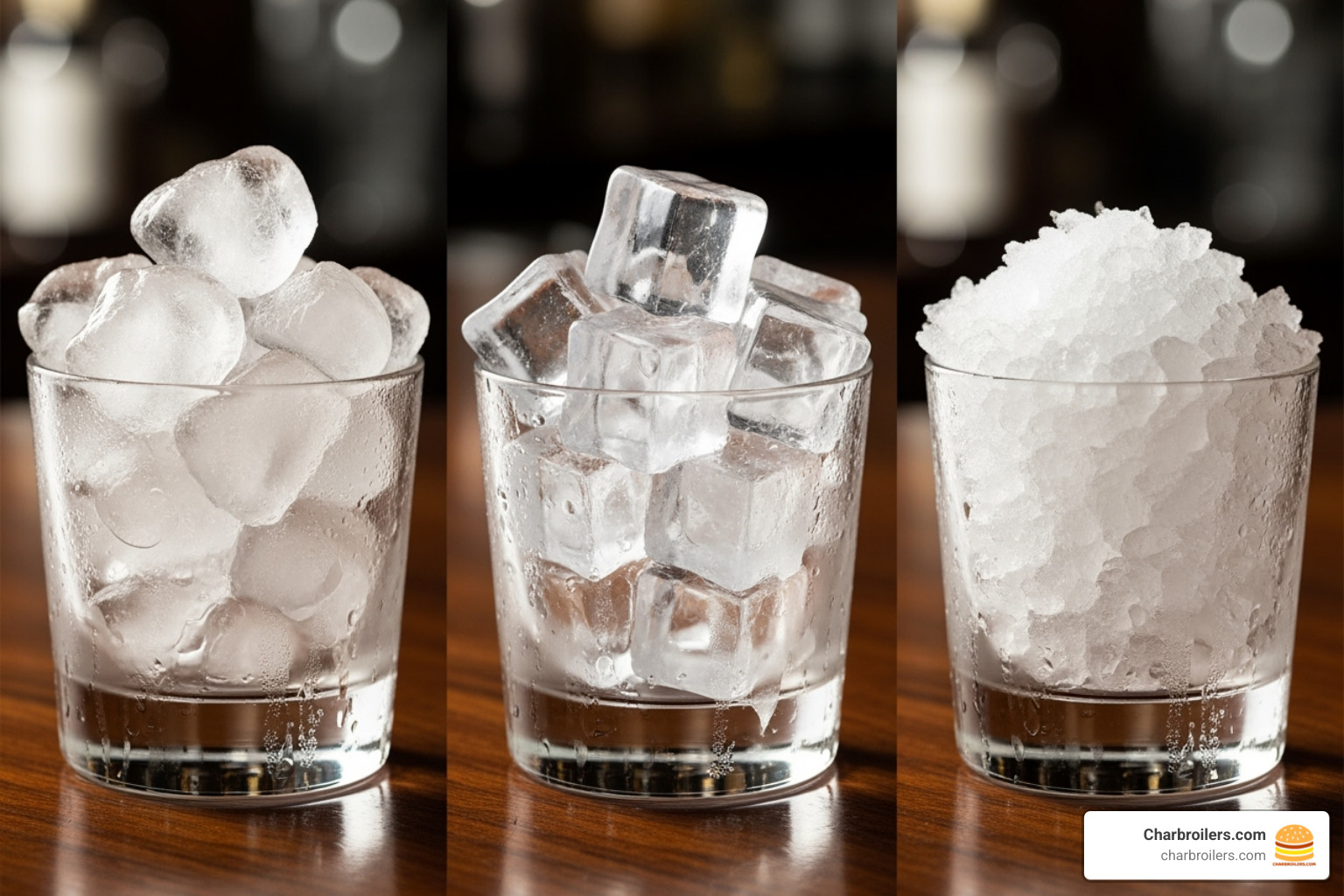
Here's where things get really exciting – the incredible variety of ice shapes that a commercial ice maker for home can produce. Gone are the days of settling for basic freezer cubes! The type of ice you choose can transform your drinks and even change how you entertain.
Nugget ice is the crowd-pleaser that's soft, chewable, and perfect for soft drinks and smoothies. It's the ice you get at your favorite fast-food restaurant – the kind people drive across town for. At home, it's fantastic for cocktails because it chills drinks quickly and has that satisfying crunch.
Full cubes are the neat choice for serious cocktail enthusiasts. These dense, slow-melting cubes look professional in a whiskey glass and won't water down your premium spirits too quickly. They're also excellent for everyday drinks when you want ice that lasts.
Half cubes offer a nice middle ground – they're smaller than full cubes so they chill drinks faster, but still maintain good density and melting characteristics. They're versatile for everything from iced tea to mixed drinks.
Flake ice might seem unusual for home use, but it's perfect for seafood displays, salad bars, or therapeutic applications. Some homeowners love it for blended drinks or when they need ice that conforms to containers.
Crescent ice and bullet ice round out the options, each with their own melting characteristics and aesthetic appeal. The beauty of commercial units is that you can often choose the exact ice type that matches your lifestyle and preferences.
For specialized ice needs, check out our guide on Commercial Crushed Ice Maker options.
What to Look for in a commercial ice maker for home
Shopping for a commercial ice maker for home means balancing professional-grade features with residential practicality. Production capacity is your starting point – think honestly about your peak ice needs. A unit producing 80-150 pounds daily typically handles most active households and entertaining scenarios without overwhelming your space or budget.
Storage bin size matters just as much as production capacity. There's no point in making 200 pounds of ice daily if your bin only holds 25 pounds. Look for units with storage that matches your usage patterns – larger bins mean less frequent emptying but require more space.
Self-cleaning cycles are non-negotiable for home use. These automated systems make maintenance manageable for busy homeowners who don't have commercial kitchen staff. Units with programmable cleaning cycles can run maintenance during off-peak hours, keeping your ice fresh and your machine healthy.
Water filtration systems lift your ice quality dramatically. Whether integrated or recommended as an add-on, good filtration removes chlorine, sediments, and other impurities that affect taste and clarity. Your cocktails and everyday drinks will taste noticeably better.
Energy efficiency becomes crucial for home use since you're paying the electricity bills directly. Look for ETL listed units that meet safety and efficiency standards. While commercial units typically use more energy than residential models, efficient commercial units can still be reasonable to operate.
Stainless steel construction isn't just about looks – it's about durability and hygiene. Commercial-grade stainless steel resists corrosion, cleans easily, and maintains its appearance over years of use.
Automatic shut-off features protect both your machine and your home. These systems prevent overflow, detect when the bin is full, and shut down operation when water supply issues occur.
Ready to explore specific models? Browse a selection of models on Charbroilers.com to see these features in action and find the perfect fit for your home.