

Cool Choices for Your Business: Finding the Perfect Commercial Refrigerator
Why Space-Saving Refrigeration Matters in Commercial Kitchens
A commercial undercounter refrigerator is a compact, counter-height refrigeration unit designed to fit beneath standard countertops in foodservice environments. Here's what you need to know:
Key Features:
- Space-Saving Design - Fits underneath countertops without taking up valuable floor space
- Convenient Access - Keeps ingredients within arm's reach at prep stations
- Worktop Surface - Many models provide an additional work surface on top
- Typical Sizes - Available in widths from 24" to 60", heights from 32" to 35"
- Configuration Options - Doors, drawers, or combination units to suit different needs
Best For:
- Restaurants and pizzerias needing efficient prep station cooling
- Bars requiring quick beverage access
- Sandwich shops storing frequently-used ingredients
- Any kitchen where floor space is limited
In busy commercial kitchens, every square foot counts. Traditional reach-in refrigerators take up floor space and force staff to walk back and forth, wasting time and energy. Undercounter refrigeration solves this by putting cold storage exactly where you need it. These compact units slide beneath prep counters, keeping ingredients within arm's reach while often providing an additional work surface.
Having ingredients at the point-of-use significantly boosts kitchen efficiency. Whether you're running a sandwich shop, pizzeria, or full-service restaurant, strategically placed undercounter units can transform your kitchen's workflow.
I'm Sean Kearney from Charbroilers.com, and I've spent over a decade helping restaurants find the right equipment at fair prices, including helping hundreds of kitchens optimize their layout with commercial undercounter refrigerators. I've seen how the right cooling solution can make or break a kitchen's efficiency.
Let's explore how to find the perfect undercounter refrigerator for your business.
Commercial undercounter refrigerator terminology:
Why Undercounter Refrigeration is a Game-Changer for Your Kitchen
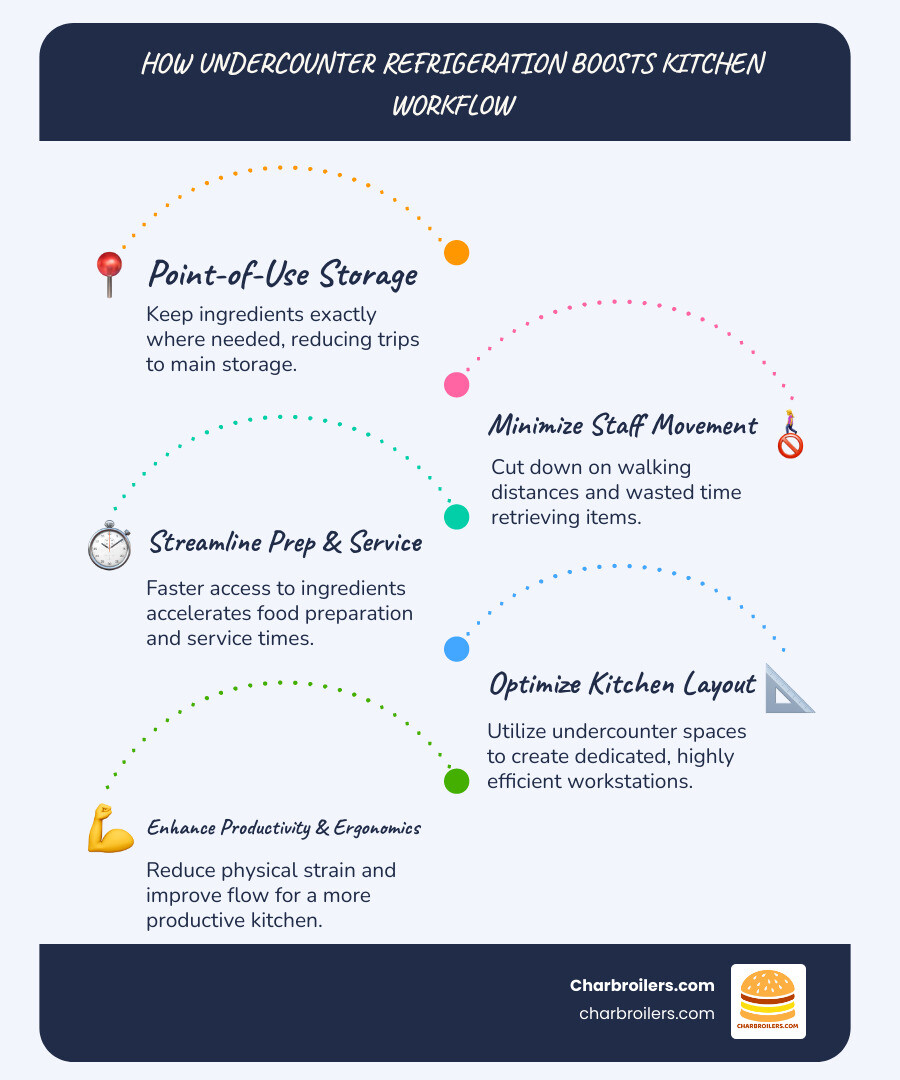
In a commercial kitchen, every second and every inch of space is precious. During a dinner rush, walking across the kitchen for an ingredient can disrupt service. This is why commercial undercounter refrigerators are essential. They aren't just convenient; they fundamentally change how your kitchen operates.
Think about your current setup. How many times does a cook walk to the walk-in cooler during a shift? Each trip takes time and breaks concentration. Imagine if those ingredients were tucked neatly under the prep counter where they're being used.
These compact units slide beneath existing countertops, so they don't take up valuable floor space. You get critical cold storage without sacrificing your kitchen's footprint. Many models even provide an additional work surface on top.
The real magic happens when you place these units strategically. Your line cooks aren't running back and forth. Your bartender isn't leaving the bar to grab garnishes. This is point-of-use storage, and it's a genuine efficiency multiplier.
The benefits ripple through your operation. Staff work faster, food stays fresher, and inventory management becomes simpler. Even food waste can drop because ingredients are properly organized and visible.
If you're new to commercial refrigeration, our guide Commercial Refrigeration Equipment Explained: No Sweat breaks down everything you need to know.
Boosting Workflow and Efficiency
Placing cold storage right where the work happens completely rethinks your kitchen's workflow.

Picture your salad station during a lunch rush. With a commercial undercounter refrigerator, the chef reaches down, pulls out a drawer with romaine, grabs Parmesan from the next, and keeps moving. No walking, no waiting, no breaking their rhythm.
This streamlined prep station setup transforms service times. Every dish comes together faster because everything is within reach. Kitchen ergonomics also improve, as reaching down is easier than constantly walking to a walk-in cooler.
There's also a safety benefit. When you reduce kitchen traffic, you reduce chaos and the chance of accidents. Your team can focus on cooking instead of dodging each other. The impact on service times is real and measurable when every station has its own dedicated refrigeration.
The Strategic Advantage of Compact Cooling
Commercial undercounter refrigerators provide professional-grade cooling without demanding prime real estate. Most kitchens have limited space for cooking equipment, prep tables, and staff. Traditional reach-in refrigerators eat up floor space, but undercounter units tuck into spaces you're already using.
This allows for creating dedicated workstations. A salad and sandwich prep area can have an undercounter unit with drawers for greens and cheeses. A glass-door undercounter refrigerator keeps bottled beverages visible and cold for bar service.
The versatility in placement is remarkable. These units work well in a traditional kitchen line, behind a bar, or in catering and outdoor kitchen setups. They adapt to your space.
Pizza shops use them for dough and toppings, while coffee shops use them for milk and cream. The beauty of compact cooling is that it distributes refrigeration throughout your operation, leading to shorter walks, better organization, and more efficient use of your entire kitchen.
For more insights on space-efficient cooling solutions, check out our article Compact Cooling Champions: Commercial Mini Fridges Worth Your Investment.
Decoding the Options: Types of Undercounter Units
When shopping for a commercial undercounter refrigerator, understanding the different configurations will help you find exactly what your kitchen needs. It's about matching the right functionality to your specific operation.
For a broader perspective on commercial refrigeration, take a look at our article on Keep Your Cool With These Commercial Refrigerators for Sale.
Doors, Drawers, or a Combination?
Your first big decision is how to access your cold storage. Each configuration has strengths suited to different kitchen operations.
Solid door units are workhorses offering maximum insulation and energy efficiency. They are ideal for storing bulk ingredients or items that don't need constant visual checks.
Glass door models are perfect when product visibility matters, like behind a bar. They allow for quick visual inventory checks without opening the door. The trade-off is they are slightly less energy-efficient than solid doors.
Drawer-style commercial undercounter refrigerators are excellent for prep-heavy operations. During a rush, a cook can pull out a specific ingredient without exposing everything else to warm air. Each drawer becomes an organized compartment, which genuinely speeds up service.
Some manufacturers offer combination units that mix doors and drawers, providing flexibility for different storage needs in a single footprint.
Here's how doors and drawers stack up:
| Feature | Doors (Solid/Glass) | Drawers |
|---|---|---|
| Pros | Better insulation with solid doors; product visibility with glass; often more cost-effective; can store taller items | Excellent organization and compartmentalization; quick, easy access to specific items; less cold air loss when opened; ideal for prep stations with many small ingredients |
| Cons | More cold air loss when opened (solid); less organization inside (solid); less energy efficient (glass) | Can be more expensive; may not accommodate very tall items; requires more precise organization to maximize space |
| Best Use Cases | Bulk storage, beverage display, general cold storage | High-volume prep lines, salad bars, sandwich stations, bakeries |
Refrigerators vs. Freezers
Commercial undercounter refrigerators and undercounter freezers are different pieces of equipment designed for different temperature ranges.
Undercounter refrigerators maintain temperatures between 33°F and 40°F. This is the sweet spot for fresh ingredients like dairy, vegetables, prepped foods, and beverages.
Undercounter freezers operate at 0°F or below for long-term frozen storage of meats, prepared dishes, or ice cream.
Your menu will determine which type you need. A sandwich shop might rely on refrigeration, while a pizzeria may need both refrigeration for fresh toppings and freezer space for backup ingredients.
If you want to explore freezers more deeply, we've written guides like Double the Doors, Double the Chill: Everything You Need to Know About Commercial Freezers and The Ultimate Guide to Commercial Cool Chest Freezers: 3.5, 5.4, and 7 Cu. Ft. Models.
Specialized Models for Unique Needs
The world of commercial undercounter refrigerators includes specialized models for specific situations.
ADA-compliant units are built to meet Americans with Disabilities Act guidelines. They are shorter—around 32 to 32.5 inches high—to fit under lower countertops and remain accessible to all staff. This is about creating an inclusive workplace where everyone can do their job effectively.
Low-profile refrigerators offer cooling power in an even more compact package for exceptionally tight spaces.
Bar refrigerators are purpose-built for beverage service, often featuring glass doors, specialized shelving for bottles and cans, and sometimes built-in garnish storage.
Outdoor-rated units are built with robust materials and improved insulation to handle varying weather conditions for patio bars, poolside service, or outdoor catering stations.
How to Choose the Perfect Commercial Undercounter Refrigerator
Choosing the right commercial undercounter refrigerator is a strategic investment in your operation's future. The decision will affect your kitchen's workflow, food safety, and long-term costs.

Take time to analyze your business needs. What food are you serving? How busy is your kitchen? Where will the unit be placed? Durability should be a top priority, as a well-built unit will save you money and headaches in the long run.
Your refrigerator must also meet health and safety standards. For detailed information, check out our guide on Cool Compliance: Your Guide to NSF/ANSI Standard 7 for Refrigerators and Freezers.
Sizing Up Your Needs: Width and Capacity
Before you choose a model, grab a tape measure. You need exact measurements of your available space—height, width, and depth. Remember to account for ventilation clearance. Many modern units feature front-breathing refrigeration systems, which are perfect for tight spaces as they don't need clearance at the back.
Widths range from compact 12-inch models to 60 inches or wider, with common sizes being 24", 27", 36", 48", and 60". Your choice depends on your volume. A small café might need a one or two-section unit, while a busy restaurant prep line will likely need a 48-60 inch model.
Capacity is measured in cubic feet, ranging from about 5 to 15 cubic feet or more. The right capacity ensures you have enough storage for proper organization and air circulation.
Built to Last: Key Construction and Design Features
The construction of a commercial undercounter refrigerator determines its longevity.
Stainless steel construction is ideal for a commercial kitchen. It resists corrosion, withstands daily abuse, and is easy to clean. Interiors often feature aluminum panels for good thermal properties.
LED interior lighting is a small but important detail. Bright, energy-efficient LEDs help staff find items quickly, reducing the time the door is open.
Self-closing doors and drawers are invaluable in a busy kitchen, preventing energy waste and maintaining consistent temperatures.
Digital temperature controls with clear displays remove the guesswork from food safety, allowing you to set and monitor precise temperatures.
A self-cleaning condenser is a feature that makes maintenance easier. These systems automatically clear dust from the condenser coil, improving efficiency and lifespan.
Many units also offer worktop surfaces, some with backsplashes, for extra prep space. Casters make it easy to move the unit for cleaning.
Finding a Reputable Commercial Undercounter Refrigerator Brand
The manufacturer you choose is important. A reputable brand means reliable performance and available parts. Look at their reputation in the industry. How long have they been making commercial refrigeration? What do other restaurant owners say? Established brands have earned their place through years of proven performance.
Parts availability is crucial. You want a brand where your supplier can get parts quickly. Good customer support is also important, with solid warranties and responsive service teams.
Before you commit, ask your supplier these questions:
- What's the typical lifespan of this brand's units?
- How quickly can you source replacement parts?
- What does the warranty cover, and for how long?
- Do you offer installation and maintenance services?
- Can you connect me with other local businesses that use this brand?
The answers will help you make a smart long-term investment.
Beyond the Basics: Energy, Maintenance, and Applications
When investing in a commercial undercounter refrigerator, the sticker price is just the beginning. The real value is revealed over time through operational costs, longevity, and versatility. These compact units have an outsized impact on your kitchen's efficiency and utility bills.
Energy Efficiency and Cost Savings
Your energy bill is a daily operational cost. A well-chosen commercial undercounter refrigerator can save you hundreds of dollars annually.
Energy Star certification is the first sign of an efficient unit. These models meet rigorous standards set by the EPA, using significantly less electricity. For details on qualifying models and savings, see the ENERGY STAR page for commercial refrigerators and freezers.
The quality of insulation also makes a massive difference. High-density insulation keeps cold air in, reducing how hard the compressor has to work. Properly fitted gasket seals around doors and drawers are also critical for preventing cold air from escaping.
Modern units also use eco-friendly refrigerants with a lower environmental impact. To understand acceptable refrigerant options and compliance, review the EPA's guidance on SNAP refrigerants. Choosing an energy-efficient model saves money and reduces your kitchen's carbon footprint.
Essential Maintenance for Optimal Performance
Regular maintenance is the best way to keep your commercial undercounter refrigerator running smoothly and can save you thousands in repair costs.
The condenser coil needs monthly attention. Dust and grease buildup forces the compressor to work overtime, wasting energy and shortening its lifespan. Cleaning the condenser filter monthly can add years to your equipment's life.
Temperature monitoring should be a regular habit. Use an independent thermometer to verify your unit is maintaining the proper range between 33 F and 40 F to prevent food safety issues.
Inspect door and drawer gaskets for cracks or tears. A damaged gasket wastes energy, so replace worn ones promptly.
Keep the interior clean with food-safe cleaning products to prevent odors and maintain hygiene. Also, avoid overloading the unit to ensure proper airflow for even cooling.
Finally, schedule professional servicing at least once a year. A qualified technician can check refrigerant levels, inspect components, and catch small issues before they become expensive problems.
Tailoring Refrigeration to Your Business Concept
Commercial undercounter refrigerators adapt beautifully to different foodservice concepts.
In restaurants, they keep prepped ingredients and sauces within arm's reach. Pizzerias use them to store dough, cheese, and toppings at the prep table.
Sandwich shops rely on drawer units to organize deli meats, cheeses, and vegetables for fast assembly. In bars, they keep beverages, garnishes, and mixers chilled and accessible.
Catering businesses love the flexibility of transporting these units to event venues. For outdoor kitchens, outdoor-rated models ensure cool drinks and fresh foods are ready to serve, regardless of the weather.
These units also pair well with other equipment, like an ice station. If you're interested in optimizing your ice setup, check out our guide: Cool Choices for Commercial Ice Maker and Bin Setups.
Frequently Asked Questions about Commercial Undercounter Refrigerators
When you're investing in a commercial undercounter refrigerator, it's natural to have questions. Here are some of the most common concerns.
What are the typical warranty considerations?
Most commercial undercounter refrigerators come with a parts and labor warranty for one to three years. The compressor, the heart of the system, often has a separate, longer warranty of five to seven years.
Before buying, review the warranty details. Understand what's covered, such as service calls, replacement parts, and labor costs. A thorough review now can prevent surprises later.
Where can I find reliable suppliers for these units?
You can find reliable suppliers at dedicated commercial kitchen equipment dealers, restaurant supply stores, and specialized online retailers like Charbroilers.com.
Choose suppliers who offer installation support, after-sales service, and easy access to replacement parts. Check online reviews and ask for recommendations from other local restaurant owners to find a trustworthy partner.
How tall is a standard undercounter refrigerator?
Standard commercial undercounter refrigerators are designed to fit under a typical 36-inch high countertop. The units themselves are usually between 32 and 35 inches tall, which leaves room for necessary ventilation.
ADA-compliant models are shorter, typically around 32 inches high, to fit under lower countertops and ensure accessibility for all staff members. Proper clearance is crucial for performance, efficiency, and lifespan, so always measure your space carefully.
Conclusion
Finding the perfect commercial undercounter refrigerator is a key step toward a more efficient kitchen. This guide has covered everything from choosing between doors and drawers to sizing your unit, identifying key construction features, and performing essential maintenance.
The right undercounter unit acts as a silent partner, keeping ingredients fresh and accessible. It reduces staff movement, streamlines workflow, and frees up valuable floor space, allowing you to focus on serving great food.
At Charbroilers.com, we know that smart equipment choices lead to a more efficient and profitable operation. A commercial undercounter refrigerator is a strategic investment that improves how your kitchen runs, how your staff works, and ultimately, your bottom line.
Ready to optimize other areas of your kitchen? Explore our complete Guide to Commercial Charbroilers for Your Restaurant for more expert advice on building the professional kitchen your business deserves.