

Combo Cool: Why a Refrigerator Freezer Combo is Your Kitchen's Best Friend
The Ultimate Space-Saver: An Introduction to Refrigerator Freezer Combos
A commercial refrigerator freezer combo is an all-in-one storage solution that combines both refrigeration and freezing capabilities in a single unit, designed specifically for commercial kitchens. Here's what you need to know:
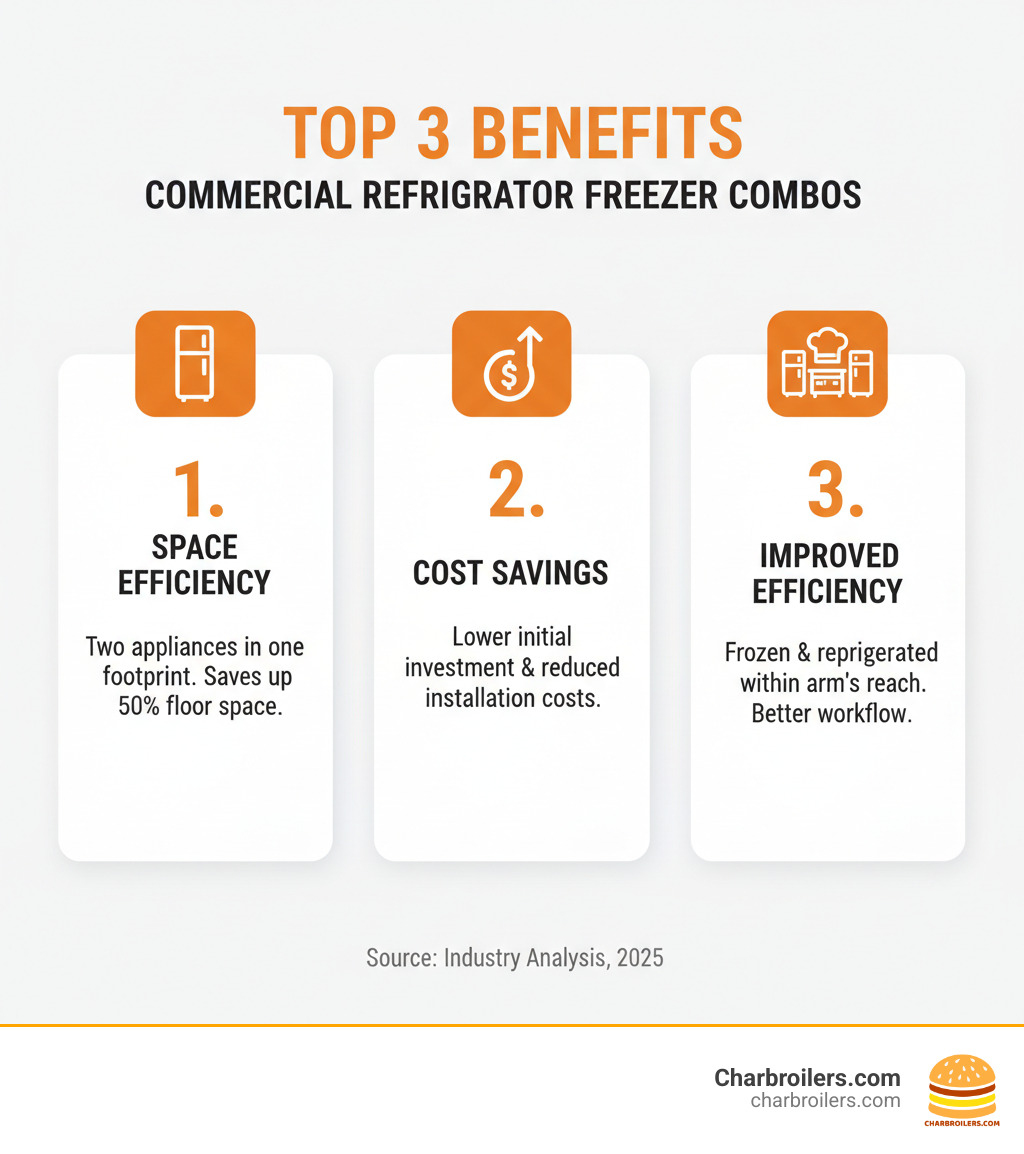
Top Benefits:
- Space Savings - Consolidates two appliances into one footprint, freeing up valuable kitchen space
- Dual Temperature Zones - Refrigerator section (33°F-41°F) and freezer section (-8°F-0°F) in one unit
- Cost Effective - Lower initial investment than buying separate units
- Improved Workflow - Keep frequently used frozen and refrigerated items easily accessible in one location
Available Configurations:
- Top-and-bottom or side-by-side designs
- One-section or two-section models
- Reach-in, undercounter, or worktop styles
- Solid doors (more durable) or glass doors (better visibility)
- Widths ranging from 26" to 72"
Price Range: $2,300 to $15,000+ depending on size, brand, and features
As one restaurant equipment supplier puts it, "Space is a precious commodity in any kitchen." With kitchens already packed tight, the thought of adding another appliance is daunting. This is exactly why combo units have become so popular.
These units let you store ice cream and meat in the freezer section while keeping milk and eggs in the refrigerated section—all without taking up the floor space of two separate appliances. Top brands include True, Beverage-Air, Hoshizaki, Turbo Air, and Continental Refrigerator, with most units running on standard 115V power.
I'm Sean Kearney, founder of Charbroilers.com. With over a decade in the restaurant equipment industry, I've seen how a well-chosen commercial refrigerator freezer combo can transform a cramped kitchen into an efficient workspace.
Key terms for commercial refrigerator freezer combo:
Why Your Kitchen Needs a Dual-Temperature Powerhouse
Walk into any busy commercial kitchen and you'll see the same challenge everywhere: too much equipment, not enough space. Between prep tables, cooking stations, and storage units, finding room for everything feels like solving an impossible puzzle. This is exactly why a commercial refrigerator freezer combo has become such a game-changer for restaurant owners.
The space-saving advantage alone is remarkable. Instead of finding room for both a commercial refrigerator and a separate freezer—each taking up precious floor space—you get both functions in a single footprint. For smaller kitchens or tight layouts, this consolidation can be the difference between a cramped workspace and one where your staff can actually move around comfortably. That extra floor space? Use it for another prep station, additional cooking equipment, or simply give your team more breathing room during the dinner rush.
Then there's the cost-effectiveness. Yes, a commercial refrigerator freezer combo represents a real investment, typically ranging from $2,300 to $15,000+ depending on size and features. But here's the thing: buying one quality combo unit is almost always more economical than purchasing two separate high-quality units. You're paying for one delivery, one installation, and managing one piece of equipment instead of two. Over time, those savings add up significantly.
The workflow improvements are where these units really prove their worth. Picture your line cook during the evening rush. They need frozen shrimp from the freezer and fresh herbs from the refrigerator. With separate units across the kitchen, that's extra steps, wasted time, and unnecessary movement during the busiest moments. With a combo unit, everything's right there—often within arm's reach. Those saved seconds multiply across hundreds of dishes each night, leading to faster service and a calmer kitchen environment.
Versatile storage is another major benefit. You're getting dual-temperature zones that work independently: the refrigerator section maintains 33°F to 41°F for dairy, fresh produce, and beverages, while the freezer section holds -8°F to 0°F for meats, ice cream, and frozen ingredients. This consolidated storage means you can adapt quickly to menu changes without reorganizing your entire kitchen setup.
At Charbroilers.com, we've helped countless restaurant owners optimize their kitchen layouts with the right refrigeration solutions. If you're still weighing your options, our Detailed Guide to Comparing Commercial Refrigerators offers a broader perspective on choosing the perfect cooling equipment for your operation.
How to Choose the Perfect Commercial Refrigerator Freezer Combo
Finding the right commercial refrigerator freezer combo for your kitchen isn't about picking the shiniest model or the one with the most bells and whistles. It's about understanding your space, your workflow, and what you actually need to keep your operation running smoothly. Think of it as a partnership—this unit will be working alongside you every single day, so it needs to fit naturally into your kitchen's rhythm.
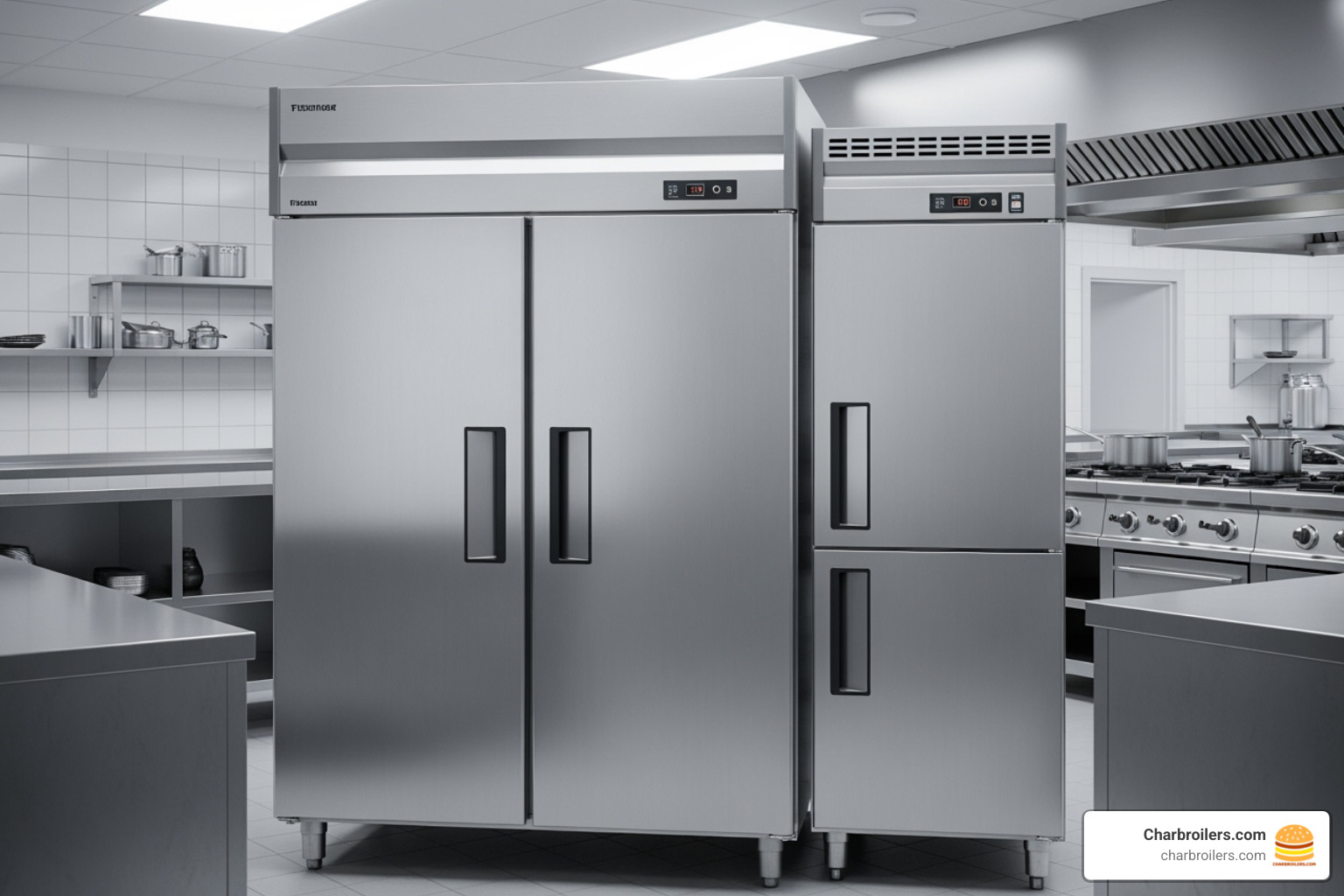
When I talk with restaurant owners about choosing their combo unit, we always start with the fundamentals. First up is sizing and capacity. Grab a tape measure and get the exact dimensions of where this unit will live. Don't forget to account for door swing clearance and ventilation space—you'd be surprised how many people overlook this. Then think about your actual storage needs. How much frozen product do you go through in a typical week? What about refrigerated items?
Combo units range from compact undercounter models at around 5.8 cubic feet all the way up to massive multi-door units with over 74 cubic feet of storage. You'll commonly see capacities like 36, 46, or 71 cubic feet. Here's a tip: don't just buy for today's needs. If your business is growing, give yourself room to expand.
Your kitchen layout matters more than you might think. A side-by-side configuration might work beautifully in a linear kitchen where your prep flows in one direction. A top-and-bottom setup could be perfect if you're working with limited floor space but have room to go vertical. Consider where this unit sits in relation to your prep stations, cooking line, and receiving area. Some units come with casters—those rolling wheels can be a lifesaver when you need to deep clean behind the unit or rearrange your kitchen.
Your menu should guide your decision too. If you're running a pizzeria with lots of frozen dough and toppings, you'll want more freezer space. A farm-to-table restaurant focused on fresh ingredients might need more refrigerator capacity. The refrigerator-to-freezer ratio varies between models—some split it 50/50, while others lean heavier toward one side or the other.
For more detailed guidance on commercial refrigeration decisions, our Commercial Refrigeration: Your Essential Buying Guide walks you through everything step by step.
Understanding the Types of Commercial Refrigerator Freezer Combos
The commercial refrigerator freezer combo market offers something for just about every kitchen setup. Understanding your options helps you make a choice that truly fits.
Reach-in units are the workhorses you see in most commercial kitchens. These upright units can be one-section with a single door or two-section with double doors. Within reach-ins, you'll find side-by-side configurations where the refrigerator and freezer sit next to each other, dividing the width. There are also top-and-bottom models where one compartment stacks above the other—typically with the freezer on bottom. These units range from compact 26-inch models to expansive 72-inch behemoths.
For tight spaces, undercounter models are absolute game-changers. They tuck neatly beneath your countertops, giving you cold storage right where you need it without eating up your limited floor space. I've seen these transform cramped kitchens into functional workspaces.
Worktop models take the undercounter concept a step further. They feature a durable stainless steel top that doubles as prep space. Imagine prepping sandwiches with your refrigerated vegetables and frozen proteins stored just inches below your cutting board. It's efficiency at its finest.
Solid Doors vs. Glass Doors: What's the Best Choice?
The door debate is real, and there's no universal right answer. Both solid and glass doors have earned their place in commercial kitchens, but for different reasons.
Solid doors are the tough guys of the refrigeration world. They can take a beating in busy back-of-house environments where doors get slammed and bumped constantly. Their superior insulation keeps temperatures steady and energy costs down. If you're running a high-volume kitchen where durability matters more than visibility, solid doors are your friend.
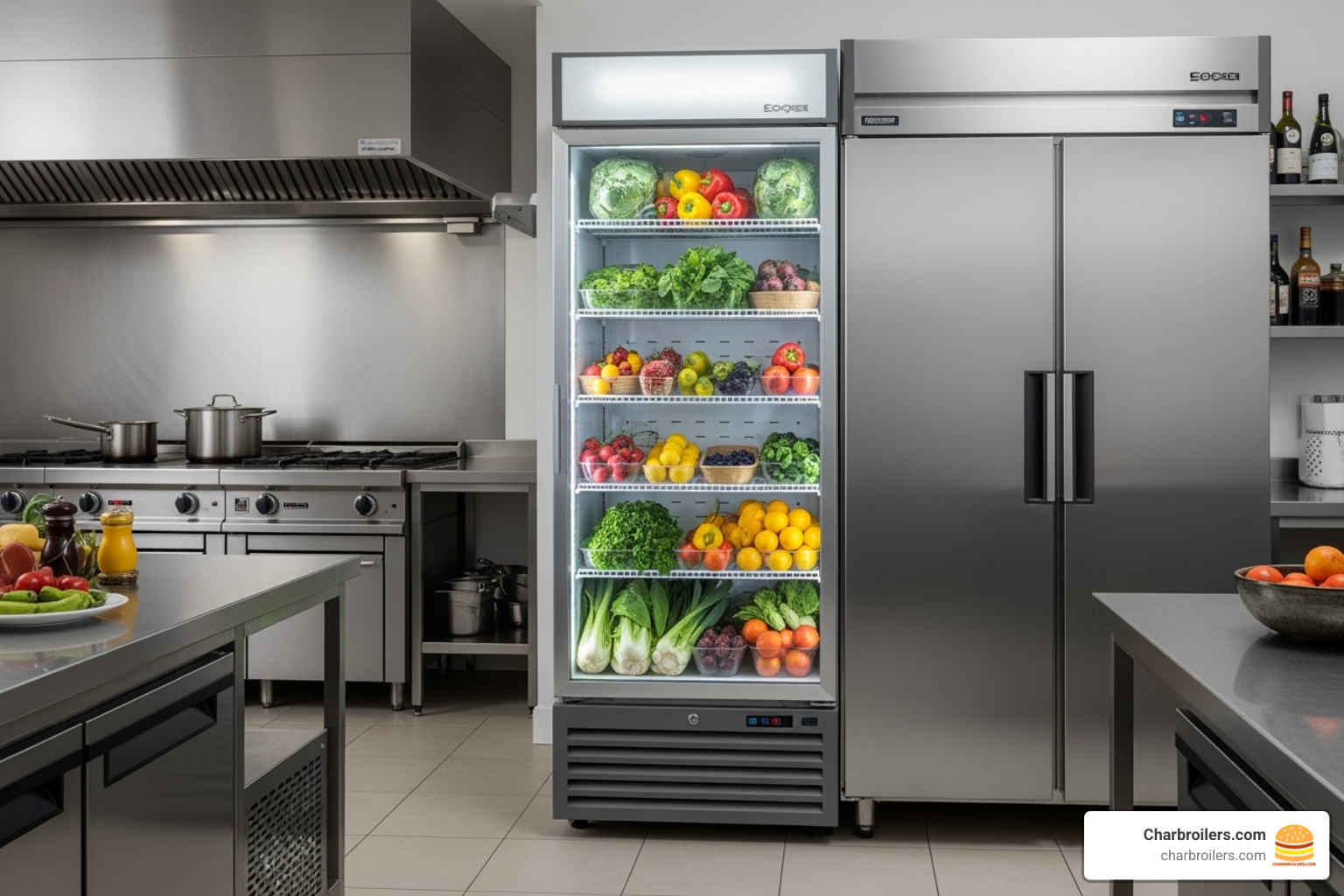
Glass doors bring visibility to the table—literally. You can spot what you need without opening the door, which actually helps maintain internal temperatures. Staff spend less time rummaging around with the door open, and inventory checks become a glance instead of a project. If you're using your combo unit for grab-and-go items or want customers to see your offerings, glass doors offer that merchandising advantage.
| Feature | Solid Doors | Glass Doors |
|---|---|---|
| Durability | More robust against dents and scratches in high-traffic areas | Commercial-grade glass is tough but more susceptible to damage |
| Insulation | Superior temperature retention and energy efficiency | Slightly less insulating but modern units minimize this gap |
| Energy Cost | Lower energy bills from better insulation | May run slightly higher but efficient tech helps |
| Product Visibility | Must open door to see contents | See everything at a glance |
| Inventory Management | Requires opening doors to check stock | Quick visual inventory checks |
| Merchandising | Not suitable for customer-facing displays | Perfect for showcasing products to customers |
Our take? For back-of-house operations, solid doors win on durability and energy savings. For front-of-house or when you want quick visual access to ingredients, glass doors make sense. Want to explore glass door options further? Check out our See It to Believe It: Commercial Glass Door Fridge Roundup.
Key Features and Modern Innovations
Today's commercial refrigerator freezer combo units are sophisticated machines, and knowing which features actually matter can save you headaches and money down the road.
Energy efficiency should be at the top of your priority list. With utility costs climbing, an ENERGY STAR certified unit pays for itself over time through lower electric bills. Modern units achieve this through advanced insulation, efficient compressors, and smart control systems that minimize waste.
Durability and construction separate the units that last from those that don't. Look for 304-grade stainless steel on both interior and exterior surfaces. This material resists corrosion, withstands daily wear and tear, and looks professional. Some manufacturers even add anti-smudge treatments to make your life easier.
When it comes to ease of cleaning, small design choices make a big difference. Rounded interior corners prevent gunk buildup, removable shelves speed up deep cleaning, and smooth surfaces wipe down quickly. These features aren't just about convenience—they're about maintaining the food safety standards your customers depend on.
Digital temperature controls give you precision that old-style dial controls can't match. Quality units often feature controls from brands like Carel, with clear displays that let you set and monitor exact temperatures. Your refrigerator section needs to stay between 33°F and 41°F, while your freezer should maintain -8°F to 0°F. Accurate temperature control isn't optional when food safety is on the line.
Nobody has time to manually defrost freezers in a busy kitchen, which is why auto-defrost systems are essential. These systems prevent ice buildup automatically, keeping your unit running efficiently without requiring you to shut down and chip away ice. Some innovative models even heat the freezer door frame to prevent water mist buildup.
Modern refrigerants like R290 hydrocarbon represent a significant environmental improvement. R290 has low Ozone Depletion Potential and Global Warming Potential, making it a responsible choice for environmentally conscious operators.
Finally, check for proper certifications like NSF, cETLus, and ETL-S. These aren't just letters—they're proof that your unit meets strict public health and safety standards for food service. For a deeper understanding of compliance requirements, our guide on Cool Compliance: Your Guide to NSF/ANSI Standard 7 for Refrigerators and Freezers covers everything you need to know.
Keeping Your Investment Running: Maintenance and Service
A commercial refrigerator freezer combo represents a significant investment in your kitchen's future, and honestly, the relationship doesn't end when you sign the purchase order. Think of it like buying a reliable work truck—you wouldn't skip oil changes and expect it to run forever, right? The same principle applies here. Proper care and understanding your service options are what separate a unit that serves you faithfully for a decade from one that becomes a constant headache.
When you're evaluating a unit, warranty coverage should be one of your first questions. This is your insurance policy, your safety net when something goes wrong at the worst possible time (and doesn't it always?). A comprehensive warranty typically covers both parts and labor, which is crucial because service calls can add up quickly. Some premium brands offer warranties spanning three years on parts and labor, with extended coverage on the compressor—often the most expensive component to replace—for up to five years total. Just remember that these warranties almost always specify commercial use only, so if you're thinking about using a commercial unit in your home, you'll likely void the coverage.
The quality of service support matters just as much as the warranty itself. We've seen too many restaurant owners stuck with a down unit because they can't find a qualified technician who services their brand. Before you commit to a purchase, ask about the manufacturer's service network. Do they have authorized service providers in your area? Is there a technical support line you can call when you're troubleshooting? At Charbroilers.com, we make it a point to partner with brands that have established, reliable support systems because we know that when your refrigeration goes down during dinner service, you need help now, not next week.
Brand reputation isn't just marketing fluff—it's built on years of consistent performance in real-world kitchens. Companies earn their reputations through durable construction, readily available replacement parts, and standing behind their products when issues arise. While we won't name names here, we can tell you that established brands with decades in the commercial refrigeration business tend to have better parts availability and more experienced service technicians familiar with their equipment.
If you're facing issues with your current unit, our The Ultimate Checklist for Commercial Refrigerator Repair Services can walk you through what to expect and how to prepare. And when you're ready to explore your options from suppliers who understand the importance of reliable equipment, you can browse options from trusted online restaurant equipment suppliers right here.
Essential Maintenance for Your Commercial Refrigerator Freezer Combo
Let's talk about keeping your unit happy—because a well-maintained commercial refrigerator freezer combo is a reliable one. Preventative maintenance isn't glamorous, but it's infinitely better than dealing with a breakdown during your busiest shift. Think of these tasks as small investments that pay huge dividends.
Cleaning condenser coils is absolutely the most important maintenance task you can do. We can't stress this enough. Those coils are typically located at the back or bottom of your unit, and they're magnets for dust, grease, and debris. When they're clogged, your compressor has to work overtime to maintain temperature, which means higher energy bills and a shorter lifespan for the unit. Depending on your kitchen environment—especially if you've got a lot of frying going on—you should clean these monthly or at least quarterly. A soft brush or vacuum attachment works great for this.
Door gaskets are your unit's first line of defense against temperature loss. These rubber seals around the doors might not look like much, but damaged or worn gaskets can cost you serious money in wasted energy. Make it a habit to inspect them regularly for cracks, tears, or stiffness. Here's a trick we learned from a veteran technician: close the door on a dollar bill. If you can pull it out without any resistance, your gasket isn't sealing properly and needs replacement. It's a simple test that can save you hundreds in energy costs.
Daily wipe-downs prevent the buildup that leads to bigger problems. Beyond cleaning up spills as they happen, schedule a thorough interior cleaning with a food-safe cleaner. This keeps odors at bay, maintains hygiene standards, and gives you a chance to spot any issues like frost buildup or water pooling where it shouldn't be.
Temperature logs might seem tedious, but they're your early warning system. Keeping a log—whether digital or on a clipboard—helps you spot trends. If your freezer section is gradually creeping up from -5°F to 2°F over several days, that's telling you something's wrong before you lose a freezer full of product. Many modern units with digital controls make this easier, but even a manual thermometer and a notebook will do the job.
Finally, schedule professional servicing at least once or twice a year. Even if you're diligent about the tasks above, a qualified technician can perform deeper diagnostics, check refrigerant levels, test electrical components, and catch issues that aren't obvious to the untrained eye. Think of it like going to the dentist—you brush and floss daily, but you still need that professional cleaning and checkup. The cost of a service visit is minimal compared to replacing a failed compressor or losing a week's worth of inventory to spoilage.
Frequently Asked Questions about Refrigerator Freezer Combos
Over the years, we've talked to countless restaurant owners and kitchen managers about commercial refrigerator freezer combos, and certain questions come up again and again. Let me share the answers to the ones we hear most often—straight talk, no jargon.
What are the typical temperature ranges for a combo unit?
This is one of the first things people ask, and it's a smart question. After all, keeping food at the right temperature isn't just about quality—it's about safety and meeting health department standards.
The refrigerator compartment in your commercial refrigerator freezer combo typically runs between 33°F to 41°F (that's 0.5°C to 5°C for those who prefer Celsius). This range is the sweet spot for fresh produce, dairy products, cooked foods, and beverages. It's cold enough to slow bacterial growth significantly, but not so cold that your lettuce turns into an ice sculpture.
The freezer section operates at much colder temperatures, usually between -8°F to 0°F (or -22°C to -18°C). These frigid temperatures are what you need for proper long-term storage of meats, poultry, seafood, and frozen desserts. At these temperatures, food stays safe for extended periods, and you maintain the quality your customers expect.
The beauty of these combo units is that each compartment has its own independent temperature control. You're not compromising one for the other—both zones maintain their ideal temperatures simultaneously, giving you complete flexibility in how you store your ingredients.
How much space can I really save?
Here's the simple math: instead of finding room for two separate units—a standalone refrigerator and a standalone freezer—you only need space for one commercial refrigerator freezer combo. You're essentially getting two appliances for the footprint of one.
Now, the exact space savings depend on which specific models you're comparing, but think about what you could do with that extra floor space. You might finally have room for that prep table you've been wanting. Your staff could move around without constantly bumping into each other during the dinner rush. You might even be able to add another piece of cooking equipment to expand your menu offerings.
For smaller establishments or kitchens with challenging layouts, this consolidation can be transformative. We've seen kitchens where adding a combo unit instead of two separate appliances literally changed the entire workflow for the better. The space you save isn't just about square footage—it's about creating a more functional, less stressful environment for your team.
Are commercial refrigerator freezer combos energy-efficient?
The short answer? Yes, modern commercial refrigerator freezer combos are designed with energy efficiency as a priority. But let me give you the longer, more useful answer.
Today's units incorporate ENERGY STAR certification whenever possible, which means they meet strict efficiency guidelines set by the EPA. These certified models consume significantly less energy than non-certified units, which translates directly to lower utility bills month after month.
The modern refrigerants used in newer models, particularly R290 hydrocarbon refrigerant, aren't just better for the environment—they also contribute to improved energy performance. High-quality insulation, typically foamed-in-place polyurethane, keeps the cold air where it belongs and reduces how hard the compressor has to work.
Now, here's where your door choice matters: solid doors generally offer superior insulation compared to glass doors. If cutting every possible penny from your energy costs is your top priority and you don't need to see inside without opening the door, solid doors will give you slightly better long-term operating costs. That said, modern glass door technology has come a long way, and the efficiency gap has narrowed considerably.
The digital temperature controls found on quality units also play a role in efficiency. These systems maintain steady temperatures without the excessive compressor cycling that wastes energy and wears out components faster.
Yes, an energy-efficient model might cost more upfront. But here's what we tell our customers: look at the long-term operating costs. The savings on your monthly utility bills can offset that initial price difference surprisingly quickly, making it a smarter investment for your bottom line over the life of the equipment.
The Smart Choice for a Cooler, More Efficient Kitchen
Here's the thing: after spending years in the restaurant equipment industry, I've learned that the best investments aren't just about buying something new—they're about finding solutions that make your life easier every single day.
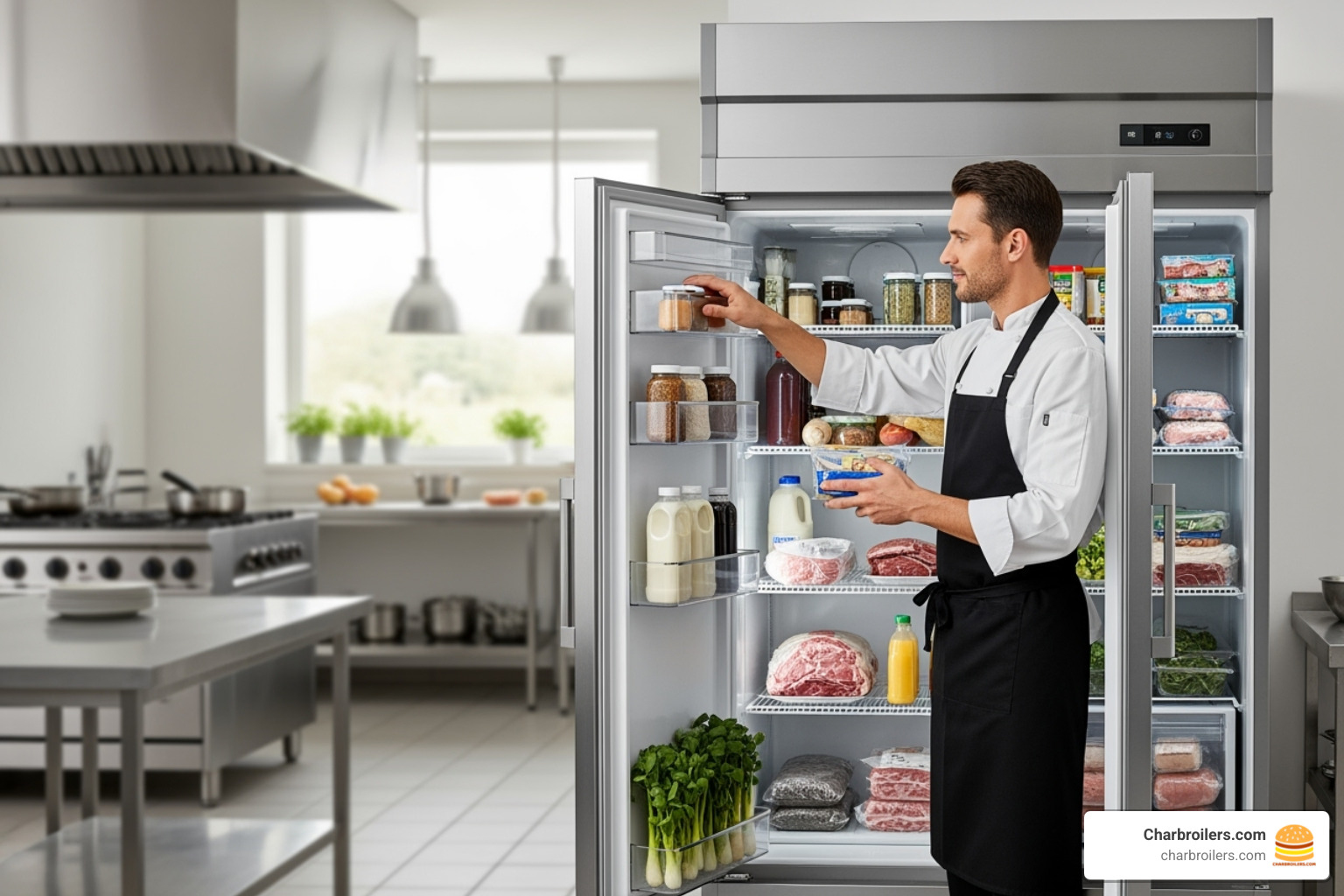
A commercial refrigerator freezer combo does exactly that. It's not flashy, and it won't wow your customers the way a gorgeous charbroiler might, but it's the kind of smart investment that pays you back in dozens of small ways. Every time your chef reaches for frozen chicken and fresh vegetables without taking three extra steps. Every time you look at your utility bill and see lower energy costs. Every time you walk through your kitchen and appreciate that extra workspace where a separate freezer used to be.
We've walked through all the technical details—the temperature ranges, the door types, the capacity calculations. But at the end of the day, what matters most is this: your kitchen works better when your equipment works smarter. Space optimization isn't just about square footage; it's about creating a kitchen where your team can move freely, work efficiently, and feel less stressed during the dinner rush.
The efficiency boost you'll see goes beyond workflow, too. Modern combo units are built to last, with durable stainless steel construction, energy-efficient compressors, and features like auto-defrost that save you maintenance headaches down the road. That's money staying in your pocket and time staying on your side.
At Charbroilers.com, we understand that every piece of equipment in your kitchen needs to earn its keep. Whether you're opening a new restaurant, upgrading an existing kitchen, or simply trying to make better use of limited space, we're here to help you find the right solutions.
Ready to take the next step? Explore our complete guide to commercial kitchen equipment to build your perfect restaurant and find how the right equipment choices can transform your operation from good to great. Your cooler, more efficient kitchen is just one smart decision away.