

Unlock Your CookRite Griddle's Full Potential: A Manual Guide
Why Finding Your CookRite Griddle Manual Is Essential for Success
Your cookrite griddle manual is the key to open uping professional-grade performance from your commercial kitchen equipment. Whether you're operating the compact ATMG-24, versatile ATMG-36, or powerhouse ATMG-48 model, having quick access to your manual ensures safe operation, proper maintenance, and maximum productivity during busy service hours.
Quick Manual Access Guide:
- Digital Downloads: Visit ManualsLib for free PDF downloads of CookRite griddle manuals
- Model-Specific Manuals: Available for ATMG-24, ATMG-36, and ATMG-48 models
- Key Information Included: Installation procedures, pilot light operation, cleaning protocols, and troubleshooting steps
- Operating Instructions: Step-by-step guidance for lighting pilots, adjusting temperatures, and safe shutdown procedures
Restaurant owners and chefs consistently face the challenge of maximizing kitchen efficiency while maintaining consistent food quality. Your CookRite griddle manual contains critical information about your equipment's 30,000 BTU burners per section, independent temperature controls, and the proper care of that heavy-duty 3/4-inch polished steel cooking surface.
The manual also covers essential safety procedures, including proper gas connection protocols, required clearances (6 inches to sides and back, 4 inches to bottom), and the correct preheating sequence of 15-20 minutes for optimal cooking performance.
I'm Sean Kearney from Charbroilers.com, and with over a decade in the restaurant equipment industry, I've helped countless kitchen operators get the most from their CookRite griddles by understanding their cookrite griddle manual thoroughly. My experience has shown that proper manual consultation prevents costly repairs and ensures your griddle delivers consistent results during peak service hours.
Cookrite griddle manual basics:
Understanding Your CookRite Griddle: Models and Key Features
The CookRite ATMG series has earned its reputation as a workhorse in commercial kitchens across the country. Whether you're running a cozy diner or a busy restaurant, understanding your cookrite griddle manual and the specific features of each model helps you make the most of your investment.
Let me walk you through what makes these griddles special, starting with the three main models that dominate professional kitchens today.

CookRite ATMG Series at a Glance
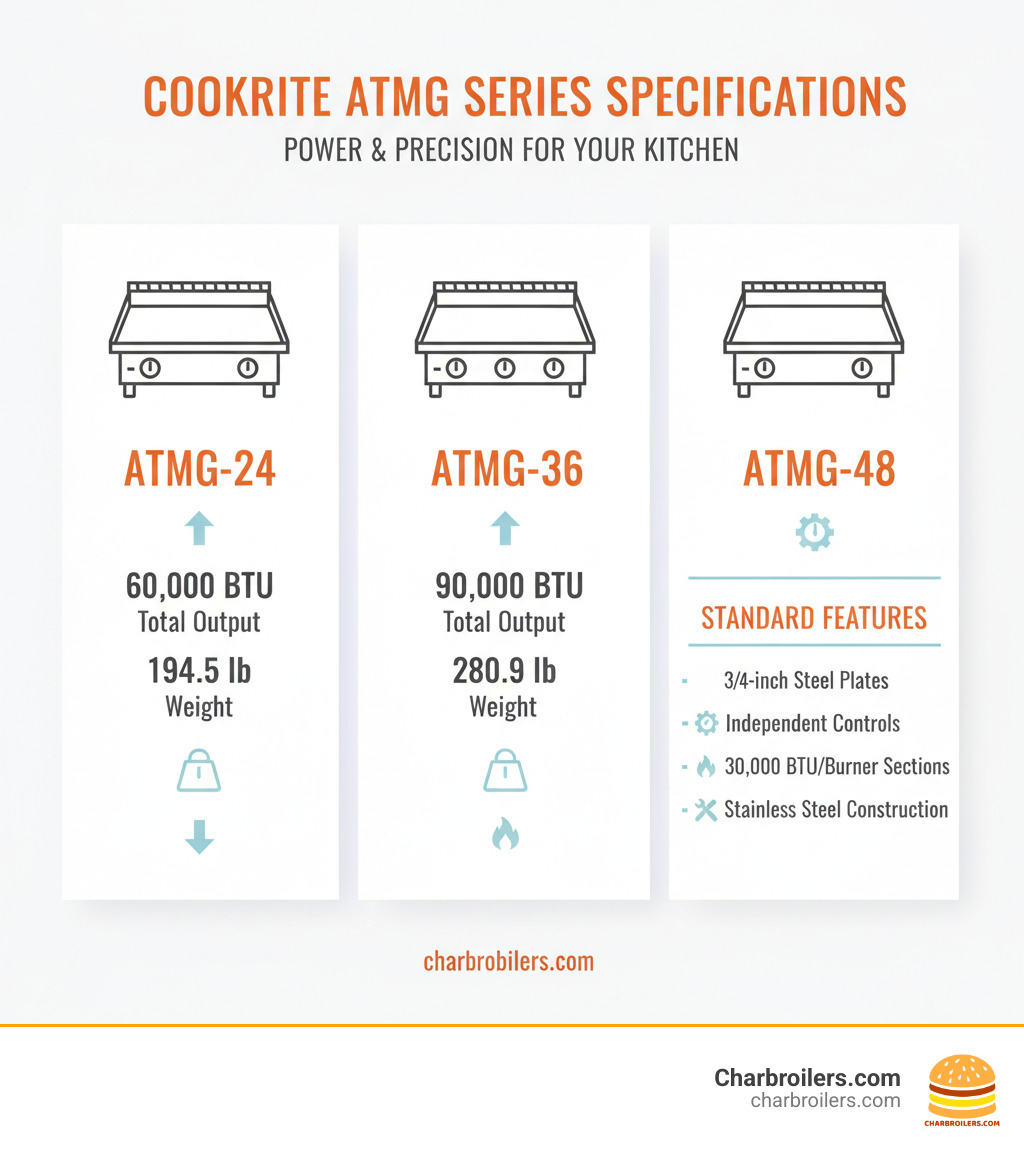
The beauty of the ATMG naming system is its simplicity - the number tells you exactly how wide your griddle is. The ATMG-24 gives you 24 inches of cooking space, perfect for smaller operations or as a secondary cooking station.
| Model | Dimensions (W x D x H) | Total BTU Output | Number of Burners | Net Weight | Cooking Surface (W x D) |
|---|---|---|---|---|---|
| ATMG-24 | 24" x 28.6" x 15.2" | 60,000 BTU | 2 | 194.5 lbs | 23 9/10" x 19 9/10" |
| ATMG-36 | 36" x 28.6" x 15.2" | 90,000 BTU | 3 | 229 lbs | 35 7/10" x 19 9/10" |
| ATMG-48 | 48" x 28.6" x 15.2" | 120,000 BTU | 4 | 294 lbs | 47 9/10" x 19 9/10" |
The ATMG-24 is your go-to choice when space is at a premium but you still need serious cooking power. At 194.5 pounds, it's manageable during installation while delivering 60,000 BTU across two burners. This model shines in food trucks, small cafes, or as an addition to existing kitchen setups. If you're working with limited space, our Top 24" Commercial Griddles: A Buyer's Guide for Small Spaces can help you explore your options.
Step up to the ATMG-36, and you'll find the sweet spot for many restaurant operations. With 90,000 BTU spread across three burners, this model handles medium-volume cooking with ease. The extra 12 inches of cooking surface makes a real difference during breakfast rushes or when you're juggling multiple orders.
For high-volume kitchens that never slow down, the ATMG-48 is your heavy-duty solution. Four burners pumping out 120,000 BTU total means you can handle even the busiest service periods without breaking a sweat. Yes, it weighs 294 pounds, but that substantial build translates to rock-solid performance when you need it most.
Standard Features Across All Models
Every CookRite griddle in the ATMG series shares the same commitment to durability and performance. The stainless steel construction isn't just about looking professional - though it certainly does that. This material choice means your griddle will resist corrosion, clean up easily, and maintain its appearance even after years of heavy use.
The heart of any griddle is its cooking surface, and CookRite doesn't cut corners here. Each model features a 3/4-inch polished steel plate that distributes heat evenly across the entire surface. This thickness eliminates those frustrating hot and cold spots that can ruin a perfectly good pancake or burger.
Underneath that impressive cooking surface, you'll find 30,000 BTU burners for each 12-inch section, complete with standby pilots. These pilots are a real time-saver - no more fumbling with matches or lighters when you need to fire up a section quickly during the dinner rush.
The practical touches matter too. Those stainless steel legs provide rock-solid stability while making it easy to level your griddle on uneven floors. The removable grease drawer slides out smoothly for quick cleaning, keeping your kitchen hygienic without the hassle.
You'll find these same quality features highlighted in our The Ultimate Commercial Flat Top Grill Roundup: Sizzle Up Your Menu, where we explore what makes commercial griddles truly exceptional.
The Benefits of Independent Manual Controls
Here's where CookRite griddles really shine - those independent manual controls for each 12-inch section. This isn't just a fancy feature; it's a game-changer that transforms how you approach cooking.
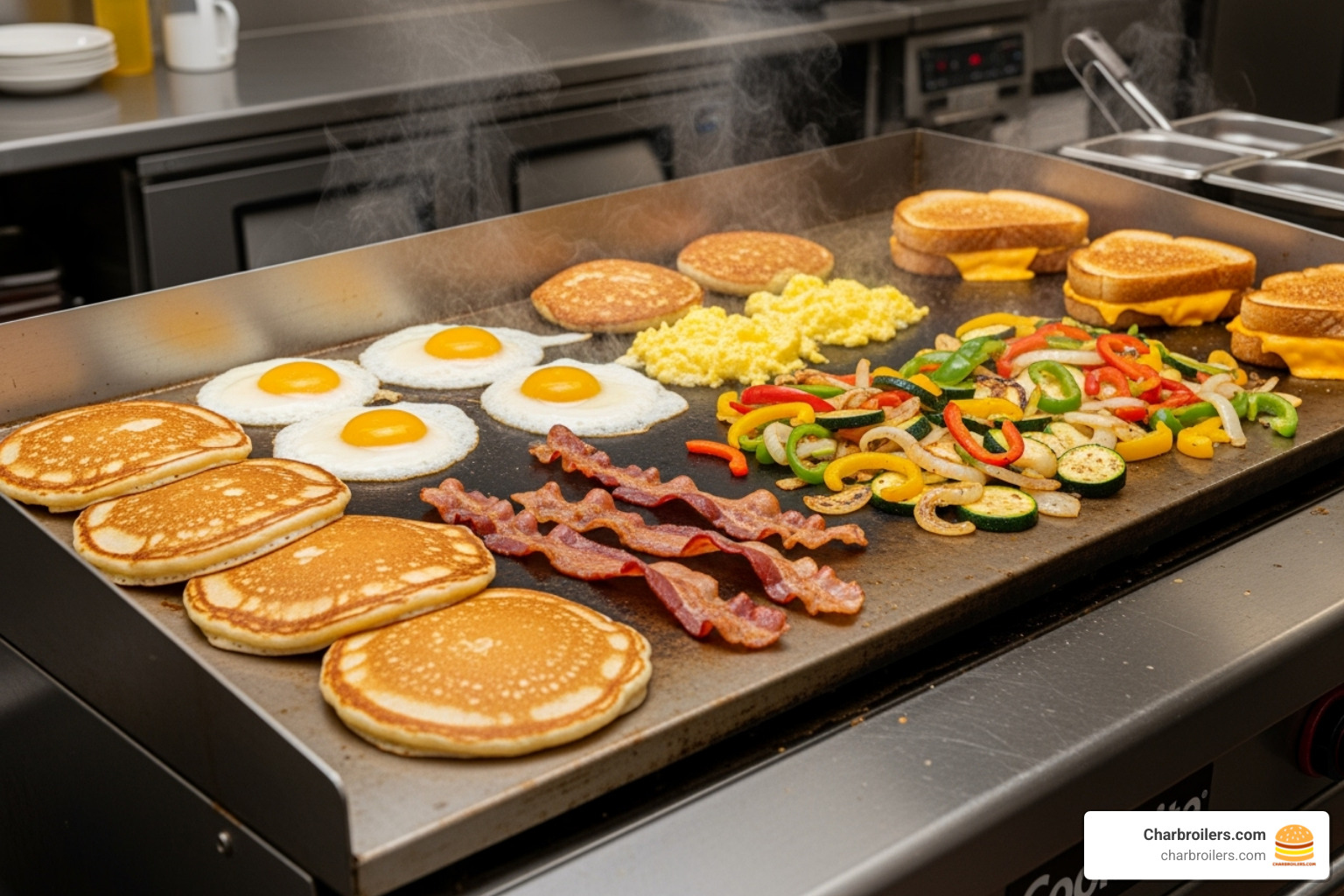
Picture this: it's Saturday morning, and orders are flying in. With zone cooking capability, you can set one section to medium heat for fluffy pancakes while another section runs hot for crispy bacon. No more compromising on cooking temperatures or juggling timing to accommodate different foods.
This temperature precision extends beyond just convenience. You're looking at real energy savings when you can heat only the sections you need. Why waste gas heating the entire griddle when you're only using half of it during slower periods? Your utility bills will thank you.
The cooking versatility these controls provide is remarkable. One section can sear steaks at high heat, another can gently warm tortillas, and a third can sauté vegetables - all simultaneously. Your cookrite griddle manual will detail the specific temperature ranges for each control, but the flexibility speaks for itself.
This level of control makes your griddle adaptable to any menu, from breakfast through late-night service. For more insights into maximizing this flexibility, check out Mastering the Flat Top: Why the Atosa ATMG-36 is Your Next Kitchen Essential.
Your Official CookRite Griddle Manual: Installation and Operation
Getting your CookRite griddle up and running safely isn't just about plugging it in and turning it on. Your cookrite griddle manual serves as your roadmap to proper installation, safe operation, and long-term success. Think of it as your griddle's best friend – it knows all the secrets to keeping things running smoothly.
Where to Find Your CookRite Griddle Manual
Your cookrite griddle manual isn't just another piece of paperwork to file away. It's your safety net, troubleshooting guide, and maintenance bible all rolled into one. Smart restaurant owners keep both a physical copy near their griddle and a digital backup on their phone or computer.
Since CookRite is part of the Atosa family, the AtosaUSA website is your go-to resource for official documentation. The manufacturer provides comprehensive spec sheets that detail everything from construction materials to BTU outputs. You can access the detailed ATMG series spec sheet directly from Atosa, which covers the ATMG-24, ATMG-36, and ATMG-48 models.
For complete operating instructions, Atosa offers a thorough manual specifically for gas countertop griddles. This PDF serves as your definitive cookrite griddle manual and includes installation guidelines, step-by-step operating procedures, cleaning protocols, and troubleshooting tips. The manual covers everything from safety warnings to daily maintenance routines that keep your griddle performing like new.
These manufacturer resources aren't just helpful – they're essential for warranty compliance and safe operation. Don't let a missing manual cost you money or put your kitchen at risk.
Step-by-Step Installation Guide
Installation isn't a weekend DIY project, even if you're handy with tools. Professional installation by a licensed technician is absolutely required – not just recommended. This ensures compliance with local gas codes, ventilation requirements, and safety standards that vary by location.
Your technician will start by confirming you have the right foundation: a level, solid surface that won't slip or burn. The griddle needs proper ventilation, ideally under a commercial exhaust hood that can handle the heat and cooking vapors. Required clearances are specific: 6 inches to the sides and back, plus 4 inches underneath for proper airflow.
Gas connection is where expertise really matters. Your CookRite griddle can run on either Natural Gas (NG) or Liquid Propane (LP), but the setup is different for each. The factory sets the pressure regulator at 4" W.C. for Natural Gas and 10" W.C. for LP Gas. Your technician will connect the 3/4" NPT rear gas connection, install the pressure valve, and perform critical safety tests using soap solution – never an open flame.
The installation process includes testing gas supply pressure to ensure it falls within specifications. This isn't just about making sure it works; it's about making sure it works safely for years to come. For more insights on commercial gas griddles and their installation requirements, check out our guide on Gas Griddle Commercial.
Lighting and Operating Your Griddle
Once professionally installed, operating your CookRite griddle follows a straightforward sequence that prioritizes safety. Your cookrite griddle manual breaks this down into manageable steps that become second nature with practice.
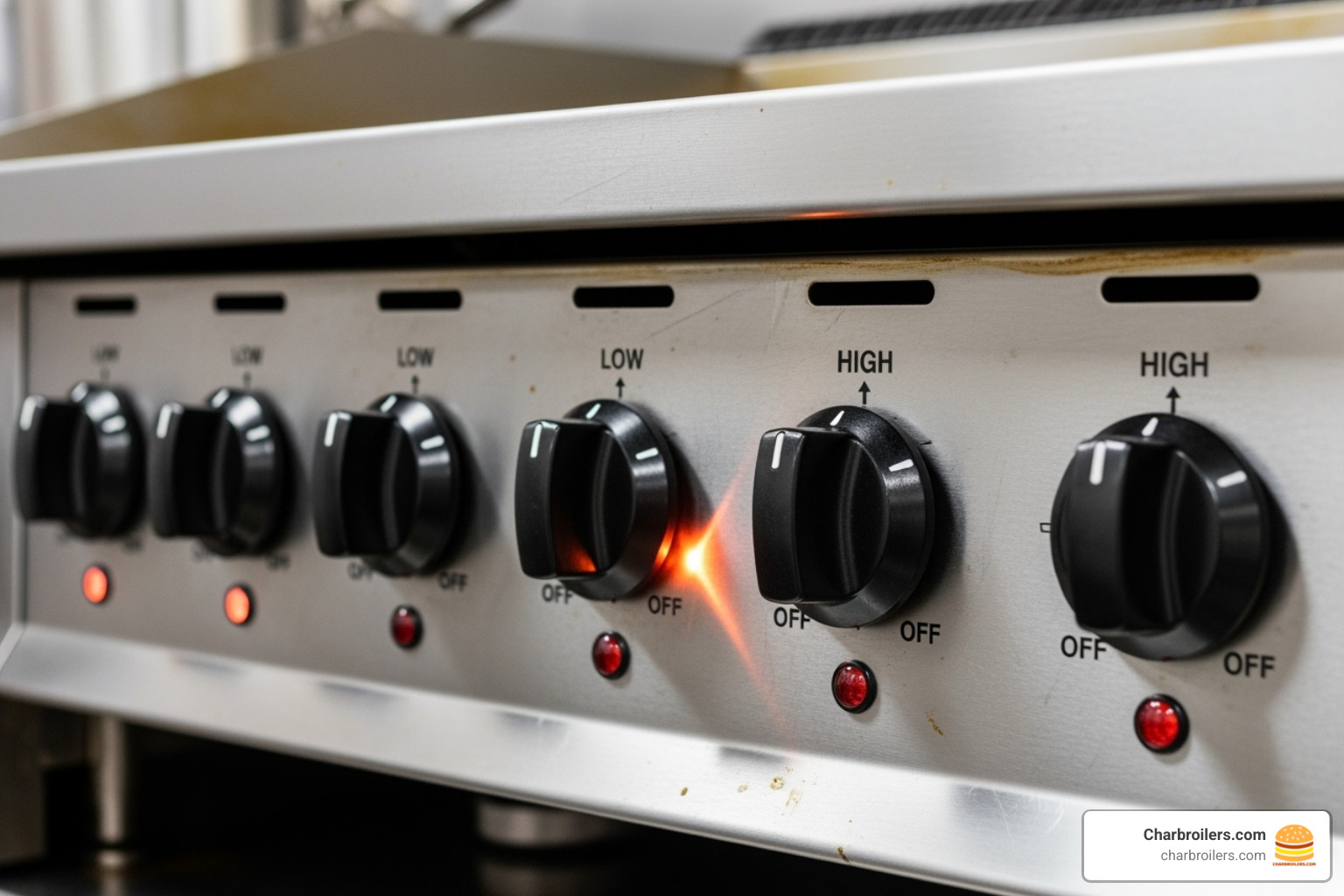
Starting with pilot lights is always your first move. Make sure all main burner knobs are in the "0" position before you begin. Each 12-inch section typically has its own pilot light located near the main burner. Hold your long lighter or match near the pilot, then turn the control valve to "PILOT" or press and hold the knob to allow gas flow.
Don't worry if it takes a minute – gas needs to purge from the lines first. Once the pilot catches, keep holding the knob for 15-20 seconds. This allows the thermocouple to heat up and maintain the pilot flame. If the pilot goes out when you release the knob, simply repeat the process.
Igniting the main burners comes next. With pilots burning steadily, turn the main control valve counter-clockwise to your desired setting. The main burner should light immediately from the pilot flame. You can adjust flame size based on your cooking needs – lower for delicate items, higher for searing.
Preheating is crucial for consistent results. Allow 15-20 minutes for that thick 3/4-inch steel plate to reach and maintain temperature. This prevents hot spots and ensures even cooking across the entire surface.
When service ends, safe shutdown means turning main burner knobs clockwise to "0" first. Pilots can stay lit for quick restart, but turn off the main gas supply when closing for the night. This simple routine prevents accidents and extends equipment life.
For specific insights about operating the ATMG-24 model, our article Griddle Me This: Why the Atosa 24" Griddle is a Must-Have offers additional practical tips from real kitchen experience.
Essential Cleaning and Maintenance Procedures
Keeping your CookRite griddle clean isn't just about making health inspectors happy—it's about protecting your investment and ensuring every pancake, burger, and grilled sandwich comes out perfectly. Your cookrite griddle manual becomes your best friend here, outlining exactly how to keep that beautiful stainless steel gleaming and your cooking surface performing like new.
Think of maintenance as insurance for your kitchen. A well-maintained griddle doesn't just last longer; it cooks more evenly, uses energy more efficiently, and prevents those dreaded mid-rush breakdowns that can turn a busy service into chaos.

Daily Cleaning for Peak Performance
The secret to effortless griddle maintenance? Don't let problems build up in the first place. Daily cleaning becomes second nature once you establish a routine, and your future self will thank you for it.
Post-use scraping is your first line of defense against stubborn buildup. While your griddle is still warm—not blazing hot, but comfortably warm—grab your griddle scraper and gently remove food debris and excess grease. Work systematically, scraping everything toward the grease trough and into that handy removable waste tray. This prevents carbon deposits from forming, which can create hot spots and make your griddle cook unevenly.
Emptying the waste tray should happen after every shift, no exceptions. That stainless steel grease drawer pulls out easily for a reason—use it! A quick wash with warm soapy water keeps things sanitary and prevents grease overflow that can create slip hazards and unpleasant odors.
Wiping down the exterior might seem like a small detail, but it makes a huge difference in your kitchen's professional appearance. Once everything has cooled completely, use a soft cloth with mild detergent on the stainless steel surfaces and control panel. Skip the abrasive cleaners and steel wool—they'll scratch that beautiful finish and create places for bacteria to hide.
The griddle plate itself deserves special attention. After cooling, a griddle brick or specialized griddle pad with proper cleaner works wonders. Follow your cleaner's instructions carefully, rinse thoroughly, and dry completely. Some chefs like to add a tiny bit of water to a warm griddle to create steam for easier cleaning—just scrape away the loosened debris afterward.
This daily routine prevents the kind of stubborn buildup that requires harsh chemicals or aggressive scrubbing later. Our Countertop Champions: The Ultimate Commercial Gas Grill Roundup emphasizes how consistent daily care applies to all your countertop cooking equipment.
Deep Cleaning and Long-Term Care
Beyond daily upkeep, your CookRite griddle needs periodic deep attention to keep performing at its peak. Think of this as the difference between brushing your teeth daily and getting professional cleanings—both are essential.
Seasoning the griddle plate brings back that perfect non-stick surface when food starts clinging more than usual. Clean the plate thoroughly first, then apply a thin layer of cooking oil and heat it until it smokes. Let it cool, then repeat several times. This builds up a protective layer that makes cooking and cleaning so much easier (see seasoning (cookware) for more background).
Checking for gas leaks should be part of your regular routine, especially if something seems off. Mix soap and water, then brush it around gas connections. Bubbles mean trouble—shut off the gas immediately and call a licensed technician. Never use an open flame to check for leaks!
Air input adjustment becomes necessary when you notice yellow flames instead of clean blue ones, or if you see black smoke. Your cookrite griddle manual explains how to adjust the air input pipe, though this job often requires a qualified technician to get it just right.
Annual professional service might seem like an unnecessary expense, but it's actually a money-saver. Licensed technicians can spot worn components, test gas pressures, and catch small problems before they become expensive repairs. They know exactly what to look for and can keep your warranty valid.
Long-term storage requires special care if you're closing seasonally or moving locations. Clean everything thoroughly, apply a protective oil coating to prevent rust, disconnect the gas supply, and store in a dry place. A little extra effort now prevents major headaches later.
Regular maintenance following your cookrite griddle manual guidelines transforms your griddle from just another piece of equipment into a reliable kitchen partner. For insights into maintaining other commercial cooking equipment, check out Used Commercial Grills: Smart Buys for Your Restaurant Kitchen.
Frequently Asked Questions about CookRite Griddles
When you're running a busy kitchen, questions about your equipment come up fast and need quick answers. Even with your cookrite griddle manual close by, certain issues pop up more often than others. Let's tackle the most common concerns I hear from restaurant owners about their CookRite griddles.
What are the warranty details for CookRite griddles?
Your CookRite griddle comes with 1-year parts and labor coverage straight from the manufacturer. This means if something goes wrong due to faulty materials or workmanship within that first year, you're covered for both the replacement parts and the technician's time to fix it.
Here's what makes this warranty process straightforward: you'll work directly with the manufacturer or their authorized service providers. No complicated middleman situations or finger-pointing between different companies.
One important heads-up - these griddles are built for commercial kitchens, not home use. If you install your CookRite griddle in a residential setting, you might void your warranty. The commercial-grade components and high BTU output are designed for restaurant environments, so stick to commercial applications to keep your coverage intact.
Many operators find it worthwhile to consider extended warranty options for additional peace of mind, especially in high-volume kitchens where downtime costs money. Always confirm your specific warranty terms when you make your purchase.
How do I switch between Natural Gas (NG) and Liquid Propane (LP)?
The good news is that CookRite griddles are designed to handle both Natural Gas and Liquid Propane. The not-so-good news? This conversion absolutely requires a licensed professional technician. I can't stress this enough - this isn't a weekend DIY project.
The conversion process involves several critical steps that affect both safety and performance. Your technician will exchange the nozzles for each burner section. Natural Gas typically uses #37 nozzles, while LP requires #51 nozzles. These control the precise gas flow rate needed for proper combustion.
Next comes pressure regulator adjustment. Your griddle's factory setting works for one gas type - Natural Gas at 4" W.C. pressure or LP at 10" W.C. The technician will adjust or replace the regulator to match your new gas source.
Finally, they'll fine-tune the air input to each burner. This ensures you get that clean, blue flame instead of yellow flames or black smoke that indicate poor combustion.
Trying to handle this conversion yourself can lead to dangerous gas leaks, poor cooking performance, and a voided warranty. Trust me, the cost of professional conversion is worth your safety and your griddle's proper operation. For more insights on propane options, check out our guide on Commercial Griddle Propane Picks That Sizzle.
My griddle isn't lighting, what does the cookrite griddle manual suggest?
When your CookRite griddle won't light, your cookrite griddle manual becomes your best troubleshooting friend. Most ignition problems have straightforward solutions, so let's work through them systematically.
Start with the gas supply basics. Is your main gas supply valve actually open? Sometimes the simplest explanation is the right one. Also check if you're getting adequate gas pressure to your griddle. If other gas appliances in your kitchen are acting up too, you might have a building-wide gas supply issue that requires calling your gas company.
Pilot light problems are incredibly common. If your pilot won't light at all, make sure you're holding that control knob for a full 15-20 seconds after the flame catches. The thermocouple needs time to heat up and signal that it's safe to keep the gas flowing. If the pilot lights but won't stay lit when you release the knob, you likely have a dirty or faulty thermocouple that needs professional attention.
When your pilot lights but the main burner won't ignite, check that your main fire control valve is fully open. Sometimes we think we've turned it far enough, but it needs that extra quarter-turn. If the valve position is correct, you might be dealing with a blocked main burner nozzle.
Nozzle blockages happen more often than you'd think, especially in busy kitchens. Food debris and carbon buildup can clog those tiny openings where gas exits to create your flame. This cleaning job requires a licensed technician who knows how to safely disassemble and clear the components.
Don't ignore control valve positions either. Double-check that all your knobs are in the right spots for ignition - pilot position for lighting pilots, then the proper "on" setting for main burners.
If you're getting yellow flames or seeing black smoke, your air-to-gas mixture is off. Your cookrite griddle manual includes instructions for adjusting the air input, but this is another job best left to qualified technicians. Proper combustion gives you clean, blue flames that heat efficiently and don't leave soot on your cookware.
When gas-related issues persist or make you uncomfortable, the smart move is shutting off your gas supply and calling a licensed service technician. Your kitchen's safety always comes first, and a professional can diagnose problems quickly while keeping everyone safe.
Conclusion: Maximize Your Kitchen's Output
Your journey through this comprehensive guide has armed you with everything needed to transform your CookRite griddle from just another piece of equipment into the beating heart of your kitchen operation. Whether you're running the compact ATMG-24 in a cozy breakfast spot or commanding the powerful ATMG-48 during the dinner rush, understanding every detail in your cookrite griddle manual makes all the difference between good service and exceptional performance.
Think about what you've learned here. Those heavy-duty 3/4-inch polished steel griddle plates aren't just thick for show—they're your secret weapon for consistent heat distribution that keeps pancakes golden and steaks perfectly seared. The 30,000 BTU burners per section deliver the power you need when orders start flying in faster than you can flip them. And those independent manual controls? They're like having multiple cooking stations in one unit, letting you juggle breakfast eggs on low heat while cranking up the heat for lunch burgers.
The real magic happens when you combine this powerful equipment with proper care. Your daily cleaning routine isn't just about meeting health codes—it's about protecting an investment that can serve thousands of meals when treated right. Seasoning your griddle plate regularly keeps food from sticking and makes cleanup a breeze. Emptying that grease drawer after each shift prevents messy overflows during your busiest moments.
Your cookrite griddle manual isn't meant to gather dust on a shelf. Keep it handy for those moments when you need to troubleshoot a pilot light issue or adjust the air input for a cleaner flame. The few minutes spent consulting the manual can save hours of frustration and keep your kitchen running smoothly.
Professional maintenance might seem like an extra expense, but think of it as insurance for your busiest days. Annual professional checks catch small problems before they become big headaches. There's nothing worse than having your griddle fail during the Saturday morning rush when every table is full and orders are backing up.
At Charbroilers.com, we've seen how the right equipment paired with proper knowledge transforms kitchens from chaotic to choreographed. Your CookRite griddle has the potential to be more than just a cooking surface—it can be the foundation of consistent quality that keeps customers coming back for more.
Ready to explore even more ways to lift your kitchen game? Our Guide to Commercial Charbroilers for Your Restaurant shows you how to add that perfect char and smoky flavor that makes dishes unforgettable. Because great food isn't just about one piece of equipment—it's about creating a kitchen that works as hard as you do.