
Shop Smart: The Best Restaurant Ice Makers on the Market
Why Restaurant Ice Makers Are Essential for Your Food Service Business
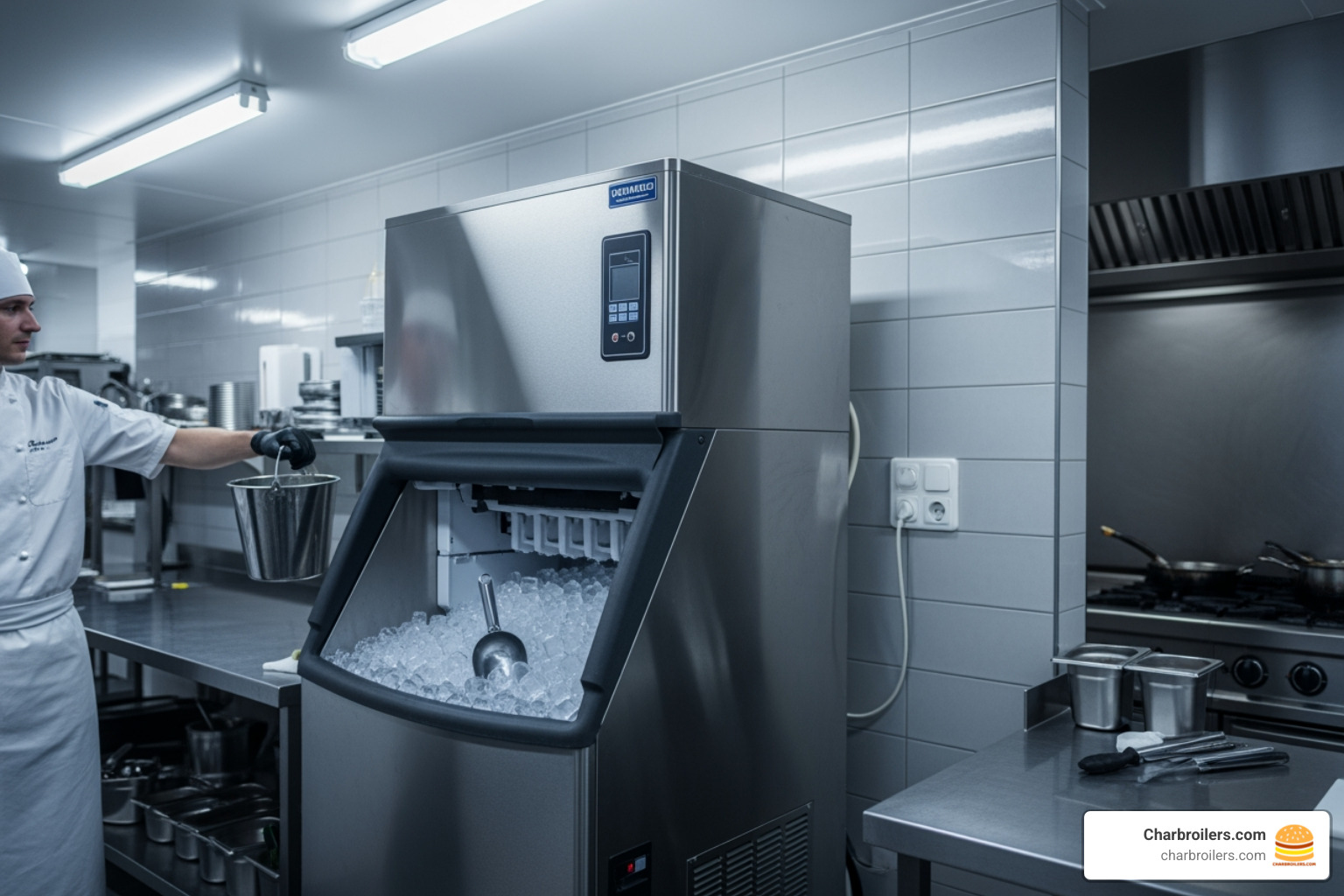
Restaurant ice makers for sale come in several key configurations to meet different operational needs:
- Modular Ice Machines - High-volume production (400-1,000+ lbs/day) with separate head and bin for custom setups
- Undercounter Ice Makers - Space-saving all-in-one units (80-350 lbs/day) perfect for bars and small cafes
- Countertop Ice Dispensers - Compact units ideal for self-service stations, often dispensing nugget ice and water
- Remote Condenser Systems - Move heat and noise outside the kitchen while maintaining high production
Ice isn't just a nice-to-have in the restaurant business—it's a critical ingredient. The global commercial ice machine market was valued at $2.7 billion in 2022 and is projected to reach $4.1 billion by 2030, growing at 5.4% annually. That growth reflects what every restaurant owner already knows: reliable ice production is non-negotiable.
But choosing the right ice maker involves more than picking the cheapest option. You need to match production capacity to your actual daily needs, select the right ice type for your beverages and food displays, and decide whether buying or leasing makes more financial sense. Different ice shapes—from slow-melting full cubes to chewable nugget ice to moldable flake ice—serve distinct purposes that can lift your beverage presentation and operational efficiency. If you want to dive deeper into the basics of how ice makers work and broader market trends, the overview on commercial ice makers is a useful external reference alongside this guide.
This guide breaks down everything you need to know when shopping for restaurant ice makers for sale, from understanding the different machine types to calculating your daily ice requirements to comparing purchase options.
I'm Sean Kearney, founder of Charbroilers.com, and I've spent over a decade helping restaurants find the right equipment at fair prices, including sourcing restaurant ice makers for sale that match specific operational needs and budgets. Whether you're opening your first location or upgrading existing equipment, I'll walk you through the key decisions that will help you invest smartly.
Quick restaurant ice makers for sale definitions:
- commercial ice cube making machine
- commercial ice maker and bin
- commercial clear ice cube maker
Decoding the Lingo: Types of Commercial Ice Makers
When we talk about restaurant ice makers for sale, we're not talking about a one-size-fits-all gadget. Commercial ice machines come in various configurations, each designed with specific operational needs and space constraints in mind. Understanding these types is the first step toward making an informed decision for your restaurant.
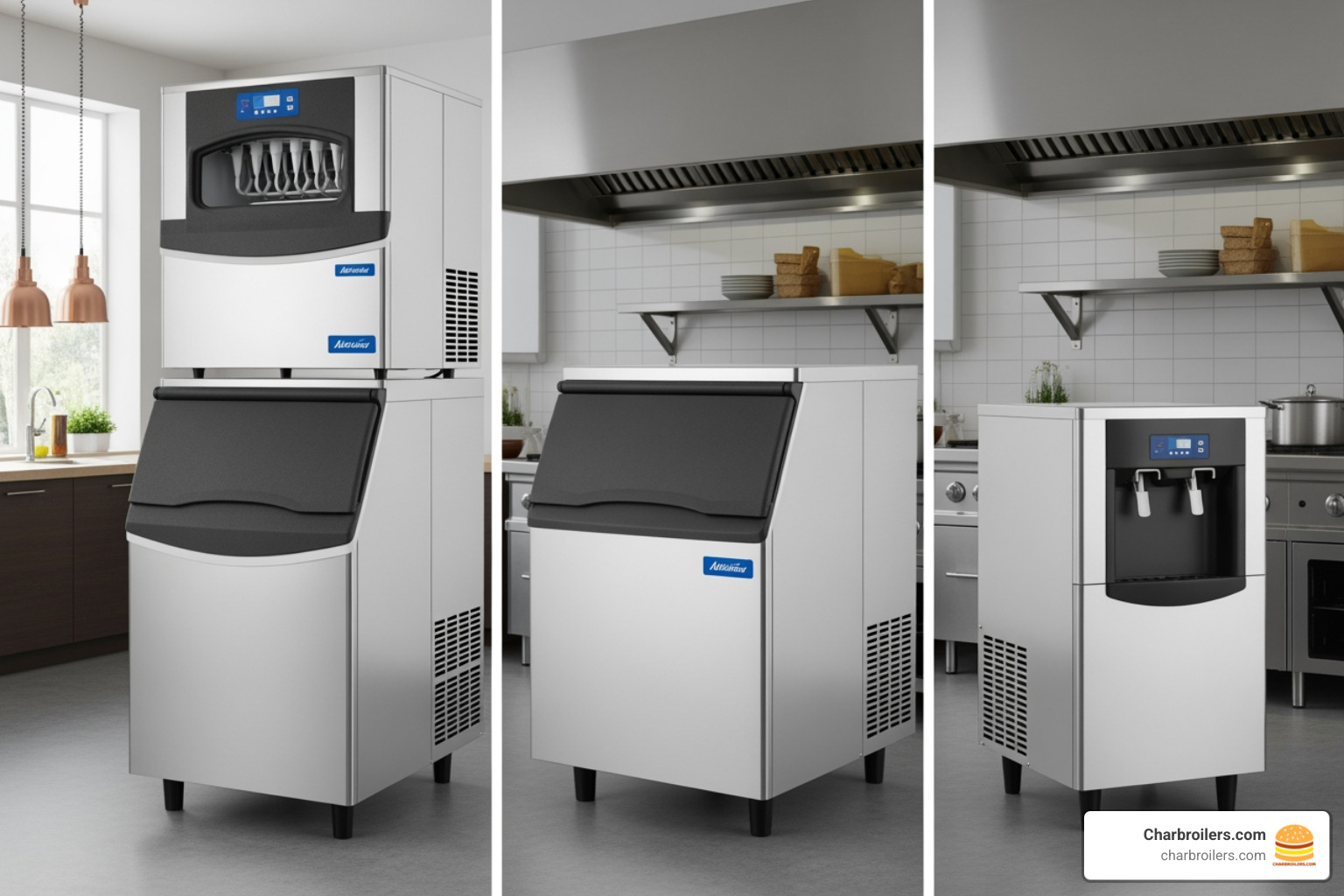
Modular Ice Machines
Think of modular ice machines as the workhorses of the ice-making world. These units consist of two separate components: an ice maker head and a storage bin. This separation offers incredible flexibility. The head, which produces the ice, sits atop a dedicated ice storage bin. This setup is ideal for restaurants with high ice demand, allowing you to pair a high-production head with a bin size that perfectly matches your daily needs.
For instance, a busy Seattle restaurant might need an ice maker head that produces 500-1000 lbs of ice per day, paired with a storage bin capable of holding 400-700 lbs. This modular design means you can customize your ice production and storage capacity. If your needs grow, you might simply upgrade the ice maker head or add another bin. They're often seen in large kitchens or back-of-house areas where space isn't as tight, but volume is king. Plus, manufacturers like Manitowoc offer a wide range of storage bins and accessories to complement their modular ice machines. You can learn more about configuring these setups in our guide on commercial ice maker and bin setups.
Undercounter Ice Makers
For those of us running cozier establishments, or needing ice right where the action is, undercounter ice makers are a godsend. These compact, all-in-one units combine the ice maker and storage bin into a single, sleek package designed to fit neatly under a counter or bar. They're perfect for bars, small cafes, and front-of-house applications where space is at a premium and a more modest daily ice production (typically 80-350 lbs) is sufficient.
While they may not churn out ice at the same rate as their modular cousins, undercounter models offer convenience and accessibility. Many feature built-in storage bins, and some even come with self-cleaning functions, making maintenance a breeze. These are ideal for smaller operations where every inch of space counts. If you're looking for solutions for smaller spaces, check out our guide on small commercial ice machines.
Countertop Ice Dispensers
Imagine a self-service beverage station where customers can easily grab ice and water. That's where countertop ice dispensers shine. These compact units are designed for convenience, often dispensing chewable nugget ice and water. They're a common sight in healthcare facilities, office breakrooms, and fast-casual restaurants where self-service is part of the model.
While their production capacity is generally lower, their ease of use and hygienic dispensing features (like touchless levers on some hotel models) make them invaluable in specific settings. They're about providing immediate, accessible ice without staff intervention. For more insights into these handy machines, we’ve got a piece on commercial ice dispensers.
Remote Condenser Systems
Beyond the physical form factor, it's worth mentioning remote condenser systems. These aren't a type of ice maker per se, but rather a configuration option, particularly for modular units. The condenser—the part of the machine that generates heat and noise—is separated from the ice maker head and can be installed outdoors or in a remote area. This is a brilliant solution for keeping your kitchen or dining area cooler and quieter, creating a more comfortable environment for both staff and customers. It’s a smart choice for any busy Seattle kitchen where managing ambient temperature and noise levels is crucial.
The Shape of Water: Choosing the Perfect Ice for Your Drinks
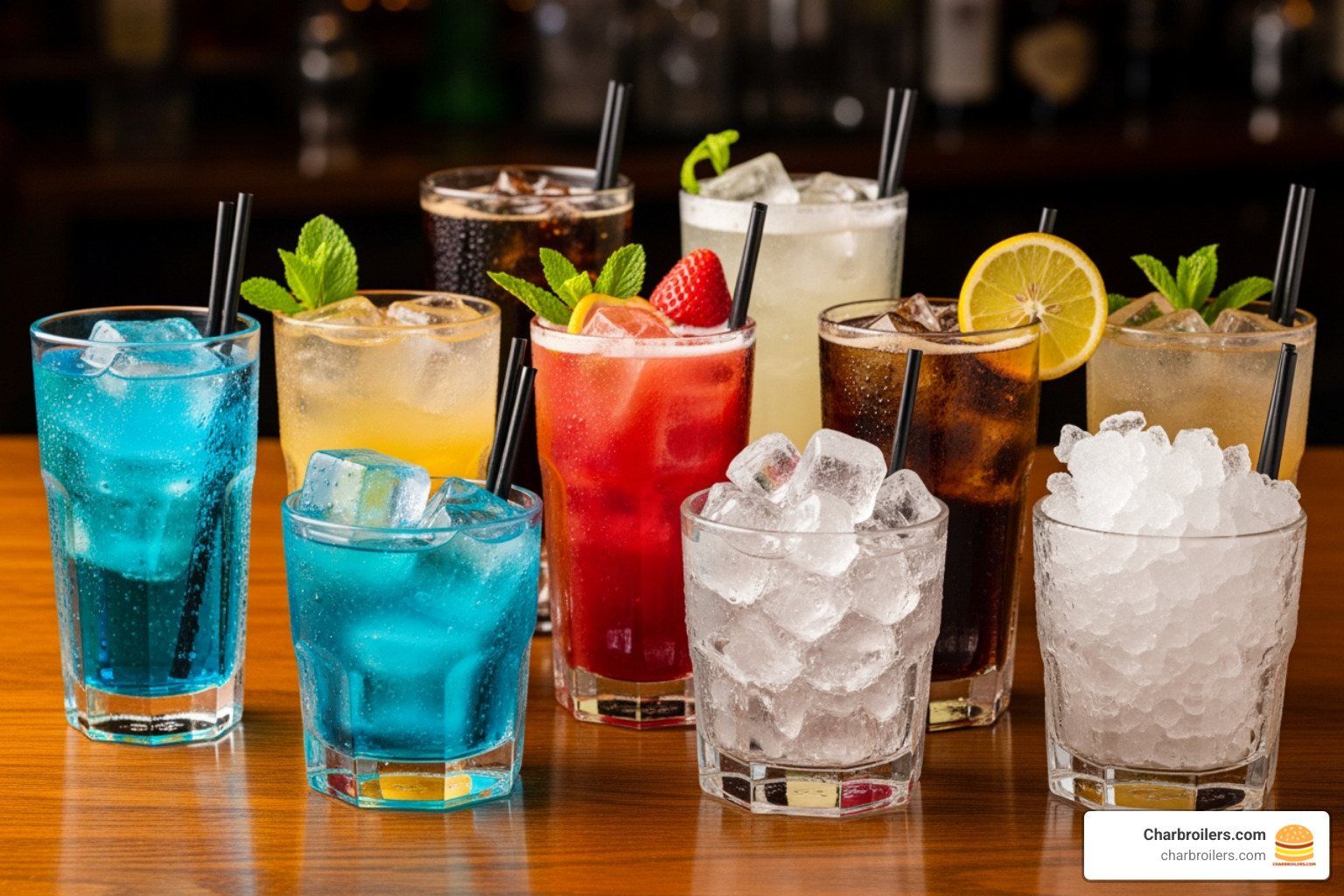
Ice isn't just frozen water; its shape, density, and melting speed can dramatically impact the quality and presentation of your beverages. When searching for restaurant ice makers for sale, considering the type of ice your establishment needs is paramount.
Classic Cubes (Full & Half)
When someone pictures ice, they're probably thinking of classic cubes. These are the workhorses of the beverage world, known for their slow melting speed and versatility.
- Full Cubes: These large, dense cubes melt slowly, making them ideal for high-end spirits, cocktails, and any drink where dilution is unwelcome. They offer a premium look and feel, making them a favorite in upscale bars and restaurants. Hoshizaki, a leading manufacturer, notes that their crescent-shaped ice is hard and slow-melting, enhancing beverage presentation while reducing splashing. We've explored these in detail in our article on commercial clear ice cube makers.
- Half Cubes: Smaller and more numerous than full cubes, half cubes are perfect for soft drinks, iced teas, and high-volume beverage service. They chill drinks quickly and are easy to dispense, making them a staple in many casual dining establishments. Models like the Ice-O-Matic CIM0530HW produce half-size cubes, offering approximately 530 lbs per 24 hours.
Nugget (Chewable) Ice
Ah, the beloved nugget ice! This soft, chewable ice has a unique appeal. It's often described as "Sonic ice" or "pellet ice" and is incredibly popular in fountain drinks, smoothies, and specialty cocktails. Its porous nature means it absorbs beverage flavor, and its chewable texture makes it a customer favorite. Plus, it displaces more liquid than solid cubes, which can be a cost-saver on expensive beverages. Nugget ice is also a common choice in healthcare settings due to its softer texture. If your restaurant relies heavily on fountain drinks or blended beverages, a nugget ice maker might be your best friend. Our article on commercial crushed ice makers dives deeper into this style.
Flake Ice
Flake ice is soft, chewable, and highly moldable. It's excellent for rapid, even cooling without bruising delicate items. While not typically used in drinks, it's indispensable for food displays such as seafood cases, salad bars, and buffets, keeping products fresh and appealing. Its ability to conform to any shape makes it perfect for presenting items beautifully. Flake ice is also sometimes used in blended drinks for a smoother texture. If your establishment features fresh seafood or extensive salad bars, a flake ice machine is a must-have.
Key Factors When Searching for Restaurant Ice Makers for Sale
Choosing the right ice maker is a significant investment for any restaurant. Beyond the type of machine and ice, several critical factors must be carefully evaluated to ensure you select a unit that meets your operational demands and budget.
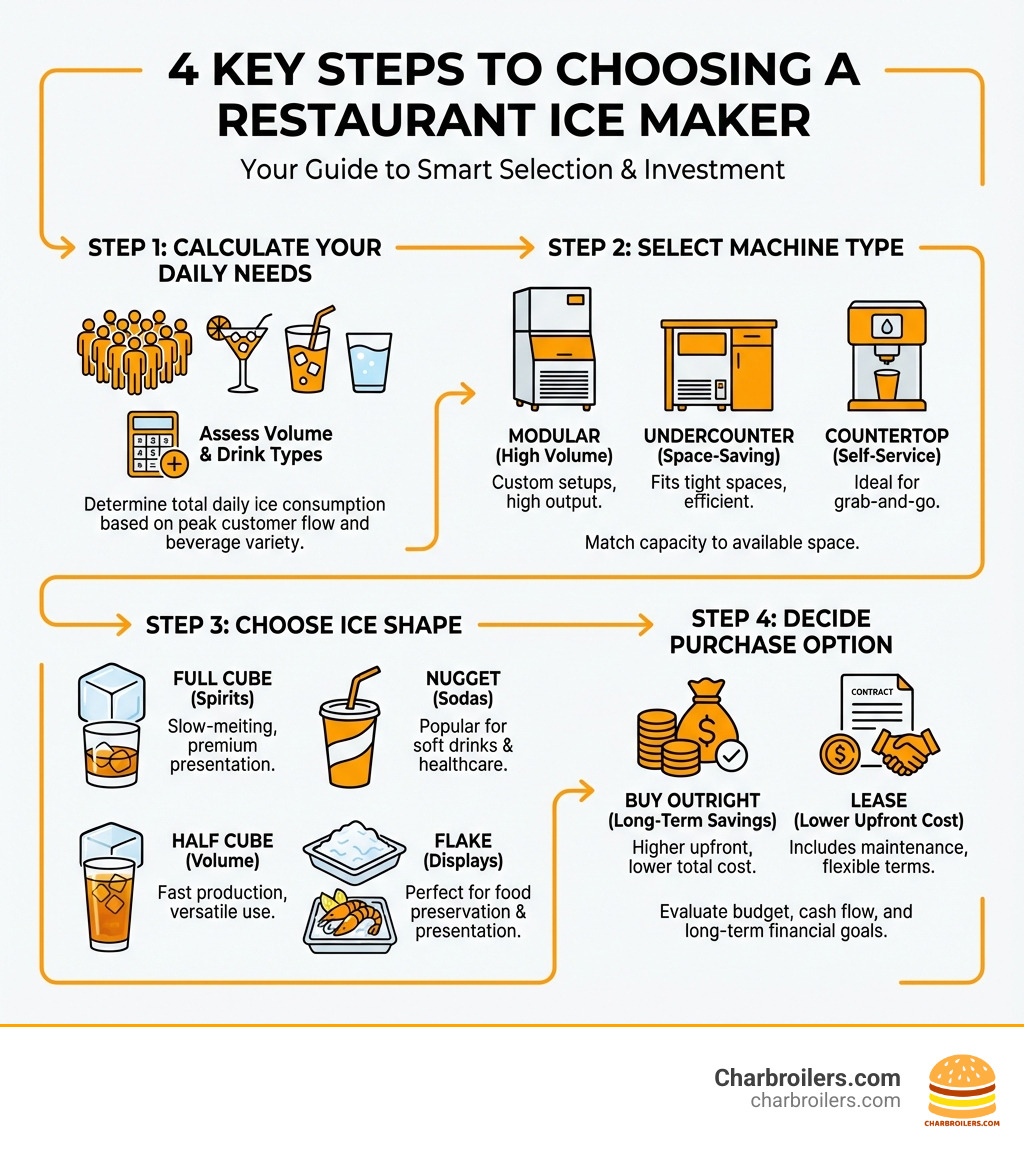
Calculating Your Daily Ice Needs
This is arguably the most crucial step. Underestimate, and you’ll run out of ice during peak hours, leading to frustrated customers and lost sales. Overestimate, and you’re wasting energy and space. So, how do we get it just right?
A common rule of thumb is to estimate ice consumption based on the type of establishment and peak customer volume. Here's a general guideline:
- Restaurant/Bar: 1.5 - 3 lbs of ice per customer
- Beverage-heavy establishment (e.g., coffee shop, juice bar): 3 - 5 lbs per customer
- Salad bars/Food displays: 30 lbs per cubic foot of display space
Let's do a quick calculation. If your Seattle restaurant serves 200 customers during a busy dinner shift and each consumes 2 lbs of ice, you'll need 400 lbs of ice for that shift alone. Factor in additional needs for the kitchen, bar, and potential catering, and your daily production requirement could easily exceed 500 lbs. Always plan for peak demand and consider seasonal changes – summer heat in Seattle will definitely spike your ice needs! It's better to have a little more capacity than to ever run out.
The Ice-O-Matic CIM0530HW, for example, produces approximately 530 lb/24 hours, while the CIM1136FW can churn out around 968 lb/24 hours. These figures vary based on ambient air and water temperatures, so always check the specifications for your local conditions.
Condenser Types: Air-Cooled vs. Water-Cooled
The condenser is the part of the ice maker that removes heat. The way it does this impacts efficiency, installation, and operating costs.
- Air-Cooled: These are the most common and generally less expensive to operate in terms of utility costs. They use a fan to blow air over a condenser coil, similar to a refrigerator. However, they require adequate ventilation and can add heat to your kitchen, making your AC work harder. If your kitchen gets very hot, an air-cooled unit might struggle to operate efficiently.
- Water-Cooled: Water-cooled units use water to cool the condenser, making them highly efficient, especially in hot or poorly ventilated environments. They don't add heat to the room and tend to be quieter. The downside? They use a significant amount of water, which can lead to higher utility bills, especially in areas with high water costs. However, they can be a lifesaver in cramped, hot kitchens. For example, the Ice-O-Matic CIM0530HW is a water-cooled model.
- Remote Condensers: As we touched upon earlier, these systems move the heat and noise of the condenser outside the main operational area. This offers the best of both worlds: efficient ice production without heating up your kitchen or adding to the noise levels. It's an excellent choice for maintaining a comfortable and quiet atmosphere. The Ice-O-Matic CIM0836HR is an air-cooled model with a remote condenser.
Essential Features for Restaurant Ice Makers for Sale
Beyond basic function, modern commercial ice makers come with features that improve efficiency, hygiene, and ease of maintenance.
- ENERGY STAR Certification: This is a big one! ENERGY STAR certified equipment is designed to be more energy-efficient, which means lower utility bills for your restaurant. The demand for energy-efficient ice machines is increasing due partly to rising environmental concerns, so looking for this label is a smart move for your wallet and the planet. Hoshizaki, for instance, emphasizes their ENERGY STAR® equipment for sustainable operations.
- Antimicrobial Technology: Hygiene is non-negotiable in food service. Features like PURE ICE® built-in antimicrobial protection, found in many Manitowoc models, inhibit the growth of bacteria, slime, and mold, keeping your ice clean and safe.
- Self-Cleaning Functions: Who has time for constant deep cleaning? Many new models feature auto-cleaning or one-touch sanitize and descaling controls. This significantly reduces manual labor and ensures your machine operates efficiently.
- Durable Stainless Steel Construction: Commercial kitchens are tough environments. Stainless steel not only looks professional but also stands up to heavy use, corrosion, and is easy to clean, meeting health code standards.
- Water Filtration Systems: The quality of your water directly impacts the quality of your ice and the lifespan of your machine. Integrated or recommended external water filtration systems remove impurities, preventing mineral buildup that can damage components and affect ice taste. Many manufacturers, like Ice-O-Matic, recommend specific filters (e.g., IOMQXL) and even tie extended warranty coverage to their use.
To Buy or To Lease? Your Guide to Acquiring an Ice Machine
Once you've decided on the type of ice maker and its features, the next big question is how to acquire it. For restaurant ice makers for sale, you generally have two primary options: buying outright or leasing. Each comes with its own financial and operational implications.
The Pros and Cons of Buying Outright
Pros:
- Ownership Equity: The machine is yours. You own the asset, which can be depreciated over time for tax purposes.
- Lower Long-Term Cost: While the initial outlay is higher, buying outright generally results in a lower total cost of ownership over the machine's lifespan, as you're not paying interest or leasing fees indefinitely.
- Full Control: You have complete control over maintenance, upgrades, and disposal. You can choose your service providers and repair schedules.
Cons:
- High Initial Investment: Commercial ice makers can be a significant upfront expense, ranging from a few hundred dollars for smaller units to several thousands for high-capacity modular systems. This can strain a new restaurant's budget.
- Responsibility for Maintenance and Repairs: All maintenance, cleaning, and repair costs fall squarely on you. If a major component fails after the warranty expires, it's your bill.
- Obsolescence Risk: Technology evolves. If a newer, more efficient model comes out, you're stuck with your current machine unless you choose to sell it.
For those considering the financial aspects of purchasing, our cube ice machine price guide can offer more detailed insights into typical costs.
Exploring Leasing and Subscription Options for Restaurant Ice Makers for Sale
Leasing has become an increasingly popular option, particularly for businesses looking to manage cash flow and operational headaches.
Pros:
- Low Upfront Cost: Often, leasing requires minimal to no down payment, preserving your capital for other essential restaurant needs.
- Maintenance and Repairs Included: Many leasing agreements include comprehensive maintenance, cleaning, and 24/7 support. This means no surprise repair bills or the hassle of finding a technician. It's peace of mind for one low monthly rate.
- Predictable Monthly Payments: Budgeting becomes easier with a fixed monthly expense, allowing for better financial planning.
- Upgrade Flexibility: At the end of a lease term, you often have the option to upgrade to a newer model, keeping your equipment modern and efficient.
Cons:
- Higher Total Cost Over Time: While monthly payments are lower, the cumulative cost of leasing over several years can sometimes exceed the purchase price of the machine.
- No Ownership Equity: You don't own the asset, so there's no depreciation benefit.
- Contractual Obligations: Leasing agreements are contracts, and you're typically locked into a term, even if your needs change.
For many restaurants, especially startups or those in high-growth phases, the benefits of predictable costs and included maintenance make leasing an attractive alternative. It allows you to focus on what you do best: serving delicious food and drinks. We dig deeper into this topic in our article, renting commercial ice machines made easy.
Long-Term Care: Maintenance and Warranty Essentials
Investing in restaurant ice makers for sale is just the beginning. To ensure your machine runs efficiently, produces clean ice, and lasts for years, proper maintenance and understanding your warranty are crucial. Neglecting these aspects can lead to costly repairs, reduced ice quality, and even voided warranties.
A Simple Maintenance Schedule
Consistency is key when it comes to ice maker maintenance. Here’s a general schedule we recommend:
-
Daily Visual Checks:
- Check ice quality: Is it clear, odorless, and free of foreign particles?
- Ensure the bin is properly sealed and that the scoop is clean and stored hygienically.
- Look for any unusual noises or leaks.
-
Weekly Exterior Cleaning:
- Wipe down the exterior of the machine with a mild, food-safe cleaner.
- Clean the air filter (for air-cooled units) to ensure proper airflow and prevent overheating. This is typically a quick rinse.
-
Regular Filter Replacement:
- Water filters are your machine’s first line of defense against impurities. Follow the manufacturer's recommendations for replacement, usually every 3-6 months, depending on water quality and usage. Manufacturers like Ice-O-Matic often recommend specific filters (e.g., IOMQ) and link extended warranties to their use.
-
Bi-Annual Professional Deep Cleaning and Descaling:
- This is where the pros come in. Every six months, or more frequently in hard water areas, your ice maker needs a thorough cleaning and descaling of its internal components. This process removes mineral buildup, mold, and bacteria that can accumulate in the water system and ice-making parts. Many modern units come with one-touch sanitize and descaling controls and dishwasher-safe food zone components, simplifying this process for your service technician. A professional cleaning not only ensures hygiene but also maintains efficiency and prolongs the life of the machine.
Consistent maintenance ensures you're always serving clean, fresh ice, which is essential for customer satisfaction and health code compliance in Seattle.
Decoding Your Warranty
A commercial ice maker is a complex piece of equipment, and its warranty can be just as complex. Don't just glance at the headline; dig into the details:
- Parts vs. Labor Coverage: Most warranties specify separate coverage for parts and labor. For example, an Ice-O-Matic Elevation Series™ ice maker might offer 3 years parts & labor for the ice maker itself. This means if a covered part fails within three years, both the part and the cost to install it are covered.
- Separate Component Warranties: Key components like the compressor and evaporator often have longer, separate warranties. You might see 5 years for compressor parts and 7 years for evaporator parts. This is because these are critical, expensive components. For instance, Manitowoc often provides 5 years for evaporator & compressor parts, and an impressive 7 years for evaporator parts & labor when enrolled in their filter program. This highlights the importance of using recommended filters.
- The Filter Program Connection: Pay close attention to conditions that extend your warranty. Many manufacturers, like Ice-O-Matic, offer extended coverage for their evaporator (sometimes parts and labor) if you enroll in and adhere to their water filter program. This is a win-win: better ice quality and longer warranty protection.
- How Improper Maintenance Can Void a Warranty: This is critical! Failing to follow the manufacturer's recommended maintenance schedule, using non-approved parts or cleaning solutions, or not replacing filters as recommended can all void your warranty. Always keep detailed records of your maintenance, especially professional cleanings and filter changes.
Before purchasing any restaurant ice makers for sale, we always advise reviewing the full warranty document. It’s your safety net against unexpected repair costs.
Conclusion: Making the Smartest Investment for Your Restaurant
Choosing the right commercial ice maker for your restaurant isn't a decision to be made lightly. It's an investment that impacts everything from beverage quality and customer satisfaction to operational efficiency and utility costs. As we've seen, the market for restaurant ice makers for sale is robust and growing, reflecting the essential role these machines play in the food service industry.
We've covered a lot of ground today, from the different types of machines—modular, undercounter, and countertop—each suited for specific needs, to the critical choice of ice type, whether it's classic cubes for a sophisticated cocktail, chewable nugget ice for fountain drinks, or moldable flake ice for stunning food displays. We’ve also digd into key purchasing factors like calculating your daily ice needs, understanding condenser types (air-cooled vs. water-cooled, and the benefits of remote systems), and identifying essential features like ENERGY STAR certification, antimicrobial protection, and self-cleaning functions.
Finally, we explored the financial considerations of buying versus leasing, weighing the upfront costs against long-term operational responsibilities, and emphasized the non-negotiable importance of regular maintenance and understanding your warranty to protect your investment.
A quality ice maker is a cornerstone of any successful food service operation. By carefully assessing your restaurant's specific needs, choosing the right machine type and ice shape, and considering your purchase options, you'll be well-equipped to make a smart investment that keeps your customers cool and your operations running smoothly.
At Charbroilers.com, we understand the unique demands of the restaurant industry. While we specialize in charbroilers, deep fryers, and griddles, our commitment to helping you find the right commercial kitchen equipment extends to all your needs, including sourcing the perfect ice maker. We’re here to help you steer these decisions and ensure you get the best equipment at a fair price.
Ready to explore other essential kitchen equipment? Check out our guide to commercial charbroilers.