
Flipping Out: Our Top Picks for Commercial Burger Griddles
Why the Right Griddle Makes All the Difference for Your Burgers
The best commercial griddle for burgers combines a thick steel cooking plate (3/4" to 1"), powerful heat output (at least 30,000 BTU per 12 inches for gas), and efficient grease management. For most restaurants, a 36-inch gas griddle with manual or thermostatic controls offers the ideal balance of capacity, precision, and value—typically ranging from $700 to $2,200.
For that perfect diner-style burger—crispy, caramelized edges with a juicy interior—a griddle's flat surface beats a traditional grill. The secret is maximum surface contact, which triggers the Maillard reaction for crave-worthy, browned edges. Its even heat distribution ensures consistent cooking, while the flat surface prevents flare-ups and uses rendered fat to baste the patty.
However, not all griddles are equal. Plate thickness, heat source, and grease management all impact burger quality and kitchen efficiency. A thin plate loses heat with cold patties, poor grease control creates soggy burgers, and low BTU output slows you down during a rush.
I'm Sean Kearney from Charbroilers.com. With over a decade in the restaurant equipment industry, I've helped many operators find the best commercial griddle for burgers for their needs. This guide explains what to look for and which griddles work best for various operations.
Common best commercial griddle for burgers vocab:
Why a Griddle Is the Secret to a Better Burger
Diner burgers taste better because they're cooked on a flat-top griddle. The perfectly seared, crispy-edged exterior isn't luck; it's science, requiring full contact with a hot, flat surface.
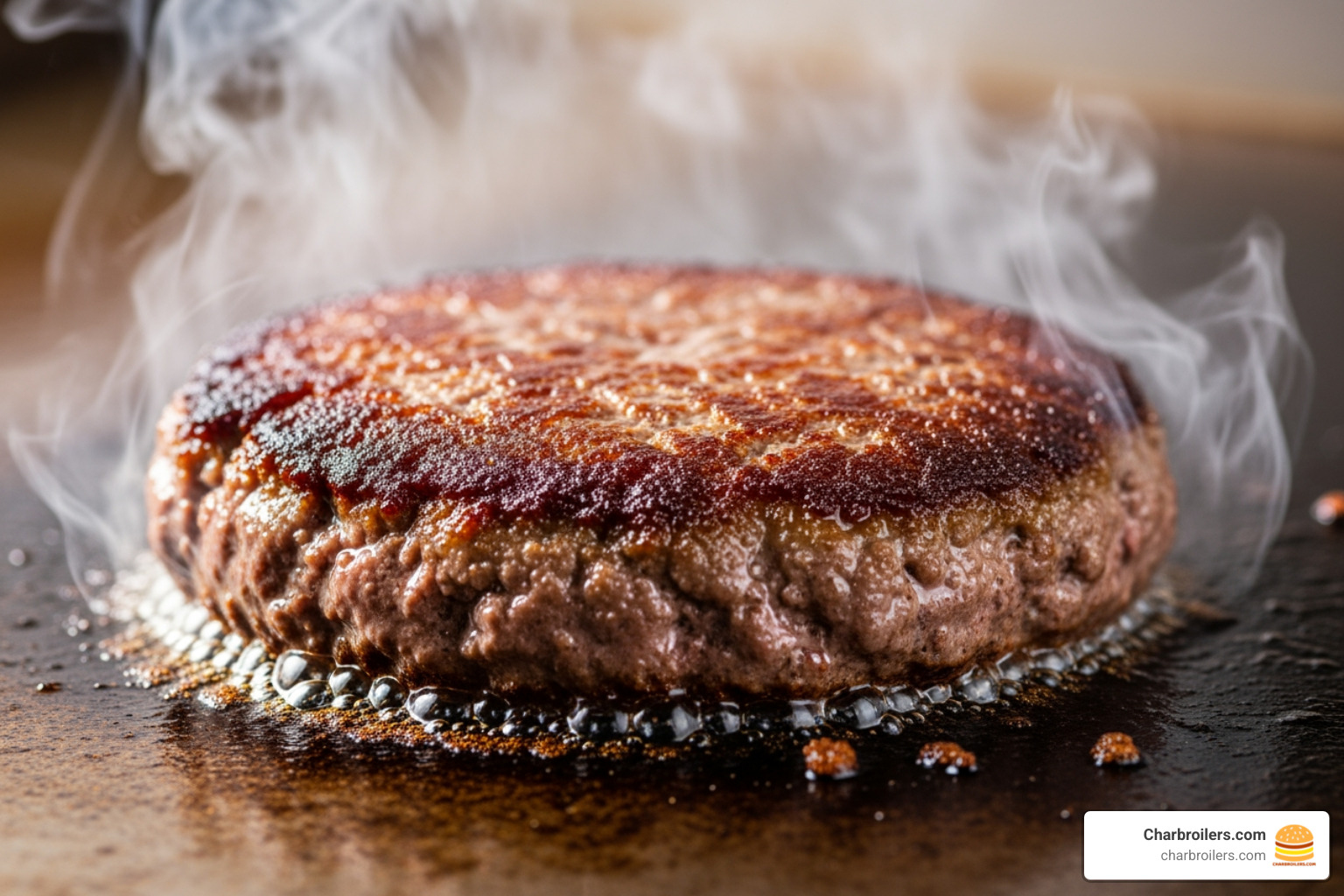
The magic is the Maillard reaction, the chemical process creating rich flavors and browning. A grill only cooks where the grates touch the patty. A griddle presses nearly every inch against hot steel, maximizing surface contact for intense caramelization and crunchy edges.
This is crucial for smash burgers. Pressing the patty maximizes contact, and the high heat instantly sears the patties, locking in juices and building a signature crust. A grill can't replicate this.
Beyond a good sear, a griddle's even heat distribution ensures every burger cooks at the same rate, eliminating hot spots and the need to rotate patties.
As burgers cook, rendered fat pools on the surface, allowing the patty to self-baste. This keeps it moist and flavorful, unlike on a grill where fat drips away and is lost.
Line cooks also appreciate that there are no flare-ups. Dripping fat on a grill causes flames that char burgers unevenly. A griddle provides controlled, consistent heat, making it the Best Way to Cook Burgers in a commercial kitchen.
Finally, a griddle is versatile. You can sear burgers on one zone while toasting buns, caramelizing onions, or frying eggs on another, saving space and time.
When searching for the best commercial griddle for burgers, look for one that maximizes surface contact, heat retention, even cooking, and grease management. This will ensure you serve restaurant-quality burgers that customers love.
Key Features to Look for in the Best Commercial Griddle for Burgers
Choosing the best commercial griddle for burgers means understanding the features that create a perfect burger: crispy edges, a juicy center, and consistent results during a rush. Let's break down what matters.
Cooking Surface: Material and Thickness
The cooking surface's material and thickness determine your burger quality.
Steel griddle plates are the industry standard. They're tough, conduct heat well, and develop a seasoned, non-stick surface over time. While steel requires regular seasoning to prevent rust, it delivers powerful searing and authentic flavor.
Chrome surfaces are easier to clean, reduce flavor transfer, and radiate less heat into the kitchen. However, they cost more and can be delicate. For pure burger performance, most operators prefer steel. Our guide on Heavy Metal Heroes: Choosing Your Commercial Cast Iron Griddle digs deeper into material differences.
Now, plate thickness is critical. A thick plate acts as a thermal battery, storing heat and maintaining temperature even when loaded with cold patties.
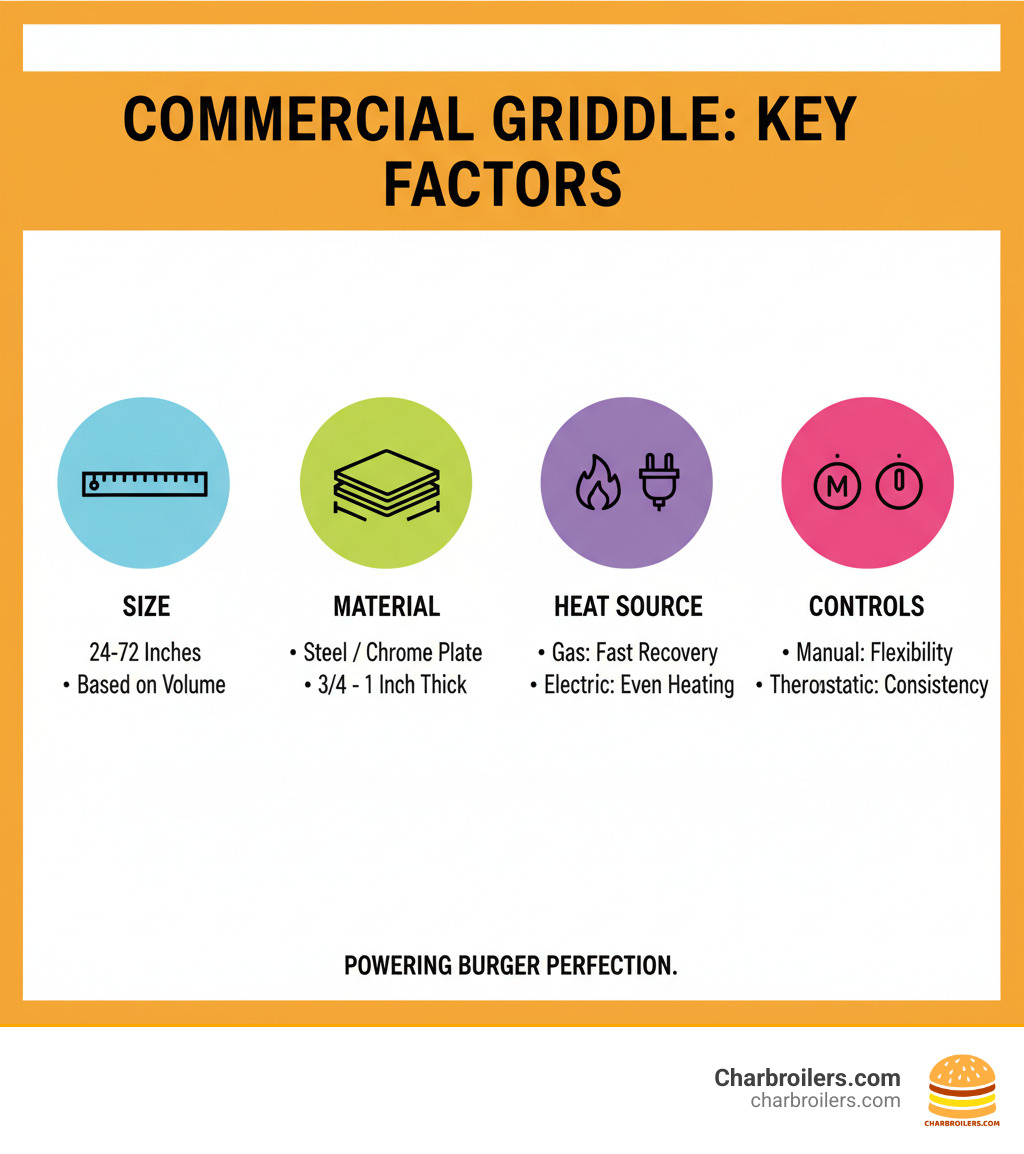
A 3/4-inch to 1-inch thick plate is ideal for high-volume burger cooking. It maintains temperature, ensuring an immediate sear instead of steaming, and recovers heat quickly between batches. This thickness can significantly increase your hourly output.
Thinner plates (around 1/2-inch) heat up faster but lose temperature quickly during a rush, leading to steaming instead of searing, longer cook times, and inconsistency. They are not recommended for high-volume burger cooking.
Size, Power, and Heat Control
Matching griddle size and power to your needs prevents wasting money and avoids service bottlenecks.
Griddle size ranges from 24 to 72 inches. A good rule of thumb is to allow 12 inches of width for every four to six burgers. A busy joint may need 48+ inches, while a cafe might only need 36 inches. Our 48-Inch Commercial Flat Top Grill Guide: Cooking Up Success walks through sizing decisions in detail.
The heat source choice between gas and electric depends on your kitchen. Commercial Gas Griddle models offer fast heat-up, instant temperature control, and high BTU output for powerful searing and quick recovery, making them the choice for most burger operations.
Electric griddles provide exceptionally even heating with no hot or cool zones. They are a great solution for kitchens without gas lines and can be more energy-efficient. Check out Choosing Your 36" Electric Griddle: A Commercial Buyer's Guide for the full electric story.
Heat controls can be manual or thermostatic. Manual controls offer direct, tactile adjustments preferred by some experienced cooks. Thermostatic controls automatically maintain a set temperature, ensuring consistency, which is ideal for training new staff and high-volume production.
For maximum flexibility, use zonal cooking with independent burners. Set different zones for searing (400-450°F), finishing, and toasting buns to transform your workflow. Speaking of temperatures, our Burger Cooking Temp guide covers the ideal ranges for different results.
Griddle Type: Countertop vs. Drop-In
Your griddle's physical type—countertop or drop-in—affects installation costs and kitchen flexibility.
Countertop griddles offer flexibility and straightforward installation, making them popular for food trucks, small cafes, and businesses that might rearrange their layout. They are generally more affordable upfront. Our Countertop Champions: The Ultimate Commercial Gas Grill Roundup showcases these versatile units.
Drop-in griddles offer a seamless, built-in look that improves workflow and aesthetics. However, installation is more complex and permanent, making them best for new builds or major renovations.
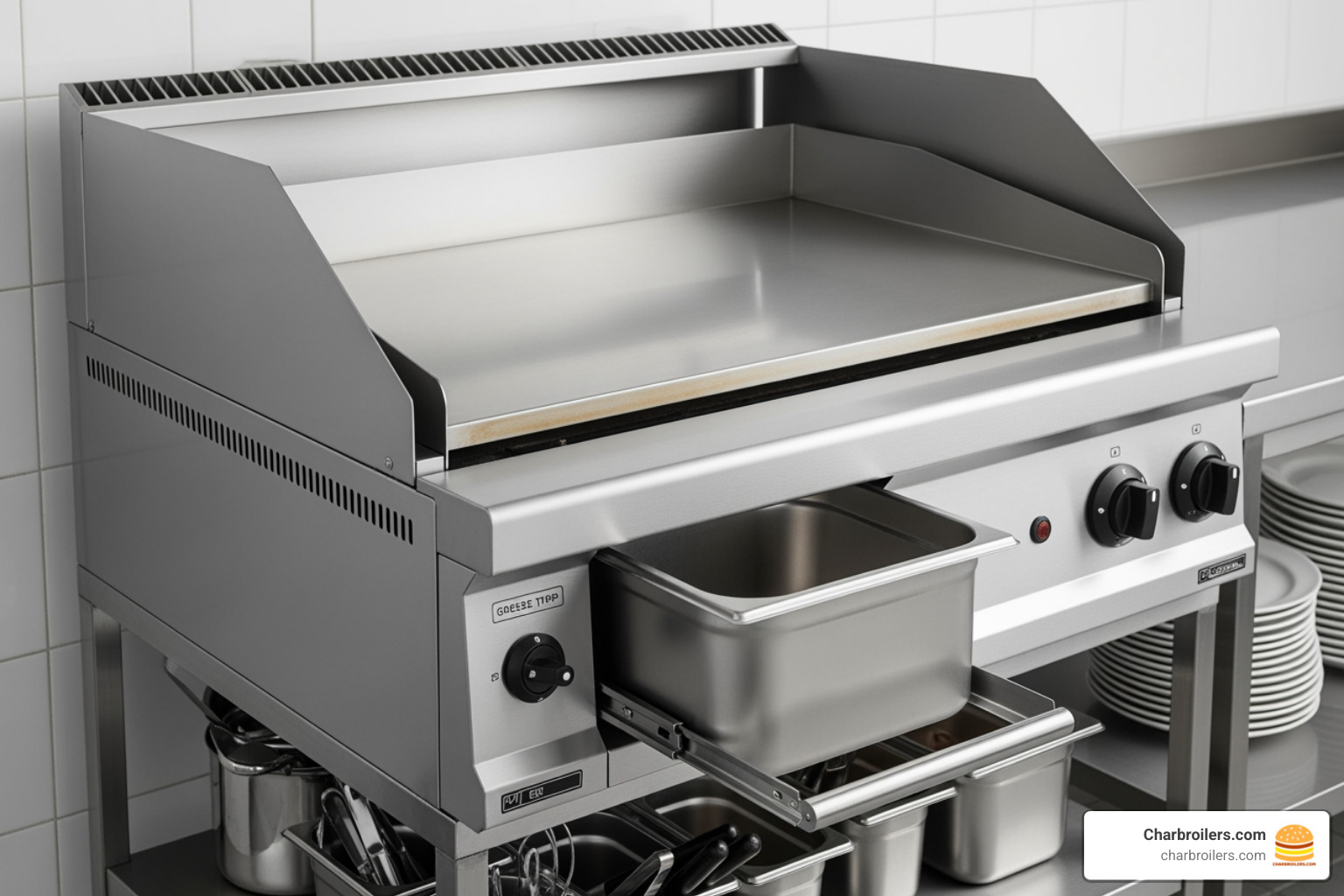
Finally, effective grease management is crucial. A good griddle has large, accessible grease troughs to channel fat away and splash guards to contain splatter, ensuring a cleaner, safer kitchen.
Poor grease management leads to soggy burgers and a hazardous, messy kitchen. Prioritizing good grease management results in better food, a safer workspace, and easier cleanup. For a comprehensive look at all griddle features, our guide From Countertop to Cast Iron: A Pro's Guide to Commercial Flat Tops covers everything in detail.
Our Top Picks: Finding the Right Griddle for Your Burger Volume
The best commercial griddle for burgers depends on your specific operation. A food truck's needs differ from a high-volume diner's. We've organized our top picks into three common scenarios to help you find the right match.
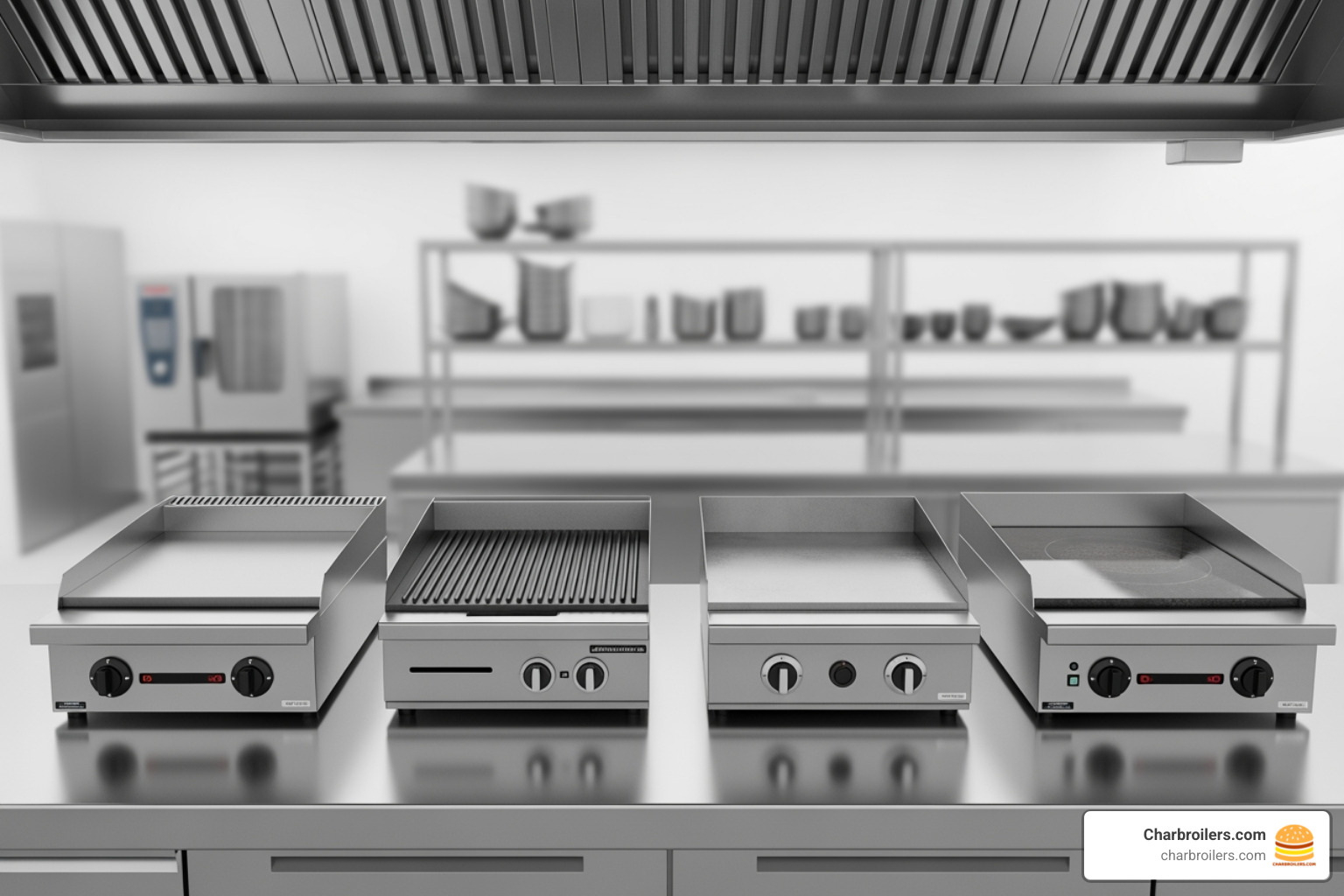
Commercial griddles range from about $149 to over $2,499. For serious burger operations, the $700 to $2,200 range offers the best balance of performance, durability, and value. If you want to explore the full spectrum of options, our The Ultimate Commercial Flat Top Grill Roundup: Sizzle Up Your Menu covers the landscape.
The All-Rounder: Best commercial griddle for burgers in most kitchens
This is the classic workhorse griddle that performs well without breaking the budget.
A 36-inch gas-powered griddle is ideal for most medium-volume restaurants. With three to four burners and a 3/4-inch thick steel cooktop, it offers zonal control and maintains steady heat without taking too long to preheat.
This versatile griddle can handle breakfast items like eggs and hash browns, then switch to searing burgers and toasting buns for lunch. This flexibility is key to a smooth-running kitchen.
The main benefit is balance: ample capacity in a reasonable footprint, quick heat-up and recovery, and multi-zone temperature control. This configuration is perfect for most family restaurants, sports bars, or casual dining spots.
The Space-Saver: Best compact griddle for burgers
A tight kitchen space doesn't prevent you from making great burgers. A compact griddle offers serious capability in a small footprint.
A 24-inch countertop griddle, available in gas or electric, is the solution. It typically has a 1/2-inch to 3/4-inch plate, which is capable for smaller batches. Its countertop design offers flexibility for limited spaces.
These griddles are ideal for food trucks, concession stands, small cafes, and pop-ups. Restaurants also use them as dedicated or backup stations, as they fit into existing setups without major changes.
Despite their size, these compact units heat up fast and deliver professional, restaurant-quality burgers in a small footprint. If you're working with limited square footage, our guide to Top 24 Commercial Griddles: A Buyer's Guide for Small Spaces walks you through maximizing every inch.
The High-Volume Hero: Best commercial griddle for burgers and maximum output
When burgers are your main event, you need equipment that can handle constant, high-volume orders.
This requires a 48-inch to 72-inch gas-powered griddle with high BTU output (30,000 per 12 inches) and, critically, a 1-inch thick steel plate. The thick plate acts as a heat battery, holding energy and maintaining temperature even when slammed with frozen patties during a rush.
This griddle is for dedicated burger joints and high-volume diners where consistency at scale is paramount. It allows you to cook large batches without sacrificing quality, thanks to its lightning-fast recovery time.
The benefits are speed, capacity, and consistency. You can achieve a perfect sear every time, allowing your kitchen to handle any rush while delivering the quality that keeps customers returning. If you're ready to dive into serious burger production, check out 60 Commercial Griddles: Heavy-Duty Solutions for High-Volume for the heavy-duty options that can keep pace with your operation.
Mastering Your Griddle: Cleaning, Maintenance, and Burger Tips
Buying the best commercial griddle for burgers is just the first step. Mastering its daily care and cooking techniques is what turns it into a powerhouse. Like a cast iron skillet, proper care improves its performance over time.
Building and Maintaining Your Non-Stick Surface
A great griddle's secret is its seasoning. A properly seasoned steel surface develops a natural non-stick coating that improves with use.
To season a new or deep-cleaned steel griddle, wash and dry it, then heat it to 300-350°F. Apply a very thin layer of a high-smoke-point oil (like canola or vegetable oil). A thin layer is crucial to avoid a sticky surface.
Heat the oil until it stops smoking (15-20 minutes). The surface will darken as the oil polymerizes. Cool and repeat two or three times to build a protective, non-stick layer.
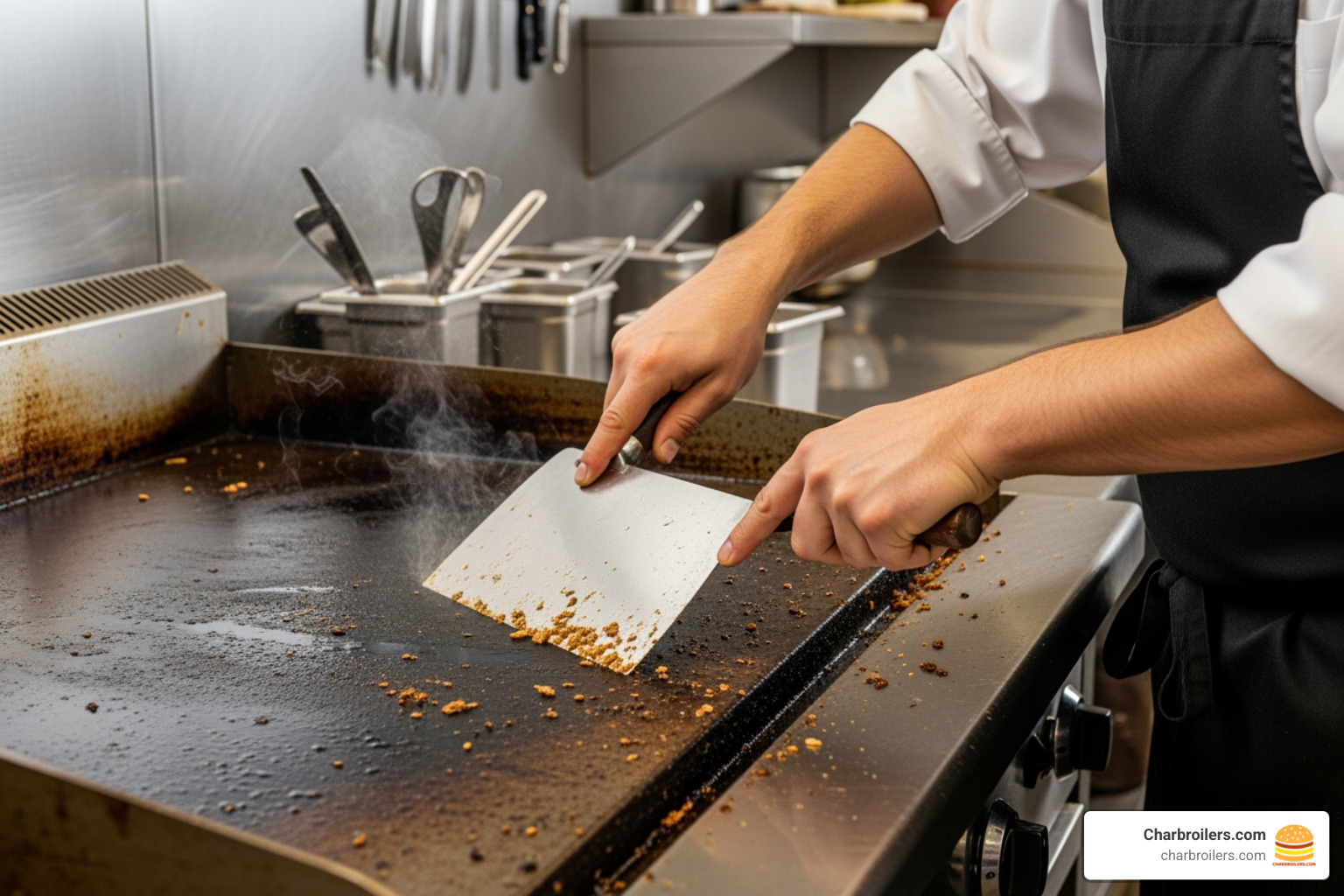
Daily cleaning is essential. While the griddle is still warm, scrape debris into the grease trough. Use a griddle cleaner and a non-abrasive pad, then wipe clean with a damp cloth. Finish with a thin layer of oil to protect the surface.
Pay attention to the grease management system. Empty and clean grease troughs after every shift to prevent fire hazards and ensure proper searing. For a complete deep dive into griddle care, check out The Hot Plate Handbook: Mastering Commercial Griddles and Flat Top Grills.
Cooking Burgers Like a Pro
To cook perfect burgers, always preheat your griddle for 15-20 minutes to 400-450°F. A cold griddle will steam burgers instead of searing them, preventing a good crust.
Learn your griddle's hot zones (over the burners) and cooler spots. Use hot zones for the initial sear and cooler areas for finishing thicker patties or holding.
For smash burgers, place a ball of beef on the hot surface and immediately press it flat with a griddle press for 10-15 seconds. This maximizes surface contact and creates the signature crispy edges.
Temperature management is key. Use high heat (400-450°F) for the initial sear. For thicker patties, move them to a cooler zone to finish cooking without burning the exterior. Speaking of proper temperatures, our guide on Burger Cooking Temp breaks down exactly what you need to know about safe internal temperatures.
Avoid overcrowding the griddle. It drops the surface temperature, causing burgers to steam instead of sear. Give each patty enough space for consistent results.
A well-maintained griddle improves over time. The surface becomes more non-stick, and you'll develop an intuitive feel for cooking on it, which is where the real burger magic happens.
Frequently Asked Questions about Commercial Burger Griddles
When searching for the best commercial griddle for burgers, some questions are common. At Charbroilers.com, we've heard them from all types of operators. Here are the answers to the most frequent concerns.
What temperature is best for cooking burgers on a griddle?
The sweet spot for cooking burgers on a griddle sits between 400°F and 450°F. This high heat is hot enough to trigger the Maillard reaction that creates a crispy, caramelized crust. At this temperature, sear each side for 1-2 minutes to develop the exterior while keeping the interior juicy.
Pro tip for thicker patties: sear them at high heat, then move them to a cooler zone (around 350°F) to finish cooking. This two-zone method gives you control over both the crust and internal doneness. For precise internal temperature guidelines, check out our Burger Temperature Chart.
Does the thickness of the griddle plate really matter for burgers?
Yes, absolutely—it's one of the most important features when choosing the best commercial griddle for burgers. The difference can make or break your operation during busy service.
Thicker plates (3/4-inch to 1-inch) act like a thermal battery, storing and holding heat. When you add cold patties, the temperature remains stable, ensuring a perfect sear and fast recovery time between batches. This guarantees consistent quality during a busy rush.
Thinner plates lose heat quickly when cold food hits them, leading to longer cook times and inconsistent searing. For serious burger operations, a thicker plate is a worthwhile investment.
How do I get a good sear on my burgers without them sticking?
Achieving a perfect, non-stick sear comes down to a few key principles. A properly seasoned surface is your foundation; for steel griddles, this natural non-stick coating improves with use.
Temperature is also critical. Your griddle must be preheated to 400-450°F. A hot surface immediately forms a crust that naturally releases when ready to flip. A lukewarm griddle causes sticking.
While burgers release their own fat, a light coating of high-smoke-point oil can help with leaner patties.
Finally, be patient. Let the patty sear for 1-2 minutes to develop a crust. It will release easily from the surface when it's ready to flip. Flipping too early will tear the meat and leave the crust behind.
Conclusion: Find Your Perfect Burger Griddle
Finding the best commercial griddle for burgers means matching your unique needs to the right equipment. This guide has covered why griddles make better burgers, the key features to look for, and the best types for different operations.
While the right griddle depends on your volume, space, and menu, always prioritize plate thickness, heat control, and grease management. A thick plate (3/4- to 1-inch) ensures heat retention. Precise controls guarantee a perfect sear. Good grease management leads to a cleaner, safer kitchen and better burgers.
A quality griddle is an investment in burger perfection that will make your restaurant a destination. Consistent equipment performance leads to a smoother kitchen, more efficient staff, and a growing reputation.
Choosing kitchen equipment can be overwhelming, but we can help. At Charbroilers.com, we've assisted restaurants in Seattle, WA, and across the USA. We partner with you to understand your needs and recommend solutions that fit your business and budget.
We also offer flexible financing options designed for food service operations, making it easier to invest in the equipment that will lift your kitchen. Whether you're opening your first burger joint or upgrading an existing setup, we're here to help you succeed.
Ready to take your burgers to the next level? Explore our selection of commercial griddles, reach out for expert advice, or check out our Guide to Commercial Charbroilers for Your Restaurant to see how the right equipment can transform your entire menu. Your perfect burger griddle is waiting—and we're here to help you find it.