
From Countertop to Cast Iron: A Pro's Guide to Commercial Flat Tops
The Workhorse of the Professional Kitchen
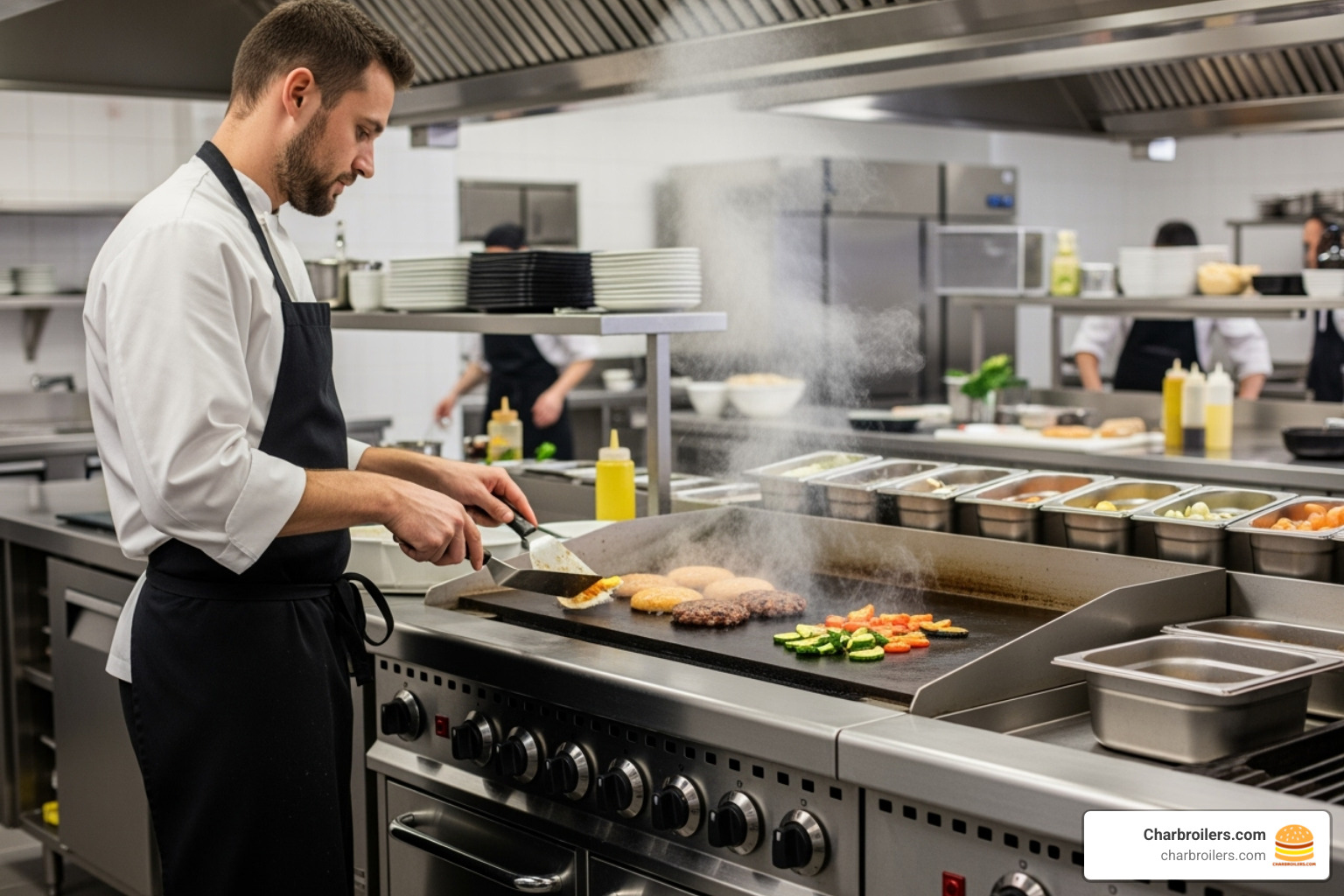
A commercial flat top griddle is the ultimate multitasking powerhouse that transforms any professional kitchen into a high-efficiency cooking operation. Whether you're flipping pancakes for the breakfast rush, searing burgers for lunch, or grilling vegetables for dinner service, the right griddle becomes your most reliable partner.
Key Benefits of Commercial Flat Top Griddles:
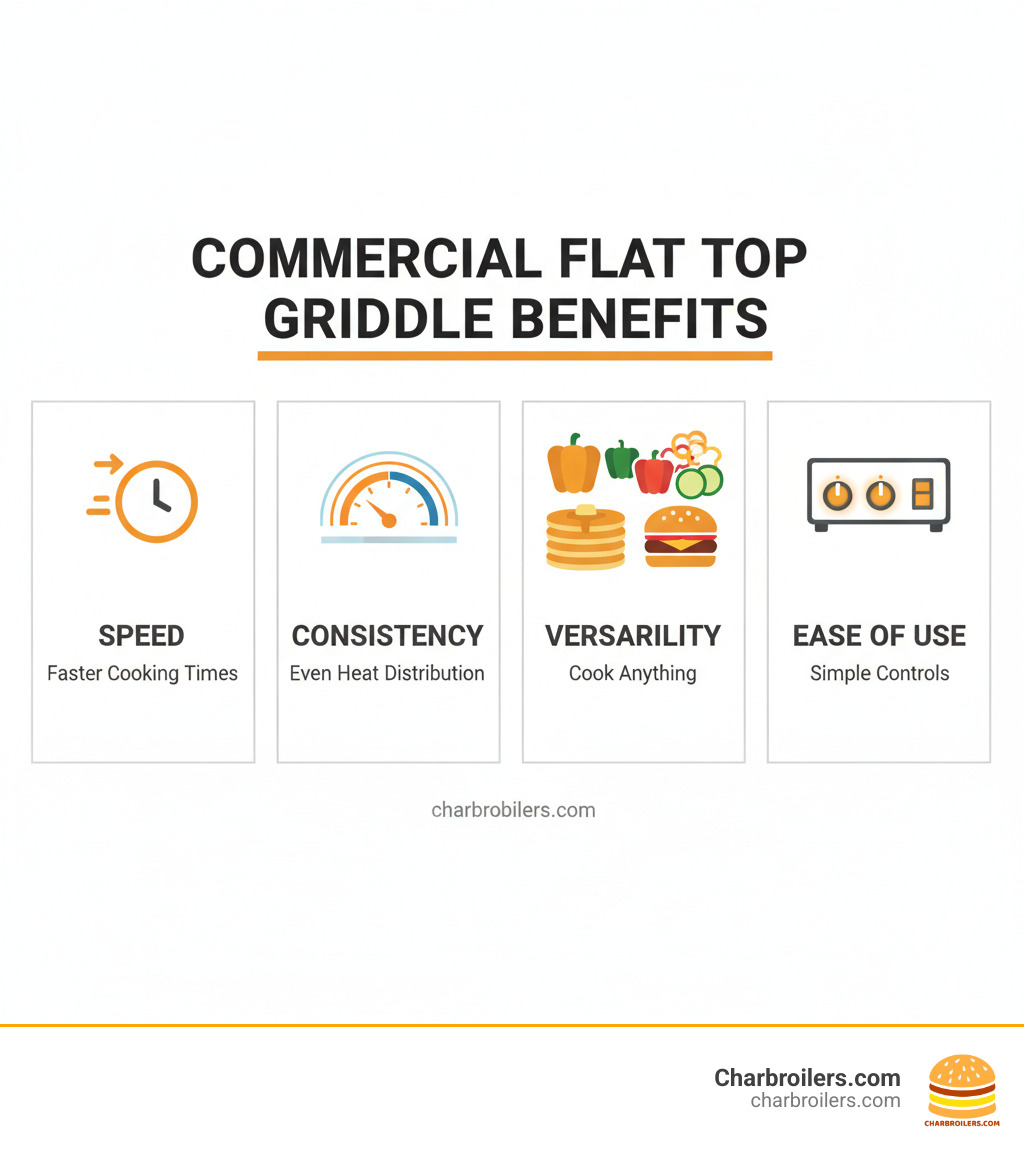
- Versatility - Cook everything from eggs and pancakes to steaks and vegetables on one surface
- High-Volume Capacity - Handle multiple orders simultaneously with large cooking surfaces
- Consistent Results - Even heat distribution ensures uniform cooking across the entire plate
- Menu Expansion - Add breakfast items, grilled sandwiches, and seared proteins without additional equipment
- Easy Cleaning - Flat surfaces and grease management systems simplify daily maintenance
The choice between gas and electric models, plate materials like steel versus chrome, and sizing options from 24-inch countertop units to 72-inch workhorses can feel overwhelming. Temperature control systems range from simple manual knobs to advanced thermostatic controls, while safety features and maintenance requirements vary significantly across brands and models.
I'm Sean Kearney from Charbroilers.com. With over a decade in the restaurant equipment industry, I've learned that the right griddle selection can make or break your kitchen's efficiency and profitability, and I've helped countless operators choose the perfect commercial flat top for their needs.
Commercial flat top terminology:
- 24 inch commercial griddle
- commercial griddle propane
- how to clean a commercial stainless steel griddle
Choosing Your Power Source: Gas vs. Electric Griddles
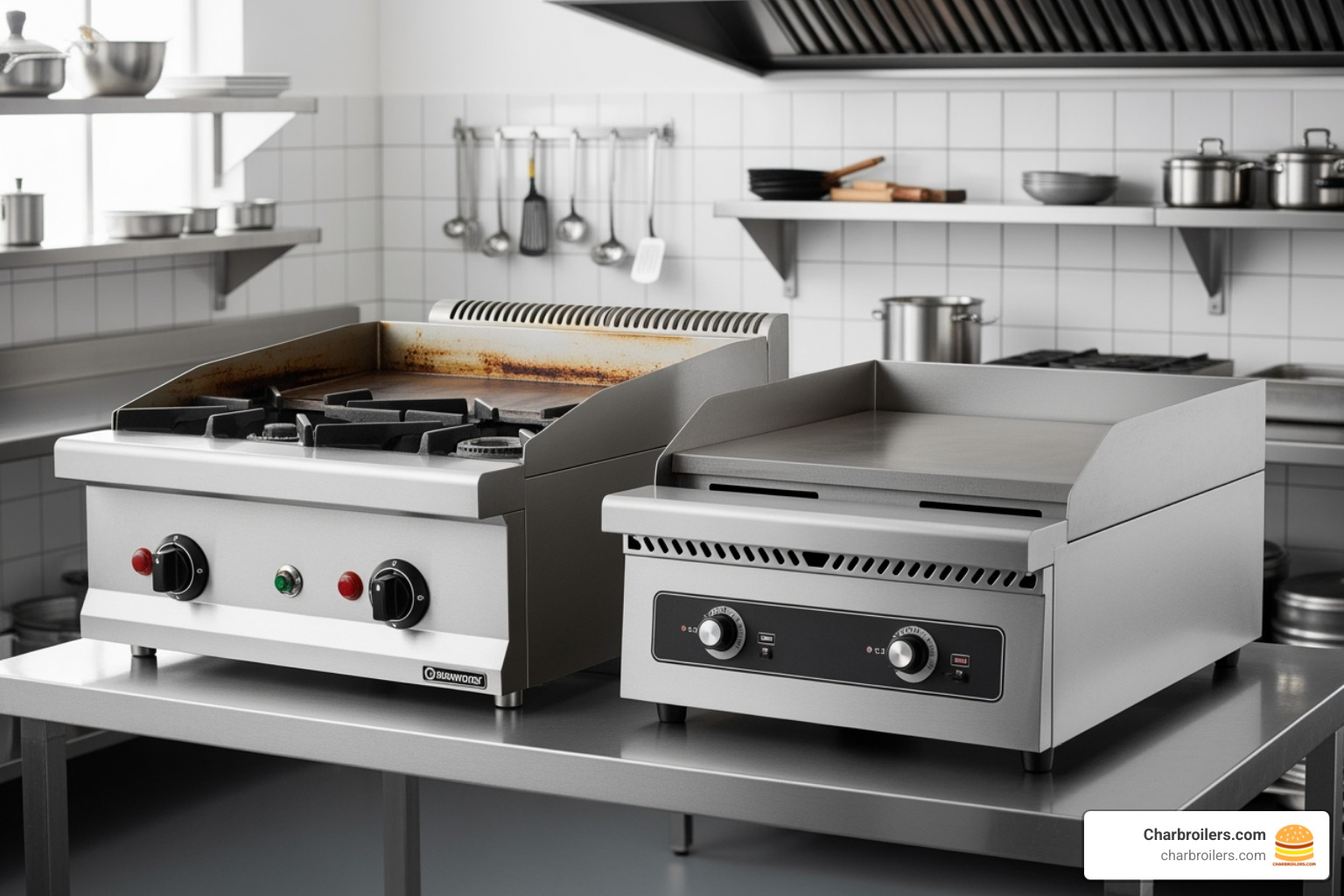
The power source for your commercial flat top griddle shapes everything from daily operations to utility bills. Your kitchen's infrastructure is a major factor; existing gas lines make gas griddles an obvious choice, but electric models offer compelling advantages for kitchens without them. Your menu is also key. High-heat searing for dinner rushes points toward gas, while consistent breakfast cooking often favors electric.
For a comprehensive comparison of both options, check out our detailed guide on 36" Commercial Griddles: Gas vs. Electric and Top Picks.
The Power and Precision of Gas Griddles
Gas griddles are the speed demons of the commercial flat top world. Their rapid heat-up times and precise temperature control mean you can go from cold to searing hot in minutes and adjust temperatures instantly—perfect for hectic rushes when every second counts.
Most gas griddles pack serious power with high BTU output, making them ideal for high-volume searing of proteins. Think juicy steaks with perfect grill marks or burgers that lock in all their flavor. The intense heat creates that coveted caramelization that customers love.
You'll also have flexibility with fuel options. Gas griddles work with both propane and natural gas, so whether you're in a permanent location with gas lines or running a mobile food operation, there's an option for you.
Want to dive deeper into gas options? Our guides on Commercial Gas Griddles and Commercial Griddle Propane Picks That Sizzle have you covered.
The Consistency and Convenience of Electric Griddles
While slower to warm up, electric griddles provide best even heat distribution, eliminating hot spots so items like pancakes cook uniformly. The simple installation is a game-changer; with no gas lines needed, many models are plug-and-play, making them perfect for locations without gas lines or kitchens requiring placement flexibility.
Thermostatic controls on electric griddles offer incredible precision. Set your temperature, and the griddle maintains it consistently. This reliability makes electric models particularly energy efficient for maintaining steady cooking temperatures over long periods.
The consistent, gentle heat makes electric griddles shine for delicate items like crepes, eggs, or grilled sandwiches where even cooking is more important than intense searing power.
If you're leaning toward electric, our Choosing Your 36" Electric Griddle: A Commercial Buyer's Guide breaks down everything you need to know.
Comparing Gas vs. Electric Griddles
| Feature | Gas Griddles | Electric Griddles |
|---|---|---|
| Heat-up Speed | Fast initial heating and quick temperature changes | Slower to heat up but maintains temperature well |
| Temperature Control | Instant response to adjustments, high heat capability | Precise thermostatic control with consistent temperatures |
| Installation | Requires gas line connection and proper ventilation | Simple electrical connection, more placement flexibility |
| Operating Cost | Generally lower fuel costs per BTU | Higher electricity costs but more efficient heat retention |
| Best For | High-volume operations, searing proteins, quick service | Consistent cooking, breakfast items, locations without gas |
The choice between gas and electric often comes down to your specific operation's needs, existing infrastructure, and cooking style. Both can be excellent workhorses in the right kitchen.
Essential Features of the Perfect Commercial Flat Top
When investing in a commercial flat top griddle, the details matter. The right features can transform your kitchen, turning your griddle into an extension of your culinary vision. The three pillars of griddle excellence are the cooking plate material, size selection, and temperature control system. Get these right, and you'll have a workhorse that delivers consistent results day after day.
Modern technology has revolutionized what's possible with griddles. Advanced features like multi-zone temperature control and smart thermostats can lift your kitchen's efficiency to new heights. If you're curious about cutting-edge options, our guide on Smart Griddling: Why Atosa ATTG Models Are a Must-Have explores how technology is changing the game.
Griddle Plate Materials: Steel, Cast Iron, and Chrome
Your griddle plate is where the magic happens, and the material you choose shapes every cooking experience. Think of it as choosing between different canvases for an artist – each has its own personality and purpose.
Steel plates are the reliable workhorses of the griddle world. Most commonly made from mild steel or stainless steel, they offer a balance of durability and performance. Steel heats up quickly and responds well to temperature changes, but you'll need to season them properly to create a non-stick surface. Once seasoned, a steel plate is your trusted partner for everything from eggs to burgers.
Cast iron plates are the marathon runners of griddle materials. Once they get hot, they stay hot, delivering the kind of heat retention that makes high-volume cooking a breeze. Picture a busy breakfast service—cast iron maintains its temperature even when you're constantly adding cold food. The downside is that cast iron is heavy, heats up slowly, and requires more maintenance to prevent rust. However, many chefs swear by its superior, even heat distribution.
Chrome plates are the premium choice that's gaining popularity. Food glides off chrome surfaces, making cleanup almost effortless. Chrome also reflects heat back to the food, keeping your kitchen cooler. While the initial investment is higher, reduced oil use and easier maintenance often pay dividends. Just remember that chrome scratches more easily than steel.
What size commercial flat top do I need?
Choosing the right size commercial flat top is like finding the perfect pair of shoes – it needs to fit your space and support your daily demands.
24-inch griddles are nimble solutions for tight spaces and focused menus, perfect for food trucks, small cafes, or as supplementary cooking surfaces. They handle breakfast items and paninis beautifully without dominating your counter space. If you're working with limited square footage, our Top 24" Commercial Griddles: A Buyer's Guide for Small Spaces will help you maximize every inch.
36-inch griddles hit the sweet spot for many operations, providing enough cooking real estate for moderate volume while fitting comfortably in most kitchen layouts.
When volume demands grow, 48-inch and 60-inch griddles become essential. These larger surfaces allow you to create dedicated cooking zones—imagine keeping one section at a gentle heat for eggs while another sears steaks. Our 48-Inch Commercial Flat Top Grill Guide: Cooking Up Success explores how larger griddles can revolutionize high-volume operations.
Consider your peak service periods and menu complexity. A breakfast diner might only need a 36-inch model, while a busy sports bar could require a 60-inch unit for its diverse menu.
Mastering Temperature: Manual vs. Thermostatic Controls
The right temperature control system is about consistency and peace of mind, separating good griddles from great ones.
Manual controls put you in the driver's seat with simple knobs that directly regulate heat. Experienced chefs often prefer this direct connection, adjusting heat levels by feel and instinct. Manual controls are straightforward, reliable, and give you immediate response.
Thermostatic controls are like having a sous chef constantly monitoring your temperatures. These systems automatically cycle heating elements to maintain your set temperature, ensuring consistency. Snap-action thermostats are particularly popular for their reliability.
For ultimate precision, solid-state controls offer the tightest temperature management available, perfect for delicate cooking or when food safety protocols demand exact temperatures.
The real game-changer is multi-zone cooking capability. Modern griddles often feature independently controlled sections, allowing you to maintain different temperatures across the same surface. This versatility transforms a single griddle into multiple specialized cooking stations.
If you're interested in exploring different control options, The Ultimate Atosa Griddle Guide: Manual, Thermostatic, and Beyond provides detailed comparisons to help you choose the right system for your operation.
Maximizing Your Investment: Maintenance, Safety, and ROI
Your commercial flat top is a serious investment. To ensure it becomes a profitable workhorse, you need a solid plan for maintenance, safety, and financial returns. Neglecting these areas can lead to expensive repairs, safety issues, and poor ROI. With the right approach, your griddle will reward you with years of reliable service.
Best Practices for a Clean and Long-Lasting Commercial Flat Top
The secret to a long-lasting commercial flat top is consistent daily care. This prevents grease and carbon buildup, which can damage the griddle and create safety hazards, while also ensuring better-tasting food.
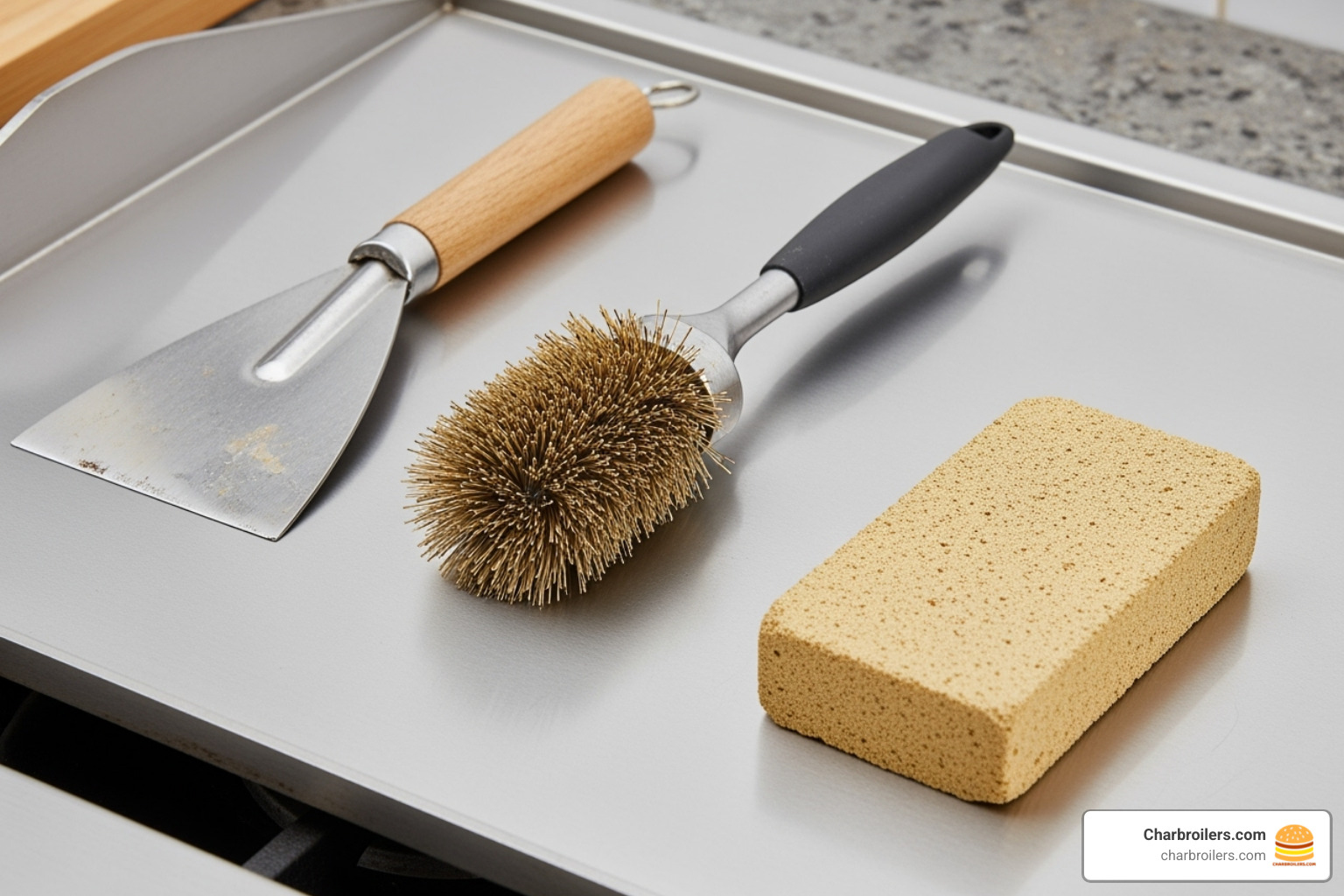
Daily cleaning is a must. While the griddle is still warm, scrape off debris, scrub with a griddle brick and cleaner, then rinse and wipe dry. Features like the wide front grease trough and large-capacity grease drawer on models like the Vulcan HEG36E simplify this process.
Seasoning your steel and cast iron surfaces is critical. After cleaning, apply a thin layer of high-smoke-point oil and heat the griddle until it smokes. This creates a natural non-stick coating that must be maintained with regular seasoning.
Deep cleaning should happen weekly or as needed. Use specialized griddle cleaning solutions to break down stubborn grease and carbon deposits, always ensuring proper ventilation.
Don't forget about grease trap management. A full grease trap is a fire hazard. Empty and clean it regularly to prevent overflow and maintain safety standards.
Your cleaning arsenal should include a sturdy griddle scraper, griddle bricks or pads, and appropriate cleaning solutions.
Critical Safety Features and Protocols
Working with a commercial flat top means dealing with high temperatures. Modern griddles come with safety features, but team training is equally important.
Backsplashes and side splashes are a first line of defense against grease splatter, protecting walls, equipment, and staff from hot oil.
The cool-touch front rail feature, like the "cool bull nose" design on some models, prevents accidental burns when chefs are working close to the griddle.
Non-skid legs on countertop models ensure your griddle stays put during operation.
Proper ventilation is non-negotiable. Your exhaust hood system removes grease, smoke, and odors while reducing fire risks. Some systems even come pre-piped for Ansul R-102 Fire Prevention Systems, ensuring UL300 compliance.
Gas models should always include flame failure devices that automatically shut off gas supply if the flame goes out, preventing dangerous gas leaks.
Remember: safety features are only effective when staff are properly trained on safe operation and cleaning.
Troubleshooting Common Griddle Issues
Knowing how to troubleshoot common issues can save you money and prevent service disruptions.
Uneven heating on gas griddles might mean clogged burner ports; on electric models, it could be faulty heating elements. Always check that the griddle is level.
Pilot light problems on gas griddles often stem from a dirty thermocouple or obstructions around the pilot assembly.
Temperature fluctuations typically indicate thermostat problems on electric models or inconsistent gas pressure on gas units.
Food sticking to steel or cast iron surfaces usually means insufficient seasoning. Re-seasoning and thorough daily cleaning typically resolve this.
When troubleshooting, start with your user manual. For complex issues, contact a qualified service technician to protect your warranty and ensure safety.
Calculating Cost and Return on Investment (ROI)
Investing in a commercial flat top requires careful financial planning, but the returns can be substantial.
Initial purchase prices vary dramatically by size, power, material, and brand. At Charbroilers.com, we offer financing options to make these essential investments manageable for your cash flow.
Operating costs depend on your power source and usage. Energy-efficient features can significantly reduce these ongoing expenses.
Menu diversification becomes possible with a versatile griddle, increasing revenue streams without requiring additional specialized equipment.
Increased efficiency boosts profitability. Features like rapid heat-up and multi-zone cooking improve kitchen speed, leading to quicker table turns, higher order capacity, and increased sales.
Labor savings add up when equipment is easy to use and maintain. Easy-to-clean surfaces and intuitive controls reduce staff time on cooking and cleaning, saving on labor costs.
Durability and longevity from a reputable manufacturer, combined with proper maintenance, protect your investment and ensure it keeps generating revenue.
By carefully evaluating these factors, you can calculate your griddle's potential ROI and ensure it becomes a profit-generating asset.
For more information on how data is handled, please refer to our policies:
Frequently Asked Questions about Commercial Flat Tops
We've fielded countless questions about commercial flat top griddles from operators. Here are answers to some of the most common ones—the practical details that can make or break your griddle investment.
What's the difference between a griddle and a plancha?
While both offer a flat cooking surface, they're designed for different culinary approaches. A plancha is a griddle's high-performance cousin, with a higher temperature range and thicker plate construction. Wood Stone Plancha Griddles, for example, reach impressive temperatures from 150°- 650° F for gas models and 300°- 700° F for electric units, which is significantly hotter than most standard griddles.
The thicker plate on a plancha provides superior heat retention and recovery, making it brilliant for searing proteins. Griddle versatility shines in everyday operations for items like pancakes and eggs. Planchas excel at specific use cases: high-heat searing, Spanish-style cooking, and achieving restaurant-quality crusts on meats and vegetables.
How thick should my griddle plate be?
The plate thickness of your commercial flat top dramatically impacts performance. The central trade-off is heat retention vs. response time. Thinner plates (e.g., 1/2-inch, like on the Vulcan HEG36E) heat up and respond quickly, which is great for adjusting between different foods.
Thicker plates—typically 3/4-inch or 1-inch—are high-volume workhorses. They take longer to heat up but offer superior heat retention, maintaining a steady temperature even when you drop cold food on the surface. This ensures fast recovery and consistent cooking during a rush.
Matching thickness to menu items is crucial. A 1/2-inch plate works perfectly for breakfast items, but if you're searing steaks or handling high-volume orders, invest in a thicker plate for temperature consistency.
Can I use a commercial griddle in a food truck?
Yes, commercial flat top griddles are popular in food trucks because they are compact, versatile, and can handle diverse menus.
Portability is key. Countertop models, especially 24-inch and 36-inch units, fit perfectly into tight food truck layouts, offering serious cooking power in a manageable footprint.
Power source considerations are critical. Propane griddles are the go-to choice, offering independence from electrical hookups. Electric options work too, but you'll need a powerful generator or reliable shore power. Smaller 120-volt electric griddles can work with more standard setups.
Ventilation requirements in mobile kitchens are non-negotiable. You'll need a commercial exhaust hood system to handle fumes, grease, and heat. Always check your local health department regulations for mobile food units.
With proper planning, a commercial flat top can become the heart of your food truck operation.
Conclusion: Fire Up Your Menu with the Right Flat Top
Selecting the perfect commercial flat top can transform your kitchen's capabilities. We've explored the fundamental choices: whether gas or electric power suits your operation, which plate material serves your menu best, what size matches your volume, and how smart temperature controls can lift your cooking.
A commercial flat top is more than just technical specifications; it's the heartbeat of your kitchen. It's where the breakfast rush comes alive, lunch service flows smoothly, and creative menu ideas become profitable reality.
The right griddle empowers your chefs to work with confidence. When equipment delivers consistent results and handles peak service demands, they can focus on what they do best – creating memorable food experiences for your customers.
We've also seen how proper maintenance and safety protocols protect your investment and ensure your team can work efficiently and safely. When you factor in the menu diversification opportunities, labor savings, and increased efficiency, a quality griddle quickly proves its worth as a revenue-generating cornerstone of your business.
At Charbroilers.com, we understand that choosing commercial kitchen equipment is about investing in your operation's future success. That's why we provide both a wide selection of equipment and financing options custom for foodservice operations like yours. We're here to help you select a griddle that doesn't just meet your current needs but grows with your business.
Ready to expand your cooking capabilities even further? Now that you've mastered the flat top, explore our complete Guide to Commercial Charbroilers for Your Restaurant and find how the right combination of equipment can take your menu to the next level.