

Don't Get Burned: A Step-by-Step Guide to Fixing Your Char-Broil Igniter
That Frustrating Click (or Silence)
When your char broil commercial series igniter not working leaves you staring at an unlit grill during peak service hours, every second counts. Here's what you need to know right now:
Quick Troubleshooting Checklist:
- Check the battery - Replace if dead or corroded (most common cause)
- Listen for a click - If no sound, check wire connections to the ignition module
- Look for a spark - If clicking but no spark, clean the electrode and check the gap (should be 1/8" from burner)
- Inspect the electrode wire - Ensure it's snug, not corroded or cracked
- Clean debris - Remove grease, spider webs, or food buildup around the electrode
- Test with a match - If igniter fails, manually light to confirm gas supply is working
The good news? Most igniter problems stem from simple issues like a dead battery, dirty electrode, or loose connection—not expensive component failures.
I'm Sean Kearney from Charbroilers.com, and over my decade-plus in the restaurant equipment industry, I've helped countless operators troubleshoot char broil commercial series igniter not working issues that were costing them valuable prep time. Most of these problems can be fixed in under 10 minutes with basic tools you already have in your kitchen.
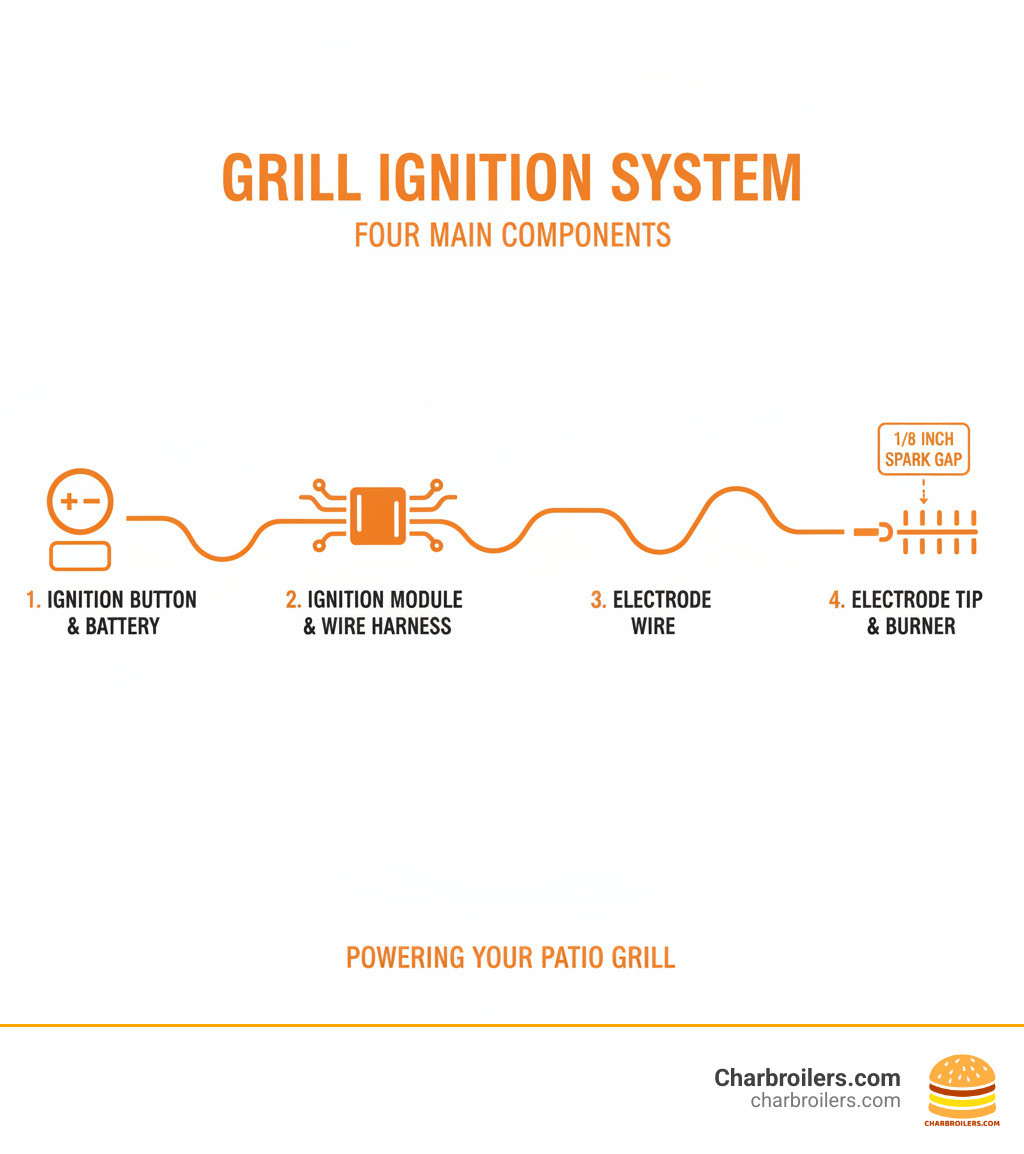
Easy char broil commercial series igniter not working word list:
Why Won't My Igniter Work? Common Causes Explained
Picture this: you're ready to fire up your grill, you press that ignition button, and... nothing. Or maybe you hear a click but see no flame. When your char broil commercial series igniter not working becomes the problem standing between you and perfectly grilled food, it's natural to feel frustrated.
The good news? Most igniter failures trace back to a handful of common issues that are surprisingly easy to fix once you know what to look for.
Dead batteries top the list by a mile. Just like your TV remote or flashlight, battery-operated igniters eventually run out of juice. If your grill hasn't sparked in months, this is almost always your culprit.
Next up are loose or corroded wiring connections. The heat, grease, and moisture around a commercial grill aren't exactly gentle on electrical components. Over time, wires can work themselves loose, corrode at the connection points, or even fray from repeated exposure to high temperatures.
Here's one that surprises people: clogged electrodes. Grease buildup, food debris, and yes—spider webs—can block the electrode tip where the spark forms. Spiders love the smell of propane and often build nests in the burner tubes and around the igniter. It sounds odd, but it's one of the most common issues we see.
Moisture problems can shut down your igniter fast. If your grill sits uncovered during rain or in humid conditions, water can interfere with the electrical connections or prevent the spark from forming properly. This is especially common if you've just cleaned your grill with water and haven't let it dry completely.
The igniter button or module itself can fail after years of repeated use. That button gets pressed hundreds or thousands of times, and eventually the internal mechanism or the electronic module it connects to can wear out.
Sometimes the issue is simply an improper spark gap—the distance between the electrode tip and the burner. This gap needs to be about 1/8 inch for the spark to jump effectively. Too wide, and the spark can't make it across. Too narrow, and it won't have enough space to ignite the gas properly.
Finally, what looks like an igniter problem might actually be a gas supply issue. If no gas is reaching the burners, even a perfectly functioning igniter won't produce a flame. Always double-check that your propane tank isn't empty or that your natural gas line valve is fully open.
Understanding these common causes puts you halfway to solving the problem. For more background on how gas grills work in general, check out our guide on Gas Grill Char Broil.
Understanding Your Ignition System: Battery vs. Piezo
Before you start troubleshooting, it helps to know which type of ignition system you're working with. Most Char-Broil Commercial Series grills use one of two systems: battery-operated electronic igniters or piezo igniters. They work quite differently, which means the troubleshooting approach differs too.
Battery-operated igniters use a small battery (usually AA or AAA) to power an electronic module that creates a continuous spark when you hold down the button. You'll typically hear a rapid series of clicks—like a machine gun of sparks—as long as the button is pressed. When these systems fail, you're usually looking at a dead battery, corroded battery contacts, loose wiring, or a faulty electronic module.
Piezo igniters, on the other hand, work mechanically. When you press the button, a spring-loaded hammer strikes a special crystal inside, which generates a single high-voltage spark. No batteries needed. You'll hear just one distinct click with each press. When piezo systems fail, it's often due to mechanical wear on the spring or plunger, a damaged crystal, or a dirty connection point at the electrode.
| Feature | Battery-Operated Igniter | Piezo Igniter |
|---|---|---|
| How It Works | Uses a battery (often AA or AAA) to power an electronic voltage intensifier, creating a continuous spark when the button is held. | Uses a spring-loaded hammer to strike a crystal (piezoelectric material), distorting it to generate a single, high-voltage spark. |
| Common Failure Points | Dead or corroded battery, loose/damaged wiring, faulty electronic module, corroded battery contacts. | Mechanical failure of the plunger/spring, crystal damage, loose/damaged wiring, dirty contact point, improper gap. |
| Troubleshooting Approach | Focus on battery, battery compartment cleanliness, and continuity of electrical circuit. | Focus on mechanical function of the button, cleanliness of the contact point, and proper spark gap. |
| Signs of Life | Often produces a rapid series of clicks (if working) when the button is pressed and held. | Produces a single, distinct click with each press of the button. |
Most modern Char-Broil Commercial Series grills feature battery-operated electronic ignition because they're more reliable and easier to use. But knowing the difference between the two systems means you'll know exactly where to focus your troubleshooting efforts—whether that's checking batteries and wiring or inspecting the mechanical button mechanism.
Step-by-Step Troubleshooting for a Char Broil Commercial Series Igniter Not Working
Let's roll up our sleeves and figure out what's going on with your grill. We'll walk through this together, starting with the easiest fixes first and working our way up to the more technical stuff. The good news? Most of the time, you'll find the problem in the first few steps.
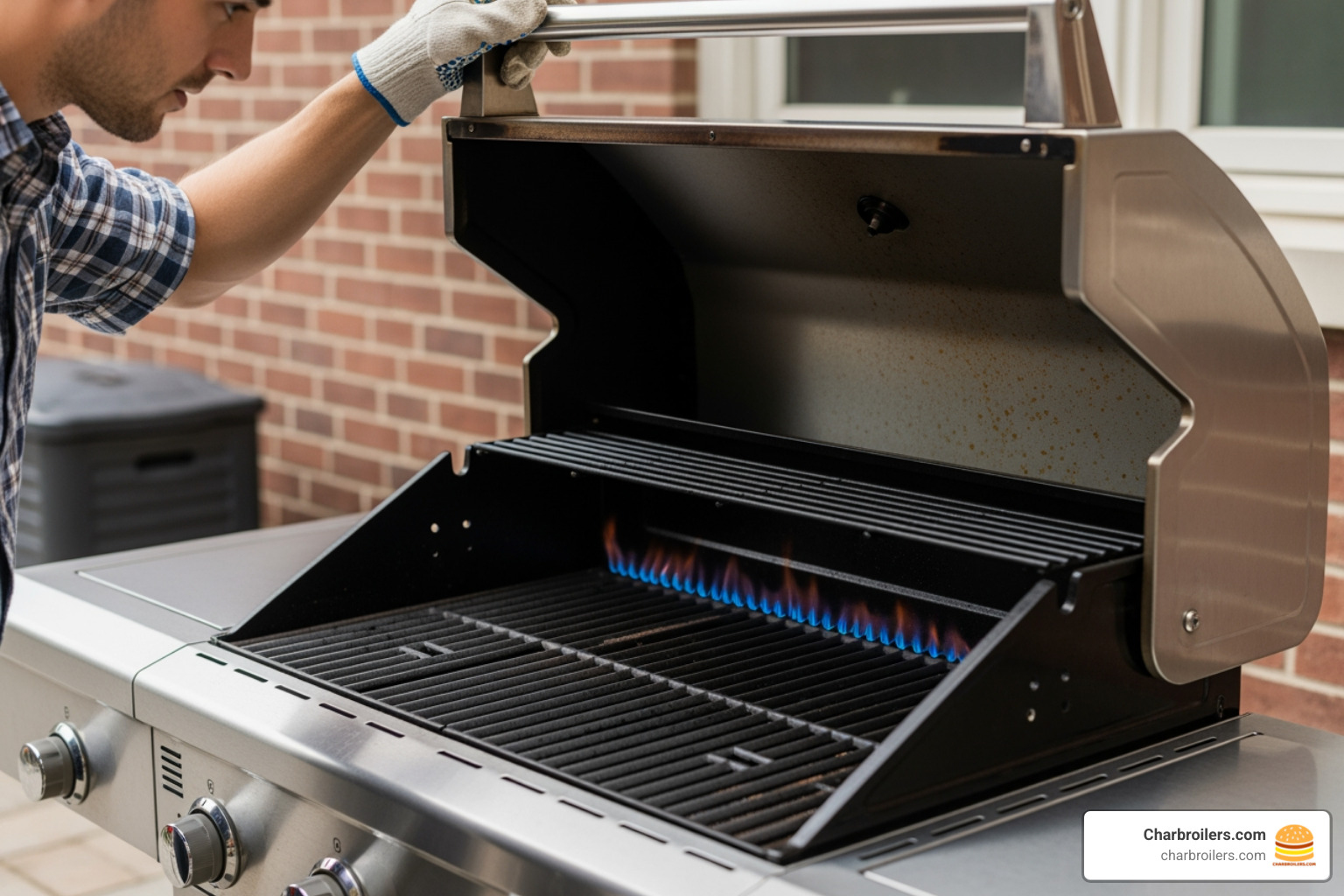
Step 1: The Battery Check – The Simplest Fix
I know, I know—checking the battery feels almost too simple. But here's the truth: a dead battery is the number one reason why your char broil commercial series igniter not working. We've seen it hundreds of times, and there's no shame in it. Batteries die when we least expect them to.
Finding your battery compartment is usually straightforward on Char-Broil grills. Look at the control panel where your ignition button sits. On most models, the battery lives right inside that button. You'll typically need to unscrew the igniter button by twisting it counter-clockwise. Be gentle here—there might be wires attached, and you don't want to yank anything loose.
Once you've got it open, check how the battery is sitting. Is the positive end where it should be? Look for the little plus and minus symbols inside the compartment. Even if the battery looks fine, here's my advice: replace it anyway. A fresh AA or AAA battery costs less than a dollar and eliminates all doubt. I've seen batteries that looked perfectly fine test completely dead.
While you're in there, take a close look at those battery contacts—the little metal pieces that touch the battery ends. See any green or white crusty buildup? That's corrosion, and it's blocking the electrical connection. Grab a cotton swab and a bit of rubbing alcohol (or even a tiny spray of WD-40), and clean those contacts until they shine. This simple step can make all the difference.
If you want to be absolutely sure you're doing this right for your specific model, you can always follow your manual instructions for battery replacement on Char-Broil's support site.
Step 2: The Sound Test – Are You Getting a Click?
Now that you've got a fresh battery installed, let's see if your igniter is actually trying to work. This is where we use our ears to diagnose the problem. Open your grill lid and make sure you can see the burners. You can turn the gas on for this test, but we're not lighting anything yet—we're just listening.
Press and hold that ignition button. What do you hear?
If you get a distinct clicking sound—either a single click or a rapid series of clicks—that's actually good news. It means your battery is doing its job, the ignition module is getting power, and something is happening. The problem is further down the line, probably at the electrode where the spark should be forming. You can skip ahead to Step 3.
But what if you hear nothing at all, or just a very faint, sad little click? That tells us the power isn't making it to where it needs to go. Time to do some detective work.
Start by checking the wire connections to the ignition module. This is usually a small box located somewhere near your control panel. Follow the wires from your ignition button and look for any that are loose, disconnected, or showing signs of damage. Wires can corrode from grease and moisture, or they can simply vibrate loose over time. If you spot a loose connection, push it back on firmly. If you see corrosion, you might need to clean the connection or replace the wire.
If all the wires look good and you've got a fresh battery, but still no click, the igniter button itself or the ignition module might have failed internally. These components do wear out eventually, especially in busy commercial kitchens.
Step 3: The Spark Test – What to Do If You Hear a Click but See No Spark
Alright, you've got a click, but your burners aren't lighting. This is one of the most common scenarios when dealing with a char broil commercial series igniter not working. The good news is that your ignition module is working—it's sending the signal. The spark just isn't making the journey from the electrode to the burner.
Here's a pro tip: dim the lights or wait until it's darker in your kitchen. Sparks are much easier to see in low light. With the gas turned off (safety first—always!), press the ignition button and watch the area near your burner. You're looking for a small, blue spark jumping from the electrode tip to the burner tube.
If you don't see that spark, or if it's weak and inconsistent, here's what's likely happening. The electrode tip might be clogged with grease, carbon buildup, food debris, or even spider webs. Yes, spiders love to make homes in grills! This buildup acts like insulation, preventing the spark from forming properly.
Take a close look at the ceramic insulator that surrounds the electrode base. If you see cracks or breaks in this white or tan ceramic piece, that's your problem. The spark is grounding out through the crack instead of traveling to the tip where it belongs.
Another common issue is the electrode being out of position. Maybe it got bumped during cleaning, or it's slowly bent over time. The electrode needs to be positioned at just the right distance from the burner—about 1/8 of an inch, roughly the thickness of a nickel. If it's too far away, the spark can't jump the gap. If it's too close, it won't form properly either.
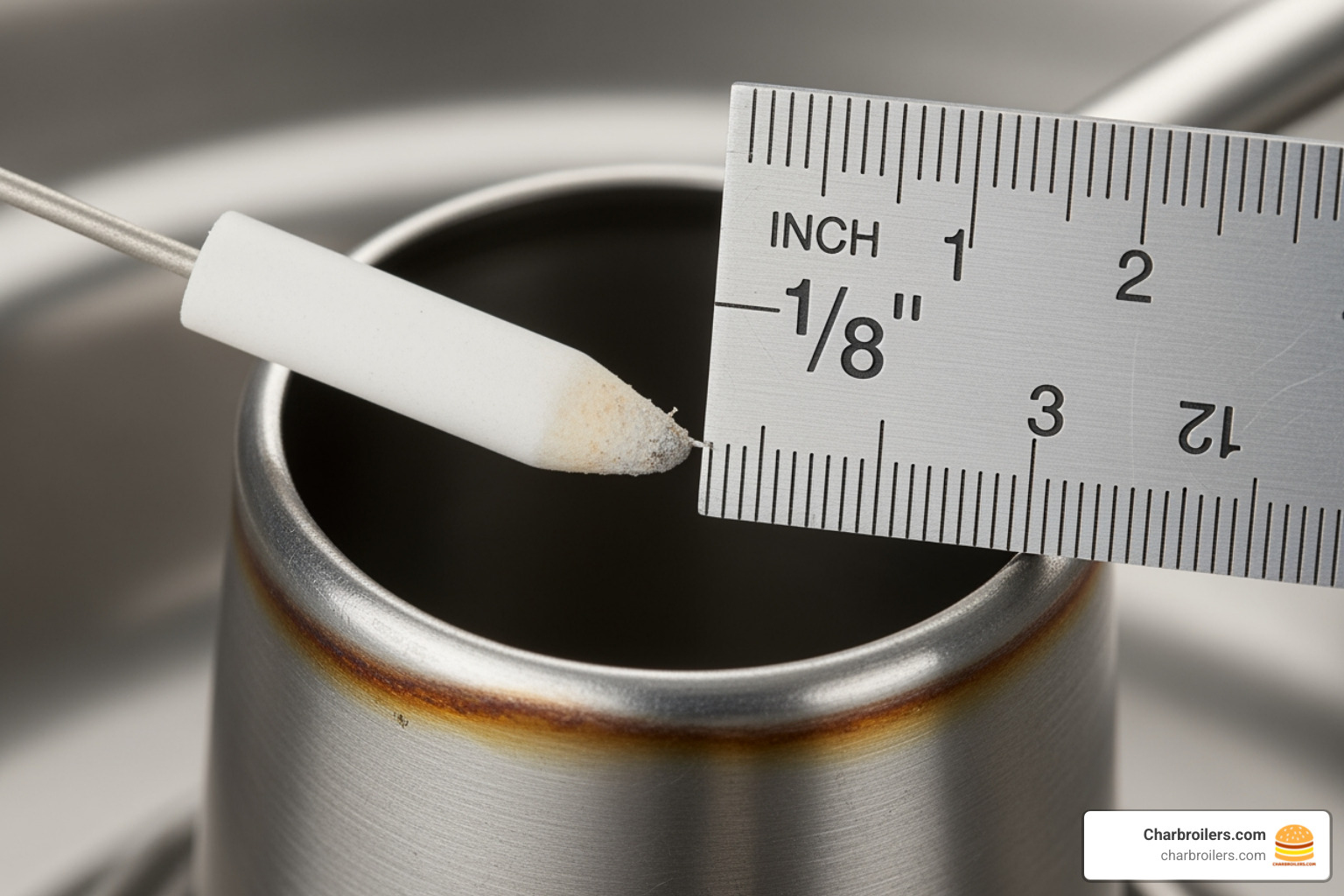
Don't forget to check where the wire connects to the electrode itself. Even if the wires leading to the module are fine, this connection point can corrode or work loose. Give it a gentle tug to make sure it's secure, and look for any signs of damage or corrosion.
We'll show you exactly how to clean and adjust your electrode in the next section, but for now, you've successfully diagnosed where the problem is.
Advanced Maintenance and Repair
If you've worked through the basic checks and your char broil commercial series igniter not working problem persists, don't lose hope. Sometimes the solution requires a bit more hands-on work, but these steps are still manageable with basic tools and a little patience.
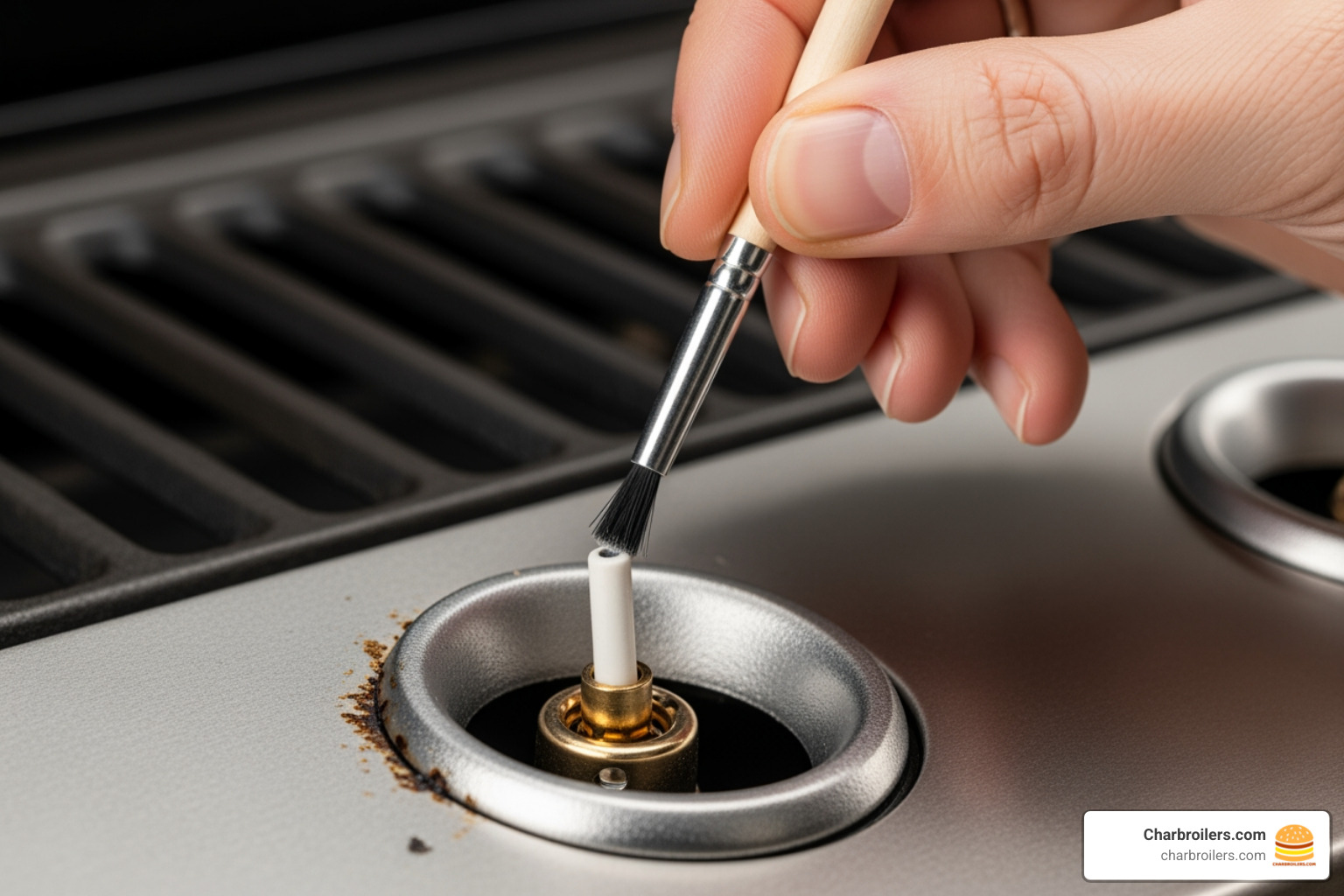
Cleaning and Adjusting the Electrode
A dirty or misaligned electrode is one of those sneaky problems that can completely shut down your igniter. The good news? It's usually fixable in just a few minutes with supplies you probably already have on hand.
Start by cleaning the electrode tip with rubbing alcohol. Grab a cotton swab, dampen it with rubbing alcohol, and gently clean both the ceramic insulator and the metal tip of the electrode. You'd be surprised how much grease, carbon buildup, and grime can accumulate on this small component. That invisible layer of crud acts like insulation, preventing the spark from forming properly.
For more stubborn debris—think caked-on grease or those mysterious spider webs that somehow find their way into every grill—use a soft-bristled brush like an old toothbrush. Gently scrub around the electrode, being careful not to bend it or crack the ceramic. The ceramic insulator is essential for directing the spark to the right place, so treat it with care.
Once you've cleaned the electrode, check the spark gap. This is the distance between the electrode tip and the burner where the spark needs to jump. The ideal gap is approximately 1/8 inch—about the thickness of a nickel. If the electrode has been bumped or bent over time, this gap can get thrown off.
Gently adjust the electrode bracket using needle-nose pliers or a small flathead screwdriver if needed. You're aiming for that 1/8 inch sweet spot between the electrode tip and the gas port opening on the burner. Be gentle here—you're nudging, not forcing. A bent electrode that's been carefully repositioned can work just as well as a new one.
Finally, clear away any other obstructions around the electrode and burner area. Make sure there's nothing blocking the path between the electrode and the burner where the spark is supposed to jump. Sometimes a bit of food debris or grease in the wrong spot is all it takes to disrupt the ignition.
If you're a visual learner, you can watch this helpful video on general ignition troubleshooting that walks through many of these same steps.
When to Consider Replacement Parts
Sometimes, despite our best cleaning and adjusting efforts, a component has simply reached the end of its service life. Knowing when to replace rather than repair can save you hours of frustration and get your grill back in service faster.
If you're still experiencing persistent issues after checking the battery, cleaning the electrode, and verifying all connections, it's probably time to order new parts. Similarly, visible damage to wires—frayed insulation, burnt spots, or broken connections—means those wires need replacing. Electrical components don't heal themselves, unfortunately.
A cracked or chipped ceramic insulator on the electrode is another clear sign you need a replacement. Once that ceramic is damaged, the spark will ground out before it reaches the burner, and no amount of cleaning will fix it. Likewise, if you've installed a fresh battery, checked every connection, and still hear no click when you press the button, your ignition module has likely failed internally and needs to be swapped out.
Extensive rust or corrosion is also a red flag. While light surface rust can sometimes be cleaned, if your battery contacts are heavily corroded or your electrode is rusty throughout, replacement is the more reliable path forward.
To order the right parts, you'll need your grill's model number, which is typically on a sticker on the grill frame—often near the back or inside the cabinet doors. With that number in hand, you can order a new igniter module or electrode assembly. For guidance on finding and choosing the right components, check out The Right Parts for the Perfect Char: Commercial Charbroiler Components. You can also browse options for Replacement Parts for Charbroil Grill to get your equipment back up and running quickly.
Frequently Asked Questions about Char-Broil Igniters
When your char broil commercial series igniter not working has you scratching your head, you're not alone. We get questions about igniter issues all the time at Charbroilers.com. Here are the answers to the most common ones that'll help you get back to grilling without missing a beat.
How do I manually light my Char-Broil Commercial grill?
Look, even the most reliable igniter can have an off day. And honestly, sometimes the old-school method is just faster when you're in a rush. The good news is that manually lighting your Char-Broil Commercial grill is straightforward and safe when done correctly.
Start by opening the grill lid completely—this is crucial to prevent any gas from building up inside. Next, turn on the gas by rotating the control knob for your chosen burner to the "High" setting. Now grab a long match or a long-stemmed lighter (emphasis on long—your eyebrows will thank you) and insert it through the lighting hole. This hole is typically located on the side of the firebox or in a specially designated opening near the burner you're trying to light.
Position the flame near the burner ports, and the gas should catch almost instantly. Once lit, make sure the burner stays lit and burns evenly. For your specific model's safety instructions and exact lighting hole location, always check your manual. Different models can have slight variations, so it's worth a quick look.
What's the difference between a SureFire® and a standard electronic ignition?
If you've been shopping around or looking at replacement options, you've probably seen these terms thrown around. Understanding the difference can actually help you troubleshoot more effectively when dealing with a char broil commercial series igniter not working.
SureFire® systems are Char-Broil's premium ignition technology, designed with convenience in mind. The key feature here is that each burner gets its own dedicated electrode. That means you can light each burner independently with just a push of the button above it. No waiting for flames to spread, no sequential lighting—just direct, reliable ignition exactly where you need it.
Standard electronic ignition systems work a bit differently. They typically have a single ignition point that lights one primary burner. Once that burner catches, the flame spreads to light the adjacent burners in sequence. It's effective and gets the job done, but it doesn't offer the same level of individual control that you get with a SureFire® setup.
Knowing which system your grill uses becomes especially helpful when you're ordering replacement parts or trying to figure out why only certain burners aren't lighting properly.
How can I prevent my igniter from failing in the future?
Prevention is always easier than repair, especially when you're running a busy kitchen and can't afford downtime. The truth is, most igniter failures are preventable with just a little regular attention.
Regular cleaning is your first line of defense. Grease and food debris are the mortal enemies of any igniter. When you're doing your routine grill maintenance, take an extra minute to clean around the electrode and burner area. A quick wipe-down can save you a lot of headaches later.
Moisture protection is equally important, particularly if your grill lives outdoors or in a humid environment. Investing in a good quality grill cover isn't just about keeping your grill looking nice—it's about protecting those electrical components from rain, condensation, and the general dampness that can wreak havoc on igniters. A cover also keeps out dust, dirt, and pests (yes, spiders love to make homes in warm, dark grill spaces).
Make checking the battery annually a habit, or better yet, replace it at the start of each grilling season. Don't wait until you're in the middle of a dinner rush to find it's dead. Fresh batteries are cheap insurance against a char broil commercial series igniter not working emergency.
Finally, whenever you're doing a deep clean of your grill, take a few extra moments to inspect the wires. Look for any signs of fraying, heat damage, or corrosion. Catching these small issues early means you can fix them before they turn into bigger problems that shut down your operation.
For a comprehensive approach to keeping your commercial grill in top shape, check out our guide: Beyond the Burn: A Step-by-Step Guide to Commercial Charbroiler Cleaning. A little preventive maintenance goes a long way toward keeping you cooking without interruption.
Get Fired Up: Your Next Steps
You've made it through the troubleshooting journey, and hopefully, your char broil commercial series igniter not working problem is now behind you. Whether it was something as simple as swapping out a dead battery, cleaning a grimy electrode, or adjusting that critical spark gap, you now have the knowledge to tackle these issues head-on instead of waiting around for a repair tech during your lunch rush.
Here's what we've covered: checking your battery first (because it's almost always the battery), listening for that telltale click to diagnose power issues, inspecting for sparks in dim lighting, cleaning and adjusting your electrode to the perfect 1/8" gap, and knowing when it's time to order replacement parts. These aren't complicated fixes—they're practical skills that any kitchen manager or grill operator can master with a few basic tools and a little patience.
A working igniter isn't just about convenience, though it certainly makes your life easier. For a Commercial Gas Charbroiler in a busy restaurant environment, reliable ignition means faster service, safer operation, and one less thing to worry about when orders start piling up. You can focus on what really matters: putting out great food.
At Charbroilers.com, we've spent years helping restaurant operators like you keep their equipment running smoothly. We know that downtime costs money, and that's why we're committed to sharing the expertise that gets you back to cooking as quickly as possible. Whether you're maintaining your current setup or considering an upgrade, we're here to support your operation.
Ready to dive deeper into commercial charbroiling equipment? For a complete overview of professional equipment options, features, and what to look for when outfitting your kitchen, check out our Guide to Commercial Charbroilers for Your Restaurant. Now get out there and keep those flames roaring!