
Demystifying NSF: A Complete Guide to Certified Convection Ovens
Why NSF Certification Matters for Your Commercial Kitchen
An nsf convection oven is a commercial cooking appliance certified by NSF International to meet strict public health and safety standards. Here's what you need to know:
Quick Answer: NSF Convection Oven Basics
- NSF Certification = Third-party verification that the oven meets food safety, sanitation, and material safety standards (NSF/ANSI Standard 4)
- Convection Technology = Uses forced hot air circulation via an internal fan to cook food faster and more evenly than conventional ovens
- Commercial Grade = Built for high-volume use with durable, easy-to-clean materials like stainless steel
- Required for Most Commercial Kitchens = Health codes typically mandate NSF-certified equipment for restaurants, bakeries, and food service operations
In any commercial kitchen, you'll see the NSF certification on most professional equipment. But what does it mean for your operation?
NSF certification is your assurance that an oven has been rigorously tested for food safety, sanitation design, and material durability. It verifies the oven is built with non-porous materials, has coved corners for easy cleaning, and can withstand commercial kitchen demands.
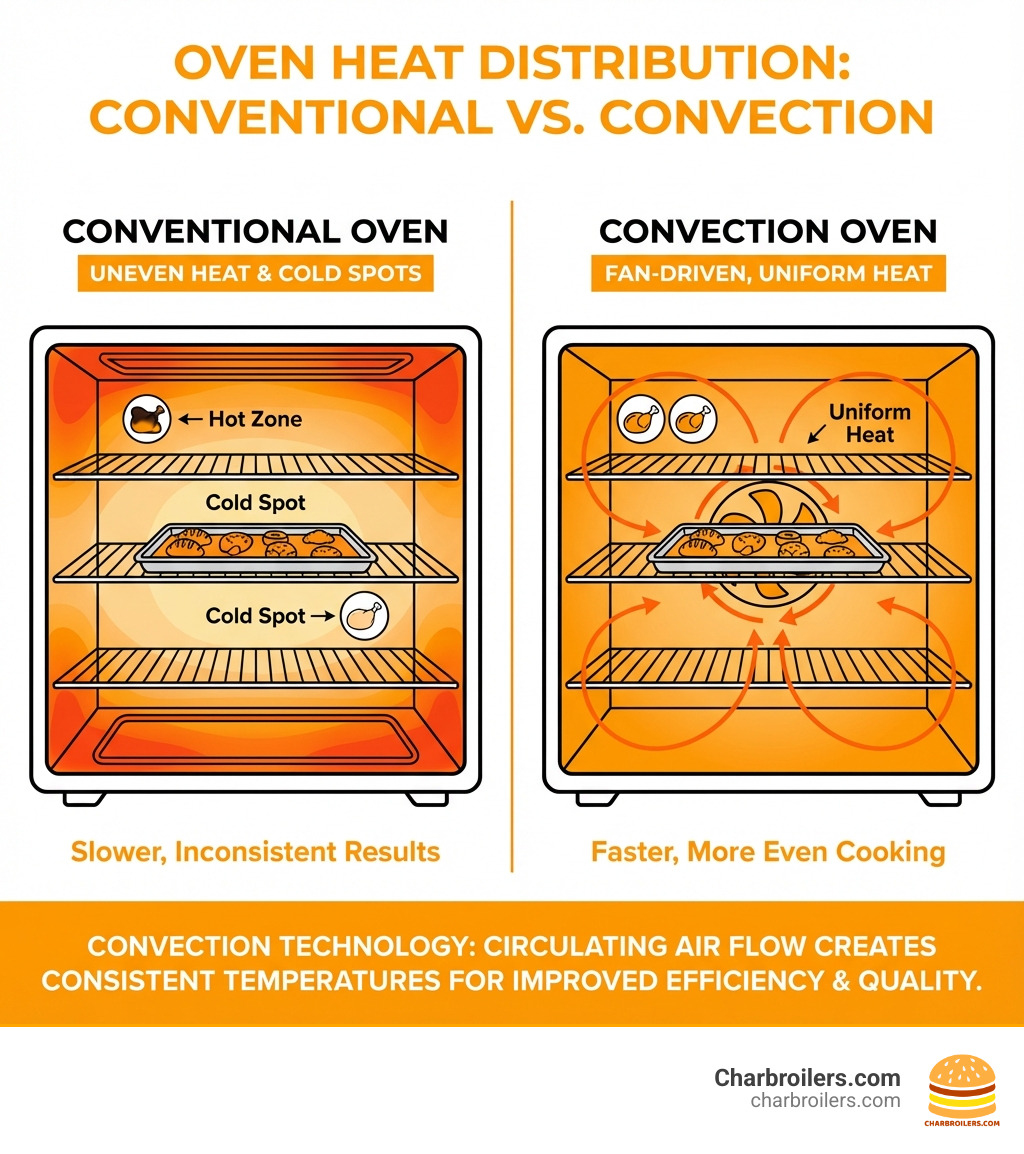
Convection ovens use an internal fan to circulate hot air, eliminating cold spots and cooking up to 25% faster than conventional ovens. This yields more consistent results, better browning, and improved efficiency—critical for getting meals out quickly during rush hours.
NSF convection ovens come in various sizes and configurations. You'll find full-size models priced around $2,282-$2,962, half-size units starting at $1,089, and compact countertop options. They operate on either 120V or 208-240V power, with temperature ranges typically from 59°F to 428°F. Many models now meet ENERGY STAR standards, offering cooking-energy efficiency ratings of 71-76% for electric models and 46-49% for gas units.
I'm Sean Kearney, founder of Charbroilers.com and The Restaurant Warehouse. With over a decade of experience, I've seen how the right nsf convection oven can transform a kitchen's efficiency and food quality. Let me guide you through making the best choice for your operation.
Important nsf convection oven terms:
- commercial convection ovens
- how does a commercial convection oven work
- convection oven cleaning tips
What is NSF Certification and Why Does It Matter for Ovens?
For an nsf convection oven, the "NSF" part is as crucial as the "convection oven" part in a commercial kitchen. NSF International is a global organization that develops public health standards. In the commercial kitchen equipment world, NSF certification is the gold standard for safety and sanitation.
It matters for food safety and public health. NSF certification means a third-party expert has evaluated the oven to ensure it meets strict criteria for:
- Material Safety: Materials used won't leach harmful chemicals into food. Stainless steel, for example, is non-porous and easy to sanitize.
- Design for Cleanability: The design minimizes areas where food and bacteria can accumulate. This includes coved (rounded) corners, smooth surfaces, and easily removable components for thorough cleaning.
- Sanitation: The oven's surfaces must be easy to clean and sanitize to prevent the growth of harmful microorganisms.
- Performance Testing: Certification often involves testing to ensure the equipment performs as expected without creating health hazards.
In many jurisdictions, like Seattle, WA, health codes mandate that commercial food service equipment must be NSF certified. This protects your customers and your business's reputation, not just avoiding fines. To verify a product's certification, you can check the official NSF listings online: How to verify a product's certification.
Key Features of an NSF Convection Oven
An nsf convection oven meets these standards by adhering to NSF/ANSI Standard 4. This standard dictates design and material requirements for maximum hygiene and durability.
Here are some of the key features you'll find:
- Non-Porous Materials: This primarily means high-quality stainless steel for food contact surfaces and often the exterior. Stainless steel resists corrosion, scratching, and bacterial growth and is easy to sanitize.
- Seamless Construction and Coved Corners: Instead of sharp interior angles where grease can hide, NSF-certified ovens feature coved (rounded) corners. This design eliminates crevices, making cleaning easier and more effective.
- Easily Removable Racks and Components: Racks, rack guides, and fan covers are designed for easy removal without tools, allowing your team to clean every nook and cranny.
- Durable Components: The overall construction is robust. NSF certification implies the oven is built to withstand the heavy-duty demands of a commercial kitchen, ensuring longevity and consistent performance. Durable, well-maintained equipment is a big part of kitchen safety. Learn more about keeping your team safe: Don't Get Burned: Follow These Convection Oven Safety Guidelines.
How Convection Technology Works
Now for the "convection oven" part. A convection oven is all about smart airflow. Unlike a conventional oven that relies on radiant heat, a convection oven actively circulates hot air with an internal fan.
Here's how it works:
- Heating Element: A convection oven has heating elements (electric or gas-fired) that generate heat.
- Internal Fan: A powerful fan, typically at the back of the oven, draws in the heated air.
- Forced Hot Air: The fan blows this superheated air over and around your food. This constant movement strips away the cooler air that surrounds food in a static oven, allowing food to absorb heat more rapidly.
- Even Heat Distribution: By circulating air, a convection oven eliminates hot and cold spots. The entire oven cavity maintains a consistent temperature, leading to even cooking and baking results across all racks.
- Faster Cooking Times: Efficient heat transfer means food cooks significantly faster—often 20-25% quicker than in a conventional oven. This is a lifesaver during peak hours.
- Better Browning and Crisping: The moving air helps evaporate surface moisture, resulting in superior browning, crispier skins, and a delightful crust on baked goods.
This technology directly improves efficiency and food quality in any commercial kitchen. We've explored its inner workings in more detail here: Demystifying Commercial Convection Ovens: A Deep Dive into Their Operation.
Types and Applications of NSF Convection Ovens
Commercial kitchens vary, and so do nsf convection oven models. Whether you run a small cafe in Seattle or a large catering operation, there's a certified oven for your needs.
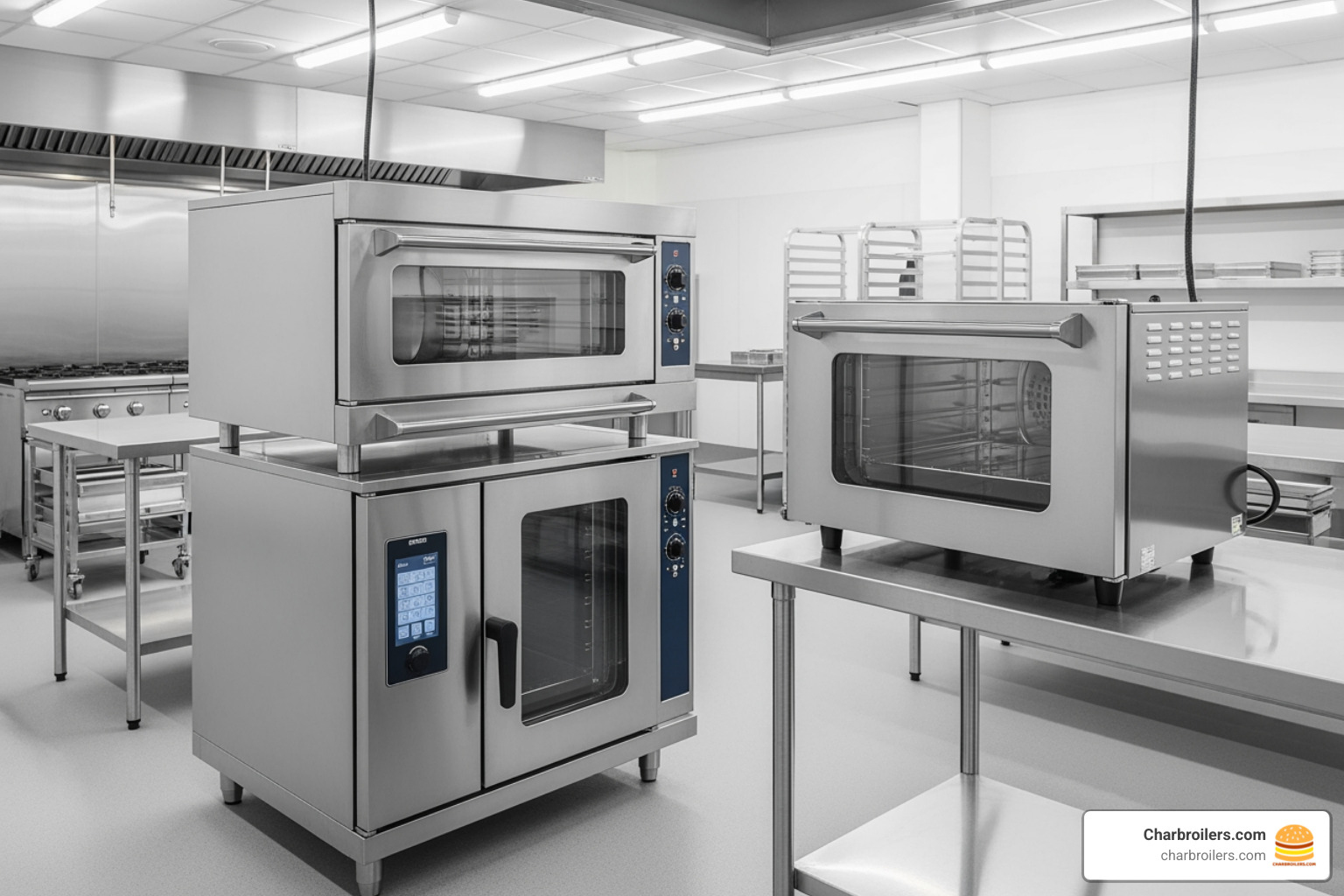
These ovens are indispensable in:
- Bakeries: For perfectly risen bread, uniform pastries, and consistent cookies.
- Restaurants: Ideal for roasting meats, baking casseroles, reheating dishes, and preparing vegetables in bulk.
- Catering Operations: Their speed and efficiency are crucial for high-volume events.
- Convenience Stores & Delis: Perfect for quickly baking hot sandwiches, pizzas, and other grab-and-go items.
- Schools & Institutions: For preparing nutritious meals for many people with consistent results.
The versatility of an nsf convection oven makes it a cornerstone of modern commercial cooking. If you're looking for top performers, we've got you covered: Convection Perfection: Top Ovens for Your Commercial Kitchen.
Full-Size, Half-Size, and Countertop Models
Choosing the right size is critical for optimizing workflow and space. NSF convection ovens are categorized by their capacity, referring to the number and size of standard sheet pans they hold.
| Oven Type | Capacity | Footprint | Typical Use |
|---|---|---|---|
| Full-Size | 5-10 full-size (18"x26") sheet pans | Large, freestanding | High-volume restaurants, bakeries, catering operations |
| Half-Size | 3-5 half-size (18"x13") sheet pans | Medium, often stackable or on stands | Medium-volume restaurants, cafes, smaller bakeries, specialty items |
| Countertop | 2-4 half-size (18"x13") sheet pans or smaller | Compact, fits on counters | Small cafes, convenience stores, satellite kitchens, retherming, proofing |
- Full-Size Ovens: These are workhorses for large kitchens, holding multiple full-size (18"x26") sheet pans for high-volume production. If you bake or roast in large batches, a full-size nsf convection oven is what you need. Models like the Economy Natural Convection Oven 5.3 cu ft ($2,962.00) fall into this category.
- Half-Size Ovens: A popular choice for many restaurants, these ovens balance capacity and space efficiency. They hold several half-size (18"x13") sheet pans and are often stackable. Nemco's Manual Convection Oven, 1/2 Size, 3-Shelf (Model 6220) and 4-Shelf (Model 6225) are great examples, operating on 120V or 208/240V.
- Countertop Ovens: For kitchens with limited space or needing an auxiliary oven, countertop models are fantastic. They are compact yet deliver convection power. The NSF Full Size Countertop Convection Oven 208-240V FD-100 ($1,089.00) offers full-size capabilities in a countertop footprint, saving space. Learn more about these compact powerhouses: Countertop Oven Powerhouses: Your Guide to Commercial Excellence.
Gas vs. Electric Ovens
Choosing between a gas or electric nsf convection oven depends on your kitchen's infrastructure, utility costs, and cooking preferences. Both perform well but have distinct characteristics.
-
Electric Convection Ovens:
- Pros: Often provide drier heat, great for crisping and browning. They offer precise temperature control and are generally easier to install.
- Cons: Can be more expensive to operate with high electricity costs. They require specific voltage (120V or 208/240V) and plug configurations (e.g., NEMA 5-20P, NEMA 6-20P). The Nemco 6220 and 6225 models offer both 120V and 208/240V options.
-
Gas Convection Ovens:
- Pros: Generally cheaper to operate with lower natural gas prices. They often provide moister heat, which is good for certain types of baking or roasting.
- Cons: Require a gas line and often a dedicated exhaust hood, adding to installation costs. Gas ovens also need proper ventilation for safety.
Your utility costs in Seattle, WA, might influence your decision. We've explored gas convection ovens in depth: Top Commercial Gas Convection Ovens: Find Yours Today.
Choosing the Right NSF Convection Oven for Your Kitchen
Selecting the right nsf convection oven is a significant investment. Getting it right means improved efficiency, better food quality, and a smoother operation.

When making your choice, consider these factors:
- Kitchen Workflow: How will the oven fit into your kitchen layout and production line? Do you need a pass-through design or a standard front-loading model?
- Menu Requirements: What will you be cooking? High-volume baking, roasting, retherming, or a mix? Some ovens excel in specific areas.
- Budget: An oven is an investment. Weigh the upfront cost against long-term savings from energy efficiency and durability.
Our ultimate guide to comparing commercial convection ovens offers more insights: The Ultimate Guide to Comparing Commercial Convection Ovens.
Important Specifications to Consider
Once you've narrowed your needs, consider the specifications that differentiate one nsf convection oven from another.
- Capacity and Pan Size: This impacts production volume. Will you use full-size (18"x26") or half-size (18"x13") pans? How many racks do you need? For instance, the Nemco 6220 is a 3-shelf, 1/2 size oven, while the 6225 is a 4-shelf model.
- Temperature Range: Commercial ovens offer a wide range, typically from 59°F to 428°F (15°C to 220°C). This versatility allows for everything from proofing to high-heat roasting.
- Power Requirements: This is crucial for installation. Check the required voltage (120V vs. 208/240V), amperage, and NEMA plug configuration (e.g., NEMA 5-20P or NEMA 6-20P). Ensure your kitchen's outlets can support the oven you choose. Some models, like the NSF Full Size Countertop Convection Oven 208-240V FD-100, cannot be converted to 110V.
- Dimensions: Measure your available space carefully, including height, especially if you plan to stack units or place them under a hood.
- Control Type: Do you prefer simple manual controls or advanced digital controls with programmable settings for consistency?
For a deeper dive, check out our industrial oven buying guide: Industrial Oven Buying Guide: Find Your Perfect Heat Treat Solution.
Energy Efficiency and ENERGY STAR Standards
In a commercial kitchen, efficiency boosts your bottom line. An energy-efficient nsf convection oven reduces operating costs and environmental impact. This is where ENERGY STAR certification helps.
ENERGY STAR is an EPA program promoting energy-efficient products. For commercial ovens, this means meeting criteria for:
- Idle Rate: The energy used when the oven is on but not cooking. Lower idle rates mean less wasted energy. For example, a full-size gas oven must have an Idle Rate ≤ 9,500 Btu/h (Version 3.0).
- Cooking-Energy Efficiency: How efficiently the oven converts energy into cooking power. Full-size electric ovens must achieve ≥ 76% efficiency, while full-size gas models need ≥ 49% (Version 3.0).
Choosing an ENERGY STAR certified nsf convection oven means investing in reduced utility bills and a more sustainable operation, which is especially relevant in an environmentally conscious city like Seattle. Find detailed specifications on the ENERGY STAR website: ENERGY STAR Version 3.0 Commercial Ovens Specification.
Maintenance and Warranty for Your NSF Convection Oven
Even a robust nsf convection oven needs proper maintenance to last. Understanding your warranty is key to protecting your investment.
- Typical Warranty: Most commercial ovens come with a standard warranty, such as the 2-year warranty on the Economy Natural Convection Ovens.
- Labor Warranty Options: Some suppliers offer extended labor warranties, like the 1-year ($65.34) or 2-year ($217.80) options for the NSF Full Size Countertop Convection Oven FD-100. These can be valuable, as repair labor costs add up.
- Routine Cleaning: This is the most important maintenance task. Use features like removable racks and coved corners for daily cleaning to prevent grease buildup. We've compiled tips to keep your oven sparkling: Baked on Mess? Convection Oven Cleaning Hacks to the Rescue!.
- Preventative Maintenance: Consider regular professional check-ups to inspect heating elements, fans, and seals. Catching small issues early can save you time and money.
- Component Longevity: High-quality NSF-certified ovens are built with durable components, but parts can wear out. A warranty and maintenance schedule will ensure your oven remains a reliable workhorse.
Frequently Asked Questions about NSF Convection Ovens
We get many questions about nsf convection ovens as they are core equipment in commercial kitchens. Here are the most common inquiries.
What is the price range for an NSF convection oven?
The price of an nsf convection oven varies by size, features, brand, and power type. Based on our research:
- Countertop Models: Compact, NSF-certified models start around $1,089.00, like the NSF Full Size Countertop Convection Oven 208-240V FD-100.
- Half-Size Models: These typically range from $1,700 to $3,000+, depending on features and power specs.
- Full-Size Models: High-capacity models generally start in the $2,000-$3,000 range, with advanced models costing more. For example, the Economy Natural Convection Oven 3.5 cu ft is $2,282.00, and the 5.3 cu ft model is $2,962.00.
An nsf convection oven is an investment in quality, efficiency, and compliance. The long-term benefits of consistent cooking, speed, energy savings, and health code adherence often outweigh the upfront cost. For more on budgeting, see our guide: Budgeting for Bake-Offs: How Much Does a Commercial Convection Oven Set You Back?.
Can I use a residential convection oven in a commercial kitchen?
Absolutely not. A residential oven is fundamentally different from a commercial nsf convection oven. Never use a residential oven in a commercial setting for these reasons:
- NSF Certification: Residential ovens are not NSF certified and violate health codes in places like Seattle, WA, leading to fines or closure.
- Durability: Commercial ovens are built to withstand continuous, heavy-duty use. Residential ovens will quickly break down under such demands.
- Performance: Residential ovens lack the power, temperature consistency, and rapid recovery times needed for commercial volume.
- Warranty: Commercial use immediately voids a residential oven's warranty.
- Fire Risk: Residential ovens lack the fire safety standards of commercial units, increasing fire risk with prolonged, high-temperature use.
Does an NSF convection oven need a ventilation hood?
This is an important question. The answer depends on the oven type and your local regulations in Seattle, WA.
- Gas Ovens: Almost always, yes. A gas nsf convection oven requires a Type I (grease-rated) ventilation hood to vent combustion byproducts, heat, and grease-laden vapors.
- Electric Ovens: It's trickier with electric ovens. Many still require a Type I hood, especially for cooking greasy foods. However, some "ventless" models have advanced filtration systems to break down grease and odors, allowing operation without a traditional hood. Even with ventless ovens, you must check with your local fire and health departments in Seattle, WA, as regulations vary.
Always consult local codes and the manufacturer's specifications before installation. We have more information on these specialized ovens here: Ventless Commercial Convection Ovens That'll Blow You Away Without The Vent.
Conclusion
We've covered how an nsf convection oven is a cornerstone of a successful, safe, and efficient commercial kitchen, from its meticulous NSF certification standards to its efficient convection technology.
We've seen how NSF certification ensures food safety, sanitation, and durability. We also demystified convection technology, which delivers faster, more even cooking. We explored the range of sizes—from countertop to full-size—and weighed the pros and cons of gas versus electric power.
Understanding key specifications like capacity, power requirements, and the benefits of ENERGY STAR certification empowers you to make an informed decision. And we've highlighted the importance of maintenance and warranty to protect your investment.
Choosing an nsf convection oven is about investing in trust: trust in its quality, performance, and ability to help you serve delicious, safe food daily. Here at Charbroilers.com, we believe in equipping you with the best tools and knowledge. Ready to explore more essential kitchen equipment? Explore our guide to commercial charbroilers and other essential kitchen equipment.