
Bake, Roast, and Toast: Everything You Need to Know About Commercial Convection Ovens
Why Commercial Convection Ovens Are Essential for Restaurant Kitchens
Convection ovens commercial models are specialized cooking appliances that use internal fans to circulate hot air around food, resulting in faster, more even cooking compared to traditional static ovens. Here's what makes them different:
Key Differences from Traditional Ovens:
- Fan System: Built-in fans continuously move hot air throughout the cooking chamber
- Even Heat Distribution: Eliminates hot and cold spots for consistent results on every rack
- Faster Cooking: Speeds up cooking processes by approximately 25% compared to static ovens
- Temperature Flexibility: Can often cook at lower temperatures while achieving the same results
- Energy Efficiency: Uses less electricity or gas to cook the same amount of food
Primary Benefits:
- Crispy exteriors and juicy interiors on meats
- Uniform browning on baked goods across all trays
- Reduced need to rotate pans during cooking
- Quick pre-heating times for immediate use
- Multiple rack cooking without flavor transfer
If you're running a busy kitchen with limited space and need consistent results across high-volume service, a commercial convection oven solves the problem of uneven cooking and slow output that traditional ovens create. The circulating air strips away the cold boundary layer around food, transferring heat more efficiently and cutting your cooking times by roughly a quarter.
I'm Sean Kearney, and over my decade-plus in the restaurant equipment industry, I've helped countless kitchen operators choose the right convection ovens commercial models for their specific needs and budgets. At Charbroilers.com, we focus on connecting restaurants with reliable equipment at fair prices, with financing options to make your investment easier.
Know your convection ovens commercial terms:
- how does a commercial convection oven work
- do commercial convection ovens need venting
- convection oven cleaning tips
The Convection Advantage: How It Works and Why It's Better
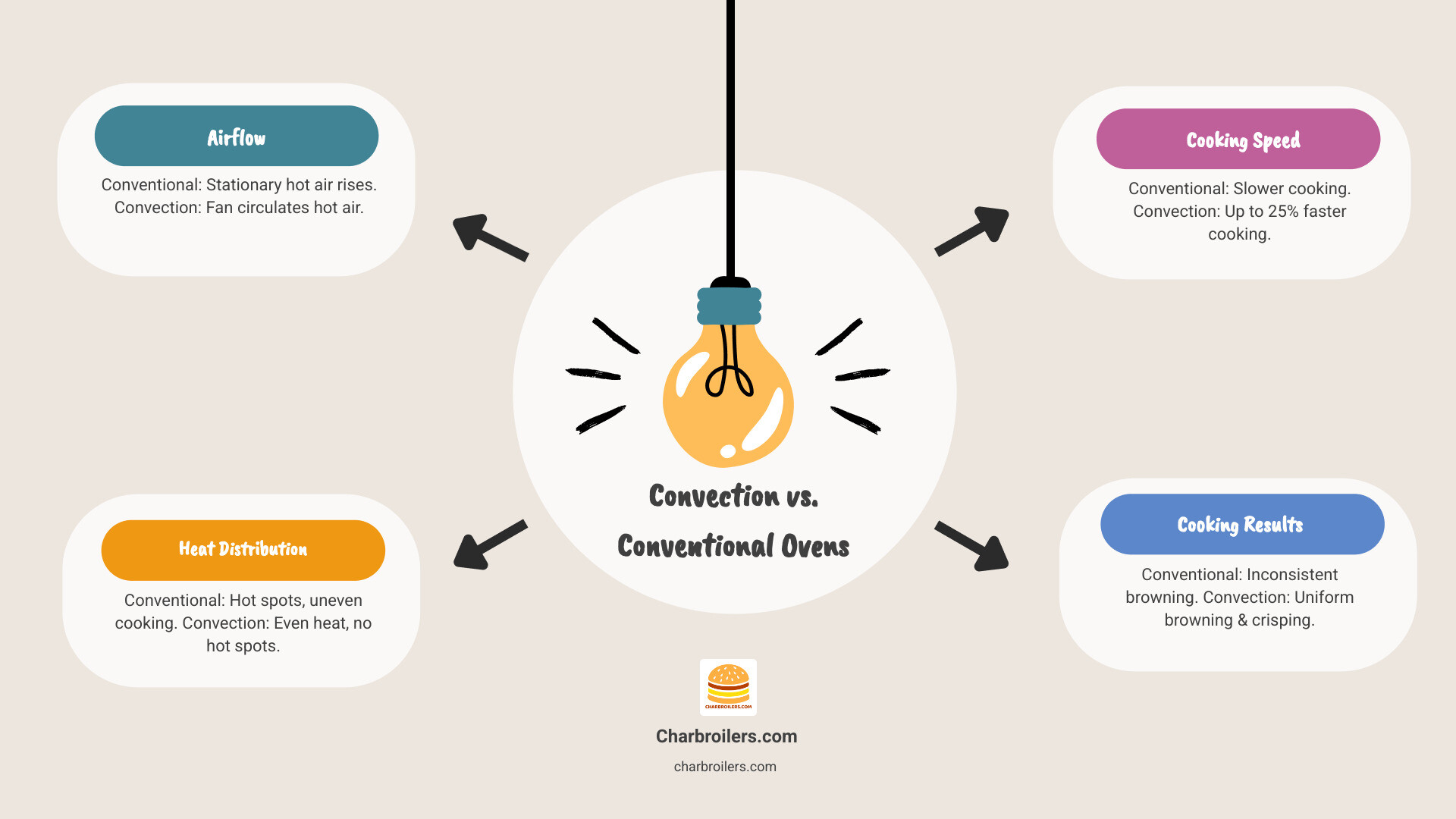
The heart of a commercial convection oven lies in its ingenious fan system. Unlike traditional ovens, which rely solely on radiant heat from heating elements at the top and bottom, convection ovens actively circulate hot air throughout the cooking chamber. This simple yet powerful difference transforms the cooking process, making it faster, more even, and often yielding superior results. For a general overview of convection cooking principles, you can also review the explanation on convection ovens.
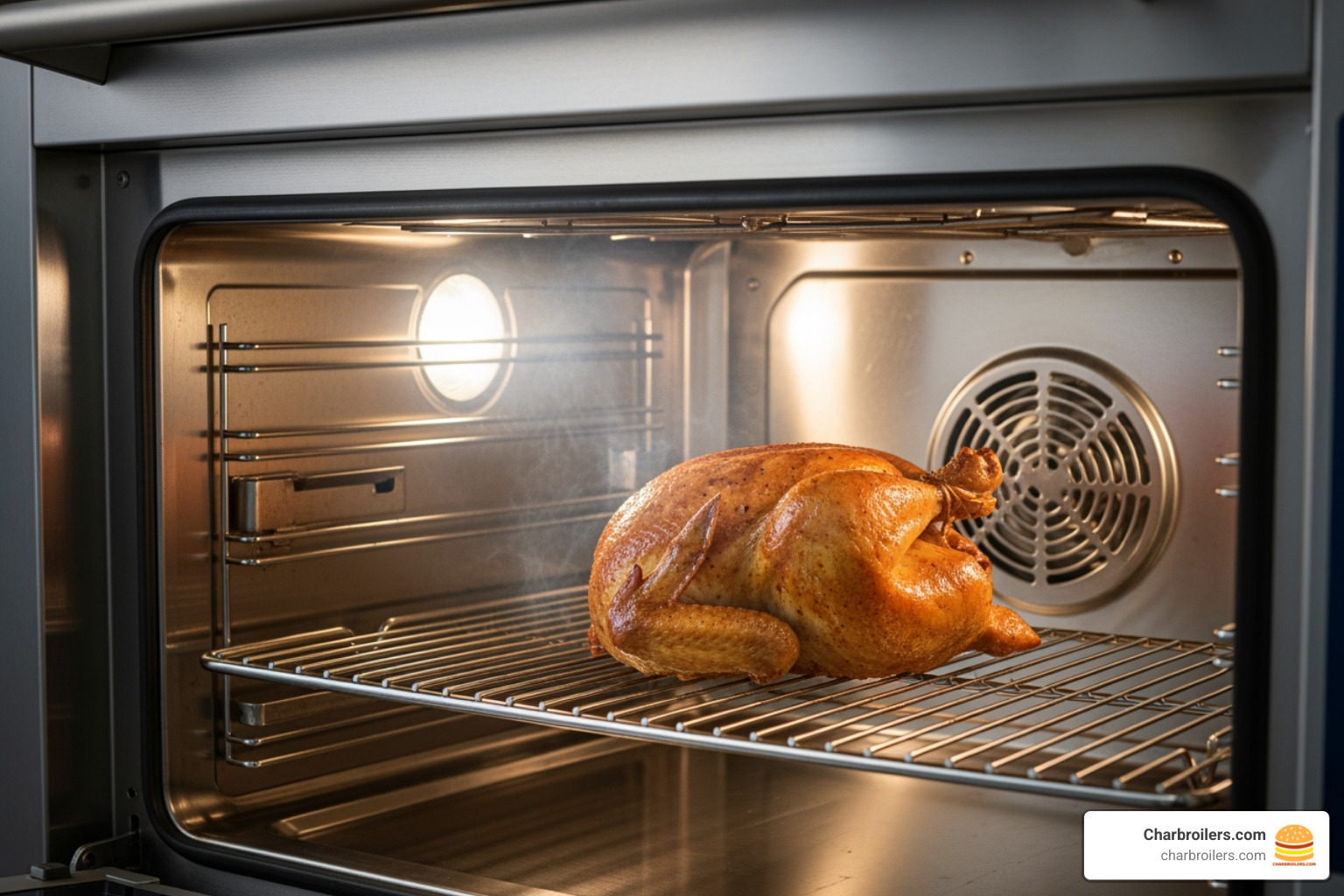
The fan system mechanics are straightforward yet highly effective. One or more fans inside the oven continuously move hot air, creating a dynamic cooking environment. This constant air movement serves several critical purposes:
- Eliminating Hot Spots: In a static oven, heat tends to rise, creating hotter zones at the top and cooler areas at the bottom. The circulating air in a convection oven evenly distributes heat, effectively eliminating these hot and cold spots. This means every inch of the oven cavity maintains a consistent temperature.
- Consistent Temperature: With hot air constantly washing over the food, the temperature remains uniform. This ensures that items on all racks, from front to back and side to side, cook at the same rate.
- Faster Cooking Times: This even heat distribution and direct contact with moving hot air dramatically speed up cooking. Commercial convection ovens cook food approximately 25% faster than their static counterparts. This efficiency is a game-changer for busy kitchens, allowing for quicker turnaround times and increased output.
- Browning and Crisping Effect: The circulating dry heat in a convection oven is excellent for promoting the Maillard reaction--the chemical process responsible for the delicious browning and crisping of food. Meats emerge with deliciously crispy outsides and tender, juicy interiors, while baked goods achieve uniform golden-brown crusts.
- Moisture Reduction: Many commercial convection ovens are equipped with specialized exhaust systems that actively remove humid air from the cooking chamber. This controlled moisture reduction is vital for achieving crispy textures, preventing sogginess, and even preventing the odors of different foods from mixing during multi-item cooking. Some advanced systems, like Unox's DRY.Plus technology, specifically expel humid air to favor the correct formation of the internal structure of baked items, ensuring that your bread and pastries have the perfect crumb.
To dive deeper into the mechanics, read our guide on Blowing Hot Air: How to Properly Use Commercial Fan-Forced Ovens.
How Convection Speeds Up Cooking
The science behind convection's speed advantage is fascinating. When food is placed in a static oven, it creates a "cold boundary layer" of cooler air around itself. This layer acts as an insulator, slowing down heat transfer. Convection ovens, with their powerful fans, constantly strip away this cold air boundary, ensuring that fresh, hot air is always in direct contact with the food. This continuous, forced heat transfer is significantly more efficient than the natural convection and radiation found in traditional ovens.
This accelerated heat transfer means several benefits for your kitchen:
- Reduced Cooking Temperatures: Because heat is transferred so efficiently, you can often set a convection oven 25-50°F (15-25°C) lower than a conventional oven and still achieve the same cooking results in less time.
- Energy Savings: Cooking faster and at lower temperatures directly translates to reduced energy consumption. This makes commercial convection ovens more energy-efficient than traditional ovens, using less electricity or gas to cook the same amount of food. Over time, these savings can significantly impact your operating costs.
- Improved Kitchen Workflow: Faster cooking times mean less waiting, quicker batch production, and the ability to turn tables faster or meet high demand more easily. Quick pre-heating times also mean less downtime between uses, further streamlining your kitchen operations.
For a comprehensive look at the inner workings, explore Demystifying Commercial Convection Ovens: A Deep Dive into Their Operation.
What Foods Cook Best in a Convection Oven?
One of the greatest strengths of a convection oven commercial model is its versatility. It can cook almost anything, making it a valuable workhorse in any professional kitchen.
Ideal Foods for Convection Cooking:
- Roasting Meats: From whole chickens to large cuts of beef or pork, convection ovens deliver beautifully browned exteriors and perfectly cooked interiors. The circulating air helps render fat and create a delicious crust. Roast vegetables also thrive, achieving tender centers and caramelized edges.
- Baked Goods: Breads, cookies, pastries, muffins, and even frozen bakery items like snacks and croissants benefit immensely. The even heat ensures uniform rise and browning across all trays, eliminating the need to rotate pans.
- Crispy Foods: Anything you want to be crispy, such as roasted potatoes, chicken wings, or even reheating pizza, will benefit from the dry, circulating heat.
- Dehydrating: While not their primary function, many commercial convection ovens can be used for low-temperature dehydrating of fruits or vegetables.
- Toasting: Achieving consistent toast or browning on casseroles and gratins is effortless.
Foods to Exercise Caution With (or Avoid):
While highly versatile, there are a few delicate items where the powerful fan of a convection oven might be too much:
- Delicate Custards and Soufflés: The strong airflow can sometimes disrupt the delicate structure of these items, causing them to crack or rise unevenly.
- Light Batters: Very light batters might be blown around by the fan, leading to uneven shapes.
- Uncovered Liquids: Liquids can evaporate too quickly, altering the consistency of sauces or stews.
For these delicate items, some advanced convection ovens offer a "Gentle Bake Mode" or pulse fan settings that can mitigate these issues, providing more control over the airflow.
A Buyer's Guide to Convection Ovens Commercial
Choosing the right convection oven commercial model for your business in Seattle, WA, is a critical decision that impacts efficiency, food quality, and ultimately, your bottom line. With so many options available, it's easy to feel overwhelmed. We're here to help you steer the options.
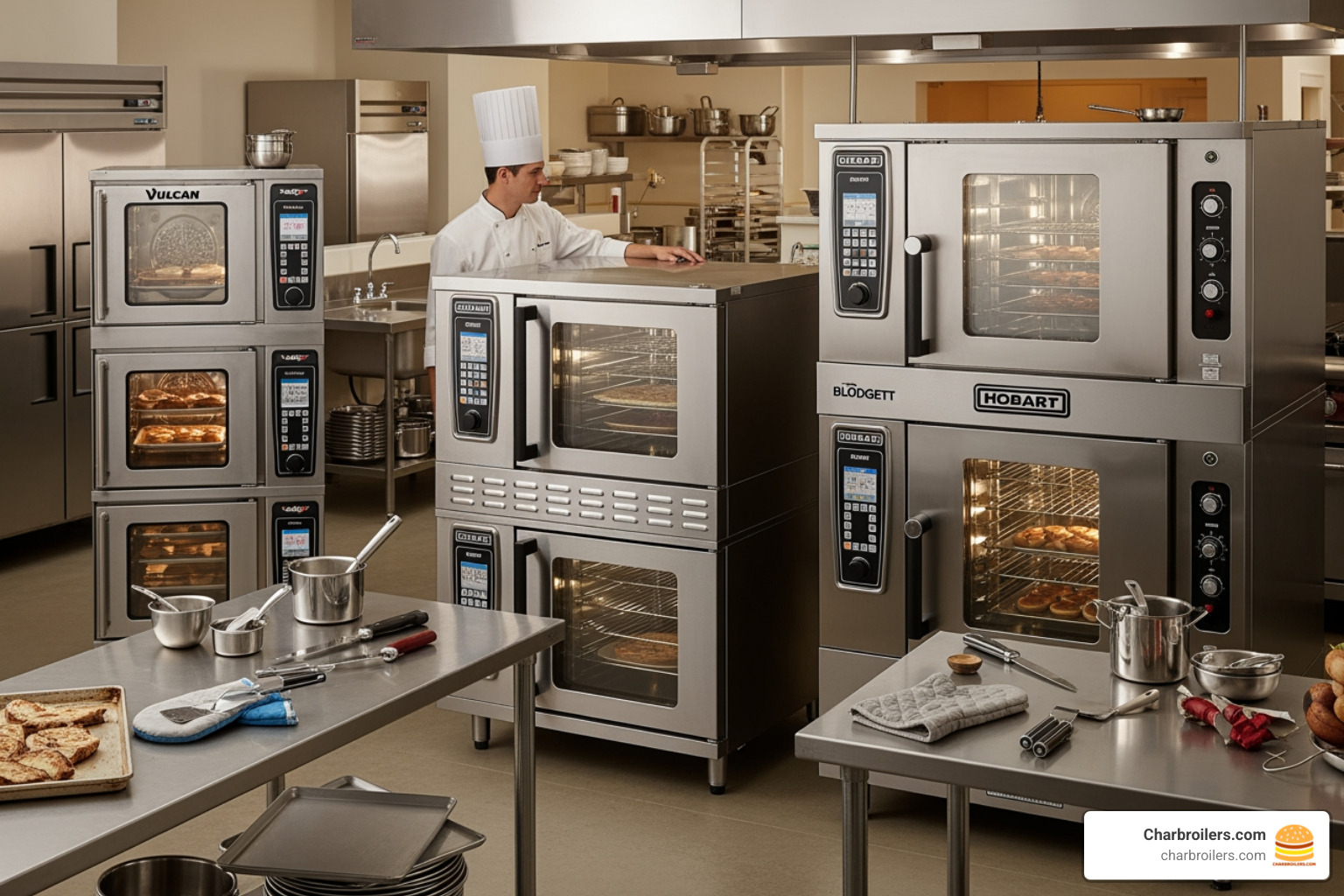
When considering an investment, think about these key purchasing factors:
- Budgeting: Commercial ovens are a significant investment. We recommend exploring our insights on Budgeting for Bake-Offs: How Much Does a Commercial Convection Oven Set You Back? to understand the financial implications and our financing options.
- Kitchen Space: Measure your available footprint carefully. Will it be a countertop unit, a full-size floor model, or part of a double stack?
- Menu Needs: What types of food will you be cooking? How much volume? This will dictate capacity, temperature range, and specific features.
- Usage Frequency: How often will the oven be in use? A high-volume operation demands a more robust, durable model.
- Energy Efficiency: Look for ENERGY STAR® certified models, which can offer significant savings on utility bills.
- Controls: Do you need simple analog dials or advanced programmable digital controls?
- Durability and Warranty: Commercial kitchens are tough environments. Invest in stainless steel construction and check warranty details.
For a deeper dive into making the best choice, consult The Ultimate Guide to Comparing Commercial Convection Ovens.
Sizing and Capacity for Convection Ovens Commercial
The size and capacity of your commercial convection oven must match your kitchen's output and physical space. There's a wide range of options to fit virtually any operation:
-
Countertop vs. Full-Size Models:
- Countertop convection ovens are ideal for smaller operations, coffee shops, or as supplementary ovens. They offer significant power in a compact footprint, suitable for fast-kitchen heating, low-volume baking, or medium-volume reheating. Some can hold up to four trays. You can learn more in our guide on Maximize Your Space: Understanding Full-Size Commercial Countertop Convection Ovens.
- Full-size floor models are the workhorses of larger kitchens, capable of handling high volumes. They are typically standard depth or deep/bakery depth.
-
Single vs. Double Stack Ovens:
- A single-deck oven is a standalone unit.
- Double stack ovens combine two full-size ovens vertically, doubling your capacity while saving valuable floor space. This is an excellent solution for high-volume establishments. Explore your options with our Commercial Double Stack Ovens: A Comprehensive Buyer's Guide.
-
Tray Capacity:
- Smaller convection ovens commercial units can accommodate up to four trays, typically measuring around 460 by 340mm.
- Bigger units, often full-size or double-stacked, can accommodate ten or more trays that measure 600 by 400 mm, allowing for massive production.
- Oven Weight: The physical weight for installation and counter stability. Small units can weigh around 40kg, while larger makes and models can weigh up to 150kg. Ensure your counters or flooring can support the chosen unit.
Power Sources: Gas vs. Electric
The choice between gas and electric power for your commercial convection oven depends on several factors, including utility availability, operating costs, and cooking preferences.
| Feature | Gas Convection Ovens | Electric Convection Ovens |
|---|---|---|
| Preheat Time | Generally faster preheat times. | Can take longer to preheat. |
| Temperature Control | Can have slight hot/cold spots, but modern designs minimize this. | More consistent and even heating throughout the cavity. |
| Utility Costs | Often less expensive to operate in many regions. | Can be more expensive to operate depending on electricity rates. |
| Installation | Requires gas line connection and ventilation. | Requires appropriate electrical hookup; can be more flexible with venting. |
| Heat Recovery | Excellent for high-volume use, quick recovery after door opens. | Consistent heat, ideal for delicate items that need stable temps. |
- Gas Oven Benefits: Gas ovens typically heat up faster and, in many areas, offer lower operating costs due to the price of natural gas. They are powerful and excellent for recovery after frequent door openings. Our guide on Unlock Efficiency: The Power of Gas Convection Ovens offers more insights.
- Electric Oven Benefits: Electric ovens are known for providing incredibly even and consistent heating, which is crucial for delicate baked goods or recipes requiring precise temperature control. They are often preferred in quick-service restaurants where consistent high temperatures are needed despite frequent door openings. Learn more with Power Up Your Kitchen: The Best Commercial Electric Ranges with Convection Ovens.
Controls, Construction, and Advanced Features
Modern commercial convection ovens come packed with features designed to improve performance, ease of use, and durability.
-
Controls:
- Analog controls with simple dials are reliable and easy to use, ideal for operations that prefer straightforward operation.
- Digital controls offer precise temperature management and often include programmable settings for consistent results across different recipes. Some models feature improved LED displays or intuitive "Press and Go" interfaces, simplifying complex cooking tasks.
- Construction: Durability is paramount in a commercial kitchen. Look for ovens with robust stainless steel exteriors and smooth porcelain enamel interiors with coved corners for easy cleaning and optimal airflow. Features like full-length welded hinge rods and positive seal gaskets on doors contribute to longevity and heat retention. Our article on Built to Last: Best Commercial Stainless Steel Convection Ovens Reviewed highlights top choices.
-
Door Configurations:
- Independent doors allow you to open one door without affecting the other, minimizing heat loss.
- Dependent doors open simultaneously. Some feature a 60/40 design, offering a wider opening. Many commercial ovens also feature removable doors for easier cleaning and maintenance.
- Advanced Airflow Systems: Beyond just a fan, look for innovative air baffling systems and large blower wheels that maximize and evenly channel airflow throughout the entire oven cavity. Technologies like AIR.Plus ensure perfect distribution of air and heat for truly uniform results.
- Humidity Control Features: For bakers, humidity functions are a game-changer. Features like DRY.Plus actively expel humid air, which is crucial for achieving the correct internal structure and crust on baked goods. Conversely, some ovens can introduce humidity for specific cooking applications, such as steaming.
- Gentle Bake Modes: For delicate items that might be adversely affected by strong airflow, some ovens offer a "Gentle Bake Mode" or pulse fan settings. These features allow for more controlled air movement, ensuring even cooking without disrupting fragile structures.
Installation, Cleaning, and Safety
Proper installation, diligent cleaning, and adherence to safety protocols are crucial for maximizing the lifespan and performance of your convection oven commercial unit, while also ensuring the safety of your staff and compliance with local regulations in Seattle, WA. For general background on commercial kitchen ventilation systems, you can reference kitchen ventilation standards in addition to your local codes.
Venting and Hood Requirements
One of the most common questions we get is about venting. The answer often depends on the type of oven and local building codes.
- Gas Convection Ovens: These almost always require a Type I hood, which is designed to remove heat, smoke, and grease-laden vapors. This is a non-negotiable safety requirement.
- Electric Convection Ovens: Many electric models may only need a Type II hood, which primarily removes heat and moisture. Some advanced electric models are even designed to be ventless, using internal filtration systems. However, even with ventless models, you must always check local health and fire codes in Seattle to ensure compliance.
- Placement and Clearance: Always follow the manufacturer's guidelines for clearances around the oven to walls and other equipment to prevent heat buildup and ensure proper operation.
- Safety Guidelines: Beyond venting, adhere to general kitchen safety practices. Ensure staff are properly trained, keep flammable materials away from the oven, and perform regular checks. Don't forget to read our comprehensive guide on Don't Get Burned: Follow These Convection Oven Safety Guidelines.
For a detailed breakdown of what you need to know, check out Commercial Convection Ovens: Unpacking Venting and Hood Requirements.
Keeping Your Oven in Top Condition
A well-maintained oven not only performs better but also lasts longer. Regular cleaning and maintenance are non-negotiable in a commercial setting.
-
Daily Cleaning Tasks:
- Wipe down the interior and exterior surfaces to remove food splatters and grease.
- Clean the oven cavity and filters every time the oven is used, especially if you're cooking greasy foods.
- Empty and clean crumb trays.
-
Deep Cleaning Methods:
- For baked-on messes, a mixture of vinegar and water or a commercial oven cleaner can be effective. Always follow product instructions and ensure proper ventilation.
- Removable parts like racks and door seals should be cleaned regularly, often able to go into a commercial dishwasher.
- Our guide, Baked on Mess? Convection Oven Cleaning Hacks to the Rescue!, provides more tips.
- Self-Cleaning Features: Some advanced convection ovens come with self-cleaning cycles or specialized coatings that make cleaning easier. If your oven has this feature, refer to the manufacturer's instructions. For safe cleaning of these ovens, see Don't Ruin Your Oven: Safe Cleaning for Self-Cleaning Convection Ovens.
-
Maintenance Checks:
- Monthly, check all bolts and screws to ensure they are tight. Vibration from fans can sometimes loosen fasteners.
- Ensure the oven remains level. An unlevel oven can lead to uneven heating and baking.
- Maintain an oven log to track usage, cleaning schedules, and any issues. This helps in troubleshooting and proactive maintenance.
Frequently Asked Questions about Commercial Convection Ovens
How much faster do commercial convection ovens cook?
On average, they cook about 25% faster than conventional ovens. This allows for lower temperature settings, saving energy while increasing output, which is crucial in a busy commercial kitchen.
Are commercial convection ovens more energy-efficient?
Yes, due to faster cooking times and the ability to operate at lower temperatures, convection ovens typically use less energy per dish compared to traditional static ovens, making them a more cost-effective choice over time.
Do I need a special ventilation hood for my convection oven?
It depends on the type and local regulations. Gas convection ovens almost always require a Type I hood. Many electric models may only need a Type II hood or could even be ventless, but you must always check local health and fire codes.
Conclusion
Investing in a convection oven commercial model is more than just buying another piece of equipment; it's about upgrading your kitchen's capabilities, enhancing food quality, and boosting operational efficiency. The speed, consistency, and energy efficiency these ovens bring to your Seattle, WA, restaurant kitchen can truly transform your output and profitability.
From perfectly roasted meats and vegetables to uniformly baked goods, the advantages are clear. We've explored how these ovens work, what to look for when purchasing one, and how to keep it running smoothly and safely.
At Charbroilers.com, we understand the demands of the food service industry. That's why we offer a wide selection of commercial kitchen equipment, including top-tier convection ovens, along with flexible financing options customized for your business. We believe the right equipment shouldn't break the bank.
Ready to bake, roast, and toast your way to culinary success? We're here to help you find the perfect convection oven commercial model that fits your unique needs and budget.