

Keep Your Cool: The Ultimate Commercial Ice Maker Maintenance Manual
Why Commercial Ice Maker Cleaning Is Critical for Your Business
Commercial ice maker cleaning is essential for food safety, equipment longevity, and protecting your business reputation. Here's what you need to know:
Quick Answer: Cleaning Your Commercial Ice Maker
- How Often: Deep clean and sanitize every 6 months minimum; weekly exterior wipe-downs
- Why It Matters: Ice is classified as food by the FDA—dirty machines cause health code violations
- Key Steps: (1) Turn off and empty, (2) Run cleaning cycle with approved descaler, (3) Run sanitizing cycle, (4) Discard first two ice batches
- What to Avoid: Never use bleach, chlorine cleaners, or non-food-grade vinegar—they damage components and void warranties
The Hidden Dangers of a Dirty Ice Machine
Commercial ice machines are the unsung workhorses of any food service operation. They run continuously, often tucked away and forgotten—until something goes wrong. But here's the reality: ice is considered food by the FDA, which means your ice machine must meet the same hygiene standards as your kitchen equipment.
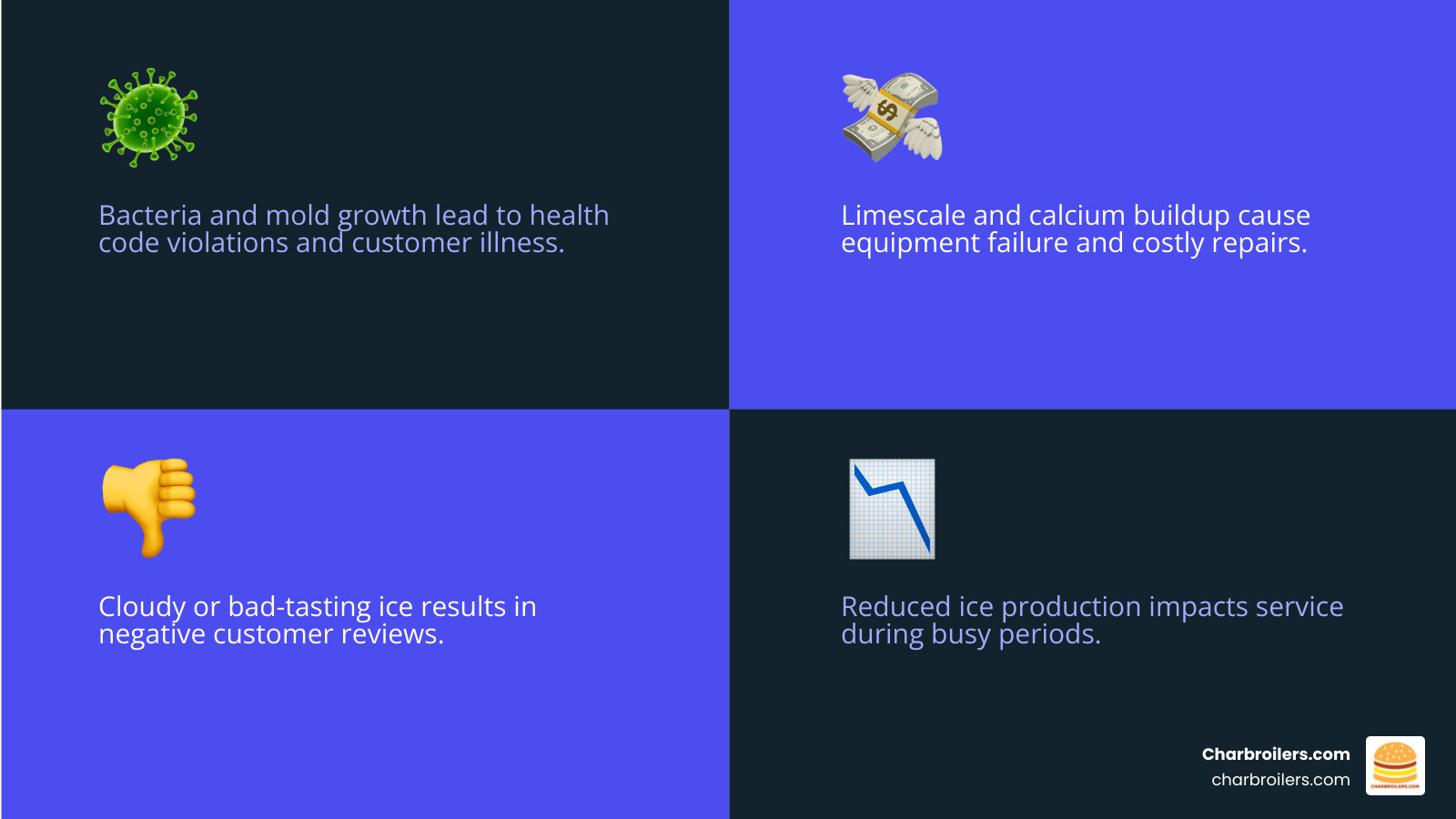
Neglecting regular cleaning leads to serious problems. Biofilm slime and mold grow inside the machine, contaminating every cube. Limescale and calcium deposits choke performance, driving up energy costs and shortening equipment life. Worst of all? Serving customers ice from a moldy machine isn't just disgusting—it's a health code violation that can shut down your operation and destroy your reputation through negative reviews.
The good news is that proper maintenance prevents these issues entirely. Regular cleaning keeps your ice clear, your machine efficient, and your customers safe.
I'm Sean Kearney, founder of Charbroilers.com, and I've spent over a decade helping restaurants find and maintain the right equipment at fair prices. Through my work in the restaurant equipment industry, I've seen how proper commercial ice maker cleaning extends equipment life and prevents costly breakdowns. Let's walk through exactly how to keep your ice machine running clean and efficient.
Easy commercial ice maker cleaning word list:
Before You Begin: Why Cleaning is Crucial and What You'll Need
Imagine serving a customer a refreshing beverage, only for them to find a strange taste or visible mold in their ice. This is why understanding the "why" behind commercial ice maker cleaning is as important as the "how."
Health Risks: The Unseen Dangers
The primary concern with a neglected ice machine is harmful microorganisms. Ice is a food product, meaning contaminants in your ice machine can directly impact customer and staff health.
- Mold and Biofilm Slime: These common culprits appear as sticky, slimy layers (often pink, black, or green) that contaminate ice, leading to off-flavors and odors. Mold poses health risks, especially for those with allergies or respiratory issues.
- Bacteria: Beyond visible mold and biofilm, bacteria thrive in the damp, cool environment of an ice machine. Neglecting cleaning allows these microbes to multiply, potentially causing foodborne illnesses.
Business Consequences: Beyond Just Health
Poor ice machine maintenance hits your business where it hurts: reputation and wallet.
- Health Code Violations: Regular cleaning and sanitizing are mandated by local health departments. Inspectors consider ice machines critical food contact surfaces. A dirty machine can result in fines, temporary closures, or permanent shutdown. Serving ice from a moldy commercial ice machine is a serious health and safety code violation.
- Negative Reviews and Reputation Damage: A single bad experience with cloudy or foul-tasting ice can lead to negative online reviews, quickly damaging your establishment's reputation.
- Equipment Damage and Costly Repairs: Limescale and calcium buildup force the machine to work harder, leading to higher energy consumption, reduced ice production, and faster wear. Neglect results in frequent, costly repairs and shorter equipment lifespan.
Essential Supplies and Safety Gear
Before diving into the cleaning process, gather the right tools and protective equipment.

Here's what you'll need for effective commercial ice maker cleaning:
-
Personal Protective Equipment (PPE):
- Safety Glasses: Protect eyes from chemical splashes
- Waterproof Gloves: Chemical-resistant to protect hands
-
Cleaning Solutions:
- Approved Ice Machine Cleaner (Descaler): Specifically designed to dissolve mineral buildup. Look for "nickel-safe" and NSF-certified products.
- Approved Sanitizer: Kills bacteria, mold, and microorganisms. Again, choose "nickel-safe" and NSF-certified products.
-
Cleaning Tools:
- Soft Cloths or Sponges: For wiping surfaces
- Nylon Brushes: For scrubbing without scratching components
- Spray Bottles: For applying diluted solutions
- Bucket: For mixing solutions and rinsing parts
- Paper Towels: For drying and final wiping
-
Other:
- Manufacturer's Manual: Contains model-specific instructions for disassembly, cleaning cycles, and approved chemicals
For comprehensive guidance on necessary supplies, refer to the Guide to Cleaning a Commercial Ice Maker | Sani Professional.
Understanding Cleaning vs. Sanitizing
These two terms refer to distinct, equally important processes in commercial ice maker cleaning.
- Cleaning (Descaling): The first step, focused on physical removal. It dissolves and eliminates mineral deposits like limescale and calcium buildup, improving ice production, energy efficiency, and overall performance.
- Sanitizing: The crucial second step, aimed at eliminating microscopic threats. After cleaning removes physical debris, sanitizing disinfects the machine, killing bacteria, removing mold, and eliminating biofilm slime. This ensures food safety by reducing microorganisms to safe levels.
The machine should always be sanitized after cleaning. Chemicals used for cleaning must be thoroughly purged and rinsed prior to sanitizing. Never mix cleaner and sanitizer together, as this can create hazardous fumes or neutralize their effectiveness.
The Complete Guide to Commercial Ice Maker Cleaning and Sanitizing
Now let's dive into the "how." This section details the semi-annual deep cleaning process. Always consult your specific model's manual for precise instructions.
Step 1: Preparation and Disassembly
Before touching anything, safety is paramount.
- Turn Off Power: Locate the main power switch and turn it OFF. Unplug from the wall if accessible.
- Turn Off Water Supply: Shut off the water inlet valve.
- Empty All Ice: Remove all ice from the storage bin. This ice must be discarded.
- Remove Front Panel: Most machines have a removable front panel. Carefully remove by unlatching clips or unscrewing fasteners.
- Access Internal Components: Remove the water curtain, water distribution tube, or other detachable components for manual cleaning. Refer to your manufacturer's manual for model-specific instructions.
Step 2: The Commercial Ice Maker Cleaning Cycle
This cycle focuses on descaling and removing mineral buildup.
- Prepare Cleaning Solution: Dilute your approved, nickel-safe ice machine cleaner according to manufacturer's instructions (commonly 1 gallon water to 16 ounces cleaner).
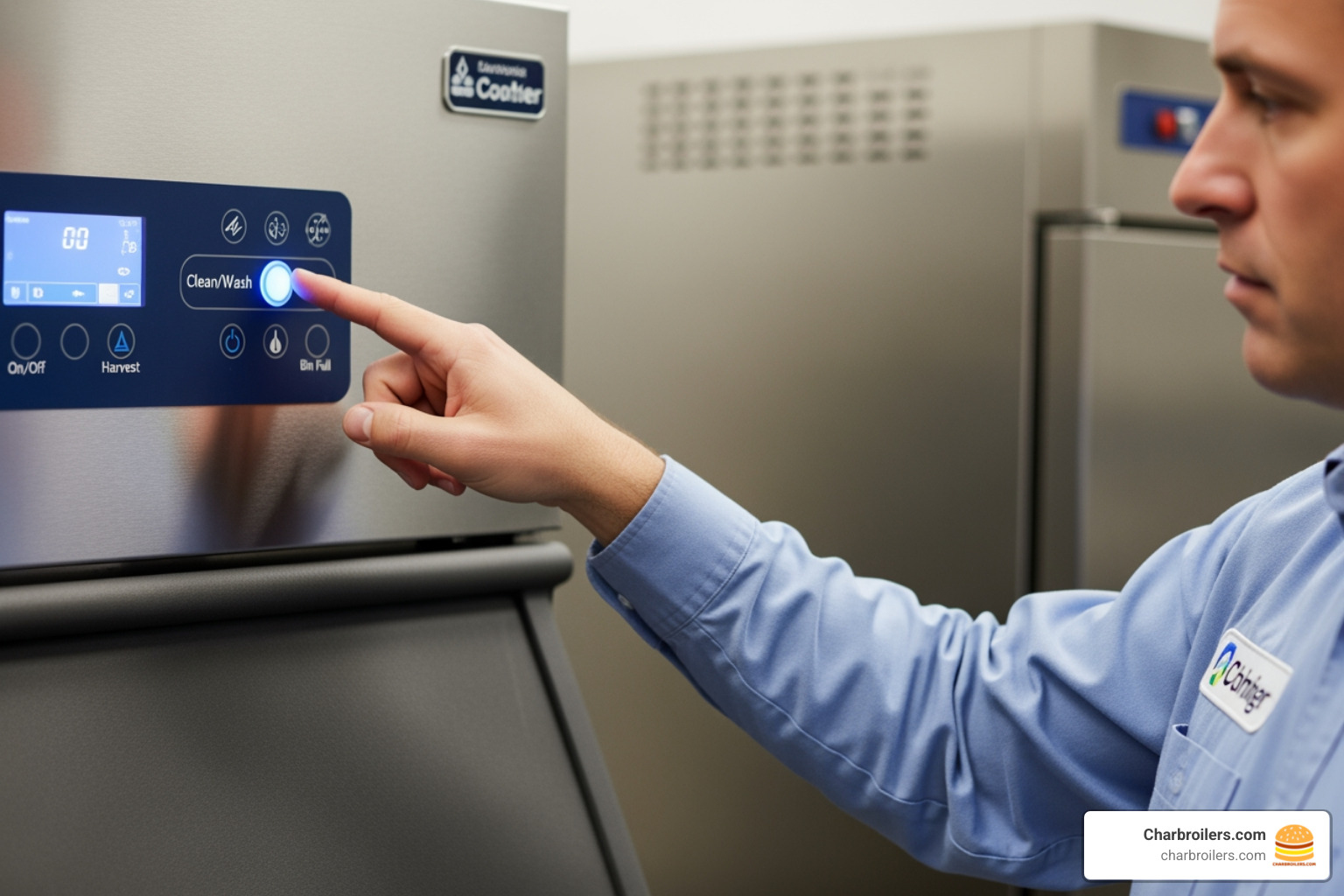
- Activate Clean/Wash Cycle: With power on (water supply off), set the control switch to "CLEAN" or "WASH."
- Add Descaling Solution: Pour diluted cleaning solution into the water trough or reservoir.
- Circulate Cleaner: Allow the machine to run the cleaning cycle for 15-30 minutes.
- Scrub Stubborn Scale: While cleaner circulates, use a soft cloth or nylon brush to scrub visible deposits on the evaporator, water curtain, and distribution tube.
- Clean Removed Parts: Scrub disassembled components in a bucket with diluted cleaning solution.
- Rinse Thoroughly: Drain cleaning solution. Run 2-3 rinse cycles with fresh water to purge all chemicals.
Step 3: The Commercial Ice Maker Sanitizing Cycle
Once physically clean, kill any remaining microorganisms. This step is critical for Chill Out: A Deep Dive into Commercial Ice Production Methods and ensuring food safety.
- Prepare Sanitizing Solution: Dilute your approved, nickel-safe sanitizer per manufacturer's instructions.
- Activate Clean/Wash Cycle: Add diluted sanitizing solution to the water trough or reservoir.
- Circulate Sanitizer: Run the sanitizing cycle for 10-15 minutes.
- Sanitize Removed Parts: Immerse cleaned components in diluted sanitizing solution.
- Air Dry Parts: Remove parts from sanitizing solution. Do not rinse. Allow to air dry completely.
- Reassemble Components: Once air-dried, carefully reassemble following your manufacturer's manual.
Step 4: Final Steps and Restart
Final steps to get your machine back to making safe ice.
- Run Rinse Cycles: Drain sanitizing solution. Run several rinse cycles with fresh water.
- Resume Normal Operation: Turn control switch to "ICE" or "ON." Turn water supply back on. Replace front panel.
- Discard First Batches: Discard the first two batches of ice produced after cleaning and sanitizing.
- Monitor Performance: Check ice quality and production. You should notice clearer, better-tasting ice and improved efficiency.
For more information on pairing your ice machine with the right storage, check out Cool Choices for Commercial Ice Maker and Bin Setups.
Your Maintenance Schedule: How Often to Clean Each Component
Consistency is key to effective commercial ice maker cleaning. Here's a recommended schedule to keep your machine in top shape, ensuring optimal performance and longevity.
| Component | Frequency | Key Actions |
|---|---|---|
| Interior Food-Contact Surfaces | Every 6 months | Run a full cleaning and sanitizing cycle; inspect for scale, slime, or mold and scrub as needed with nickel-safe cleaner and sanitizer. |
| Exterior Panels & Surrounding Areas | Weekly | Wipe with a mild, food-safe cleaner and a soft cloth; remove dust, grease, and spills to prevent contaminants from entering the machine. |
| Condenser Coils | Every 6 months | Turn off power; vacuum or brush dust and grease from fins; use coil cleaner if heavily soiled, taking care not to bend the fins. |
| Air Filter (if equipped) | Every 6 months | Remove and clean with water or replace per manufacturer instructions; ensure unobstructed airflow to the condenser. |
| Water Filter / Cartridge | Every 6 months | Replace the water filter or cartridge according to manufacturer guidelines or sooner if you notice reduced flow or ice quality issues. |
| Ice Storage Bin (Interior) | Every 6 months | Empty bin; wash with approved cleaner; rinse and sanitize; allow to air dry before refilling with fresh ice. |
| Full Cleaning & Sanitizing Cycle | Every 6 months | Perform the complete deep clean and sanitize procedure described above; increase frequency in hard-water or high-volume environments. |
| Water Quality Check | As needed | Test for hardness, sediment, and pH; adjust filtration or treatment systems and cleaning frequency based on test results. |
| Ice Scoop | Daily | Wash, rinse, and sanitize at least once per day; store in a clean holder outside the bin, never buried in the ice. |
Daily and Weekly Tasks
These routine checks and quick cleanings prevent small issues from becoming big problems.
- Wipe Exterior (Weekly): Use a damp cloth with a mild, food-safe cleaner to wipe down the exterior of your ice machine and the surrounding area. This removes dust, spills, and grease, preventing airborne contaminants from entering the machine. The interior and exterior of your ice machine should be cleaned regularly to remove water scale and other deposits that can interfere with machine function.
- Check and Sanitize Ice Scoop (Daily): The ice scoop is a high-touch item and a direct point of contact with your ice. It should be washed and sanitized daily, just like any other food-contact utensil. Never leave the scoop inside the ice bin; store it in a designated, clean holder. For more on proper ice storage, see our guide on Don't Get Left in the Cold: Your Guide to Buying the Best Commercial Ice Storage Bin.
- Inspect Ice Quality (Daily): Quickly check the ice for clear appearance, proper size, and absence of odor or off-tastes. Cloudy or soft ice can be an early indicator that your machine needs attention.
Monthly and Semi-Annual Maintenance
These deeper maintenance tasks are crucial for optimal performance and longevity.
-
Clean Condenser (Every Six Months): The condenser coils, much like a car's radiator, are vital for heat exchange. They collect dust, lint, and grease, especially in a busy kitchen environment. A dirty condenser restricts airflow, making the machine work harder, increasing energy consumption, and reducing its lifespan. The condenser and filter of an ice maker should be cleaned every six months for optimal airflow and performance.
- How to Clean: Turn off the power. Use a vacuum cleaner with a brush attachment to gently remove debris from the condenser fins. Be careful not to bend the delicate fins. For heavily soiled condensers, specialized coil cleaner might be necessary, but always follow product instructions and wear PPE.
- Check Air Filter (Every Six Months): Many ice machines have an air filter that protects the condenser. Inspect it for dust and debris, and clean or replace it as needed.
- Clean Water Filter (Every Six Months or as Needed): A good water filter is your first line of defense against mineral buildup and contaminants. Check the filter cartridge and replace it according to the manufacturer's recommendations or when you notice a drop in water pressure or ice quality.
- Run Full Cleaning/Sanitizing Cycle (Every Six Months): As detailed in the steps above, a full deep clean and sanitizing cycle is essential at least twice a year. Commercial ice machines should be cleaned and sanitized at least once a year, or more often in hard water areas or when issues like slow ice production or cloudy ice are noticed. For some models, manufacturers may recommend cleaning and sanitizing as frequently as twice per year.
-
Water Quality Impact: Water quality plays a significant role in how often your machine needs cleaning.
- Hard Water: If your business is in an area with hard water, you'll likely experience faster limescale and calcium buildup. This means you may need to increase the frequency of your deep cleaning cycles.
- RO Water Acidity: While Reverse Osmosis (RO) water can improve ice clarity, it can also be very acidic. RO water can promote faster microbial growth, and its acidity can attack the evaporator and other metal components. If RO water is used, the water pH should be verified to be a neutral 7.0 to prevent corrosion and potential warranty voidance.
Frequently Asked Questions about Commercial Ice Maker Cleaning
We've covered a lot, but you might still have some lingering questions. Let's tackle some common queries about commercial ice maker cleaning.
What are the signs my ice machine needs cleaning?
Your ice machine often gives subtle (and sometimes not-so-subtle) clues when it's overdue for a cleaning. Ignoring these signs can lead to bigger problems down the line.
- Slow Ice Production: If your machine seems to be taking longer to produce a batch of ice, or if its overall output has decreased, mineral buildup on the evaporator plates could be insulating them, reducing their efficiency.
- Small or Cloudy Ice Cubes: Limescale can interfere with the ice-making process, resulting in smaller, misshapen, or cloudy ice cubes. Ice should ideally be clear and consistent.
- Soft Ice: If your ice cubes are soft, slushy, or melt quickly, it could indicate poor heat transfer due to mineral deposits.
- Bad Taste or Odor: This is a direct indicator of bacterial or mold growth. If your ice tastes metallic, musty, or simply "off," it's a red flag that your machine needs immediate attention.
- Visible Mold or Slime Inside the Machine: The most obvious sign. Pink, black, or green slime on the water curtain, evaporator, or ice bin interior means biofilm and mold have taken hold. Serving customers ice from a moldy commercial ice machine is not only disgusting but also a serious health and safety code violation.
If you notice any of these signs, don't delay – it's time for a thorough commercial ice maker cleaning.
What cleaning solutions should I absolutely avoid?
This is a critical point. Using the wrong cleaning chemicals can severely damage your ice machine, void its warranty, and even create dangerous fumes. Stick to products specifically designed for ice machines.
Absolutely avoid the following:
- Bleach or any Chlorine-Based Solutions: While bleach is a powerful disinfectant, it is highly corrosive to the stainless steel and nickel-plated components found in most ice machines. Using it can cause pitting, corrosion, and flaking of metal, which can damage the machine and contaminate your ice. Never use cleaning or sanitizing solutions that contain Nitric Acid, Sulfuric Acid, Hydrochloric Acid, Carbolic Acid, Acetic Acid, diluted Acetic Acid or non-food-grade vinegar, or any chlorine-based solution such as bleach, chlorine dioxide or any type of salts, as these can damage the ice machine.
- Hydrochloric Acid (Muriatic Acid): This is an extremely corrosive acid that will cause significant damage to your machine's metal parts.
- Non-Food-Grade Vinegar (especially concentrated): While diluted food-grade vinegar (acetic acid) is sometimes suggested for light descaling, non-food-grade or highly concentrated vinegar can be too acidic and damage components, especially nickel-plated evaporators. It's generally safer to use purpose-built, nickel-safe ice machine cleaners.
- Ammonia: Ammonia-based cleaners can also be corrosive to certain metals and plastics in ice machines and should be avoided.
Always use approved, nickel-safe ice machine cleaners and sanitizers. These products are formulated to be effective against mineral buildup and microorganisms without harming the delicate internal components of your machine. When in doubt, consult your ice machine's manual.
Can I clean the ice machine myself or should I hire a professional?
The decision to DIY or hire a professional for commercial ice maker cleaning depends on several factors, including your comfort level, the complexity of your machine, and the severity of the cleaning needed.
- Routine Cleaning (DIY): For daily and weekly tasks like wiping the exterior, sanitizing the scoop, and basic inspections, we encourage in-house staff to perform these duties. For the semi-annual deep cleaning, many business owners or trained maintenance staff can successfully perform it by carefully following the manufacturer's manual. The manual provides specific, step-by-step instructions for your model, including how to safely disassemble, clean, sanitize, and reassemble components.
-
When to Hire a Professional:
- Discomfort or Lack of Time: If you or your staff are uncomfortable with the process, lack the necessary training, or simply don't have the time, calling in a professional is a wise investment. They have the expertise, specialized tools, and proper chemicals to do the job efficiently and safely.
- Complex Machines or Severe Buildup: Some larger or more complex machines may require intricate disassembly. If you're dealing with severe mold, biofilm, or limescale buildup that doesn't respond to standard cleaning, a professional can often tackle these challenges more effectively.
- Warranty Protection: Some manufacturers recommend that cleaning be performed by a trained technician to ensure proper procedures are followed and to maintain warranty validity. If you're in the Seattle, WA area, you can find many reputable services that offer commercial ice machine maintenance.
- Troubleshooting: If your machine is exhibiting persistent issues (e.g., still producing cloudy ice after cleaning, strange noises, leaks), a professional can diagnose and fix underlying problems beyond just cleaning.
Balancing cost, convenience, and competence is key. Regular in-house maintenance can save money, but don't hesitate to call in the experts when needed.
Conclusion
We've covered a lot about commercial ice maker cleaning, from the critical health risks of neglected machines to the step-by-step process of deep cleaning and sanitizing. Ice is a food, and its quality directly reflects on your business.
Proactive maintenance isn't just about avoiding costly repairs; it's about safeguarding your customers' health, maintaining your reputation, and ensuring your equipment operates at peak efficiency for years to come. By implementing a consistent cleaning schedule and using the right techniques and products, you can extend the life of your valuable investment and consistently serve crystal-clear, refreshing ice.
At Charbroilers.com, we understand that your kitchen equipment is the backbone of your business. By following this guide, you ensure your business serves safe, high-quality ice while protecting your investment in essential kitchen equipment.