
The Ultimate Commercial Convection Toaster Oven Guide: Bake, Roast, and Broil Like a Pro
Why Your Commercial Kitchen Needs a Convection Toaster Oven
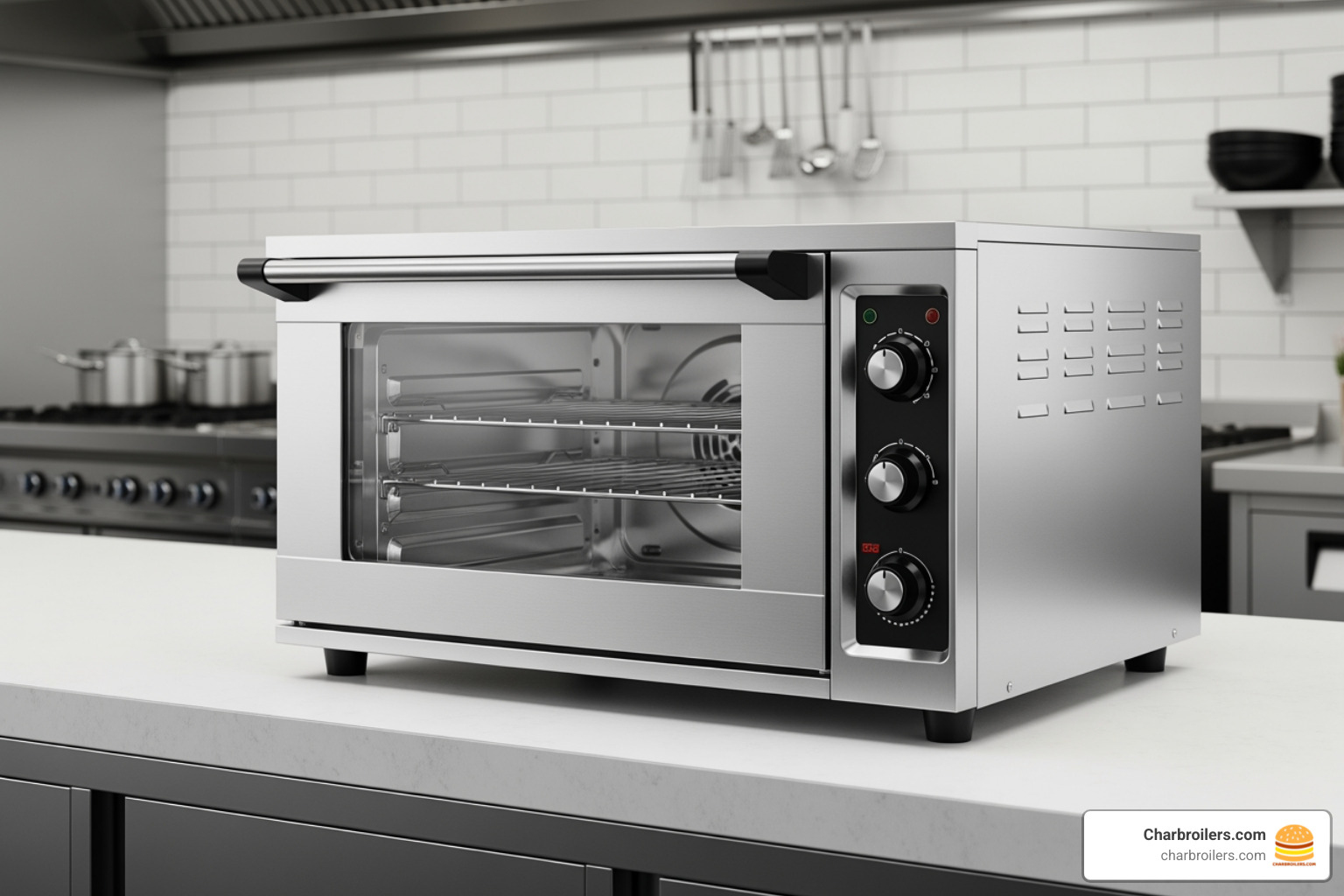
A commercial convection toaster oven is a countertop appliance that uses a fan to circulate hot air, cooking food faster and more evenly than traditional ovens. They are ideal for restaurants, bakeries, snack bars, and caterers needing efficient baking, roasting, and broiling in a compact footprint.
Key Features to Consider:
- Capacity: Quarter-size (21L), half-size (60-66L), or full-size models
- Power: Typically 1,400W to 1,800W on 120V
- Temperature Range: 150°F to 500°F (65°C to 250°C)
- Construction: Stainless steel exterior with tempered glass doors
- Price Range: $80 to $1,500+ depending on size and features
If you're running a busy kitchen with limited space, a commercial convection toaster oven delivers full-size oven performance without the footprint or energy costs. They're perfect for baking pastries, roasting chicken, and handling multiple dishes at once thanks to their multi-tier rack systems.
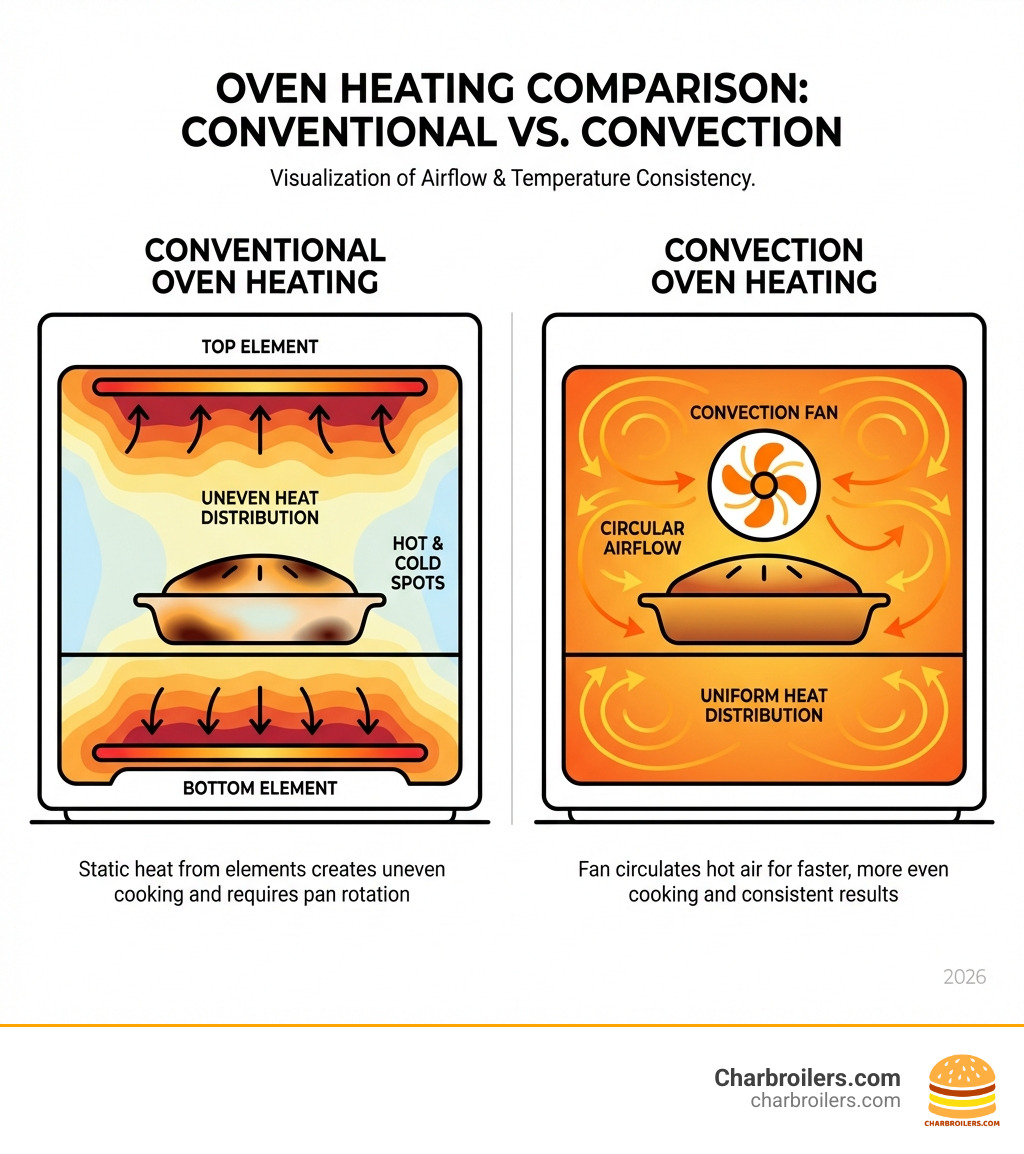
The convection fan makes all the difference. While traditional ovens have hot and cold spots, convection ovens circulate air for uniform heat. This means your food cooks up to 25% faster and browns more evenly—no more rotating pans halfway through.
I'm Sean Kearney, founder of Charbroilers.com. With over a decade of experience helping restaurant owners, I've seen how a commercial convection toaster oven can transform any kitchen, from food trucks to full-service restaurants, into an efficient operation.
What is a Commercial Convection Toaster Oven and How Does It Work?
A commercial convection toaster oven is a versatile workhorse that bakes, roasts, and broils with incredible speed and consistency. It's an essential tool for any professional kitchen.
At its core, this oven uses convection technology. A fan actively circulates hot air throughout the cooking chamber, creating an even heating environment. This forced air movement ensures every part of the food is exposed to the same temperature, leading to uniform cooking and browning.
This technology has two main advantages. First, it significantly reduces cooking times because the moving air allows heat to penetrate food more efficiently. Second, it guarantees even heat distribution, eliminating hot spots and cold spots for consistent results. For a deeper dive, see our guide on Decoding Ovens: A Guide to Conventional and Convection Cooking.
The principle is simple: by actively moving hot air, a commercial convection toaster oven ensures that your food cooks uniformly and browns beautifully, all while reducing overall cooking time. This translates directly to increased efficiency for your business.
Key Features and Specifications
A commercial convection toaster oven is built for professional demands with specific features for reliable performance.
Commercial models are built with robust, easy-to-clean stainless steel to withstand the rigors of a professional kitchen. They feature dual-wall tempered glass doors, which allow you to monitor cooking without opening the door and losing heat. Some models include magnetic sealing strips to further minimize heat loss.
Temperature control is paramount. These ovens offer a wide temperature range, typically from 150°F to 500°F (65°C to 250°C), for maximum flexibility. Precise controls, whether dials or digital, allow you to fine-tune the heat. Integrated timers (usually 0-120 minutes) with auto-shutoff are a lifesaver in a busy kitchen.
Inside, multi-tier racks allow you to cook multiple items simultaneously. A 4-tier interior is common, and many models can accommodate standard half-sheet pans (18"x13"), a game-changer for efficiency. For more on the inner workings, see our article on Demystifying Commercial Convection Ovens: A Deep Dive Into Their Operation.
Key Benefits for Your Professional Kitchen
Investing in a commercial convection toaster oven upgrades your kitchen's efficiency and output. For any professional kitchen in Seattle, WA, where speed and quality are vital, these ovens offer significant benefits.

Reduced cooking time is a primary benefit. The convection fan circulates hot air, cooking food up to 25% faster than conventional ovens. This means quicker order turnaround and more productive staff.
This efficiency extends to energy use. Faster cooking times mean the oven is on for shorter periods, saving on electricity bills—a crucial factor for managing operational costs.
The even heat distribution eliminates hot spots, ensuring every item is cooked perfectly. This consistency builds customer trust and reduces food waste from unevenly cooked products.
These ovens can also promote healthier cooking. The circulating air crisps and browns food effectively, often requiring less oil or fat. This is a plus for health-conscious customers and aligns with modern dietary trends. For more on healthy cooking fats, see guidance from the American Heart Association.
Finally, the space-saving countertop design is invaluable for kitchens with limited square footage, allowing you to maximize your workspace without sacrificing cooking capacity. For more ways to boost output, explore our insights on Cook Faster, Earn More: Top Industrial Convection Ovens Reviewed.
Maximizing Kitchen Space with Countertop Models
In a busy city like Seattle, WA, every inch of kitchen space counts. The countertop commercial convection toaster oven shines here, offering full-size oven capabilities in a small package.
These ovens sit on existing countertops, adding significant cooking capacity without costly renovations. Their portability is another advantage. The compact size and standard 120V connection make them easy to move, which is ideal for catering, food trucks, or pop-up events.
Countertop models are perfect for snack bars, convenience stores, and concession stands that need to quickly heat appetizers, toast sandwiches, or bake small batches. Even larger restaurants benefit from a dedicated countertop unit for overflow or smaller tasks. Our guide on Countertop Oven Powerhouses: Your Guide to Commercial Excellence offers more detail on how these compact units can revolutionize your operations.
Choosing the Right Commercial Convection Toaster Oven for Your Business
Choosing the right commercial convection toaster oven for your Seattle-based business requires matching the unit's features to your needs. Consider these key factors before you buy. Our The Ultimate Guide to Comparing Commercial Convection Ovens can also provide further insights.
Here’s a quick overview of what to look for:
| Factor | Description |
|---|---|
| Size/Capacity | Consider internal dimensions and rack capacity (e.g., 4-tier for half-sheet pans) to determine how much food you can cook at once. |
| Power (Wattage) | Higher wattage (e.g., 1800W) means faster heating. Ensure your 120V electrical system can support it. |
| Temperature Range | A wide range (e.g., 150-500°F) offers versatility. Choose between precise digital controls or durable manual knobs. |
| Materials | Stainless steel construction is standard for durability and easy cleaning. Tempered glass doors are essential for monitoring. |
| Price Range | Models range from $80 to $1,500+. Balance your budget with features and durability for the best long-term value. |
Understanding Size and Capacity
The size of your commercial convection toaster oven dictates how much food you can prepare, directly impacting kitchen efficiency. Ovens are typically categorized by the sheet pan size they accommodate.
- Quarter-size ovens are the smallest, ideal for small cafes or as an auxiliary oven.
- Half-size ovens are common for small to medium-sized kitchens. A 60-66L model can often hold multiple half-sheet pans (18"x13"), perfect for batch cooking pizzas, chicken, or pastries.
- Full-size convection ovens are typically larger, freestanding units. For countertop models, half-size is generally the largest.
When evaluating capacity, think about your peak demand. Ensure the oven can handle your busiest hours without causing bottlenecks. For more on maximizing space, see our guide on Maximize Your Space: Understanding Full Size Commercial Countertop Convection Ovens.
Key Power and Control Specs for a Commercial Convection Toaster Oven
Power and control specs influence how quickly and precisely your oven operates.
Wattage indicates heating power. Higher wattage (1400W to 1800W) means faster preheating and temperature recovery, which is crucial in a busy kitchen.
Voltage is also important. Most countertop models run on a standard 120V connection, compatible with most kitchens in Seattle, WA. Always verify your electrical system can support the unit. For more on electrical needs, see our insights on Power Up Your Kitchen: The Best Commercial Electric Ranges with Convection Ovens.
For controls, you can choose between manual and digital. Manual knobs are simple and durable, while digital controls offer precision and pre-set programs. The best choice depends on your kitchen's need for precision versus simplicity.
Materials, Certifications, and Accessories
The durability and safety of your commercial convection toaster oven are determined by its materials, certifications, and accessories.
Durable stainless steel is the industry standard for its longevity and ease of cleaning. A dual-wall tempered glass door allows for monitoring while providing heat resistance and safety. Our article on Built to Last: Best Commercial Stainless Steel Convection Ovens Reviewed highlights why this material is critical.
Certifications like ETL or NSF are non-negotiable. They indicate the product meets specific safety and sanitation standards required in Seattle, WA. Understanding these is key, as detailed in our guide Demystifying NSF: A Complete Guide to Certified Convection Ovens.
Finally, consider the included accessories. Items like wire racks, a food tray, and heat-resistant gloves add value and ensure you can use your oven effectively right away.
Popular Applications and Food Versatility
The versatility of a commercial convection toaster oven is one of its greatest strengths, making it a valuable asset across various food service sectors.
The target markets for these ovens are broad:
- Restaurants: For baking sides, reheating appetizers, and finishing dishes.
- Bakeries: For consistent baking of pastries, cookies, and bread.
- Concession stands & snack bars: For rapid cooking of fries, pizzas, and hot sandwiches.
- Convenience stores: For fresh, warm grab-and-go options.
- Catering operations: For portability and high-quality on-site cooking.
To explore a wider range of ovens suitable for these applications, Explore our selection of commercial ovens.
Foods You Can Perfect in a Commercial Convection Toaster Oven
The beauty of a commercial convection toaster oven lies in its ability to handle a diverse menu. Here's a list of foods you can consistently perfect:
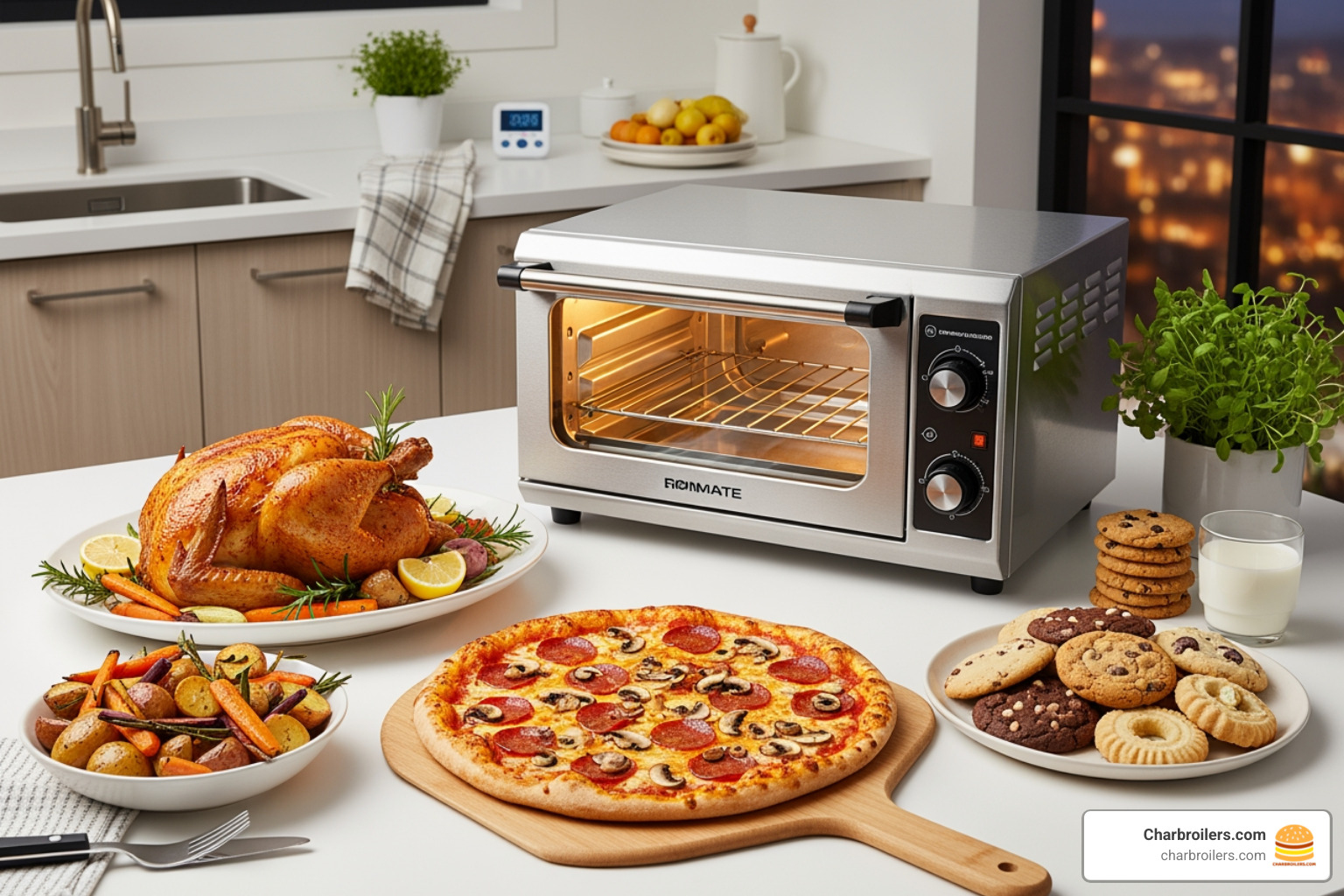
- Baking: Achieve beautifully golden and evenly baked pastries, cookies, bread, muffins, and cupcakes. The convection feature ensures uniform results without hot spots.
- Roasting: The circulating hot air creates crispy exteriors on chicken, meats, and vegetables with less oil.
- Reheating: Quickly and effectively reheat leftovers or pre-cooked items without drying them out.
- Broiling: Achieve a perfect char or melt cheese on nachos, open-faced sandwiches, or gratins.
- Finishing & Toasting: Give a final crisp to casseroles or toast bagels and bread to perfection.
Whether you're making French fries, pizzas, or a variety of baked goods, the commercial convection toaster oven is a reliable appliance for delivering quality and efficiency in your kitchen.
Frequently Asked Questions about Commercial Convection Ovens
We often get asked a lot of great questions about commercial convection toaster ovens. Let's tackle some of the most common inquiries.
Do commercial convection ovens require a special vent or hood?
This is a critical question for any kitchen in Seattle, WA. The answer depends on the oven model and local health and fire codes.
Many smaller, countertop commercial convection toaster ovens may not require a full Type I hood (for grease) if they are used for baking or heating non-greasy foods. However, all cooking appliances produce heat and steam, so proper ventilation is crucial for staff comfort and safety. A Type II hood (for heat and steam) might still be necessary.
The best practice is always to consult your local health department and a certified HVAC professional in Seattle, WA, to determine the exact venting requirements for your specific oven and kitchen setup. For a more detailed look, our article on Commercial Convection Ovens: Unpacking Venting and Hood Requirements is a must-read.
How do I adjust my recipes for a convection oven?
Switching to a commercial convection toaster oven requires a simple adjustment to your recipes to account for more efficient cooking.
The general rule is to either:
- Reduce the temperature by about 25°F (around 15°C).
- Reduce the cooking time by approximately 25%.
Start with a temperature reduction and monitor your food. You may find a combination of both works best. Because convection cooks more evenly, you won't need to rotate pans as often. However, it's always a good idea to check for doneness early, especially when using a new oven. Use a food thermometer for meats and visual cues for baked goods. For more tips, check out our guide on Blowing Hot Air: How to Properly Use Commercial Fan-Forced Ovens.
What kind of maintenance do these ovens require?
Regular maintenance will extend the life of your commercial convection toaster oven and ensure it performs optimally.
The primary task is regular cleaning. Wipe down the stainless steel exterior daily. Clean the interior to remove food spills and grease buildup, following the manufacturer's instructions. Always empty the crumb tray to prevent a fire hazard.
Other key maintenance steps include:
- Check door seals: Inspect gaskets for tears or gaps to ensure heat retention and efficiency.
- Inspect racks: Keep wire racks and pans clean and free from damage.
- Follow manufacturer guidelines: Refer to your oven's manual for specific cleaning and service schedules.
- Professional inspection: Have a technician inspect your oven periodically to catch minor problems before they become costly repairs.
For essential safety tips, read our guide on Don't Get Burned: Follow These Convection Oven Safety Guidelines.
Conclusion
In any commercial kitchen, efficiency and consistency are key. A commercial convection toaster oven delivers both, offering a powerful, compact solution for baking, roasting, and broiling.
We've seen how its robust construction, precise controls, and multi-tier capacity make it ideal for busy restaurants, bakeries, and caterers in Seattle, WA. It’s a smart investment that saves space, reduces cooking times, and ensures consistent quality, contributing to a healthier bottom line.
Choosing the right model involves considering capacity, power, and materials to match your kitchen's demands. With proper care, a commercial convection toaster oven will become one of the most valued tools in your culinary arsenal.
At Charbroilers.com, we are committed to providing the knowledge and equipment you need to succeed. If you're ready to upgrade your kitchen's capabilities, explore our extensive range to find the perfect commercial convection toaster oven.
For more expert advice, be sure to Find the perfect equipment for your restaurant in our comprehensive guide to commercial charbroilers.