

Cold Truths – Can Commercial Refrigerators Double as Freezers?
Why Commercial Refrigeration Temperature Differences Matter
Are commercial refrigerators also freezers? No, commercial refrigerators are not freezers. They serve completely different purposes and operate at distinct temperature ranges. While both are essential for food storage, they're engineered for specific cooling functions that cannot be interchanged.
Quick Answer:
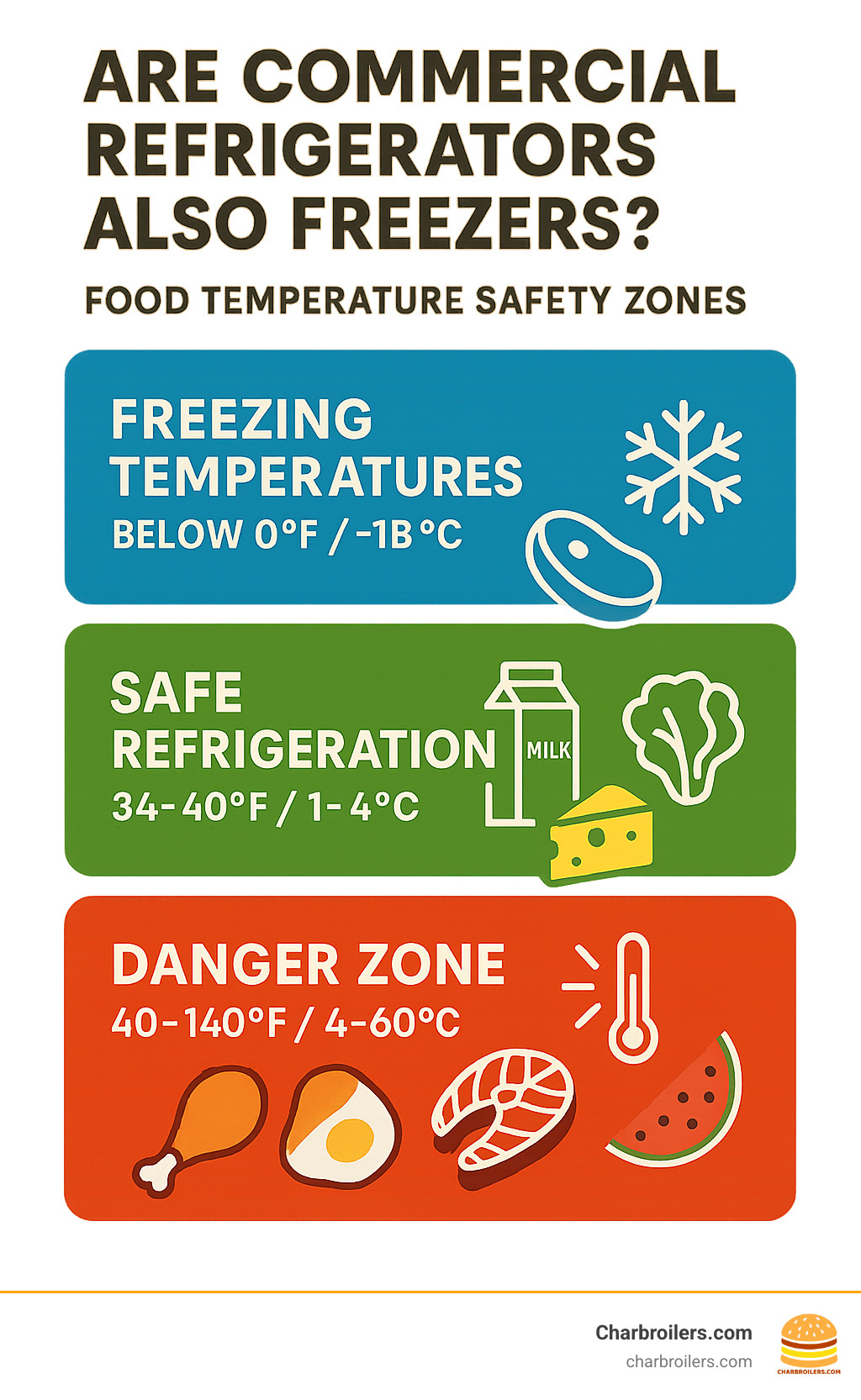
- Commercial refrigerators: Keep food chilled at 34-40°F (1-4°C) for short-term storage.
- Commercial freezers: Freeze food solid at 0°F to -10°F (-18°C to -23°C) for long-term preservation.
- Different equipment: Each uses specialized compressors, insulation, and cooling systems.
- Combination units available: Some models offer both functions in separate, independently controlled compartments.
The confusion often arises because both units look similar externally. However, their internal systems are vastly different and purpose-built.
Food safety depends on maintaining proper temperatures. Refrigerators keep perishables in the safe zone just above freezing, while freezers halt bacterial growth by freezing food solid. Using the wrong equipment puts your customers at risk and can lead to massive food waste.
As Sean Kearney from Charbroilers.com, I've seen how understanding these temperature differences saves restaurant owners thousands in food costs and helps them avoid health code violations.
Must-know are commercial refrigerators also freezers terms:
- commercial upright frost free freezer
- nsf ansi standard 7 commercial refrigerators and freezers
- small commercial freezer
Refrigerator vs. Freezer: Understanding the Core Differences
While they may look similar, commercial refrigerators and freezers are fundamentally different. It's like comparing a marathon runner to a sprinter; both are athletes, but they're built for different purposes.
Designed for Different Temperatures
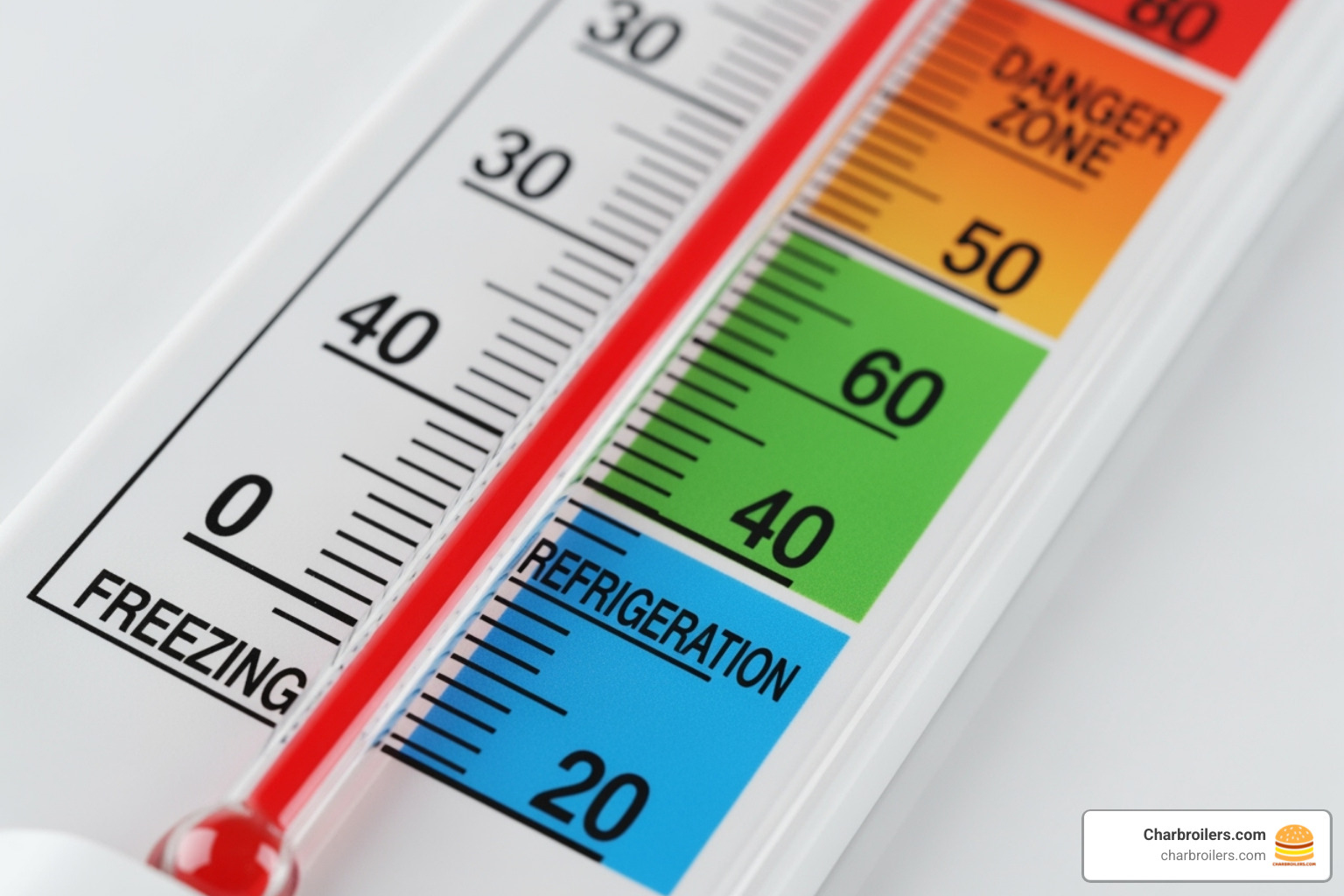
The core reason commercial refrigerators aren't also freezers is their operating temperature. These aren't minor variations; they are fundamentally different cooling environments.
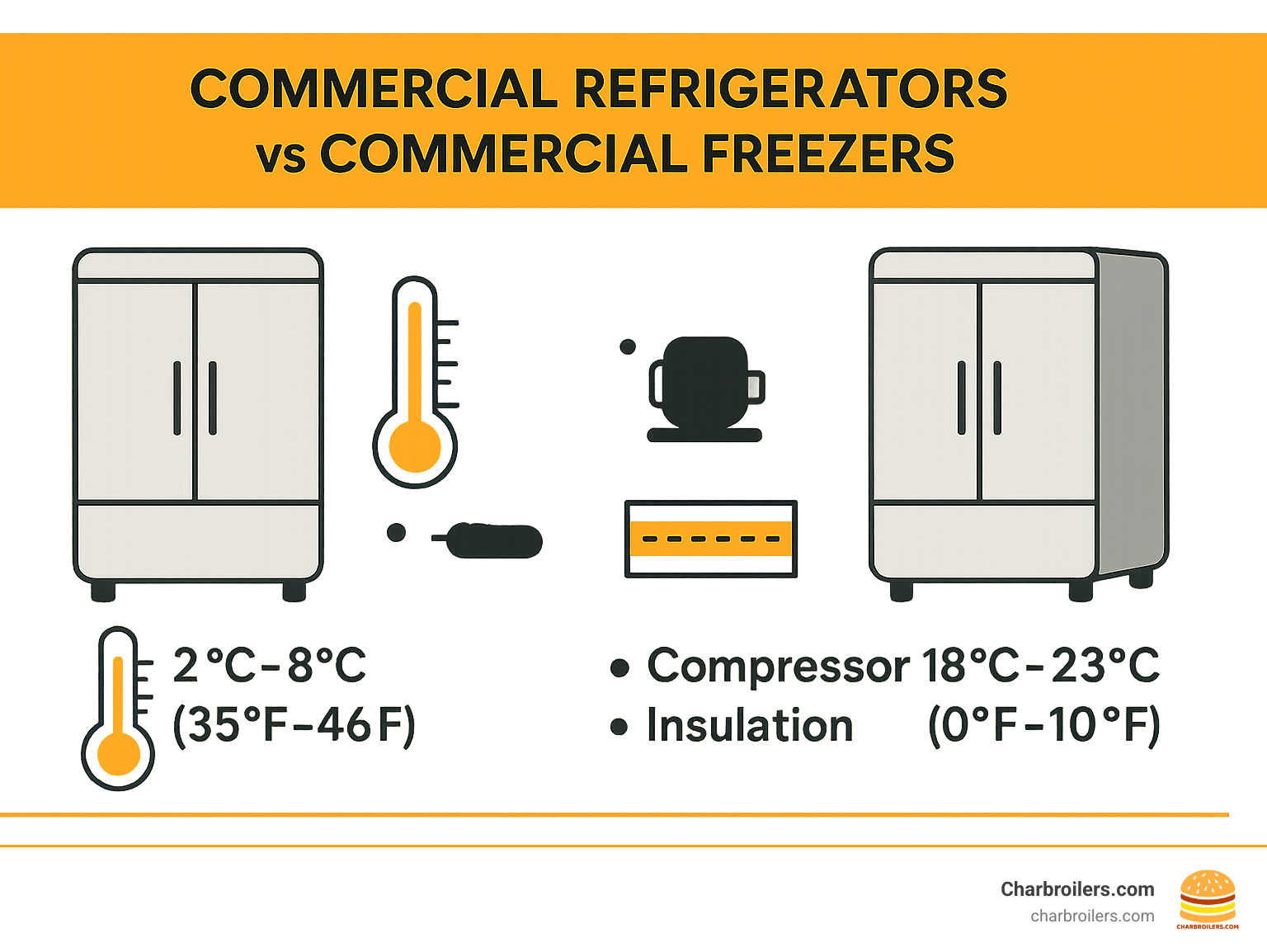
Commercial refrigerators maintain a chilling zone between 2°C to 8°C (35°F to 46°F). This range is perfect for fresh produce, dairy, and prepped items, slowing bacterial growth to keep food fresh and safe for short-term use.
Commercial freezers operate at a much colder -18°C to -23°C (0°F to -10°F). At these arctic temperatures, bacterial growth halts, making it ideal for long-term storage of bulk meats, frozen desserts, and other items.
Components and Construction
The internal components of these machines are as different as their temperature ranges. The entire engineering changes to suit the specific cooling task.
- Compressors: Freezers have more powerful compressors to reach and maintain sub-zero temperatures, especially in a busy kitchen with frequent door openings.
- Insulation: Freezers use much thicker, denser insulation to keep extreme cold locked in and improve energy efficiency.
- Cooling Systems: While the principle is the same, the evaporator coils and refrigerant cycles in freezers are optimized for more intensive, lower-temperature operation.
- Defrost Cycles: Freezers require more robust and frequent automatic defrost systems to manage the greater ice buildup that occurs at sub-zero temperatures.
| Feature | Commercial Refrigerator | Commercial Freezer |
|---|---|---|
| Temperature Range | 2°C to 8°C (35°F to 46°F) | -18°C to -23°C (0°F to -10°F) |
| Compressor Size | Standard, designed for chilling | More powerful, designed for deep freezing and rapid cooling |
| Insulation | Adequate, designed for moderate temperature retention | Thicker, denser, designed for extreme cold retention |
| Defrost System | Less frequent, often automatic or manual | More frequent, robust automatic defrost |
| Primary Use | Short-term storage, chilling fresh foods and beverages | Long-term preservation, freezing bulk items |
These machines are purpose-built for their specific jobs. A commercial refrigerator trying to act as a freezer will fail, leading to costly food spoilage and safety risks. For more insights, see our Detailed Guide to Comparing Commercial Refrigerators.
So, Are Commercial Refrigerators Also Freezers? The Technical Answer
The technical answer to are commercial refrigerators also freezers? is a firm no, with one key exception. A standard commercial refrigerator is a single-purpose machine engineered for chilling, not freezing.
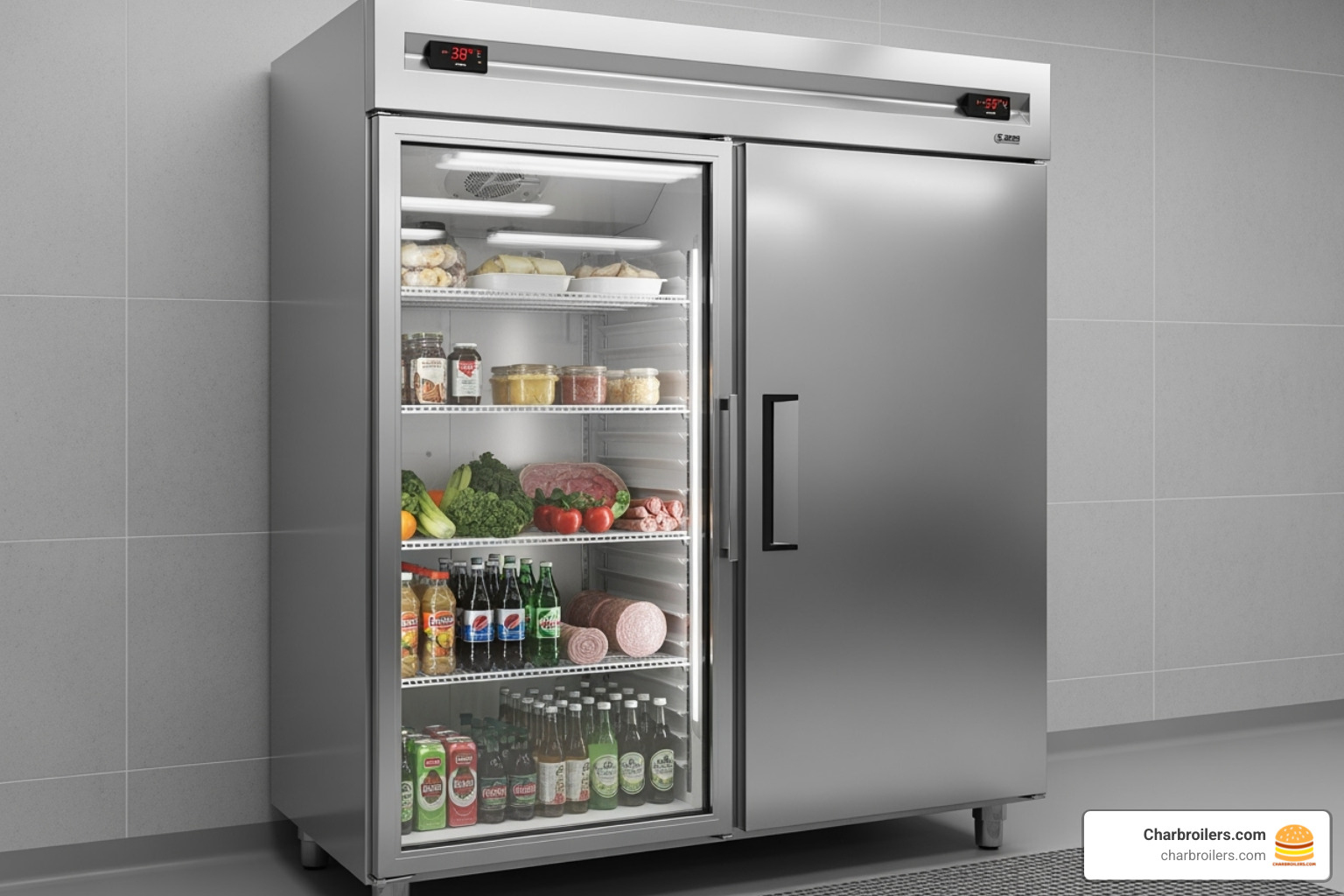
Attempting to force a refrigerator to do a freezer's job leads to inefficient cooling, high energy bills, and serious food spoilage risks. The system simply cannot maintain the sub-zero temperatures required for frozen food safety.
The exception is the combination refrigerator-freezer unit. These are not standard refrigerators; they are purpose-built with separate compartments and independent cooling systems to handle both tasks effectively.
For a deeper dive into how commercial cooling equipment works, check out our guide on Commercial Refrigeration Equipment Explained: No Sweat.
Why You Can't Simply "Turn Down" a Refrigerator
Thinking you can turn a refrigerator into a freezer by lowering the thermostat is a common mistake that leads to costly problems. Here's why it doesn't work:
- Compressor Overload: A refrigerator's compressor isn't designed for the intense workload of reaching freezing temperatures. Forcing it to do so will cause it to overheat and fail prematurely.
- Coil Freezing: The evaporator coils will ice over completely, blocking airflow and causing temperatures inside the unit to rise, spoiling food.
- Inconsistent Temperatures: The unit will struggle to maintain a consistent sub-zero temperature, creating a dangerous cycle of thawing and refreezing that promotes bacterial growth.
- Voided Warranty: Using equipment outside of its specified purpose will void the manufacturer's warranty, leaving you responsible for expensive repairs.
Every component in a commercial refrigerator is optimized for chilling, not freezing.
The Exception: Combination Refrigerator-Freezer Units
For businesses that need both functions but are short on space, combination refrigerator-freezer units are the ideal solution. These are not compromised machines; they are engineered to excel at both jobs.
They feature dual compartments with truly independent cooling systems. The freezer section maintains its proper -18°C while the refrigerator section stays at a perfect 4°C, with neither affecting the other's performance. They are essentially two specialized units in a single cabinet.
For space-strapped kitchens, food trucks, or specialty shops, these units offer the versatility and space-saving benefits needed to optimize workflow and ensure food safety. While they cost more upfront, the operational efficiency often justifies the investment. If you're exploring options, see our selection to Keep Your Cool With These Commercial Refrigerators For Sale.
The Reverse Scenario: Using a Commercial Freezer as a Refrigerator
While a refrigerator can't be a freezer, the reverse question often comes up: "Can I use my commercial freezer as a refrigerator?" Technically, it's possible by raising the thermostat, but it's an inefficient workaround with significant risks and is not recommended for professional use.
This approach is sometimes considered by operators tight on space or budget, but it's crucial to understand the trade-offs.
Advantages and Disadvantages of Repurposing a Freezer
This is not a decision to take lightly. While there are minor benefits, they come with significant risks to food safety and your equipment.
- Pros: Commercial freezers have superior insulation, which can be better at holding a set temperature. This could potentially lead to minor energy savings if the unit cycles infrequently, but this is not guaranteed.
- Cons: The primary risks are significant. You can easily freeze and ruin fresh food because the powerful cooling system can overshoot the warmer temperature setting. Moisture buildup is another major issue, as freezers are designed for dry, cold air, not the higher humidity of refrigerated foods. This can lead to condensation, ice formation, and mold. Finally, operating the system outside its designed parameters puts mechanical stress on the compressor and thermostat, leading to premature failure.
For insights on proper freezer maintenance, see our guide on Commercial Upright Frost Free Freezers That Keep Their Cool.
Key Safety and Performance Considerations
If you must attempt this as a temporary measure, food safety must be your top priority.
- Temperature Monitoring: Do not trust the freezer's built-in gauge. Use multiple, dedicated external thermometers to constantly monitor the internal temperature, ensuring it stays within the safe refrigeration zone (35°F to 46°F) without dropping below freezing.
- Moisture Control: Ensure good air circulation by not overpacking the unit. You may need to wipe down condensation regularly to prevent ice and mold growth.
- Electrical Load: Be aware that the compressor may short cycle (turn on and off frequently) as it struggles to maintain a temperature it wasn't designed for. This is inefficient and a sign of mechanical stress.
- Proper Storage: Use sealed, food-safe containers to protect food from moisture and temperature fluctuations.
If you run into issues, our guide on Fixing Common Issues With Imperial Frost Free Commercial Freezers might help.
Using a freezer as a refrigerator is a risky, temporary fix. Investing in purpose-built equipment is always the safer and more efficient long-term solution.
Key Factors When Choosing Commercial Refrigeration
Choosing the right commercial refrigeration—be it a refrigerator, freezer, or a combination unit—is a critical decision that impacts your food safety, operations, and costs for years to come.
When making a selection, prioritize these key factors:
- Durability: Look for robust stainless steel construction to handle a busy kitchen.
- Capacity: Plan for your peak storage needs and the size of items you store.
- Design: Choose features that support your workflow, like glass vs. solid doors or digital controls.
- Energy Efficiency: Select models with high efficiency ratings to control monthly utility bills.
- Maintenance: Easy-to-clean designs and accessible components save time and service calls.
- Regulatory Compliance: Ensure all equipment meets necessary health and safety codes.
Energy Efficiency and Environmental Impact
Energy efficiency is a necessity for modern restaurant operators. When considering if commercial refrigerators are also freezers, their energy use is a key differentiator.
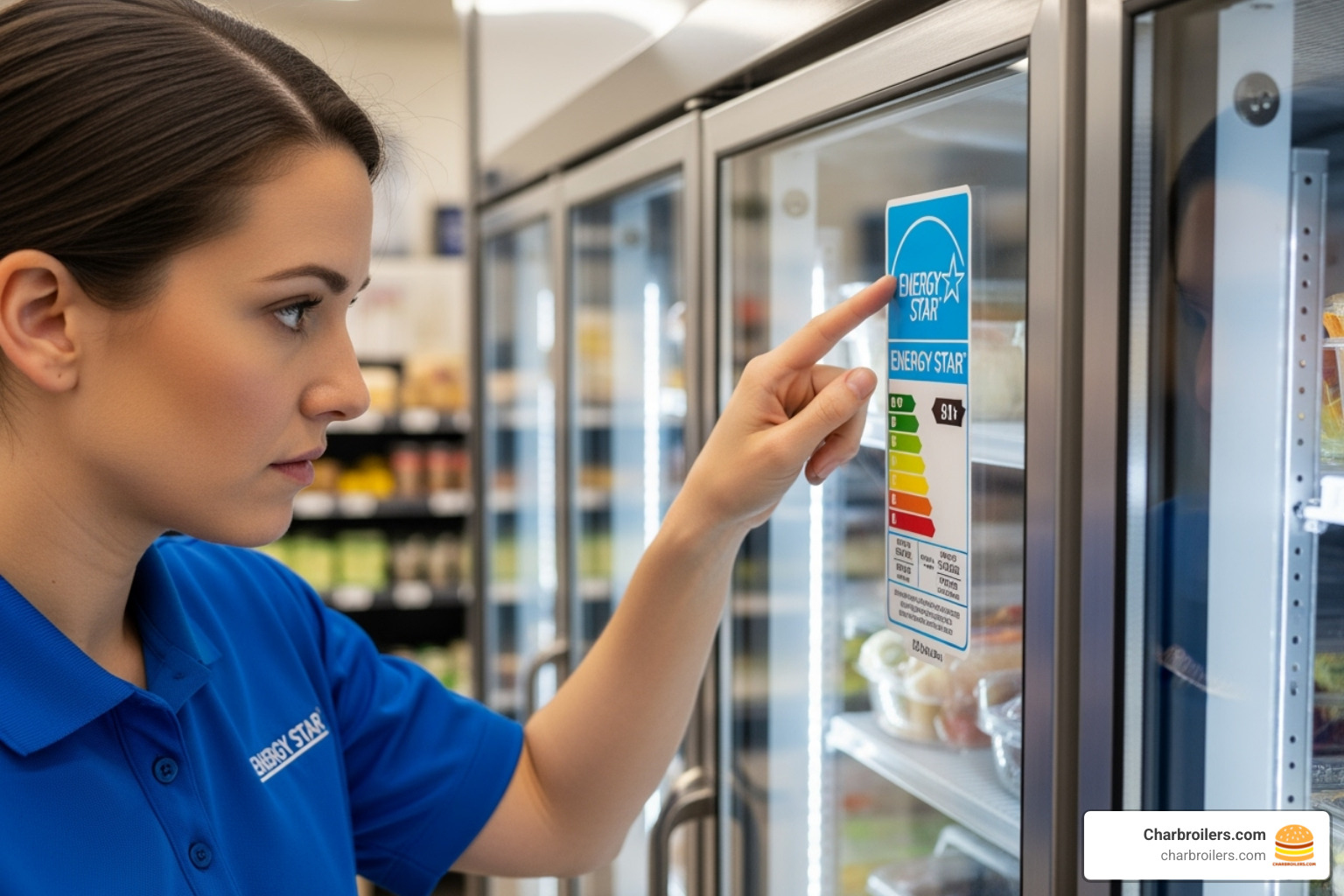
- ENERGY STAR Certification: Look for the ENERGY STAR label. These certified units are guaranteed to be more energy-efficient than minimum federal standards, leading to lower utility bills. Many utility companies also offer rebates for purchasing certified equipment.
- Refrigerant Types: Modern refrigerants like R-290 (Propane) have a much lower Global Warming Potential (GWP) than older HFCs. Choosing equipment with eco-friendly refrigerants like R-290, R-600a, or R-450A is environmentally responsible and often results in better performance.
To find certified equipment and rebates, visit www.energystar.gov/products/commercialfoodserviceequipment/commercialrefrigerators_freezers.
Understanding U.S. Regulations and Compliance
Navigating U.S. regulations is essential to protect your business and ensure food safety.
- Department of Energy (DOE): The DOE sets energy conservation standards for commercial refrigeration equipment under 10 CFR 431.62. Staying aware of upcoming compliance deadlines, such as those in 2029, can prevent costly future upgrades.
- NSF/ANSI Standards: NSF/ANSI Standard 7 focuses on health and sanitation, ensuring equipment is made from food-safe materials, is easy to clean, and is designed to prevent contamination.
- Food Safety Compliance: Adhering to these regulations is your primary defense against health code violations, fines, and foodborne illness outbreaks. Proper temperature maintenance and equipment design are non-negotiable.
For DOE standards, reference www.ecfr.gov/cgi-bin/text-idx?SID=ea9937006535237ca30dfd3e03ebaff2&mc=true&node=se10.3.431_166&rgn=div8. For help with NSF/ANSI Standard 7, see our guide: Cool Compliance: Your Guide to NSF/ANSI Standard 7 for Refrigerators and Freezers.
Frequently Asked Questions about Commercial Refrigeration
Here are concise answers to the most common questions about commercial refrigeration.
What is the main difference between a commercial refrigerator and a freezer?
The primary difference is their operating temperature and purpose. Refrigerators operate between 35°F to 46°F (2°C to 8°C) to chill food for short-term storage. Freezers operate between 0°F to -10°F (-18°C to -23°C) to freeze food solid for long-term preservation. This requires different compressors, insulation, and overall engineering.
Are there units that are both a commercial refrigerator and a freezer?
Yes, these are called combination or dual-temperature units. They feature separate, independently controlled compartments for both refrigeration and freezing within a single appliance. They are an excellent space-saving solution for kitchens that need both functions.
How do commercial refrigerators differ from residential ones?
Commercial units are built for durability and high performance in demanding kitchen environments. They feature heavy-duty construction (like stainless steel), more powerful compressors to handle frequent door openings in hot kitchens, and must comply with strict health and safety regulations (like NSF/ANSI standards) that do not apply to residential models.
Conclusion
So, are commercial refrigerators also freezers? The definitive answer is no. They are distinct pieces of equipment, each engineered for a specific mission in your kitchen: refrigerators for short-term chilling and freezers for long-term preservation.
Using purpose-built equipment is fundamental to both food safety and operational efficiency. When every piece of equipment performs its intended job, your staff works more effectively, your food stays safer, and your energy costs remain under control.
While combination units provide a versatile, space-saving solution, they achieve this with separate, dedicated systems for each temperature zone—proving that you can have both functions, but not from a single-purpose unit.
Making an informed choice about your refrigeration protects your customers, your reputation, and your bottom line. At Charbroilers.com, we are passionate about helping you understand not just what equipment to buy, but why it matters for your success.
Ready to explore more? Our guide on Keeping It Cool: Your Essential Guide to Restaurant Walk-In Fridges can help you master the bigger picture of commercial refrigeration.
Great food starts with great equipment—and that begins with understanding exactly what each piece brings to your kitchen.