

Meat Shop Must-Haves: Display Freezers That Sell
Why the Right Display Freezer Can Make or Break Your Meat Business
A display freezer for a meat shop is more than just refrigeration; it's a silent salesperson. The right unit showcases your premium products, drives sales, and ensures food safety, while a poor choice can lead to spoiled inventory and lost customers.
Key considerations for meat shop display freezers:
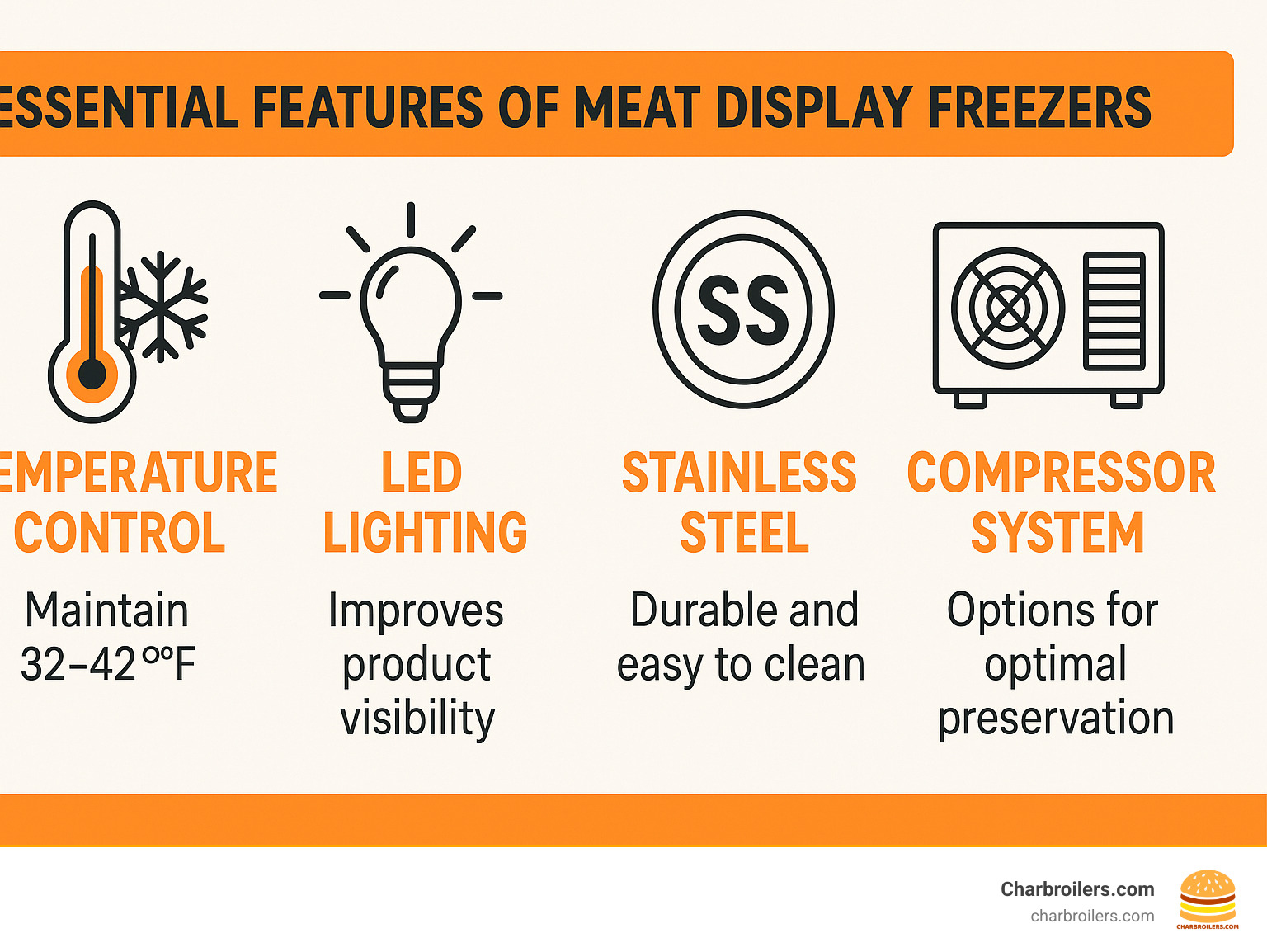
- Temperature control: Maintain 32°F to 42°F (0°C to 5.5°C) for fresh meat
- Glass type: Straight or curved glass fronts for optimal product visibility
- Compressor location: Self-contained units vs. remote systems
- Service style: Full-service cases vs. self-serve merchandisers
- Construction: Stainless steel for durability and easy cleaning
Modern meat display cases operate within precise temperature ranges while featuring LED lighting for superior product presentation. The commercial display industry is experiencing rapid growth, reflecting the increasing demand for quality refrigeration that improves both food safety and visual merchandising.
I'm Sean Kearney from Charbroilers.com. With over a decade in the restaurant equipment industry, I've helped countless meat shop owners find the perfect display freezer for meat shop applications to boost sales and food safety. My experience has given me deep insights into what drives success in commercial food service equipment.
Display freezer for meat shop helpful reading:
- NSF ANSI Standard 7 Commercial Refrigerators and Freezers
- Commercial Upright Frost Free Freezer
Essential Features of a Display Freezer for a Meat Shop
The fresh, vibrant look of meat in a butcher shop is no accident. It's the result of a well-designed display freezer for meat shop operations that goes far beyond just keeping things cold.
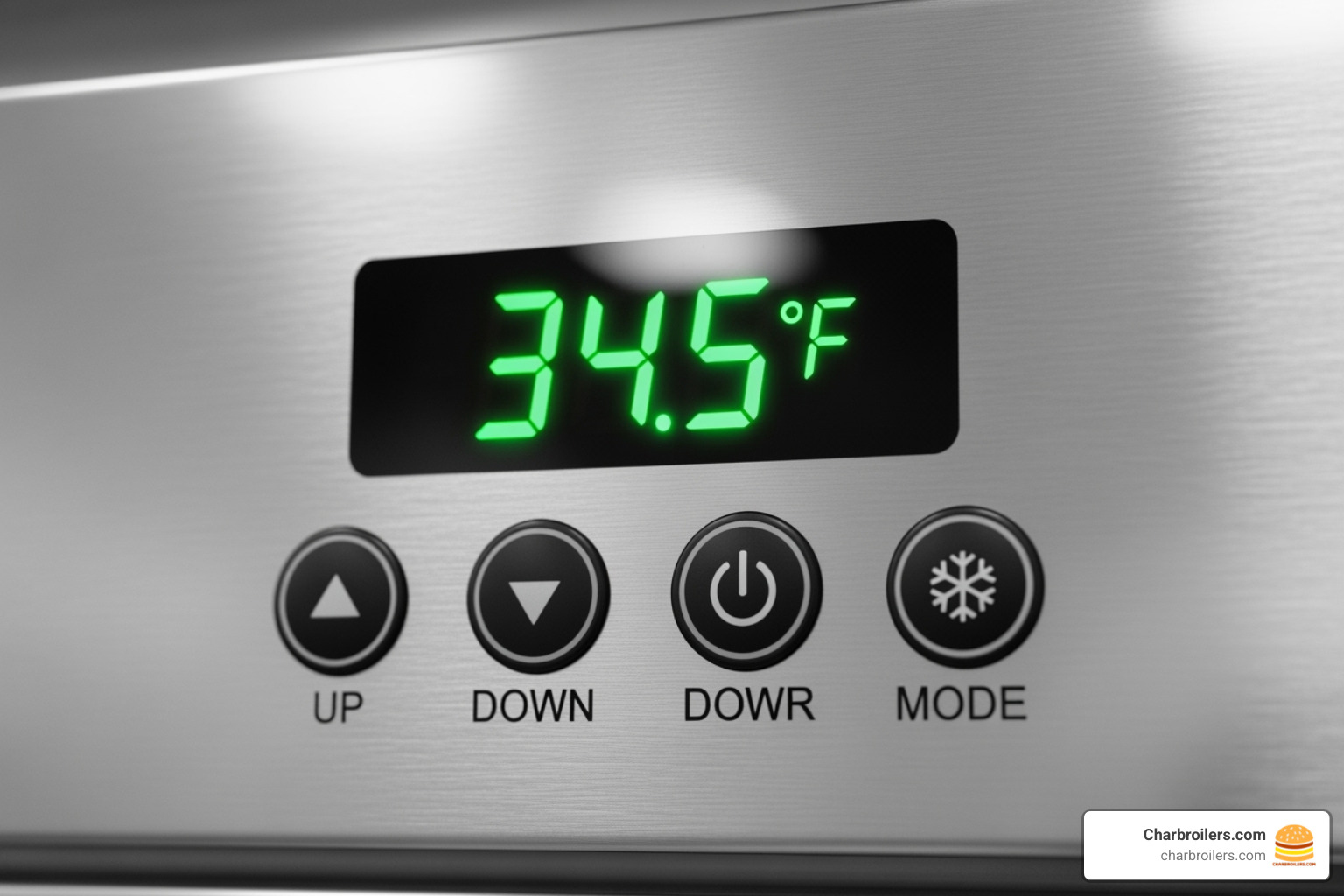
Key components like temperature consistency, humidity control, quality construction, and the right compressor type work together to keep products safe, fresh, and compliant with food safety standards. Modern commercial display freezers maintain precise temperature ranges: 32°F to 50°F (0°C to 10°C) for coolers and 14°F to -0.4°F (-10°C to -18°C) for freezers. For fresh meat, the sweet spot is between 32°F and 42°F (0°C to 5.5°C), and most quality units include digital displays for easy monitoring.
Critical Temperature and Humidity Control
Temperature control is vital for your display freezer for meat shop. Fresh meat requires a narrow window between 32°F and 42°F (0°C to 5.5°C) to halt bacterial growth without freezing. Too warm, and bacteria multiply; too cold, and the meat's texture and appeal are lost.
Humidity is just as crucial as temperature. Meat is mostly water, and without proper humidity systems, it dehydrates, leading to discoloration and a shriveled appearance. Smart humidity control keeps meat looking plump and juicy, maintaining its natural color and texture. This not only improves appearance but also extends shelf life, which means less waste and more profit.
Lighting and Construction That Sells
Your display case is a stage for your products, and LED lighting advantages make them shine. LEDs offer natural color rendering that showcases the true colors of your meat—the rich red of beef or the pale pink of pork—unlike the yellowish tint of older fluorescent lights.
LEDs are also highly energy-efficient and produce minimal heat, which lowers utility bills and reduces strain on the refrigeration system. It's a win-win for presentation and operational costs.
When it comes to the case itself, stainless steel construction is the industry standard. It's incredibly durable, resists corrosion, and offers the best ease of cleaning. In a meat shop where hygiene is critical, stainless steel can be quickly sanitized without harboring bacteria.
For complete peace of mind, ensure your unit meets industry standards. Check out our guide on Cool Compliance: Your Guide to NSF/ANSI Standard 7 for Refrigerators and Freezers to understand what certifications mean for your business.
Compressor Systems: Self-Contained vs. Remote
Choosing between self-contained units and remote compressor systems depends on your shop's needs.
Self-contained units have everything built-in, offering plug-and-play installation that's ideal for smaller shops or flexible layouts. The trade-off is that they generate some heat and noise in the customer area. Many include condensate evaporators, simplifying installation by eliminating the need for a drain.
Remote compressor systems move the noisy, heat-generating components away from the sales floor. This creates significant heat and noise reduction for a better customer experience and is more energy-efficient for larger setups. The downside is the complexity and higher upfront cost of professional installation, which requires careful shop layout considerations.
Both systems typically include automatic defrost cycles to prevent ice buildup. The choice comes down to your space, budget, and the shopping environment you want to create.
Choosing Your Style: Types of Meat Display Freezers
The type of display freezer for meat shop you choose shapes the entire customer experience, whether you prioritize personal service or grab-and-go convenience.
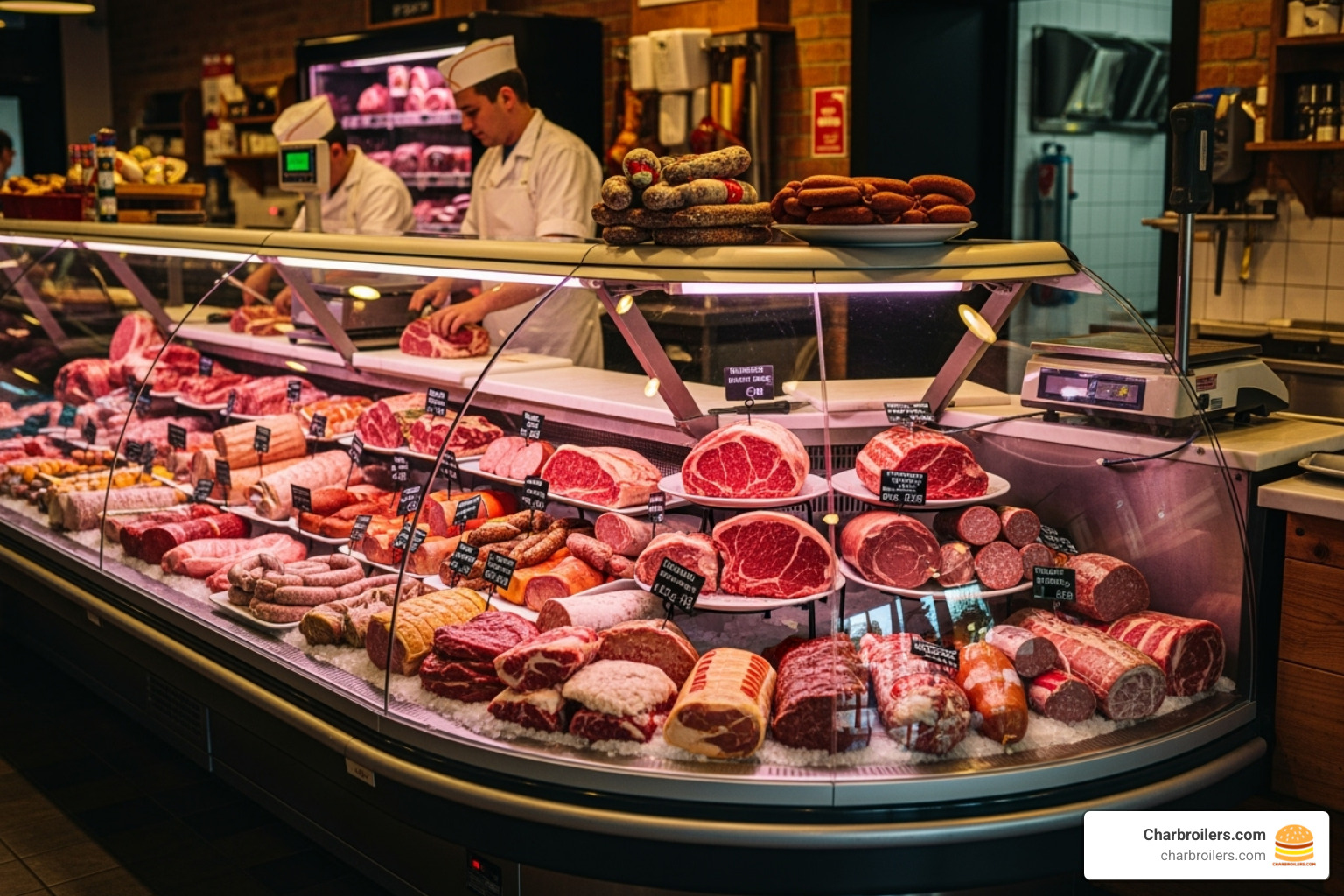
Every meat shop has its own personality, and your display case should reflect that. Some shops thrive on the personal touch of a skilled butcher, while others excel at offering busy customers a quick way to grab quality meat.
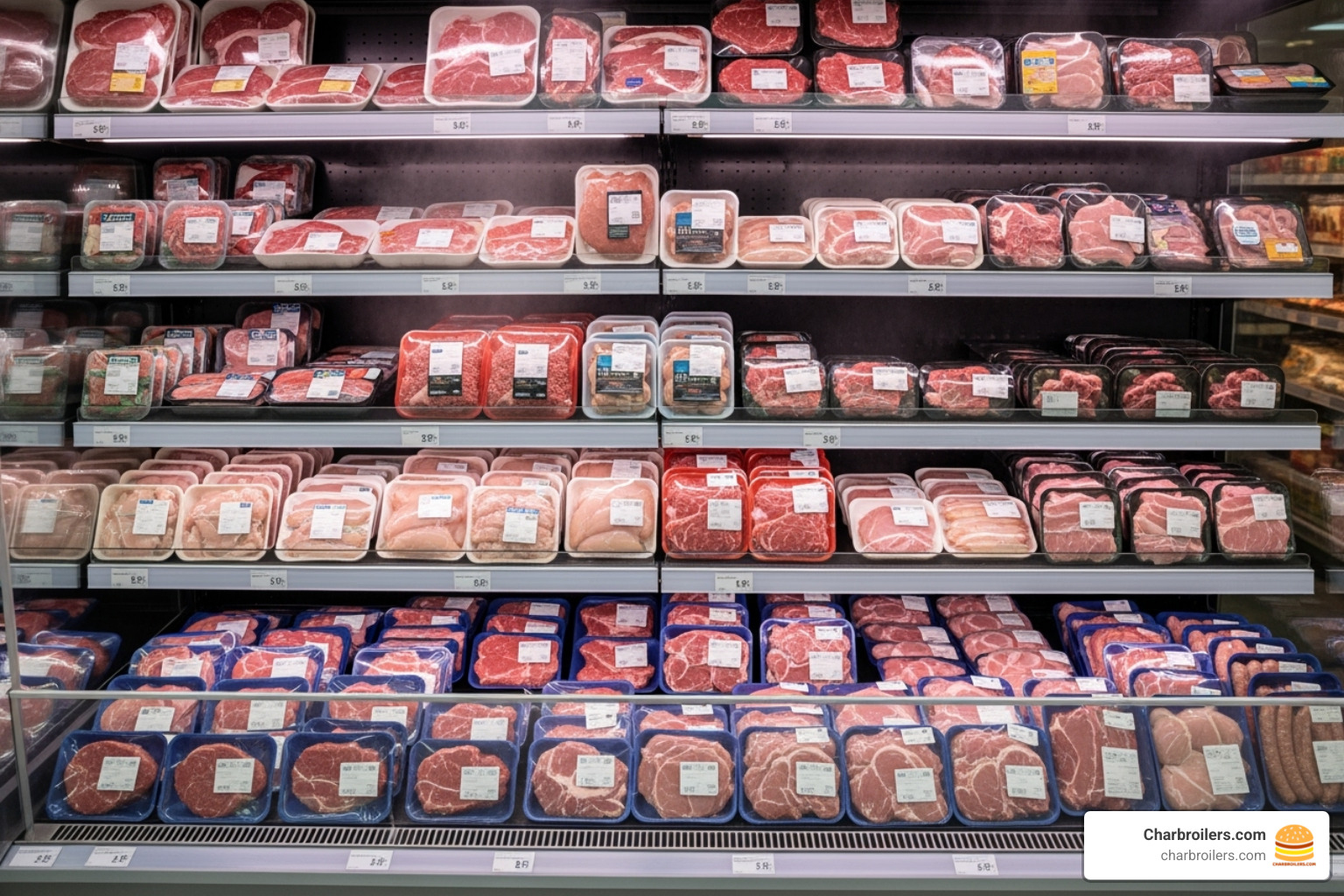
Many successful shops combine different display styles to serve various customer needs and maximize their merchandising flexibility.
Full-Service vs. Self-Serve Cases
Full-service curved or straight glass deli cases are the heart of traditional butchery, putting your staff's expertise on display. This personal interaction allows for upselling, offering recommendations, and building customer relationships. These cases often feature heated glass to prevent fogging, ensuring a crystal-clear view of your products.
For customers in a hurry, self-serve open merchandisers are ideal. These multi-deck workhorses are perfect for displaying pre-packaged products with clear pricing, encouraging impulse buys and allowing customers to browse at their own pace.
A strategic combination of both styles can be very effective. The full-service case highlights premium cuts and builds relationships, while self-serve units handle high-volume, pre-packaged items. If you're considering expanding your display options, our Twice as Nice: Commercial 2-Door Cooler Buying Guide offers more insights.
Specialty Displays: Hanging Meat and Upright Freezers
Hanging meat showcase refrigerators turn premium cuts into dramatic displays that stop customers in their tracks. These units are perfect for dry-aging displays or showcasing whole primal cuts. The visual impact is incredible, immediately signaling a premium product. Modern units maintain precise temperature and humidity conditions (0°C to 10°C) to ensure perfect aging and food safety.
For your frozen products, upright glass door freezers offer an energy-efficient solution with excellent visibility. These vertical, space-saving displays are perfect for showcasing pre-packaged frozen items like gourmet burgers or specialty sausages. The adjustable shelves and bright LED lighting ensure every product looks its best, while glass doors help maintain consistent temperatures.
Many upright freezers also come with locking mechanisms, which is a great feature for securing high-value items overnight. For more details, see our guide on Commercial Upright Frost-Free Freezers That Keep Their Cool.
Comparing Meat Display Freezer Types
| Freezer Type | Best For | Customer Interaction | Space Requirement | Pros | Cons |
|---|---|---|---|---|---|
| Full-Service | Premium cuts, custom orders, deli meats | High (direct with butcher) | Moderate to Large | Builds trust, allows upselling, personalized service, highlights artisanal quality, excellent presentation. | Requires dedicated staff, slower service, potentially higher labor costs, limited capacity for self-serve items. |
| Self-Serve | Pre-packaged meats, high volume, impulse buys | Low (customers select freely) | Moderate to Large | Convenience, speed, high sales volume, lower labor costs, ideal for grab-and-go. | Less personalized service, potential for customer indecision, requires good product labeling, higher energy use for open-air models. |
| Hanging Display | Dry-aged beef, cured meats, specialty cuts | Low to Moderate (visual focus) | Varies (often tall) | Dramatic visual appeal, highlights aging process, unique selling proposition, premium perception. | Limited to specific products, specialized maintenance, higher cost, may require dedicated space. |
| Upright Glass Door | Frozen pre-packaged meats, specialty frozen items | Low (customers select freely) | Moderate | Energy-efficient, excellent visibility for frozen goods, space-saving vertical design, secure storage with locks. | Limited to frozen products, not suitable for fresh meat, can be bulky if multiple units are needed. |
Boosting Your Bottom Line: How the Right Freezer Drives Sales & Safety
A display freezer for meat shop operations is a significant investment, but it's not an expense—it's a hardworking member of your sales team. It acts as a silent salesperson by enhancing presentation and as a food safety guardian by maintaining perfect temperatures. This combination reduces waste, increases sales, and improves your bottom line.
Think of it this way: every day your display freezer prevents spoilage or encourages an impulse buy, it's paying for itself. That's the kind of return on investment that makes business owners smile.
Enhancing Presentation and Maximizing Sales
A quality display freezer for meat shop use is designed to make your products look their absolute best. Strategic LED lighting is a key feature, rendering the natural colors of meat beautifully and making every cut look vibrant and appetizing.
Creating an abundant look is another powerful merchandising tool. A full, well-organized display creates a perception of freshness and variety, encouraging customers to browse longer and make impulse purchases. We've seen shops increase their average sale value by 20-30% simply by upgrading to a display freezer that showcases their meat properly. When your products look premium, customers are willing to pay premium prices.
Ensuring Food Safety and Extending Shelf Life
Food safety is paramount, and a reliable display freezer for meat shop operations maintains the crucial cold chain without fail. Consistent temperatures—32°F to 42°F for fresh meat and -10°C to -18°C for frozen products—are essential to prevent bacterial growth and keep your meat safe.
This consistent temperature control also dramatically extends shelf life, which means less product going to waste and more profit in your pocket. We've seen shops cut their spoilage losses in half just by upgrading to a properly functioning display freezer.
Perhaps most importantly, proper temperature control builds customer trust. When shoppers see your meat in a pristine, perfectly chilled environment, they feel confident in your commitment to quality. That confidence translates into repeat business and positive word-of-mouth. Adhering to health codes isn't just about avoiding fines; it's about protecting your reputation and ensuring your business can operate without interruption.
Pro Tips for Maintenance and Merchandising
Buying a great display freezer for meat shop is just the first step. Proper maintenance and smart merchandising are key to protecting your investment and maximizing profits.
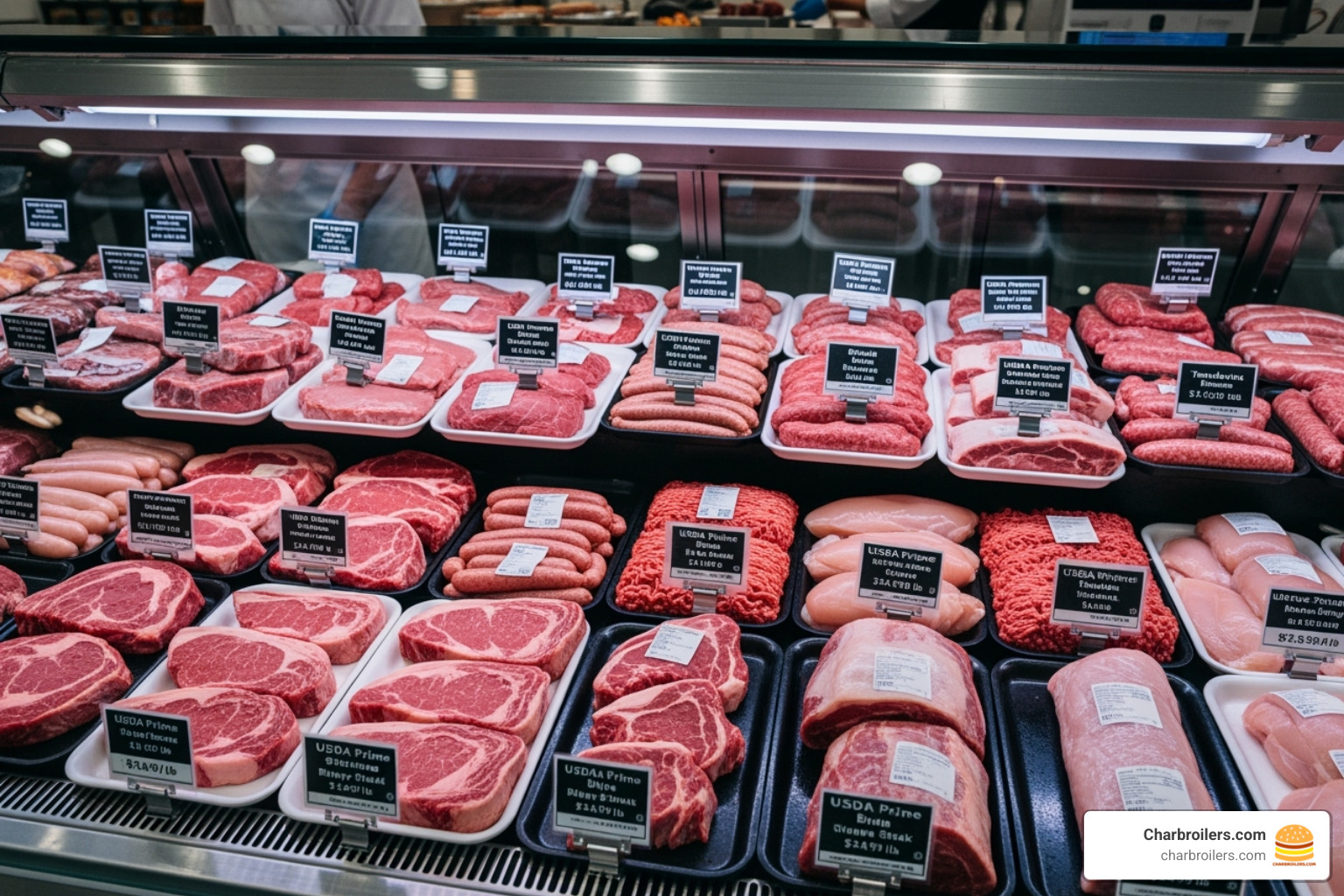
Smart maintenance keeps your equipment running efficiently, while thoughtful merchandising turns your display case into a silent sales associate.
Essential Maintenance for Your Display Freezer for a Meat Shop
Establishing a routine for your display freezer for meat shop is simple and effective.
Daily: Check digital temperature displays to ensure they are within the safe range (32°F-42°F for fresh meat). Wipe down all glass, handles, and stainless steel surfaces with a food-safe cleaner to maintain a sparkling appearance.
Weekly: Perform a deep clean. Remove and wash all shelves and trays with warm, soapy water, followed by a sanitizing solution. Clean the magnetic door seals to ensure a proper seal, which is critical for temperature consistency and energy efficiency.
Monthly: Clean the condenser coils. Dusty coils force your compressor to work harder, increasing energy costs and shortening the equipment's life. A simple brushing or vacuuming will keep it running smoothly. Also, check that any drainage systems flow freely.
Maintaining a temperature log is a great way to spot trends before they become expensive problems. For more tips, see our guide on Keep Your Cool: Restaurant-Ready Commercial Refrigerators.
Optimizing Product Organization within Your Display Freezer for a Meat Shop
How you arrange products in your display freezer for meat shop directly impacts both sales and food safety.
Group by Meat Type: Organize products by beef, poultry, pork, and specialty items. This creates a logical shopping experience and helps customers find what they need quickly.
Use FIFO: The First-In, First-Out principle is non-negotiable. Always stock new products behind older ones to reduce waste and ensure customers get the freshest product.
Use Dividers and Trays: Clear dividers and stainless steel trays keep things tidy, prevent cross-contamination, and give your display a professional polish.
Label Clearly: Every item should have transparent labeling with the cut type, weight, and price. This builds customer confidence and helps them make informed decisions.
Cross-Merchandise: Place complementary items like marinades, rubs, or seasonings near related cuts. This simple strategy can boost your average transaction value by turning a single purchase into a meal solution.
Frequently Asked Questions about Meat Display Freezers
As an expert in commercial kitchen equipment, I often get questions about the display freezer for meat shop operations. Here are answers to the most common ones.
What is the ideal temperature for a fresh meat display case?
The ideal temperature for a fresh meat display case is between 32°F and 42°F (0°C to 5.5°C). This range is critical because it slows bacterial growth to a crawl without freezing the meat, which would damage its texture and appearance.
Temperature consistency is just as important as the range itself. Even brief fluctuations above 42°F can compromise safety and quality. A quality display freezer for meat shop use with reliable digital controls is essential for maintaining this stability.
How often should I clean my meat display freezer?
Your meat display case requires daily cleaning and regular deep cleaning. Daily wipe-downs of glass and surfaces to remove smudges and spills are non-negotiable.
Every week, you should perform a thorough deep clean. This involves removing all shelves and trays and washing them with a food-safe sanitizer. Pay special attention to door seals and interior corners where bacteria can hide.
Monthly, clean the condenser coils. Dusty coils make your compressor work harder, increasing energy costs. This simple task can prevent costly repairs and reduce energy consumption.
What's the difference between a meat display cooler and a freezer?
The key difference is the temperature and the state of the meat being stored.
A meat display cooler (or refrigerator) is designed to keep fresh, unfrozen meat at refrigerated temperatures, typically between 32°F and 42°F (0°C to 5.5°C). In these units, the meat stays soft and retains its natural color and fresh appearance.
A display freezer, on the other hand, operates at sub-zero temperatures, usually between -10°C and -18°C (14°F to -0.4°F). These are used to showcase and store frozen meat products like pre-made burgers or bulk packages. The meat is frozen solid, which extends its shelf life significantly.
Most successful meat shops use both: coolers for fresh cuts intended for immediate sale and freezers for frozen specialty items and bulk products.
Conclusion
Choosing the right display freezer for your meat shop is a crucial business decision. This equipment is a partner that works around the clock to showcase your products, protect your investment, and build customer trust.
From precise temperature control and brilliant LED lighting to durable stainless steel construction, the features we've discussed are the foundation of a successful meat business. Your choice of a full-service case, a self-serve merchandiser, or a stunning hanging display makes a statement about your commitment to quality that customers will notice.
A quality freezer extends shelf life, reduces waste, and protects your profit margins by maintaining perfect conditions. Simple daily and weekly maintenance, combined with smart product organization, will keep your investment running smoothly and help turn browsers into buyers.
Investing in the right equipment is an investment in your business's reputation and long-term growth. When you provide customers with high-quality products in an appealing and safe way, you build a foundation for success.
For a wide selection of commercial refrigeration solutions custom to your specific needs, explore the options at Charbroilers.com. We're here to help you find the perfect fit to keep your business cool and your sales hot!
Deep Dive into Deep Freezers: Top 7 Cu. Ft. Commercial Chest Freezer Picks