Navigating Food Truck Permit Requirements
So you’re ready to start a food truck. That’s fantastic. But before you start dreaming up your signature dish, we need to talk about the less glamorous—but absolutely critical—side of the business: paperwork. Getting your food truck on the road legally means navigating a maze of food truck permit requirements, and it can feel like a full-time job in itself.
These aren't just bureaucratic boxes to check. Think of your business licenses, health permits, and vehicle permissions as the foundation of your entire operation. They’re what make you a legitimate, trustworthy business in the eyes of the law and your future customers.
Your Roadmap to Food Truck Legal Compliance
I've seen too many passionate food truck owners get tripped up by the paperwork. It’s easy to get overwhelmed, but this guide will be your roadmap. We’re going to untangle this web of documentation so you can get on the road with confidence. The key is to stop seeing permits as obstacles and start seeing them as the building blocks of a secure, reputable brand.
It helps to understand the why behind it all. These rules exist for a reason. Public health regulations protect your customers from getting sick, and local commerce laws ensure a level playing field. Once you grasp that, you can tackle the process strategically and avoid the common pitfalls that can sideline a new business before it even serves its first customer.
Understanding the Permit Landscape
Here’s the first thing you need to know: there's no single "food truck permit." The reality is you'll be collecting a portfolio of documents from different government bodies—city, county, and even the state. It’s a common rookie mistake to think one approval covers everything.
For example, your city will almost certainly demand a business license to let you operate within its boundaries. At the same time, the county health department will have its own set of rules focused entirely on food safety. And let’s not forget the state’s DMV, which will have specific regulations for your truck as a commercial vehicle.
Navigating this intersection of regulations is the real challenge. You might get a vending permit from the city, but it's completely useless if you don't have your county health permit. And getting that health permit might require you to show proof of a signed agreement with a local commissary kitchen. It's all connected.
One of the biggest draws of a food truck is the significantly lower startup cost compared to a brick-and-mortar restaurant. A huge chunk of your initial budget—which data shows can be anywhere from $50,000 to $200,000—will go toward the truck itself, your kitchen equipment, and, you guessed it, securing all these permits. A good portion of this money is spent directly on meeting health department certifications, parking permissions, and business licenses.
Core Permit Categories at a Glance
To bring some order to the chaos, it’s helpful to group the permits into a few main categories. While the exact names and requirements will change depending on where you are, nearly every document you need will fall into one of these buckets.
This table breaks down the three core areas you'll be dealing with. Think of it as your high-level checklist to make sure you've got all your bases covered.
| Permit Category | Primary Purpose | Common Examples |
|---|---|---|
| Business & Financial | To legally operate as a business and pay taxes. | Business License, Seller's Permit, EIN |
| Health & Safety | To ensure public safety and food hygiene. | Food Handler's Permit, Health Department Permit |
| Vehicle & Parking | To operate a commercial vehicle for vending. | Mobile Vending Permit, Vehicle Registration |
Getting these permits in order is just one part of the puzzle. You also have to outfit your mobile kitchen correctly. Choosing the right food truck cooking equipment from the start not only helps you produce amazing food but also makes passing those all-important health inspections a whole lot smoother. A smart setup will save you a world of headaches.
Figuring Out Your Local Permit Checklist
If there’s one lesson I’ve learned from years in the food truck game, it’s this: food truck permit requirements are intensely local. Seriously. The license that gets you serving in one city could be completely useless a single town over. Your first real job isn't just making a checklist; it's finding out which government offices you even need to talk to.
This whole process starts by identifying the key players in the area you want to operate. Don't fall into the trap of thinking one office handles everything. You're going to be building relationships with multiple departments across city, county, and sometimes even state levels.
This is the typical hierarchy of paperwork you'll be chasing down.
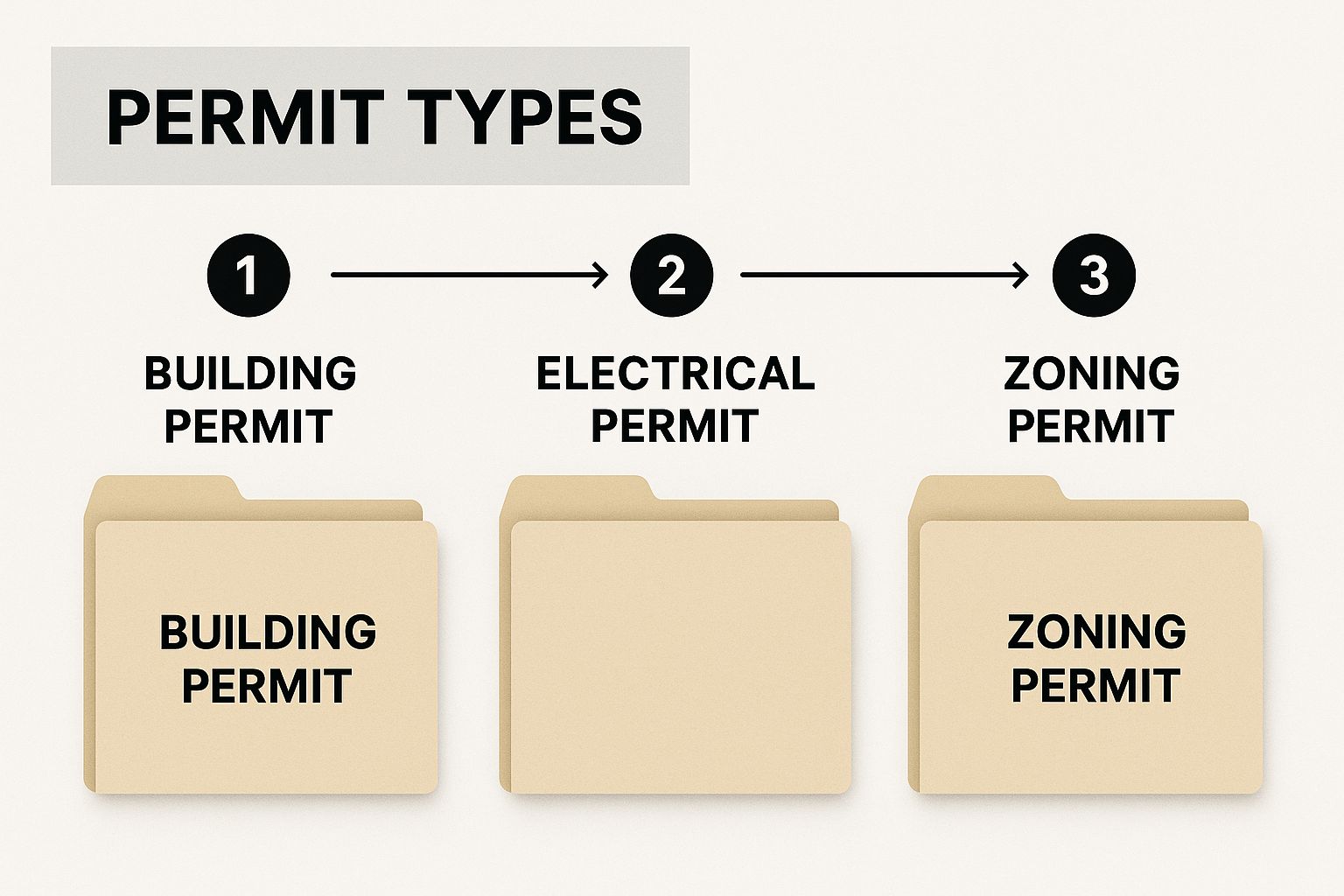
As you can see, it’s a layered journey. You'll need approvals for your business, your health and safety practices, and your vehicle itself, with each authority having its own set of rules.
Starting the Local Search
Your hunt for the right government offices will probably kick off online, but I can almost guarantee it’ll end with phone calls and in-person visits. Start by Googling things like "[Your City] + food truck permit" and "[Your County] + health department mobile food vendor."
These first few searches should point you toward the main gatekeepers:
- The County Health Department: This is your most important relationship, bar none. They oversee everything related to food safety, from the layout of your truck's kitchen to how you handle your ingredients.
- The City Clerk's Office (or Business Licensing Division): This is usually where you'll get the general business license required to operate legally inside city limits.
- The Fire Department: A lot of cities, like Lebanon, NH, for example, require a separate mobile food truck permit from the local fire marshal to make sure your truck's setup is fire-safe.
A Real-World Example: Austin Taco Truck
Let's say you're launching "Austin Taco Co." in Austin, Texas. Your first stop is the Austin Public Health (APH) website to pull up their "Mobile Food Vendor" requirements. Right away, you'll see you need a detailed plan review, a food manager certification, and proof of a commissary agreement—that's a contract with a licensed commercial kitchen where you'll prep food and clean up.
Next up, you’d head over to the City of Austin's business licensing portal. At the same time, you'd be looking into the Texas Department of State Health Services for any statewide regulations. You’d also discover pretty quickly that to sell at a huge event like Austin City Limits, you need an entirely separate, temporary event permit. Another item for the list.
A veteran food truck owner in your city is your best resource. Find them at a local food truck park, buy their food, and politely ask if they'd spare 15 minutes to share how they navigated the process. Their practical advice can save you weeks of frustration.
Building Your Master Permit Checklist
Every time you uncover a new requirement, add it to a master checklist. And don't just write down the permit's name. Document the specific office, a contact person's name if you can get one, the application fee, the renewal date, and any documents you need before you can apply. For instance, the health department will almost certainly want to see your business license and commissary agreement before they even agree to inspect your truck.
Organizing these food truck permit requirements like a pro from day one is what turns a completely chaotic process into a manageable project. This master document will become your operational bible, making sure nothing falls through the cracks so you can launch legally and with total peace of mind.
Passing Your Health and Safety Inspection
The health inspection is the moment of truth for any food truck owner. All the paperwork and permits lead to this single moment: a trained inspector stepping onto your truck, ready to scrutinize every inch of your mobile kitchen. They’re here to ensure you can serve food safely to the public. It's less about ticking boxes and more about proving your absolute commitment to public health.
The anxiety that builds up to this inspection is completely normal. I've seen plenty of new owners sweat this part. But you can take control of the situation by knowing exactly what they’re trained to spot. Think of it from their perspective: they’re looking for potential hazards in a very compact space, from how you store your food to whether your hand-washing station is up to snuff. Your goal is to make your truck so obviously clean and compliant that the whole process feels more like a final confirmation than a dreaded exam.

Beyond the Basics: What Inspectors Really See
Inspectors have a knack for zoning in on the areas where things can go wrong fast, especially in a mobile setup. They'll definitely check your water tanks, your waste disposal system, and the general cleanliness. But their two biggest concerns are almost always temperature control and cross-contamination.
This is where your equipment choices really matter. For example, being able to maintain precise food temperatures is non-negotiable. A high-quality commercial charbroiler isn’t just for getting killer grill marks; it’s about consistently cooking food to a safe internal temperature, every single time. Our wide selection of commercial charbroilers, including high-performance gas, electric, and infrared charbroilers, is built for exactly this kind of reliability, helping you nail your temps even when you’re slammed with orders.
A key piece of advice I always give new operators is to think like an inspector. Before the official visit, do your own walkthrough. Ask yourself: "Where could germs hide? Is every single surface easy to clean? Is there any possible way raw meat juices could drip onto ready-to-eat produce?" Shifting your mindset this way is invaluable.
Mastering Onboard Systems and Protocols
Every system built into your truck will be put under the microscope. The inspector will verify your hand-washing station is fully compliant—meaning it has hot and cold running water, soap, and single-use paper towels. They'll also check your three-compartment sink to make sure it’s set up correctly for washing, rinsing, and sanitizing your dishes and utensils.
Beyond the hardware, you have to have your internal procedures down cold, especially for preventing cross-contamination. This means having and using separate cutting boards and utensils for raw and cooked foods. It also means demonstrating that you understand the proper food storage hierarchy in your refrigerators (e.g., raw chicken on the bottom, ready-to-eat foods on top).
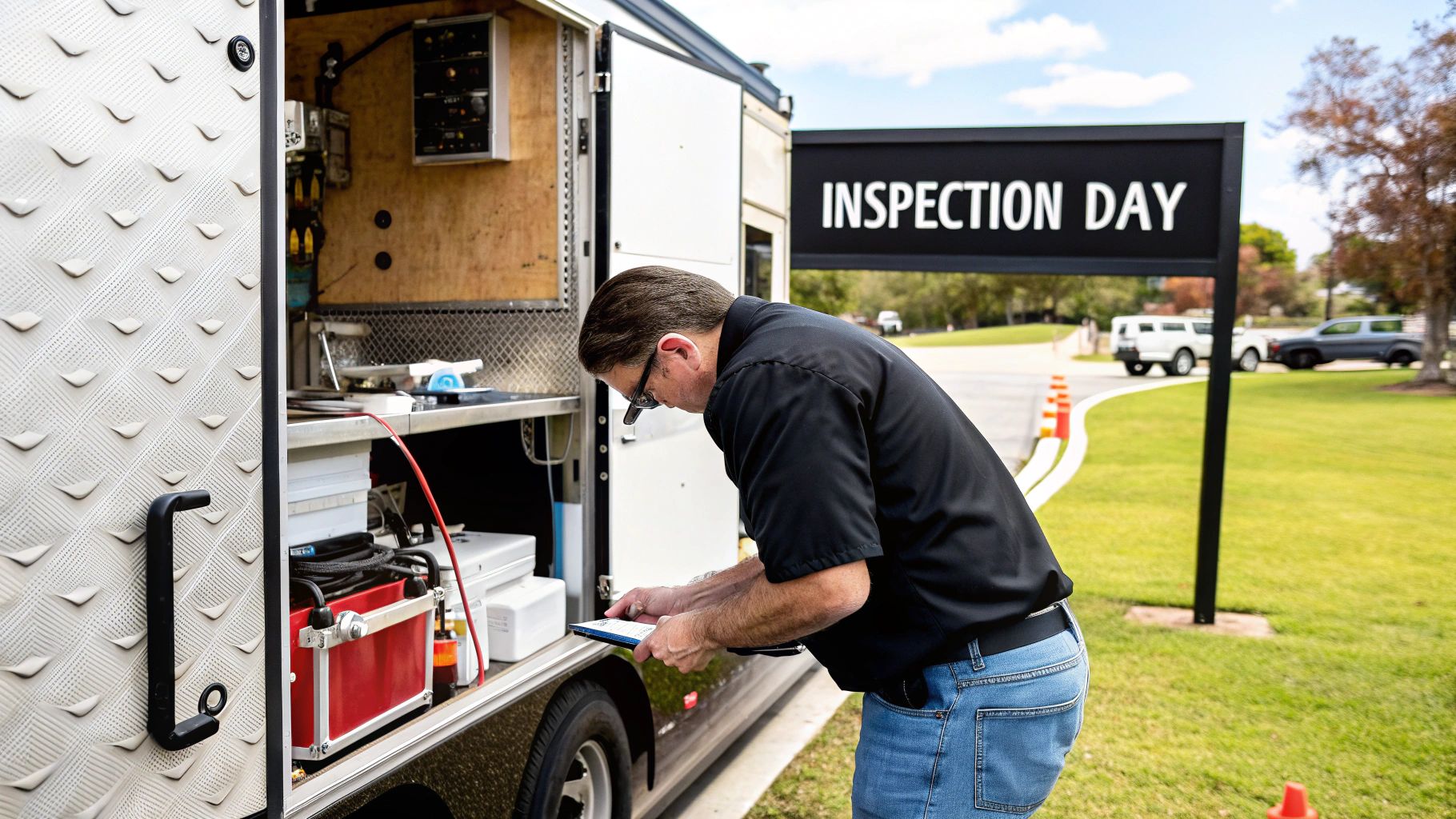
To be ready for both your initial inspection and any surprise visits down the road, make sure you have these items in perfect order:
- Temperature Logs: Keep meticulous, daily logs showing your refrigerator and freezer temperatures are in the safe zone.
- Sanitizer Test Strips: Have these on hand. You need to be able to prove your sanitizing solution is mixed to the correct concentration.
- Commissary Agreement: You must have a valid, signed agreement with your commissary kitchen and be ready to present it.
- Food Handler Cards: Make sure your own and your staff's food handler certifications are current and easily accessible.
Passing your inspection isn’t just about having a good day when the inspector shows up. The complexity of these rules—from food safety protocols to waste disposal and vehicle maintenance—highlights the intense regulatory scrutiny food trucks operate under. To get a better sense of these operational hurdles, it's worth exploring the full research on the food truck market. It really paints a picture of what it takes to succeed.
Solving the Vehicle and Parking Puzzle
Your food truck is more than just a kitchen on wheels—it's a commercial vehicle. This dual identity means you're straddling two different worlds of regulation, and just having up-to-date tags from the DMV won't cut it. You're going to need specialized mobile vending permits that dictate exactly where, when, and how you can operate.
These permits are your golden ticket. They’re completely separate from your vehicle registration and are typically issued by city or county officials who are focused on zoning and public space laws. Getting this wrong is a classic rookie mistake that leads to eye-watering fines and the nightmare of being shut down mid-lunch rush.
Navigating Zoning Laws and Buffer Zones
The stickiest part of getting your food truck permit requirements sorted often comes down to parking. You can't just pull up to a promising-looking curb and start slinging tacos. Every town has its own zoning laws, and food trucks are almost always in a special category.
One of the biggest tripwires you'll encounter is the buffer zone. Many cities, like Austin, have rules that stop you from setting up shop within a certain distance—often 300 to 500 feet—of a brick-and-mortar restaurant. These rules are designed to protect established businesses, so you'll need to get surgical with your map and measuring tape to stay compliant.
I can't stress this enough: figuring out the local parking landscape is just as crucial as perfecting your recipes. Your spot determines your foot traffic, and your foot traffic determines your revenue. The difference between a busy, legal spot and a hidden, illegal one can literally make or break your first few months.
Finding Your Prime Operating Spots
So, where can you actually park and serve? Your options usually fall into a few buckets, and you'll need to do your homework on the local rules for each one:
- Commercial Districts: This is often prime real estate, but it comes with the tightest rules. Expect strict time limits and specifically designated parking spaces you have to use.
- Private Lots: Teaming up with another business to use their parking lot can be a brilliant move. You'll need written permission from the property owner, and you should keep a copy on the truck to show officials.
- Public Parks and Events: Getting into a park or a local festival is a great way to find a hungry crowd, but it almost always requires a special event permit on top of your standard mobile vending license.
Cities like Portland, with its famous food truck "pods," have shown how successful this can be. These pods are clusters of trucks on private land, which solves the parking puzzle by creating a food destination. Seeing how these established models work can give you a great roadmap for your own strategy.
A well-planned location also ties directly into your workflow. A stable, reliable spot means you can optimize your truck's interior for maximum speed and efficiency. For some great ideas on how to do that, check out our guide to effective food truck kitchen layouts and learn how to make a small space produce big results.
Budgeting for Permit Costs and Renewals
You've done it. You navigated the bureaucratic maze and secured your initial permits. It feels like a massive weight has been lifted, but I have to be honest with you—this isn't the finish line. It's the starting gun for the ongoing race of administrative upkeep.
The work doesn't stop with that first stack of approved documents. From here on out, managing renewal deadlines and budgeting for fees is a core part of your business, just like ordering inventory or paying staff. If you drop the ball, you could be looking at hefty fines or, even worse, getting sidelined right when your business starts to take off. You need a system from day one.
Building Your Permit Renewal System
First things first, let's get one thing straight: fees for food truck permit requirements are all over the map. A seasonal vending permit in a small town might only set you back a couple hundred bucks. But an annual health permit in a major city? That could easily run into the thousands. Some cities even have variable costs, like seasonal rates for electricity at designated food truck spots, adding another layer to your budgeting.
Your first move should be creating a master calendar dedicated solely to your permits and licenses. A simple digital calendar with automated reminders is your best friend here.
- Log Every Deadline: The moment you get a permit, put its expiration date on the calendar. Then, set multiple reminders: 90 days out, 60 days out, and 30 days out. No excuses.
- Track the Costs: Right next to that deadline, note the renewal fee. You never want to be blindsided by a $500 charge you completely forgot was coming.
- Know Who's in Charge: Remember which agency issues which permit. Your business license is probably a city thing, but your health permit might come from the county. List the correct agency and their contact info for each renewal to save yourself a headache later.
The smartest operators I've worked with all have a dedicated "renewals fund." They treat these fees like any other bill, automatically setting aside a small percentage of their weekly revenue to cover them. This simple habit turns a potentially crippling, unexpected expense into a predictable, manageable line item.
Streamlining the Paperwork and Financials
Folding these ongoing costs into your regular financial planning is non-negotiable. Think of it like equipment maintenance. You wouldn't dream of skipping the cleaning of your cooking surfaces, right? Your paperwork deserves the same routine attention. Speaking of gear, keeping your fry station in top shape is crucial for service; you can get the lowdown on the best equipment with our guide on commercial electric deep fryers.
This proactive approach is what saves you from financial shocks. When your calendar shows three separate renewals totaling $850 coming up in April, you can plan for it months ahead. You can adjust your spending, hustle for a few extra catering gigs, or simply pull from that dedicated fund you've been building.
This system isn't just about dodging fines; it’s about protecting your business's momentum. A single lapsed permit can pull your truck off the road for days or even weeks—a loss that's far more painful than any renewal fee. By treating your food truck permit requirements as a living, breathing part of your business, you ensure nothing stops you from serving your customers.
Common Questions About Food Truck Permits
Even with the best-laid plans, you're going to have questions about food truck permit requirements. It's just part of the process. I've heard them all over the years, so let's tackle some of the most common hurdles and urgent queries I see from new owners. Getting clear, direct answers makes a world of difference in getting your truck on the road instead of stuck in bureaucratic limbo.
How Long Does It Really Take to Get My Permits?
This is the million-dollar question, and the only honest answer is: it varies. A lot. Depending on how efficient your local government is and how complicated their rules are, you could be looking at a few weeks or a few grueling months. A health department plan review, for instance, can easily eat up 30 to 60 days all by itself.
I've seen operators in high-demand cities get stuck in permit lotteries that add years to their wait time. Your best bet to speed things up is to submit absolutely flawless applications, follow up professionally (without being a pest), and build a serious buffer into your launch plan. To be safe, start the entire process at least 3 to 6 months before you even dream of serving your first customer.
Can I Operate My Truck in Different Cities?
You absolutely can, but here’s the catch you need to know about: you will almost certainly need a completely new set of permits for each and every city or county. A health permit from one town is rarely recognized by the next. Zoning laws, fire codes, and vending rules are hyper-local and change the second you cross a municipal line.
If your business plan involves hitting multiple cities, take my advice: start with one. Master its rules. Get established and profitable. Then, you can strategically expand by tackling the permit process for a new location. Trying to get licensed in three cities at once is a surefire way to get buried in paperwork before you even sell a single taco.
A critical piece of the puzzle, especially in the United States and Europe, is how interconnected these permits are. It's often a single system that weaves together health inspections, vehicle registrations, food handler cards, and vending permits—each with its own strict rules on time and place. To get a sense of the bigger picture, check out this in-depth market report on the global rise of food trucks and the regulations shaping the industry.
Why Is a Commissary Required for My Food Truck?
Think of a commissary as your operational home base. It’s a licensed, commercial kitchen that health departments require because your truck, no matter how awesome it is, is just too small for certain essential tasks. You can't safely handle large-scale food prep, dispose of grease, or sanitize big pieces of equipment on board.
This is your support hub. You'll rely on the commissary to:
- Legally prep and store food in bulk.
- Safely get rid of used cooking oil and wastewater (grey water).
- Fill your truck's freshwater tanks.
- Do the heavy-duty cleaning and sanitizing of your gear.
When your health inspector shows up, they will ask to see a signed, valid commissary agreement. It's non-negotiable. It’s the proof that your mobile business is held to the same fundamental food safety standards as any brick-and-mortar restaurant.
At Charbroilers, we know that reliable equipment is just as critical as your permits. To serve incredible food that creates loyal fans, you need gear that performs consistently, day in and day out. We offer a huge selection of commercial charbroilers perfect for your food truck, from high-performance infrared to classic gas and electric models. Equip your kitchen for success by exploring our inventory at https://charbroilers.com.