
The Best Electric Convection Ovens for Commercial Kitchens
Why Electric Convection Ovens Are Essential for Modern Commercial Kitchens
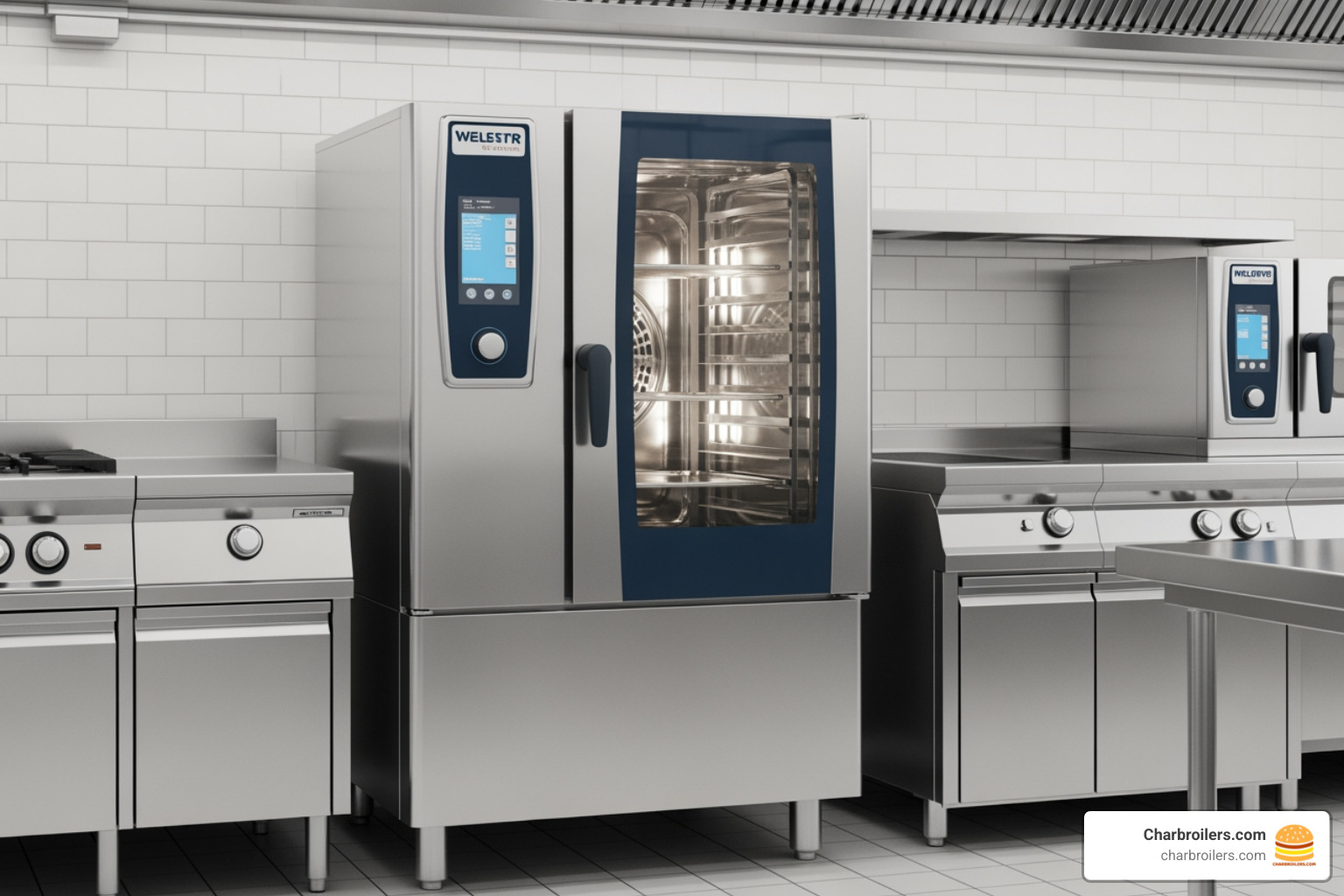
Convection ovens electric are a game-changer for commercial kitchens, using a fan to circulate hot air for faster, more even cooking. Here's what you need to know:
Key Benefits of Electric Convection Ovens:
- Cook up to 25% faster than conventional ovens
- Even heat distribution eliminates hot spots and uneven cooking
- Better browning and crisping for professional-quality results
- Multi-rack cooking without rotating dishes
- Energy efficient with faster preheat times
When to Use Convection:
- Roasting meats and vegetables
- Baking cookies and pastries
- Sheet pan dinners
- Dehydrating and toasting
When to Turn the Fan Off:
- Delicate cakes and soufflés
- Custards and flans
- Quick breads
For high-volume kitchens, an electric convection oven delivers speed and consistency. The circulating hot air allows for multi-rack cooking without rotating pans, eliminating burnt edges and raw centers.
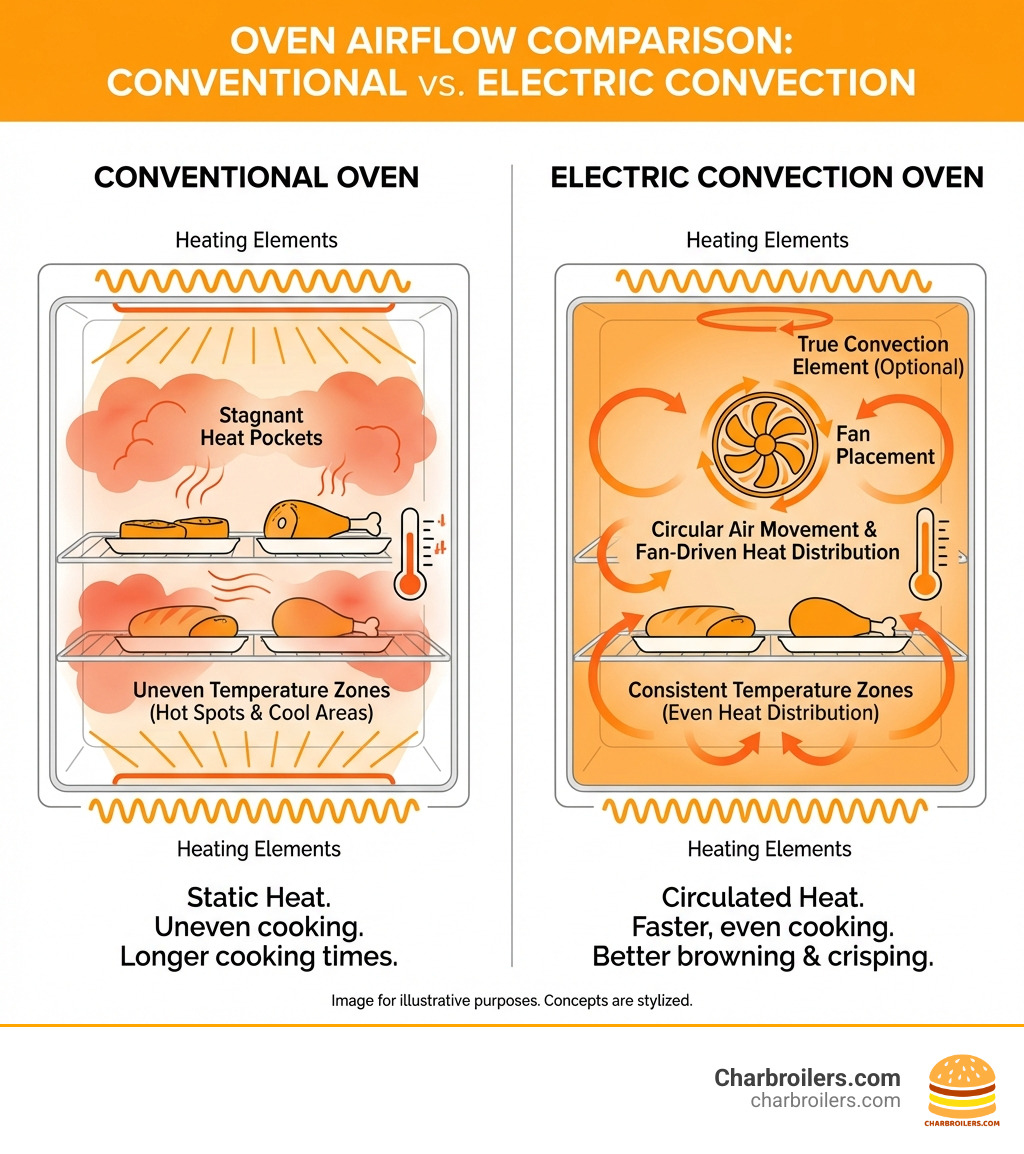
The technology is simple: electric heating elements warm the oven, and a fan circulates the hot air. This constant heat movement speeds up cooking and creates a crispy, golden exterior. True convection models add a third heating element near the fan for superior results.
This translates to faster ticket times, lower energy bills, and consistent quality. An electric convection oven easily handles everything from baking dinner rolls to roasting vegetables.
I'm Sean Kearney, founder of Charbroilers.com. With over a decade in the restaurant equipment industry, I've helped countless kitchens find the right convection ovens electric. My goal is to help you invest in equipment that solves your kitchen's pain points and boosts efficiency.
Convection ovens electric vocabulary:
- how does a commercial convection oven work
- convection oven cleaning tips
- do commercial convection ovens need venting
What is a Convection Oven and How Does It Revolutionize Commercial Cooking?
A conventional oven uses static heat from elements at the top and bottom. This can create hot spots and uneven cooking, requiring you to rotate pans for uniform results.
A convection oven electric adds a fan and exhaust system. The fan circulates hot air, eliminating hot spots and creating an even cooking environment. This results in consistent, faster cooking with better browning—a game-changer for commercial kitchens where efficiency is key. For a deeper dive, explore our guide on Decoding Ovens: A Guide to Conventional and Convection Cooking.
The Core Components: Fan, Heating Elements, and More
The core components of a convection oven electric include:
- Fan Mechanism: Located at the back, the fan circulates heated air evenly throughout the oven, ensuring consistent heat in every corner.
- Electric Heating Elements: These generate heat, typically at the top and bottom. The fan distributes this heat. Advanced models may have a third element around the fan.
- Exhaust System: This system removes excess moisture, creating a drier environment for crispier results and faster cooking.
- Racks: Multiple racks allow for high-volume, multi-rack cooking without rotating dishes, maximizing kitchen throughput.
Understanding these components helps us appreciate the intricate dance of heat and air that makes convection cooking so effective. For more detailed insights into the workings of these essential kitchen powerhouses, check out Demystifying Commercial Convection Ovens: A Deep Dive into Their Operation.
True Convection vs. Standard Convection: What's the Difference?
When shopping for convection ovens electric, you'll see terms like "standard" and "true" convection. Both use a fan, but their performance differs:
- Standard Convection (Fan-Assist): The fan circulates hot air produced by the main heating elements (top and bottom). This improves heat distribution and speed over conventional ovens.
- True Convection (European or Third-Element Convection): A third heating element is placed around the fan. This actively heats the circulating air, providing superior heat distribution, faster preheating, and more precise temperature control. It's ideal for cooking multiple items at once.
For commercial kitchens, true convection models offer unparalleled consistency and efficiency, making them an excellent investment for high-quality, repeatable results. You can read more about these differences at Convection Oven vs. Conventional Oven: 5 Key Differences.
The Unbeatable Benefits of Convection in a Pro Kitchen
For any busy commercial kitchen, the benefits of convection ovens electric are undeniable. They are essential for optimizing operations and delivering high-quality food.
- Faster Cooking Times: Convection ovens cook food up to 25% faster than conventional models. The circulating air transfers heat more efficiently, reducing cooking times and leading to quicker table turns.
- Even Browning: The constant airflow ensures heat reaches every food surface, resulting in uniform browning, caramelization, and crisping for professional presentation.
- Crispier Results: The exhaust system removes moisture, creating a drier environment ideal for crispy skins on meats and perfectly flaky pastries.
- Energy Savings: Faster cooking and preheating times mean convection ovens often use less energy. ENERGY STAR® certified models can lead to significant savings on operating costs.
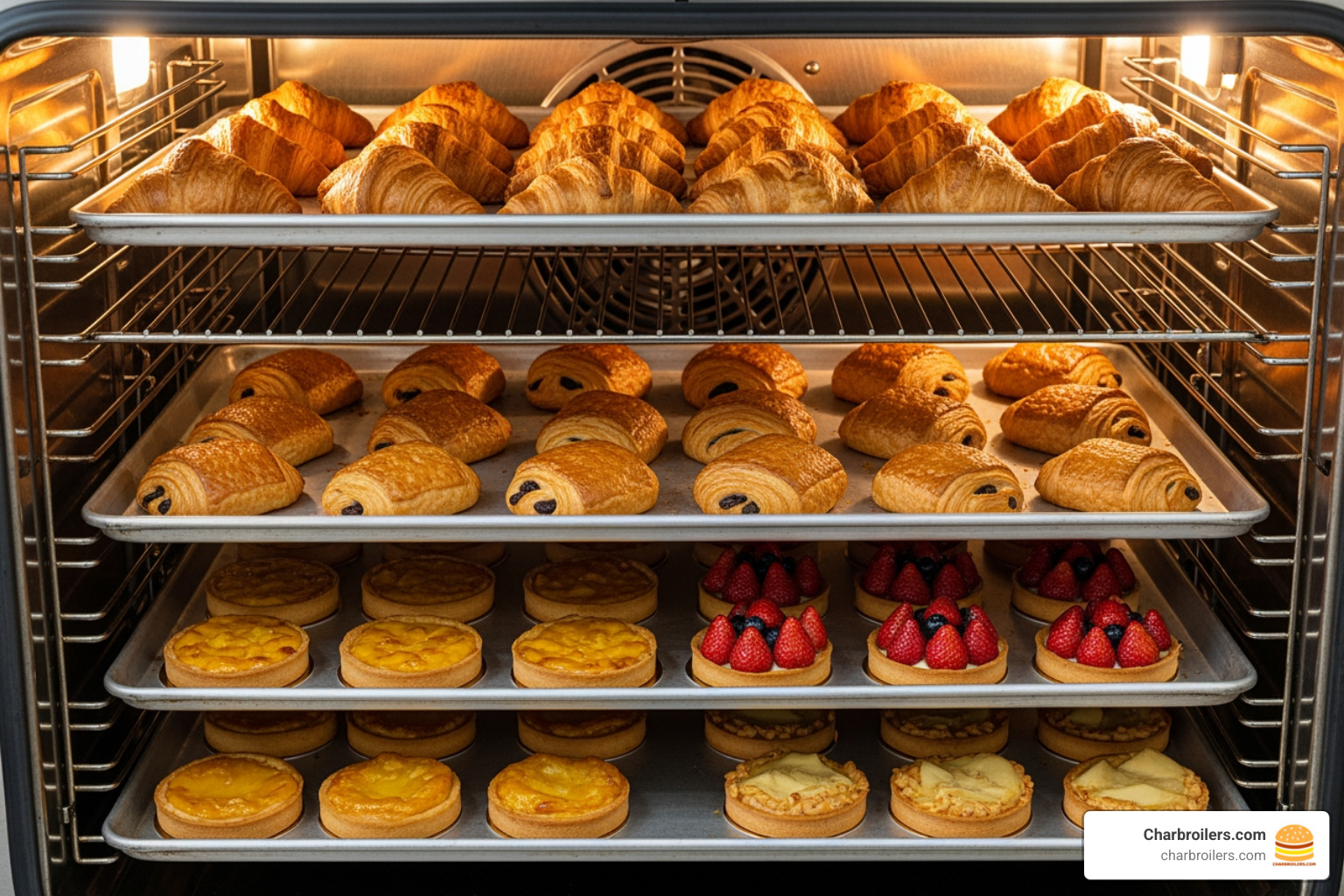
- Multi-Rack Cooking: A major advantage for high-volume kitchens is the ability to cook on multiple racks simultaneously without rotating pans, dramatically increasing throughput.
These benefits make convection ovens electric a cornerstone of efficiency in any modern commercial kitchen. To understand how these advantages translate into increased profitability, dig into Cook Faster, Earn More: Top Industrial Convection Ovens Reviewed.
Foods That Thrive in a Convection Environment
The unique cooking environment of convection ovens electric makes them ideal for a wide array of applications:
- Roasting Meats: The circulating air creates a crispy exterior while sealing in juices, perfect for large cuts of beef or whole chickens.
- Roasting Vegetables: Quickly and evenly caramelizes vegetables like roots, broccoli, and peppers.
- Baking Cookies: Ensures uniform baking across multiple trays for perfectly golden cookies every time.
- Flaky Pastries: The dry heat is ideal for croissants, puff pastries, and pie crusts, promoting flakiness and a golden-brown finish.
- Dehydrating: The circulating dry air is effective for dehydrating fruits, vegetables, and jerky.
- Sheet Pan Dinners: The even heat is perfect for one-pan meals, cooking meats and vegetables together with minimal cleanup.
- Air Frying: Many models offer an "air fry" function, a high-powered convection setting that mimics deep-frying with little oil for items like fries and wings.
When to Turn the Fan Off: Limitations and Considerations
While versatile, the fan in convection ovens electric can be a hindrance for some dishes. Most ovens allow you to turn off the fan, converting it to a conventional oven for greater flexibility.
Here's when you might want to switch off the convection fan:
- Delicate Baked Goods: The fan can cause delicate cakes, soufflés, and some custards to rise unevenly, crack, or collapse.
- Custards and Flans: These need a moist, static environment and can dry out or form a skin with the fan on.
- Quick Breads: Delicate quick breads may develop a crust too quickly, leaving the inside undercooked.
- Items Requiring a Moist Environment: Any dish needing moist, static heat is often better suited for conventional baking.
Always check your oven's manual and the recipe. If unsure, especially with delicate items, use the conventional setting. For more guidance, consult resources like When to Use Your Oven's Convection Function.
How to Choose the Best Commercial Convection Ovens Electric Models
Selecting the right convection oven electric for your commercial kitchen is a critical decision impacting efficiency and your bottom line. It's about finding the perfect fit for your operational needs.
Here are the key factors to consider:
- Kitchen Space: Evaluate your available space, including door clearance and ventilation. Decide if a full-size, half-size, or countertop model is most practical.
- Production Volume: Determine how much food you need to cook at once. Consider single vs. double-deck units and their sheet pan capacity.
- Menu Requirements: Your menu dictates the features you need. Delicate pastries require precise temperature control, while roasting requires powerful fans and even heat.
- Budgeting: Factor in the initial price, operating costs (energy, maintenance), and long-term savings from an efficient, durable model.
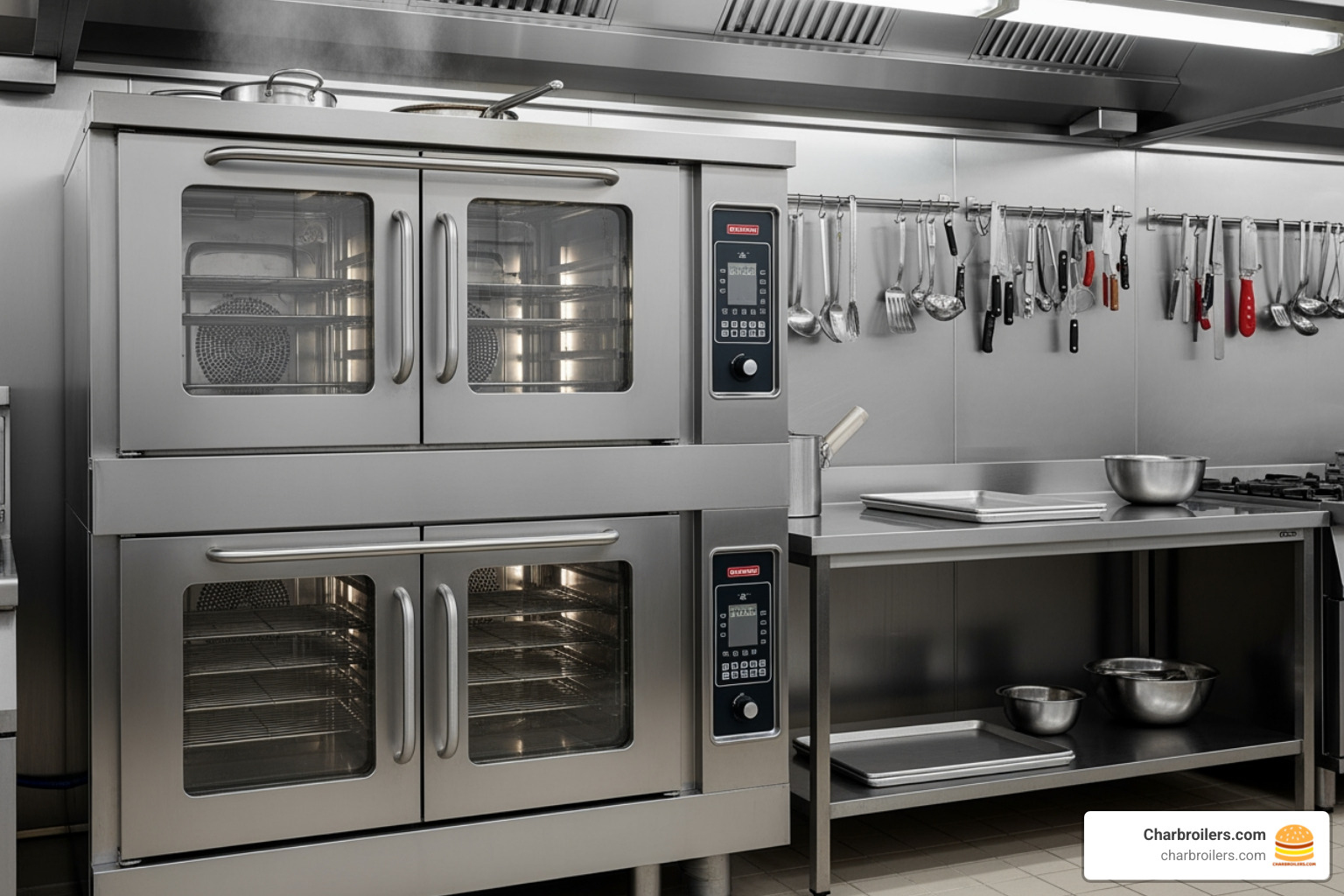
Making an informed decision will ensure you invest in an oven that lifts your kitchen's capabilities. For a comprehensive comparison, check out The Ultimate Guide to Comparing Commercial Convection Ovens.
Key Features to Look for in a Commercial Electric Convection Oven
When evaluating convection ovens electric, look for these beneficial features:
- Programmable Controls: Save cooking profiles (time, temp, fan speed) for frequently made items. This ensures consistency, reduces errors, and saves time.
- Temperature Range: A wide range (e.g., 170°F to 550°F+) allows for versatility, from dehydrating to high-heat roasting.
- Recovery Time: How quickly the oven reheats after the door is opened. Fast recovery is essential in busy kitchens to maintain consistent cooking.
- Door Configuration: Choose between independent or dependent doors. Sturdy, easy-to-open doors are vital. Some models offer removable, dishwasher-safe doors for easier cleaning.
- Interior Lighting: Good lighting allows staff to monitor food without opening the door, saving energy and maintaining temperature.
- ENERGY STAR Certification: Certified models meet strict energy efficiency guidelines, leading to lower utility bills and a smaller environmental footprint. This offers substantial long-term savings.
Sizing it Up: Full-Size, Half-Size, and Countertop Models
Commercial convection ovens electric come in various sizes to fit different kitchen layouts and production demands.
- Full-Size Ovens: The workhorses for high-volume kitchens, holding multiple full-size (18" x 26") sheet pans. Available in single or double-deck units for maximum capacity.
- Half-Size Ovens: A balance of capacity and footprint, holding half-size (18" x 13") sheet pans. Ideal for medium-sized restaurants or as supplementary ovens.
- Countertop Models: Compact units for smaller operations or specific tasks. They fit on a counter, hold quarter- or half-size pans, and offer convection benefits in a small footprint. Learn more in our guide, Countertop Oven Powerhouses: Your Guide to Commercial Excellence.
When considering size, always think about your kitchen's peak production needs. It's better to have slightly more capacity than not enough.
Mastering Your Convection Oven: Tips, Tricks, and Maintenance
To get the most from your new convection oven electric and ensure its longevity, it's crucial to master its use and maintain it properly.
- Recipe Conversion: Most recipes are for conventional ovens. You'll need to adjust for convection, typically by lowering the temperature and shortening the cooking time.
- Proper Loading: Don't overcrowd the oven. Leave space between pans and the oven walls to ensure proper airflow for even cooking.
- Cookware Choice: Use low-sided or perforated pans to maximize airflow for browning and crisping. Use covered dishes to retain moisture.
By following these guidelines, you'll quickly get the hang of using your convection oven. For more in-depth advice, refer to Blowing Hot Air: How to Properly Use Commercial Fan-Forced Ovens.
Adjusting Recipes: The 25/25 Rule for Perfect Results
Adapting conventional recipes for a convection oven electric is simple with the "25/25 rule":
- Temperature Reduction: Reduce the recipe's recommended temperature by 25°F (about 15°C). For example, if a recipe calls for 350°F, set your convection oven to 325°F.
- Time Reduction: Shorten the cooking time by 20-25%. If a recipe suggests cooking for 60 minutes, start checking for doneness around 45-48 minutes.
Important Considerations:
- Oven Thermometer: Use an independent thermometer to verify your oven's temperature accuracy, as thermostats can vary.
- Proteins: For meats, you might keep the temperature the same but reduce the cooking time, relying on internal temperature for doneness.
- Delicate Items: For delicate items like soufflés, it's often best to turn the fan off and use the conventional setting.
The "25/25 rule" is a guideline; you may need to experiment to fine-tune your approach. For more insights, check out Convection cooking: How and when to use this oven setting.
Cleaning and Maintenance for Your Electric Convection Oven
Proper cleaning and maintenance are crucial for extending the life and efficiency of your convection oven electric. A clean oven ensures consistent, high-quality food.
- Daily Cleaning: At the end of each shift, wipe down all surfaces with a damp cloth and mild cleaner. Clean spills before they bake on and empty the crumb tray.
-
Deep Cleaning: Most ovens have a self-clean or steam-clean function.
- Self-Cleaning Cycles: These use high heat (800°F+) to incinerate residue into ash. This takes 3-5 hours and requires good ventilation.
- Easy Clean (Steam Clean): This feature uses steam to loosen light soils in about 20 minutes with less heat and no fumes. It's ideal for cleaning between deep cleans.
- Fan Care: Periodically clean the fan blades and vent to remove debris and ensure they can move freely.
- Accessories: Regularly wash racks and pans, ensuring they are completely dry before placing them back in the oven.
Regular maintenance prevents costly breakdowns and ensures optimal performance. For more tips, explore Don't Ruin Your Oven: Safe Cleaning for Self-Cleaning Convection Ovens.
Frequently Asked Questions about Commercial Electric Convection Ovens
Here are answers to common questions about convection ovens electric:
Can a convection oven be used as a conventional oven?
Yes. Most commercial convection ovens electric have a setting to turn off the fan, allowing them to function as a conventional oven. This is ideal for delicate recipes like custards or soufflés and gives you the flexibility of two ovens in one.
How does a convection oven compare to an air fryer?
An air fryer is essentially a small, high-powered countertop convection oven. Both use a fan to circulate hot air for crispy results. However, a commercial convection oven electric offers far greater capacity, durability, and versatility for a professional kitchen. It can handle multiple sheet pans and heavy use, while an air fryer is best for small batches.
Do I need special ventilation for a commercial electric convection oven?
Ventilation needs for a commercial convection oven electric depend on the model, heat output, and local codes. Many electric models are ventless and don't require a hood, often using internal filtration. However, you must always:
- Check Manufacturer Specifications: Follow the manufacturer's specific ventilation guidelines.
- Consult Local Codes: Your local health and fire departments have the final say, even for ventless models. Ensure compliance to avoid issues.
Conclusion
In commercial kitchens, efficiency and consistency are the cornerstones of success. Investing in the right convection ovens electric is a strategic decision that boosts productivity, ensures consistent quality, and promotes culinary excellence.
With faster cooking, even browning, and multi-rack capabilities, electric convection ovens meet the demands of any professional kitchen. They offer the flexibility to handle a diverse menu while saving energy.
At Charbroilers.com, we help you find the commercial kitchen equipment that fits your budget and lifts your culinary capabilities. The right electric convection oven is more than an appliance; it's a partner in your kitchen's success.
For a wide selection of commercial kitchen equipment custom to your needs, explore the options at Charbroilers.com. And while you're there, don't miss our comprehensive Guide to Commercial Charbroilers for Your Restaurant.