

Commercial Refrigerators: Your Coolest Investment Yet
More Than Just Cold Drinks: Why Your Business Needs the Right Refrigeration
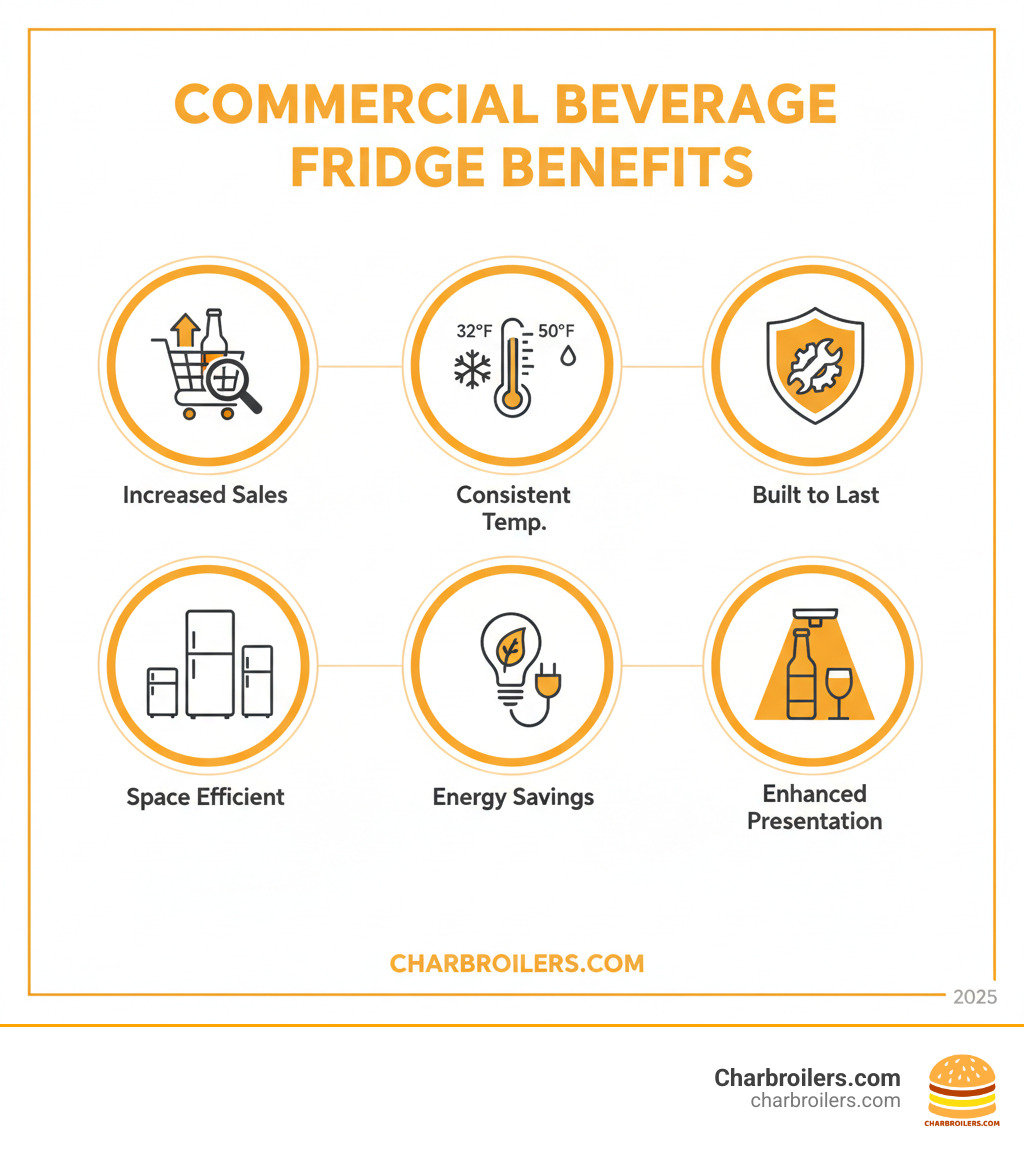
A commercial beverage fridge is a specialized unit designed to store and display drinks at optimal temperatures for high-volume business use. Here's what you need to know:
Key Benefits of Commercial Beverage Refrigerators:
- Increased Sales - Glass-door models boost impulse purchases by 20-30% through product visibility
- Temperature Consistency - Maintain beverages between 32-50°F for optimal taste and safety
- Built for Durability - Engineered for frequent door openings and 24/7 operation
- Space Efficiency - Available in undercounter, back bar, and freestanding designs to fit any layout
- Energy Savings - Modern units with LED lighting and efficient compressors reduce operating costs
Unlike residential units, commercial beverage fridges feature more powerful cooling systems to maintain temperature despite constant door openings, reinforced construction to handle daily abuse, and display-focused designs with glass doors and interior lighting. Whether you're running a busy restaurant bar, a convenience store, or a hotel lobby, the right beverage cooler keeps drinks perfectly chilled while showcasing your selection to drive sales.
The market offers everything from compact 3-cubic-foot undercounter units starting around $500 to large 35-cubic-foot merchandisers exceeding $5,000. With over 750 models available, choosing the right commercial beverage fridge depends on your space, product volume, and whether you need front-of-house display or back-of-house storage.
I'm Sean Kearney, founder of Charbroilers.com. With over a decade in the restaurant equipment industry, I've seen how the right commercial beverage fridge transforms operational efficiency and customer experience. It's one of the smartest investments for any food service operation.
Commercial beverage fridge vocabulary:
Decoding the Commercial Beverage Fridge: Types and Applications
Not all commercial beverage fridge units are the same because different businesses have different needs. A busy sports bar requires a different solution than a cozy coffee shop or a food truck. The good news? There's a perfect refrigeration solution for every situation.
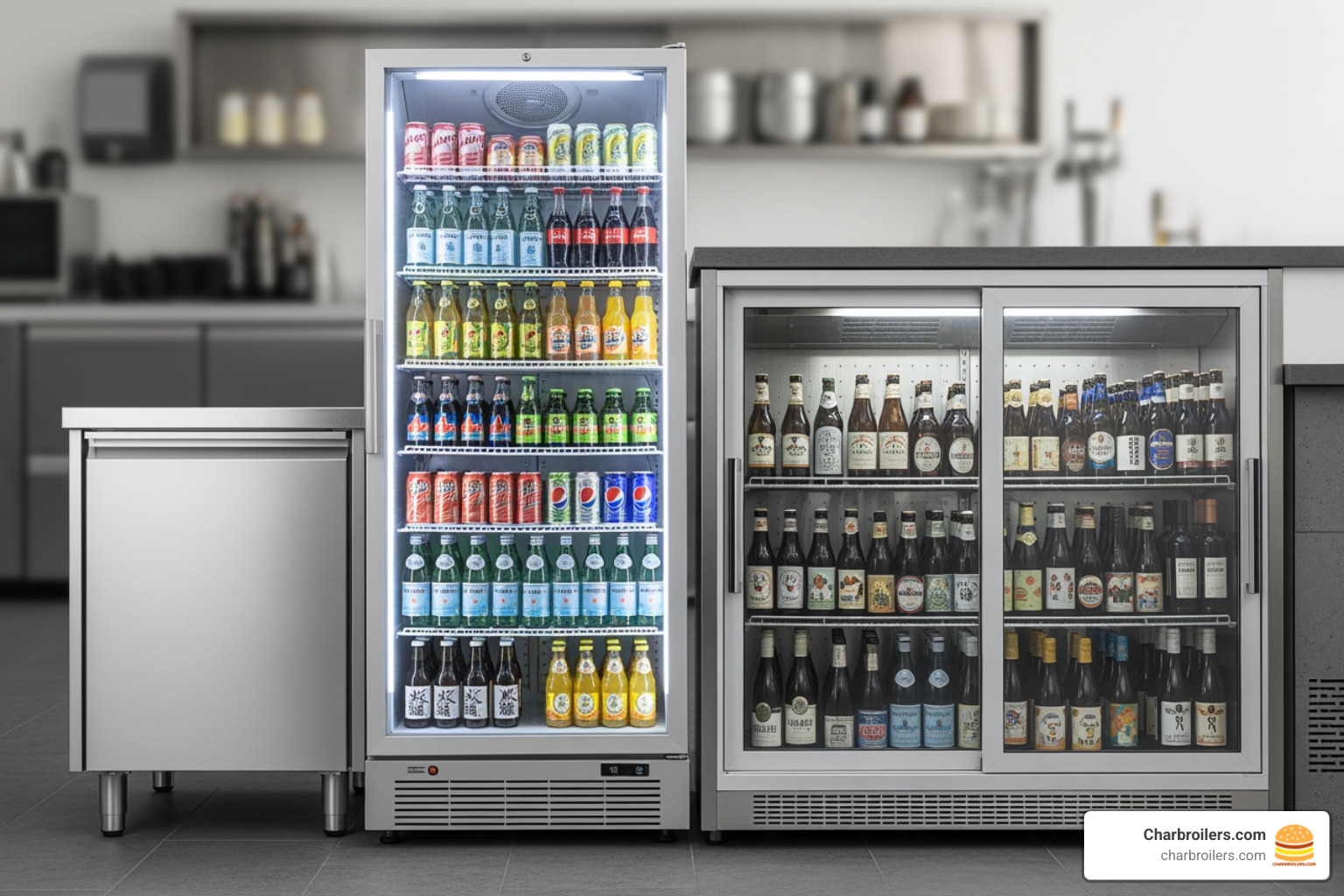
Reach-in merchandisers are the tall, glass-doored workhorses seen in grocery stores and delis. With bright LED lighting, they're designed to show off your beverage selection and often come with customizable lightboxes to attract customers.
For tight spaces, undercounter coolers tuck neatly beneath countertops in bars or cafes. They allow staff to grab drinks easily without cluttering your visible space. Some have glass doors for quick inventory checks, while others have solid doors for back-of-house use.
Back bar refrigerators are purpose-built for bartenders. Positioned behind the bar, they keep the selection visible to customers and allow staff to grab bottles quickly. They're engineered to handle constant use during rush hours.
For ultimate convenience, air curtain merchandisers have no door. A continuous stream of cold air creates an invisible barrier, keeping drinks chilled while allowing customers to grab what they want. They are perfect for cafeterias or busy convenience stores.
For an outdoor patio or food truck, you'll need an outdoor refrigerator. These units feature weather-resistant construction and improved insulation to handle temperature swings and keep beverages perfectly chilled.
Don't overlook compact cooling champions. Commercial mini fridges pack serious refrigeration power into a small footprint, ideal for office break rooms or as supplementary storage. Our guide on compact cooling champions: commercial mini fridges worth your investment explores what they can do.
Glass-Door vs. Solid-Door Coolers
Should you choose glass or solid doors for your commercial beverage fridge? The decision impacts both sales and energy use.
Glass-door coolers are merchandising machines. Customer visibility drives impulse purchases, as people buy what catches their eye. Modern units use double-layer tempered glass with a Low-E coating to reflect heat and prevent frost, making them far more energy-efficient than older models. For front-of-house areas, the sales boost usually outweighs the slightly higher energy costs. Our see it to believe it: commercial glass door fridge roundup explores these units.
Solid-door coolers offer superior insulation and temperature stability, resulting in lower energy use. They are also tougher and better able to handle the scrapes of a busy kitchen. The downside is the lack of visibility, making them perfect for back-of-house storage, stockrooms, or kitchens where product display isn't a priority. They are often more budget-friendly than glass-door models of similar capacity.
| Feature | Glass-Door Commercial Beverage Fridge | Solid-Door Commercial Beverage Fridge |
|---|---|---|
| Visibility | High – Excellent for product display and impulse purchases | Low – Contents are hidden |
| Energy Use | Generally higher due to glass, though modern tech (Low-E) improves it | Generally lower due to superior insulation |
| Best Use Case | Front-of-house display, merchandising, customer self-service | Back-of-house storage, stockrooms, kitchens, long-term chilling |
| Price Point | Can be slightly higher due to specialized glass and display features | Often more budget-friendly for similar capacity |
Undercounter vs. Freestanding Models
Your layout will determine whether an undercounter or freestanding commercial beverage fridge is best.
Undercounter models are space-savers, sliding beneath counters for a clean, integrated look. This is crucial in bars or compact kitchens. The main consideration is ventilation; most units are front-venting, but you must ensure proper airflow. Once installed, they are not easily moved.
Freestanding models offer flexibility and capacity. You can place them anywhere with an outlet, and they are typically larger, providing more storage. While they don't offer a seamless built-in look, their size and portability make them a great choice for primary merchandising or high-volume storage.
Must-Have Features and Smart Selections
When you're ready to invest in a commercial beverage fridge, certain features separate a basic cooler from a smart business investment. These elements impact your daily operations and long-term profitability. For a broader perspective, our commercial refrigeration: your essential buying guide offers valuable insights.
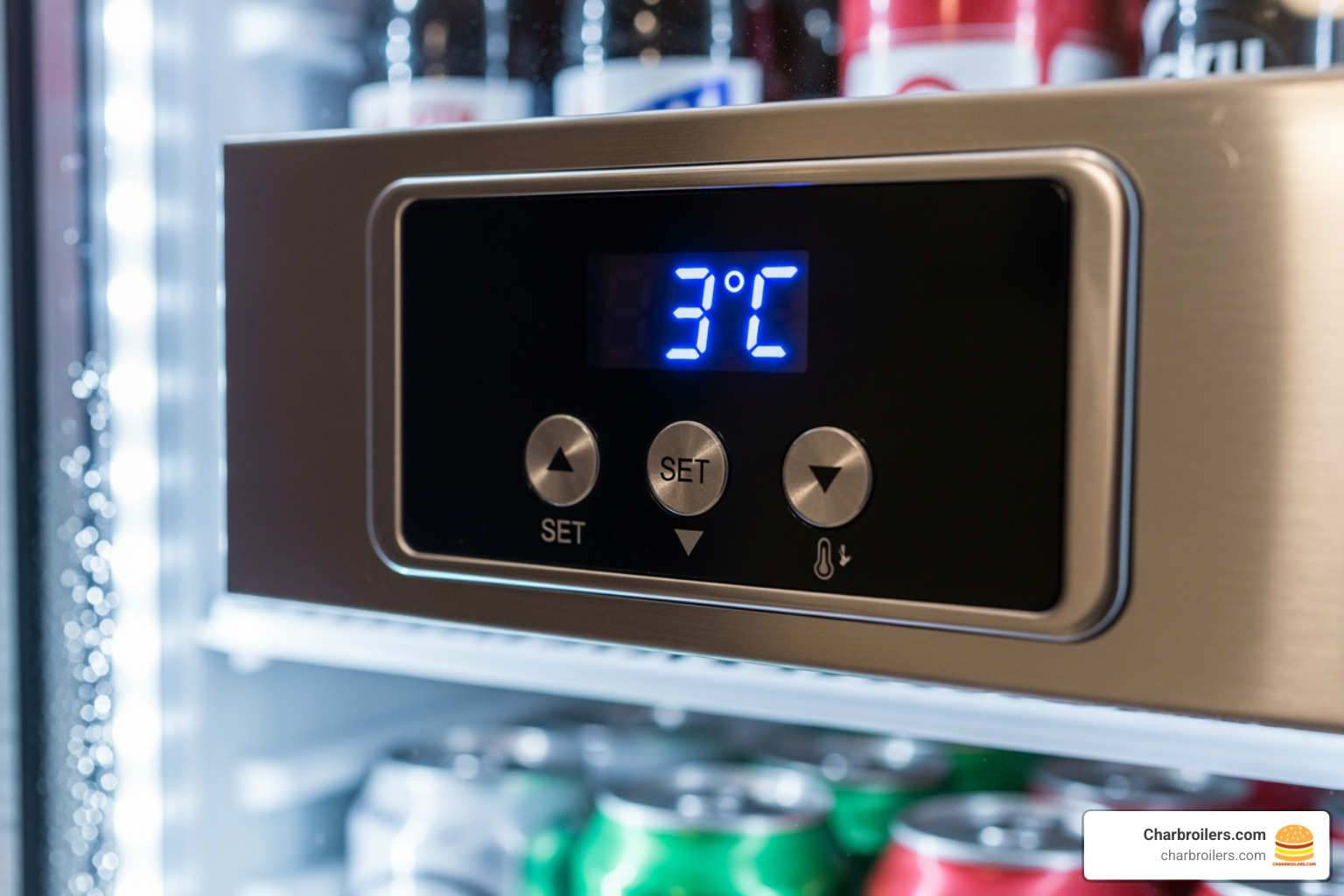
Essential Features for Your Commercial Beverage Fridge
Let's talk about the features that make a real difference in your business.
LED lighting has revolutionized beverage displays. Unlike old fluorescent tubes, modern LEDs illuminate products beautifully while consuming minimal energy. They last longer and generate less heat, so your compressor works less.
Many merchandisers include customizable lightboxes at the top. This is prime real estate to display your logo or announce specials, as seen on the Wilprep Professional Display Refrigerator. It’s a small detail that makes a big impression.
Digital temperature control provides precise settings on an easy-to-read panel. This matters because beverages have an ideal temperature range—typically 32°F to 50°F—for optimal taste and safety. No more guessing if drinks are properly chilled.
When it comes to energy efficiency, look for the ENERGY STAR certification. It's your assurance that the unit meets strict standards, translating to lower utility bills. Features like Low-E coated glass reflect heat and prevent condensation, while double-layer tempered glass locks cold air inside.
Adjustable shelving gives you the flexibility to store everything from tall craft beer bottles to standard soda cans. Removable shelves also make cleaning much easier.
Locking doors protect your inventory during off-hours. In busy environments, self-closing doors are a blessing, preventing energy waste and ensuring doors seal properly every time.
For more on creating captivating displays, our guide on display counter fridges: a buyer's guide to eye-catching refrigeration dives deeper into merchandising.
Understanding Defrost Systems and Energy Use
How your commercial beverage fridge handles frost and consumes energy directly affects your bottom line.
Most quality units, like the Wilprep Professional Display Refrigerator, feature automatic defrost systems. These periodically warm the evaporator coils to melt ice, draining the water away automatically. This prevents downtime and is a game-changer for busy operations. Manual defrost systems, while slightly more energy-efficient, require you to periodically shut down the unit, which is impractical for most businesses.
The air cooling system uses fans to circulate cold air, ensuring even temperatures throughout the cabinet. This system quickly restores optimal temperatures after the door is opened or warm products are added.
Energy consumption is a recurring cost. Beyond ENERGY STAR ratings, check the refrigerant used. Modern units use environmentally friendly options like R290 refrigerant, which has excellent thermodynamic properties and a low environmental impact. A unit that costs less upfront but more in electricity each year isn't a true saving. Over a 10-year lifespan, efficiency differences add up.
For more guidance, explore our raise your glass to these commercial beverage cooler picks where we highlight models that excel in features and efficiency.
Sizing, Costs, and Long-Term Care
Investing in a commercial beverage fridge is a significant decision. It involves balancing the initial purchase price with size, ongoing maintenance, and warranty coverage. Getting these elements right ensures your investment pays off for years to come.
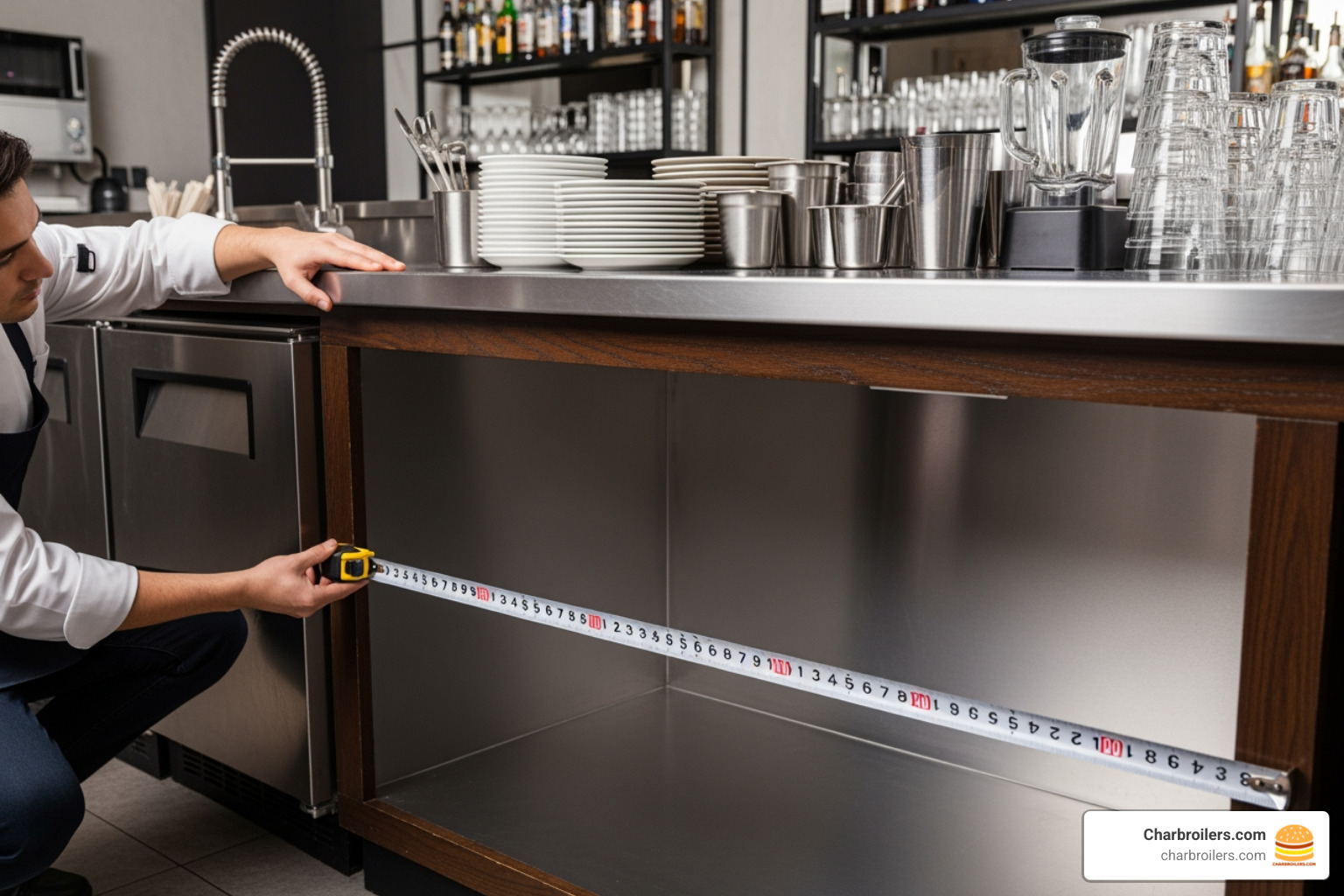
Sizing Up Your Commercial Beverage Fridge Needs
Finding the right size commercial beverage fridge is crucial. Too small, and you'll run out of stock. Too large, and you're wasting space and energy.
Start with cubic feet capacity. The range is vast, from compact 7.4 cubic foot models to spacious 35.4 cubic foot merchandisers. The Wilprep Professional Display Refrigerator, for instance, offers 12.8 cubic feet, a good balance for many mid-sized operations.
Next, measure your available space. External dimensions vary dramatically. Always account for installation clearance—most units need several inches of breathing room for ventilation. Don't forget to measure for door swing on hinged-door models.
The interior layout also matters. Adjustable shelving is invaluable for accommodating beverage containers of all shapes and sizes, from 12-ounce cans to tall wine bottles.
Finally, consider your business volume and product types. A small boutique might need a compact unit, while a high-traffic restaurant will require substantially more capacity. For businesses needing serious storage, our twice as nice: commercial 2-door cooler buying guide explores larger options.
Maintenance, Warranty, and Reputable Brands
Protecting your commercial beverage fridge investment comes down to regular care and understanding your warranty.
Coil cleaning is the single most important maintenance task. Clogged condenser coils force your compressor to work overtime. Clean them every one to three months to improve energy efficiency and prevent premature failure.
Perform regular gasket checks. Damaged rubber seals around the doors allow cold air to escape. Inspect them for cracks or tears and replace them if they've lost their seal.
Proper ventilation cannot be overstated. Cramming a refrigerator into a tight space without adequate clearance is asking for trouble. Follow the manufacturer's specified minimum clearances religiously.
Beyond these tasks, keep up with regular interior cleaning and, for automatic defrost units, check that the drain line is clear.
When it comes to reputable manufacturers, research brands with strong track records for reliability and customer service. Parts availability and service accessibility are critical—you don't want your unit down for days waiting for a part. The Wilprep brand, for example, is a popular choice in many commercial settings.
Speaking of protection, warranty length deserves serious attention. This is where manufacturers show confidence in their products. Look for comprehensive warranties that cover parts, labor, and the compressor for multiple years. That's the kind of commitment that gives you peace of mind. Always read the fine print and verify that authorized service technicians are available in your area.
For a deeper dive into costs, our guide on the price of cool: a guide to commercial refrigerator costs breaks down the numbers.
Frequently Asked Questions about Commercial Beverage Refrigerators
You've read through the features, compared the types, and considered the costs. Now let's tackle the questions we hear most often from business owners.
What is the ideal temperature for a commercial beverage fridge?
The ideal temperature for a commercial beverage fridge is 32-50°F (0-10°C). This range ensures beverage safety and optimal taste while preventing freezing. Most quality units, like the Wilprep Professional Display Refrigerator, are designed to maintain this range. A frozen beverage is not only undrinkable but can also cause damage to your inventory and the fridge itself.
How much does a commercial beverage refrigerator cost?
A commercial beverage fridge can cost anywhere from $500 to over $5,000. The price depends on factors like size, capacity, features (digital controls, LED lighting), and brand reputation. While feature-rich models cost more upfront, they often pay for themselves through energy savings and increased sales. At Charbroilers.com, we offer financing solutions to help you get the equipment you need without straining your cash flow. For a detailed breakdown, check out our guide on the price of cool: a guide to commercial refrigerator costs.
How do I clean and maintain my beverage cooler?
Proper maintenance protects your investment and ensures your commercial beverage fridge performs consistently. Follow a regular cleaning schedule, wiping down all surfaces weekly with a mild, food-safe detergent.
The most critical task is coil cleaning every 1-3 months. Dust and debris force your compressor to work harder, so unplug the unit and use a brush or vacuum to clean the coils.
Inspect your door seals and gaskets regularly for cracks or tears. A compromised seal wastes energy. Also, ensure the unit has proper ventilation (2-4 inches of clearance) to allow airflow.
Finally, consider scheduling professional servicing annually. A qualified technician can check refrigerant levels and catch potential issues before they become expensive problems, ensuring your customers always get perfectly chilled drinks.
Your Coolest Investment Awaits
As we've seen, a commercial beverage fridge is a strategic investment that drives sales, improves customer experience, and boosts operational efficiency. The right unit transforms how you present beverages, maintains their quality, and stands up to the pace of commercial use.
We know choosing the perfect commercial beverage fridge can feel overwhelming. But by understanding your specific needs—whether it's maximizing space in your Seattle bar with an undercounter model or creating an eye-catching display with a glass-door merchandiser—you're on your way to making a smart decision.
Investing in quality refrigeration means increased impulse purchases, consistent temperatures, and durability for the long haul. Modern energy-efficient features also reduce your operating costs.
At Charbroilers.com, we've spent over a decade helping operators find the right equipment at fair prices. We understand that every dollar counts, which is why we offer flexible financing options for food service businesses. We're here to help you find solutions that fit your budget and vision.
The long-term value of the right commercial beverage fridge extends well beyond the purchase price. With proper maintenance—regular coil cleaning and gasket checks—your unit will serve your business reliably for years. Choosing reputable brands with solid warranties protects your investment against unexpected downtime.
Ready to keep your beverages perfectly chilled and your customers happy? We invite you to explore our full selection: keep your cool with these commercial refrigerators for sale. And while you're building out your kitchen, don't forget other essentials. Explore our complete guide to commercial charbroilers for your restaurant to see how the right cooking equipment can complement your beverage service.
Your coolest investment is just a click away.