
Choosing Commercial Fish Fryers for Your Restaurant
Choosing the right commercial fish fryer is about more than just buying a piece of equipment. It’s about delivering that perfect, golden crunch your customers will remember and come back for. This guide is your partner in that decision, cutting through the tech specs to help you see how different fryers will actually impact your food, your kitchen’s workflow, and your bottom line.
Think of it as the first step in finding the fryer that will become the profitable heart of your kitchen.
Finding the Right Fryer for Crispy Results
A commercial fish fryer is a serious investment, and it’s one that has a direct say in the taste and texture of your signature dishes. The decision comes down to balancing your daily cooking volume, the physical space you have to work with, and your available energy sources. Get this choice right, and every piece of fish or basket of fries that leaves your kitchen will hit that high standard your customers expect.
This isn't about finding a one-size-fits-all magic box. It's about matching the machine's strengths to your restaurant's reality. A packed seafood spot cranking out hundreds of orders a night has completely different needs than a small café with a limited fried menu. That's why understanding the core differences between fryer types is the first real step toward a smart, long-term purchase.
Key Decisions in Selecting Your Fryer
The journey to the perfect fryer starts with three honest questions: how much food are you frying, where is this thing going to live, and what’s powering it? Your answers will immediately narrow down the options. For instance, high-volume kitchens will almost always gravitate toward floor models, while food trucks and concession stands need the compact footprint of a countertop unit.
The image below breaks down these initial choices, giving you a clear visual path to follow for your business.
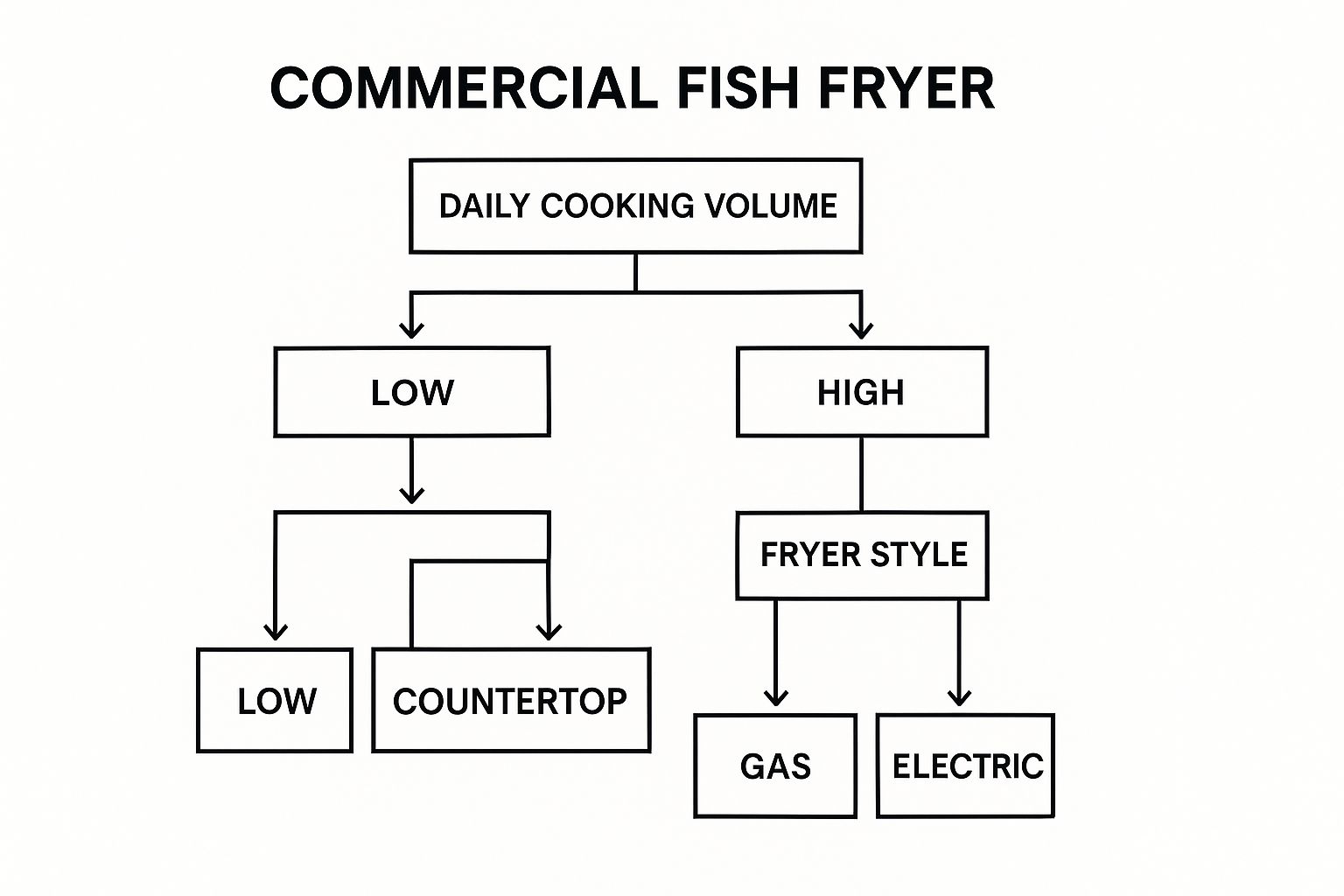
As you can see, your daily output is the first and most important filter. It tells you whether to start looking at countertop or floor models before you even think about gas versus electric.
Understanding the Market and Your Needs
The demand for reliable, high-performance frying equipment is definitely on the rise. The global commercial deep fryer market is expected to grow from about USD 583.92 million in 2024 to an estimated USD 798.24 million by 2032. This isn't just a random statistic; it shows how central fried foods are to the industry and why having efficient gear matters more than ever. You can dig deeper into these market trends by exploring the full research.
To help you get your bearings, the table below gives a quick rundown of the main fryer types. Use it as a cheat sheet to see which model lines up best with your restaurant’s day-to-day operations.
At-a-Glance Commercial Fryer Comparison
This table summarizes the big players in the commercial fryer world, helping you quickly identify which category makes the most sense for your kitchen's needs.
| Fryer Type | Best For | Key Advantage | Primary Consideration |
|---|---|---|---|
| Gas Floor Fryer | High-volume restaurants, fast-food chains | Rapid heat-up and temperature recovery | Requires professional gas line installation |
| Electric Floor Fryer | Kitchens needing precise temperature control | Excellent temperature stability for delicate foods | Slower heat recovery than comparable gas models |
| Gas Countertop Fryer | Food trucks, concession stands, small cafes | Powerful heating in a compact footprint | Limited oil capacity for lower volume output |
| Electric Countertop Fryer | Businesses with limited frying needs | Simple installation and ease of use | Lower power output, best for smaller batches |
Each of these options has its own superpower. The key is to pick the one whose strengths solve your kitchen’s specific challenges, whether that’s speed, space, or precision.
Gas vs. Electric: Which Power Source Fits Your Kitchen?
The first big decision on your plate is the power source. Choosing between a gas and an electric fryer isn't just about what hookups you have—it’s a strategic choice that defines your kitchen's speed, precision, and day-to-day operating costs. Each type has its own personality, and one will be a much better fit for your workflow.
Think of a gas fryer as the high-performance muscle car of the kitchen. It’s all about raw power and speed. Gas models heat oil incredibly fast and, more importantly, have an almost instant temperature recovery time. That means when you drop a cold basket of battered fish into the hot oil, a gas fryer snaps that temperature right back up to where it needs to be.
This rapid recovery is the secret to surviving a relentless dinner rush. For high-volume fish and chip shops or any spot where tickets are flying, a gas fryer is the undisputed workhorse. It powers through the busiest shifts, ensuring every single batch comes out consistently crispy.
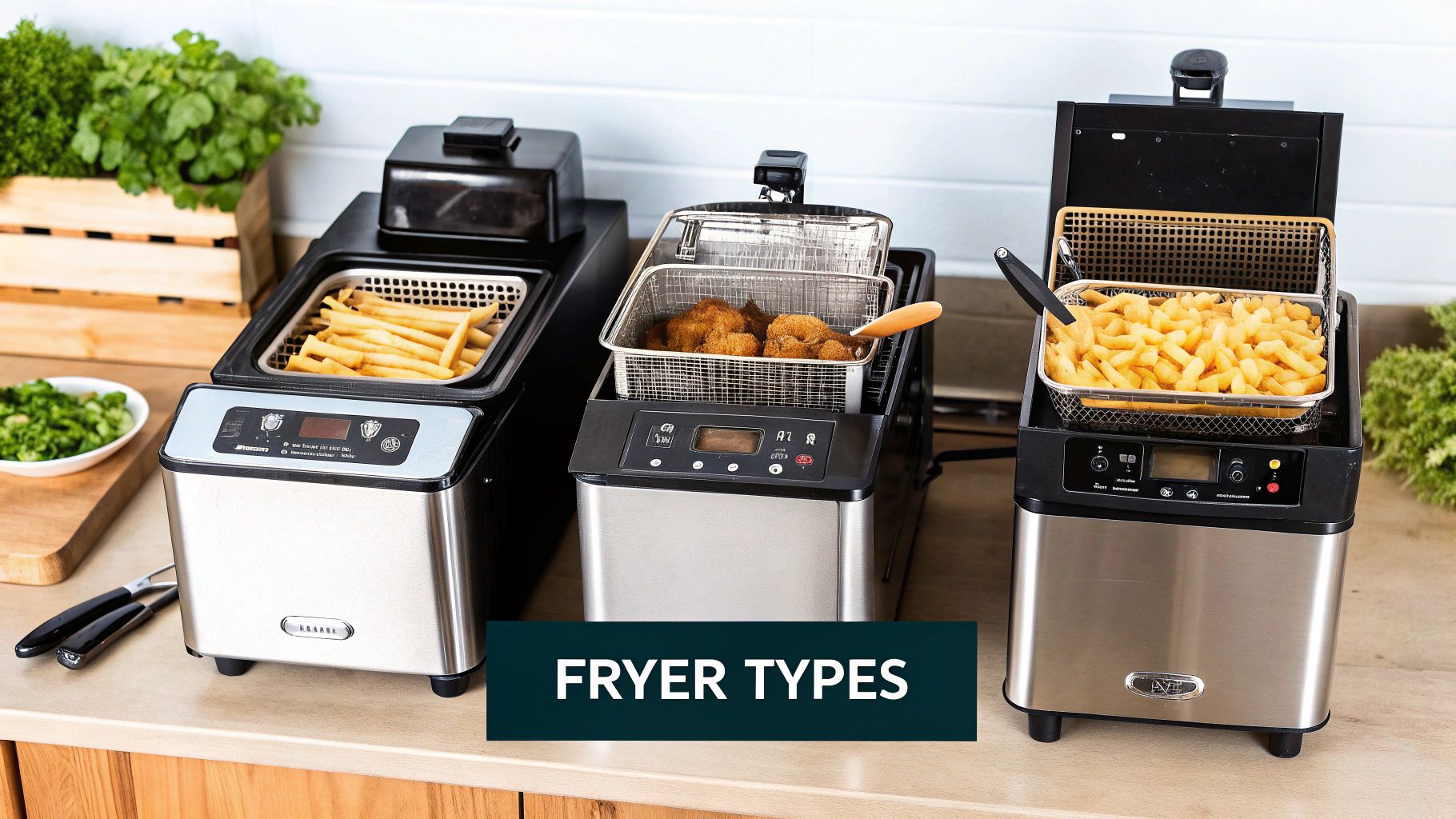
The Case for Gas Fryers
Chefs in fast-paced kitchens lean on gas fryers for a few key reasons, all tied to performance and pure output.
- Speed and Recovery: Their biggest strength is getting oil hot fast and keeping it that way, even after a cold basket goes in. This means higher throughput, letting you serve more customers in less time.
- Lower Utility Costs: In many places, natural gas is just plain cheaper than electricity. Over the long haul, that adds up to real savings, especially for a piece of equipment that’s on for hours every day.
- Familiar Operation: A lot of chefs just prefer the feel of gas. They’re trained on it and like the immediate, responsive control you get from an open flame.
The flip side? Gas models need a professional to hook them up to a dedicated gas line and must be installed under a proper ventilation hood. This can add a bit to the initial setup cost and complexity.
The Precision of Electric Fryers
If gas fryers are muscle cars, then electric fryers are the precision-tuned instruments. Their defining feature is incredible temperature stability. Sure, they might take a little longer to heat up at the start of the day, but their heating elements hold the oil temperature with remarkable accuracy.
This level of precision is a total game-changer for delicate items.
For a gourmet spot serving lightly battered tempura prawns or a restaurant focused on perfectly flaky white fish, that stable temperature is everything. It stops the oil from getting too hot and scorching the outside before the inside is cooked through. This control gives you a perfect golden-brown finish every single time and can even help your cooking oil last longer by keeping it from breaking down. You can dive deeper into these models in our guide to commercial electric deep fryers.
An electric fryer’s stable temperature acts like a safety net for your food quality. It minimizes the risk of scorching delicate batters and ensures a consistent, high-quality product from the first order of the day to the last.
Plus, electric models are often easier and cheaper to install since most kitchens already have the right kind of outlets. They're also a bit more energy-efficient because the heating elements are sitting right in the oil, so less heat escapes into your kitchen. The trade-off is a slower temperature recovery time, which might create a small bottleneck during your absolute busiest moments.
Making the Right Choice for Your Restaurant
So, which one is right for you? It really boils down to your menu and your volume.
Choose a Gas Fryer if:
- You run a high-volume business that needs to push out a ton of fried food, fast.
- Speed and quick temperature recovery are your absolute top priorities.
- You have easy access to a natural gas line and the right ventilation setup.
Choose an Electric Fryer if:
- Your menu has delicate fried items that need precise, stable heat.
- Consistency and final food quality are more important than raw speed.
- You want a simpler installation or don't have a gas hookup available.
What Really Drives a Fryer's Performance
Forget the power source for a second. What truly separates a kitchen workhorse from a basic fryer are the details under the hood. The spec sheet might look like a wall of numbers, but those figures and design choices have a direct line to your kitchen's speed, efficiency, and even your monthly operating costs.
Learning to read between the lines is the key. It's how you predict a fryer's real-world performance when the dinner rush is in full swing. We'll break down the core components that really matter—from the physical shape of the fry pot and the clever engineering of the cold zone to the raw power of BTUs and kilowatts.
The Heart of the Fryer: The Fry Pot Design
The shape and style of the fry pot—the tank holding all that precious oil—is one of the biggest factors in a fryer's day-to-day performance and cleaning routine. In a commercial kitchen, you'll run into two main designs, each with its own clear advantages.
Open-Pot Fryers: Picture a simple, large, open basin. That’s an open-pot fryer. Its smooth, unobstructed interior makes it incredibly easy to clean out. This design is perfect for things that aren't heavily breaded, like french fries, because there are fewer nooks and crannies for sediment to get stuck in.
Tube-Type Fryers: These fryers have several tubes running through the bottom of the fry pot. The gas flame or electric element heats these tubes from within, which then heats the oil surrounding them. This design creates more heating surface area, often leading to better energy efficiency. It’s the go-to for heavily breaded items like fried chicken or fish, as the space between the tubes naturally helps collect loose breading.
The choice comes down to your menu. If quick, easy cleaning is your top priority and you're frying lighter fare, an open-pot model is a fantastic choice. But for high volumes of heavily battered fish, a tube-type design will probably serve you better.
The Unsung Hero: The Cold Zone
One of the most brilliant features of a modern commercial fryer is the cold zone. This is a small area at the very bottom of the fry pot, sitting below the heating elements or tubes, where the oil temperature is significantly lower than the cooking temperature up top.
Think of it as a sediment trap. As bits of batter and food break off during frying, they sink. In a fryer without a cold zone, they’d land on the hot heating surfaces, burn, and quickly ruin your oil, giving your food a nasty, bitter taste.
The cold zone is a simple yet genius feature that acts like a safety net for your oil. By catching sediment in a cooler area, it prevents burning, which drastically extends the life of your oil and saves you real money over time.
For any serious commercial kitchen, this feature is non-negotiable. A well-designed cold zone means your oil lasts longer, your food tastes cleaner, and you spend less time and money on constant oil changes.
Translating Power into Production: BTUs and Kilowatts
Now let's talk raw power. A fryer's heating muscle is measured in BTUs (British Thermal Units) for gas models and kilowatts (kW) for electric models. These numbers aren't just for show; they tell you exactly how much cooking power you're really getting.
A higher BTU or kW rating gives you two critical performance benefits:
- Faster Initial Heat-Up: The fryer gets your oil up to the right cooking temperature much quicker at the start of a shift.
- Quicker Temperature Recovery: This is the big one. When you drop a basket of frozen fish into hot oil, the oil's temperature plummets. A fryer with a high power rating will bring that temperature right back up to the optimal range almost instantly.
Slow recovery time is a production killer. It leads to soggy, oil-logged food because the items just sit there soaking in lukewarm oil instead of crisping up. A higher BTU or kW rating means you can cook more batches back-to-back without sacrificing quality, leading to higher throughput and happier customers. For a detailed look at some of the best machines on the market, you can check out our review of the top commercial deep fryers to see how these specs compare across leading models.
Matching Fryer Size and Type to Your Menu
A mismatched commercial fish fryer is a silent killer of kitchen efficiency. Get one that’s too small, and you’ll create a frustrating bottleneck during the dinner rush, leaving customers fuming and your staff completely stressed out. But if you go too big, you're just burning through expensive oil and energy for no reason, which eats directly into your profits.
The secret is to stop thinking of your fryer as just another piece of equipment. It’s an integral part of your kitchen's workflow. The right choice comes down to matching the fryer's capacity and design to what your menu actually demands. Nail that, and you'll have a smooth, fast, and profitable operation from the first order of the day to the last.
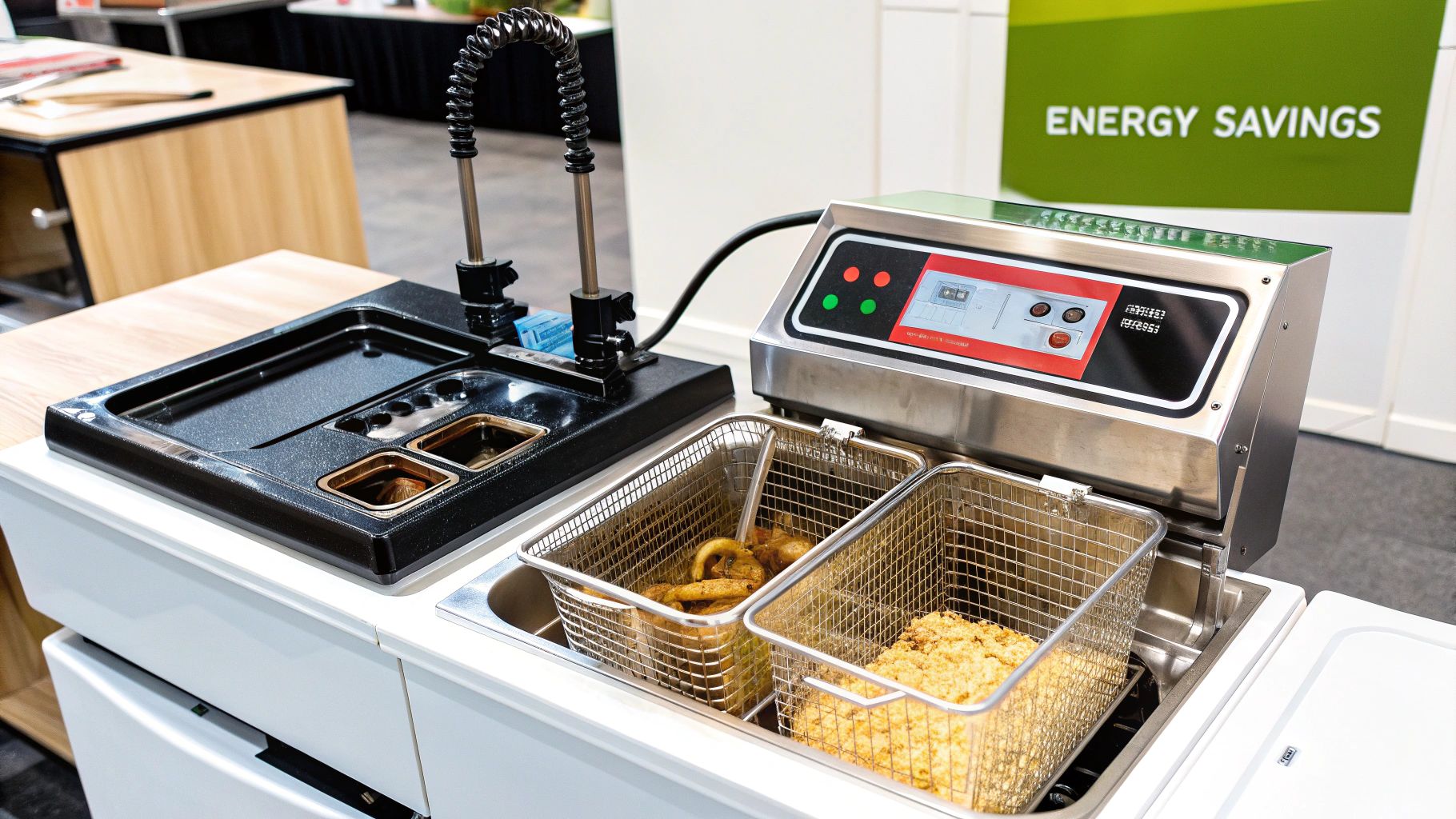
Countertop Fryers: The Compact Powerhouses
For smaller operations, a countertop fryer is often the perfect fit. Think of it as a specialized tool that gets the job done without taking over your entire workspace. These compact units are ideal for businesses where fried items are an important part of the menu, but not the main attraction.
- Food Trucks and Concession Stands: Space is the ultimate luxury here, and a countertop model delivers serious frying capability in a tiny footprint.
- Cafes and Small Bistros: If you're just adding a fish and chips special or some fried appetizers, a countertop unit gives you the capacity you need without a massive investment.
- Bars with a Limited Food Menu: These are perfect for slinging quick, profitable items like wings, onion rings, or calamari alongside drinks.
The main benefit is pure efficiency in a tight space. They are also much simpler to install and maintain, making them a smart entry point into the world of professional frying. For a deeper dive, check out our commercial countertop fryer guide to see if this compact option is right for you.
Floor Model Fryers: Built for High Volume
Now, when frying is the star of the show, a floor model fryer is non-negotiable. These are the heavy-duty workhorses designed for a relentless, back-to-back onslaught of orders. For dedicated seafood restaurants, bustling fish and chip shops, or large-scale catering, a floor model is really the only choice that makes sense.
Their massive oil capacity and powerful heating systems are engineered for high throughput. This ensures you can keep up with demand during your busiest hours without ever sacrificing food quality. This is especially true in the fast-food world, where speed and consistency are everything. In fact, the commercial deep fryer market is heavily driven by fast-food chains, where over 90% of major players use high-capacity fryers for their core menu items.
Smart Configurations for Menu Diversity
Beyond just raw size, modern commercial fish fryers offer some clever configurations to prevent flavor transfer—a critical issue when you're cooking different items. A split-pot fryer is a brilliant example of this in action.
A split-pot fryer has a divided fry pot. This simple but genius design lets you cook fish in one section and fries in another, each in its own vat of oil. It completely eliminates any flavor crossover, guaranteeing your french fries don't taste like last night's fish special.
This feature is a total game-changer for restaurants with diverse menus. It gives you the flexibility of having two fryers but in the footprint of just one, preserving the distinct, clean taste of every dish you send out. In the end, choosing the right size and configuration isn't just a practical decision; it’s a strategic one that directly supports your menu, streamlines your kitchen, and boosts your bottom line.
Keeping Your Kitchen and Team Safe
In the controlled chaos of a busy kitchen, safety isn’t just another box to check—it’s the bedrock of your entire operation. A high-quality commercial fish fryer is an absolute workhorse for your bottom line, but let's be honest, it also brings some serious risks into the mix if you don't respect the heat. Getting the installation and daily operation right isn't just a suggestion; it's non-negotiable from day one.
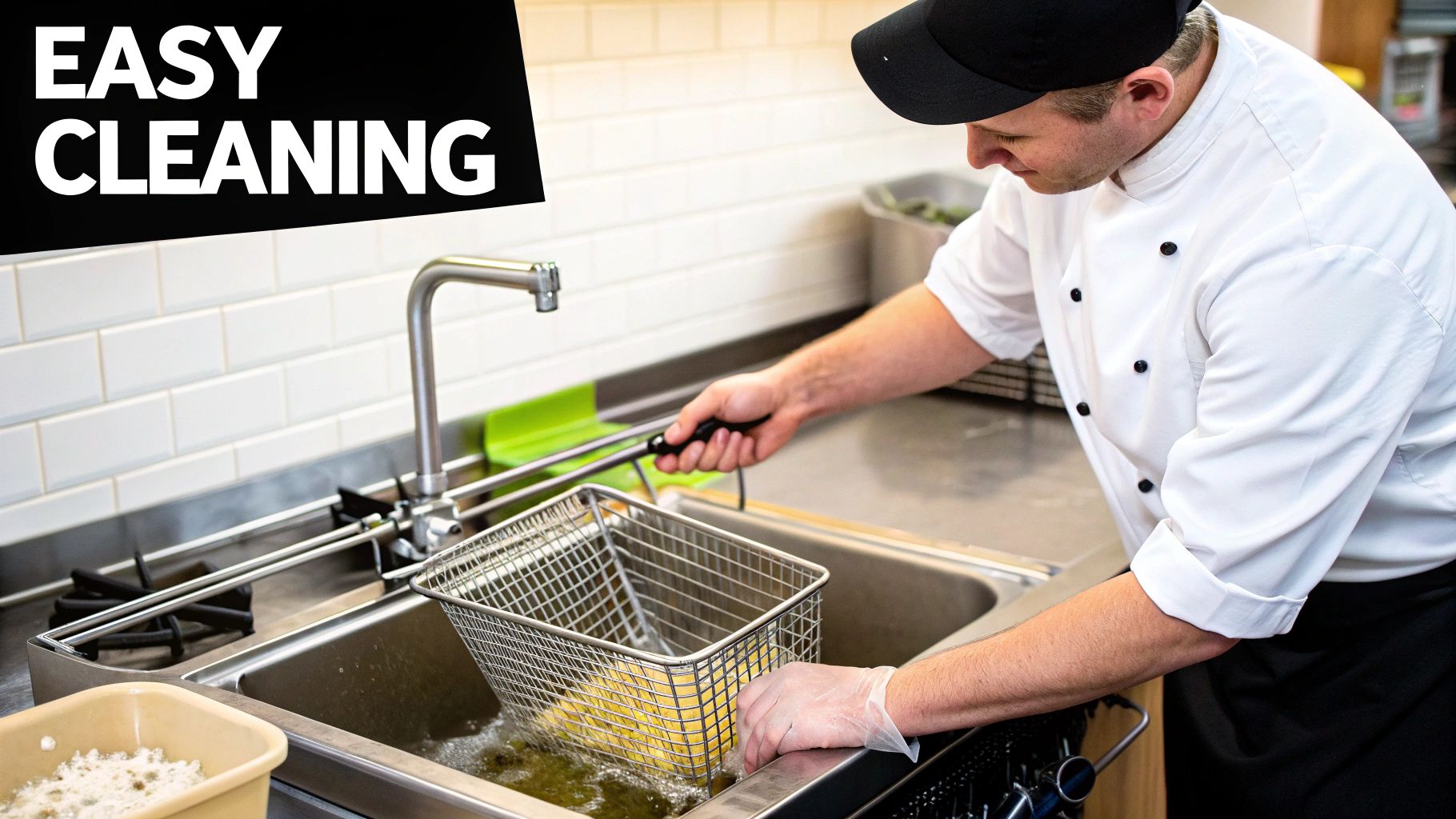
Your first line of defense is a proper, professional installation. This is one of those times you absolutely need to call in a certified pro to make sure everything is up to local fire and safety codes. It's a legal requirement in most places for a reason—it protects your business, your property, and most importantly, your people.
The Critical Role of Ventilation
If there's one safety system you can't ignore, it's ventilation. Think of your kitchen’s Type I hood as the lungs of your operation. Its entire job is to pull out the intense heat, smoke, and grease-filled vapor that a commercial fryer pumps into the air.
Without it, you're creating a recipe for disaster. That greasy air builds up, dramatically increasing the risk of a flash fire and making the air quality terrible for your staff. This system is required by law for any appliance that produces grease, and keeping its filters clean has to be a core part of your maintenance routine.
Integrated Fire Suppression Systems
Today's kitchen safety standards go way beyond a simple vent hood. An integrated fire-suppression system is another piece of equipment you simply can't operate without. These systems are usually built right into the ventilation hood, ready to automatically detect and snuff out a fire before it has a chance to spread.
A fire suppression system is your kitchen's ultimate insurance policy. It can mean the difference between a small, contained incident and a catastrophic event that could shut down your business. Check your local regulations, as these systems are often mandatory.
They work by spraying a wet chemical agent that quickly smothers the flames and cools down the hot oil and metal surfaces. To make sure it’s armed and ready to go, you'll need regular inspections and maintenance from a certified professional.
Essential Team Safety Protocols
At the end of the day, even the best gear is only as good as the people using it. Safety really comes down to solid training and daily discipline. Every single person working near that fryer needs to be drilled on the core safety protocols to prevent accidents and know exactly what to do in an emergency.
Here's what everyone must know:
- Handling Hot Oil: Train everyone on the slow, careful way to lower and lift fryer baskets to avoid dangerous splashes. And hammer this point home: water and hot oil create a violent, explosive reaction. Never mix the two.
- Emergency Procedures: Your team needs to know the location of the gas shut-off valve and the fire suppression system's manual pull station without even thinking about it.
- Fire Extinguisher Use: Your kitchen must have Class K fire extinguishers, which are specifically designed for grease fires. Given the obvious risks, knowing how to operate a fire extinguisher is a life-saving skill. Run drills. Practice makes perfect.
- Proper Attire: Non-slip shoes are a must. So are heat-resistant gloves or aprons for anyone working with or filtering the fryer. No exceptions.
When you combine professional installation, top-notch safety systems, and rigorous staff training, you create an environment where your team can work confidently and focus on what they do best: making incredible fried fish.
Smart Maintenance for Lower Costs and Better Food
Your commercial fish fryer's performance tomorrow comes down to one thing: how you treat it today. Good, consistent maintenance isn't just a list of chores. It's the secret to saving serious money, keeping your food tasting incredible, and getting years more life out of your expensive gear.
Think of it as a direct investment in your bottom line. These habits have a massive impact on your two biggest operational headaches: the cost of cooking oil and the consistency of your food. A clean fryer with fresh oil turns out that perfect, golden-crispy product every single time. A neglected one? It serves up greasy, off-tasting food while burning through oil at a terrifying rate.
Your Essential Cleaning Checklist
To keep your fryer in peak condition, the best strategy is breaking down the work into a simple, repeatable schedule. This takes the guesswork out of the equation and builds a solid routine for equipment longevity and food safety.
Here’s a practical checklist you can start using tonight:
- Daily Routine (End of Shift): Brush out any loose crumbs and debris from the fry pot. Wipe down all the exterior surfaces to stop that sticky grease buildup before it starts. Most importantly, cover the fry pot overnight. This one simple step shields the oil from oxygen and light—the two things that make it break down faster.
- Weekly "Boil Out": This is your deep clean. After draining the old oil, you fill the fryer with water and a specialized cleaning solution and bring it to a gentle boil. This is the only way to strip away the tough, baked-on gunk that a simple wipe-down just can't touch.
- Monthly Inspection: Time to take a closer look at the guts of the machine. Check your thermostat’s accuracy, look over gas connections or electrical cords for any wear and tear, and make sure safety features like the high-limit shut-off are working correctly.
The Art of Extending Oil Life
Cooking oil is one of your biggest recurring costs, so mastering the art of making it last is a financial game-changer. The secret isn't just about cleaning; it’s about disciplined daily habits that protect your oil from its three main enemies: heat, air, and contaminants.
The single most powerful habit for boosting profitability is disciplined oil management. Consistent filtering and precise temperature control can often double the lifespan of your cooking oil, cutting a major operational expense in half.
Start with disciplined temperature control. Never let the oil get hotter than needed when the fryer is idle—excess heat absolutely destroys oil quality. Next, make filtering a non-negotiable part of your closing routine. Whether you use a portable filter machine or have a built-in system, getting those microscopic food particles out is critical. Those tiny burnt bits act like catalysts, speeding up oil breakdown and creating funky, off-flavors in your food.
Modern technology is also making this process much easier. Many new commercial deep fryers now come with smart features like automated temperature controls and programmable cook settings that help you dial in oil usage perfectly. You can learn more about how AI is enhancing fryer efficiency on Consegic Business Intelligence. By combining these smart habits with the right tech, you can turn a major expense into a significant saving.
Expand Your Menu with Commercial Charbroilers
Once you've mastered the art of frying with the perfect commercial fish fryer, what's next for your menu? Partnering your fryer with a commercial charbroiler opens up a new world of flavor and expands your kitchen's capabilities. A charbroiler delivers the smoky, flame-grilled taste that customers crave on items like steaks, burgers, chicken, and vegetables—the perfect complement to your fried classics.
We offer a wide selection of commercial charbroilers to fit the needs of any restaurant. Whether you need the precision of infrared, the classic taste from a gas model, or the clean efficiency of an electric unit, we have the equipment to help you diversify your menu and increase revenue.
Our range includes:
- Infrared Charbroilers: These units provide intense, even heat for a perfect sear that locks in juices, ideal for high-end steaks and burgers.
- Gas Charbroilers: The top choice for achieving that authentic, smoky, flame-grilled flavor. Gas models offer powerful and responsive heat control favored by many chefs.
- Electric Charbroilers: A great solution for kitchens without gas hookups. Electric models offer consistent and precise temperature management for perfectly cooked results every time.
Adding a charbroiler is a strategic move to broaden your menu's appeal. By offering both fried favorites and new grilled specialties, you can attract a wider range of customers and build a more dynamic, profitable kitchen.
Ready to bring the fire and expand your menu? Explore our wide selection of high-performance infrared, gas, and electric char broilers designed for your restaurant. Find the perfect model to complement your commercial fish fryer by visiting https://charbroilers.com today.