

Unlocking Efficiency Your Comprehensive Look at Commercial Convection Microwave Ovens
Why Commercial Convection Microwave Ovens Matter for Your Kitchen
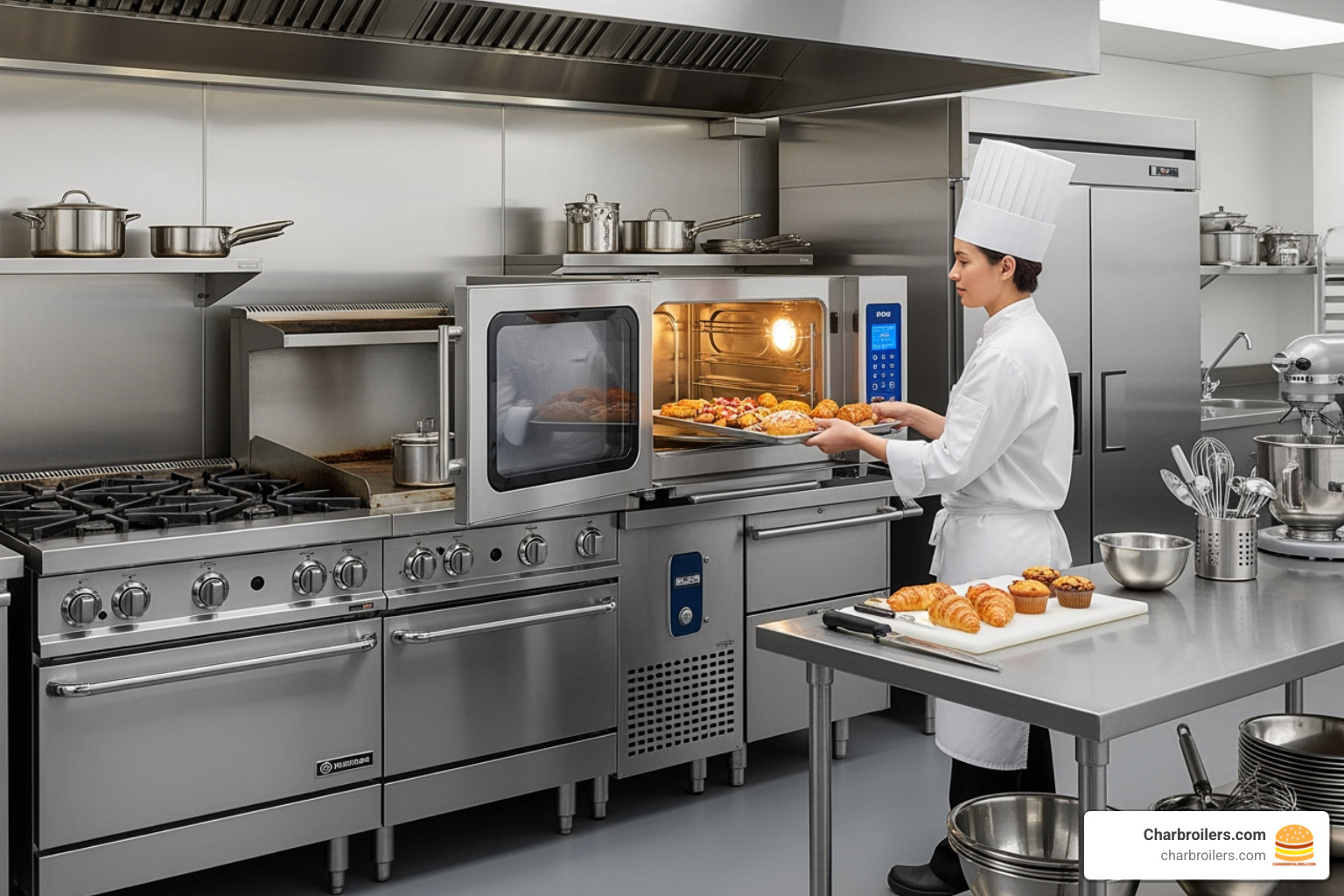
A commercial convection microwave oven combines the rapid heating of microwave technology with the browning and crisping power of convection cooking, giving you restaurant-quality results in a fraction of the time. Here's what you need to know:
Key Benefits:
- Speed: Cooks up to 25% faster than traditional ovens while using lower temperatures
- Quality: Delivers even browning and crispy textures that standard microwaves can't achieve
- Versatility: Three cooking modes—microwave only, convection only, or combination
- Space-Saving: Replaces multiple appliances in tight kitchen spaces
- Energy Efficiency: Uses 30% less energy compared to traditional cooking equipment
Common Applications:
- Toasting hot sandwiches and melts
- Finishing individual pizza slices
- Reheating plated meals without sogginess
- Baking small batches of pastries
- Roasting vegetables and proteins
If you've struggled with a standard microwave that leaves food soggy or waited too long for a convection oven to preheat during a lunch rush, you understand the problem. The real power of these ovens shows up when you're feeding hundreds of customers in record time.
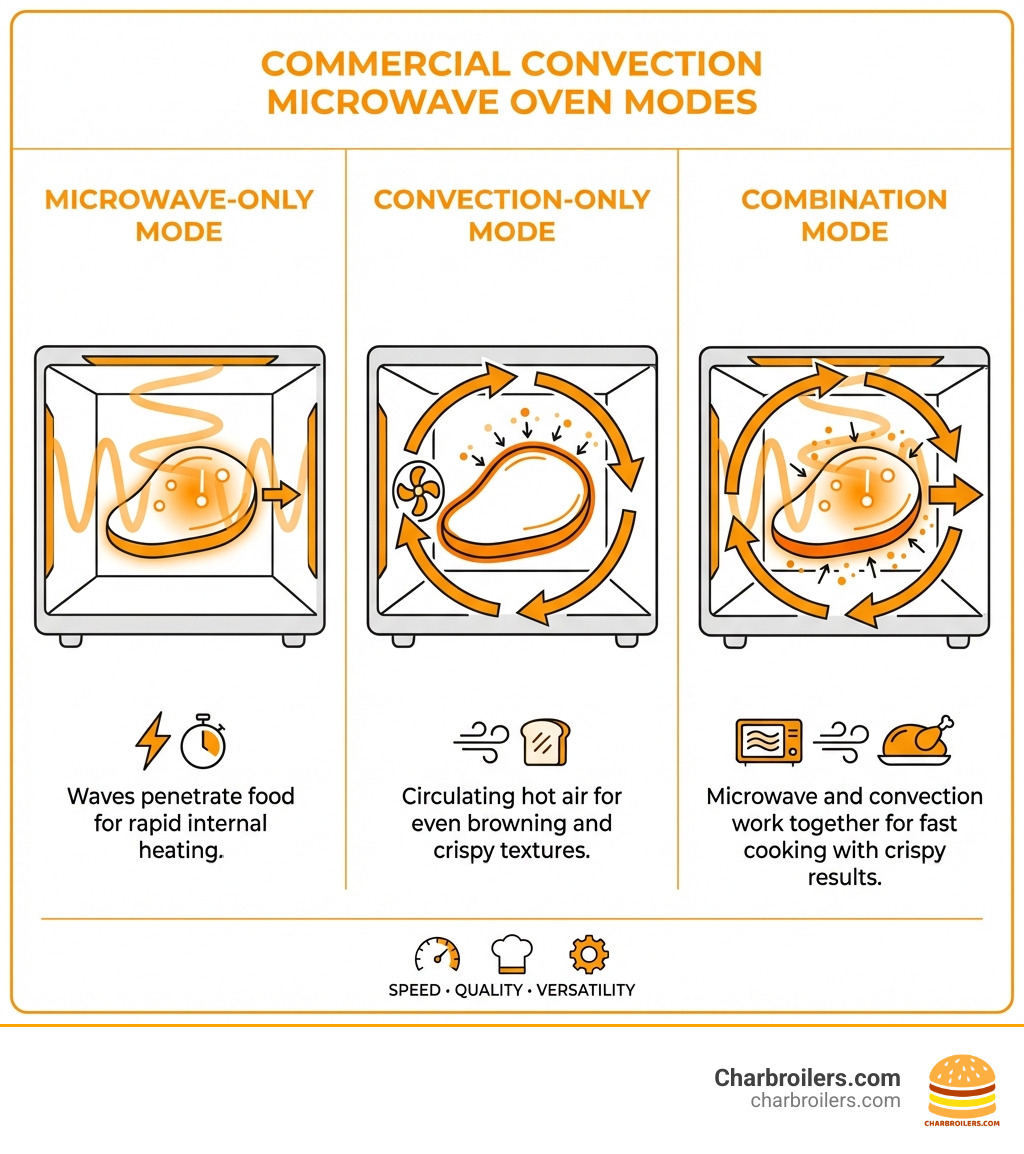
The technology works by combining electromagnetic radiation (microwaves) with circulating hot air. The microwave component rapidly heats food from the inside, while the convection fan distributes hot air for browning and crisping. Some models include additional features like air frying and steam cycles, making them true multi-function workhorses.
I'm Sean Kearney, and I've spent over a decade helping restaurant owners find the right commercial kitchen equipment at fair prices. Through my work with commercial convection microwave ovens and other foodservice equipment, I've seen how the right appliance can transform kitchen efficiency without breaking your budget.
Commercial convection microwave oven terms you need:
- commercial convection ovens
- how does a commercial convection oven work
- commercial countertop oven
The Best of Both Worlds: How Convection and Microwave Power Combine
At its core, a commercial convection microwave oven combines two distinct cooking methods to deliver superior results. Understanding these methods is key to appreciating this hybrid appliance's power.
First, microwave technology uses electromagnetic radiation to penetrate food, exciting water molecules to generate heat rapidly from the inside out. While great for quick reheating, this method often leaves food lacking the crispy, golden-brown finish we crave.
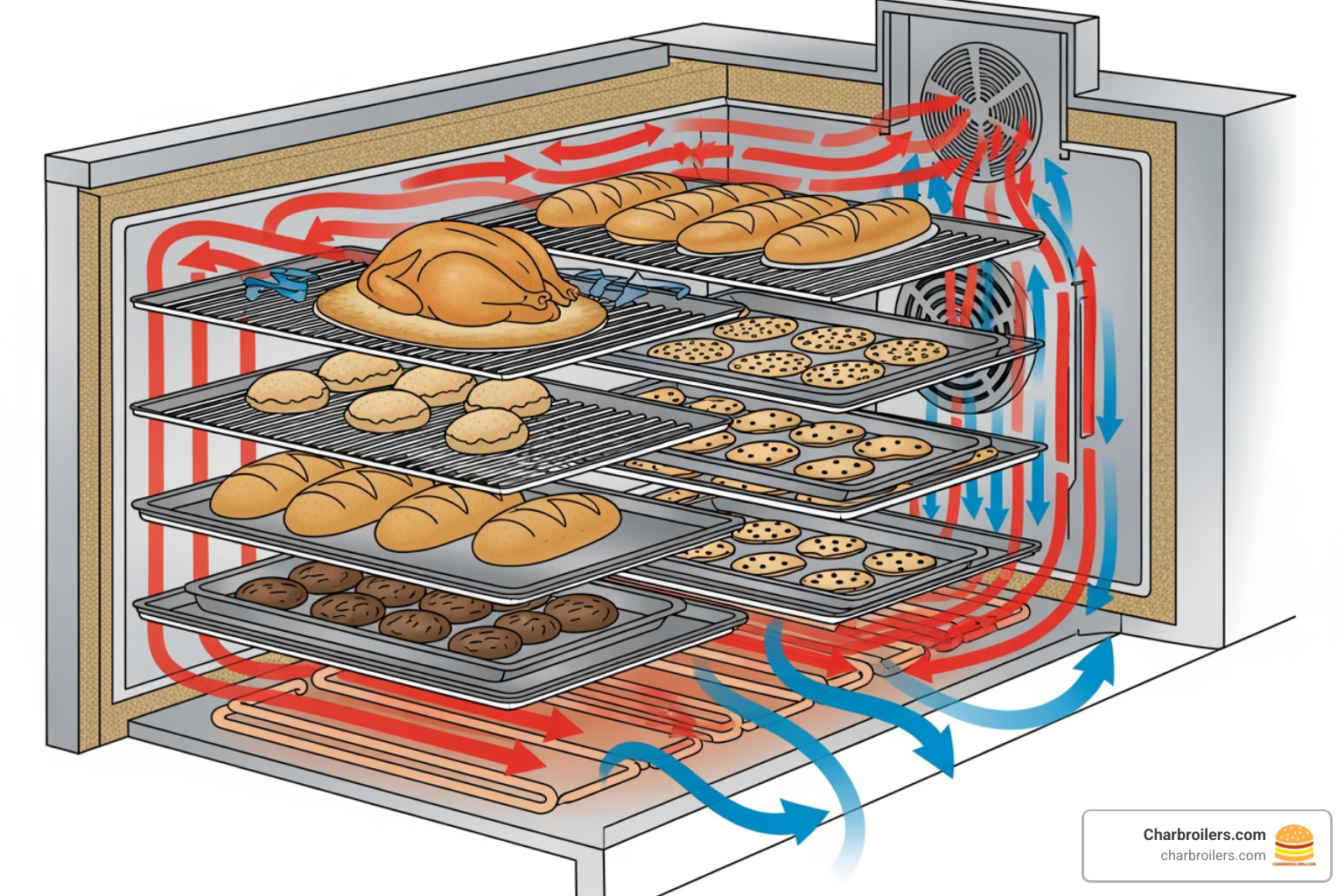
Then there's convection technology. A fan circulates hot air generated by heating elements, transferring heat to every food surface. This constant movement of hot air strips away the cooler air layer that surrounds food, allowing for more efficient heat transfer. This gives convection ovens their ability to brown, crisp, and cook evenly. We've seen that convection ovens typically cook 25% faster than traditional ovens, at temperatures that are 25 degrees lower.
When these two technologies combine in a commercial convection microwave oven, the magic happens. The microwave component provides rapid internal heating, while the convection fan and heating elements work to brown and crisp the exterior. This combination delivers faster cooking times, superior browning, and an improved food texture that standard microwaves cannot achieve. You get the best of both worlds: speed and quality.
What makes it different from a standard microwave or a convection oven?
The fundamental difference lies in versatility. A standard commercial microwave excels at reheating and defrosting but can't brown or crisp. Food often comes out soggy or rubbery, which is unacceptable in a professional kitchen.
On the other hand, a standard commercial convection oven provides excellent browning, roasting, and baking but requires preheating and generally cooks slower than a microwave. It's a champion for quality but lacks the instant speed of a microwave.
A commercial convection microwave oven bridges this gap, offering hybrid functionality that delivers both speed and quality. It can operate in microwave-only, convection-only, or, most powerfully, in combination mode. This makes it incredibly versatile, allowing one appliance to perform tasks that would otherwise require two separate units. This versatility also makes it a significant space-saving solution in busy commercial kitchens where every square inch counts. For more insights into specialized commercial microwaves, check out our guide on commercial microwaves.
How does convection technology improve cooking results?
Convection technology is the secret sauce that lifts a microwave into a culinary workhorse. Its primary role is to ensure even heating and facilitate the Maillard reaction, which is crucial for desirable food characteristics.
Here’s how it works:
- Hot air circulation: The fan continuously moves hot air around the food, ensuring heat is evenly distributed to all surfaces and preventing "cold spots."
- Eliminating hot spots: Unlike conventional ovens, convection ensures a more uniform temperature throughout the cooking cavity, so food cooks consistently.
- Maillard reaction: The high, circulating heat promotes the Maillard reaction on the surface of foods. This chemical reaction gives roasted meats their savory crust, baked goods their golden-brown finish, and toasted sandwiches their crispness.
- Crisping and browning: Because of the Maillard reaction, foods come out with a desirable crisp exterior and a beautifully browned surface.
- Roasting capabilities: With convection, a commercial convection microwave oven can effectively roast smaller portions of meats and vegetables, delivering tender interiors and caramelized exteriors.
- Baking capabilities: It can also handle baking tasks like cookies and brownies, producing results comparable to a dedicated convection oven.
The addition of convection technology transforms the cooking experience, allowing you to achieve professional-grade results with speed and consistency. For a deeper dive into the mechanics of convection, take a look at how convection ovens work.
Choosing Your Commercial Convection Microwave Oven: Key Features and Cost
When investing in a commercial convection microwave oven, it's about matching the appliance's capabilities to your kitchen's specific needs. You need to consider power, capacity, functionality, and durability.
What specific cooking functions should one look for?
The array of features can be overwhelming, but focusing on what genuinely improves your kitchen's workflow is key.
Here's what we recommend:
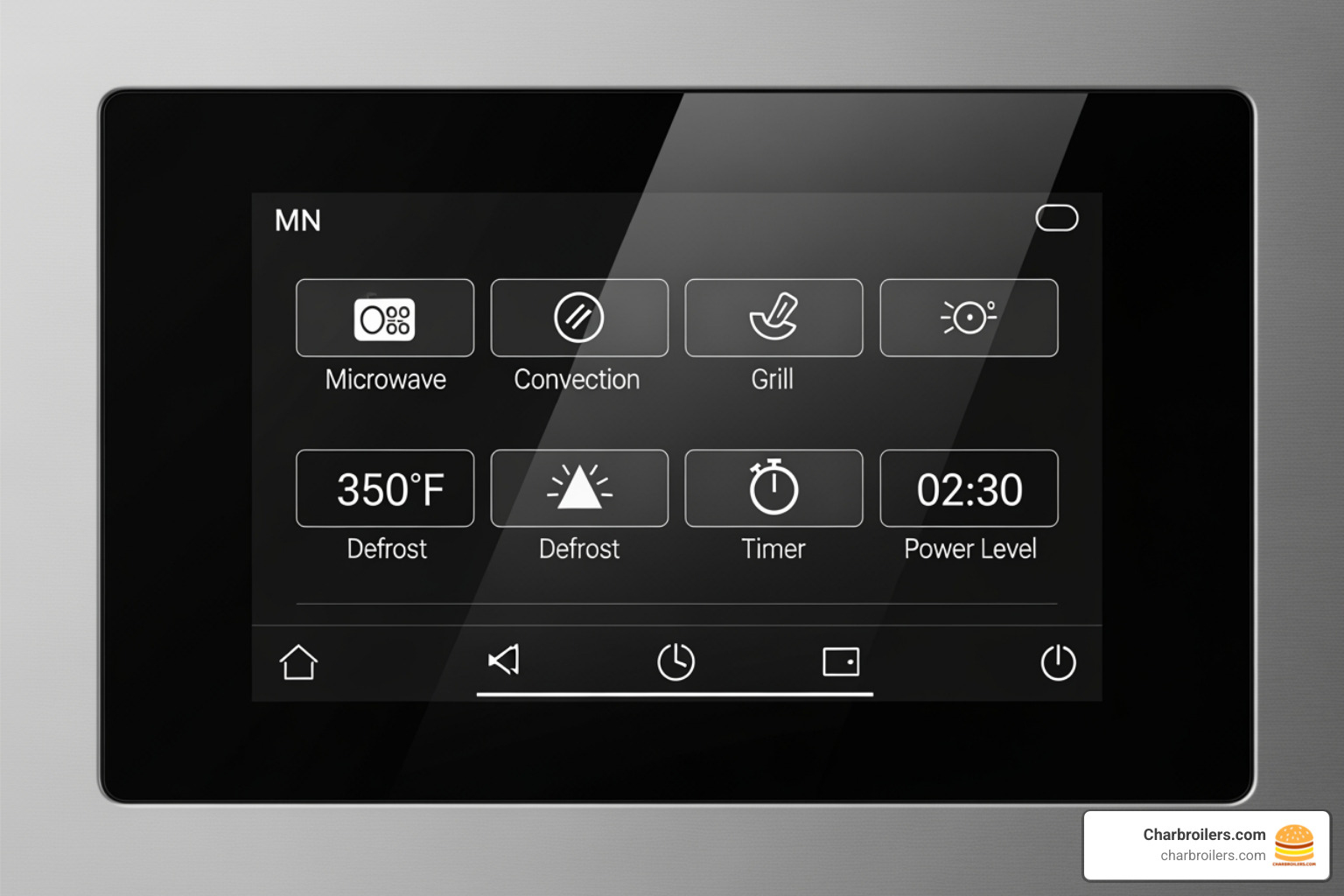
- Microwave Power Levels: Look for models with at least 10 power levels for precise heating, from gently warming sauces to rapidly boiling water. For instance, a typical over-the-range model might boast 1000 watts of microwave power, a strong indicator of its heating capability.
- Convection Temperature Range: A wide temperature range is crucial for versatility, allowing you to bake, roast, and crisp effectively. A good model, for example, might offer 1400W of convection power, demonstrating robust performance.
- Combination Modes: This is the core advantage. Ensure the oven offers various combinations of microwave and convection cooking to fine-tune cooking for different food types, achieving both speed and browning.
- Preset Cooking Options: In a busy kitchen, consistency and speed are paramount. Programmable menus and presets for common items like popcorn, potatoes, and frozen dinners can save time and reduce training needs.
-
Advanced Features:
- Air Fry Function: An integrated air fry function allows you to achieve crispy, fried textures with less oil, expanding your menu. Some models even include an air fry kit.
- Steam Function: A "Steam Cycle" feature can be invaluable for delicate cooking, retaining moisture and rethermalizing dishes without drying them out.
- Capacity: Measured in cubic feet (Cu. Ft.), this dictates how much food you can cook at once. A 1.7 Cu. Ft. capacity is common for compact models, often featuring a 12.4-inch turntable. Consider your typical batch sizes.
- Wattage: Higher wattage for both microwave and convection functions generally translates to faster, more powerful cooking, which is important for high-volume operations.
- Programmable Menus & User Controls: Touch controls and clear LED displays are essential for ease of use. The ability to program specific cooking sequences ensures consistency across shifts.
- Build Quality & Material: Look for durable stainless steel construction, which is easy to clean and withstands the rigors of a commercial kitchen.
- NSF Certification: For any commercial kitchen equipment, ensuring it meets NSF (National Sanitation Foundation) standards is crucial for health and safety compliance.
Here's a general comparison table to help you gauge different models:
| Feature | Light-Duty Models | Medium-Duty Models | Heavy-Duty Models |
|---|---|---|---|
| Wattage | 1000W Microwave / 1200-1400W Convection | 1200-1500W Microwave / 1500-1800W Convection | 1800W+ Microwave / 2000W+ Convection |
| Capacity | 1.0-1.7 Cu. Ft. | 1.7-2.0 Cu. Ft. | 2.0+ Cu. Ft. |
| Footprint | Compact, often countertop or over-the-range | Standard countertop or stackable | Larger footprint, often dedicated station |
| Programmability | Basic presets, limited custom programs | Multiple presets, more custom program slots | Extensive, highly customizable programs with multi-stage |
| Build Quality | Good for occasional use | Robust, stainless steel for daily use | Heavy-duty, designed for continuous high-volume operation |
| Features | Microwave, Convection, basic Combo | Air Fry, Steam, more Combo options, Sensor Cook | Advanced air distribution, humidity control, smart features |
What is the typical price range and what influences the cost?
The price of a commercial convection microwave oven can vary significantly, from a few hundred dollars for light-duty models to several thousand for high-performance units.
Several factors influence this cost:
- Light-Duty vs. Heavy-Duty: This is the biggest determinant. Light-duty models are less expensive, while heavy-duty units feature more powerful components and robust construction for continuous use, leading to a higher price.
- Brand Reputation: Established brands known for commercial kitchen equipment often command higher prices due to their proven reliability and customer support. It's important to assess if a model's build quality meets the rigorous demands of your specific operation.
- Power and Capacity: As discussed, higher wattage and larger interior capacity generally increase the cost.
- Advanced Features: Specialized functions like air frying, steaming, sensor cooking, and extensive programmable menus will add to the price.
- Construction Materials: Commercial-grade stainless steel construction is more expensive but also more durable and hygienic.
- Warranty: A comprehensive commercial warranty reflects the manufacturer's confidence and can factor into the initial cost.
When budgeting, consider the long-term benefits of efficiency, durability, and reduced labor costs. To get a better understanding of oven costs in general, we have a detailed guide on how much a commercial convection oven sets you back.
High-Speed Applications and Ideal Use Cases
The versatility and speed of a commercial convection microwave oven make it an invaluable asset across a wide spectrum of foodservice environments. These units are often called "speed ovens" because they significantly cut down cooking and reheating times without sacrificing quality.
We've seen them shine in:
- Quick-Service Restaurants (QSRs): Perfect for rapidly preparing hot sandwiches, burritos, and individual fast-food items.
- Delis and Cafes: Ideal for toasting bagels, making gourmet grilled cheeses, or warming pastries.
- Bars and Pubs: Excellent for heating appetizers like nachos, wings, or pizza slices.
- Stadiums and Arenas: Concession stands benefit immensely from the speed, allowing staff to serve individual items in seconds.
- Concession Stands: Similar to stadiums, these ovens are perfect for high-turnover items that need to be hot and ready instantly.
- Office Breakrooms: For corporate dining, these ovens can quickly reheat plated meals, offering a better alternative to standard microwaves.
What are the ideal use cases for a commercial convection microwave oven?
These ovens can handle a diverse range of tasks efficiently. Their "speed oven" capability means they can often replace multiple pieces of equipment or dramatically improve workflow.
Here are some prime examples:
- Toasting Sandwiches: The combination of microwave speed and convection browning ensures a perfectly toasted exterior and a hot, melted interior in a fraction of the time.
- Finishing Individual Pizza Slices: Reheat and crisp up a slice of pizza to perfection, giving it a fresh-from-the-oven taste.
- Baking Pastries: For cafes needing to warm croissants or bake small batches of cookies, the convection feature ensures even baking and a golden finish.
- Roasting Small Portions of Vegetables: Achieve tender-crisp roasted vegetables with nice caramelization for side dishes.
- Reheating Plated Meals: The combination mode shines here. Microwaves heat the food quickly, while convection prevents sogginess.
Top 5 Foods to Cook in a Commercial Convection Microwave:
- Gourmet Grilled Cheese/Paninis: Crispy bread, perfectly melted cheese.
- Individual Pizza Slices: Hot, bubbly cheese, crispy crust.
- Toasted Bagels/Muffins: Warm and lightly browned.
- Nachos: Melted cheese, hot toppings, crispy chips.
- Roasted Chicken Wings (small batches): Crispy skin, juicy interior.
For businesses with limited space, a commercial convection microwave oven can be a godsend. Find more about optimizing layouts for small commercial kitchens.
What should I look for in high-performance models?
When you're looking for an oven that can keep up with a busy commercial kitchen, focus on models built for high performance, often referred to as "speed ovens."
Key characteristics of high-performance models include:
- High-Speed Ovens: These are designed for ultimate speed, often utilizing advanced air distribution systems with microwave power to cook exceptionally fast.
- Durable Construction: A high-performance oven needs to be a workhorse. Look for stainless steel interiors and exteriors, heavy-duty door hinges, and commercial-grade components.
- Ease of Use: The best models feature intuitive controls and clear displays. Poor visibility at certain angles or in low lighting can be an issue, so check for clarity.
- Programmability: Extensive programmability with multi-stage cooking is crucial. This allows chefs to create complex cooking cycles that can be executed consistently by any staff member.
- Reputable Manufacturers: Well-known brands in the commercial speed oven market are recognized for their robust and reliable equipment. Ensure any chosen model meets your specific commercial volume and durability requirements.
For further exploration of top-tier ovens, dig into our article on convection perfection: top ovens for your commercial kitchen.
Installation, Care, and Key Considerations
Like any piece of commercial equipment, a commercial convection microwave oven has specific requirements for installation, maintenance, and cleaning to ensure optimal performance and longevity.
What are the considerations for installation, maintenance, and cleaning?
Installation:
- Ventilation Requirements: Many commercial convection microwave ovens, especially over-the-range (OTR) models, come with integrated hood fans. For example, a typical OTR model features a 300 CFM (Cubic Feet per Minute) Hood Fan with 3-speed operation to remove smoke, steam, and odors. If you choose an OTR model, it must be installed over a range with proper hood exhaust. These appliances are typically designed to be suspended, not used as countertop units. You'll need to consider options for outside top exhaust, back exhaust, or recirculating (non-vented ductless) installation. Proper ventilation is often a health and safety requirement. For more in-depth information, refer to our guide on commercial convection oven venting requirements.
- Electrical Specifications: Most commercial units operate on 120V, 60 HZ power. It's crucial to ensure you have dedicated circuits that can handle the wattage of both the microwave and convection elements to prevent overloads.
- Proper Clearance: Always follow the manufacturer's guidelines for clearance around the oven to allow for adequate air circulation and prevent overheating.
Maintenance and Cleaning:
- Daily Cleaning Procedures: Regular cleaning is non-negotiable. We recommend wiping the interior walls with a soft, damp sponge and a non-abrasive cleanser after each use to prevent stain build-up.
- Exterior Cleaning: Stainless steel exteriors can show fingerprints. Regular wiping with a soft cloth and a specialized stainless steel cleaner will keep your oven looking professional.
- Filter Maintenance: If your oven has an integrated hood fan, remember to regularly clean or replace the grease filters to maintain effective ventilation and prevent fire hazards.
- Child Safety Lock: For safety, especially if the oven is accessible to non-staff, use features like the child safety lock.
For more comprehensive tips on keeping your oven spotless, check out our article on oven cleaning hacks.
What are the limitations or potential drawbacks?
While a commercial convection microwave oven offers incredible advantages, it's important to be aware of its limitations.
- Limited Capacity: Compared to full-size commercial convection ovens, these hybrid units typically have a smaller interior capacity (e.g., 1.7 Cu. Ft.). They are not suitable for bulk production or very large items, excelling instead at individual servings or small batches.
- Higher Initial Cost: While they can save money by combining two appliances, their initial purchase price is higher than a standard commercial microwave. This investment needs to be justified by the added efficiency.
- Complexity of Controls: With multiple cooking modes and presets, the controls can be more complex than a basic microwave, potentially requiring additional staff training.
- Not a Replacement for All Equipment: A commercial convection microwave oven won't entirely replace specialized equipment like a combi oven (which offers precise humidity control) or a dedicated high-volume convection oven. It's a fantastic supplementary appliance for specific tasks.
- Mixed Reviews on Certain Aspects: As with any product, individual models can have quirks. Some users report that certain units might heat slowly in convection mode or that displays are hard to see. Build quality can also vary. These are important points to consider when evaluating specific models.
Understanding these potential drawbacks helps you make an informed decision. Always prioritize safety in the kitchen; read our convection oven safety guidelines.
Conclusion: Boost Your Kitchen's Efficiency
The commercial convection microwave oven is a true innovator in foodservice, marrying the rapid heating of microwave technology with the browning and crisping of convection cooking. The result is an oven that cooks up to 25% faster than traditional models and delivers a food quality that standard microwaves cannot match.
Its versatility, with microwave-only, convection-only, and combination modes, makes it an indispensable tool for a wide range of kitchens, from busy QSRs and delis to stadiums and cafes. The ability to toast sandwiches, finish pizzas, and reheat meals with superior speed and texture translates directly into improved customer satisfaction and streamlined operations. Furthermore, its space-saving footprint and energy efficiency contribute to a smarter, more sustainable kitchen.
While considerations like initial cost and capacity limitations exist, the benefits often far outweigh the drawbacks for businesses looking to optimize their workflow. Investing in a high-performance commercial convection microwave oven is a smart move toward boosting your kitchen's efficiency, ensuring consistent food quality, and improving your bottom line.
Here at Charbroilers.com, we understand the demands of your kitchen. We're committed to providing you with the best commercial kitchen equipment—from charbroilers and deep fryers to griddles—backed by expertise and custom financing options.
Explore our complete guides to commercial kitchen equipment and let us help you find the perfect solutions for your business.