
Small Commercial Kitchens Made Simple
A small commercial kitchen isn't just a downsized version of a big one. It's a highly specialized, professionally equipped engine built for operations like ghost kitchens, food trucks, or busy cafes. The real secret to success lies in a design that squeezes every ounce of efficiency and workflow out of a tight footprint, relying on smart layouts and multi-tasking equipment. It’s all about being profitable without the massive overhead of a traditional restaurant space.
Designing a Kitchen That Actually Works
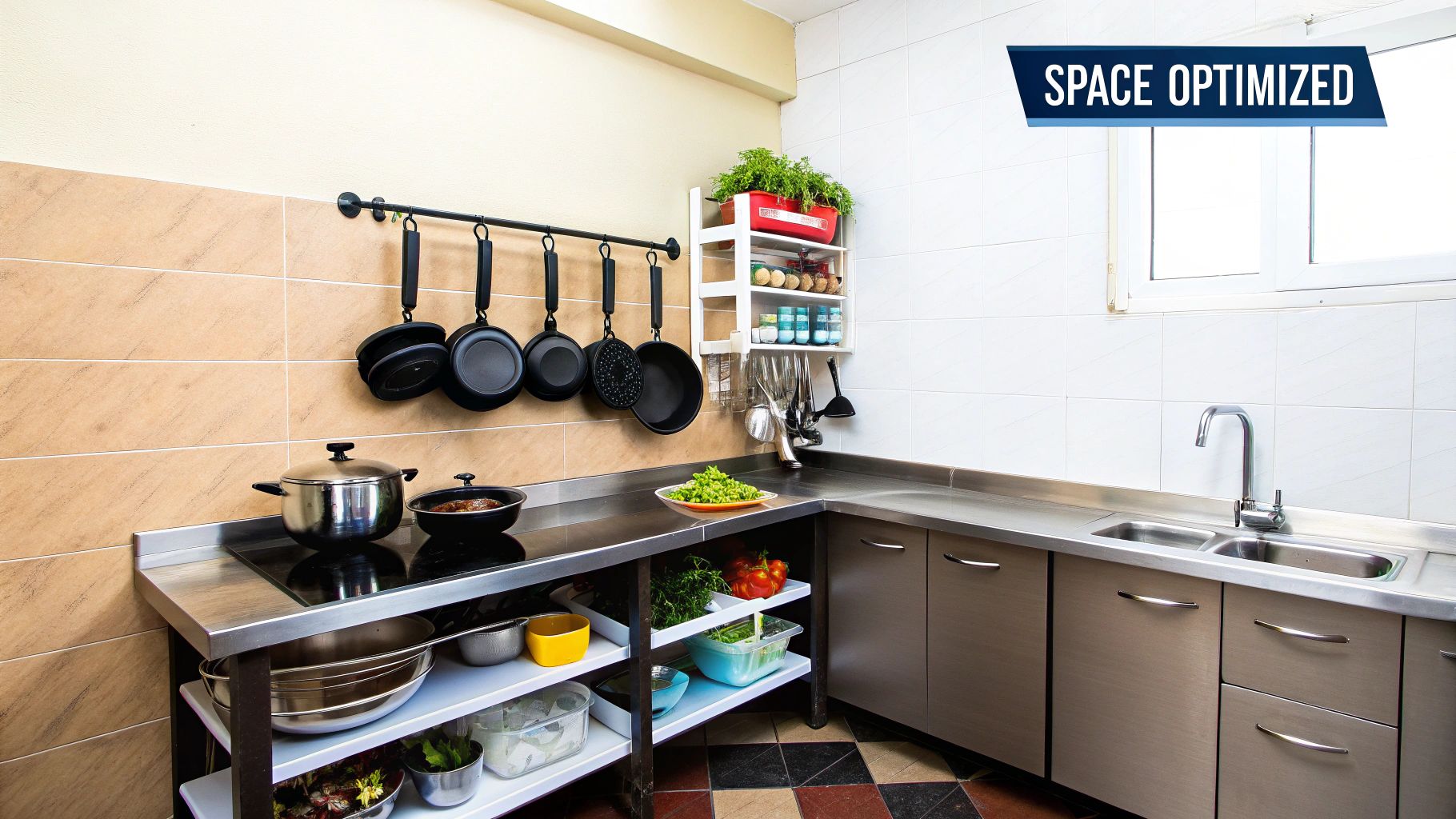
Putting together a small commercial kitchen is less about copying a generic floor plan and more about solving a unique, high-stakes puzzle for your specific business. The mission isn't just to cram equipment into a room. It's to build a space that actively supports your menu, your service style, and your team.
Get it wrong, and you're signing up for constant bottlenecks, stressed-out staff, and painfully slow ticket times that hit your bottom line directly. A great design starts with a hard look at your core workflow—literally mapping the journey of your food from a raw ingredient to a finished dish. This process tells you exactly which stations you need and how they must connect for a smooth, logical flow.
Mapping Your Core Kitchen Workflow
Before you even think about where the fridge or prep table goes, you need to understand exactly how your food gets made. For a ghost kitchen pumping out gourmet burgers, the workflow is pretty linear: raw ingredients get received, stored, prepped into patties, grilled, assembled, and then handed off for delivery. Each step needs its own spot in the kitchen.
A small café, on the other hand, has a more tangled workflow. You’ve got separate lines for espresso drinks and baked goods that have to merge cleanly at the counter. Mapping these journeys from the start is what prevents total chaos.
Think in terms of these core zones:
- Receiving & Storage: This is where everything comes in. It needs to be near an entrance and flow right into your dry storage, fridges, and freezers to keep transit time short and maintain the cold chain.
- Food Prep: Your washing, chopping, and mixing hub. It needs dedicated counter space, sinks, and should be a quick step away from both cold and dry storage.
- Cooking Station: This is the heart of the operation—the "hot line" with your ranges, ovens, and fryers. Its location is critical because it dictates your ventilation needs and sits at the center of the kitchen's flow.
- Service & Plating: This is where finished dishes are put together and garnished before they go out to servers or get packed for delivery. It needs to be right next to the cooking line but just separate enough to prevent people from tripping over each other.
- Sanitation & Dishwashing: The final stop. This zone has to be kept away from food prep to avoid cross-contamination, but still be easy for everyone to get to.
Zoning Your Limited Square Footage
Once your workflow is on paper, you can start carving up your physical space into zones. The whole point is to create distinct, logical stations that cut down on wasted movement. A cook should never have to sprint across the kitchen for a spice while a steak is on the grill.
In a small space, you have to think vertically. Wall-mounted shelves for everyday items, magnetic knife strips, and overhead pot racks aren't just clever ideas; they're absolute necessities. Under-counter refrigeration is another game-changer, turning the dead space beneath your prep tables into prime cold storage. And don't forget the ground up—choosing the right flooring is essential for safety and durability, so it pays to explore the top commercial flooring options to see what holds up best under pressure.
The most efficient small kitchens are the ones where the design itself prevents chaos. By establishing clear zones for prep, cooking, and sanitation, you create an intuitive environment where your team can move with purpose, even during the most intense service periods.
At the end of the day, a thoughtfully designed small kitchen is the foundation of a profitable business. It cuts down on waste, speeds up service, and makes for a safer, less frantic workplace for your team. This initial planning phase is easily the most important investment you’ll make.
Mastering Your Kitchen Layout and Workflow
In a small commercial kitchen, a thoughtful layout isn't just a nice-to-have; it's the absolute backbone of your operation. It's what separates a smooth, profitable service from a chaotic, stressful mess. The right setup has a direct impact on your speed, safety, and ultimately, your bottom line.
Think of it this way: your floor plan is a strategic decision that needs to be driven entirely by your menu and service style. A high-volume ghost kitchen cranking out delivery orders has completely different needs than a cozy neighborhood café. Your layout has to reflect that reality.
Finding the Right Configuration for Your Space
Most small kitchens fall into one of three classic layouts. Each one comes with its own set of pros and cons, depending on the shape of your room and the complexity of your menu.
- Galley Layout: This is the go-to for long, narrow spaces—think urban storefronts or food trucks. You have two parallel lines of equipment with a single aisle down the middle. Its biggest advantage is pure efficiency in a tight footprint; everything is just a step or two away. The downside? It gets crowded fast. More than two or three people, and you've got a bottleneck during a rush.
- Assembly Line Layout: If you're building the same thing over and over, like a burrito spot or a high-volume sandwich shop, this is your winner. Stations are arranged in the exact order of production, from prep to cook to assembly. It's fantastic for speed and consistency, but it's not very flexible. If your menu changes often or involves more complex prep, this layout can feel rigid.
- Island Layout: This setup puts a central cooking station—the "island"—smack in the middle of the kitchen, with other zones like prep and dishwashing lining the walls. It’s great for communication and creates a more fluid workflow. However, you really need a wider, more square-shaped room to pull it off without feeling cramped.
A Real-World Scenario: Galley vs. Island
Picture a busy coffee shop squeezed into a narrow downtown building. A galley layout is a perfect fit. The espresso machine, grinders, and milk station are on one wall, with pastry ovens and fridges on the opposite side. One barista can glide down the line, pulling shots and steaming milk without wasting a single step.
Now, let's switch gears to a delivery-only pizza kitchen. A modified island layout makes a world of difference here. The central island is a massive prep table where multiple cooks can top pizzas at the same time. The ovens are right behind them, with dough prep and ingredient coolers along the outer walls. This design is built for teamwork and high output.
For a deeper dive into how these configurations affect your kitchen's pulse, you can learn more about crafting the perfect commercial kitchen layout design in our detailed guide.
The goal of any layout is to create a "path of least resistance." Every extra step a cook takes is wasted time and energy. A well-designed kitchen anticipates movement and places everything needed for a task within immediate reach.
Modernizing the Kitchen Work Triangle
You've probably heard of the classic "kitchen work triangle," which connects the fridge (storage), the sink (cleaning), and the stove (cooking). While it started in home kitchens, the core principle is still gold for small commercial kitchens, though it usually evolves into more complex "work zones."
The idea is simple: shrink the distance between key stations. In a pro kitchen, that means putting your main cooking gear—like a range, fryer, or charbroiler—right next to the prep tables and coolers that feed it. A chef shouldn't have to hike across the kitchen to grab ingredients, walk back to prep, and then finally get to the hot line.
By grouping equipment logically, you create these little work zones for each task. This micro-zoning keeps staff from tripping over each other and makes sure each station is a self-sufficient hub, which dramatically boosts the kitchen's rhythm and pace when you're slammed.
Choosing Equipment That Works Harder for You
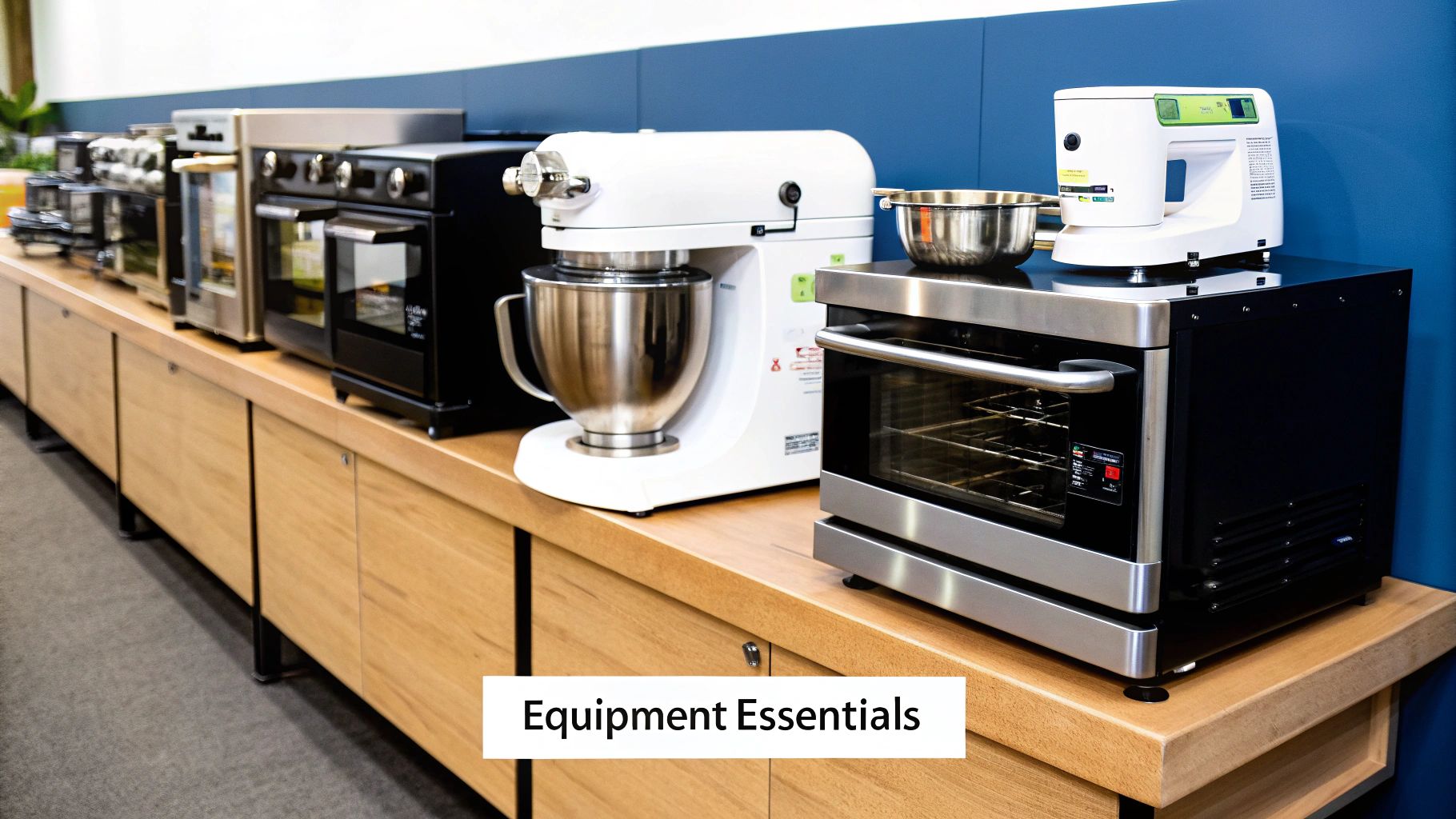
In a small commercial kitchen, every inch of counter space is prime real estate. Each piece of equipment has to earn its keep by being a workhorse, not just a space-filler. The goal is to find compact, multi-functional gear that punches well above its weight, letting you maximize output without cramming your kitchen.
This is where smart investments really pay off. Think about a combi oven that can steam delicate fish, roast vegetables, and bake bread—all in one unit. That single piece of gear just replaced three separate appliances. Or consider the massive space-saving benefits of under-counter refrigeration and slimline fryers, which keep your workflow smooth without creating bottlenecks. These are the kinds of strategic choices that boost your kitchen's capacity and, ultimately, its profitability.
Investing in Multi-Functional Powerhouses
The best equipment decisions almost always involve pieces that can pull double or even triple duty. Before you buy anything, ask yourself a simple question: "Can this do more than one thing for my menu?" Answering that honestly helps you sidestep those single-use gadgets that end up collecting dust in a corner.
The commercial kitchen appliance market is booming, and it's projected to hit USD 133.02 billion by 2030. A huge part of that growth comes from innovation in multi-functional and efficient equipment—the exact kind of gear that small kitchens need. We're seeing next-gen combi ovens with cloud-based programs and induction ranges that boast around 85% energy transfer efficiency, compared to just 40% for old-school gas cooktops.
This trend is a massive advantage for smaller operations. When you invest in equipment that consolidates your cooking processes, you get less clutter, a cleaner workflow, and a much more efficient kitchen.
Selecting the Right Commercial Charbroiler for Your Menu
For so many concepts—from ghost kitchen burger joints to upscale bistros—the commercial charbroiler is the heart and soul of the hot line. It's the machine that delivers that unmistakable smoky flavor and those perfect grill marks customers can't get enough of. But when you're working in a tight space, picking the right one is critical. You have to balance what your menu demands with your ventilation capacity and, of course, your budget.
That’s why we offer a wide selection of commercial charbroilers for your restaurant. Our lineup is designed to fit any small kitchen, with a range of infrared, gas, and electric char broilers so you can find the perfect match for your operation.
Choosing the right charbroiler can feel like a tough call, but breaking down the options by how they perform makes it much clearer. Here’s a quick comparison to help you weigh the pros and cons for your specific needs.
Commercial Charbroiler Comparison
| Charbroiler Type | Best For | Energy Efficiency | Heat Control |
|---|---|---|---|
| Infrared | Speed and searing; kitchens needing fast ticket times. | Excellent. Heats up in minutes, reducing preheat time and energy waste. | Highly responsive and direct. Cooks food quickly with intense, even heat. |
| Gas | High-volume kitchens needing that classic flame-broiled flavor. | Good. Reliable and powerful, but less efficient than infrared. | Very good. Offers powerful, consistent heat that's easy to adjust on the fly. |
| Electric | Kitchens without gas lines or those needing precise, consistent temps. | Moderate. Slower to heat but maintains temperature steadily. | Excellent. Provides precise, even heat perfect for delicate items. |
Ultimately, the best choice comes down to your menu and your kitchen's unique constraints.
- Gas Charbroilers: These are the industry standard for a reason. They deliver powerful, consistent heat and that classic flame-grilled taste. They're perfect for high-volume spots that need a reliable workhorse for steaks, burgers, and chicken.
- Electric Charbroilers: When a gas line isn't an option or you need more precise temperature control, electric models are a fantastic solution. They're often easier to install and can be a great choice for kitchens where ventilation is a major factor.
- Infrared Charbroilers: For the ultimate in speed and efficiency, infrared is a game-changer. These units heat up incredibly fast and cook with intense, direct heat. That means less preheating and faster ticket times—ideal for searing and getting a great crust without drying out the protein.
To make sure you're ticking all the boxes as you equip your space, our comprehensive commercial kitchen equipment checklist is a great resource to keep you on track.
Your menu should be the ultimate decision-maker. A steakhouse needs the raw power of a gas charbroiler, while a café grilling sandwiches might benefit more from the convenience and precision of an electric model. Let the food lead the way.
Choosing equipment isn't just about filling space—it’s a strategic investment in your kitchen's future. By focusing on multi-functionality and selecting the right tools for your specific menu, like the perfect commercial charbroiler, you build an operation that's not just compact, but incredibly powerful.
Navigating Ventilation and Safety Codes
Let's be clear: ventilation and safety codes aren't just red tape. They're the foundation of a kitchen that's both legal and safe for your team. This is especially true in a small kitchen, where heat, smoke, and grease can build up in a hurry. A proper ventilation system is absolutely non-negotiable—it protects your staff, prevents devastating fires, and ensures you sail through inspections.
Getting this right from the start means digging into the specific demands of your equipment. High-heat appliances like ranges, fryers, and particularly charbroilers are notorious for pumping out grease-laden vapors. These require a serious extraction system. Skimping here can lead to crippling fines or even a forced shutdown, so this needs to be a top priority in your initial planning.
Choosing the Right Ventilation Hood
Your first big decision is picking the right type of hood. Commercial kitchen hoods fall into two main camps, and fire and health codes are very specific about which one you need based on what's on your menu.
- Type I Hoods: These are the heavy-hitters, often called grease-capturing hoods. They are mandatory for any equipment that creates smoke and grease—think griddles, fryers, and especially charbroilers. They use baffle filters designed to trap grease particles before they can build up into a dangerous fire hazard inside your ductwork.
- Type II Hoods: These are for appliances that only give off heat and steam, like baking ovens or pasta cookers. They can't handle grease and are much cheaper, but putting one over a charbroiler is a massive code violation waiting to happen.
For almost any small commercial kitchen with a hot line, a Type I hood is going to be the only real option. Given the tight squeeze you're likely working with, it’s worth looking into low-profile or back-shelf hood designs. These are engineered specifically for smaller spaces and can save you critical overhead room without compromising on performance.
Calculating Your Airflow Needs
Once you’ve settled on the hood type, you need to make sure it has enough muscle for your kitchen. This power is measured in Cubic Feet per Minute (CFM), which tells you how much air the system can move. An underpowered hood is a serious safety hazard; it won't pull out the smoke and heat effectively. Go too big, and you're just throwing money away on your energy bill every month.
Figuring out the right CFM depends on your hood and the size of your cooking line. A common formula for wall-mounted canopy hoods is to multiply the hood's length in feet by a specific CFM factor. This number can range from 150-400 CFM per linear foot, depending on how intense your cooking equipment is.
Getting the CFM calculation right is a balancing act. You need to guarantee air quality and safety without installing a jet engine that sends your utility bills through the roof. My advice? Bring in an HVAC pro who specializes in commercial kitchens. It's an investment that pays for itself.
You can dive deeper into the technical side by exploring some comprehensive guides on commercial kitchen ventilation requirements. It’s smart to get a handle on the specifics before you make a purchase.
Fire Suppression and Beyond
A good ventilation hood is just one piece of the safety puzzle. Every single Type I hood must have an integrated fire suppression system. These systems are designed to automatically unleash fire-retardant chemicals over your cooking line if a fire breaks out, smothering the flames instantly.
Beyond the hood itself, safety codes touch on other critical areas:
- Clear Egress: Make sure all your exits are clear and easy to get to. No exceptions.
- Proper Signage: You need clear, visible signs for fire extinguishers, exits, and first-aid kits.
- Regular Maintenance: Every system, from your ventilation to your fire suppression, needs professional inspections and cleanings (usually semi-annually), and you better have the paperwork to prove it.
Finally, remember that the hardware you install is only half the battle; daily operational safety is just as important. Codes also cover strict hygiene standards. Using a solid commercial kitchen cleaning checklist is essential for food safety and staying compliant. Passing your inspections comes down to having the right gear and proving you take meticulous care of it.
How to Future-Proof Your Kitchen Operations
It’s one thing to design a kitchen for today’s menu. It’s another thing entirely to build one that’s ready for tomorrow. The foodservice world never sits still—new tech, ghost kitchens, and shifting customer tastes are constantly rewriting the rules.
Future-proofing isn't about gazing into a crystal ball. It’s about building in flexibility right from the start. A few smart decisions now can keep your kitchen humming efficiently and profitably for years, allowing you to pivot with the market instead of being left behind by it.
Embracing Delivery-First Design Principles
The explosion of delivery and cloud kitchens has totally changed the game. When your main customer is a delivery driver, not a diner in a seat, your whole workflow needs a rethink. It’s all about speed, accuracy, and a tightly choreographed assembly line.
In this model, the "pass"—where dishes are handed off—isn't for servers anymore. It's for packers. This packing station becomes mission control, demanding dedicated space for containers, bags, and order consolidation. Your layout needs a clear, straight shot from the cook line to the packing station and out the door to the driver pickup area. Any crossover or bottleneck will kill your ticket times.
For a delivery-focused kitchen, every single second you can shave off the order-to-pickup time is a victory. Design a clear, unobstructed path for finished orders. A driver should be able to walk in, grab the bag, and leave without ever getting in your kitchen crew's way.
This kind of setup demands meticulous planning, where you place equipment not just for cooking efficiency but for how it fits into that rapid-fire assembly process. It’s a specialized approach that puts volume and speed above all else.
The Rise of Smart, Connected Appliances
Kitchen tech is no longer a "nice-to-have"—it's a critical tool for survival. Smart, IoT-enabled appliances are quickly becoming standard issue in small commercial kitchens, and for good reason. They offer powerful ways to boost efficiency and, most importantly, prevent catastrophic downtime.
These connected gadgets give you real-time data on everything from temperature swings to energy use. Imagine your freezer sending an alert to your phone the second its temperature creeps up, saving you thousands in spoiled inventory. Or a combi oven that flags a potential maintenance issue before it fails on a slammed Saturday night. That’s the power of predictive maintenance.
This trend is a huge part of why the commercial kitchen appliance market, valued at around USD 98.34 billion, is expected to hit USD 149.34 billion by 2030. A big driver of that growth is the rise of cloud kitchens, which absolutely depend on specialized, hyper-efficient equipment to turn a profit.
Adapting to Evolving Consumer Palates
Customer tastes are always in motion. A decade ago, a gluten-free option was a novelty. Today, it’s an expectation. The same goes for the growing demand for plant-based dishes. A kitchen designed purely for meat-and-potatoes cooking is going to struggle.
Future-proofing your equipment lineup means being ready for this dietary diversification. Here’s what that looks like in practice:
- Dedicated Prep Space: To prevent cross-contamination and keep vegan customers happy, you’ll likely need a separate, dedicated prep area for plant-based ingredients.
- Specialized Cookware: Think about investing in a separate griddle top or a specific section of your charbroiler just for vegetarian items. This stops flavor transfer and shows you respect your customers' dietary needs.
- Multi-Functional Gear: This is where equipment like combi ovens really proves its worth. You can use one unit to perfectly steam vegetables, bake plant-based goods, and roast proteins—often with pre-programmed settings to ensure consistency.
The need to handle a diverse menu is exactly why flexible, multi-use equipment is such a smart investment. A kitchen that can pivot to new food trends without a complete overhaul is a kitchen that will stay profitable for the long haul.
Of course, all this smart equipment is only as good as the environment it runs in. To keep everything operating at peak performance, check out this comprehensive Commercial HVAC Preventative Maintenance Guide. Regular upkeep is the final piece of the puzzle to safeguard your investment for years to come.
Answers to Your Top Kitchen Questions
Even with the most meticulous plan, you’re going to hit a few snags when designing a small commercial kitchen. Let's tackle some of the most common questions I hear from operators trying to get the most out of a tight space.
What Is the Most Critical Piece of Equipment?
This always comes down to your menu, but if I had to pick one MVP for most small kitchens, it’s the combi oven. It’s a game-changer. You get a steamer, a convection oven, and a roaster all in one box, which frees up an incredible amount of space by replacing three separate appliances.
But there's a big exception. If your concept is built around the grill—say, a ghost kitchen slinging burgers or a bistro known for its steaks—then a high-quality commercial charbroiler becomes your non-negotiable cornerstone. That signature char and flavor are your brand, and you just can't fake it with anything else.
How Can I Maximize Storage in a Limited Space?
In a small kitchen, you have to go vertical. It’s all about using every square inch of wall and floor without choking your workflow.
- Shelve High: Get tall, heavy-duty shelving units and run them as close to the ceiling as you can. This is your spot for dry goods and equipment you don't need every minute.
- Use Your Walls: Magnetic knife strips and pot racks are your best friends. This simple move gets bulky items off your precious counter space instantly.
- Rethink Under-Counter Space: Swap out traditional cabinets for under-counter drawers. They're way more organized and you can see everything at a glance without having to dig into a dark cabinet.
- Get Mobile: Bring in rolling shelving units or carts. They give you incredible flexibility to reconfigure your storage on the fly as menus or prep needs change.
What Are the Biggest Layout Mistakes to Avoid?
The most common mistake I see is a poorly planned workflow. This is what causes the dreaded "kitchen dance," where staff are constantly bumping into each other and creating bottlenecks right in the middle of a rush. It’s chaotic and kills ticket times.
Another huge error is blocking access to critical zones like the walk-in, sinks, or the dish pit with a badly placed piece of equipment. Every time someone has to squeeze by, you're losing seconds and creating a safety hazard.
Finally, people always underestimate the need for proper landing space next to hot equipment. You need a clear, heat-proof spot to put down a hot pan from an oven, a basket from a fryer, or a tray of steaks off the charbroiler. Not having this is both dangerous and a massive drag on efficiency.
A well-designed kitchen anticipates movement. Every piece of equipment should be positioned to minimize steps and support a logical, circular flow of traffic, preventing the chaotic "kitchen dance" that slows down service.
Do I Always Need a Type I Ventilation Hood?
If you’re using any equipment that kicks out grease-laden vapors, then yes, you absolutely need a Type I hood. There’s no getting around it. We’re talking charbroilers, griddles, ranges, and fryers. Local health and fire codes are incredibly strict on this to prevent fires.
Now, if you have equipment that only produces heat and steam—like a convection oven used just for baking bread—you might be able to get by with a less expensive Type II hood. But here's the critical part: you must talk to your local code enforcement office before you buy anything. Get their official sign-off to ensure you're 100% compliant.
At Charbroilers, we get that the right equipment is the heart of a successful kitchen. Our wide selection of commercial charbroilers is built to handle the demands of any operation, big or small. Dive into our infrared, gas, and electric models to find the perfect powerhouse for your restaurant. Visit us at https://charbroilers.com to find the equipment your menu deserves.