

Best Ice Cream Display Freezers: A Sweet Selection Guide
Why the Right Display Freezer is Your Secret Sales Weapon
The best ice cream display freezer isn't just a storage unit—it's a powerful marketing tool that protects your product quality while driving impulse purchases. To make the right choice, you must prioritize key features like precise temperature control, the appropriate display type for your business, sufficient capacity, energy efficiency, and durable build quality.
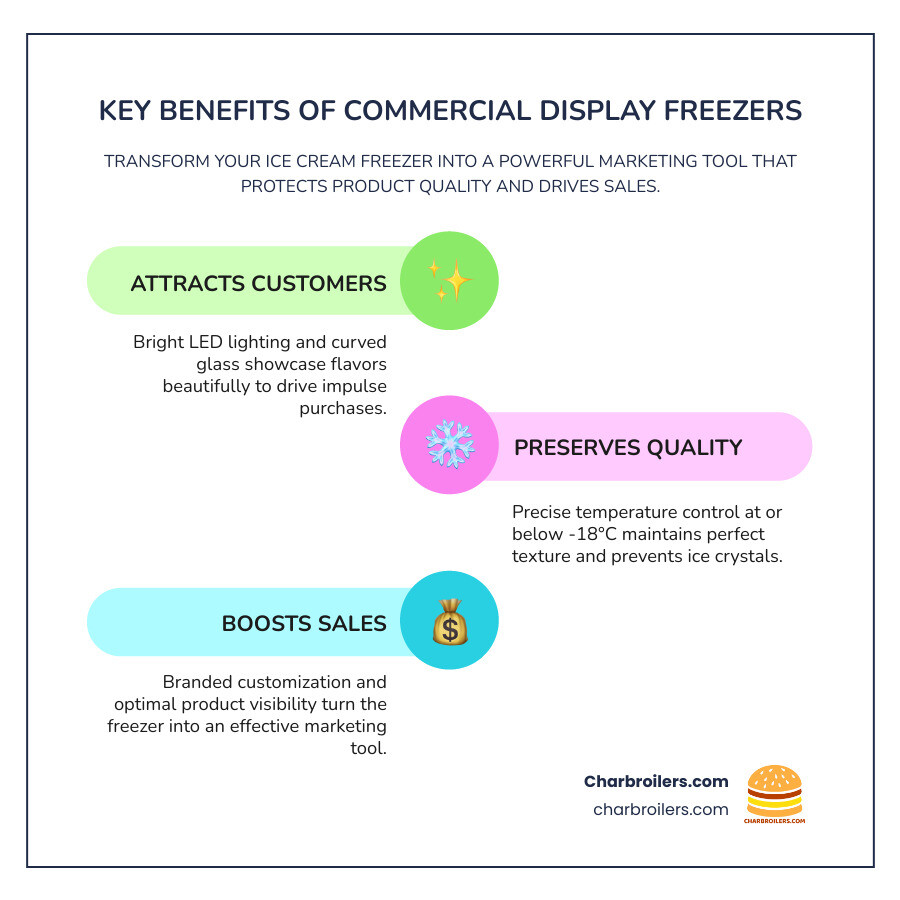
A freezer must maintain a consistent temperature of -18°C (-0.4°F) or below to prevent melting and the formation of unpleasant ice crystals that ruin texture. A substandard freezer will damage your ice cream's taste—and your reputation. Beyond preservation, the right display freezer showcases your flavors beautifully, attracts customers with proper lighting and visibility, and can even serve as a branded advertising tool.
The variety of commercial ice cream freezers is impressive, from large chest freezers to sleek display cabinets and compact countertop units. Each type serves different business needs, from busy ice cream parlors to restaurants offering ice cream as a dessert option.
I'm Sean Kearney from Charbroilers.com, and after over a decade in the restaurant equipment industry, I've helped countless businesses find the best ice cream display freezer for their specific needs at fair prices. This guide will walk you through the essential features, types, and considerations to make a smart investment that boosts both product quality and sales.
Simple best ice cream display freezer glossary:
- nsf ansi standard 7 commercial refrigerators and freezers
- commercial deep freezer
- commercial chest freezer 7 cu ft
Decoding the Chill: Types of Ice Cream Display Freezers
Choosing the best ice cream display freezer starts with understanding that there's no one-size-fits-all solution. Your ice cream parlor has different needs than a convenience store, and a busy restaurant faces different challenges than a small café. The good news? There's a freezer type perfectly suited for each scenario.
Think of it this way: you wouldn't use a charbroiler to make French fries, right? The same logic applies here. Let's break down the three main types of commercial ice cream freezers and help you figure out which one matches your business model.
Scooping / Dipping Cabinets
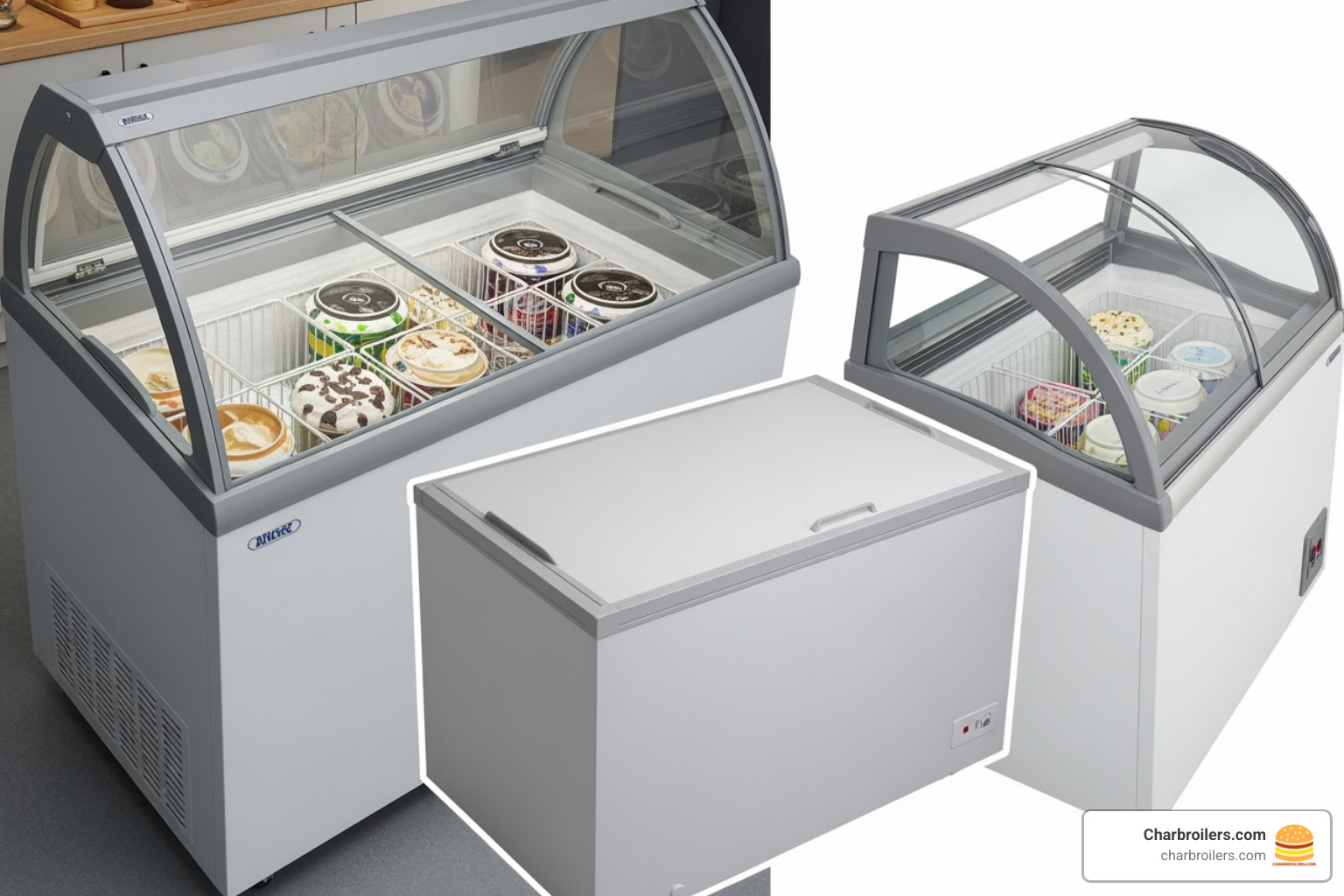
Walk into any thriving ice cream parlor, and you'll immediately notice the beautiful display cabinet showcasing rows of colorful flavors. That's a scooping cabinet—the showpiece of the ice cream world. These units are designed specifically to put your product on stage, encouraging customers to point, choose, and often add "just one more scoop."
The magic is in the glass top design. You'll find two main styles: curved glass offers that classic, panoramic view that draws the eye from across the room, while flat glass provides a sleeker, more modern aesthetic. Both work beautifully; it's really about your shop's vibe.
What makes these cabinets truly valuable is their dual-zone capacity. The display area up top typically holds your active flavors in large Napoli pans (usually 5-liter capacity), while generous under-storage below keeps backup stock frozen and ready. This means your staff isn't constantly running to a back freezer during the dinner rush. These cabinets shine brightest in dedicated ice cream parlors and gelaterias where customer interaction and flavor selection are part of the experience.
Horizontal Chest Freezers
If scooping cabinets are the performers, horizontal chest freezers are the reliable workhorses. You've seen these in every convenience store and supermarket—those low-profile units with sliding glass tops that let customers help themselves to pints, novelty bars, and pre-packaged treats.
The design is brilliantly simple. Those sliding glass tops provide excellent visibility while creating an energy-efficient seal that keeps cold air where it belongs. Customers can browse your entire selection without staff assistance, which speeds up service during busy times and reduces labor needs.
Storage capacity is where chest freezers really impress, with many units offering 20 cubic feet of space or more, often organized with baskets for easy product separation. That versatility makes them surprisingly useful for shops that do both scooping and packaged sales.
Energy efficiency is another major advantage. The horizontal design naturally keeps cold air settled at the bottom (cold air sinks, after all), meaning these units typically use less electricity than upright models. For high-volume locations running freezers 24/7, those savings add up quickly.
Countertop Display Freezers
Not every business needs a massive freezer taking up precious floor space. Maybe you're running a cozy café where ice cream is the perfect complement to your coffee service, or a restaurant wanting to offer a simple dessert option. That's where countertop units come in.
These compact freezers are all about space-saving efficiency. They sit right on your counter, typically holding just a few pans or several pints—enough to showcase your most popular flavors without overwhelming your limited space. Think of them as the "greatest hits" display rather than the full album.
The beauty of countertop units is their flexibility. They work beautifully in restaurants offering ice cream as a supplementary dessert option, bakeries adding a cold treat to complement warm pastries, or small cafes testing the ice cream waters before committing to a larger unit. They're about making ice cream accessible and visible in spaces where a full-sized cabinet simply isn't practical.
Key Features to Look for in the Best Ice Cream Display Freezer
Finding the best ice cream display freezer goes far beyond picking a type. The real magic—the difference between serving perfect scoops and dealing with icy, grainy disappointments—lies in the specific features your freezer offers. Let's dig into what truly matters for keeping your ice cream pristine, your costs manageable, and your customers smiling.
Temperature Precision and the Perfect Scoop
Here's a truth that every ice cream business owner learns quickly: temperature precision isn't negotiable. Your freezer must maintain temperatures at or below -18°C (-0.4°F) consistently. This isn't arbitrary—this exact temperature prevents melting and stops those awful ice crystals from forming that ruin texture.
When temperatures creep above -18°C, even temporarily, ice cream begins to soften. Worse still, when it refreezes, you get that grainy, icy texture that customers can spot immediately. Commercial refrigeration naturally fluctuates, which is why investing in a unit with digital temperature control makes such a difference. Some specialty frozen treats even require temperatures as low as -26°C (-14.8°F), so having that flexibility protects your ability to expand your offerings.
The best ice cream display freezer will give you reliable digital thermostats and tight temperature control, ensuring every scoop is as perfect as the last. For more insights on maintaining proper temperatures in commercial refrigeration, our guide on cool compliance: your guide to nsf ansi standard 7 for refrigerators and freezers offers additional details.
Finding the Best Ice Cream Display Freezer with the Right Capacity
Capacity is where many businesses either set themselves up for success or create constant headaches. It's not just about physical dimensions—it's about understanding both your display capacity (what customers see) and your under-storage volume (your backup supply).
Smart businesses start with pack-out calculations. Send your package dimensions or pan specifications to suppliers, and they can show you exactly how many items will fit. This visualization prevents expensive surprises after delivery.
A good scooping cabinet might hold 16 pans in the visible display area, plus another 14 pans in under storage. For businesses focused on packaged goods, a chest freezer might provide 20 cubic feet of storage organized with baskets.
Your business volume should drive this decision completely. Think about your peak times—summer weekends, after-school rushes, whatever drives your business—and plan for those moments when demand spikes. The right capacity means you're never scrambling or disappointing customers.
Defrosting Systems: Manual vs. Automatic
Defrosting sounds mundane until you've lost revenue emptying a freezer to chip away ice buildup. The defrost system you choose directly impacts your maintenance burden, energy costs, and product safety.
Manual defrost systems come with a lower upfront cost and simpler mechanics. But that savings comes with strings attached: significant downtime, labor-intensive cleaning, and the logistical challenge of temporarily relocating all your product.
Automatic defrost systems handle this process without your intervention. The convenience is obvious, but the real benefit is maintaining consistent temperatures without manual disruption. The premium option is hot gas defrost technology. These advanced systems can clear ice buildup in as little as 5 minutes, preventing the kind of ice accumulation that reduces cooling efficiency and strains compressors. This isn't just about convenience—it's about protecting your equipment investment.
Construction, Materials, and Durability
Your ice cream display freezer is a long-term investment. Stainless steel construction is the gold standard for commercial freezers. It resists corrosion, withstands the constant bumps of busy service, and cleans easily—a critical factor for maintaining health standards.
The quality of glass components matters more than you might think. Features like anti-fog glass ensure customers can always see your offerings clearly. Mobility might seem like a minor feature until you need to clean behind your freezer. Units with caster wheels give you flexibility without sacrificing stability. Investing in quality construction means fewer repairs, longer lifespan, and ultimately, better value for your business.
Maximizing Sales: Display, Branding, and Efficiency
A commercial ice cream display freezer is much more than a cold boxit's a dynamic sales tool that works for you 24/7. The way it looks, how efficiently it runs, and whether it carries your brand can make the difference between a customer walking past or stopping to buy. Let's explore how the best ice cream display freezer can become your hardest-working employee.
Visual Merchandising and Lighting
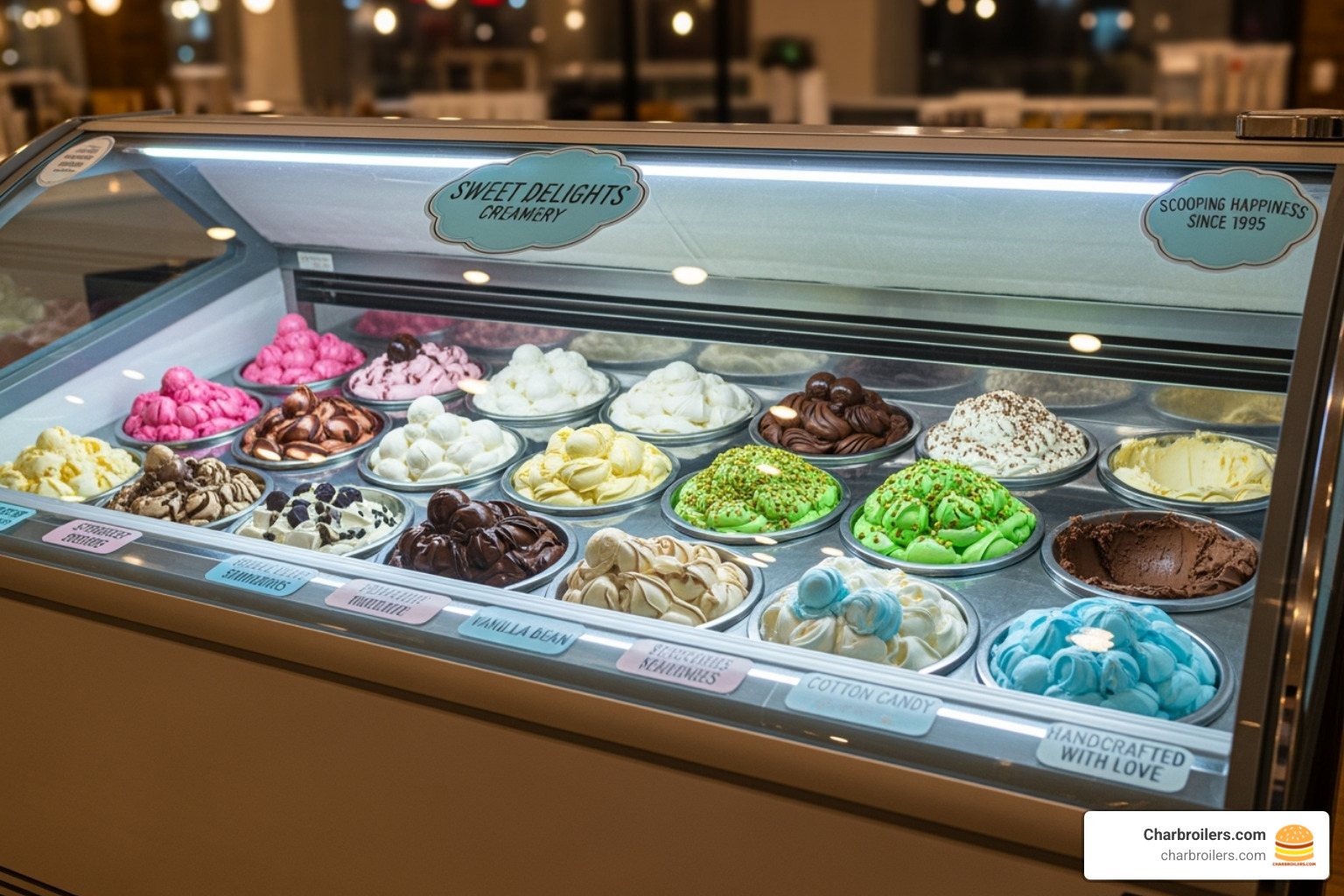
Think about the last time you walked past an ice cream display. What made you stop? Chances are, it was the visual appealthose gorgeous colors, the inviting presentation, and the lighting that made everything look irresistible.
LED lighting is the secret weapon of modern ice cream displays. Bright, energy-efficient LEDs illuminate your ice cream beautifully, making vibrant colors pop and highlighting creamy textures. Curved glass designs can offer a panoramic view that draws customers in from multiple angles, as excellent product visibility is key to attracting buyers.
Don't overlook anti-fog features, either. Anti-fog glass ensures crystal-clear visibility at all times, keeping your beautiful display visible even during busy periods. A well-organized display with proper lighting transforms your ice cream from a simple dessert into something customers actively crave.
Energy Efficiency and Cost of Ownership
Here's a truth that surprises many new freezer owners: the sticker price is just the beginning. The real cost of a best ice cream display freezer reveals itself over months and years through your utility bills and maintenance needs.
Energy efficiency ratings should be near the top of your priority list. Highly-rated units consume significantly less power, and those savings compound over the freezer's lifetime. Modern inverter compressors are game-changers for efficiency, as they adjust their speed based on demand rather than constantly cycling on and off, which saves energy and reduces wear.
The choice of refrigerant matters too. R290 refrigerant is an environmentally friendly option that also performs efficiently. An efficient automatic defrost system also contributes to savings by preventing the compressor from overworking. Don't forget about warranty and service options, which protect your investment and minimize downtime. For more insights on maintaining commercial cold equipment efficiently, our guide on Cool Choices for Commercial Ice Maker and Bin Setups offers additional valuable information.
Customization and Branding
Your ice cream display freezer can be more than just functionalit can be a powerful extension of your brand.
Custom branding stickers and designs transform a standard freezer into an advertising tool. Lightboxes with your brand illuminated can catch the eye from across a busy room. Custom colors take personalization even further, allowing you to match the freezer to your brand's signature color or interior design. This creates a cohesive, professional look and a unique aesthetic that improves brand recall. With a little extra customization, your investment becomes a marketing asset that attracts customers and reinforces your brand identity.
Choosing the Right Freezer for Your Business
Selecting the best ice cream display freezer isn't a one-size-fits-all decision. Your business type, space constraints, and customer interaction style all play crucial roles. Before we dive into specific recommendations, it's worth understanding why a commercial freezer is essential rather than trying to make do with a residential unit.
Commercial freezers are engineered for business environments. They handle frequent opening without losing temperature, maintain the precise temperatures needed for ice cream, offer superior display features, and use durable materials. Perhaps most importantly, they meet health and safety regulations that residential units don't. In short, a commercial freezer is a professional tool for a professional job.
For High-Volume Parlors: The Best Ice Cream Display Freezer for Scooping
If you're running a busy ice cream parlor, your freezer is the centerpiece of your operation. You need capacity, presentation, and efficiency. This is where large scooping or dipping cabinets truly shine.
Capacity is king in a high-volume environment. Look for units that can hold many pans on display and have ample under-storage for backup stock. This dual display and storage approach means you're never scrambling to restock during a rush. Essential service accessories include integrated dipper wells for hygiene and preventing flavor cross-contamination, and sneeze guards for maintaining food safety standards. Durability matters tremendously, so a robust build with easy-to-clean surfaces like stainless steel is a must.
For Restaurants & Cafes: Compact and Versatile Options
If you're running a restaurant or cafe, ice cream is likely a complementary offering. Here, space-saving design and versatility become your top priorities.
Countertop units are often the perfect solution for limited spaces. They offer a small footprint while still allowing for an attractive display of a few signature flavors. If you need a bit more capacity, a compact dipping cabinet that holds fewer pans can strike the right balance.
Ease of use for staff is another crucial consideration. Features like sliding glass lids for overnight storage make life simpler for your team. The goal is to offer an appealing ice cream option that improves your dessert menu without overwhelming your kitchen or front-of-house area.
For Convenience Stores & Markets: Grab-and-Go Solutions
Convenience stores and markets operate on a different model. Your customers want to see their options clearly, grab what they want, and go. This calls for freezers that maximize visibility for packaged goods and facilitate quick, self-service purchases.
Glass top chest freezers are the undisputed champions for this environment. Their large, clear sliding glass tops offer excellent visibility for pre-packaged ice cream and novelties, encouraging impulse purchases. Security features become important in self-service environments. A built-in lock protects your inventory during off-hours. The ease of customer access should be paramount, allowing shoppers to easily browse and retrieve items without assistance.
Frequently Asked Questions about Ice Cream Display Freezers
Running a food service business means dealing with plenty of questions, and when it comes to ice cream display freezers, we hear the same ones again and again. Let me share what I've learned over the years to help you make the smartest decision for your operation.
What is the ideal temperature for storing and serving ice cream?
This is probably the most critical question we get, and the answer is straightforward: keep your ice cream at or below -18°C (-0.4°F). This isn't just a suggestion—it's essential for maintaining quality.
At this temperature, your ice cream stays smooth and creamy, without the annoying ice crystals that ruin texture. It also protects the flavor integrity of your product and reduces waste. A few degrees make all the difference, and the best ice cream display freezer will maintain this critical temperature consistently.
What are the main benefits of a commercial freezer over a standard residential one?
I get it—when you're starting out, a residential freezer looks tempting. But it's just not built for the job.
Commercial freezers are designed for frequent opening and can recover temperature quickly in a busy shop. The build quality and durability are in a completely different league, with components designed to run 24/7 for years. They also feature LED lighting and anti-fog glass that help you sell more product.
Finally, commercial units meet the health and safety regulations required for food service businesses, and they are often more energy-efficient under heavy commercial use. For more insights on commercial cold equipment standards, our guide on cool compliance: your guide to nsf ansi standard 7 for refrigerators and freezers covers the important regulations you need to know.
How important is the defrost system in an ice cream freezer?
Very important. The defrost system is one of those features that quietly saves you money and headaches. Every time a freezer is opened, moist air enters and can form ice on the cooling coils. This ice buildup forces the compressor to work harder, driving up energy costs and wearing out the equipment.
An automatic defrost system, especially one with hot gas technology, prevents this ice buildup before it becomes a problem. It maintains optimal cooling performance without any intervention from you or your staff. This saves hours of downtime and labor costs associated with manual defrosting. A reliable defrost system also extends your freezer's lifespan by preventing the compressor from overworking.
Conclusion: A Cool Decision for a Hot Product
Finding the best ice cream display freezer for your business really does matter—and I hope this guide has shown you exactly why. We're not talking about just another appliance. We're talking about an investment that protects your product, makes your customers smile, and boosts your bottom line.
Throughout this guide, we've explored the different types of freezers—from scooping cabinets to chest freezers and countertop units. We've also dug into the features that truly matter: maintaining that crucial -18°C temperature, planning for capacity, choosing an automatic defrost system, and selecting durable materials. The right freezer also becomes a sales tool, with LED lighting and customization options that turn it into a branded showcase.
The right freezer preserves quality, attracts customers, and contributes real value to your operation. Whether you're running a high-volume parlor, a cozy cafe, or a busy convenience store, there's a perfect freezer solution waiting for you.
At Charbroilers.com, we've spent over a decade helping food service businesses make smart equipment decisions. We know that choosing commercial kitchen equipment is about finding reliable tools that help you serve great food and build your business. We're here to answer your questions, help you compare options, and ensure you get fair pricing on equipment that truly fits your needs.
Make an informed choice today, and give your ice cream the showcase it deserves. Your customers—and your sales numbers—will thank you for it.