

Unlock the Flavor: How to Season Your Commercial Griddle Like a Pro
Why Seasoning Your Commercial Griddle is Critical for Success
How to season a commercial griddle is a fundamental skill every restaurant owner and chef must master. Here's the quick answer:
Basic Seasoning Process:
- Clean the griddle surface with mild detergent and water, then dry completely
- Heat the griddle to 300-350°F for 30 minutes
- Apply a thin, even layer of high smoke point oil (like grapeseed or vegetable oil)
- Heat until the oil smokes, then let it cool completely
- Repeat 2-3 times until the surface is dark brown and uniform
- Maintain by applying a thin oil coat after each use
Seasoning transforms a bare metal griddle into a non-stick cooking powerhouse. Through a process called polymerization, cooking oil bonds to the metal surface at high heat, creating a blackened, stick-resistant coating that doesn't scratch. This layer prevents food from sticking, stops rust from forming, and adds flavor to every dish you cook.
Without proper seasoning, you'll face constant headaches: food that tears apart, uneven browning, rust spots, and a griddle that wears out years before it should. A well-seasoned griddle, on the other hand, becomes more valuable over time. The coating builds up with use, creating a surface that rivals any non-stick pan while handling the intense heat and volume of commercial cooking.
I'm Sean Kearney from Charbroilers.com. Over the past decade in the restaurant equipment industry, I've helped countless kitchens master how to season a commercial griddle properly. My experience has taught me that the right technique makes all the difference between equipment that frustrates your staff and equipment that becomes your kitchen's MVP.
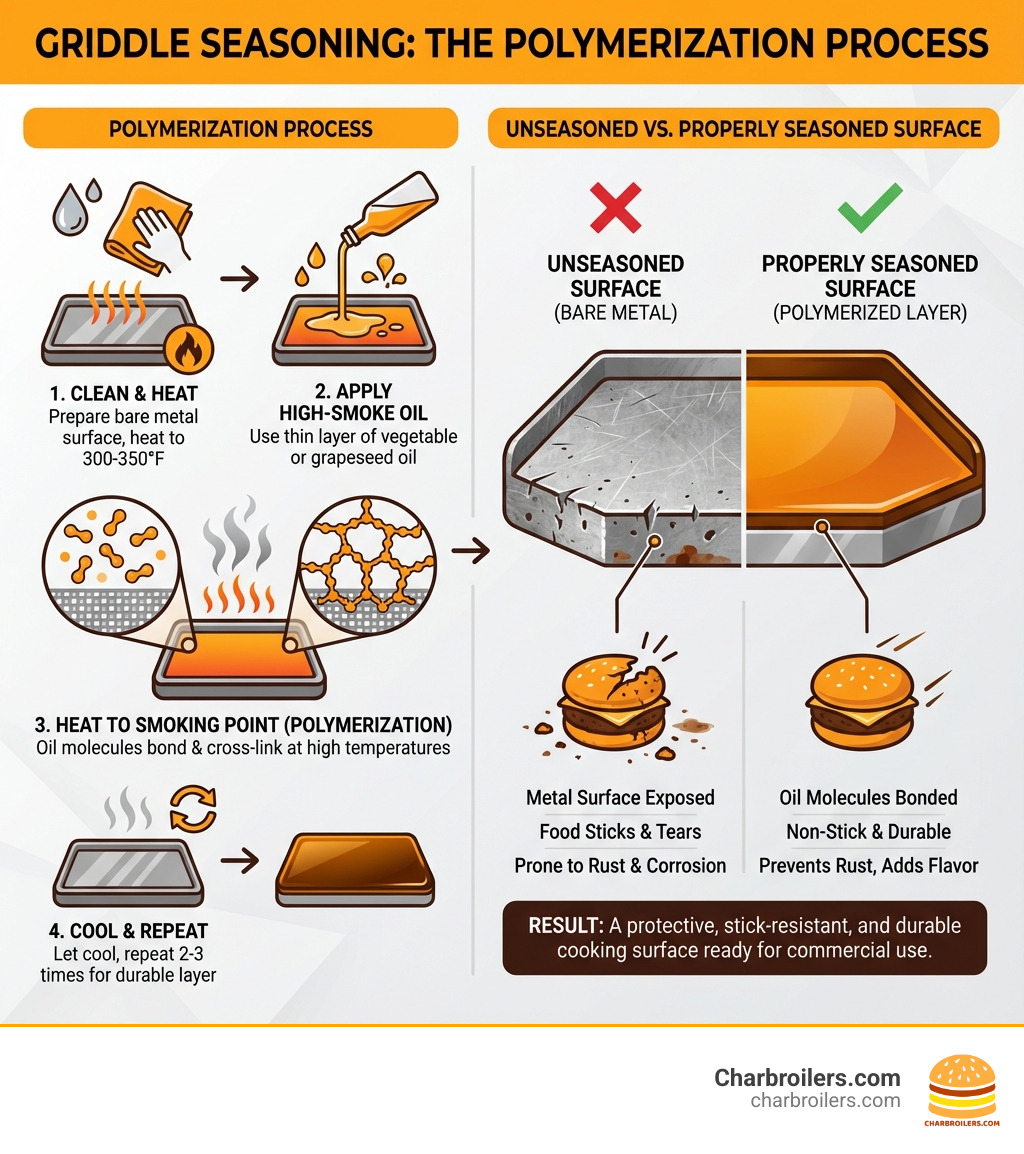
How to season a commercial griddle terms to learn:
Pre-Seasoning Prep: Gathering Your Tools and Supplies
Before you learn how to season a commercial griddle, gathering the right tools and supplies is essential. Proper prep makes the process smoother and ensures a lasting, effective seasoning.
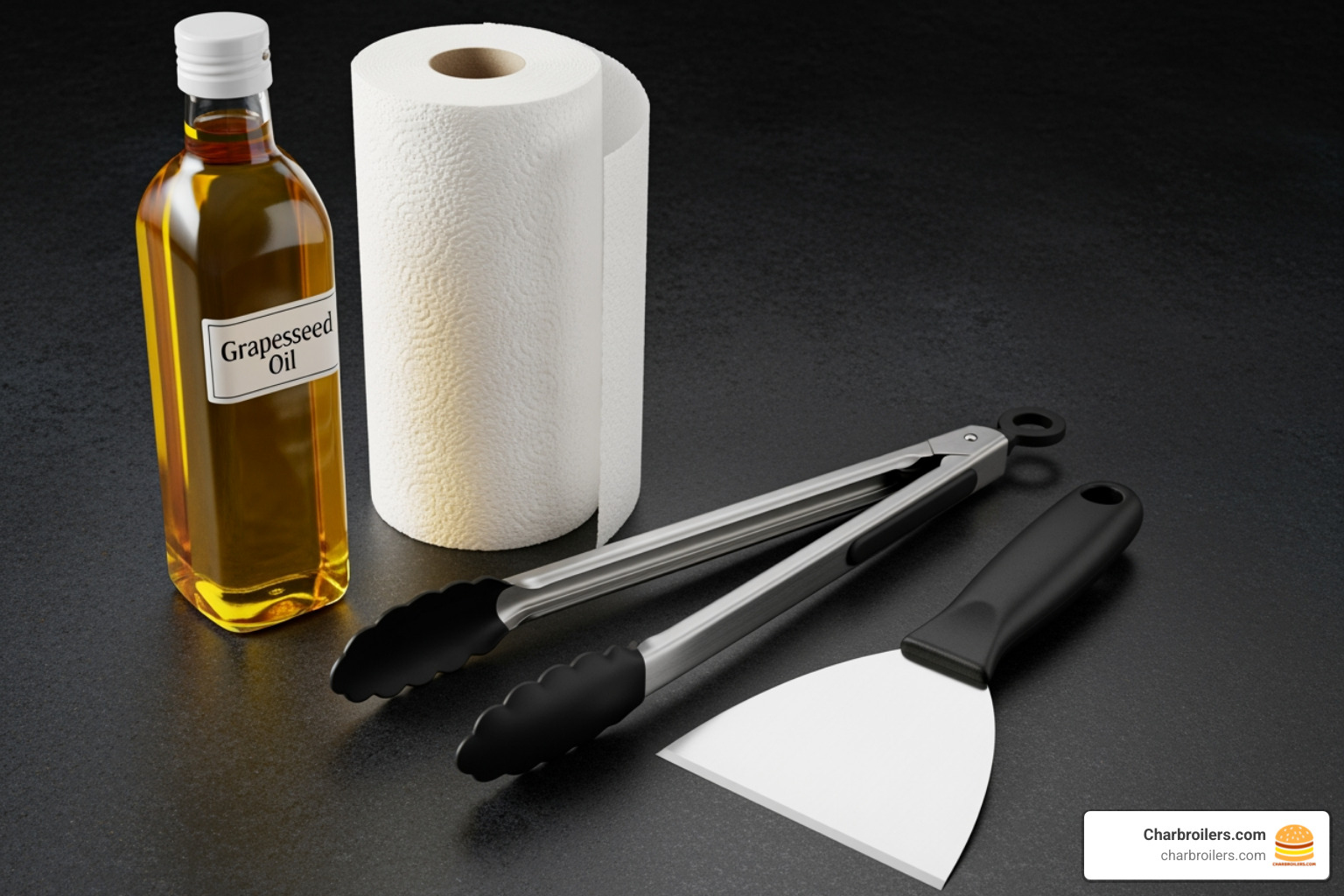
Choosing the Right Oil
The oil you choose is paramount for successful seasoning. You need an oil with a high smoke point and a neutral flavor. A high smoke point means the oil can withstand the heat required for polymerization without burning and leaving a bitter residue. A neutral flavor ensures your seasoning won't impart unwanted tastes to your dishes.
Our Top Picks for Seasoning Oils:
- Grapeseed Oil: Known for its very high smoke point and neutral flavor, making it an excellent choice.
- Canola Oil: A widely available and economical option with a good smoke point.
- Avocado Oil: Boasts one of the highest smoke points, perfect for intense heat, though it can be pricier.
- Vegetable Oil: A common and effective choice, often a blend of oils with a suitable smoke point.
- Peanut Oil: Recommended by some manufacturers for its high smoke point.
- Cultured Oil and Ghee: Also suggested for their appropriate smoke temperatures.
- Coconut Oil: Can be used, but ensure it's refined to avoid a strong coconut flavor.
Oils to Avoid:
- Corn Oil: Its high sugar content can cause it to caramelize and burn, leading to sticky gunk.
- Olive Oil (especially Extra Virgin): Generally has a lower smoke point and a distinct flavor that can transfer to your food.
- Butter: Has a very low smoke point and will burn quickly, creating a sticky mess.
The goal is to create a durable, non-stick surface, not a sticky, caramelized one!
Essential Tools
Having the right tools on hand will make the seasoning process safe and efficient:
- Lint-free Cloths or Paper Towels: For applying and wiping off oil.
- Long-Handled Tongs: Essential for safely holding paper towels or cloths when working on a hot surface.
- Griddle Scraper: To remove any debris or excess oil.
- Mild Detergent and Warm Water: For the initial cleaning of a new griddle.
- Heat-Resistant Gloves/Mitts: For added protection when handling hot tools.
Initial Cleaning: Starting with a Clean Slate
New commercial griddles come with a protective coating applied by the manufacturer to prevent rust during shipping. This coating must be thoroughly removed before seasoning.
Here's how we tackle the initial clean:
- Ventilation is Key: Ensure your kitchen's ventilation system is on and working effectively. This is crucial for dissipating fumes during both cleaning and seasoning.
- Wash with Soap and Water: For the very first clean, use hot water and a mild detergent. This is the only time soap should be used on the griddle surface. Scrub it down to remove all traces of the manufacturer's oil.
- Rinse and Dry Completely: Rinse the griddle thoroughly with clean water to remove all detergent residue. Then, dry it completely. Any moisture left behind can lead to rust when you start heating.
A clean, dry surface is the foundation for successful seasoning. For more in-depth cleaning tips for your griddle, you can always refer to our guide on The Ultimate Guide to Cleaning a Commercial Stainless Steel Griddle.
The Step-by-Step Guide on How to Season a Commercial Griddle
With supplies gathered and the initial clean done, it's time to season your commercial griddle. This process is about building layers with patience and understanding the science behind it.
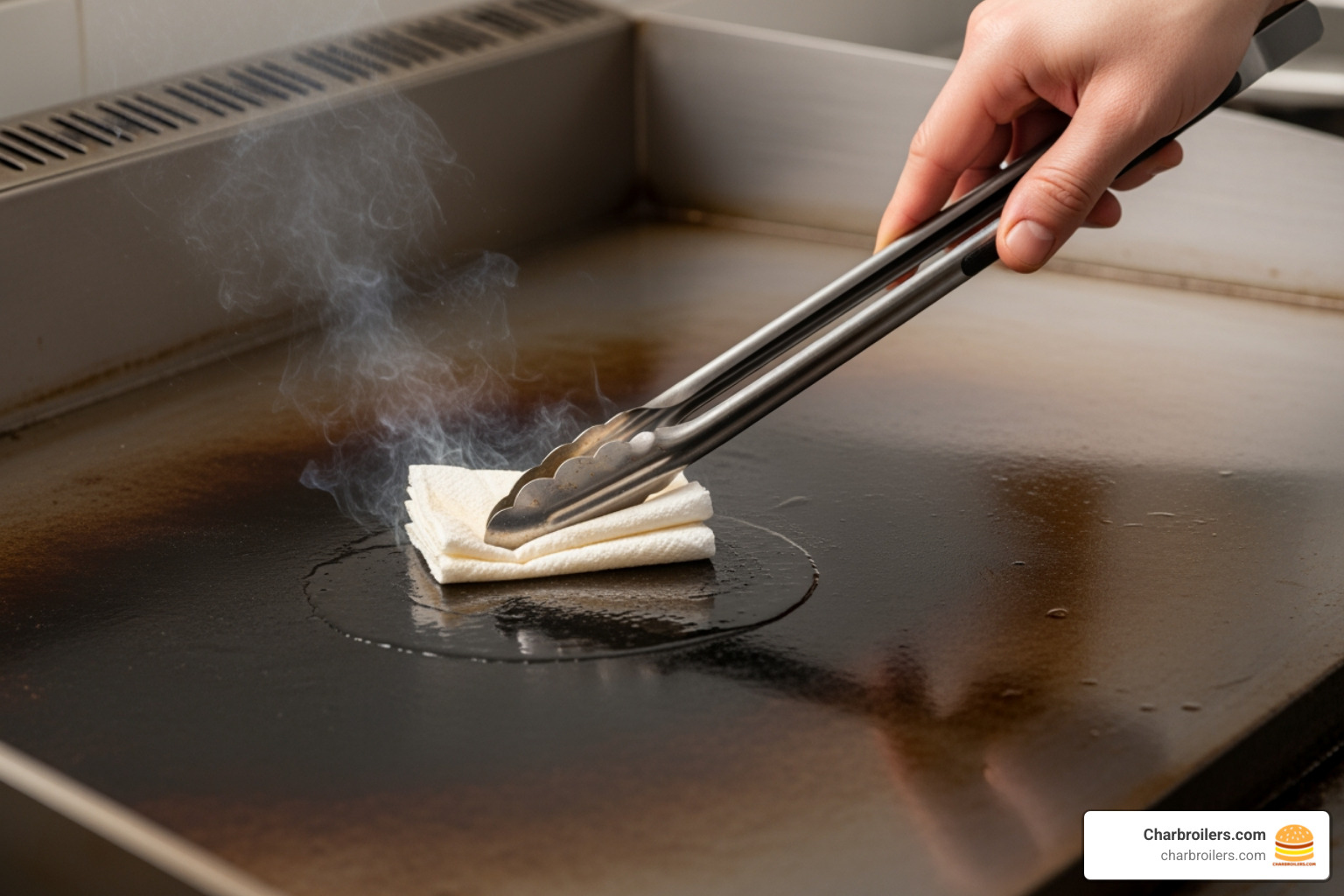
Proper Ventilation
First, ensure proper ventilation. Seasoning produces smoke and fumes, so a well-functioning commercial hood system is non-negotiable for keeping your kitchen air clear and safe.
Step 1: The "Burn-In" (Heating to 300-350°F)
This initial heating opens the pores of the metal to accept the oil.
- Turn on the Griddle: Set your griddle burners to a medium-high heat, aiming for a surface temperature of 300°F to 350°F (150°C – 175°C).
- Heat for 30 Minutes: Let the griddle heat at this temperature for approximately 30 minutes. The surface may start to change color.
- Cool Down: Turn off the griddle and allow it to cool down completely, which usually takes about 30 minutes.
Step 2: Applying the First Coat (Thin, Even Layer)
The key here is thin. Too much oil is a common mistake that leads to a sticky, gummy surface.
- Warm Surface: While the griddle is still slightly warm, pour a small amount of your chosen high smoke point oil (about 1-2 tablespoons) onto the center.
- Spread Evenly: Using lint-free paper towels held with long-handled tongs, spread the oil evenly across the entire griddle surface, including the edges. Imagine you're trying to wipe all the oil off, leaving just a thin sheen. There should be no visible puddles. If oil begins to bead, wipe the excess away.
Step 3: Reaching the Smoke Point (Heating until Smoking Stops)
This is where polymerization happens.
- Reheat the Griddle: Turn the griddle burners back to medium-high heat, aiming for 350°F again.
- Watch for Smoke: The oil will begin to smoke. Let it continue to heat until the smoke stops. This indicates the oil has bonded with the metal, creating the initial polymerized layer. This process takes about 20-30 minutes per coat.
Step 4: Cooling Down
Patience is key when seasoning.
- Turn Off Heat: Once the smoking stops, turn off the griddle.
- Cool Completely: Allow the griddle to cool down completely. This lets the new seasoning layer harden and bond to the metal.
Step 5: Repeating the Process (2-3 times for a Dark, Uniform Finish)
One coat is rarely enough for a commercial griddle. You need to build a robust, protective layer.
- Repeat Steps 2-4: Repeat the oil application, heating, and cooling process at least 2 to 3 more times. For the best results, you might go for 3-4 rounds.
- Observe the Color: With each coat, the griddle surface should darken, turning from light brown to a rich, dark brown or black. A well-seasoned griddle will be dark from edge to edge.
How to Season a Commercial Griddle for Different Surfaces
Not all commercial griddles are the same, and their materials affect how we approach seasoning.
Steel Griddles
Steel plates are the most common choice for commercial griddles due to their durability and value. They require proper seasoning as outlined above. The polymerized oil layer provides non-stick properties and prevents rust. Steel griddles benefit from regular maintenance seasoning to keep the protective layer intact.
Chrome Griddles
Chrome griddles have a polished, non-porous surface that is inherently non-stick and emits less heat. They generally do not require seasoning. Their smooth surface prevents food from sticking without a polymerized oil layer. However, they require specific cleaning tools like special scrapers and polish; abrasive tools like a griddle brick will cause damage.
Composite Griddles
Composite griddles are a newer technology with layered construction for superior heat transfer and faster recovery. Like chrome griddles, they are often low-maintenance and may have inherent non-stick properties. For composite griddles, always follow the manufacturer's specific instructions for seasoning and cleaning.
Here's a quick comparison of the different griddle plate materials:
| Griddle Plate Material | Seasoning Required? | Primary Benefit | Cleaning Considerations |
|---|---|---|---|
| Steel | Yes | Durable, economical | Standard griddle scrapers, bricks, detergents. Requires re-seasoning after deep cleaning. |
| Chrome | No | Aesthetic, less heat emission | Special razor scrapers, food-safe polish. Avoid abrasive tools. |
| Composite | Follow Mfg. | Fast cook times, energy efficiency | Standard griddle scraper, mild detergent, non-abrasive scrubby pad. Follow specific manufacturer guidelines for any maintenance beyond basic cleaning. |
While we're focusing on commercial griddles here, you might find our guide on Heavy Metal Heroes: Choosing Your Commercial Cast Iron Griddle interesting.
Understanding Initial Seasoning vs. Maintenance Seasoning
It's important to differentiate between initial seasoning and ongoing maintenance. Both contribute to your griddle's longevity and performance.
Initial Seasoning
Initial seasoning is the multi-step process detailed above. It builds the foundational non-stick layer on a new or stripped griddle. It requires multiple coats of oil with heating and cooling cycles to create a robust, dark, uniform surface. This prepares the griddle for the rigors of a commercial kitchen.
Maintenance Seasoning
Maintenance seasoning is a quick, daily ritual to preserve and improve the existing seasoning. After cleaning food debris off the griddle, apply a small amount of oil evenly across the warm surface. This thin layer reinforces the non-stick coating and protects against rust. It's a simple step to keep your griddle in peak condition, as detailed in our Griddle Glory: Simple Steps to a Spotless Surface guide.
Long-Term Care: Maintaining Your Seasoning and When to Re-Season
Seasoning isn't a one-time task; it requires ongoing care. Consistent maintenance is key to years of flawless performance from your commercial griddle.
Daily Maintenance Routine
After every service, or at least daily, follow this simple routine to keep your seasoning in top shape:
- Scraping After Use: While the griddle is still warm (around 300-350°F), use your griddle scraper to remove any food debris, carbonized bits, or excess grease. This prevents buildup that can hinder heat transfer.
- Wiping with a Thin Oil Coat: Once scraped clean, apply a very thin, even layer of high smoke point oil across the entire cooking surface. This replenishes the protective layer and guards against rust overnight.
This daily upkeep prevents the need for frequent full re-seasoning.
Signs It's Time to Re-Season
Even with diligent care, you may eventually see signs that a full re-seasoning is needed:
- Food Sticking: This is the most obvious sign. If your food is tearing or sticking to the surface, your non-stick layer is compromised.
- Flaking or Chipping: If you see bits of the dark seasoning layer flaking off, the bond with the metal has weakened.
- Rust Spots: The appearance of rust indicates the protective oil layer has broken down, exposing the bare metal to moisture. Rust on a cooking surface is a health hazard and needs immediate attention.
- Uneven Color: Patches of light and dark suggest uneven seasoning, which can lead to hot spots and inconsistent cooking.
How to Re-Season a Griddle
When these signs appear, it's time to perform a full re-seasoning.
-
Stripping the Old Layer: This is the most critical step. You need to remove the damaged seasoning and any rust.
- For steel griddles, use griddle cleaning chemicals or natural acidic solutions like lemon juice and vinegar to strip old seasoning. Aggressive scraping with a griddle brick also helps. The goal is to get back to a clean, bare metal surface.
- For chrome or composite griddles, consult the manufacturer's guide, as stripping may not be necessary or could require special methods.
- Following the Initial Seasoning Process: Once stripped, cleaned, and dried, follow the initial seasoning process outlined earlier. This involves multiple coats of oil, heating, and cooling until you achieve a deep, uniform dark brown finish.
A well-maintained griddle is a kitchen's best friend. For more insights on the care of professional flat tops, check out From Countertop to Cast Iron: A Pro's Guide to Commercial Flat Tops.
Common Seasoning Mistakes and How to Avoid Them
It's easy to make mistakes when learning how to season a commercial griddle. Here's how to avoid common mishaps.
Using Too Much Oil
This is the most common mistake. While it's tempting to apply a thick layer of oil, the opposite is true.
- The Problem: Too much oil results in a sticky, gummy surface. Excess oil doesn't fully polymerize and pools, creating a thick, uneven layer that never hardens. This can also lead to chipping and buildup.
- The Fix: Aim for a microscopic layer. When applying oil, imagine you're trying to wipe it all off. Wipe away any beading or puddling immediately. If you have a gummy layer, heat the griddle and scrape off the buildup before re-applying a much thinner coat.
Using the Wrong Oil
Not all oils are created equal for seasoning.
- The Problem: Low smoke point oils (like extra virgin olive oil or butter) burn quickly, leaving a bitter, carbonized residue. Corn oil's high sugar content can caramelize and burn, creating a sticky mess.
- The Fix: Stick to high smoke point, neutral-flavored oils like grapeseed, canola, avocado, peanut, or vegetable oil. These oils can withstand the high temperatures needed for proper polymerization.
Not Cleaning Properly First
Starting with a dirty griddle is like painting over rust—it won't last.
- The Problem: Seasoning over factory oil, food debris, or old grease traps impurities. This leads to a weak, uneven seasoning that can flake off and contaminate food.
- The Fix: Always perform a thorough initial cleaning of a new griddle with soap and water. For re-seasoning, ensure all food residue and old, damaged seasoning are completely removed before you begin.
Not Getting the Griddle Hot Enough
Polymerization is a chemical reaction that requires sufficient heat.
- The Problem: If the griddle isn't hot enough (around 350°F), the oil won't fully polymerize. This results in a weak seasoning that isn't non-stick and wears off quickly.
- The Fix: Use a griddle thermometer to ensure your surface reaches the target temperature of 300-350°F. The oil should smoke and then stop, indicating it has polymerized.
Using Ice to Cool Down
This is a common but dangerous practice.
- The Problem: Cooling a hot griddle with ice causes thermal shock. This can warp or crack the metal plate and damage the seasoning layer, potentially rendering the griddle unusable.
- The Fix: Always allow your griddle to cool down naturally. If you must expedite cooling for cleaning, use room temperature water. Patience protects your investment.
Frequently Asked Questions about Seasoning Commercial Griddles
We get a lot of questions about griddle seasoning. Here are some of the most common queries we encounter:
Why is my griddle sticky after seasoning?
A sticky or gummy surface is almost always caused by using too much oil. Excess oil doesn't fully polymerize, leaving a tacky residue that can lead to chipping and buildup.
Our advice: To fix this, heat the griddle and carefully scrape off the gummy buildup. Then, apply an incredibly thin coat of oil for your next seasoning layer. Less is more!
How often should I perform a full re-seasoning on my commercial griddle?
A full re-seasoning (stripping and starting over) isn't a frequent task. It's only necessary if the seasoning is damaged, flaking, rusty, or has been stripped by harsh cleaners.
With proper daily maintenance (scraping and oiling), your seasoning will strengthen over time. A full re-seasoning may only be needed once or twice a year, or even less, depending on use and care.
Can I use soap to clean my seasoned griddle?
Generally, avoid using soap on a seasoned griddle. Detergents break down the oils that form the seasoning layer, stripping away the non-stick surface and leading to rust.
Our recommendation: Only use soap and water for the initial cleaning of a new griddle or when intentionally stripping it for re-seasoning. For daily cleaning, use a scraper, hot water, and a griddle brush, followed by a light oil application. When researching specific cleaning products online, it's wise to understand how websites handle your information; you can learn more about data privacy from providers like Google.
Conclusion
Mastering how to season a commercial griddle is an investment in your kitchen's efficiency, food quality, and equipment longevity. Each step helps create the coveted, non-stick surface professionals rely on.
We've covered the importance of choosing the right oil, applying thin coats, and understanding the nuances of seasoning. The benefits are clear: superior food release, improved flavor, and extended equipment life.
A well-seasoned griddle is a cornerstone of a high-performance kitchen. By following these steps and avoiding common mistakes, you'll ensure your equipment works flawlessly for years. At Charbroilers.com, we believe the right technique and equipment make all the difference. Ready to upgrade your kitchen's performance? Explore our complete Guide to Commercial Charbroilers for Your Restaurant and find the perfect equipment for your needs.