
Opening Checklist Restaurant: Your Ultimate Guide to Success
The difference between a chaotic shift and a flawless service is decided hours before your first guest ever walks through the door. A detailed opening checklist for your restaurant is the single most valuable tool you have for consistency and efficiency. It’s what turns potential morning chaos into a reliable, repeatable system that empowers your staff and stamps out costly mistakes before they happen.
Why Your Checklist Is the Key to a Flawless Service
A well-crafted checklist does a lot more than just remind the opening crew to flip on the lights. It sets the professional standard for the entire day, and that has a direct impact on team morale, guest satisfaction, and ultimately, your bottom line.
Think of it as the framework that ensures every last detail is perfect, from the kitchen's readiness to the dining room's vibe. When you give your team this kind of structure, you empower them to take ownership, slash the need for constant management oversight, and build a real culture of accountability.
In fact, fine-tuned operations that lean on comprehensive checklists have been shown to boost their operational efficiency by up to 30%. It’s not just about ticking boxes; it’s about building a smarter, smoother-running business from the ground up.
Building Your Operational Framework
At its core, your checklist is a daily Standard Operating Procedure (SOP). It breaks down all the complex opening duties into manageable, verifiable tasks for both the front and back of house.
Here's a quick overview of what goes into a solid opening checklist, breaking down the critical areas that need daily attention.
Core Components of a Daily Restaurant Opening Checklist
A quick overview of the essential areas your opening checklist must cover for a smooth and successful service every day.
| Checklist Area | Main Objective | Critical Task Example |
|---|---|---|
| Kitchen Readiness | Ensure all equipment and stations are safe, clean, and prepped for service. | Firing up the flat-top, checking fryer oil quality, and verifying walk-in temperatures. |
| Dining Room Ambiance | Create a welcoming and spotless environment for guests. | Adjusting lighting and music, wiping down all menus, and inspecting every table setting. |
| Staff Alignment | Sync up the entire team on daily goals, specials, and service notes. | Holding a pre-shift huddle to discuss 86'd items, large party reservations, and the soup of the day. |
| Sanitation & Safety | Confirm the restaurant meets all health codes and safety standards. | Checking sanitizer bucket concentrations and ensuring all fire exits are clear and accessible. |
Each of these areas is packed with small but crucial details.
-
Kitchen Readiness: This covers everything from firing up the ovens and charbroilers to pulling the day's prep. A non-negotiable task is making sure all cooking surfaces are pristine and ready for action. For a detailed rundown, check out our guide on cleaning a commercial stainless steel griddle.
-
Dining Room Ambiance: This is all about setting the mood. Getting the lighting, music, and temperature just right creates the first impression. It also means walking the floor to ensure every single table is perfectly set and ready for guests.
-
Staff Alignment: The checklist should always culminate in a pre-shift huddle. This is where the entire team—from hosts to line cooks—syncs up on specials, 86'd items, big reservations, and the goals for the shift. It gets everyone on the same page.
Want to get the principles behind your checklist right? For a deeper dive into the fundamentals, explore these insights on how to create standard operating procedures that work. Getting this right ensures every part of your service is consistently flawless.
Preparing Your Back of House for Peak Performance
The back of house (BOH) is your restaurant's engine. A disciplined opening checklist is what keeps it from having a mid-service meltdown. Before that first ticket ever prints, your kitchen team needs to transform a quiet, dark space into a humming hub of productivity. It all starts with waking up the equipment.
Firing up ovens, grills, and fryers isn't just about flipping a switch. It’s about methodically bringing each piece to its correct, stable operating temperature. A fryer that's too cool will spit out greasy, soggy food, while an oven that hasn't preheated properly can throw off cook times for the entire service. The same precision applies to your charbroilers.
Whether you're working with a wide range of commercial charbroilers—like a speedy infrared, a powerful gas, or a consistent electric charbroiler—a daily check is vital. Making sure the grates are spotless from the night before and that the unit heats evenly is a fundamental part of any opening checklist for a restaurant. This simple habit guarantees the perfect sear and consistent flavor customers expect.
Auditing Your Stations for Service
With the heavy equipment warming up, the focus pivots to food safety and prep. Verifying refrigeration temperatures is a non-negotiable first step. Every single walk-in, lowboy, and prep fridge must be checked with a calibrated thermometer to confirm they are holding food at safe temperatures, which is typically below 40°F (4°C).
A single oversight on the temperature log can cost you thousands of dollars in spoiled product and create a serious health risk. Think of this check as your first line of defense against both foodborne illness and waste.
Once temperatures are confirmed, the team can start auditing each mise en place station. This is way more than just pulling out prepped ingredients. It's about checking the quality, quantity, and proper FIFO (First-In, First-Out) rotation of every single item, from your finely chopped herbs to portioned proteins. This infographic really drives home how a properly set up station is the foundation of an efficient kitchen.
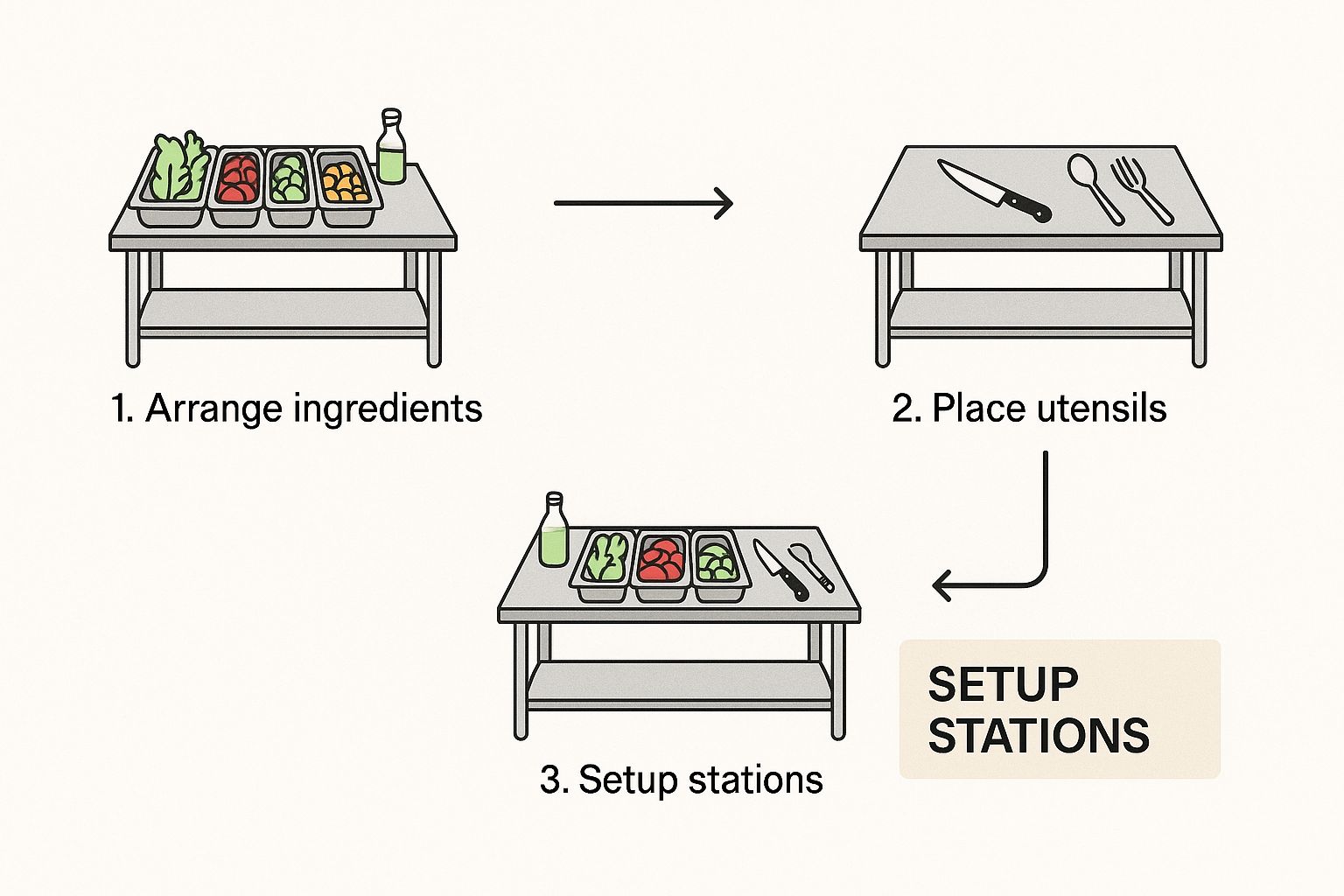
This visual shows exactly why a well-organized station, where every ingredient and tool has its designated spot, leads directly to faster ticket times and fewer errors during a rush. It’s the physical embodiment of "a place for everything, and everything in its place."
Finally, the BOH checklist has to tackle sanitation. This isn't just a quick wipe-down; it's a systematic process.
- Sanitizer Buckets: Mix fresh sanitizer solution and get a bucket placed at every single station. No exceptions.
- Surface Cleaning: Wipe down all stainless steel surfaces, cutting boards, and any shared equipment.
- Handwashing Stations: Make sure all hand sinks are fully stocked with soap, paper towels, and have running warm water.
This methodical approach ensures the kitchen isn't just ready to cook—it's ready to perform at the highest level of safety and efficiency from the moment your doors open.
Crafting the Perfect Guest Experience Before Doors Open
Your guest's experience doesn't kick off with their first bite. It starts the moment they step through your door and take in the atmosphere. Having a dialed-in Front of House (FOH) section in your opening checklist restaurant is what makes that first impression count, setting the stage for a great meal long before anyone even looks at a menu.
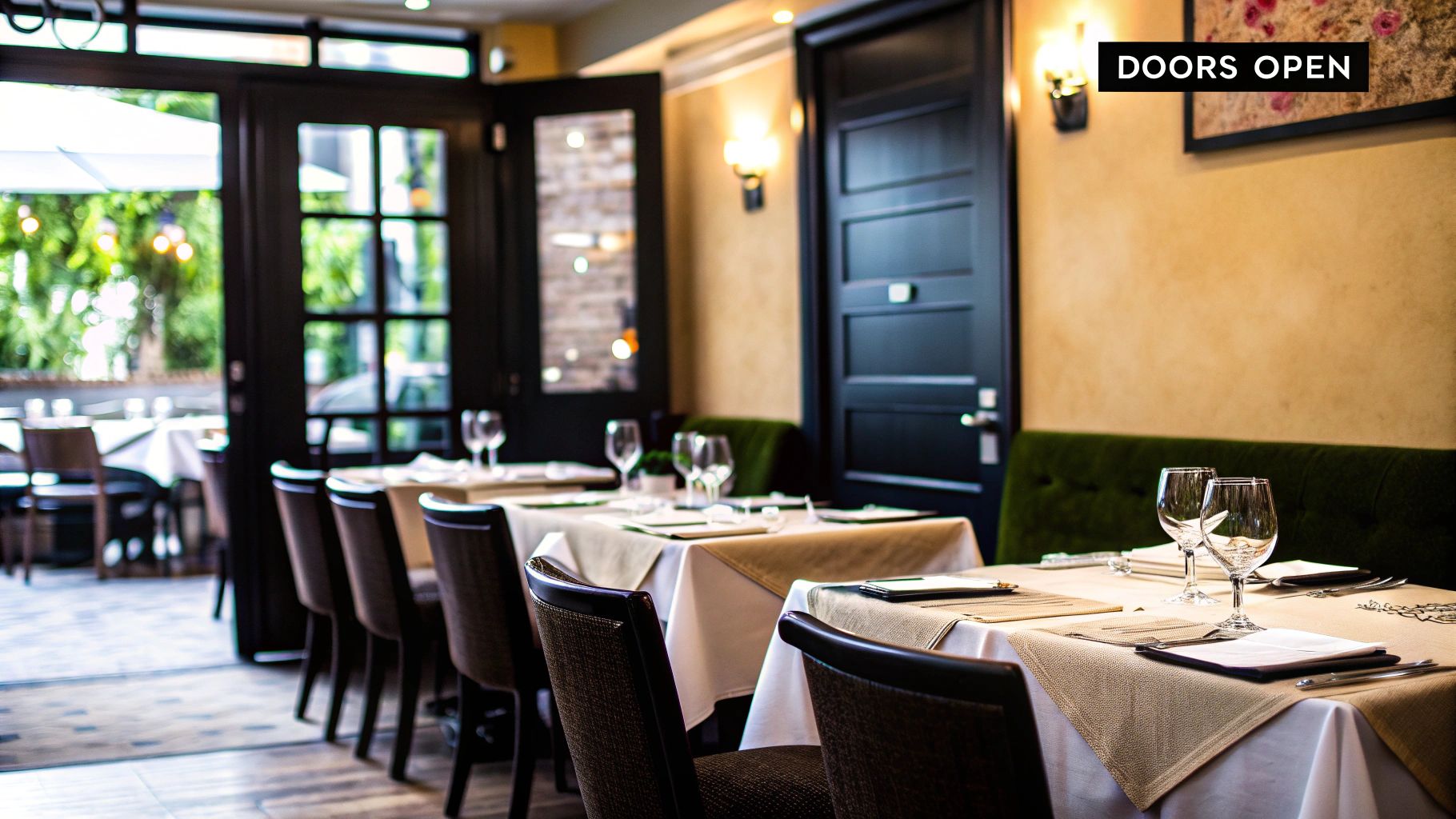
This part of your daily routine goes way beyond a quick sweep and mop. It's about setting a mood. Before you unlock the doors, take a walk through the dining room with a critical eye. Are the lights dimmed just right for the time of day? Is the music a good fit for the vibe you're going for, and is it quiet enough for easy conversation? Even the temperature of the room can make or break someone's comfort.
All these little sensory details add up, shaping how people feel about your restaurant. A dining room that feels intentionally prepared sends a strong signal about your standards—a message guests will assume applies to the food and service, too.
Setting the Stage for Service
Once the ambiance feels right, it's time to get hands-on with the physical setup. Every single table needs a thorough inspection. This isn't just about making sure the forks are on the left. You need to check for wobbly tables that drive guests crazy, look for smudges on glassware, and make sure every chair is perfectly aligned. Menus are a huge touchpoint, so wipe them down and pull any that are stained, torn, or tired-looking.
A pristine, well-organized dining room is a silent promise to your guests. It tells them, "We've been expecting you, and we've prepared everything to ensure you have a wonderful experience." This non-verbal communication is incredibly powerful.
Beyond the tables, your service stations need to be locked and loaded. Nothing looks worse than a server scrambling to find extra napkins or a clean water pitcher during the middle of a rush. That's a clear sign of a sloppy opening. Nail down these key areas:
- Service Stations: Stocked with polished cutlery, neatly folded napkins, and plenty of extra glassware.
- Condiment Caddies: Wiped clean and refilled—salt, pepper, sugar, the works.
- Beverage Area: Fresh coffee brewed, ice bins completely full, and all your drink garnishes prepped and ready to go.
Finalizing Operational Readiness
The last FOH checks are all about operations. Your Point of Sale (POS) system needs to be fully booted up, with every terminal logged in and loaded with fresh receipt paper. Double-check that the cash floats for each register are counted and correct to head off any issues later in the shift.
One final, critical step is to review the day's reservations. Make a note of any large parties, VIPs, or special requests like birthdays or allergy alerts. Getting this information to the host stand and the serving staff is what creates that seamless, personal welcome.
And don't forget the restrooms. Their cleanliness has a surprisingly big impact on how guests see your whole operation. As some experts on how to improve guest satisfaction with cleanliness point out, a spotless facility is a visible sign of your restaurant's high standards. You can also explore our detailed guides to selecting the right commercial kitchen equipment to make sure your entire restaurant is set up to win.
The Pre-Shift Huddle: Your Secret Weapon for a Flawless Service
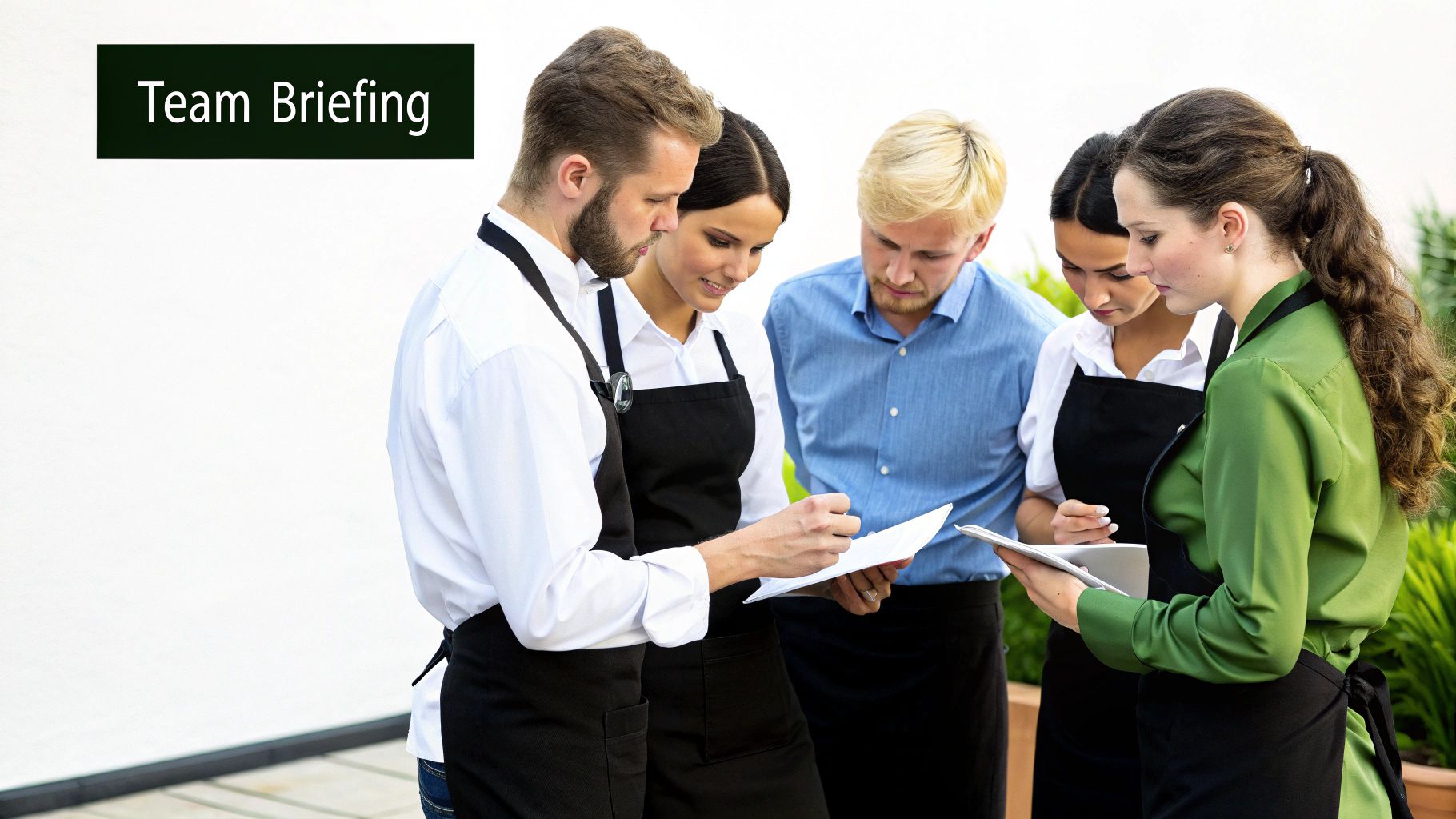
Your opening checklist for a restaurant gets the building ready, but the pre-shift huddle gets your people ready. This quick, focused meeting is the non-negotiable step that turns a bunch of individual employees into a single, cohesive unit, primed to crush the upcoming service. Think of it as the command center where the front-of-house and back-of-house finally sync up.
A great huddle is way more than a manager just rattling off the soup of the day. It’s a dynamic, two-way conversation that gets the entire operation on the same page. This is your moment to flag any "86'd" items before a server punches in an order that the kitchen can't make. Talk about preventing disappointment for the guest and a headache for your cooks. It's also the perfect time to go over the reservation book, pointing out any VIPs or large parties so the team can roll out the red carpet.
I’ve seen the best managers use this time to get ahead of problems before they even start. Did a key piece of equipment, like one of your commercial charbroilers, give you trouble during prep? The huddle is where you tell the team. Whether you’re running an infrared, gas, or electric char broiler, letting the servers know about potential longer ticket times or menu changes is critical for managing guest expectations.
Setting the Tone for Service
Beyond just the nuts and bolts, the huddle is an incredible motivational tool. Use it to share a glowing review from last night, give a shout-out to a staff member who went the extra mile, or set a small, achievable goal for the shift. Maybe it’s pushing a specific appetizer or upselling a great bottle of wine.
This brief meeting grounds the team in their shared mission. It’s a powerful reminder that everyone—from the host to the line cook—is fighting for the same thing: a perfect service and an unforgettable guest experience.
Getting your staffing and communication right is everything, especially as the restaurant workforce is projected to hit over 15.9 million employees in the U.S. by 2025. That’s a lot of people to keep organized. The pre-shift meeting is a cornerstone of that organization, ensuring every single person is dialed in on service standards and safety. You can dive deeper into restaurant industry trends and workforce statistics to keep your team in the loop.
When you make the pre-shift huddle a non-negotiable part of your daily routine, you're building a culture of communication and teamwork. That's the kind of investment that pays off long after you've unlocked the doors for the day.
Moving Your Checklist From Paper to Digital
Look, paper checklists get the job done. They’re a solid starting point. But if you really want to tighten up your opening procedures, digital tools are where the game completely changes. When you move your opening checklist restaurant protocol onto a digital platform, you unlock a level of accountability and operational insight that a clipboard just can’t touch.
Forget wondering if a task actually got done. Digital checklists give managers a live look at what's happening. Many apps have features like time-stamped completions and even photo verification, so your line cook can snap a quick picture of their perfectly prepped station. This kills any ambiguity and confirms your standards are being met, no hovering required.
Integrating for Smarter Operations
The real power of going digital isn't just about ticking boxes on a screen—it's about integration. This is where things get really efficient. Imagine your checklist automatically talking to your other restaurant systems.
- Inventory Management: Your BOH team member notices you're low on prep containers. They mark it on the checklist, and the system automatically flags it for the next supply order. Simple.
- Scheduling Software: The app can assign specific checklist items to whoever is on the opening shift, so everyone walks in knowing exactly what they’re responsible for.
- Maintenance Logs: Someone flags the gas charbroiler for making a weird noise during the morning check. A maintenance ticket gets generated on the spot.
Digital systems give you a data-rich snapshot of your daily operations. You can track completion times, spot recurring problems, and find bottlenecks, letting you fine-tune your opening process based on facts, not just feelings.
Making the leap from traditional paper systems isn't just about downloading an app; it's a shift in how your team operates. Getting everyone on board is key. Taking some time to understand the process of overcoming barriers to digital transformation can help you manage the change and make sure it sticks for the long run.
Still Have Questions About Restaurant Checklists?
Even with the perfect checklist in hand, questions always pop up once you put it into action. That's a good thing. Getting the right answers is what turns a simple list into a powerful tool that makes your restaurant run like a well-oiled machine.
One of the first things people ask is how often they should be updating their checklists. This isn't a "set it and forget it" document. I tell every manager to plan a review at least quarterly. You should also pull it out anytime you change the menu, get a new piece of equipment, or tweak your service flow. Your team is on the front lines using it every single day, so their feedback is pure gold.
Another area that gets overlooked? The guest environment. It’s funny, but the most frequently missed items are usually related to ambiance. Your crew gets so laser-focused on kitchen prep and getting the tables set just right that they completely forget to check the music volume, adjust the lighting, or make sure the room temperature is comfortable.
Should FOH And BOH Have Separate Checklists?
Absolutely. Managers often wonder if one master checklist is the way to go, but I always recommend splitting them up. It's essential to create separate lists for your Front of House (FOH) and Back of House (BOH) teams. This creates clear lines of ownership and makes sure specialized tasks don't get lost in the shuffle.
A BOH checklist is all about food safety, equipment readiness, and culinary prep. The FOH checklist, on the other hand, is completely focused on the guest experience—from the cleanliness of the entryway to service station readiness and the overall atmosphere.
A killer checklist can even act as an early warning system, helping you spot inventory issues before they have a chance to mess up a service. If you want to see how this fits into the bigger picture, getting a handle on effective restaurant supply chain management will give you some great insights into keeping your stock levels exactly where they need to be.
At Charbroilers, we understand that exceptional performance begins with the right equipment. That's why we offer a wide selection of commercial charbroilers designed to meet the rigorous demands of any professional kitchen. Whether you need the intense, even heat of our infrared charbroilers, the classic power and control of our gas char broilers, or the reliable consistency of our electric char broilers, we have the perfect solution to elevate your menu. Explore our full range of high-quality equipment at https://charbroilers.com and find the workhorse your restaurant deserves.