

Easy! How to Clean & Maintain Your Commercial Flat Top Griddle
Why a Clean Griddle is Your Kitchen's MVP
How to clean and season a commercial griddle properly ensures better food quality, prevents sticking, reduces fire hazards, and extends your equipment's lifespan. Here's the quick answer:
Quick Steps:
- Daily Cleaning - Scrape debris between uses, clean thoroughly at end of shift (griddle at 300-350°F)
- Weekly Deep Clean - Use food-safe degreaser, scrub in circles, rinse completely, squeegee dry
- Seasoning - Apply thin layer of high-smoke-point oil (vegetable or peanut), heat until smoking, wipe excess
- Maintenance - Empty grease trap daily, avoid ice/cold water (causes cracks), re-season when food sticks
Your commercial griddle works harder than almost any other piece of equipment in your kitchen. Whether you're flipping burgers during lunch rush or cranking out breakfast orders, that flat cooking surface sees constant action. But here's the reality: a dirty griddle doesn't just look bad—it actively hurts your business.
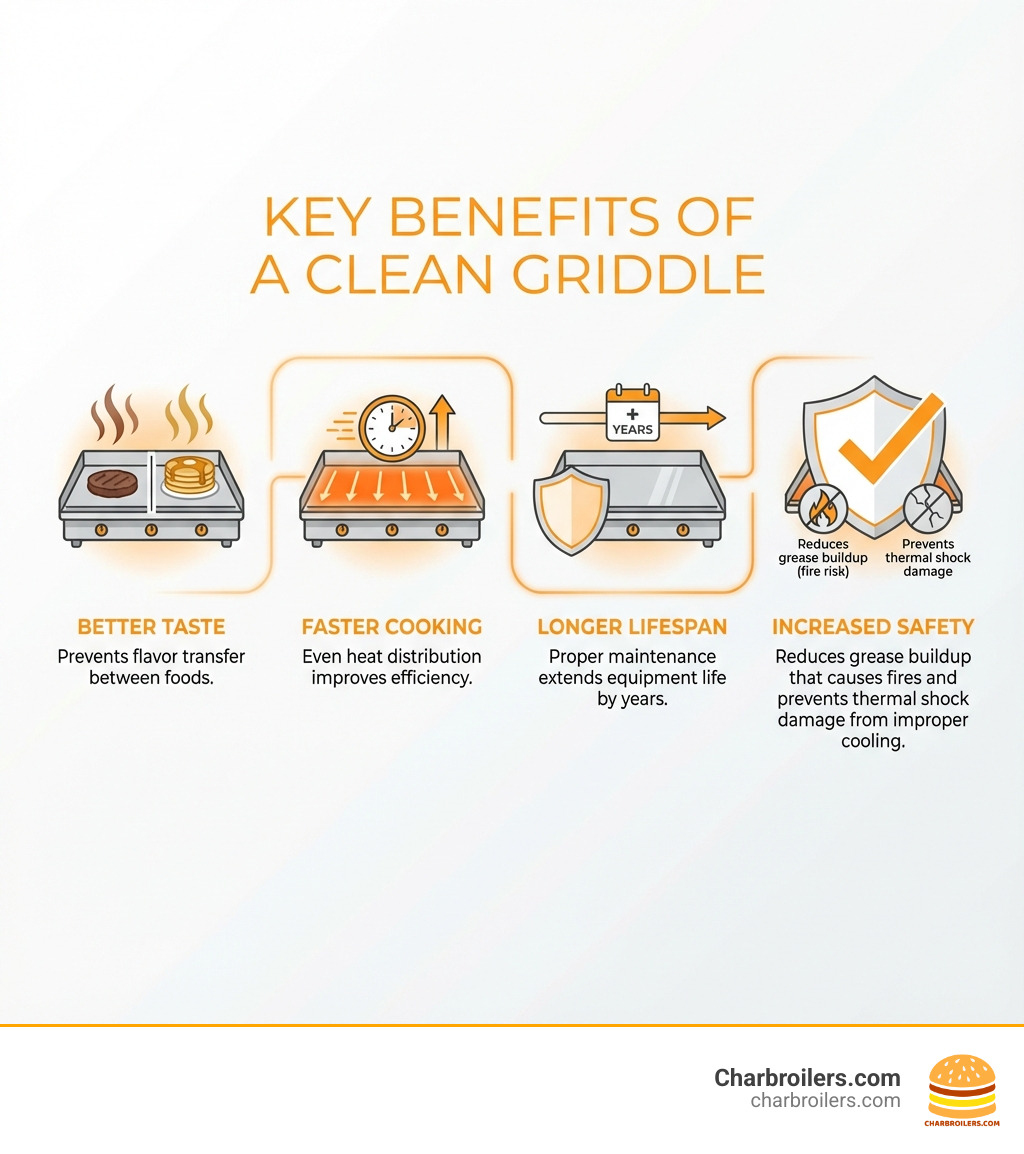
When grease and carbon build up on your griddle, several problems happen fast. Food starts sticking, which slows down your line. Heat transfer becomes uneven, giving you inconsistent results. Flavors transfer between dishes—nobody wants their pancakes tasting like last night's burgers. Worse, accumulated grease creates serious fire hazards and can seep into your equipment's inner workings, leading to expensive repairs.
The good news? Regular cleaning and proper seasoning take just minutes but deliver massive returns. A well-maintained griddle cooks more efficiently, produces better-tasting food, and can last years longer than a neglected one. Research shows that regularly cleaned griddles help surfaces conduct heat more evenly and efficiently, while proper maintenance extends equipment life significantly. For a general overview of how seasoning works on cooking surfaces, you can also review the background on seasoning (cookware)).
The biggest mistake restaurant operators make? Using ice or cold water to cool their griddles quickly. This creates thermal shock—rapid temperature changes that cause stress cracks in the cooking surface. Once cracked, grease seeps into areas you can't clean, and you're looking at costly repairs or replacement.
I'm Sean Kearney from Charbroilers.com, and I've spent over a decade helping restaurants find the right equipment and maintain it properly. Learning how to clean and season a commercial griddle correctly is one of the most valuable skills for protecting your kitchen investment and keeping your operation running smoothly. Let me show you exactly how to do it right.
Explore more about how to clean and season a commercial griddle:
Essential Tools and Griddle Surface Knowledge
Before we dive into the nitty-gritty of how to clean and season a commercial griddle, let's talk about the arsenal you'll need. Having the right tools makes all the difference, changing a daunting task into a quick and efficient routine.
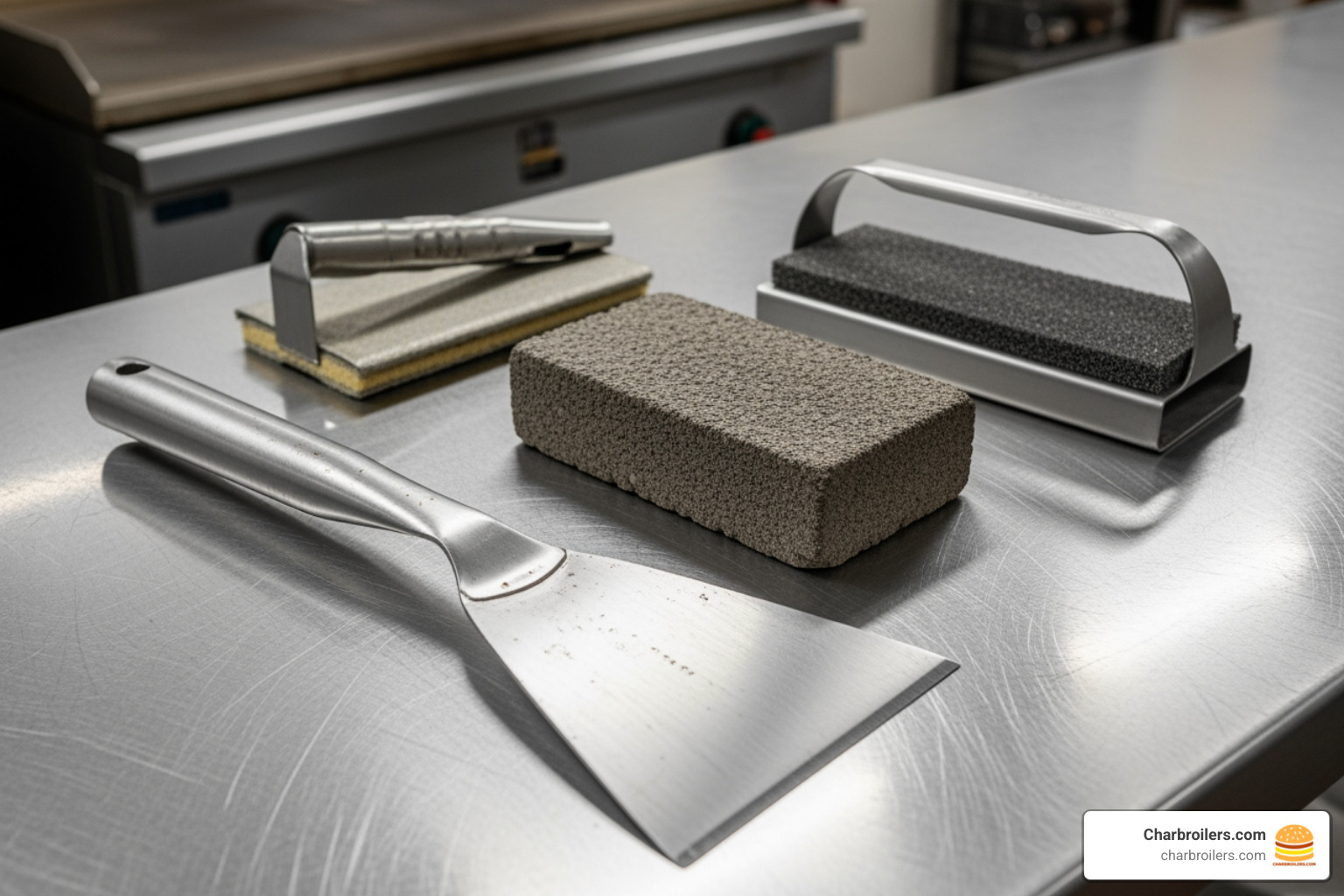
Here’s a checklist of essential tools and supplies for cleaning and seasoning your commercial griddle:
- Griddle Scraper: Your first line of defense against food debris and carbonized grease. Choose one with a sturdy handle and a sharp, durable blade.
- Grill Brick or Griddle Pad: For scrubbing away stubborn residues. Be mindful of your griddle's material when choosing.
- Pad Holder: To protect your hands and provide leverage when using griddle pads.
- Squeegee: Excellent for pushing liquids and loosened debris into the grease trough.
- Food-Safe Degreaser/Griddle Cleaner: Specifically formulated to break down grease and carbon without damaging your griddle surface. Some systems, like the Scotch-Brite™ Quick Clean Griddle Cleaning System, feature specialized liquids and pads designed for fast, effective cleaning.
- High-Smoke-Point Oil: Essential for seasoning. Vegetable or peanut oil are excellent choices due to their high smoke points.
- Heat-Resistant Gloves: Safety first! Protect your hands when cleaning a warm griddle.
- Lint-Free Cloths/Towels: For wiping down, rinsing, and applying oil.
- Apron & Face Shield: Additional PPE to protect yourself from splashes and heat, especially during deep cleaning.
Using commercial-grade cleaning tools specifically designed for your griddle type is key to effective appliance care. If you can find items exclusively designed for your type of griddle, use them to remove grime and grease most effectively.
Understanding Your Griddle Surface
Just like you wouldn't use sandpaper on a delicate painting, you shouldn't use the same cleaning method on every griddle surface. Commercial griddles come in various materials, and each has its quirks when it comes to cleaning and maintenance. Understanding your griddle's material is the first step in mastering how to clean and season a commercial griddle effectively.
Here's a breakdown of the most common types:
| Griddle Surface Type | Characteristics & Pros | Cons & Cleaning Considerations |
|---|---|---|
| Steel Plates | Most common, economical, and durable. Excellent heat retention and even cooking. Can be seasoned for a non-stick surface. | Requires more cleaning effort. Can be prone to rust if not properly maintained and seasoned. Use griddle bricks/pads with a scraper, often with water or specific detergents. Always season after a thorough clean to prevent sticking and rust. When using a griddle brick, scrape in the direction of the grain to prevent damage. |
| Chrome Plates | Aesthetically pleasing, emits less radiant heat into the kitchen (improving comfort). Easier to clean than steel. | More expensive. Cannot be seasoned in the traditional sense; relies on its smooth surface for non-stick properties. Requires non-abrasive cleaners, special razor scrapers, and food-safe polish. Avoid harsh chemicals or highly abrasive tools that can scratch the chrome. Do not use standard griddle bricks. A light coat of oil after cleaning helps protect the surface. |
| Composite Plates | Offers 5x the heat transfer rate, leading to faster cooking times and potential energy savings. Faster recovery times. | Priced between steel and chrome. Requires non-abrasive scrubby pads and mild detergents. Avoid harsh abrasive tools. |
Always refer to your equipment's specific operations manual for detailed instructions custom to your model. For a deeper dive into choosing the right griddle for your kitchen, check out our Choosing Your Commercial Griddle: A Comprehensive Buyers Guide.
How to Clean and Season a Commercial Griddle: The Complete Process
This section provides the core step-by-step instructions for maintaining your griddle, ensuring it performs at its best for years to come. Following these procedures for cleaning and seasoning is crucial for any professional kitchen.
Part 1: How to Season a Commercial Griddle for a Perfect Non-Stick Surface
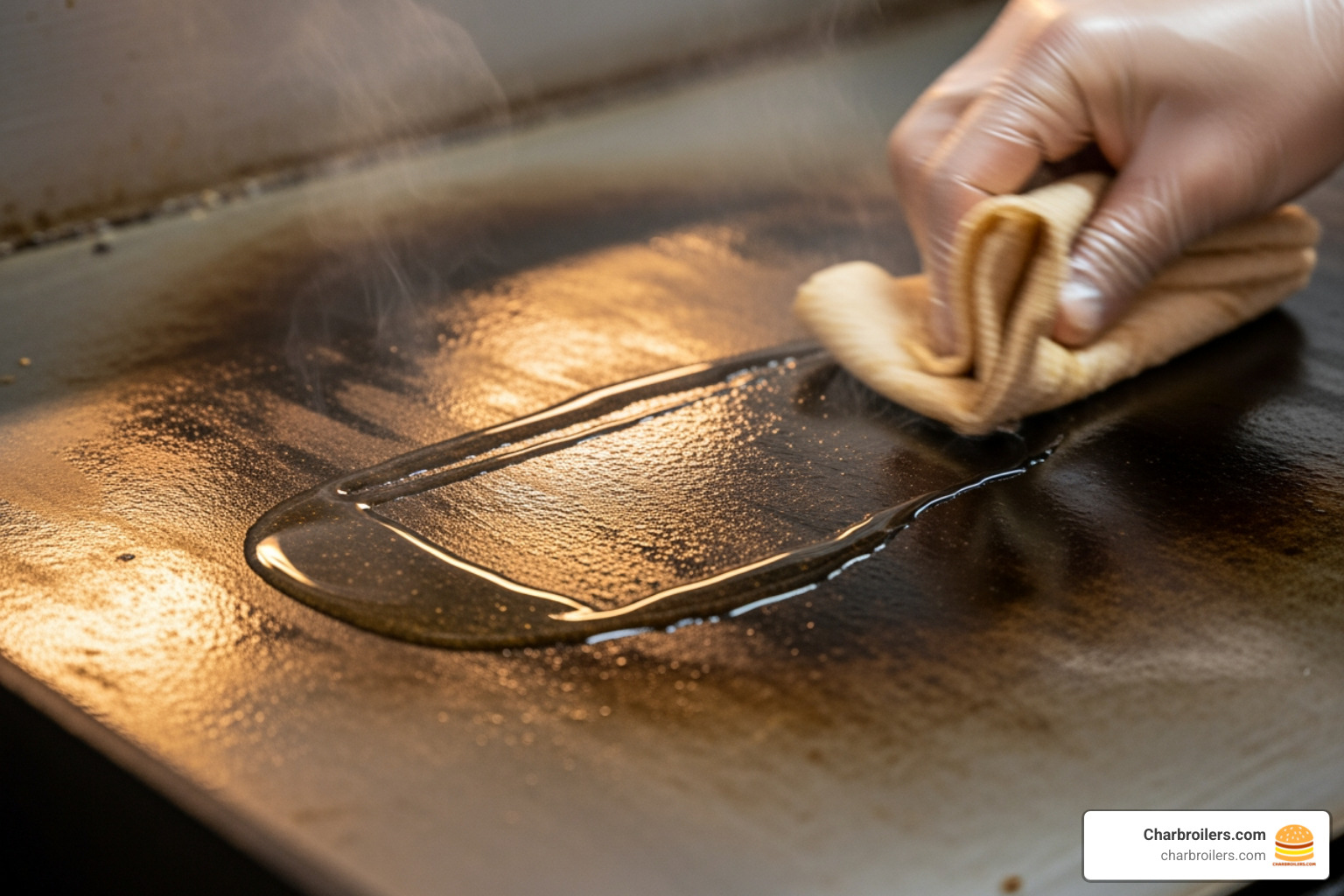
Seasoning your griddle isn't just a fancy chef trick; it's a critical step, especially for steel griddles, to create a natural non-stick surface and protect against rust. This process, known as polymerization, bakes oil into the metal, forming a slick, protective layer. Mastering how to clean and season a commercial griddle starts here!
Why Seasoning is Important:
- Prevents Food from Sticking: The polymerized oil creates a naturally non-stick surface, making cooking and subsequent cleaning much easier.
- Protects Against Rust: A seasoned layer acts as a barrier, preventing moisture from reaching the metal, which is crucial for steel griddles.
- Improves Flavor: A well-seasoned griddle can contribute to the flavor profile of your food over time.
- Extends Griddle Life: By preventing rust and sticking, seasoning helps prolong the lifespan of your valuable equipment.
Initial Seasoning Process (for a brand new griddle or after a deep, abrasive clean):
- Clean Off Protective Coating: New griddles often come with a protective mineral oil coating to prevent rust during shipping. Turn on ventilation. Use hot water and a mild detergent to remove this coating. Rinse thoroughly and dry completely. You might notice gray residue on your paper towel—that's normal.
- Perform the "Burn-In": Push and turn your control knob to 350°F (175°C) and heat the griddle for about 30 minutes. This helps burn off any remaining manufacturing residues. Turn off and allow to cool.
- Apply First Layer of Oil: While the griddle surface is still warm (but not too hot to touch safely), pour a small amount of high-smoke-point oil (vegetable or peanut oil are recommended) onto a paper towel. Spread a very thin, even layer over the entire cooking surface. Avoid using too much oil, as this can lead to gummy residue.
- Heat Until Smoking: Push and turn your control knob back to 350°F (175°C). Heat the griddle until the oil begins to smoke. This indicates the oil is polymerizing and bonding to the metal.
- Cool and Wipe: Turn the griddle to OFF and allow it to cool completely. Once cool, wipe off any excess oil.
Re-seasoning (After each use or when needed):
After each thorough cleaning, or if you notice food sticking or rust spots forming, you'll want to re-season your griddle. This is a quicker version of the initial process:
- Ensure the griddle is clean and warm to the touch.
- Apply a small amount of vegetable or peanut oil with a paper towel, spreading it evenly.
- Heat the griddle to 350°F (175°C) until it just begins to smoke.
- Turn off the griddle and let it cool, then wipe away any excess oil.
For more insights into seasoning, you might find our guide on Cleaning and Seasoning Cast Iron helpful, as the principles are quite similar for steel griddles.
Part 2: How to Clean a Commercial Griddle (Daily, Weekly, & Deep Clean)
A clean griddle is a happy griddle, and a happy griddle means happy customers! Consistency is key when it comes to cleaning, with different levels of attention required daily, weekly, and for deep cleaning. Let's break down how to clean and season a commercial griddle through regular maintenance.
Daily Cleaning – During and After Service:
-
During Service (Light Cleaning):
- Scrape Between Uses: Throughout the day, use your griddle scraper to remove food debris and excess grease between cooking different items. Push everything into the grease trough. This prevents flavor transfer and buildup.
- Wipe Down: Regularly wipe down the backsplash, side splashes, and the front of your griddle with a clean cloth.
- Empty Grease Trap: Empty the grease trap or crumb tray as needed during service to prevent overflow.
-
End-of-Day Cleaning:
- Cool Down Safely: Allow the griddle to cool to a safe temperature, ideally between 300-350°F. It should still be hot enough to work with, but not so hot that it's dangerous.
- Scrape Thoroughly: With your griddle scraper, remove all remaining food particles, char, and grease into the grease trough.
- Apply Cleaner (for Steel Griddles): While still warm, you can apply room temperature water. For stubborn bits, a food-safe griddle cleaner or even soda water/club soda can help loosen carbonized grease. Some systems, like the Scotch-Brite™ Quick Clean Griddle Cleaning System, are designed to work quickly (3-5 minutes) and effectively on hot griddles (300-350°F).
- Scrub the Surface: Using a grill brick, griddle pad, or appropriate scouring pad (depending on your griddle material) and a pad holder, scrub the surface in small circles or, for steel, in the direction of the grain. This helps remove embedded grime.
- Rinse and Squeegee: If using a liquid cleaner or water, use your squeegee to push all the dirty liquid and residue into the grease trough. Rinse the surface thoroughly with clean, wet cloths until all cleaner residue is gone.
- Dry and Season/Oil: Dry the griddle surface completely. For steel griddles, re-season as described in Part 1. For chrome or composite, apply a light, even coat of high-smoke-point oil with a clean cloth to protect the surface.
- Clean Exterior: Wipe down all exterior surfaces, controls, and surrounding areas.
- Empty and Clean Grease Trap: Remove, empty, wash, and sanitize the grease trap.
Weekly Deep Cleaning:
A weekly deep clean goes beyond the daily routine, ensuring every part of your griddle is spotless. This is where you might unplug the unit and let it cool completely for a more thorough scrub.
- Unplug and Cool Completely: For safety and to allow thorough cleaning, unplug your griddle and let it cool down entirely.
- Disassemble (if possible): Remove any removable parts like the grease trough and clean them separately.
- Clean Cooking Surface: Use a non-abrasive griddle cleaner and a clean cloth or appropriate pad for your griddle material. Scrub the entire surface, paying attention to corners and edges. For steel griddles, you can still use a grill brick for heavy carbon buildup, but ensure the griddle is cool.
- Rinse and Dry: Rinse the griddle surface thoroughly with clean water, ensuring no cleaner residue remains. Dry completely to prevent rust.
- Clean Sides, Front, and Underneath: This is your chance to tackle all the built-up grease and grime on the griddle's exterior, backsplash, sides, and even the area underneath. Use a degreaser and clean cloths.
- Inspect: Check for any stress cracks or damage.
- Re-season/Oil: Apply a fresh coat of seasoning (for steel) or protective oil (for chrome/composite).
A deep clean of the griddle should happen once a week. Regularly cleaning griddles helps surface heat conduct more evenly and efficiently, and regular cleaning extends the life of griddle equipment. For more detailed instructions on cleaning stainless steel, check out our The Ultimate Guide to Cleaning a Commercial Stainless Steel Griddle. Always check your equipment's operations manual for specific instructions.
Common Griddle Maintenance Mistakes to Avoid
Even with the best intentions, it's easy to fall into bad habits that can damage your griddle or compromise food safety. Knowing how to clean and season a commercial griddle also means knowing what not to do.
Here are some common mistakes we see and how to avoid them:
- Using Ice or Cold Water on a Hot Griddle (Thermal Shock): This is the cardinal sin of griddle cleaning! Pouring ice or cold water onto a scorching hot griddle causes rapid temperature changes, leading to thermal shock. This can cause the griddle plate to warp, buckle, or even crack, resulting in costly repairs or replacement. Always allow your griddle to cool down to a warm (300-350°F) or completely cool temperature before applying liquids.
- Using Harsh or Inappropriate Chemicals: Bleach, oven cleaner, or highly abrasive chemicals can damage your griddle's surface, especially chrome. Always use food-safe degreasers and cleaners specifically designed for griddles, and ensure they are compatible with your griddle material.
- Using the Wrong Abrasive Tools: A heavy-duty grill brick is great for steel, but it can scratch and ruin a chrome or composite surface. Match your cleaning tool to your griddle material to prevent damage.
- Neglecting the Grease Trap/Crumb Tray: A full grease trap is not just unsightly; it's a major fire hazard and can lead to messy overflows. Empty and clean it daily, or even more frequently during busy shifts.
- Not Following Manufacturer's Instructions: Every griddle is a little different. Your manufacturer's manual is your best friend when it comes to specific cleaning agents, temperatures, and procedures. Always consult it to ensure you're maintaining your equipment correctly and keeping your warranty valid.
- Skipping Seasoning (for Steel Griddles): Forgetting to season your steel griddle after a thorough clean leaves it vulnerable to rust and makes food stick like crazy. Always re-season to maintain that protective, non-stick layer.
Avoiding these common pitfalls will significantly extend the life of your griddle and keep your kitchen running smoothly and safely.
Frequently Asked Questions about Griddle Care
We get a lot of questions about griddle maintenance. Here are some of the most common ones, answered to help you master how to clean and season a commercial griddle.
How often should I empty the grease trap?
The grease trap or crumb tray should be emptied and cleaned daily, or even more frequently during heavy use. Think of it like a trash can for your griddle—you wouldn't let that overflow, would you? Regularly emptying it prevents messy spills, reduces fire hazards from accumulated grease, and keeps your kitchen sanitary. After emptying, wash it thoroughly with warm water and soap, just like any other dish.
What is the best temperature for cleaning a griddle?
For most daily and end-of-day cleaning procedures, the best temperature for cleaning a commercial griddle is between 300-350°F (150-175°C). This temperature is hot enough to loosen grease and debris effectively, allowing specialized griddle cleaners to work efficiently, but cool enough to be safer than a fully hot griddle. For weekly deep cleaning, where you might use more aggressive scrubbing or need to handle components, it's best to unplug the griddle and let it cool completely to ensure maximum safety. Always wear heat-resistant gloves when cleaning a warm griddle.
My food is sticking. Do I need to re-season my griddle?
If your food is consistently sticking to your griddle surface, it's a strong indicator that your seasoning layer (for steel griddles) has worn thin or been compromised. Other signs include an uneven surface color or the appearance of rust spots.
Yes, it's definitely time to re-season your griddle! Follow the re-seasoning steps we outlined earlier: clean the griddle thoroughly, apply a thin, even coat of high-smoke-point oil (like vegetable or peanut oil), heat it to 350°F (175°C) until it smokes, then let it cool and wipe off any excess. Regular re-seasoning is crucial for maintaining that desirable non-stick surface and protecting your investment.
Conclusion: Protect Your Investment with Proper Griddle Care
At Charbroilers.com, we understand that your commercial griddle is more than just a piece of equipment; it's a workhorse that contributes directly to your menu, your efficiency, and your bottom line. Mastering how to clean and season a commercial griddle isn't just about hygiene; it's about protecting that investment, ensuring peak performance, and delivering consistently delicious results to your customers.
By committing to a routine of daily cleaning, weekly deep cleaning, and proper seasoning (especially for steel griddles), you'll reap numerous benefits: improved food quality, extended equipment life, improved kitchen safety, and a more efficient cooking environment. Consistency is key! A few minutes of proper care each day can save you hours of headaches and thousands in repair or replacement costs down the line.
We're here to help you get the most out of all your commercial kitchen equipment. Explore our complete Guide to Commercial Charbroilers for Your Restaurant for more expert tips on outfitting your kitchen.