

How Long to Cook Carne Asada on Grill for Perfect Results
Knowing how long to cook carne asada on the grill really boils down to two things: how hot your grill is and how thick your steak is. For those classic thin cuts like skirt or flank steak, you’re looking at a blazing hot sear for just 2-7 minutes per side. That's all it takes to get that perfect, juicy medium-rare.
Your Quick Guide to Perfect Carne Asada Grill Time
The real secret to incredible carne asada isn't a long, slow cook. It's the exact opposite: a fast, aggressive sear. This high-heat attack creates a mouthwatering crust while keeping the inside unbelievably tender and moist. The exact timing is all about the thickness of your steak and how you like it cooked.
Most of the time, you’ll be grilling carne asada over medium-high heat, somewhere in the 350°F to 450°F range. For flank or skirt steak, this usually means a total cook time of about 7 to 15 minutes. The sweet spot for a perfect medium-rare is an internal temperature between 130°F and 135°F.
Grilling Time by Steak Thickness
To make things even easier, here’s a quick chart that breaks down the grilling time per side based on how thick your steak is.
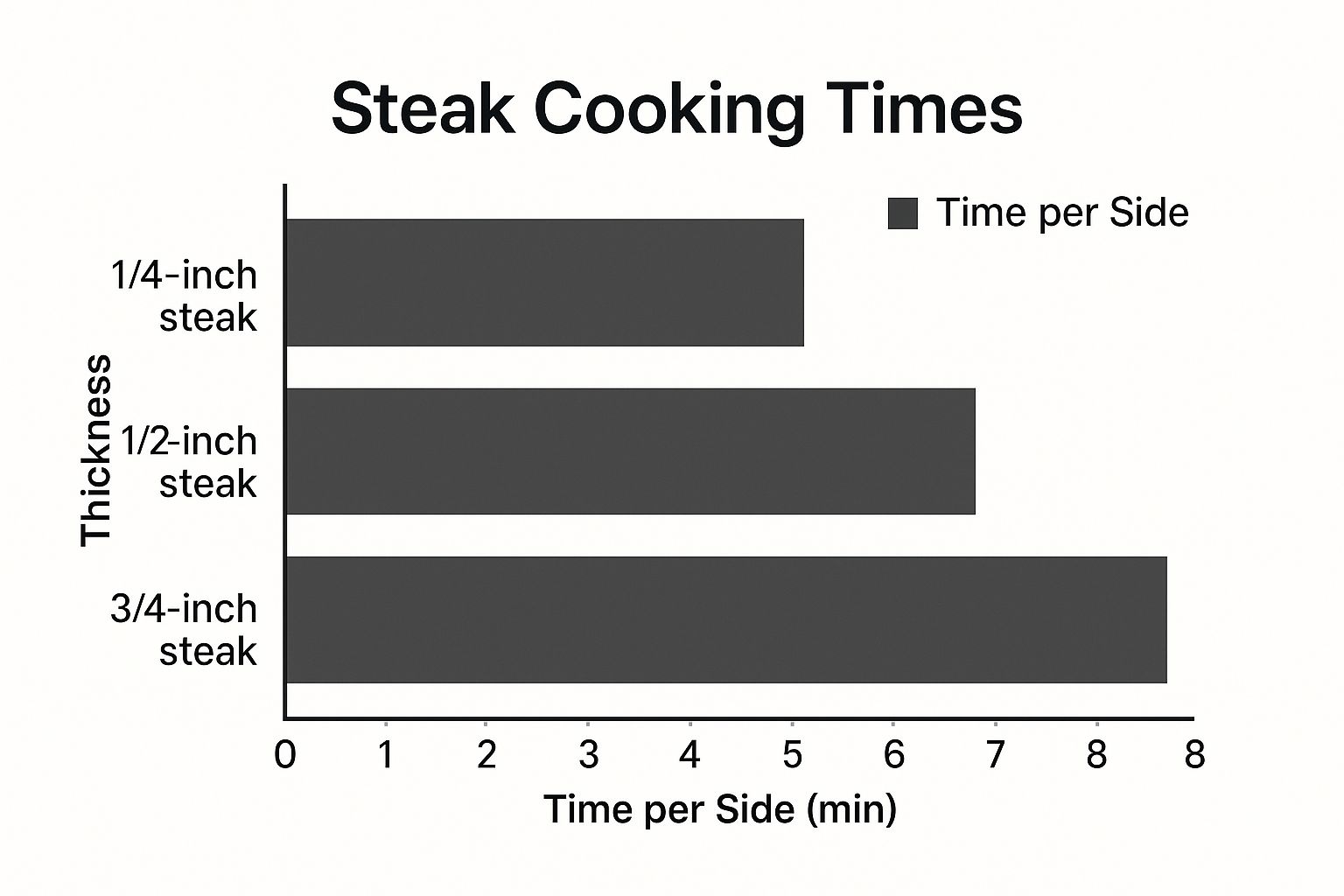
As you can see, even a small bump in thickness can add a couple of extra minutes to your cook time on each side. It's a game of minutes, sometimes seconds!
Ultimately, the most reliable way to know when your steak is done is by checking its internal temperature. To make sure your carne asada is both perfectly cooked and safe, it’s a great idea to get familiar with the recommended guidelines for safe cooking temperatures for meat. Knowing these numbers will give you a ton of confidence at the grill.
Key Takeaway: Always, always use a meat thermometer for accuracy. Pull the steak off the grill about 5°F below your target temperature. It’ll continue to cook as it rests, hitting that perfect temp right on the cutting board.
Carne Asada Grilling Time and Temperature Chart
Here's a handy reference to get you started. Remember, these are approximations—your grill's unique quirks and the weather can play a role, so always trust your thermometer!
| Steak Thickness | Doneness | Grill Temperature | Total Cook Time (Approx.) | Target Internal Temp |
|---|---|---|---|---|
| 1/2 inch | Medium-Rare | 400°F - 450°F | 4-6 minutes | 130°F - 135°F |
| 1/2 inch | Medium | 400°F - 450°F | 6-8 minutes | 135°F - 145°F |
| 3/4 inch | Medium-Rare | 375°F - 425°F | 6-9 minutes | 130°F - 135°F |
| 3/4 inch | Medium | 375°F - 425°F | 9-12 minutes | 135°F - 145°F |
| 1 inch | Medium-Rare | 350°F - 400°F | 10-14 minutes | 130°F - 135°F |
| 1 inch | Medium | 350°F - 400°F | 14-16 minutes | 135°F - 145°F |
This chart is your best friend when you're getting the hang of it. After a few cooks, you'll start to develop a feel for it, but the numbers are a great safety net.
The Flavor Foundation: Prepping Your Steak
Truly exceptional carne asada starts long before the grill ever gets hot. The prep work is what separates a decent steak from a truly memorable one. It all begins with the marinade.
A great marinade does more than just add flavor; its acidic components, like lime and orange juice, are crucial for tenderizing tougher cuts like skirt or flank steak. This process breaks down dense muscle fibers, making sure every single bite is tender.
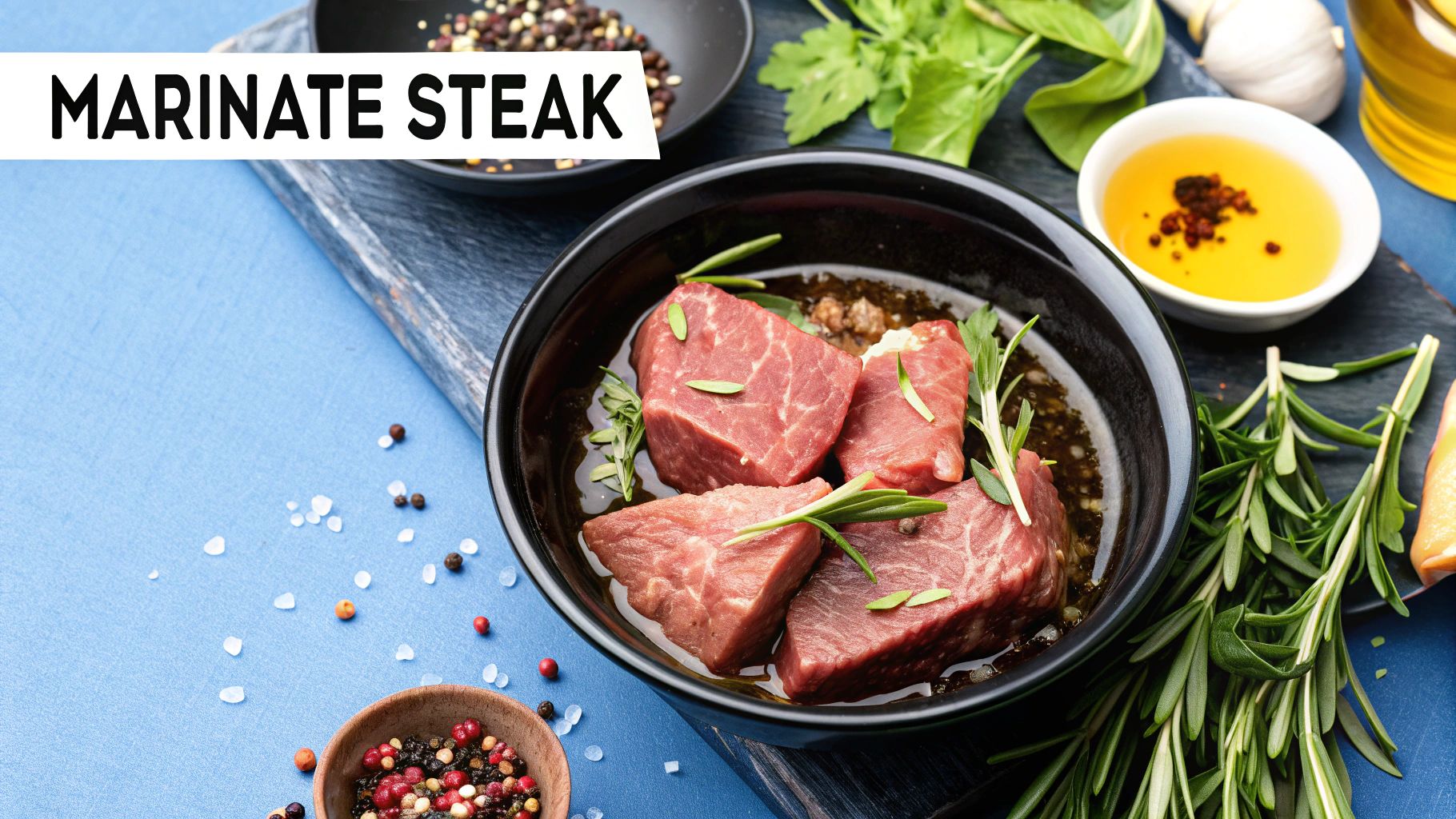
This is your chance to build those deep, complex flavors. A classic blend of citrus, garlic, cilantro, and spices gives you that signature zesty, savory taste everyone loves. A quick tip: always pat the steak dry before it goes into the marinade. It helps the flavors penetrate the meat much more effectively.
Mastering the Marinade
So, how long should you marinate? The timing window is pretty flexible, but it's the key to your final texture and flavor intensity. For cuts like skirt or flank steak, you'll want to marinate for at least 2 to 4 hours. If you have the time, letting it soak overnight will give you maximum tenderness.
This step is non-negotiable for both home cooks and professional chefs aiming for that perfect, juicy result. If you're looking to really dial in your process, there are some great professional insights on carne asada techniques that can help.
Here’s another pro tip that makes a huge difference: let your steak sit out and come to room temperature for about 20-30 minutes before it hits the heat. It’s a simple step, but it’s critical for ensuring the steak cooks evenly from edge to center. This is how you avoid that dreaded raw middle and burnt exterior.
In a restaurant setting, getting that consistency right on every single order is everything. And that’s where having high-quality equipment really pays off.
Executing the Perfect Sear on the Grill
Now for the fun part. With your steak marinated and resting at room temperature, it's time to head to the grill. This is where all that prep work pays off, transforming a great cut of meat into a sizzling, charred masterpiece. The first rule is simple, but it’s the most important one: get your grill screaming hot.
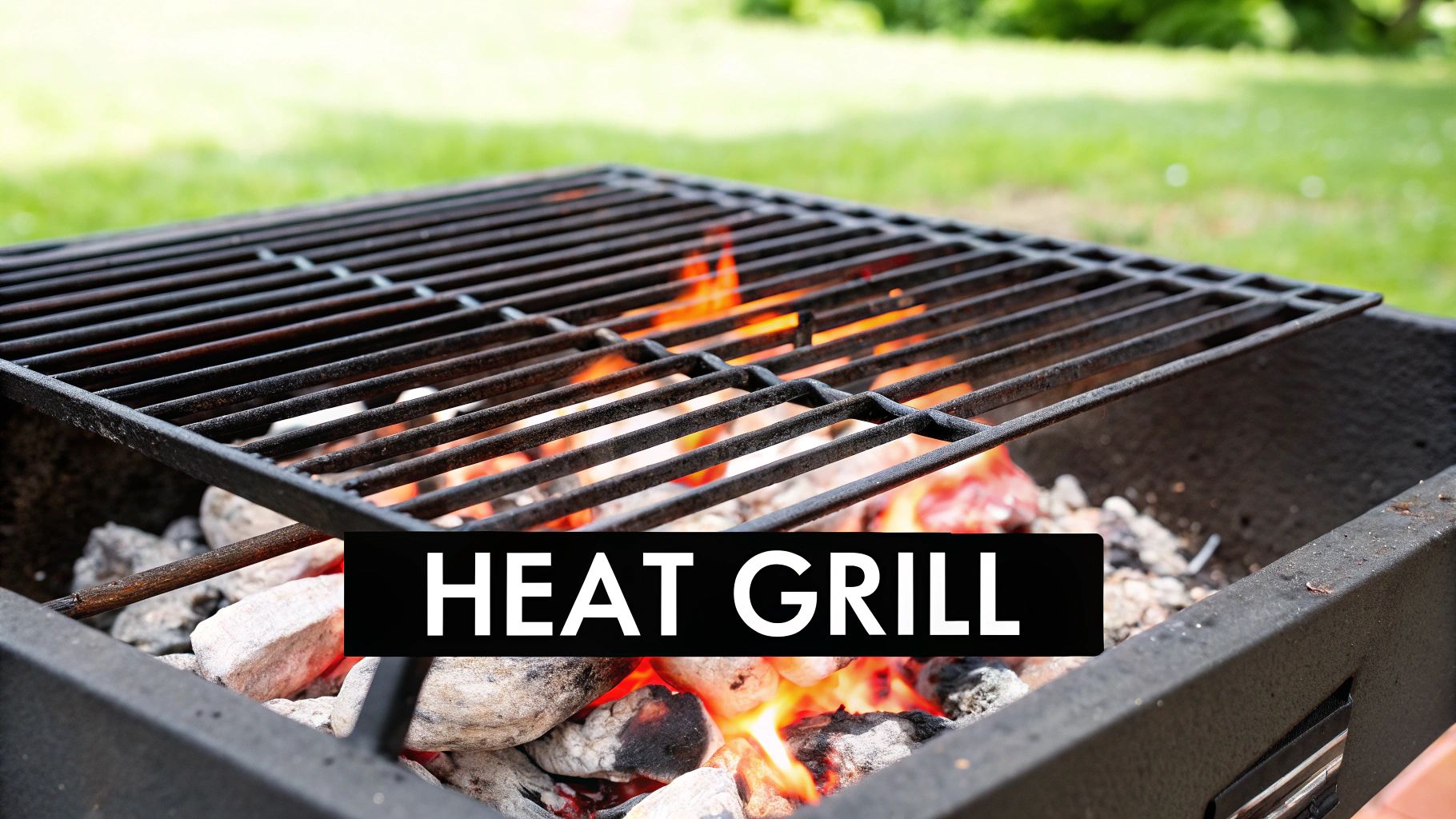
You absolutely need to preheat your grill to a high heat between 400°F and 450°F. This intense heat is the secret to a perfect sear. It instantly caramelizes the surface of the steak, creating that amazing crust we all love while locking in the juices. If you toss a steak on a lukewarm grill, you'll just end up steaming it—and nobody wants a sad, gray piece of meat.
Getting the Grates Ready
Before that steak even thinks about hitting the heat, your grates need to be clean and well-oiled. Any gunk left over from last time will cause sticking and can give your steak a bitter, burnt flavor. Give them a good scrub with a grill brush, then wipe them down with a paper towel soaked in a high-smoke-point oil. This creates a perfect non-stick surface for those beautiful grill marks.
This step is especially critical for cast iron grates. If you're using them, make sure they're properly cared for. We've got a whole guide on how to season cast iron grates if you need a refresher.
Nailing the Cook Time
Lay the steak down and listen for that sizzle. That's the sound of success. Now, here’s a pro move: leave it alone. Resist every urge to poke, prod, or move it around. Your goal is to flip it only once to build up that deep, even crust.
Carne asada is a lean cut, so it cooks fast. For steaks that are about 1/2 to 1 inch thick, you’re looking at 3 to 5 minutes per side. This will land you in that perfect medium-rare to medium zone. All in all, you're on that high heat for a total of 6 to 10 minutes.
Pro Tip: You've got to manage your flare-ups. A little bit of flame kissing the meat is great for char, but an out-of-control fire will just burn your steak. I always keep a spray bottle with water handy to tame any big flames, or I'll just slide the steak over to a cooler spot on the grill for a second.
For any restaurant trying to nail this process every single time, the right gear is everything. It’s that professional-grade firepower that ensures your hard work results in an incredible dish for your customers.
Choosing the Right Commercial Charbroiler
Knowing how long to cook carne asada on grill is one thing, but churning out perfectly cooked steaks consistently, order after order? That’s what keeps people coming back. Your commercial charbroiler is the unsung hero behind that consistency, directly shaping your kitchen’s workflow and the final flavor on the plate.
Making a smart investment here means understanding what you’re really buying. Different charbroilers are built for different jobs, and matching the machine to your menu is the first step toward grilling success. Our wide selection of commercial charbroilers ensures you can find the perfect match for your restaurant's specific needs.
Comparing Charbroiler Types
It really boils down to three main contenders. The right one for you depends entirely on your kitchen’s existing setup—and the kind of results you're aiming for with that beautiful carne asada.
- Infrared Charbroilers: Think of these as the heat champions. They use powerful infrared technology to cook meat directly and intensely. This means fewer flare-ups, an incredible sear, and faster cook times. They’re brutally efficient.
- Gas Charbroilers: These are all about control. Gas models give chefs the ability to make instant, precise temperature adjustments on the fly. That versatility is a lifesaver when you're grilling more than just steak and need to switch gears quickly.
- Electric Charbroilers: If you don't have a gas line or have tricky ventilation, electric is your answer. They deliver steady, reliable heat and are usually a breeze to clean and maintain, which your closing crew will definitely appreciate.
Picking the right charbroiler is a cornerstone decision for any restaurant. Our collection of commercial charbroilers is built to ensure there's a perfect fit for your restaurant's volume and unique style. We offer a wide selection of top-quality infrared, gas, and electric char broilers to meet the demands of any professional kitchen.
At the end of the day, the best charbroiler is the one that empowers your team to nail that carne asada every single time. To get even more granular on picking the right unit, check out our in-depth guide on what to look for in a commercial charbroiler.
The Final Touches: Resting and Slicing for Tenderness
You’ve nailed the cook and pulled that gorgeous steak off the grill. The smell is incredible, the char is perfect… but hold on. The next ten minutes are just as critical as the time it spent over the flames. Don't touch that knife yet.
This is the resting period, and skipping it is probably the single biggest mistake you can make with a great piece of meat.
When a steak hits that high heat, its muscle fibers tense up, squeezing all those incredible juices toward the center. If you cut into it right away, you’ll watch in horror as a flavor-packed puddle forms on your cutting board. The result? A dry, disappointing steak.
Just let it rest. This simple act of patience allows those muscle fibers to relax and reabsorb all that moisture. It’s the secret to guaranteeing every single bite is as juicy as it should be.
The Art of the Perfect Slice
Okay, the steak has rested. Now it's time to slice. How you cut the meat is the final key to unlocking tenderness, especially for cuts with a prominent grain like flank or skirt steak. The golden rule is simple: always slice against the grain.
Take a close look at the steak. You’ll see the muscle fibers running in a clear direction. That's the grain. Your knife needs to cut perpendicular to those lines, not parallel to them.
By cutting against the grain, you're doing the work for your jaw. You're shortening those long, chewy muscle fibers into tiny, tender pieces. This simple technique transforms a potentially tough cut into something that practically melts in your mouth.
For any restaurant that takes its steak seriously, these final steps are non-negotiable. It’s this attention to detail that separates a good meal from a truly memorable one. While our huge selection of commercial charbroilers—from powerful infrared and versatile gas to efficient electric char broilers—gives you the foundation for a perfect cook, it’s the rest and the slice that bring it all home. This is how you ensure the quality of your equipment shines through on the plate.
Got Questions About Grilling Carne Asada?
Even the most seasoned grill masters run into questions when the coals are hot and the steak is on the line. I get it. Let’s tackle some of the most common issues that pop up when you're aiming for that perfect carne asada.
Sometimes, all it takes is a couple of small tweaks to go from good to absolutely unforgettable.
What’s the Best Cut of Beef for Carne Asada?
When you're talking authentic carne asada, two cuts really own the conversation: skirt steak and flank steak.
Skirt steak is my personal favorite for its incredible, deep beefy flavor. Its loose grain acts like a sponge, soaking up every last drop of your marinade. Flank steak is a fantastic alternative; it’s a bit leaner and thicker but slices into beautifully textured strips. Both of these are perfect for the high-heat, fast-cooking method that carne asada is famous for.
My Two Cents: While skirt and flank are the undisputed champs, don’t pass up flap steak or even thin-cut sirloin if you find a good deal. The real secret is choosing a cut that can handle intense heat and loves a good marinade.
Why Did My Carne Asada End Up So Tough?
Ah, the dreaded tough steak. It's the number one enemy of a good carne asada, and it almost always comes down to one of three things.
First, you might have rushed the marinade. That acidic punch from citrus juice is what starts breaking down the muscle fibers, and the meat needs a solid few hours to really let it sink in. Second, and this is a big one, is overcooking. Carne asada is meant to be cooked fast and hot, aiming for no more than medium. Go past that, and you're headed straight for chewy-ville.
Finally, and this part is non-negotiable: how you slice the steak. You must slice it thin and against the grain. This simple step shortens those long muscle fibers, making every bite incredibly tender.
Should I Use a Charcoal or Gas Grill?
This is the age-old grilling debate, isn't it? Honestly, you can make killer carne asada on either one. It really just depends on what you're after: old-school flavor or push-button control.
- Charcoal Grills: Purists swear by charcoal for that unmistakable smoky flavor it infuses into the meat. You can also get a charcoal fire ripping hot, which is exactly what you want for a deep, beautiful sear.
- Gas Grills: The big win here is convenience and precision. With a gas grill, you can dial in the exact temperature you want and keep it there, which makes managing flare-ups and getting a consistent cook much easier.
If you're just starting out, a gas grill offers a bit more of a safety net. For a detailed guide on hitting your target every time, our complete steak temps chart is your best friend.
Can I Make Carne Asada Without a Grill?
You absolutely can. While you won't get that signature smoky char, a heavy-duty cast-iron skillet or griddle pan is your best indoor friend.
The technique is almost identical. Get that pan screaming hot, add a little high-smoke-point oil, and sear the steak hard for 3-5 minutes per side. Just do yourself a favor and crack a window or crank up the exhaust fan—it’s going to get smoky in there!
For restaurant kitchens that need to nail that perfect char on every single order, having the right gear is everything. Charbroilers has a wide selection of commercial charbroilers built for the demands of a high-volume kitchen. Check out our lineup of powerful infrared, versatile gas, and efficient electric char broilers to find the right fit for your operation at https://charbroilers.com.